Items Similar to Mid-Century Burgundy Lacquer and Brass Vide-Poche or Ashtray, Italy, Dior 1970s
Want more images or videos?
Request additional images or videos from the seller
1 of 15
Mid-Century Burgundy Lacquer and Brass Vide-Poche or Ashtray, Italy, Dior 1970s
$560.48
£415.01
€470
CA$774.15
A$829.11
CHF 445.73
MX$10,070.06
NOK 5,631.96
SEK 5,156.48
DKK 3,581.99
About the Item
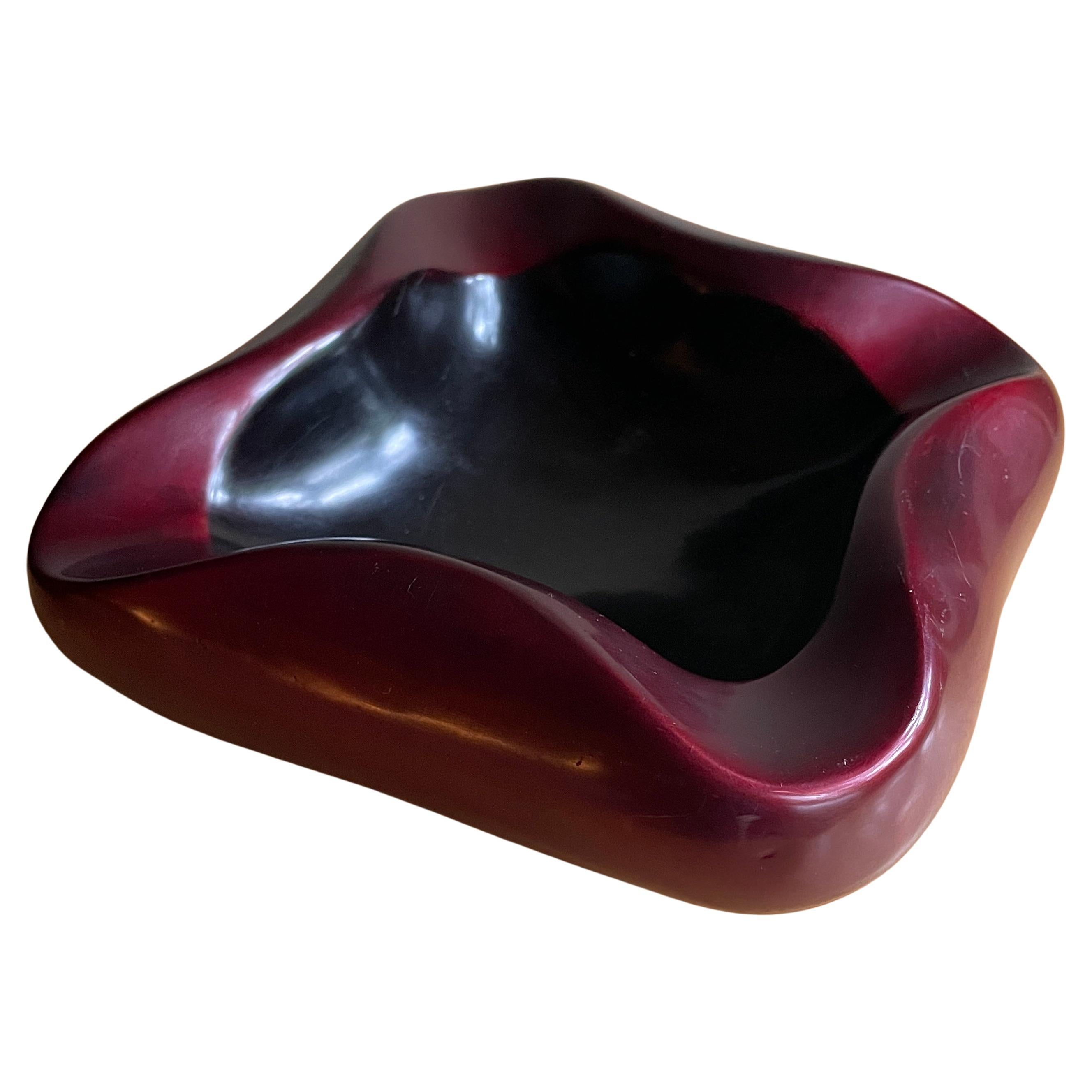
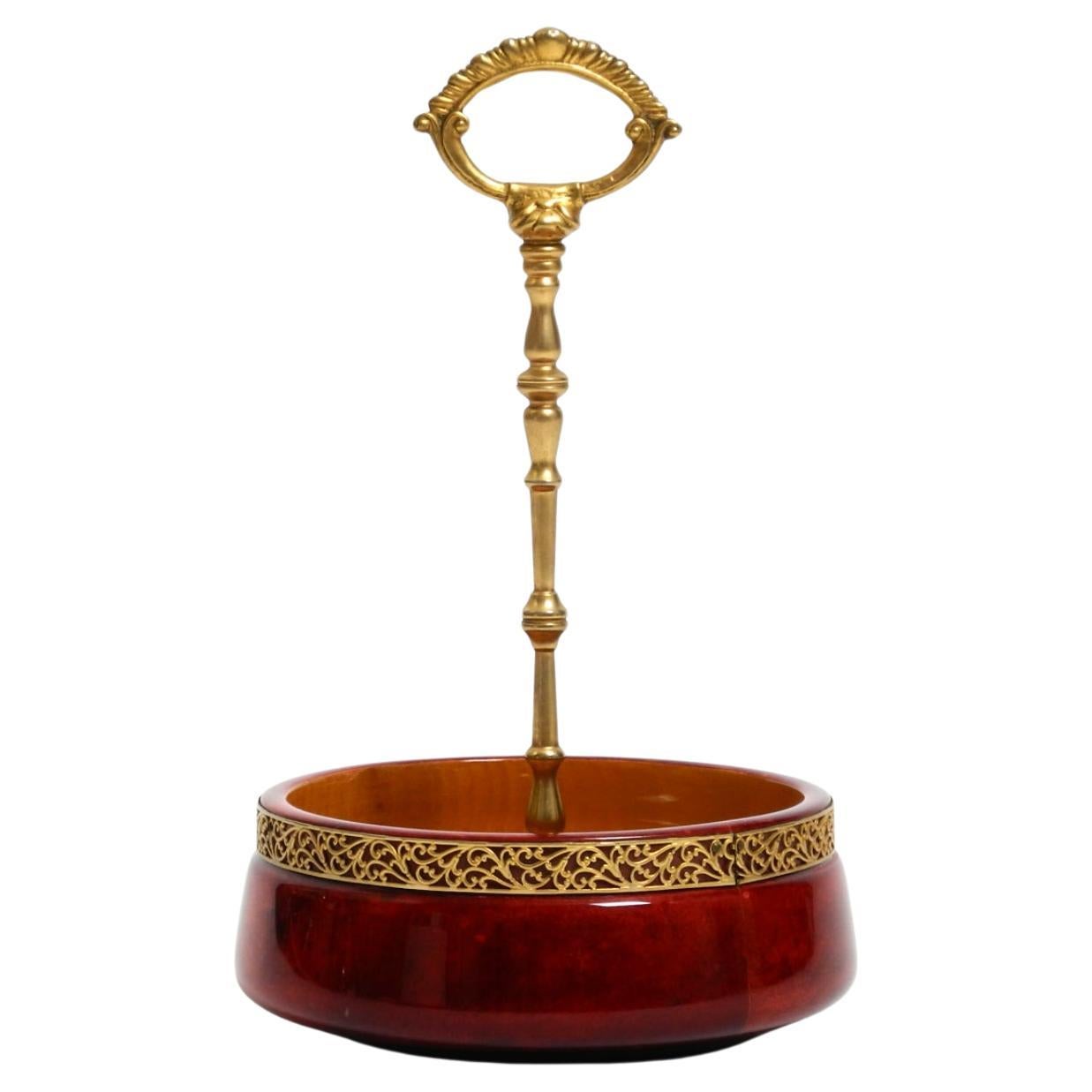
Delightful square pocket tray or ashtray made in burgundy lacquered wood, shell and brass. This incredibly elegant object is attributed to Tommaso Barbi and was made in Italy during the 1970s clearly in the style of a Dior production.
Splendid example of 1970s design, both for the fusion of materials and colors. The straight lines and the contrast between the dark red lacquered wood and the brass make this item incredibly charming and unique.
An amazing piece to enhance a Mid-century style project.
Dimensions (cm)
Depth - 23
Width - 23
Height - 3.5
- Attributed to:Tommaso Barbi (Designer)
- Similar to:Christian Dior (Designer)
- Dimensions:Height: 1.38 in (3.5 cm)Width: 9.06 in (23 cm)Depth: 9.06 in (23 cm)
- Style:Mid-Century Modern (Of the Period)
- Materials and Techniques:
- Place of Origin:
- Period:
- Date of Manufacture:1970s
- Condition:
- Seller Location:Roma, IT
- Reference Number:1stDibs: LU3067339048312
About the Seller
5.0
Platinum Seller
Premium sellers with a 4.7+ rating and 24-hour response times
Established in 1990
1stDibs seller since 2017
1,868 sales on 1stDibs
Typical response time: 1 hour
- ShippingRetrieving quote...Shipping from: Roma, Italy
- Return Policy
More From This Seller
View AllJacques Adnet Midcentury Brown Leather and Glass French Ashtray, 1950s
By Jacques Adnet
Located in Roma, IT
Superb ashtray with a leather body and glass top. This fantastic item is attributed to Jacques Adnet and was produced in France during the 1950s.
The unique element of this magnif...
Category
Mid-20th Century French Mid-Century Modern Decorative Dishes and Vide-Poche
Materials
Leather, Glass
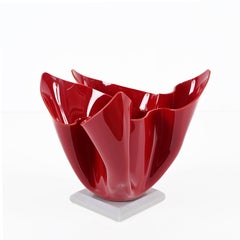
Mid-Century Burgundy Lucite Italian "Napkin" Centerpiece or Serving Bowl, 1980s
By Guzzini
Located in Roma, IT
Wonderful centrepiece in an elegant dark vibrant red Lucite with a white base. This amazing item was produced in Recanati, Italy, during the 1980s and is attributed to Guzzini, the m...
Category
Vintage 1980s Italian Mid-Century Modern Centerpieces
Materials
Acrylic, Lucite, Plexiglass
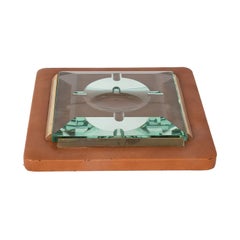
Fontana Arte 1970s, Ashtray in Leather, Brass and Faceted Glass, Italy Art Glass
By Fontana Arte
Located in Roma, IT
Fontana Arte 1970s. Ashtray in leather, brass and faceted glass.
Category
Mid-20th Century Italian Mid-Century Modern Ashtrays
Materials
Glass
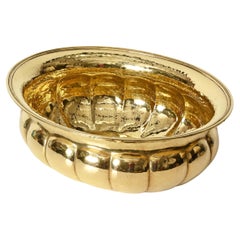
Large Handmade Hammered Brass Centerpiece Bowl by Renzo Cassetti, Italy, 1970s
By Renzo Cassetti
Located in Roma, IT
Stunning Mid-Century hand-hammered brass oval centerpiece produced by Renzo Cassetti in Italy during the 1970s, signed on the bottom.
In amazing condition, this refined centerpiece features a beautiful golden brass surface whose light is wonderfully enhanced by the sinuous lines and hammered texture. Entirely hand-forged, it bears on the underside the stamp “Cassetti – Fatto a Mano...
Category
Vintage 1970s Italian Mid-Century Modern Centerpieces
Materials
Brass
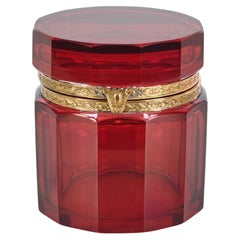
Ruby Red and Gilt Silver Faceted Murano Glass Jewelry Box, Italy 1920s
Located in Roma, IT
Stunning jewelry box in faceted ruby red Murano glass and gilt silver. This incredibly rare piece was produced in Italy in the 1920s.
The box feature an exquisite 12 sided faceted ...
Category
Early 20th Century Italian Mid-Century Modern Jewelry Boxes
Materials
Glass, Art Glass, Murano Glass
Midcentury Chrome Glass and Briar Wood Pocket Emptier in Christian Dior Style
By Christian Dior
Located in Roma, IT
Wonderful midcentury chrome glass and briarwood pocket emptier. This fantastic piece was designed in Christian Dior Style during the 1980s.
The...
Category
Vintage 1980s Italian Mid-Century Modern Decorative Boxes
Materials
Metal, Chrome
You May Also Like
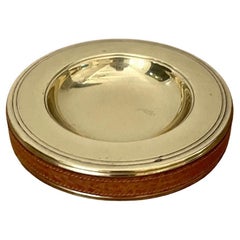
Italian Mid Century Aged Brass
Leather Catchall Ashtray
Located in Los Angeles, CA
Italian aged brass & leather ashtray
Italy, circa 1950s
This handsome piece will be a great addition to any surface
Saddle leather band encompasses the aged brass ashtray
Light surface markings
Patina from age and use
This listing is for a single ashtray...
Category
Vintage 1950s Italian Ashtrays
Materials
Brass
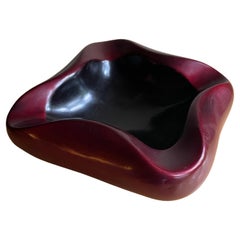
Ceramic Red + Burgundy Cigar Ashtray Dish Bowl Table Decor as Jouve
By Georges Jouve
Located in Hyattsville, MD
A wonderful deep dark red biomorphic table bowl, or Cigar ashtray, at times in low light it looks almost black. No markers markings, so artist is unknown. Normal uses, and showing so...
Category
Vintage 1970s American Mid-Century Modern Decorative Bowls
Materials
Ceramic
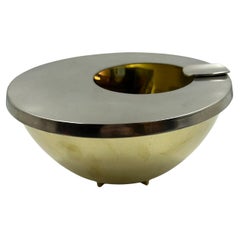
Modernist brass ashtray in two colors from Bauhaus
By Bauhaus
Located in Autonomous City Buenos Aires, CABA
The piece presents a clean hemispherical body set on small feet and a flat circular top with an integrated cigarette rest, emphasizing pure form and practical use hallmarks of Bauhau...
Category
20th Century German Art Deco Ashtrays
Materials
Brass
1960s nut bowl by Aldo Tura made of red goatskin and brass - Made in Italy
By Aldo Tura
Located in München, DE
Beautiful, very rare 1960s nut bowl by Aldo Tura made of red goatskin and brass.
Great mid-century design. Made in Italy.
Wooden bowl covered with red-dyed goatskin and clear varnish...
Category
Vintage 1960s Italian Mid-Century Modern Serving Bowls
Materials
Brass
Art Deco Platter Tray Brass and Brown Brass Handles and Mirror, France, 1930
Located in Auribeau sur Siagne, FR
Art Deco Platter Tray Brass and Brown Brass Handles and Mirror, France, 1930
Category
Vintage 1930s French Art Deco Platters and Serveware
Materials
Brass
Murano and gold, Italian, Attributed to, Seguso Barovier, 1930
By Barovier Seguso
Ferro
Located in Ciudad Autónoma Buenos Aires, C
Murano
We have specialized in the sale of Art Deco and Art Nouveau and Vintage styles since 1982. If you have any questions we are at your disposal.
Pushing the button that reads 'View All From Seller'. And you can see more objects to the style for sale.
The history of "Seguso Vetri D' Arte" is directly linked to the "Vetreria Artistica Barovier" company. When the Barovier workshop was forced to reduce production in 1929, due to a financial crisis in America, the
original group of ten partners had to separate and Antonio Seguso in 1931, assisted by his sons Ernesto and Archimede opened a small workshop of his own. They were joined by Luigi Olimpio Ferro and Napoleone Barovier the following year. Together the craftsmen establish the "Artistica Soffieria e Vetreria Barovier Seguso & Ferro" company as equal partners.
In 1934 Flavio Poli joins the firm as artistic director and within only a brief period of time a distinct style of designs emerged. The close collaboration between Flavio Poli, Archimede Seguso and Alfredo Barbini played an important part in the success of the company. New glass techniques are developed which include never before seen color applications.
The companies innovative designs constantly received awards and during the 1935 World Fair in Brussels and the 1936 Milan Triennale they did attract the interest of a new group of clientele. One of them is the French wholesale company "Veronese" from Paris which would play a defining role in the history of the company.
The demand for an increase in production requires additional investments and the partners felt that there is a need to multiply their investment tenfold.
Luigi Olimpio Ferro subsequently decided to withdraw from the company and his shares are acquired by Flavio Poli, which makes him a full partner. As a result, the company name is changed to Seguso Vetri D’ Arte and it is officially recognized in 1937. A period of great success and prosperity ensues, lasting until the outbreak of World War II.
The post war period is a time of great change in Europe and the rebuilding of the economical structure in Italy requires major investments which result in the introduction of new import duties and taxes.
To safeguard the copyright of the Seguso Vetri D'Arte designs an application for a second entry into the commercial registers of Venice is made by the partners in 1945.
Strict export regulations curb international business relations for many years after the war and the company decides to focus on the domestic market instead. In 1946 a large retail location is opened at the Piazza Diaz in Milan where in addition to the art glass, German porcelain and Italian pottery is offered.
In 1950 Flavio Poli develops a new sommerso glass technique, which consists of an overlaying of transparent layers of glass. The overlapping creates new shades of color which prior to the introduction of this technique had not been seen. Flavio Poli's most iconic design is the "Valve", which resembles an upright, slightly opened clam shell. The design was introduced in 1951. Mario Pinzoni joins the company in 1953 as a personal assistant to Flavio Poli and his responsibilities as a draftsman included the compilation of archival and the existing production drawing s...
Category
Vintage 1930s Italian Art Deco Ashtrays
Materials
Gold