Expressionist Bowls and Baskets
to
2
15
1
1
15
2
8
2
4
2
2
1
1
3
4,716
1,615
1,082
948
398
337
247
147
140
138
116
60
58
46
40
31
25
17
11
6
4
3
2
11
5
12
10
5
5
2
Height
to
Width
to
17
16
16
3
3
2
1
1
Style: Expressionist
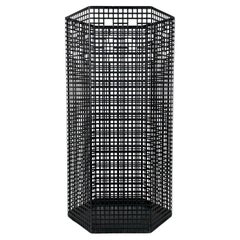
Josef Hoffmann Black Gitterwerk Waste Basket or Umbrella Stand for Bieffeplast
Located in Troy, MI
Josef Hoffmann hexagonal wastebasket or umbrella stand
Originally designed in 1905, edition Bieffeplast circa 1980s
Gitterwerk structure in black perforated steel with original lab...
Category
Late 20th Century Italian Expressionist Bowls and Baskets
Materials
Metal, Steel
Austrian Secessionist Enameled Basket, 1900
Located in Saint-Amans-des-Cots, FR
Secessionist basket, Austria, 1900. Metal & glass. Enameled garlands of roses. Measures: width : 8.1"(20.5cm), depth : 2.4"6cm), height: 3.4" (8.7cm). Just small traces of age on the...
Category
Early 1900s Austrian Antique Expressionist Bowls and Baskets
Materials
Metal

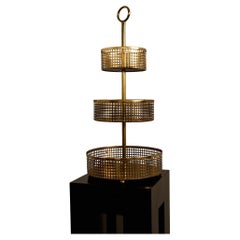
Josef Hoffmann Style Tiered Tray
Located in London, GB
Josef Hoffmann (style) tiered serving stand, 20th/21st century, goldtone pierced metal, unmarked.
Category
1930s Austrian Vintage Expressionist Bowls and Baskets
Materials
Brass
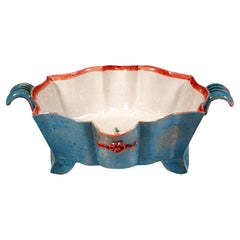
Wiener Werkstätte Art Ceramics, Expressive Style Bowl by Vally Wieselthier, 1921
Located in Vienna, AT
Large bowl on an oval ground plan with flared, wavy and curved walls on four swept-out feet in the shape of leaves, flower and leaf decoration in relief on the bowl base and on the o...
Category
1920s Austrian Vintage Expressionist Bowls and Baskets
Materials
Ceramic
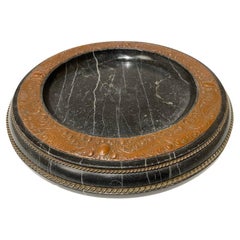
Vienna Secessionist Marble, Copper and Brass Platter Tray
Located in Stamford, CT
Austrian Belgian black marble dish with a wonderful copper repousse band with decoration typical of the Vienna Secession, that evokes the background ...
Category
Early 20th Century Austrian Expressionist Bowls and Baskets
Materials
Belgian Black Marble, Brass, Copper
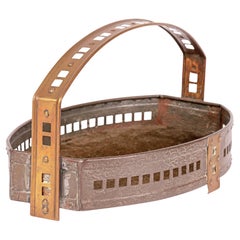
Wiener Werkstatte Secessionist Brass Mounted Metal Basket Josef Hoffmann
Located in Bishop
s Stortford, Hertfordshire
A very stylish Austrian brass mounted metal basket attributed to renowned design Josef Hoffmann (Austro-Hungarian, 1870-1956) and believed to have been made in the early establishmen...
Category
Early 1900s Austrian Antique Expressionist Bowls and Baskets
Materials
Metal, Brass
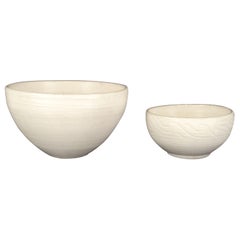
Set of Two Early 1940s White Matte Pottery Bowls by Hamilton Achilles Wolf
Located in Soquel, CA
Set of Two Early 1940s White Matte Pottery Bowls by Hamilton Achilles Wolf
Set of two hand thrown mid-century pottery bowls by California artist Hamilton...
Category
1940s American Vintage Expressionist Bowls and Baskets
Materials
Clay
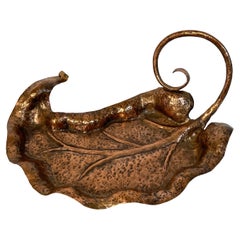
Austrian Secessionist Hand-Forged Copper Leaf Motif Bowl/Vide-Poche
Located in West Palm Beach, FL
Austrian Secessionist Hand-Forged Copper Leaf Motif Bowl/Vide-Poche
Austria, Circa 1920s
Of good size, this hand forged and engraved copper organic mod...
Category
20th Century Austrian Expressionist Bowls and Baskets
Materials
Copper

$956 Sale Price
20% Off
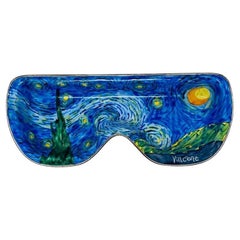
Kelvin Chen Vincent Van Gogh Starry Night Enameled Eyeglass Holder Tray
Located in San Diego, CA
Beautiful trinket dish or eyeglass or sunglasses tray. This piece by Kelvin Chen goes hand in hand with his whimsical designs that juxtapose iconic art leg...
Category
Early 2000s American Expressionist Bowls and Baskets
Materials
Metal, Enamel
$96 Sale Price
20% Off
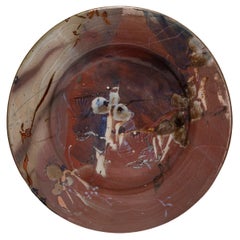
John Glick Plum Street Pottery Ceramic Charger Monumental
By John Glick
Located in Bloomfield Hills, MI
The ceramic charger is an example of the kind of work by which John Glick became so famous. He was seduced by the effects of the reduction kiln, which decreased the levels of oxygen during firing, inducing the flame to pull oxygen out of the clay and glazes changing the colors of the glazes depending on their iron and copper content. In this way he achieved the rich gradients of ochre and umber and variations in stippling and opacity. It is signed by the artist and stamped with Plum Street Pottery on the verso.
John was an American Abstract Expressionist ceramicist born in Detroit, MI. Though open to artistic experimentation, Glick was most influenced by the styles and aesthetics of Asian pottery—an inspiration that shows in his use of decorative patterns and glaze choices. He has said that he is attracted to simplicity, as well as complexity: my work continually reflects my re-examination that these two poles can coexist… or not, in a given series. Glick also took influences from master potters of Japan, notably Shoji Hamada and Kanjrio Kawai, blending their gestural embellishments of simple forms with attitudes of Abstract Expressionism. He was particularly drown to the work of Helen Frankenthaler whose soak-stain style resonated with Glick’s multi-layered glaze surfaces, which juxtaposed veils of atmospheric color with gestural marks and pattern. He spent countless hours developing and making his own tools in order to achieve previously unseen results in his work with clay and glaze.
Glick’s “Plum Tree Pottery” (now a designated historic landmark in Farmington Hills, Michigan) studio opened around 1965 and closed in the summer of 2016. It was a private studio space for John and a number of his students and assistants. He believed his shapes evolved guided by forces apparently outside his control. This was instinctual, intellectual and due to his openness to change, fusing into what he thought was the most positive force behind a potter’s approach: evolution and growth. Some have called it inspiration.
John was not only a major figure in the Detroit creative community, but in the ceramics world at large. According to Shelley Selim in her book on John, “John Glick: A Legacy in Clay” John remains: “one of the most recognizable names in the field of studio pottery – known for lecturing, publishing, and offering workshops widely – and his work has been featured in well over a hundred local, national and international exhibitions since he was a college student in the late 1950s.” Along with this John has mentored over thirty studio apprentices over five and a half decades, received numerous grants and awards for his work, and has been prolific, with an estimated 300,000 ceramic wares throughout the world.
He received his Masters from Cranbrook Academy of Art in Bloomfield Hills, Michigan, working with Maija Grotell, a legendary and influential teacher. Grotell was noted for her deep interest in the human connection to nature’s rhythms and patters. These ideas often grounded her dialog with her students including Glick, affecting, a profund and lasting influence on his future work. This famous Art Academy was designed by architect and faculty member, Eliel Saarinen who collaborated with Charles and Ray Eames on chair and furniture design. Numerous creative artists who are alumni of Cranbrook include: Harry Bertoia, Florence Knoll, Jack Lenor Larsen, Donald Lipski, Duane Hanson, Nick Cave, Hani Rashid, George Nelson, Urban Jupena (Nationally recognized fiber artist), Artis Lane (the first African-American artist to have her sculpture, "Sojourner Truth," commissioned for the Emancipation Hall in the Capital Visitor Center in Washington DC), Cory Puhlman (televised Pastry Chef extraordinaire), Thom O’Connor (Lithographs), Paul Evans (Brutalist-inspired sculpted metal furnishings), Eugene Caples (small bronze images/abstract), Morris Brose (Bronze Sculptures), Herb Babcock (blown glass), Larry Butcher (mixed media) and Lauren Anais Hussey...
Category
1990s American Expressionist Bowls and Baskets
Materials
Ceramic
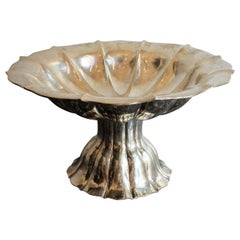
Secessionist Hand Hammered Continental Silver Compote
Located in Hamilton, Ontario
Secessionist hand-hammered continental silver compote.
Category
Early 20th Century Austrian Expressionist Bowls and Baskets
Materials
Silver
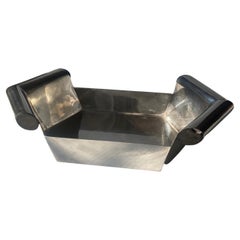
Austrian silver and ebony wood bowl stamped A Bachruch .
Located in Los Angeles, CA
Beautiful bowl in Secessionist style /Deco marked A Bachruch SUCC with Diane's Austrian silver mark . Has ebony wood ends and also marked ( 1) in bottom .
Category
Early 20th Century Austrian Expressionist Bowls and Baskets
Materials
Silver
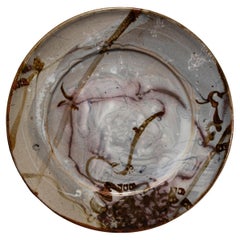
John Glick Plum Street Pottery Ceramic Charger Monumental
By John Glick
Located in Bloomfield Hills, MI
The ceramic charger is an example of the kind of work by which John Glick became so famous. He was seduced by the effects of the reduction kiln, which decreased the levels of oxygen during firing, inducing the flame to pull oxygen out of the clay and glazes changing the colors of the glazes depending on their iron and copper content. In this way he achieved the rich gradients of ochre and umber and variations in stippling and opacity. It is signed by the artist and stamped with Plum Street Pottery #129 on the verso.
John was an American Abstract Expressionist ceramicist born in Detroit, MI. Though open to artistic experimentation, Glick was most influenced by the styles and aesthetics of Asian pottery—an inspiration that shows in his use of decorative patterns and glaze choices. He has said that he is attracted to simplicity, as well as complexity: my work continually reflects my re-examination that these two poles can coexist… or not, in a given series. Glick also took influences from master potters of Japan, notably Shoji Hamada and Kanjrio Kawai, blending their gestural embellishments of simple forms with attitudes of Abstract Expressionism. He was particularly drown to the work of Helen Frankenthaler whose soak-stain style resonated with Glick’s multi-layered glaze surfaces, which juxtaposed veils of atmospheric color with gestural marks and pattern. He spent countless hours developing and making his own tools in order to achieve previously unseen results in his work with clay and glaze.
Glick’s “Plum Tree Pottery” (now a designated historic landmark in Farmington Hills, Michigan) studio opened around 1965 and closed in the summer of 2016. It was a private studio space for John and a number of his students and assistants. He believed his shapes evolved guided by forces apparently outside his control. This was instinctual, intellectual and due to his openness to change, fusing into what he thought was the most positive force behind a potter’s approach: evolution and growth. Some have called it inspiration.
John was not only a major figure in the Detroit creative community, but in the ceramics world at large. According to Shelley Selim in her book on John, “John Glick: A Legacy in Clay” John remains: “one of the most recognizable names in the field of studio pottery – known for lecturing, publishing, and offering workshops widely – and his work has been featured in well over a hundred local, national and international exhibitions since he was a college student in the late 1950s.” Along with this John has mentored over thirty studio apprentices over five and a half decades, received numerous grants and awards for his work, and has been prolific, with an estimated 300,000 ceramic wares throughout the world.
He received his Masters from Cranbrook Academy of Art in Bloomfield Hills, Michigan, working with Maija Grotell, a legendary and influential teacher. Grotell was noted for her deep interest in the human connection to nature’s rhythms and patters. These ideas often grounded her dialog with her students including Glick, affecting, a profund and lasting influence on his future work. This famous Art Academy was designed by architect and faculty member, Eliel Saarinen who collaborated with Charles and Ray Eames on chair and furniture design. Numerous creative artists who are alumni of Cranbrook include: Harry Bertoia, Florence Knoll, Jack Lenor Larsen, Donald Lipski, Duane Hanson, Nick Cave, Hani Rashid, George Nelson, Urban Jupena (Nationally recognized fiber artist), Artis Lane (the first African-American artist to have her sculpture, "Sojourner Truth," commissioned for the Emancipation Hall in the Capital Visitor Center in Washington DC), Cory Puhlman (televised Pastry Chef extraordinaire), Thom O’Connor (Lithographs), Paul Evans (Brutalist-inspired sculpted metal furnishings), Eugene Caples (small bronze images/abstract), Morris Brose (Bronze Sculptures), Herb Babcock (blown glass), Larry Butcher (mixed media) and Lauren Anais Hussey...
Category
1990s American Expressionist Bowls and Baskets
Materials
Ceramic
Contemporary Italian Murano Glass Silver Blue Green Mosaic Centerpiece on Red
Located in New York, NY
Contemporary modern Murano Art glass Mosaic centrepiece: High quality of execution using the sophisticated technique of glass fusion with a see-through mosaic of murrine (each little...
Category
2010s Italian Expressionist Bowls and Baskets
Materials
Silver Leaf
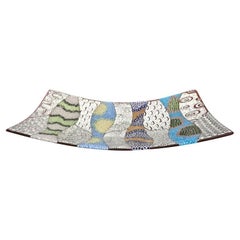
Pair of Wiener Werkstatte Brass Bowls by Dagobert Peche
Located in Atlanta, GA
A pair of brass bowl in stepped concentric form designed by Dagobert Peche (Austrian, 1887-1923) and for Wiener Werkstatte circa 1910s-1920s. In the iconic style of Vienna Secession,...
Category
Early 20th Century Austrian Expressionist Bowls and Baskets
Materials
Brass
John Glick Plum Street Pottery Signed Monumental Ceramic Charger
By John Glick
Located in Bloomfield Hills, MI
The ceramic charger with scalloped edge is an example of the kind of work by which John Glick became so famous. He was seduced by the effects of the reduction kiln, which decreased the levels of oxygen during firing, inducing the flame to pull oxygen out of the clay and glazes changing the colors of the glazes depending on their iron and copper content. In this way he achieved the rich gradients of ochre and umber and variations in stippling and opacity. It is signed on verso.
John was an American Abstract Expressionist ceramicist born in Detroit, MI. Though open to artistic experimentation, Glick was most influenced by the styles and aesthetics of Asian pottery—an inspiration that shows in his use of decorative patterns and glaze choices. He has said that he is attracted to simplicity, as well as complexity: my work continually reflects my re-examination that these two poles can coexist… or not, in a given series. Glick also took influences from master potters of Japan, notably Shoji Hamada and Kanjrio Kawai, blending their gestural embellishments of simple forms with attitudes of Abstract Expressionism. He was particularly drown to the work of Helen Frankenthaler whose soak-stain style resonated with Glick’s multi-layered glaze surfaces, which juxtaposed veils of atmospheric color with gestural marks and pattern. He spent countless hours developing and making his own tools in order to achieve previously unseen results in his work with clay and glaze.
Glick’s “Plum Tree Pottery” (now a designated historic landmark in Farmington Hills, Michigan) studio opened around 1965 and closed in the summer of 2016. It was a private studio space for John and a number of his students and assistants. He believed his shapes evolved guided by forces apparently outside his control. This was instinctual, intellectual and due to his openness to change, fusing into what he thought was the most positive force behind a potter’s approach: evolution and growth. Some have called it inspiration.
John was not only a major figure in the Detroit creative community, but in the ceramics world at large. According to Shelley Selim in her book on John, “John Glick: A Legacy in Clay” John remains: “one of the most recognizable names in the field of studio pottery – known for lecturing, publishing, and offering workshops widely – and his work has been featured in well over a hundred local, national and international exhibitions since he was a college student in the late 1950s.” Along with this John has mentored over thirty studio apprentices over five and a half decades, received numerous grants and awards for his work, and has been prolific, with an estimated 300,000 ceramic wares throughout the world.
He received his Masters from Cranbrook Academy of Art in Bloomfield Hills, Michigan, working with Maija Grotell, a legendary and influential teacher. Grotell was noted for her deep interest in the human connection to nature’s rhythms and patters. These ideas often grounded her dialog with her students including Glick, affecting, a profund and lasting influence on his future work. This famous Art Academy was designed by architect and faculty member, Eliel Saarinen who collaborated with Charles and Ray Eames on chair and furniture design. Numerous creative artists who are alumni of Cranbrook include: Harry Bertoia, Florence Knoll, Jack Lenor Larsen, Donald Lipski, Duane Hanson, Nick Cave, Hani Rashid, George Nelson, Urban Jupena (Nationally recognized fiber artist), Artis Lane (the first African-American artist to have her sculpture, "Sojourner Truth," commissioned for the Emancipation Hall in the Capital Visitor Center in Washington DC), Cory Puhlman (televised Pastry Chef extraordinaire), Thom O’Connor (Lithographs), Paul Evans (Brutalist-inspired sculpted metal furnishings), Eugene Caples (small bronze images/abstract), Morris Brose (Bronze Sculptures), Herb Babcock (blown glass), Larry Butcher (mixed media) and Lauren Anais Hussey...
Category
1990s American Expressionist Bowls and Baskets
Materials
Ceramic
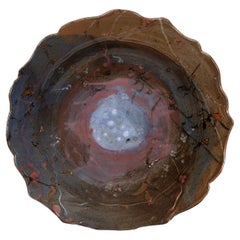
Wiener Werkstaette Art Ceramics Expressive Style Bowl by Vally Wieselthier, 1921
Located in Vienna, AT
Bowl on an oval ground plan with flared, wavy and curved walls on four swept-out feet, fruit and leaf decoration in relief on the bowl base and on the outside, colored glazed in an e...
Category
1920s Austrian Vintage Expressionist Bowls and Baskets
Materials
Ceramic
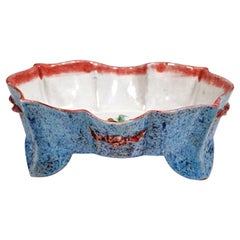
Related Items
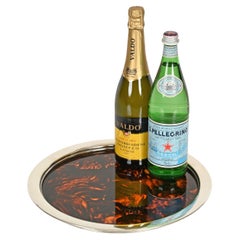
Dior Silver Plated and Tortoiseshell Lucite Serving Serving Tray, Italy 1970
Located in Roma, IT
Marvelous midcentury serving tray in silver plated metal and tortoiseshell effect lucite. This stunning and unique piece was produced in Italy during the 1970s and its design is attr...
Category
Late 20th Century Italian Expressionist Bowls and Baskets
Materials
Silver Plate
$950
H 0.79 in Dm 13.59 in
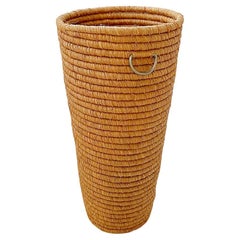
Carl Auböck Midcentury Raffia Umbrella Stand, Wastepaper Basket, 1950s, Austria
Located in Biebergemund, Hessen
Very rare simple and elegant midcentury umbrella stand or wastepaper basket designed by Carl Auböck II and manufactured by Werkstätten Auböck in the 1950s, Austria. It's made of raff...
Category
1950s Austrian Vintage Expressionist Bowls and Baskets
Materials
Brass
$2,494
H 17.72 in Dm 8.86 in
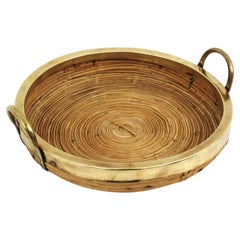
Rattan and Brass Italian Centerpiece Tray Basket, 1970s
Located in Barcelona, ES
Mid-Century Modern brass and rattan round tray basket or centerpiece.
It has a brass trim covering the top and brass handles at both sides.
Handcraft...
Category
20th Century Italian Expressionist Bowls and Baskets
Materials
Brass
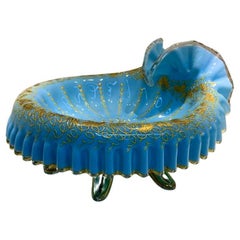
Antique French Turquoise Enamelled Opaline Dish, Plate, Bowl, 19th Century
Located in Rostock, MV
Exceptional turquoise Opaline Glass serving dish with gilding and enamel decoration
stands on a 5-feet base
features turned-out scalloped rim
very ...
Category
Early 20th Century Expressionist Bowls and Baskets
Materials
Opaline Glass
$3,622
H 5.32 in Dm 9.06 in
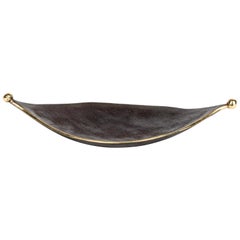
Carl Auböck Model #3431
Knopferl
Brass Tray
Located in Glendale, CA
Carl Auböck model #3431 'Knopferl' brass tray. Designed in the 1950s, this incredibly refined and sculptural Viennese tray is executed in patinated and p...
Category
21st Century and Contemporary Austrian Expressionist Bowls and Baskets
Materials
Brass
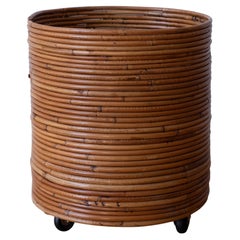
Pencil Reed Waste Basket Italy, 1960s
Located in San Diego, CA
Pencil reed waste basket with wheels. 1960s. Stamped Made in Italy.
Category
Mid-20th Century Italian Expressionist Bowls and Baskets
Materials
Brass
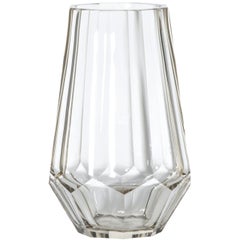
Josef Hoffmann Vase, Wiener Werkstatte, circa 1915 - 1920
Located in New York, NY
Josef Hoffmann cut and ground clear crystal vase made by Ludwig Moser & Söhne, Karlsbad for Wiener Werkstätte circa 1915 - 1920. Stamp signature to underside: [MOSER KARLSBAD WW CZ...
Category
20th Century Austrian Expressionist Bowls and Baskets
Materials
Glass
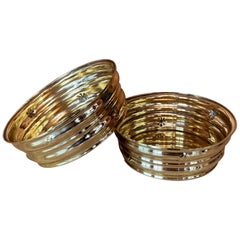
Pair of Wiener Werkstatte Brass Bowls by Dagobert Peche
Located in Atlanta, GA
A pair of brass bowl in stepped concentric form designed by Dagobert Peche (Austrian, 1887-1923) and for Wiener Werkstatte circa 1910s-1920s. In the iconic style of Vienna Secession,...
Category
Early 20th Century Austrian Expressionist Bowls and Baskets
Materials
Brass
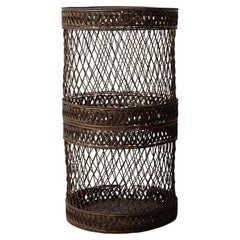
Sarreid Woven Brass Waste Basket
Located in Savannah, GA
A Sarreid woven brass waste basket.
9 ½ inches wide by 17 ½ inches tall
Category
Mid-20th Century American Expressionist Bowls and Baskets
Materials
Brass
Marble Tray Marquina Color with Leather Straps, Large
Located in Alcoy, Alicante
Marble trays with leather straps and brass bottom reinforcement. Leather tips on the legs to avoid scratching surfaces.
Marble is a non-foliated m...
Category
21st Century and Contemporary Spanish Expressionist Bowls and Baskets
Materials
Marble
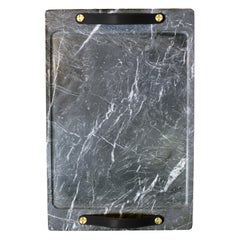
$1,501 Sale Price / item
20% Off
H 2.7 in W 26.2 in D 15.7 in
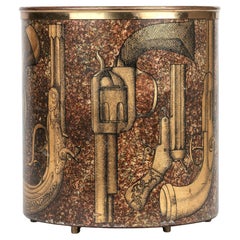
Piero Fornasetti Mid-Century Pistole Pattern Metal Basket or Waste Bin
Located in Bishop
s Stortford, Hertfordshire
A very stylish mid-century Italian metal refuse bin decorated with the ‘Pistole’ design by renowned Italian artist and designer Piero Fornasetti (Italian, 1913-1988) and dating from ...
Category
1950s Italian Vintage Expressionist Bowls and Baskets
Materials
Metal
Marble Tray, Bidasar Tone with Leather Straps, Large
Located in Alcoy, Alicante
Bidasar Marble trays with leather straps and brass bottom reinforcement. Bidasar Marble Tray with an unfinished texture. Rain forest Indian marble, also known as Bidasar, is the fine...
Category
21st Century and Contemporary Spanish Expressionist Bowls and Baskets
Materials
Marble
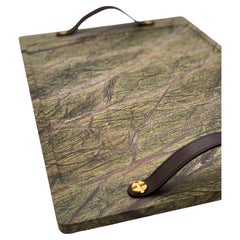
$1,501 Sale Price / item
20% Off
H 1.57 in W 23.62 in D 15.78 in
Previously Available Items
Michel Delacroix " Aux Caves du Temple" Melamine Rectangular Mini Tray 1979
By Michel Delacroix
Located in Moreno Valley, CA
Michel Delacroix " Aux Caves du Temple" Rectangular Small Tray circa 1979.
Vintage Michel Delacroix Paris Life Melamine Mini tray, Made in Italy
Michel Delacroix" Aux Caves du Temple...
Category
20th Century Italian Expressionist Bowls and Baskets
Materials
Plastic
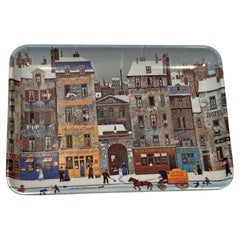
H 0.5 in W 6 in D 4.25 in
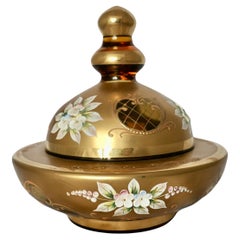
Venetian Gold Enamel Murano Glass BonBonier with Lid A lovely mid century piece
Located in Godshill, Isle of Wight
Venetian Gold Enamel Murano Glass BonBonier with Lid
A lovely mid century piece luxurious Gold on Amber Glass, with tiny flowers in relief
The Dish is 7” in diameter and 7” high an...
Category
1930s Vintage Expressionist Bowls and Baskets
Materials
Murano Glass
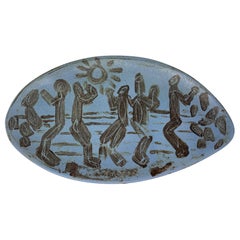
Post Modern Ceramic Figuration Libre Painted Bowl
By Keith Haring
Located in San Diego, CA
Incredibly cool ceramic bowl with a figuration libre design. This piece is unique and one of a kind. The smooth texture in a grayish blue material, this organic form envelops a fes...
Category
1980s American Vintage Expressionist Bowls and Baskets
Materials
Ceramic
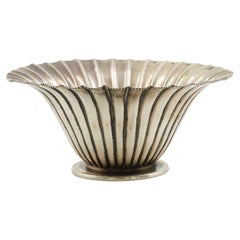
Josef Hoffmann silver bowl
Located in Buenos Aires, Argentina
Josef Hoffmann silver bowl
Solid silver bowl
Origin Austria Crica 1925
Vienna Session Style
Design made for Wiener Werkstätte
It has natural wear due to its age.
It is sealed on the ...
Category
1920s Austrian Vintage Expressionist Bowls and Baskets
Materials
Silver
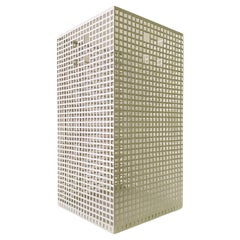
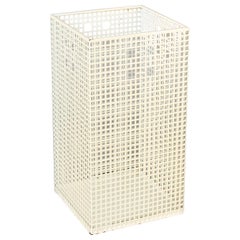
Vienna Secession / Wiener Werkstätte Josef Hoffmann Gridwork Basket, Bieffeplast
Located in Doraville, GA
Josef Hoffmann (1870 -1956) was an Austrian architect and designer. He was one of the founders of the Vienna Secessionist movement and cofounded the Wiener Werkstätte (Vienna Worksho...
Category
1980s German Vintage Expressionist Bowls and Baskets
Materials
Metal
H 15.25 in W 8 in D 8 in
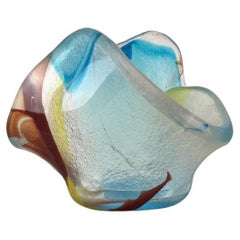
Signed Stephen Skillitzi Art Glass Harlequin Bowl or Vase, 2013
Located in Melbourne, AU
A generous, artfully simple slump glass expressionist bowl by the grandfather of the Australian studio glass movement, Stephen Skillitzi. Signed and dated 2013.
Skillitzi is recognised as the first Australian studio glass artist and has been working with glass since the 1970s. His work is held in the collections of the National Gallery of Victoria, the Sydney Powerhouse Design Museum and numerous private collections.
Deceptively simple in form, this vase references a harlequin glass...
Category
2010s Australian Expressionist Bowls and Baskets
Materials
Art Glass
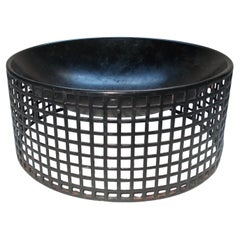
Josef Hoffman Perforated Metal Bowl, Bieffeplast, Italy 1980
Located in Sharon, CT
Important Weiner Werkstatte design by Josef Hoffman. Plastic signature label affixed to bottom. From a series manufactured by Bieffeplast, Italy in 1980.
Category
1980s Italian Vintage Expressionist Bowls and Baskets
Materials
Metal
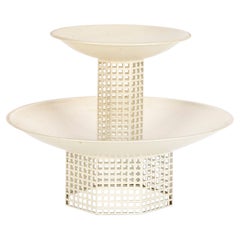
Josef Hoffman Enamel Metal Tiered Fruit Bowl by Bieffeplast, Italy
Located in Bridgeport, CT
A classic Hoffman design of ca. 1905 in pierced sheet metal reissued by Bieffe Plast Italy in the 1960's. A white two tiered server with dishes mounted on an octagonal white enameled...
Category
1970s Italian Vintage Expressionist Bowls and Baskets
Materials
Metal
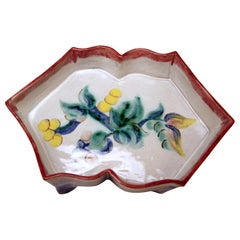
Bowl Expressionist Style Wiener Werkstaette Vally Wieselthier Vienna, circa 1925
Located in Vienna, AT
Bowl made in excellent style of Art Deco, designed by Vally Wieselthier (1895-1945) / made circa 1925.
Red earthenware, multicolored painted and glazed (= whitish crackle glaze). Co...
Category
1920s Austrian Vintage Expressionist Bowls and Baskets
Materials
Ceramic
H 2.36 in W 11.61 in D 7.67 in
Josef Hoffmann Vienna Secession Umbrella Stand Waste Paper Basket
Located in Vienna, AT
Umbrella stand or waste-paper, designed by Josef Hoffmann in 1905, manufactured as a Wiener Werkstatte re-edition in the 1960s by Bieffeplast, Padu...
Category
1960s Italian Vintage Expressionist Bowls and Baskets
Materials
Steel
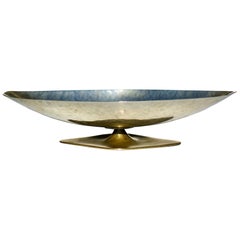
1920s by Karl Hagenauer Wiener Werkstatte Silver Metal Bowl
Located in Brescia, IT
Silver plated and brass base
Perfect condition.
Category
1920s Austrian Vintage Expressionist Bowls and Baskets
Materials
Silver, Brass
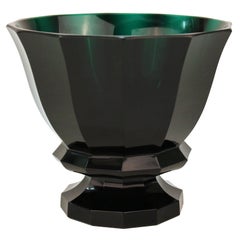
Josef Hoffmann Wiener Werkstatte Glass Vase in Dark Green
Located in Astoria, NY
Austrian Wiener Werkstatte secessionist glass vase in dark green glass designed by Josef Hoffmann, circa 1916. The faceted and footed vase bears the...
Category
1910s Austrian Vintage Expressionist Bowls and Baskets
Materials
Glass
Expressionist bowls and baskets for sale on 1stDibs.
Find a broad range of unique Expressionist bowls and baskets for sale on 1stDibs. Many of these items were first offered in the 21st Century and Contemporary, but contemporary artisans have continued to produce works inspired by this style. If you’re looking to add vintage bowls and baskets created in this style to your space, the works available on 1stDibs include decorative objects, serveware, ceramics, silver and glass and other home furnishings, frequently crafted with metal, ceramic and other materials. If you’re shopping for used Expressionist bowls and baskets made in a specific country, there are Europe, Austria, and North America pieces for sale on 1stDibs. While there are many designers and brands associated with original bowls and baskets, popular names associated with this style include John Glick, Wiener Werkstätte, Josef Hoffmann, and Vally Wieselthier. It’s true that these talented designers have at times inspired knockoffs, but our experienced specialists have partnered with only top vetted sellers to offer authentic pieces that come with a buyer protection guarantee. Prices for bowls and baskets differ depending upon multiple factors, including designer, materials, construction methods, condition and provenance. On 1stDibs, the price for these items starts at $120 and tops out at $4,200 while the average work can sell for $2,500.
Recently Viewed
View AllMore Ways To Browse
Wicker Laundry Basket
Wicker Log Basket
Antique Feather Basket
Antique Trug
Art Deco Candy Dish
Aubock Bin
Champagne Grape Basket
Chinese Water Bucket
Danish Basket Waste
French Willow Basket
Grant Of Arms
Indian Basket Lid
Olla Basket
Pine Needle Basket
Wicker Gathering Basket
Wicker Wine Basket
Wire Fruit Basket
Wood Harvest Basket