Items Similar to Beautifully Worn Late Edo Period Wabi Sabi "Safe"
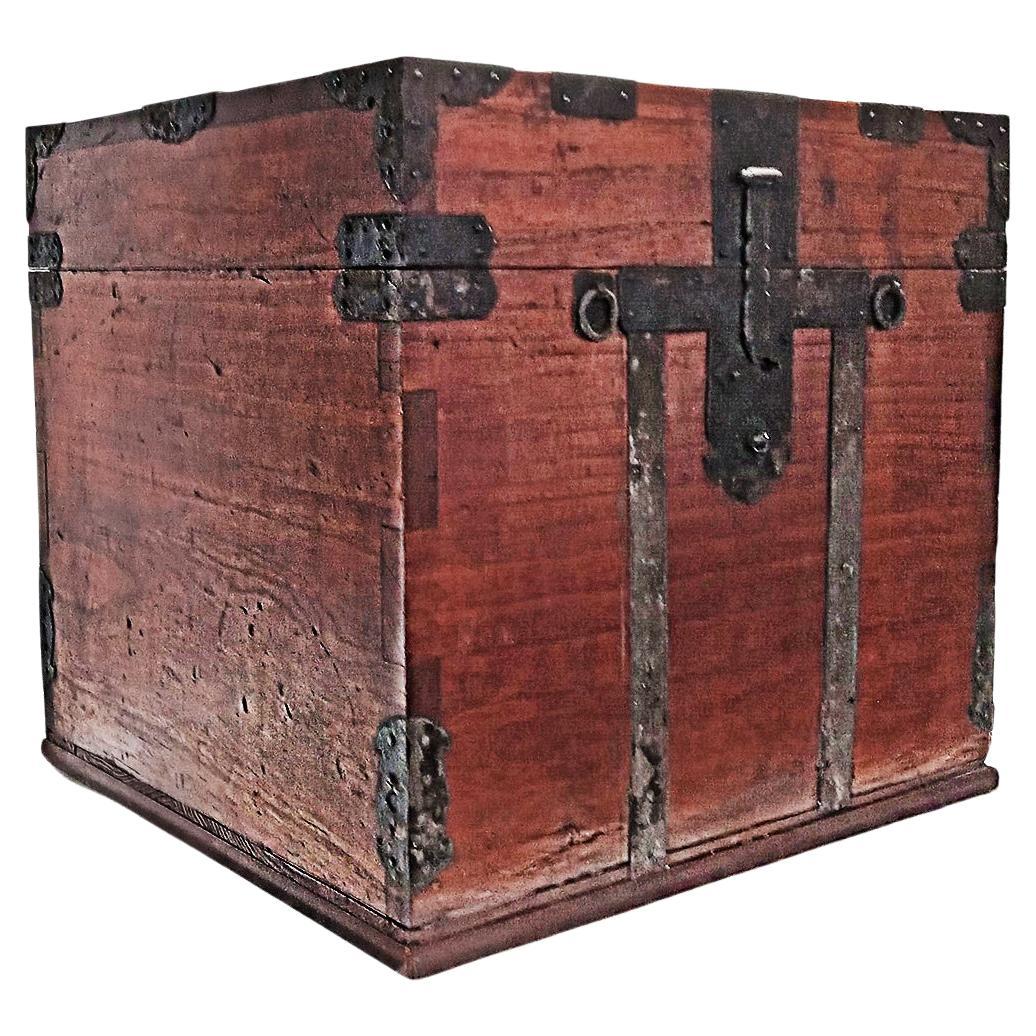
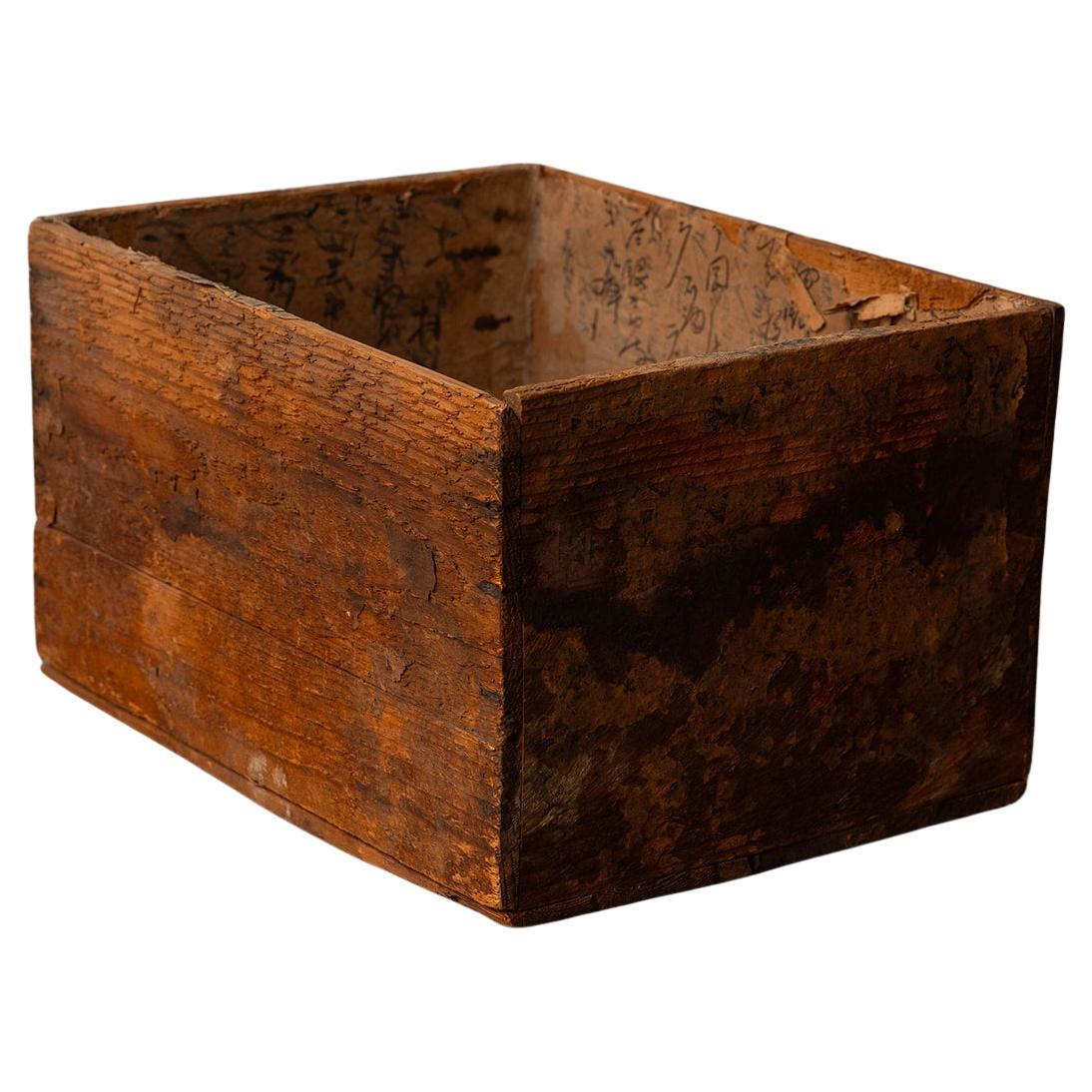
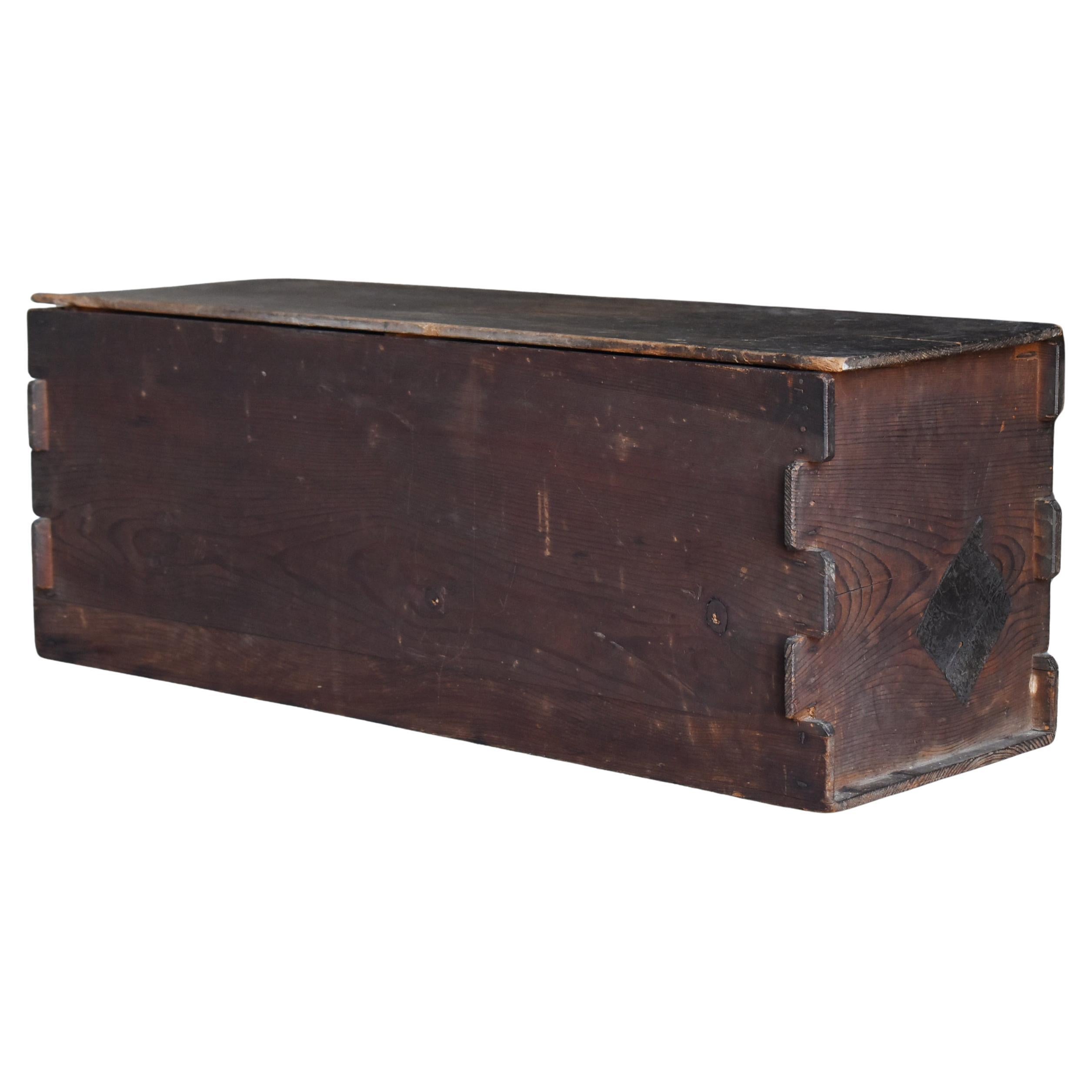
Want more images or videos?
Request additional images or videos from the seller
1 of 6
Beautifully Worn Late Edo Period Wabi Sabi "Safe"
$939.53
£675
€794.43
CA$1,289.45
A$1,362.42
CHF 732.82
MX$16,312.81
NOK 9,181.43
SEK 8,408.86
DKK 5,932.17
About the Item
A Beautifully Worn Late Edo Period Wabi Sabi "Safe"/Storage box.
Originally used to store money
valuables.
Heavily patinated cedar
chestnut.
Perfect decorative wabi sabi object.
- Dimensions:Height: 9.85 in (25 cm)Width: 9.26 in (23.5 cm)Depth: 15.75 in (40 cm)
- Materials and Techniques:
- Period:
- Date of Manufacture:C.1850
- Condition:Refinished. Wear consistent with age and use.
- Seller Location:London, GB
- Reference Number:1stDibs: LU6535234059582
About the Seller
No Reviews Yet
Vetted Professional Seller
Every seller passes strict standards for authenticity and reliability
1stDibs seller since 2022
61 sales on 1stDibs
Typical response time: 3 hours
- ShippingRetrieving quote...Shipping from: London, United Kingdom
- Return Policy
More From This Seller
View AllLarge Edo Period Japanese Tansu/Sideboard Wabi Sabi
Located in London, GB
A large heavily patinated Edo period Tansu/sideboard.
Constructed in cedar & elm with two sliding doors & three internal drawers.
Original forged ir...
Category
Antique Mid-19th Century Japanese Sideboards
Materials
Cedar
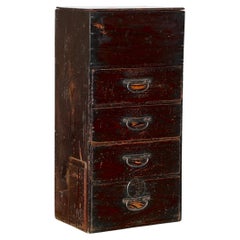
Unusual Tall Meiji Period Japanese Tansu Wabi Sabi
Located in London, GB
A tall Japanese tansu/chest of drawers of highly unusual proportions .
Four drawers with storage well to top.
Heavily patinated cedar with many age old repairs.
Category
Antique 19th Century Spanish Commodes and Chests of Drawers
Materials
Cedar
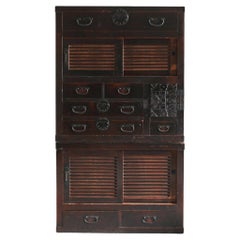
Large Wabi Sabi Two Section Late Edo Period Japanese Tansu Cabinet
Located in London, GB
A tall two section Japanese tansu from the mid 19th century.
Nicely patinated cedar with multiple drawers, sliding doors & iron hardware.
Strong utilitarian design.
Category
Antique Mid-19th Century Japanese Cabinets
Materials
Iron
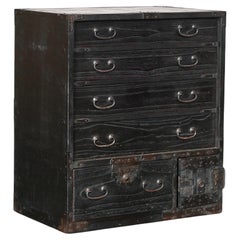
Primitive Charred Edo Period Tansu/Chest Of Drawers Wabi Sabi
Located in London, GB
A 5 drawer charred cedar & elm Japanese tansu from the early 19th C.
Both a beautiful & very practical piece of furniture.
Heavy patinated through years of use with original iron h...
Category
Antique Early 19th Century Japanese Commodes and Chests of Drawers
Materials
Cedar
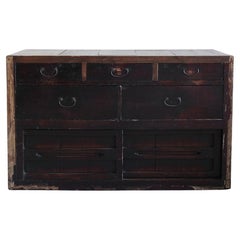
A Large Early Meiji Period Wabi Sabi Japanese Tansu/Sideboard
Located in London, GB
A large early Meiji period Japanese tansu/sideboard
A really nice mid/late 19th C. Japanese sideboard/tansu.
It was likely to be used as a coun...
Category
Antique 19th Century Japanese Meiji Sideboards
Materials
Cedar
Tall Early Meiji Period Japanese Tansu Cabinet Wabi Sabi
Located in London, GB
A tall heavily patinated cedar tansu with multiple drawers, sliding doors & original iron hardware.
Strong utilitarian design.
Category
Antique 19th Century Japanese Cabinets
Materials
Cedar
You May Also Like
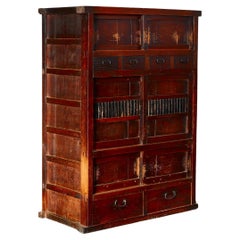
Japanese Antique Cedar Storage Cabinet, 1900s–1930s - Japandi Wabi-Sabi
Located in Chiba, Chiba
A Japanese antique storage cabinet crafted from solid cedar, dating from the 1900s–1930s.
Though compact in scale, the piece has a quiet yet unmistakable presence, shaped by the deep...
Category
Early 20th Century Japanese Furniture
Materials
Wood
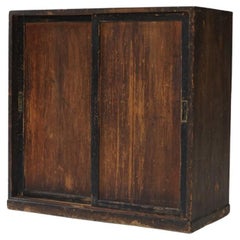
Antique Japanese todana tansu - 19th
Located in Linkebeek, BE
Antique Japanese todana tansu - 19th
Antique - Oriental Decoration
Measures : 97cmx44cm H:53cm
Materials : Wood & Ironwork
Wear Consistent with age and use
Category
Antique 19th Century Japanese Commodes and Chests of Drawers
Materials
Iron
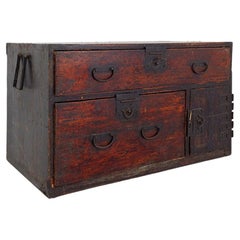
Japanese Wooden Storage Box, Meiji Period
Located in New York, NY
A Japanese Elm wooden storage box, circa 1890. Meiji Period.
Outer decorations in wrought iron. Loose lid. Finished in traditional persimmon-color stain.
Category
Antique 1880s Furniture
Materials
Iron
$1,104 Sale Price
20% Off
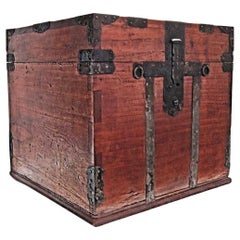
Antique Japanese Scripture Box
Located in New York, US
Antique Japanese Box scripture
1860s-1920s
Category
Antique Late 19th Century Japanese Decorative Boxes
Materials
Wood
Japanese Antique Wooden Box 1860s-1920s / Sofa Table Storage Box Wabisabi
Located in Chōsei District Nagara, JP
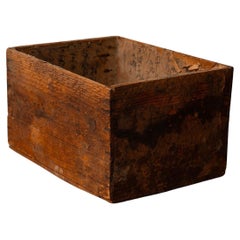
This is an old Japanese wooden box, crafted in the Meiji to Taishō period (1860s–1920s). Despite its long history, it retains a quiet and compelling presence. The box is made from traditional sugi (Japanese cedar), whose soft grain and gentle texture reflect the depth and warmth of its age.
The form is strikingly minimal—its design is completely free of unnecessary elements. Although it is simply a box, the composition of clean lines and planes gives it a subtle tension and understated beauty. It carries the precision and warmth of handcraft, something that cannot be replicated by industrial production.
One particularly captivating feature is the visible trace of careful repairs made over many years. A knot hole on the side was thoughtfully patched with black washi paper, a practical repair that, over time, has become an expressive and almost artistic detail. In this small gesture, one can sense the quiet presence of Japanese aesthetic sensibilities.
The top and sides bear gentle wear and abrasion accumulated over decades. Rather than damage, these marks serve as a texture created by time, giving the piece its unique depth and character. The box possesses a humble yet powerful presence—a true embodiment of wabi-sabi, the beauty of imperfection and age.
The interior remains sturdy, offering ample storage capacity. It has been thoroughly cleaned, ensuring it can be used safely and comfortably. Its low, elongated proportions make it highly versatile: ideal as a low coffee table, a book table, a side table, or a display platform. Simply placing it in a modern interior instantly adds a sense of calm and visual depth.
A simple yet richly expressive antique wooden box...
Category
Early 20th Century Japanese Taisho Decorative Boxes
Materials
Cedar
Japanese Antique Cabinets, Wabi Sabi, Japandi
Located in Katori-Shi, 12
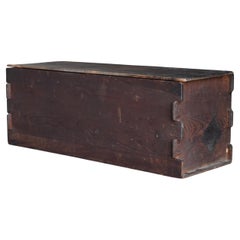
This is a beautiful cabinet that evokes the atmosphere of the Taisho period.
It is made of lauan and cedar.
It is finished with persimmon tannins and soot, which bring out the text...
Category
Early 20th Century Japanese Taisho Antiquities
Materials
Wood