1 of 6
A Japanese Gold Lacquer Friends of Winter Box with Interior Tray
$14,500List Price
About the Item
- Dimensions:Height: 8 in (20.32 cm)Width: 12 in (30.48 cm)Depth: 10.5 in (26.67 cm)
- Style:Meiji (Of the Period)
- Materials and Techniques:
- Place of Origin:
- Period:
- Date of Manufacture:Circa 1900
- Condition:In great overall condition. Some professional restorations to the lacquer tray. Very high quality, beautiful piece to add to your collection.
- Seller Location:New York, NY
- Reference Number:Seller: 90411stDibs: LU85565257103
Authenticity Guarantee
In the unlikely event there’s an issue with an item’s authenticity, contact us within 1 year for a full refund. DetailsMoney-Back Guarantee
If your item is not as described, is damaged in transit, or does not arrive, contact us within 7 days for a full refund. Details24-Hour Cancellation
You have a 24-hour grace period in which to reconsider your purchase, with no questions asked.Vetted Professional Sellers
Our world-class sellers must adhere to strict standards for service and quality, maintaining the integrity of our listings.Price-Match Guarantee
If you find that a seller listed the same item for a lower price elsewhere, we’ll match it.Trusted Global Delivery
Our best-in-class carrier network provides specialized shipping options worldwide, including custom delivery.You May Also Like
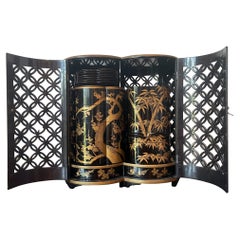
Japanese Maki-e Lacquer Portable Sagejubako Theme of Three Winter Friends
Located in Atlanta, GA
Sagejubako is a portable lunch or picnic set that became popular in the early Edo period when an additional meal was added between breakfast and dinner. It normally consists of a han...
Category
Antique 19th Century Japanese Japonisme Lacquer
Materials
Lacquer
$8,500
H 14.5 in W 14 in D 8 in
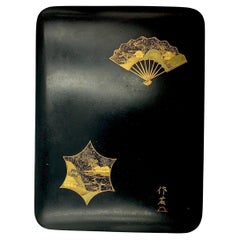
Japanese Meiji Period Antique Lacquer Box with Gold Maki-e Decoration
Located in New York, NY
A fine antique Japanese Meji Period lacquer box decorated with a fan and a stylized star shaped window in the maki-e technique. The fan at the top right corner, fully opened depictin...
Category
Antique 19th Century Japanese Meiji Lacquer
Materials
Lacquer
$1,700
H 4.5 in W 3.25 in D 1.88 in
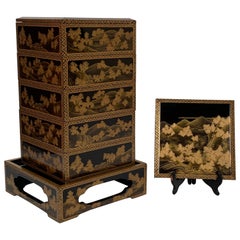
Japanese Maki-e Lacquer Stacking Box, Jubako, Meiji Period, Japan
Located in Austin, TX
A fine and impressive Japanese gold maki-e decorated black lacquer five-tier jubako with presentation tray, two lids, and the original tomobako storage box, Meiji period, late 19th c...
Category
Antique Late 19th Century Japanese Meiji Lacquer
Materials
Lacquer
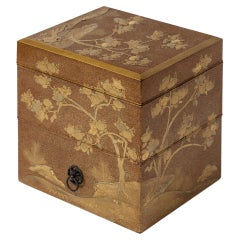
Japanese Lacquered Tebako
Box
Located in PARIS, FR
Tebako box with three compartments in golden and nashi-ji lacquer, decorated with golden, red, and kirigane lacquer, golden persimmon tree leaves, among rocks. The compartments are of increasing size from the top. The decoration is in continuity.
Persimmon has been cultivated in southern China for more than 2500 years and is believed to have been introduced to Japan in the 8th century. The veneer is a tree with very hard wood, similar to ebony. According to a legend, one specimen survived the atomic bombing of Nagasaki on August 9, 1945, close to the epicenter. It is therefore in Japan a symbol of strength and longevity. It is also the national fruit of the country. It is eaten as a traditional dish during New Year's Day celebrations.
Tebako literally means "portable box...
Category
Antique 1860s Japanese Lacquer
Materials
Lacquer
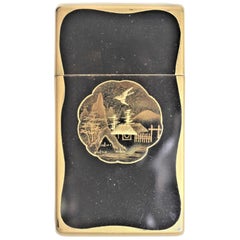
Antique Japanese Lacquered Card Box with Ornate Hand Painted Gilt Decoration
Located in Hamilton, Ontario
This antique card box is unsigned or initialed, so the specific artist is unknown, but is believed to have been made in Japan in circa 1900 in the per...
Category
Early 20th Century Japanese Meiji Lacquer
Materials
Wood
$2,450
H 3.5 in W 2.13 in D 0.5 in
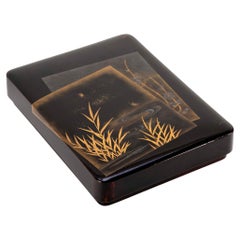
Black and Gold Lacquer Japanese Suzuribako Box
Located in Stamford, CT
19th century Japanese black and gold lacquer Suzuribako box with firefly and plum blossom design.
Category
Antique Late 19th Century Japanese Decorative Boxes
Materials
Lacquer
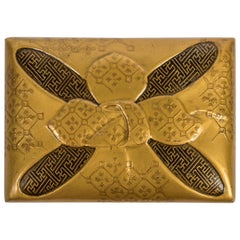
Japanese Lacquered Furoshiki Kobako
Box
Located in PARIS, FR
Rectangular and flat lacquer Kobako (small box) representing a furoshiki knot seen from above. Fundame background, furoshiki in takamaki-e with floral pattern, inside the folds of the fabric with black and gold sayagata pattern with togidashi maki-e technique. The saya (or sayagata) pattern is composed of Chinese swastikas...
Category
Antique Late 19th Century Japanese Lacquer
Materials
Lacquer
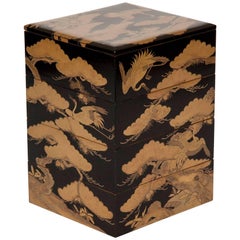
Japanese Black Lacquer Jubako Box with Stork Motif
Located in Stamford, CT
A four-tier Japanese Meiji period black lacquer Jubako box with stork and fir tree decoration. Box in four sections with lid.
Category
Antique Late 19th Century Japanese Edo Lacquer
Materials
Lacquer
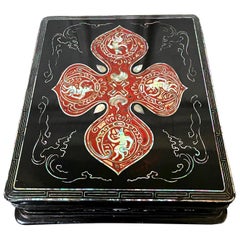
Unusual Japanese Lacquer Inkstone Box with MOP Inlays
Located in Atlanta, GA
A Japanese black lacquer box with mother of pearl inlays circa early 20th century, end of Meiji period. It was likely to be used to store inkstone or other scholarly items. The piece displays several interesting characteristics that appear puzzling initially. First, the form is not typical Japanese, but more Chinese and Korean, with its scalloped base. Second, the decoration of MOP inlays also suggests a Korean and Chinese affiliation, especially with the linear borders and the scrolling cloud patters on the sides of the box. These two observations suggest that the box may be from Ryukyu Island instead of Japanese mainland. Third, strikingly in the center of the cover, a bold quarterly floral pattern outlined with MOP was filled with a striking mottled red lacquer using tsugaru nuri...
Category
Early 20th Century Japanese Japonisme Lacquer
Materials
Wood, Lacquer
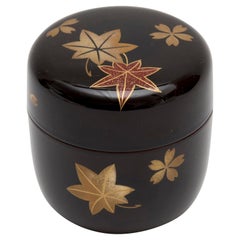
Japanese Lacquered Natsume
Tea Box
Located in PARIS, FR
Natsume in dark red lacquer, decorated with autumn leaves and cherry blossoms in hiramaki-e and nashiji. Interior in black lacquer.
Maple leaves (Momiji) are celebrated in literatur...
Category
Mid-20th Century Japanese Lacquer
Materials
Lacquer
Still Thinking About These?
All Recently ViewedMore Ways To Browse
Meiji Japan Tray
Gold Lacquer Tray
Cherub Box
Chinese Box Ceramic
Cloisonne Trinket Box
Decoupage Box
Dowry Box
Italian Music Boxes
Japanese Trinket Box
Limoges France Peint Main
Mary Box
Meissen Box
Silver Keepsake Box
Small English Boxes
Vintage Alpaca Mexico
Vintage Paper Mache Boxes
Wood Crate Box
24k Gold Boxes