Want more images or videos?
Request additional images or videos from the seller
1 of 13
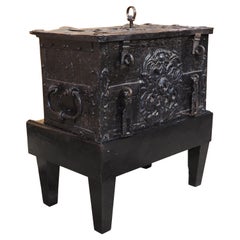
Small Antique Walnut Wood Table Trunk from Northern Italy, circa 1700
$1,860List Price
About the Item
- Dimensions:Height: 11.38 in (28.91 cm)Width: 25.75 in (65.41 cm)Depth: 14 in (35.56 cm)
- Style:Renaissance (In the Style Of)
- Place of Origin:
- Period:
- Date of Manufacture:circa 1700
- Condition:Wear consistent with age and use. Very good condition with minuscule nicks and abrasions. No Key. One side motif has been re-attached.
- Seller Location:Dallas, TX
- Reference Number:Seller: 318-211stDibs: LU906311621013
About the Seller
5.0
Vetted Professional Seller
Every seller passes strict standards for authenticity and reliability
Established in 1983
1stDibs seller since 2011
884 sales on 1stDibs
Typical response time: 1 hour
Authenticity Guarantee
In the unlikely event there’s an issue with an item’s authenticity, contact us within 1 year for a full refund. DetailsMoney-Back Guarantee
If your item is not as described, is damaged in transit, or does not arrive, contact us within 7 days for a full refund. Details24-Hour Cancellation
You have a 24-hour grace period in which to reconsider your purchase, with no questions asked.Vetted Professional Sellers
Our world-class sellers must adhere to strict standards for service and quality, maintaining the integrity of our listings.Price-Match Guarantee
If you find that a seller listed the same item for a lower price elsewhere, we’ll match it.Trusted Global Delivery
Our best-in-class carrier network provides specialized shipping options worldwide, including custom delivery.You May Also Like
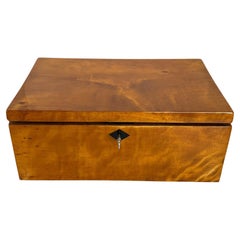
Late Biedermeier Box, Birch Solid Wood, Northern Germany, circa 1840
Located in Regensburg, DE
Beautiful, unadorned late Biedermeier casket box made of solid birch wood from northern Germany, circa 1840.
* Ebonized diamond as key crest.
* Original brass lock and hinges.
* Insi...
Category
Antique 1840s German Biedermeier Decorative Boxes
Materials
Brass
$804
H 37.01 in W 10.83 in D 6.89 in
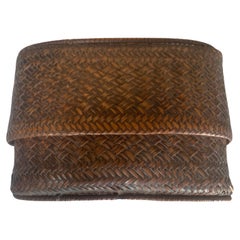
Antique Spice Basket from Akha Tribe of Northern Thailand c. 1920
Located in Jimbaran, Bali
A wonderful example of an Akha Tribe spice basket, with a stunning woven pattern on all sides and crafted from a mix of rattan. This basket was once used to store precious spices and...
Category
Vintage 1920s Thai Other Decorative Baskets
Materials
Rattan
$160 Sale Price
20% Off
H 3.94 in W 6.7 in D 2.37 in
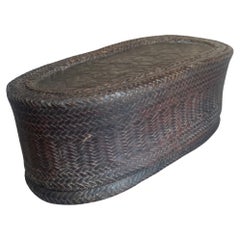
Antique Spice Basket from Akha Tribe of Northern Thailand c. 1920
Located in Jimbaran, Bali
A wonderful example of an Akha Tribe spice basket, with a stunning woven pattern on all sides and crafted from a mix of rattan. This basket was once used to store precious spices and...
Category
Vintage 1920s Thai Other Decorative Baskets
Materials
Rattan
$196 Sale Price
20% Off
H 3.75 in W 9.26 in D 4.73 in
Antique Spice Basket from Akha Tribe of Northern Thailand c. 1920
Located in Jimbaran, Bali
A wonderful example of an Akha Tribe spice basket, with a stunning woven pattern on all sides and crafted from a mix of rattan. This basket was once used to store precious spices and...
Category
Vintage 1920s Thai Other Decorative Baskets
Materials
Rattan
$160 Sale Price
20% Off
H 2.37 in W 6.7 in D 3.15 in
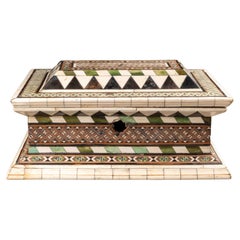
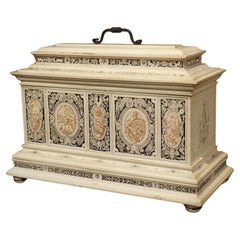
Embriachi workshop marquetry casket - Northern Italy, 15th century
Located in Bruxelles, BE
Embriachi workshop marquetry casket
Northern Italy, 15th century
Alla certosina inlays (bone, stained bone, pewter and wood)
H 28.2 x W 18 x D 14 cm
This beautiful casket of rectangular form is richly decorated with the characteristic geometric patterns of the Embriachi style.
The intricate geometric patterns are fashioned by juxtaposing lighter and darker pieces of wood, (colored) bone, horn and pewter. The lid and base are framed by a broad band of horn. When ivory became scarce in Europe due to disrupted trade routes, bone was substituted.
The attention to Symmetry and balance created an harmonious visual effect
Enhancing the overall aesthetic appeal of the casket.
The application of geometrical motifs is in Italy known as marquetry ‘alla Certosina’, named after the Certosina Church in Pavia with its famous altarpiece decorated in this way. This is ‘intarsia technique’, a term derived from the Arabic 'tarsi', which means ‘incrustation' recalling ancient mosaics made from various materials.
These geometric elements not only enhance the aesthetic appeal of the caskets but also demonstrate the versatility and skill of the artisans in creating multifaceted works of art.
‘Alla Certosina’ became famous through the Northern Italian Embriachi family who achieved a particularly high standard in working in this technique. Venice in particular was known for the production of these luxurious boxes. The caskets, hexagonal or rectangular, surmounted by a lid decorated in several registers constitute the secular, albeit equally renowned component of the workshop’s production, in addition to mirror frames and various everyday objects.
The method of fabrication of those objects was based on two concepts that underlay pre-industrial production: standardization and modularity, thanks to a distribution of skills according to the different phases of fabrication.
even the realization of the marquetry motifs (in the form of ingots from which portions of the desired size were cut) were therefore entrusted to various specialized craftsmen, as were the assembly phase.
Today better known thanks to the extensive research work recently carried out by Michele Tomasi, this workshop owes its name to its founder and owner, the Florentine Baldassare Ubriachi (or degli Embriachi), a merchant and banker established in the Tuscan capital before he settled in Venice in 1395. Together with sculptor Giovanni di Jacopo, who directed the workshop, from the last years of the fourteenth century, Baldassare oversaw a production that was truly original, and still easily recognizable today, comprising monumental altarpieces and various objects, primarily triptychs and caskets.
The precise location of the workshop is unknown, except that it originated in Florence and in ca. 1431 there was apparently a workshop in Venice, in the area of S Luca. They employed local workers specializing in 'certosina' (inlay of stained woods, bone and horn), and the workshop produced items carved in bone (usually horse or ox) with wood and bone marquetry.
The geometric decoration of Embriachi caskets reflects the artistic complexity and attention to detail that characterized their work.
this inlaid casket is a testament to the skill and artistry of the Embriachi family and serves as a stunning example of the decorative arts of the late Middle Ages.
Related Literature :
E. Berger, Prunk-Kassetten: Europäischen Meisterwerke aus acht Jahrhunderten / Ornamental Caskets...
Category
Antique 15th Century and Earlier Italian Renaissance Decorative Boxes
Materials
Pewter
$20,118 Sale Price
22% Off
Free Shipping
H 11.11 in W 7.09 in D 5.91 in
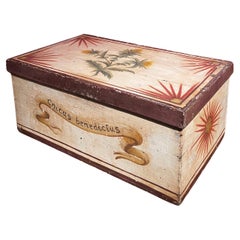
Antique Renaissance Style Italian Wood Lacquered Apothecary Box
Located in Firenze, IT
This lovely antique lacquered apothecary box was crafted in Italy in late 19th century in the style of medicinal herbs casket in use in pharmacies during the Middle Age and Renaissan...
Category
Antique 19th Century Italian Renaissance Decorative Boxes
Materials
Wood
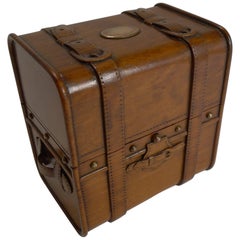
Intricate Carved French Fruit Wood Trunk, Perfume Box, circa 1880
Located in Bath, GB
A fabulous example of a French fruitwood box carved beautifully carved into the form of a trunk.
Look closely at the amazing detail, the side handles, the leather stitching, the l...
Category
Antique Late 19th Century French Late Victorian Decorative Boxes
Materials
Fruitwood
$2,129 Sale Price
20% Off
Free Shipping
H 3.75 in W 4 in D 2.63 in
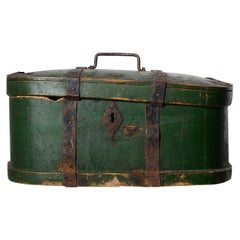
Antique Swedish Forskrin, Folk Art Travel Box from the 1700s, Original Condition
Located in Kramfors, SE
Antique folk art box, a so called Forskrin which was used when travelling for storing documents and valuables around the late 1700s. Made in nor...
Category
Antique Late 18th Century Swedish Folk Art Decorative Boxes
Materials
Wrought Iron
$932
H 9.85 in W 21.26 in D 15.36 in
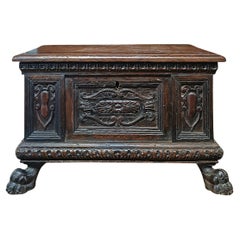
LATE 16th CENTURY SMALL WALNUT BOX
Located in Firenze, FI
Elegant solid walnut small box, entirely hand-carved. The rectangular chest features an opening top, ideal for storing objects. The front, back, and sides are decorated with geometri...
Category
Antique 16th Century Italian Renaissance Decorative Boxes
Materials
Nutwood
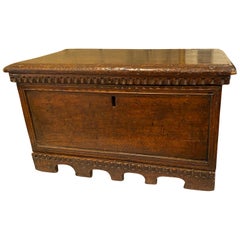
Italian Renaissance Walnut Box
Located in Essex, MA
A dwarf cassone with hinged top with chip carved edge over a paneled case with central keyhole, arcaded carved base.
Category
Antique Late 17th Century Italian Renaissance Decorative Boxes
Materials
Walnut
More From This Seller
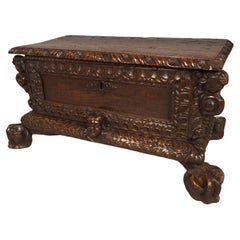
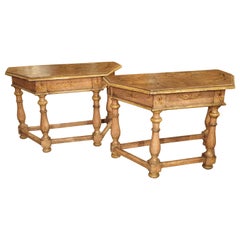
View AllCirca 1700 Carved Chestnut Table Cassone from Northern Italy
Located in Dallas, TX
More information coming soon…
This table cassone from Northern Italy has a deep brown patina that accentuates the amazing hand-carved chestnut elements. Dating to circa 1700, the t...
Category
Antique Early 18th Century Italian Blanket Chests
Materials
Wood, Chestnut
Pair of Antique Painted Console Tables from Northern Italy, circa 1800
Located in Dallas, TX
These beautiful antique Italian console tables are painted in an old rose and ochre/gold, and when pushed together, form a lovely octagonal center table. The consoles are relatively ...
Category
Antique Early 19th Century Italian Console Tables
Materials
Wood
Antique Painted Table Coffer, Dated 1915
Located in Dallas, TX
A rather unique painted chest from Europe, this table coffer was commissioned in 1915. The right side (when viewing from the front) is dated, with the numbers flanking a springing ra...
Category
Early 20th Century European Renaissance Decorative Boxes
Materials
Wood, Paint
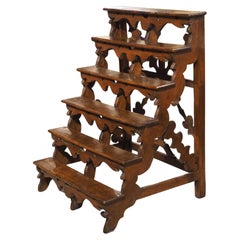
18th Century Walnut Library Stairs from Northern Italy
Located in Dallas, TX
More information coming soon…
Hand-carved in walnut during the 1700s, these library stairs from Northern Italy have six highly fretted steps. The ornate tracery continues on the si...
Category
Antique 18th Century Italian Stairs
Materials
Wood, Walnut
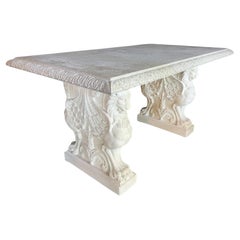
Richly Carved Roman Style Gray and White Limestone Table from Northern Italy
Located in Dallas, TX
A fantastic gray and white limestone table, the richly carved legs are after table supports found during excavations of Pompeii in the mid- to late-1800s (from Casa di Cornelio Rufo)...
Category
21st Century and Contemporary Italian Renaissance Tables
Materials
Stone, Limestone
Circa 1650 Sheet Iron Money Chest from Southern Germany with Wooden Stand
Located in Dallas, TX
In 15th and 16th century Europe, the works of blacksmiths from southern Germany were known far and wide. Demand for products by these skilled metal workers spread as far as the Scandinavian countries. Perhaps one of the most intriguing items that was produced by these workshops was the iron money...
Category
Antique Mid-17th Century German Baroque Trunks and Luggage
Materials
Iron