Items Similar to Petite Indonesian Brass Betel Box, c. 1900
Want more images or videos?
Request additional images or videos from the seller
1 of 6
Petite Indonesian Brass Betel Box, c. 1900
$480
£358.79
€413.99
CA$671.95
A$709.98
CHF 381.88
MX$8,500.83
NOK 4,784.57
SEK 4,381.97
DKK 3,091.33
About the Item
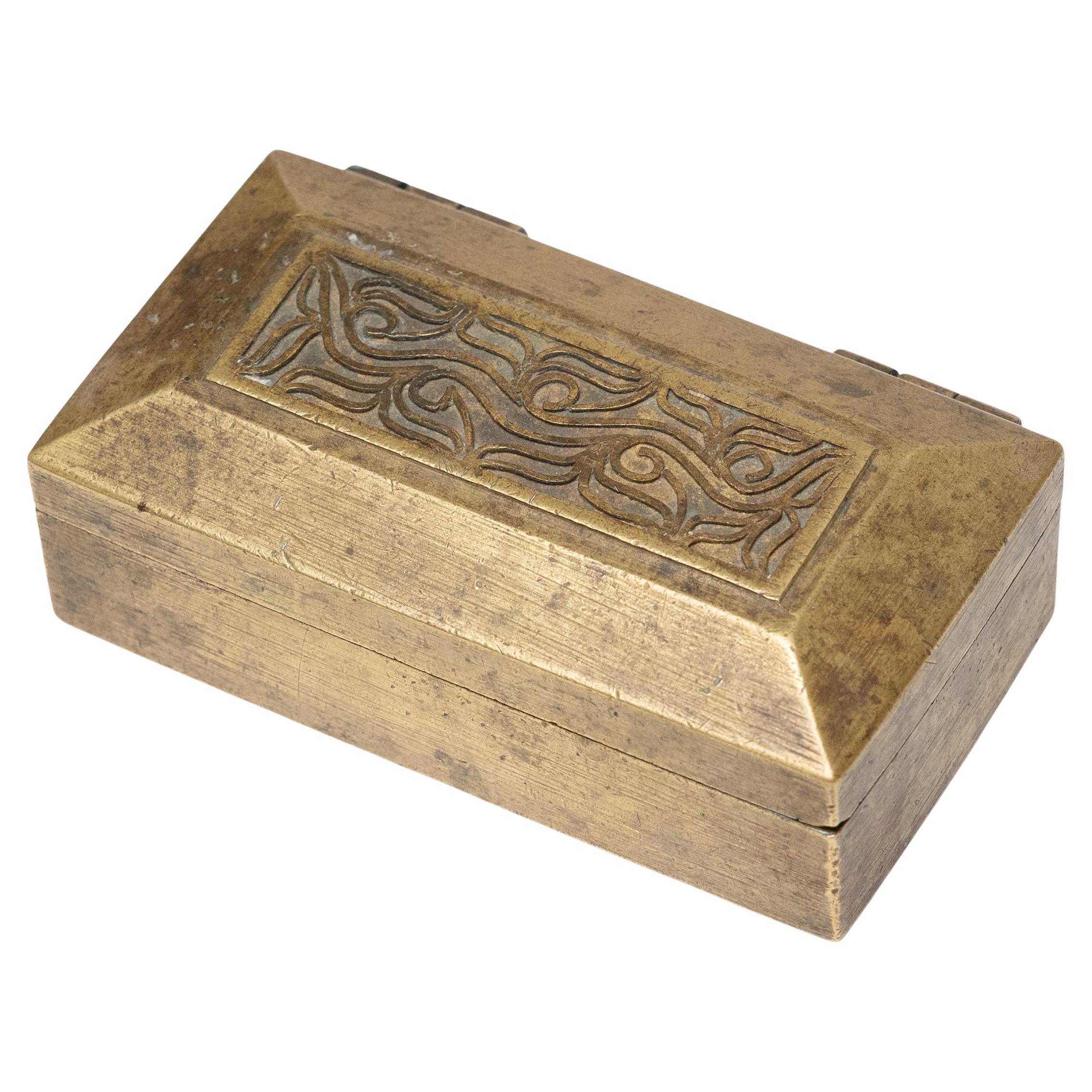
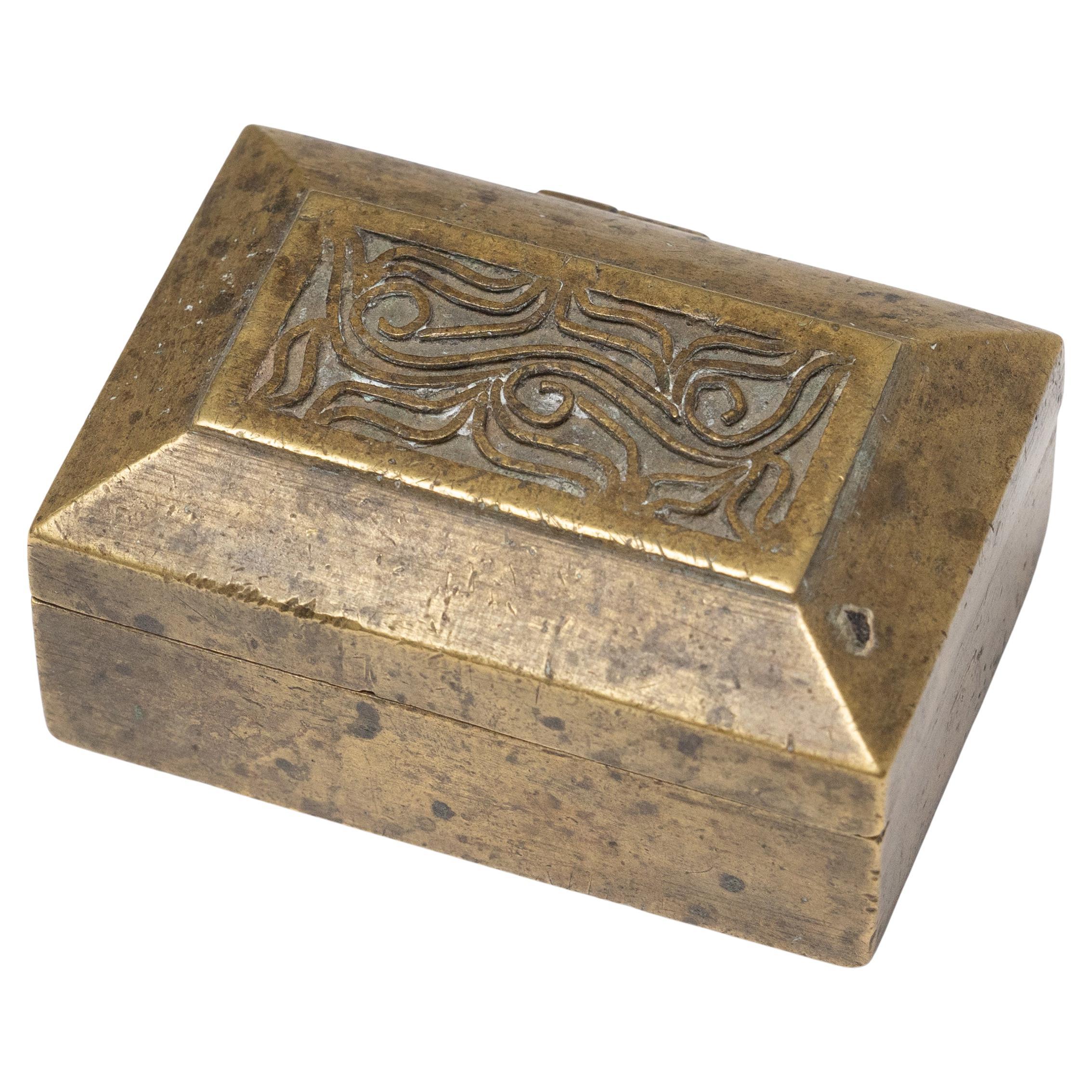
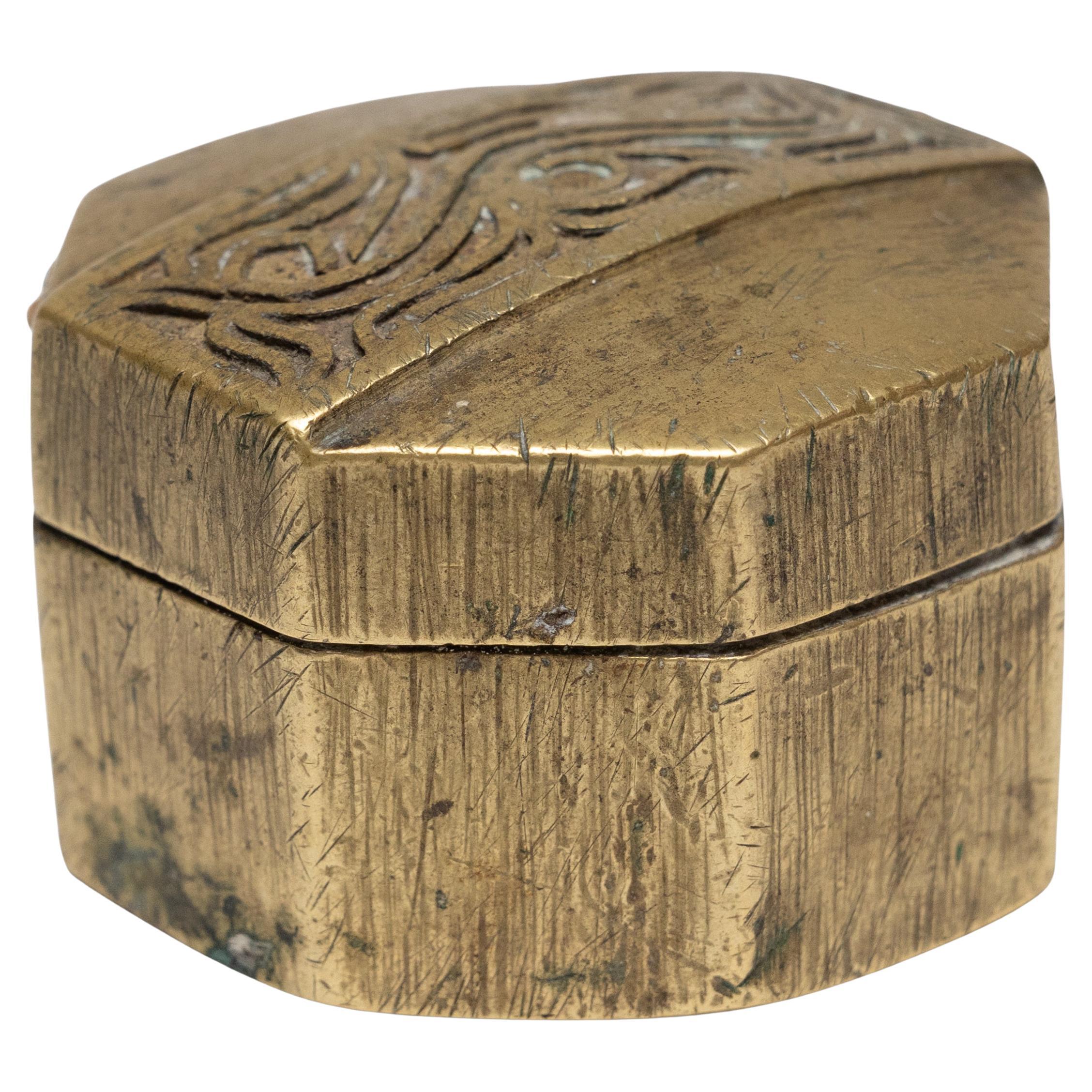
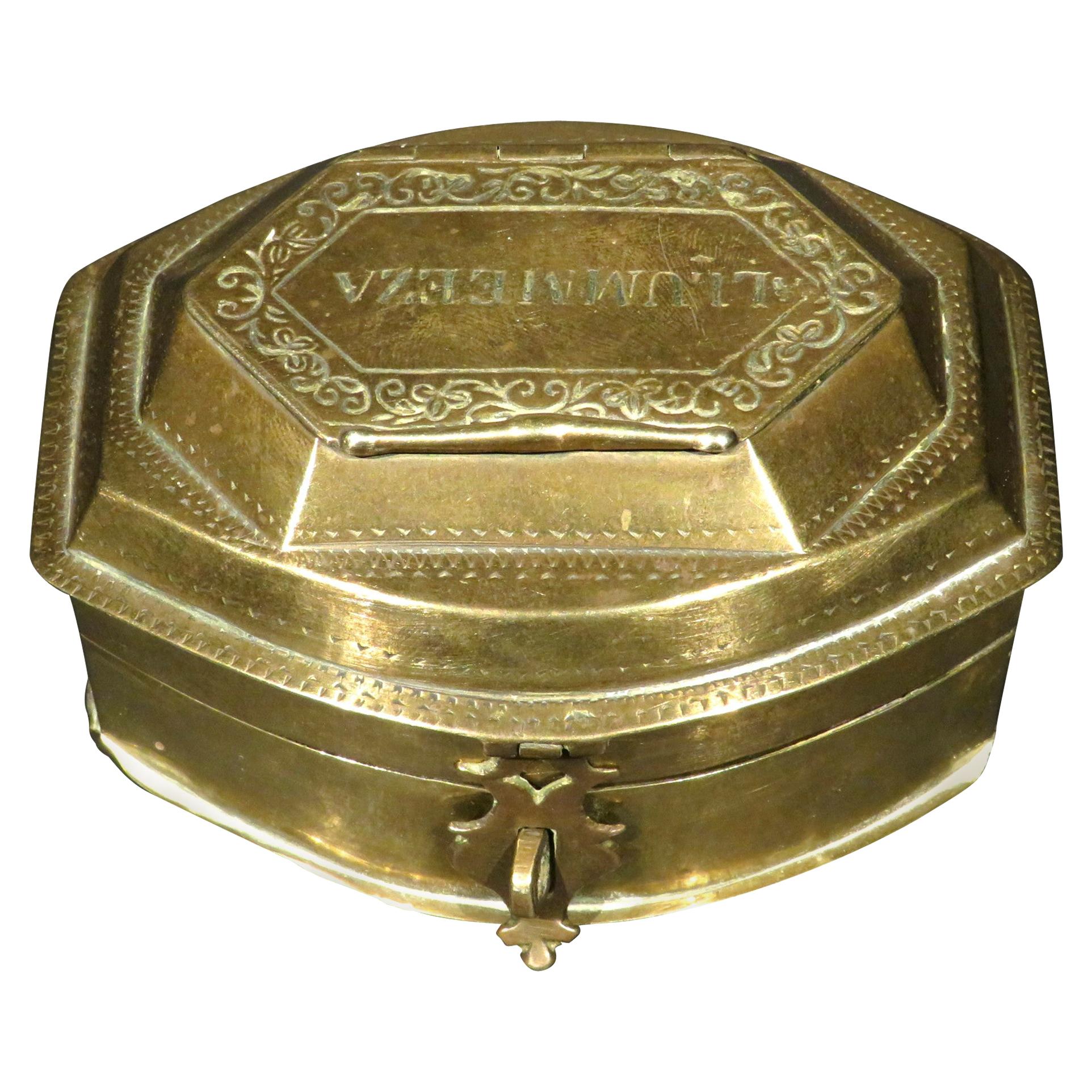
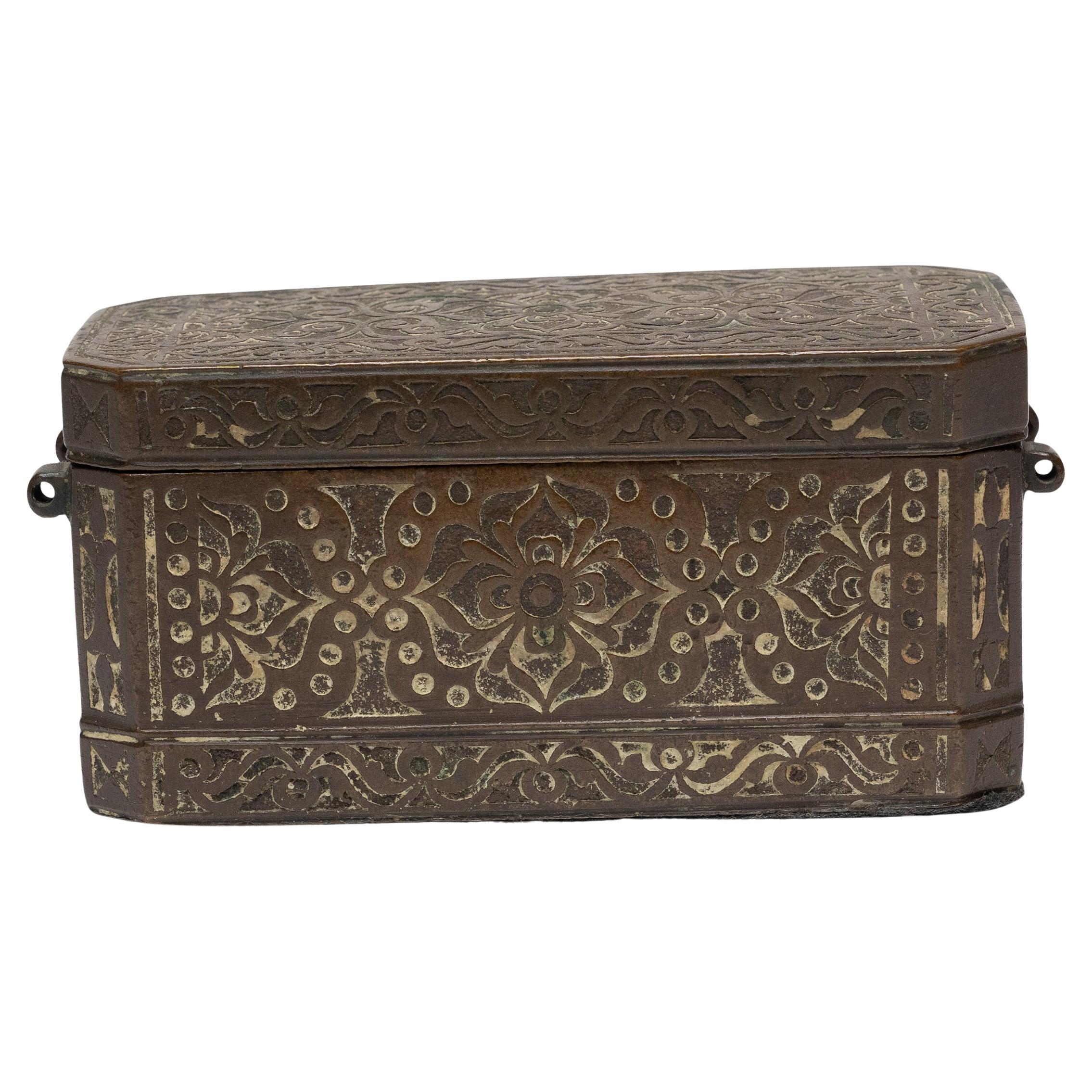
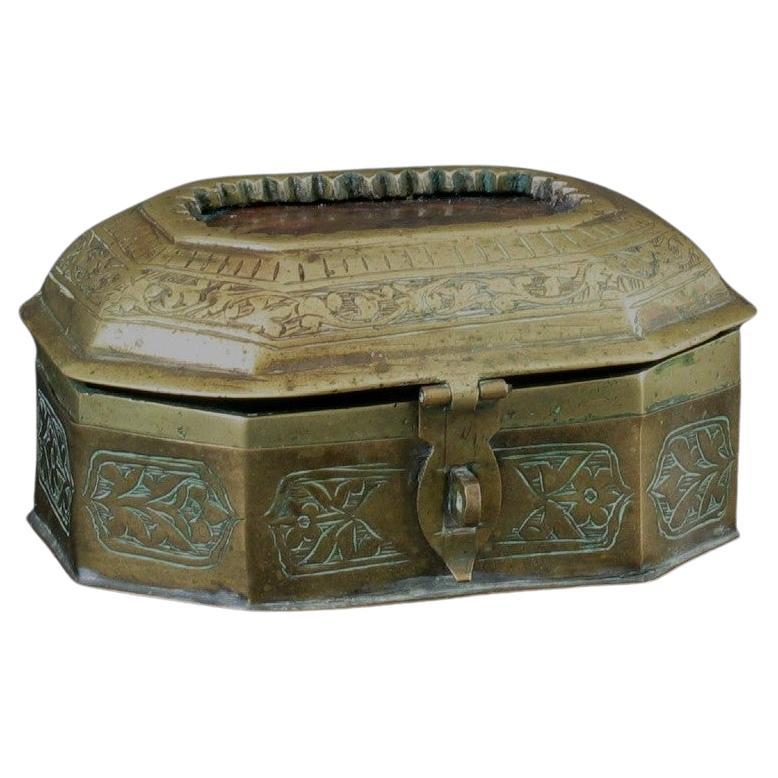
This petite brass box was originally part of an early 20th century betel box set from Indonesia, one of several small containers that held the individual ingredients of a betel quid. A blend of betel leaves, areca nuts, slaked lime, and sometimes tobacco, betel quid (paan) is a common medicinal chew throughout southeast Asia and was often kept in finely decorated boxes, either for personal use or to share with others as a social custom. Today a lovely keepsake of the past, the small box is decorated with a beveled lid, abstract scrollwork in low relief and a rich, antique patina.
- Dimensions:Height: 1.5 in (3.81 cm)Width: 4.25 in (10.8 cm)Depth: 2.5 in (6.35 cm)
- Style:Folk Art (In the Style Of)
- Materials and Techniques:
- Place of Origin:
- Period:
- Date of Manufacture:Early 20th Century
- Condition:Wear consistent with age and use. Minor losses.
- Seller Location:Chicago, IL
- Reference Number:Seller: CGM012B1stDibs: LU820047028172
About the Seller
5.0
Platinum Seller
Premium sellers with a 4.7+ rating and 24-hour response times
Established in 1997
1stDibs seller since 2006
1,761 sales on 1stDibs
Typical response time: 2 hours
- ShippingRetrieving quote...Shipping from: Chicago, IL
- Return Policy
More From This Seller
View AllPetite Indonesian Brass Betel Box, c. 1900
Located in Chicago, IL
This petite brass box was originally part of an early 20th century betel box set from Indonesia, one of several small containers that held the individual ingredients of a betel quid....
Category
Early 20th Century Indonesian Folk Art Snuff Boxes and Tobacco Boxes
Materials
Brass
Petite Indonesian Brass Betel Box, c. 1900
Located in Chicago, IL
This petite brass box was originally part of an early 20th century betel box set from Indonesia, one of several small containers that held the individual ingredients of a betel quid....
Category
Early 20th Century Indonesian Folk Art Snuff Boxes and Tobacco Boxes
Materials
Brass
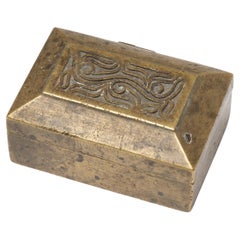
Petite Indonesian Brass Betel Box, c. 1900
Located in Chicago, IL
This petite brass box was originally part of an early 20th century betel box set from Indonesia, one of several small containers that held the individual ingredients of a betel quid....
Category
Early 20th Century Indonesian Folk Art Metalwork
Materials
Brass
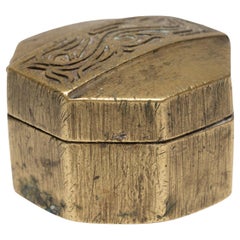
Maranao Brass Betel Box, c. 1900
Located in Chicago, IL
Decorated in relief and cloaked in an antique patina, this curious brass case is an early 20th century betel nut box, attributed to the Maranao people of the island of Mindanao, Phil...
Category
Early 20th Century Philippine Folk Art Snuff Boxes and Tobacco Boxes
Materials
Brass
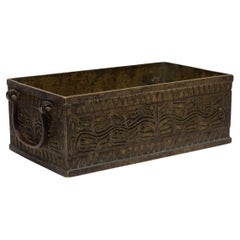
Indonesian Brass Betel Tray, c. 1900
Located in Chicago, IL
This open brass box was originally the case of an early 20th century betel box set from Indonesia, filled with small containers that held the individual ingredients of a betel quid. ...
Category
Early 20th Century Indonesian Folk Art Decorative Dishes and Vide-Poche
Materials
Brass
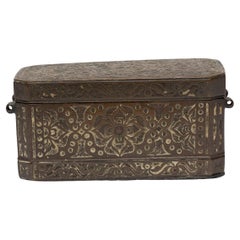
Maranao Silver Inlaid Betel Box, c. 1900
Located in Chicago, IL
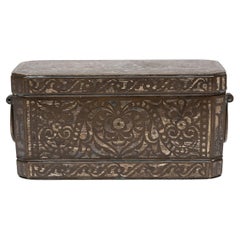
Decorated with silver inlay and cloaked in an antique patina, this curious brass case is an early 20th century betel nut box, attributed to the Maranao people of the island of Mindan...
Category
Early 20th Century Philippine Folk Art Snuff Boxes and Tobacco Boxes
Materials
Brass, Silver
You May Also Like
An Early 20th Century Brass Betel Box or Pandan, Probably Brunei Circa 1900
Located in Ottawa, Ontario
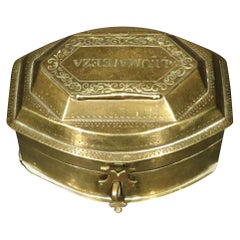
The brass body showing a hinged lid rising up to a faceted receptacle with an engraved hinged cover, overtop a hinged open compartment which then lifts to reveal an interior fitted ...
Category
Early 20th Century Bruneian Other Snuff Boxes and Tobacco Boxes
Materials
Brass
A Mughal Indian Brass Engraved Betel Pandan Box
Located in Ottawa, Ontario
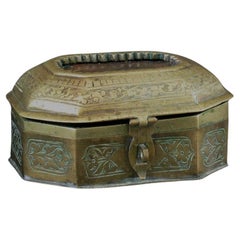
A MUGHAL INDIAN BRASS ENGRAVED BETEL PANDAN BOX
Northern India.
18th Century.
Length: 4 1/4" in. (10.9 cm.), width: 3 1/4" in., (8.3 cm.), height: 2" in.,...
Category
Antique Mid-18th Century Indian Other Decorative Boxes
Materials
Brass
Antique Southeast Asian Filipino Maranao Silver Inlaid Brass Betel Nut Box
Located in Forney, TX
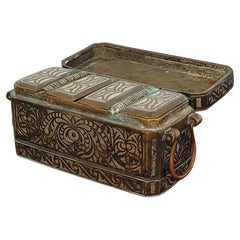
A scarce fine quality antique silver-inlaid solid brass betel nut box (Lutuan), dating to the second half of the 19th / early 20th century, hand-crafted in Mindanao, Philippines.
Boxes such as this were used to store the areca nut (also known as the betel nut) which would be wrapped in a betel leaf with lime paste and other ingredients, often tobacco, for chewing. Similar to the European tea caddy, these boxes often served as a way to impress while showing off ones wealth.
Betel chewing was prevalent in the southern Philippines as in much of the rest of Southeast Asia. Wealthier Maranao families on Mindanao were able to afford elaborate silver-inlaid brass betel boxes such as this example. Such boxes were used to show off to guests and from which they were offered betel and the other component such as leaves and lime to make up the betel quid.
Rare large size, most extant examples of such boxes tend to measure around 5 inches in length. At slightly more than 7.75 inches the example here is larger than most.
The distinctive decorative box features a very heavy strong-box like rectangular shaped chest form with canted corners, copper handles, and a conforming hinged lid, lifting open to reveal an interior divided into three compartments covered by four hinged lids. Each of these doors is inlaid with silver in stylized orchid flower patterns.
Exceptionally executed throughout, the arabesque silver inlaid exterior is decorated to the top with a large orchid motif within scrolling obid-obid (stylized rope) borders. The front, back and sides are inlaid with sets of stylized tail feathers of the sari-manok bird beneath which are unusual, highly stylized whimsical zoomorphic faces that appear like cat or tiger faces. (Such stylisation is accounted for by Southeast Asian Islamic preferences to avoid the overt and this potentially idolatrous representation of animal and human forms. Designs such as these are drawn from a local design repertoire that has its origins in wood carving.
Although the spread of Islam in the Philippines began in the 14th century, mostly through the influence of Muslim merchants from the western Malay Archipelago, decorative arts in this design remain exceptionally rare. This lutuan represents a fine example of Islamic metalwork from the most eastern outreach of Islamic art and civilisation: Mindanao island being significantly further east than even China – artwork from Islamic Southeast Asia remains chronically under-represented in the world’s major collections of Islamic art.
PROVENANCE / ACQUISITION
Acquired from highly reputable auction house, Austin Auction Gallery, established 1983, Austin, Texas.
References
Brownrigg, H., Betel Cutters...
Category
Antique 19th Century Philippine Islamic Decorative Boxes
Materials
Silver, Brass, Bronze, Copper
Antique Anglo Indian Bronze Jewelry Box
Located in Moreno Valley, CA
Antique Anglo Indian Hindu treasure jewelry metal bronze box.
19th century Anglo Indian antique metal box handcrafted with hinged lid with a swing ...
Category
Early 20th Century Indian Anglo-Indian Decorative Boxes
Materials
Bronze
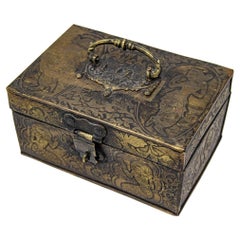
Small Betel Nut Box, Maranao, Southern Philippines (Mindanao)
Located in Point Richmond, CA
Small Betel Nut Box, Maranao, Southern Philippines (Mindanao).
A mixed metal box having a bronze/brass body with bordered silver/copper inlay design overall of a symmetrical floral t...
Category
Early 20th Century Philippine Tribal Metalwork
Materials
Silver, Brass, Copper
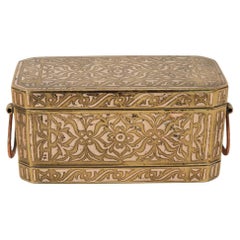
Asian Antique Brass Betel Nut Pandan Box with Lid, Northern India 19th C.
Located in Moreno Valley, CA
Asian antique Beaten Brass Betel Nut Pandan Box, Northern India.
Beautiful antique hand hammered Asian round brass betel with a lid and delicate engravings with floral design handle hand crafted by skilled artisans from Northern India.
Indian Beaten Copper Betel Nut Pandan Box with hand hammered beaten floral and incised decoration used to store betel leaf, lime, tobacco and the nut from the areca palm. This mixture of ingredients when prepared and placed in the mouth for long periods gives the user a mild aphrodisiac effect.
The preparation of the betel nut with lime stored in ornate boxes with several smaller internal containers was popular all over Asia and is still a common practice in Myanmar and India and among the hill tribes of many S. E. Asian countries.
Engraved with intricate designs on the lid which has a carved floral design handle and a latch in front for opening or closing the box and for safekeeping.
Nicely hand-hammered with intricate details.
Please check photo #5, there is about 1 inch damage area on the side of the box.
Museum quality Asian Hand-hammered decorative Islamic brass folk art metalwork collector treasure box.
Measures: Diameter 7 in. x Height 4 in.
The box has a rich, deep brown patina.
Quality of Mughal style. A pandan was used to store the pan, or betel quid after it had been stuffed and rolled ready to eat, rather than for the individual ingredients. The chewing of betel is an ancient Asian tradition comparable to tobacco in the western world. Betel consists of three main ingredients: the areca nut, betel leaf and lime paste. Betel was, and still is enormously popular throughout Asia and plays a major role in the entertaining of guests, in courtship and marriage, and in the traditional etiquette of the royal courts, where it often forms part of the state regalia.[1] Research on several pandan boxes has been published by Zebrowski.[2]
Brownrigg, H. Betel Cutters...
Category
Antique 19th Century Indian Moorish Decorative Boxes
Materials
Brass