Bauhaus Snuff Boxes and Tobacco Boxes

BAUHAUS STYLE

The Bauhaus was a progressive German art and design school founded by the architect Walter Gropius that operated from 1919 to 1933. Authentic Bauhaus furnituresofas, dining chairs, tables and more — and the school’s followers married industrial and natural materials in simple, geometric forms. The goal of the Bauhaus was to erase the distinction between art and craft while embracing the use of new technologies and materials.

ORIGINS OF BAUHAUS FURNITURE DESIGN

CHARACTERISTICS OF BAUHAUS FURNITURE DESIGN

  • Emphasis on craft
  • Simplicity, order, clarity and a prioritization of functionalism
  • Incorporation of geometric shapes
  • Minimalist and refined, little to no ornamentation
  • Use of industrial materials such as tubular chrome, steel and plastic as well as leather, cane and molded plywood in furniture and other products

BAUHAUS FURNITURE DESIGNERS YOU SHOULD KNOW

AUTHENTIC BAUHAUS FURNITURE ON 1STDIBS

The name Bauhaus is derived from the German verb bauen, “to build.” Under the school’s innovative curriculum, students were taught the fine arts, such as painting and sculpture, as well as practical skills like carpentry and metalworking. 

The school moved from Weimar in 1925 to the city of Dessau, where it enjoyed its heyday under Gropius, then Hannes Meyer and Ludwig Mies van der Rohe. The period from 1932 to 1933 when it operated in Berlin under Mies was its final chapter. Despite its brief existence, the Bauhaus has had an enduring impact on art and design in the United States and elsewhere, and is regarded by many as the 20th century’s chief crucible of modernism

The faculty roster at the Bauhaus reads like a who’s who of modernist creative genius — it included such artists as Paul Klee, Wassily Kandinsky and László Moholy-Nagy along with architects and designers like Mies and Marcel Breuer, who became known for his muscular brutalist-style concrete buildings in the postwar years. In 1925, while he was head of the Bauhaus carpentry workshop, Breuer gave form to his signature innovation: the use of lightweight tubular-steel frames for chairs, side tables and sofas — a technique soon adopted by Mies and others. Breuer’s Cesca chair was the first-ever tubular steel frame chair with a caned seat to be mass produced, while the inspiration for his legendary Wassily chair, a timeless design and part of the collection crafted to furnish the Dessau school, was the bike he rode around campus.

Bauhaus design style reflects the tenets by which these creators worked: simplicity, clarity and function. They disdained superfluous ornament in favor of precise construction. Seating pieces such as side chairs, armchairs or club chairs for example, were made with tubular metal or molded plywood frames, and upholstery was made from leather or cane. Above all, designs in the Bauhaus style offer aesthetic flexibility. They can be the elements of a wholly spare, minimalist space, the quiet foundation of an environment in which color and pattern come from one’s own collection of art and artifacts.

Today, from textiles to typefaces, architecture, furniture and decorative objects for the home, Bauhaus creations continue to have an outsize influence on modern design.

Find a collection of authentic Bauhaus furniture on 1stDibs.

to
1
1
1
69
50
48
34
25
20
12
12
10
9
9
8
5
5
4
2
2
1
1
1
1
1
1
1
Height
to
Width
to
1
1
1
1
Style: Bauhaus
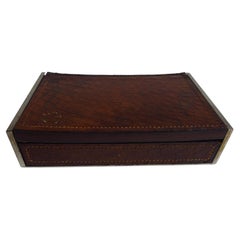
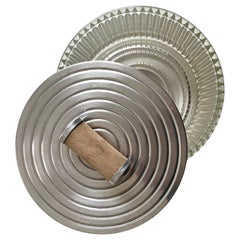
Carl Auböck Chrome Box with Leather Lid, 1930s
Located in Vienna, AT
A refined early piece from the Carl Auböck workshop, dating to the 1930s. This chrome-plated box features clean, modernist lines contrasted by a hand-stitched leather lid — a hallmar...
Category

Mid-20th Century Austrian Bauhaus Snuff Boxes and Tobacco Boxes

Materials

Chrome

Related Items
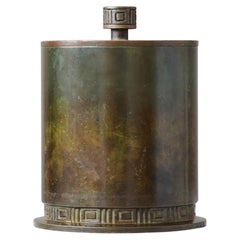
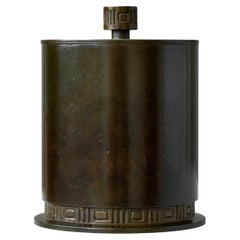
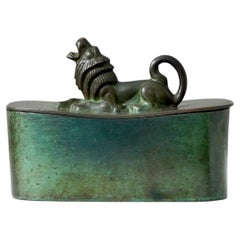
Art Deco Lidded Bronze Box by GAB Guldsmedsaktiebolaget, Sweden, 1930s
Located in Malmö, SE
A beautiful lidded bronze box with amazing patina. Art Deco / Swedish Grace. Made by GAB Guldsmedsaktiebolaget, Sweden, 1930s. Good condition, with some scratches, scuffs and we...
Category

1930s Swedish Vintage Bauhaus Snuff Boxes and Tobacco Boxes

Materials

Bronze

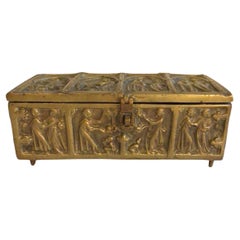
1930s Ornate Bronze Box with Feet and Hinged Lid
Located in Tarrytown, NY
This 1930s Ornate Bronze Box/Casket features religious figures and has a hinged top with hinged latch All sides have a patina which adds depth and beauty Underside is marked "Made in...
Category

1930s Belgian Vintage Bauhaus Snuff Boxes and Tobacco Boxes

Materials

Brass, Bronze

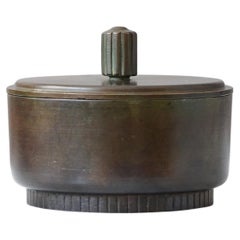
Art Deco Lidded Bronze Box by GAB Guldsmedsaktiebolaget, Sweden, 1930s
Located in Malmö, SE
A beautiful lidded bronze box with amazing patina. Art Deco / Swedish Grace. Made by GAB Guldsmedsaktiebolaget, Sweden, 1930s. Great condition, with only some light scratches. S...
Category

1930s Swedish Vintage Bauhaus Snuff Boxes and Tobacco Boxes

Materials

Bronze

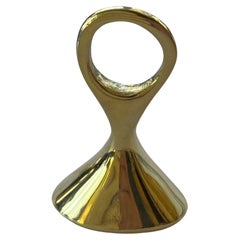
Carl Aubock Brass Cigar Snuffer #4117
Located in Chalk Hill, PA
Carl Aubock brass cigar snuffer #4117. Produced by Carl Auböck IV in the original Auböck workshop in Vienna, Austria using the same standards, high-quality materials, molds and techn...
Category

21st Century and Contemporary Austrian Bauhaus Snuff Boxes and Tobacco Boxes

Materials

Brass

Carl Aubock Brass Cigar Snuffer #4117
$192 Sale Price / item
20% Off
H 2 in W 1.25 in D 0.88 in
Lidded Bronze Art Deco Box by GAB Guldsmedsaktiebolaget, Sweden, 1930s
Located in Malmö, SE
A beautiful lidded bronze box with amazing patina. The inside clad in teak wood. Made by GAB Guldsmedsaktiebolaget, Sweden, 1930s. Great condition, with only a few light scratche...
Category

1930s Swedish Vintage Bauhaus Snuff Boxes and Tobacco Boxes

Materials

Bronze

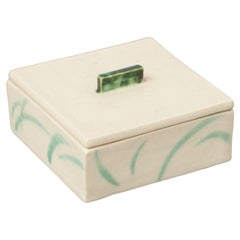
Lovely Lidded Art Deco Ceramic Box 1930s
Located in Tilburg, NL
Lovely Lidded Art Deco Ceramic Box 1930s This is a wonderful lidded ceramic art deco box. Great design and lovely colors - a true modernist piece with a lot of elegance. Would be gr...
Category

Mid-20th Century European Bauhaus Snuff Boxes and Tobacco Boxes

Materials

Pottery

Lovely Lidded Art Deco Ceramic Box 1930s
$824
H 1.97 in W 3.75 in D 3.75 in
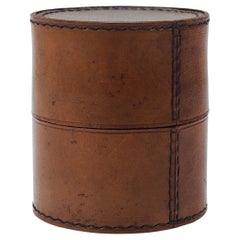
Carl Aubock Round Leather Storage Box with Lid, Vienna, Austria, 1950s
Located in Vienna, AT
A beautiful and elegant round lidded storage box, vintage from the 1950s, designed and handcrafted by Werkstätte Carl Auböck in Vienna/Austria. Originally intended as a cigarette dis...
Category

Mid-20th Century Austrian Bauhaus Snuff Boxes and Tobacco Boxes

Materials

Leather

Art Deco Lidded Bronze Box by GAB Guldsmedsaktiebolaget, Sweden, 1930s
Located in Malmö, SE
A beautiful lidded bronze box with amazing patina. Art Deco / Swedish Grace. Made by GAB Guldsmedsaktiebolaget, Sweden, 1930s. Good condition, but with scratches and wear to the ...
Category

1930s Swedish Vintage Bauhaus Snuff Boxes and Tobacco Boxes

Materials

Bronze

Art Deco Lidded Bronze Box by GAB Guldsmedsaktiebolaget, Sweden, 1930s
Located in Malmö, SE
A beautiful lidded bronze box with amazing patina. Art Deco / Swedish Grace. Made by GAB Guldsmedsaktiebolaget, Sweden, 1930s. Great condition, with only some light scratches. S...
Category

1930s Swedish Vintage Bauhaus Snuff Boxes and Tobacco Boxes

Materials

Bronze

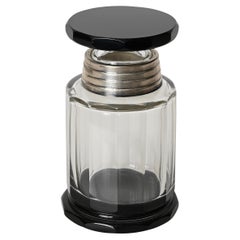
Italian Deco Crystal Box or Vase with Silver Lid, Italy, 1930s
Located in Roma, IT
Gorgeous Art Deco Italian vase in a beautiful combination Murano crystal cut glass, black glass and 800 silver. Produced in Italy during the late 1930s, in amazing condition with no ...
Category

1930s Italian Vintage Bauhaus Snuff Boxes and Tobacco Boxes

Materials

Crystal, Silver

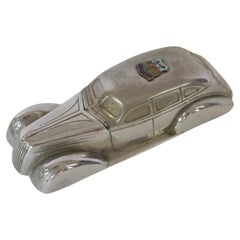
Art Deco Chrome Streamlined Car Trinket Box 1930s
Located in Dereham, GB
Art Deco Chrome Streamlined Car Trinket Box 1930s Brass casting Good Art deco Streamlined shaped car Chrome Plated Hinged top trinket box/desk tidy Enamel badge on top Reads WESTON.S...
Category

1930s French Vintage Bauhaus Snuff Boxes and Tobacco Boxes

Materials

Chrome

Art Deco Chrome Streamlined Car Trinket Box 1930s
$492 Sale Price
20% Off
H 1.97 in W 7.09 in D 2.76 in
Danish Art Deco Glass Metal Jewelry Box / Lidded Decorative Jar, 1930s
Located in Frederiksberg C, DK
Danish Art Deco Glass Jewelry Box / Lidded Decorative Jar, 1930s Elegant Danish Art Deco jewelry box or decorative lidded jar from the 1930s. Features a ribbed glass body with a mat...
Category

1930s Danish Vintage Bauhaus Snuff Boxes and Tobacco Boxes

Materials

Metal

Previously Available Items
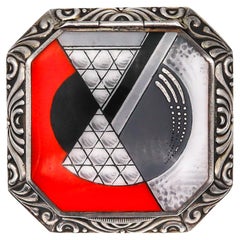
German 1923 Bauhaus Geometric Enamel And Guilloche Pill Box In .925 Sterling
Located in Miami, FL
German geometric enameled pill box attributed to Herbert Bayer. An exceptional representative piece of the Bauhaus art movement. This box has been made in Germany during the art deco period, back in the 1923. Crafted in an squared shape with chamfer corners in solid .935/.999 sterling silver. The reverse is treated with engine turned guilloche design, topped with white translucent hot enamel. The top lid is embellished with a gorgeous art deco geometric composition, with applications of red, black, gray and white enamel. It is fitted with three barrels hinge and a thumb snap push. The interiors are treated with more engine turned guilloche and blue enamel. The Bauhaus School Of Design Bauhaus Art The Bauhaus, titled after a German phrase that means “house of construction,” was created in 1919 by architect Walter Gropius in Weimar, Germany. He took over a pre-existing school of Arts and Crafts in 1915, and the revolutionary new Bauhaus art school was founded four years later via the merging of this establishment with the Weimar Academy of Fine Art. The Bauhaus style was inspired by 19th and early 20th-century creative tendencies including the Art Nouveau style and the various foreign versions like the Vienna Secession and Jugendstil, as well as the Arts and Crafts movement. All of these groups desired to blur the line between the applied and fine arts, as well as to reconnect imagination and fabrication; their heritage was represented in the romantic medievalism of the Bauhaus movement ideology during its formative days when it styled itself as some kind of craftsmen’s union. By the mid-1920s, however, this ideal had given place to a focus on integrating industrial Bauhaus graphic design and art, and it was this focus that anchored the Bauhaus’ most innovative and significant achievements. Simultaneously, the 1910s rise of Russian Constructivism provided a more urgent and aesthetically appropriate predecessor for the Bauhaus’ fusion of artistic and mechanical design. When the Bauhaus officially opened in 1920, it took up home in the old sculpture workshop of the Grand-Ducal Saxon institute, constructed in the Art Nouveau fashion. The school’s strategy was centered on its innovative and impactful curriculum. Gropius described it as a wheel with rings, with the outer circle chosen to represent the six-month preparatory course launched by Johannes Itten that focused on the foundational facets of design, particularly the differing characteristics of varied shapes, colors, and substances. (Arts In Context with thanks) Weight: 40.60 Grams, (26.03 Dwt). Measurements: 52 mm by 52 mm by 15 mm (2.05 x 2.05 x 0.59 Inches). Hallmarks: Stamped with the maker's mark, the mark for the assay of the silver and signed, "STERLING GERMANY". Herbert Bayer Vintage Bauhaus 'The 1923 Bauhaus Exhibition', Germany, Herbert Bayer, Reproduction 200gsm A3 Vintage Bauhaus Poster Herbert Bayer Bauhaus Exhibition Poster, 1923 Bayer apprenticed under the artist Georg Schmidt Hammer in Linz. Leaving the workshop to study at the Darmstadt Artists' Colony, he became interested in Walter Gropius's Bauhaus manifesto. After Bayer had studied for four years at the Bauhaus under such teachers as Wassily Kandinsky, Paul Klee[2] and László Moholy-Nagy, Gropius appointed Bayer director of printing and advertising. In the spirit of reductive minimalism, Bayer developed a crisp visual style and adopted use of all-lowercase, sans serif typefaces for most Bauhaus publications. Bayer is one of several typographers of the period including Kurt Schwitters and Jan Tschichold...
Category

1920s German Vintage Bauhaus Snuff Boxes and Tobacco Boxes

Materials

Silver, Sterling Silver, Enamel

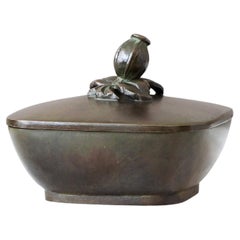
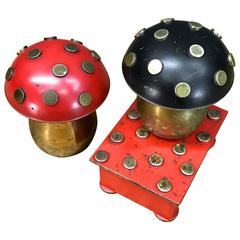
Wierner Werkstatte Argentor Brass Trinket Tobacco Snuff Jewelry Box Collection
Located in Hyattsville, MD
All pieces marked Austria. One mushroom has Argentor symbol, the box appears to be older and is heavier with made in Austria, and 273. Measures: Box 4 x 3 x 1.5 in. Blk mushroom ...
Category

1930s Austrian Vintage Bauhaus Snuff Boxes and Tobacco Boxes

Materials

Brass

Bauhaus snuff boxes and tobacco boxes for sale on 1stDibs.

Find a broad range of unique Bauhaus snuff boxes and tobacco boxes for sale on 1stDibs. Many of these items were first offered in the Early 20th Century, but contemporary artisans have continued to produce works inspired by this style. If you’re looking to add vintage snuff boxes and tobacco boxes created in this style to your space, the works available on 1stDibs include decorative objects and other home furnishings, frequently crafted with enamel, metal and other materials. If you’re shopping for used Bauhaus snuff boxes and tobacco boxes made in a specific country, there are Europe, and Germany pieces for sale on 1stDibs. It’s true that these talented designers have at times inspired knockoffs, but our experienced specialists have partnered with only top vetted sellers to offer authentic pieces that come with a buyer protection guarantee. Prices for snuff boxes and tobacco boxes differ depending upon multiple factors, including designer, materials, construction methods, condition and provenance. On 1stDibs, the price for these items starts at $1,650 and tops out at $1,650 while the average work can sell for $1,650.

Still Thinking About These?

All Recently Viewed