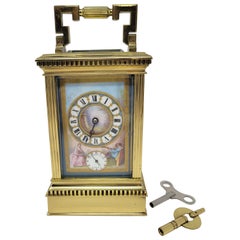
Items Similar to English Fusee Carriage Clock By Thomas Cole and James Ferguson Cole
Want more images or videos?
Request additional images or videos from the seller
1 of 7
English Fusee Carriage Clock By Thomas Cole and James Ferguson Cole
$6,210.59
£4,550
€5,352.91
CA$8,647.94
A$9,293.12
CHF 4,986.30
MX$109,467.24
NOK 62,697.15
SEK 57,273.44
DKK 40,005.52
About the Item
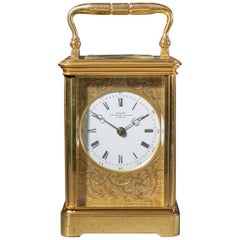
An exceptional English fusee carriage clock timepeice by two of the nineteenth centuries greatest clock makers. Although not signed by the brothers, this small carriage clock can be safely attributed to Thomas Cole and his brother James Ferguson Cole as noted by John Hawkins in The Hawkins Pictorial Survey of Cole Clocks Part 1. This is a phase 1 type 1 carriage clock from the Cole brothers, making it one of their earliest pieces. Thomas Cole as the designer and engraver, James Ferguson Cole the movement maker and Breguet hands.
The eight day single chain fusee movement and English lever escapement, the back plate numbered 2020. See pp. 400 for an almost identical backplate. The bridging system is to give strength and extra depth to the mainspring of the miniature clocks, and is a marker of James Ferguson Cole and early bespoke movements. This bridging also dates to clock to between 1833-1838. Also with original key. The engraving for the retailer and number has been fitted into the available space, and would have been done after the clock has been completed by the Cole brothers. (J.B. Hawkins). The movement is housed in a engraved, gilt case, which is stamped on the underside with the number 109.
The inset silvered dial is of typical Cole design with finely engraved rococo and floral decoration, black Roman numerals and James Ferguson Cole style Breguet blued-steel moon hands and engraved gilded mask. This style of dial is noted on many examples of Cole clocks shown in the Hawkins survey. Another important design element seen on Thomas Cole clocks is the engraved HoHo bird on the sides, which is shown on page 327. That example also incorporates the faceted handle with scroll supports, as seen here, which is described by Hawkins as a standard early design.
The case is a typical Thomas Cole Phase 1 type 1, with engraved decoration, porthole to the top allowing viewing of the balance wheel and the ball finials to the top of the case. The layered plate construction of the case with concave faceted columns is also typical the brothers’ period of collaboration. The screws through the feet are also another noted Cole feature of these early carriage clocks. The breguet style moon hands suggest the work of J.F. Cole as does the distinctive bridge on the back of the movement that gives extra strength to the mainspring and is documented in several other Cole clocks. The Cole Brothers worked together supplying clocks to other retails after J.F. Cole narrowly avoided bankruptcy, their work was retailed by Garrards, James McCabe, Arnold and Dent, and Hunt and Roskell, in an attempt to get the brother’s out of debt. This early timepiece was made by the brothers between 1833 and 1838, their partnership lasted until 1848. The case the work of Thomas Cole and the movement by his older brother James Fergusson Cole. Recently published research by J.B.Hawkins has gone into great detail on how the brothers worked together showing their unique skills and techniques that has been extremely useful in researching this Phase I type I Cole carriage clock, see page 88 for an almost identical. Thomas as the designer and casemaker, supported by his brother James who fitted them with bespoke movements. Cole was known for his exceptional designs. His creations were admired for their originality, fine metalwork, and attention to detail. Cole's work gained significant recognition, earning him awards at international exhibitions, including the Great Exhibition of 1851 and the Paris Universelle of 1855. His craftsmanship influenced other clockmakers, though none could surpass the quality of his designs.
This clock is signed on the backplate for the retailer, 'Lattey Brothers
Co. London
Calcutta. This company operated between 1842 and 1855. The bridging system on the backplate dates the clock to between 1833-38, the signature for the retailers was likely added at a later date. Circa 1833-38.
- Dimensions:Height: 5.25 in (13.34 cm)Width: 3.875 in (9.85 cm)Depth: 3.375 in (8.58 cm)
- Materials and Techniques:
- Place of Origin:
- Period:1830-1839
- Date of Manufacture:1835
- Condition:Wear consistent with age and use.
- Seller Location:London, GB
- Reference Number:1stDibs: LU2015348298872
About the Seller
4.7
Vetted Professional Seller
Every seller passes strict standards for authenticity and reliability
Established in 2012
1stDibs seller since 2016
97 sales on 1stDibs
Typical response time: 19 hours
- ShippingRetrieving quote...Shipping from: Littlehampton, United Kingdom
- Return Policy
More From This Seller
View AllA Superb and very rare Engraved Thomas Cole Mantle Clock
Located in London, GB
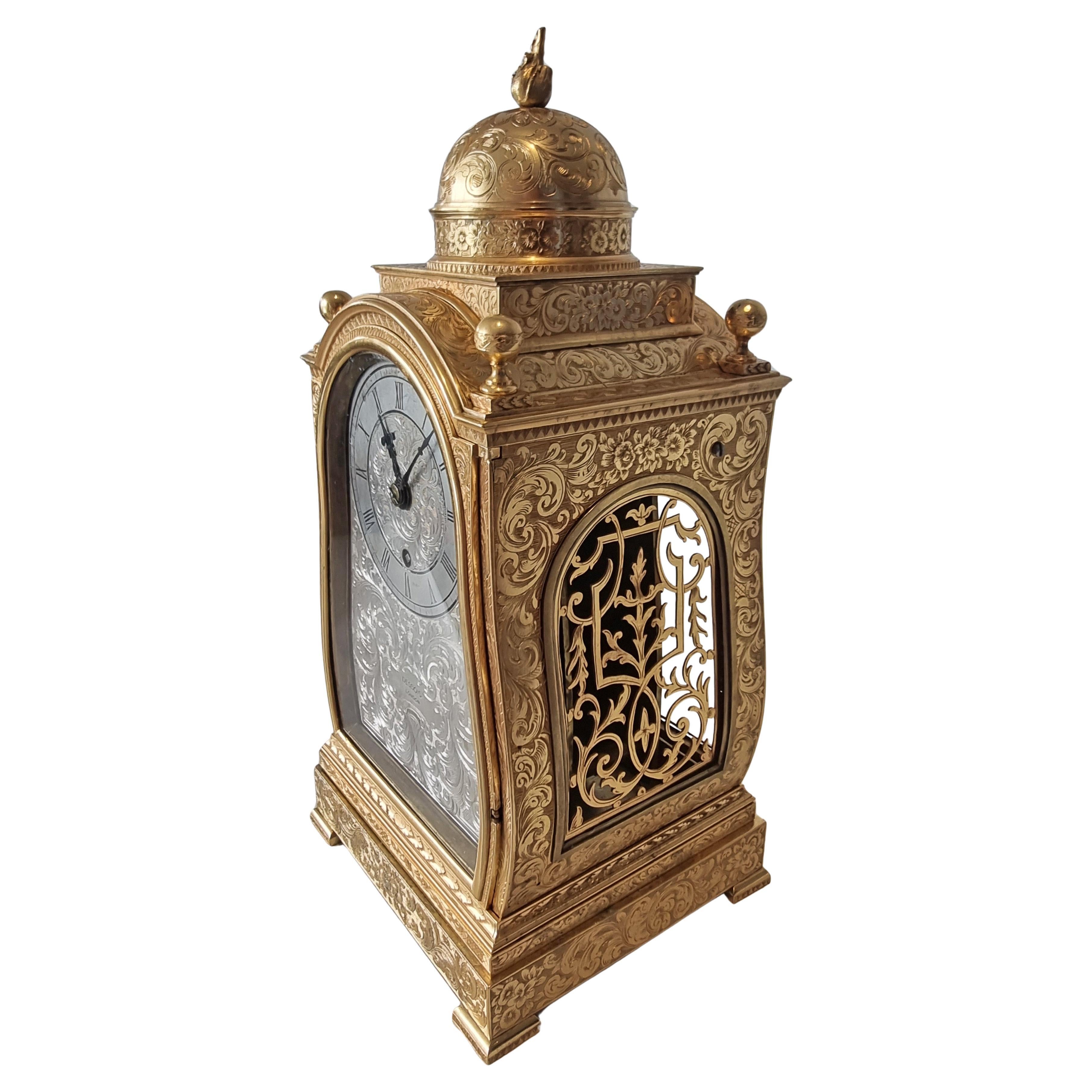
An exceptional and perhaps unique English fusee mantle clock timepiece by one of the nineteenth centuries greatest clock makers. Although not signed by Thomas Cole, this mantle or table clock can be safely attributed to Thomas Cole. The multi layed case, which is typical of Cole, the horizontal lines in the background of the engraving, and the quality of the engraving, means this clock could only be by Cole. The eight day single chain fusee movement. The engraving for the retailer has been fitted into the available space, and would have been done after the clock has been completed by Thomas Cole (J.B. Hawkins).
The inset silvered dial is of typical Cole design with finely engraved rococo and floral decoration, black Roman numerals and fleur de lyes hands. This style of dial is noted on many examples of
Thomas Cole clocks...
Category
Antique 1840s English Mantel Clocks
Materials
Bronze
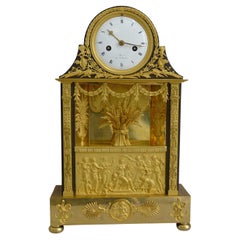
French Empire Clock in Ormolu and Patinated Bronze Signed Revel Rue De Richelieu
Located in London, GB
French Empire period ormolu and patinated bronze mantel clock representing Ceres. The crowning of Ceres is a stunning clock of very fine quality and with totally original fire gilded...
Category
Antique Early 1800s French Mantel Clocks
Materials
Bronze, Ormolu
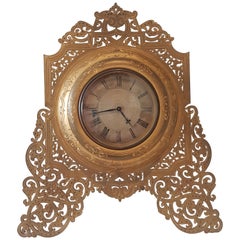
Large English Late 19th Century Ormolu Strut Clock in Manner of Cole
Located in London, GB
Large beautifully cut and engraved ormolu English Victorian strut clock in the manner of Cole. Silvered dial with engine turned centre with beaut...
Category
Antique 1860s English Table Clocks and Desk Clocks
Materials
Ormolu
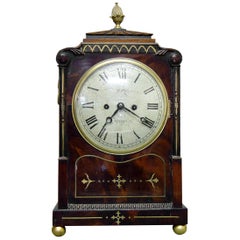
English Regency Mahogany Bracket Clock by Moore of Ipswich
Located in London, GB
A fine English Regency brass inlaid mahogany striking bracket clock. Of good color and restrained decoration. Dial signed Moore of Ipswich. Double fusee movement with anchor escapement.
Category
Antique 1810s English Regency Mantel Clocks
Materials
Ormolu
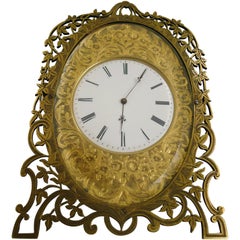
Mid-19th Century Gilt Bronze Strut Clock in the Style of Cole
Located in London, GB
Mid-19th century gilt bronze strut clock in the style of Cole. Original gilding and very fine engraving make this a most attractive clock. The pierced ormolu frame gives a very light...
Category
Antique 1860s English Table Clocks and Desk Clocks
Materials
Enamel, Ormolu
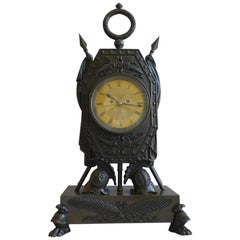
Trophies of War English Regency Clock by Forrester of Hull
Located in London, GB
A superb, rare English Regency period mantel clock in patinated bronze in the form of the "Trophies of War". Set upon a rectangular base with crested hel...
Category
Antique 1810s British Regency Mantel Clocks
Materials
Bronze
You May Also Like
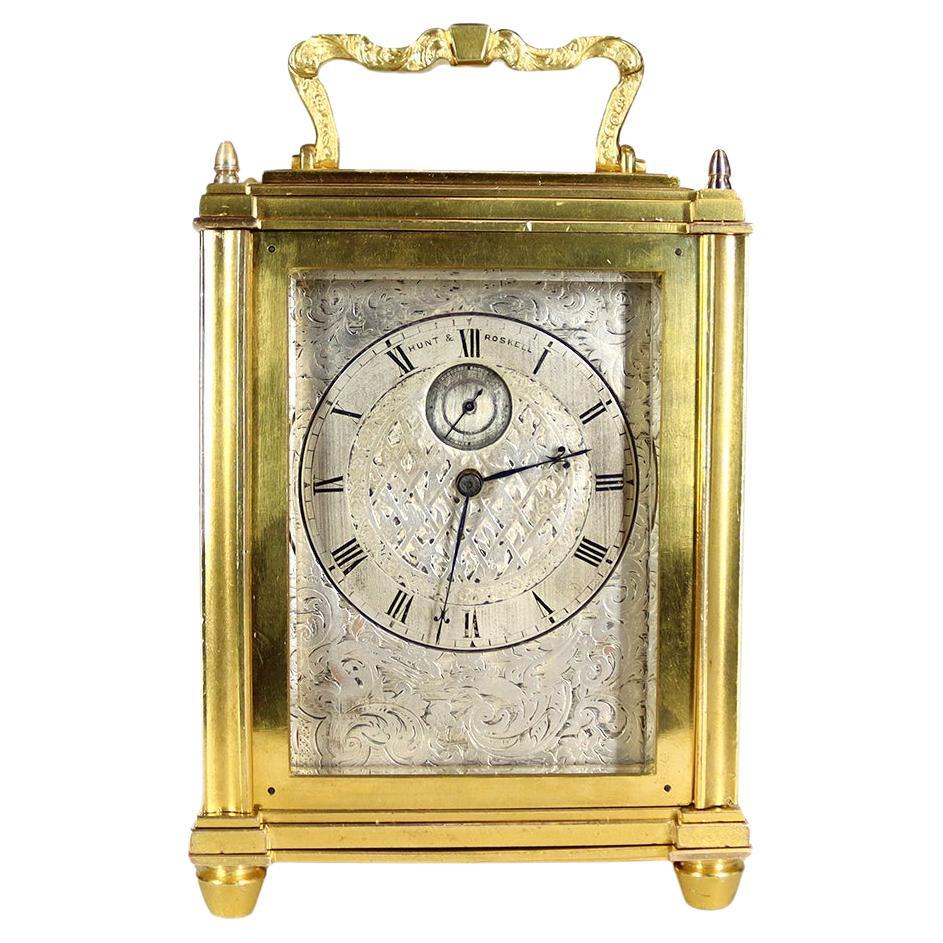
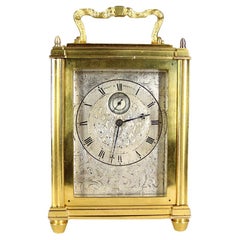
Single Fusee Carriage Timepiece By Thomas Cole and James Cole, Retailed By Hunt
By Thomas Cole (Clockmaker)
Located in Amersham, GB
A miniature carriage clock timepiece by Thomas Cole and his brother James Fergusson Cole. The eight day single fusee movement with english lever escapement.
The case is decorated with the ‘Rose and Trellis’ pattern as seen on another of Coles clocks retailed by Edward Dent with the same handle and case construction ( JB Hawkins, “The Hawkins Pictorial Survey of Cole Clocks...
Category
Antique 1840s English William IV Carriage Clocks and Travel Clocks
Materials
Brass, Steel, Ormolu
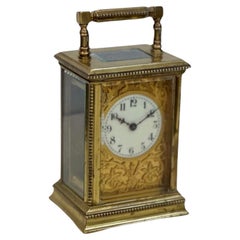
French Early 20th Century Brass Carriage Clock
Located in Los Angeles, CA
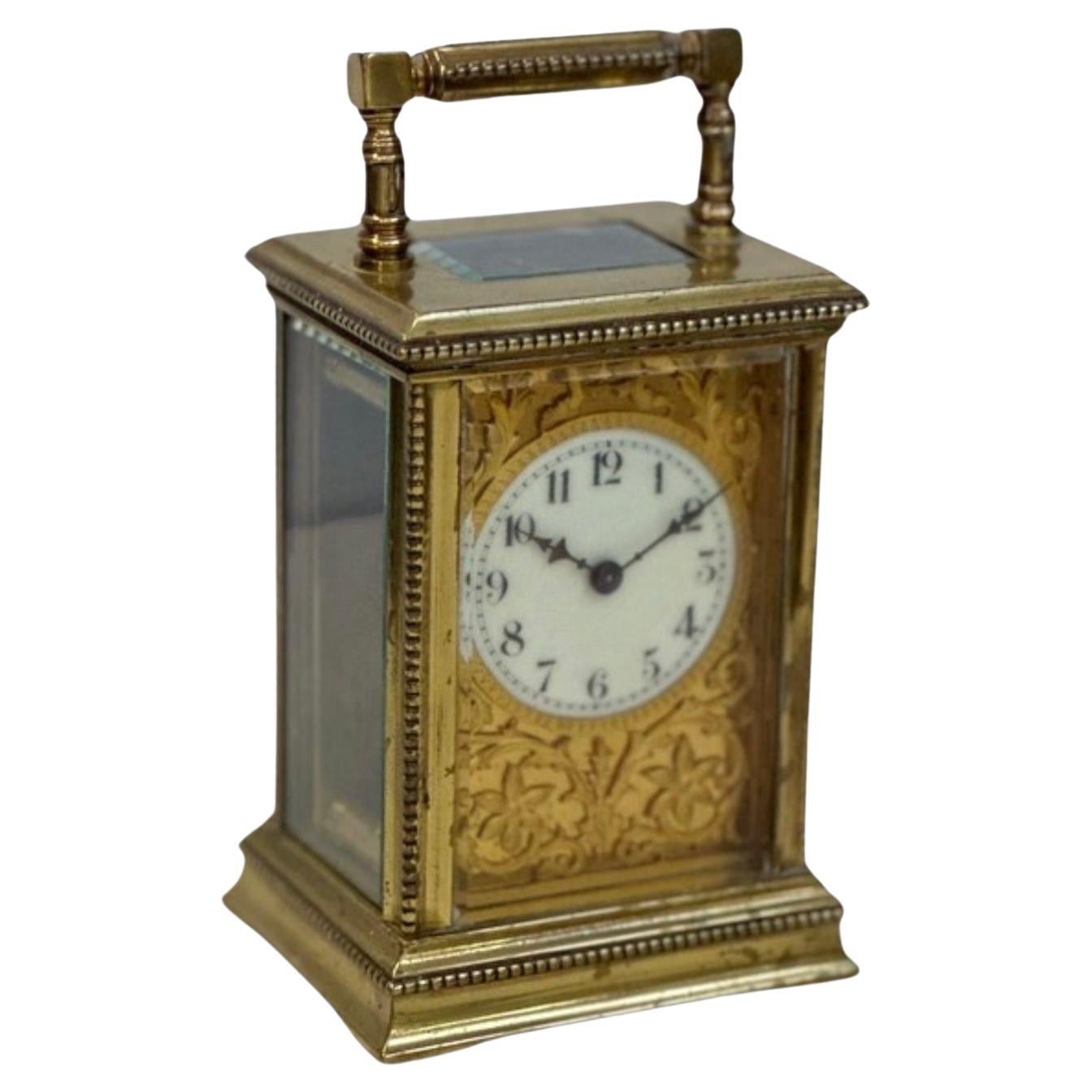
Beautiful traditional brass carriage clock made in France in the early 20th century. It is adorned with botanical details and glass...
Category
Early 20th Century French Carriage Clocks and Travel Clocks
Materials
Brass
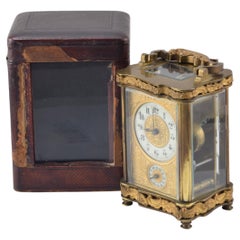
Carriage clock with case. 19th century
Located in Madrid, ES
Travel clock with case. Metal, glass, leather, etc. XIX century.
Case with lid at the top and front with a transparent glass sheet, upholstered on the inside, containing a travel cl...
Category
Antique 19th Century European Neoclassical Revival Carriage Clocks and T...
Materials
Metal, Other
Striking 19th Century Carriage Clock with a Gilt-Brass Corniche Case by Grohé
Located in Oxfordshire, United Kingdom
Striking carriage clock with a gilt-brass corniche case by Grohé, circa 1880.
A most attractive eight-day striking carriage clock, signed on...
Category
Antique 19th Century French Neoclassical Carriage Clocks and Travel Clocks
Materials
Brass
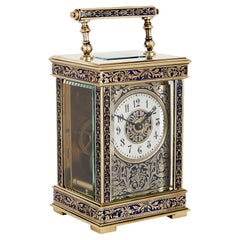
Antique French Enamelled and Engraved Brass Carriage Clock
Located in London, GB
Antique French enamelled and engraved brass carriage clock
French, late 19th century
Measures: Clock: Height 12cm, width 8cm, depth 7cm
Case: Height 15cm, width 11cm, depth 9cm
...
Category
Antique Late 19th Century French Carriage Clocks and Travel Clocks
Materials
Brass, Enamel
Antique French Sevres Gold Bronze Carriage Clock
Located in New Orleans, LA
This is a wonderful little carriage clock that strikes and has an alarm.
It was made by James Muirhead in Paris, circa 1880.
Category
Antique Late 19th Century French Carriage Clocks and Travel Clocks
Materials
Bronze