Items Similar to Single Fusee Carriage Timepiece By Thomas Cole and James Cole, Retailed By Hunt
Want more images or videos?
Request additional images or videos from the seller
1 of 12
Single Fusee Carriage Timepiece By Thomas Cole and James Cole, Retailed By Hunt
$14,649.60
£10,688
€12,501.58
CA$20,272.37
A$21,760.49
CHF 11,586.35
MX$257,728.66
NOK 146,419.79
SEK 133,722.11
DKK 93,392.50
About the Item
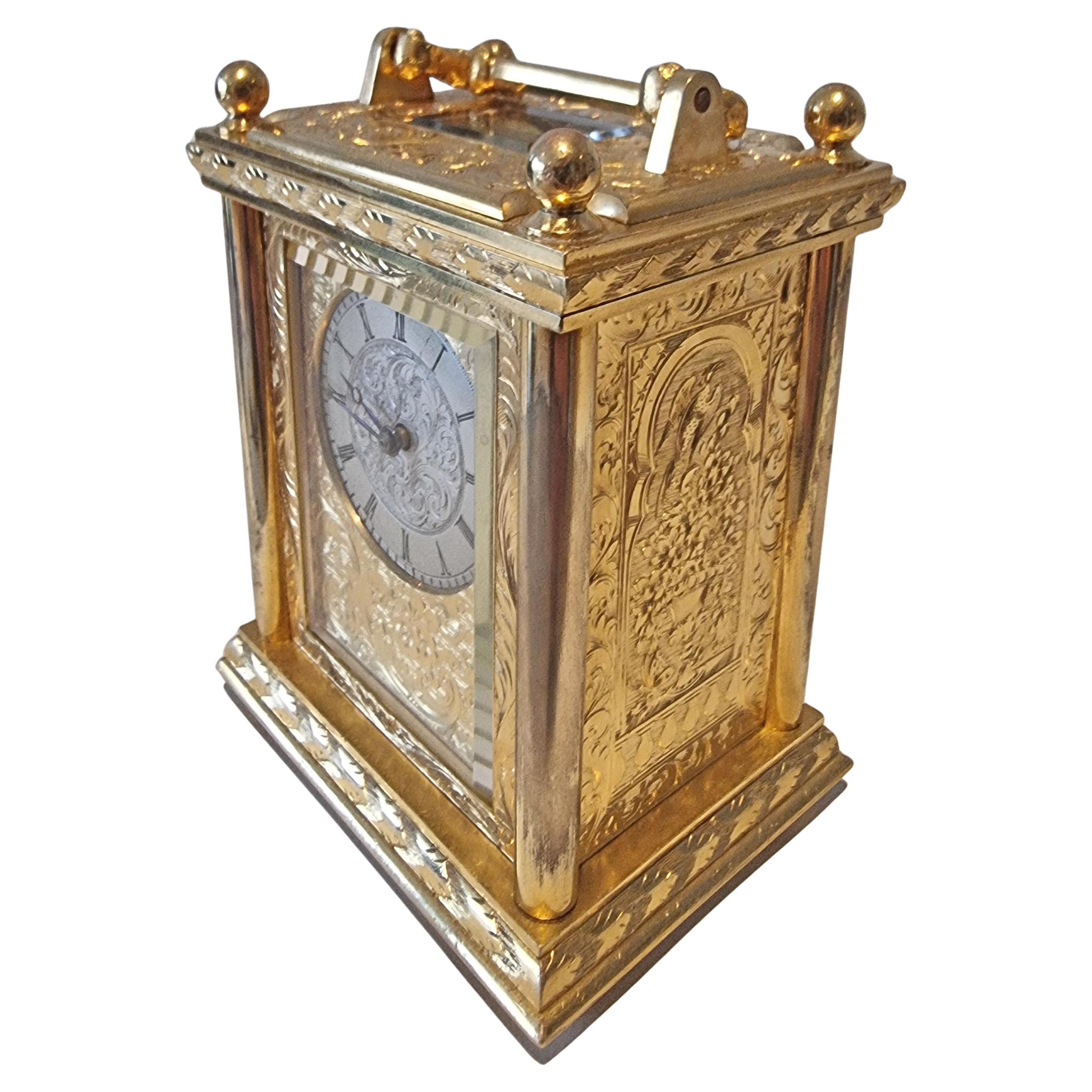
A miniature carriage clock timepiece by Thomas Cole and his brother James Fergusson Cole. The eight day single fusee movement with english lever escapement.
The case is decorated with the ‘Rose and Trellis’ pattern as seen on another of Coles clocks retailed by Edward Dent with the same handle and case construction ( JB Hawkins, “The Hawkins Pictorial Survey of Cole Clocks – Part I” p168). The side pillars have a distinctive convex profile with the tops and bottom sections of the case made up in layers and held between turned tapered feet and acorn finials.
The dial centre is engraved with the same pattern as the sides and back of the clock with a roman chapter and subsidiary seconds dial with the dial surround engraved with a foliate scroll pattern. The case still retains its original mercury gilded finish and is in remarkable original condition.
The Cole Brothers worked together supplying clocks to other retails after J.F. Cole narrowly avoided bankruptcy, their work was retailed by Garrards, James McCabe, Arnold and Dent, and Hunt and Roskell etc, in an attempt to get the brothers out of debt.
Hunt
Roskell were renowned jewellers and silversmiths on Bond Street in London who for many years held the Royal Warrant of Queen Victoria. The firm was the successor to the celebrated silversmith Paul Storr who had left Rundell, Bridge
Rundell to set up his own workshop on Harrison Street near Clerkenwell in 1819.
A couple of years later he went into partnership with John Mortimer and began trading from 13 New Bond Street as Storr
Mortimer. In 1826 they took an additional partner, John Samuel Hunt, who brought a welcome investment capital of £5,000 with him. The firm was increasingly successful and in 1838 they moved to new premises at 156 New Bond Street settling in just prior to the retirement of Paul Storr at the end of December that same year. This prompted a name change to Mortimer and Hunt which the business operated under from 1839 until 1843 when John Mortimer retired and the name changed once again, this time to Hunt
Roskell. So we can date this clock as being made between 1843 and 1848 when the Cole brothers stopped working together.
This clock requirs servicing before we can send it please be aware of this when buying as it will take longer to dispatch.
- Creator:Thomas Cole (Clockmaker) (Clockmaker)
- Dimensions:Height: 5.32 in (13.5 cm)Width: 3.15 in (8 cm)Depth: 2.37 in (6 cm)
- Style:William IV (Of the Period)
- Materials and Techniques:
- Place of Origin:
- Period:
- Date of Manufacture:circa 1843
- Condition:Wear consistent with age and use.
- Seller Location:Amersham, GB
- Reference Number:1stDibs: LU9135240275422
About the Seller
No Reviews Yet
Vetted Professional Seller
Every seller passes strict standards for authenticity and reliability
Established in 2021
1stDibs seller since 2023
8 sales on 1stDibs
Typical response time: 1 hour
- ShippingRetrieving quote...Shipping from: Amersham, United Kingdom
- Return Policy
More From This Seller
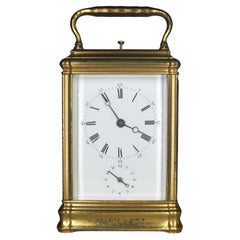
View AllRepeating Drocourt Carriage Clock with Alarm
Located in Amersham, GB
A strike repeat alarm carriage clock by Pierre Drocourt. Stamped and numbered with the Drocourt mark on the back plate in a gilded 'Gorge' case. Drocourt was one of the great carriag...
Category
Antique 1860s French Victorian Carriage Clocks and Travel Clocks
Materials
Brass, Steel, Ormolu
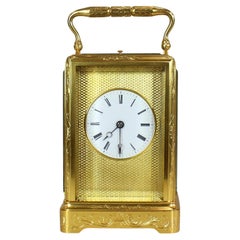
One Piece Engraved Repeating Carriage Clock
Located in Amersham, GB
A fine early repeating carriage clock in an engraved one piece case. With a gilt engin turned mask, and a white enamel dial and roman numerals.
The gilded case is engraved with foliate scrollwork, the 8 day repeating movement with English lever platform escapement strikes on a gong, is regulated by a silvered english lever platform escapement, although unsigned this clock is of the highest quality and is likely to have been made by one of the great Parisian makers. The gong block is signed FD in an oval cartouche, this supplier was used by both Henri Jacot...
Category
Antique 1850s French Victorian Carriage Clocks and Travel Clocks
Materials
Brass, Enamel, Steel, Ormolu
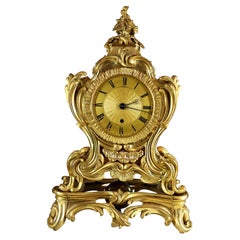
Single Fusee Mantel clock by Hay London
By HAY
Located in Amersham, GB
An unusual english single fusee mantel clock in a Louis XV style rocaille ormolu case in the french taste. The eight day fusee movement is of superb quality with a pendulum descendin...
Category
Antique Early 19th Century British Rococo Mantel Clocks
Materials
Bronze
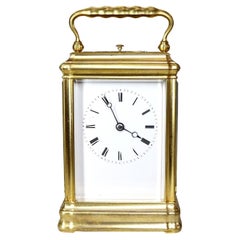
Petit Sonnerie Carriage Clock in Gorge Case with original Gilding
Located in Amersham, GB
A handsome Petit Sonnerie Carriage clock in a Gorge case retaining much of its original gilding, the eight day movement with original silvered lever escapement, strikes on two nested...
Category
Antique 1860s French Carriage Clocks and Travel Clocks
Materials
Brass, Enamel, Steel
A Rare George III Ten Bell Quarter Chiming Bracket Clock By Allam and Caithness
Located in Amersham, GB
A rare example of a quarter chiming bracket clock made 1800-1805 by John Allam and Thomas Caithness with an eight day triple fusee movement chiming on ten bells. This clock has an un...
Category
Antique Early 1800s English George III Mantel Clocks
Materials
Brass, Steel
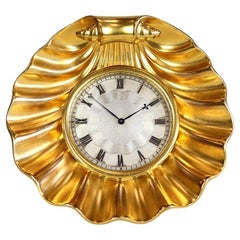
A Strut Clock in The Manner of Thomas Cole by Howell, James
Co.
By Thomas Cole (Clockmaker)
Located in Amersham, GB
This beautiful desk timepiece is a rare strut clock, in the form of a gilded scallop shell, with an engine turned silvered roman dial set behind a bevelled glass with distinctive fle...
Category
Antique 1860s English Baroque Revival Table Clocks and Desk Clocks
Materials
Ormolu
You May Also Like
English Fusee Carriage Clock By Thomas Cole and James Ferguson Cole
Located in London, GB
An exceptional English fusee carriage clock timepeice by two of the nineteenth centuries greatest clock makers. Although not signed by the brothers, this small carriage clock can be ...
Category
Antique 1830s English Carriage Clocks and Travel Clocks
Materials
Bronze
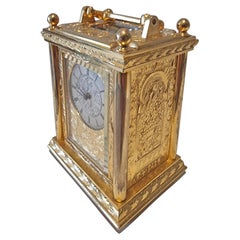
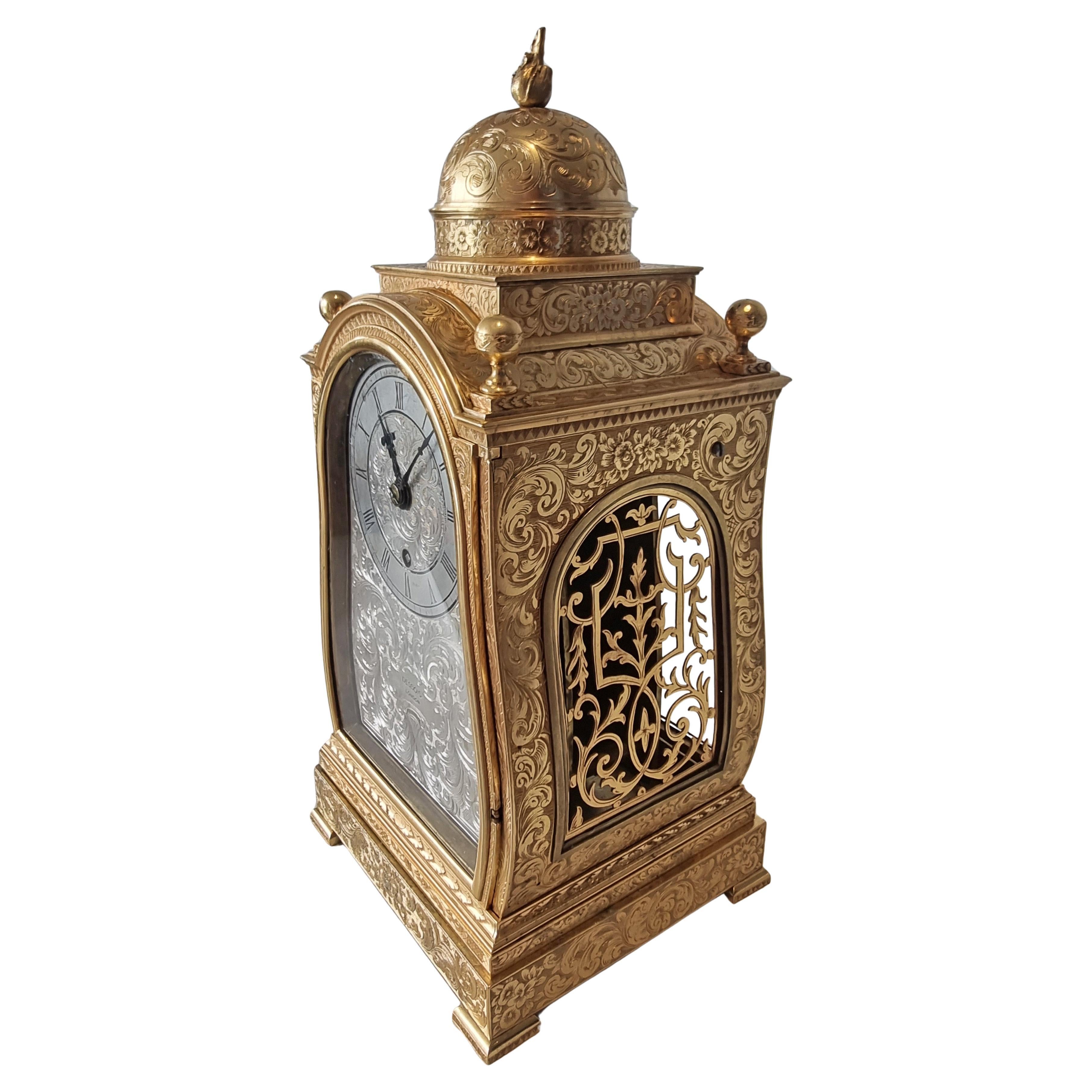
A Superb and very rare Engraved Thomas Cole Mantle Clock
Located in London, GB
An exceptional and perhaps unique English fusee mantle clock timepiece by one of the nineteenth centuries greatest clock makers. Although not signed by Thomas Cole, this mantle or table clock can be safely attributed to Thomas Cole. The multi layed case, which is typical of Cole, the horizontal lines in the background of the engraving, and the quality of the engraving, means this clock could only be by Cole. The eight day single chain fusee movement. The engraving for the retailer has been fitted into the available space, and would have been done after the clock has been completed by Thomas Cole (J.B. Hawkins).
The inset silvered dial is of typical Cole design with finely engraved rococo and floral decoration, black Roman numerals and fleur de lyes hands. This style of dial is noted on many examples of
Thomas Cole clocks...
Category
Antique 1840s English Mantel Clocks
Materials
Bronze
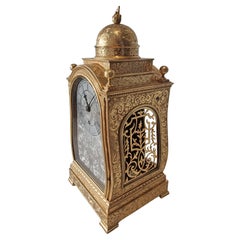
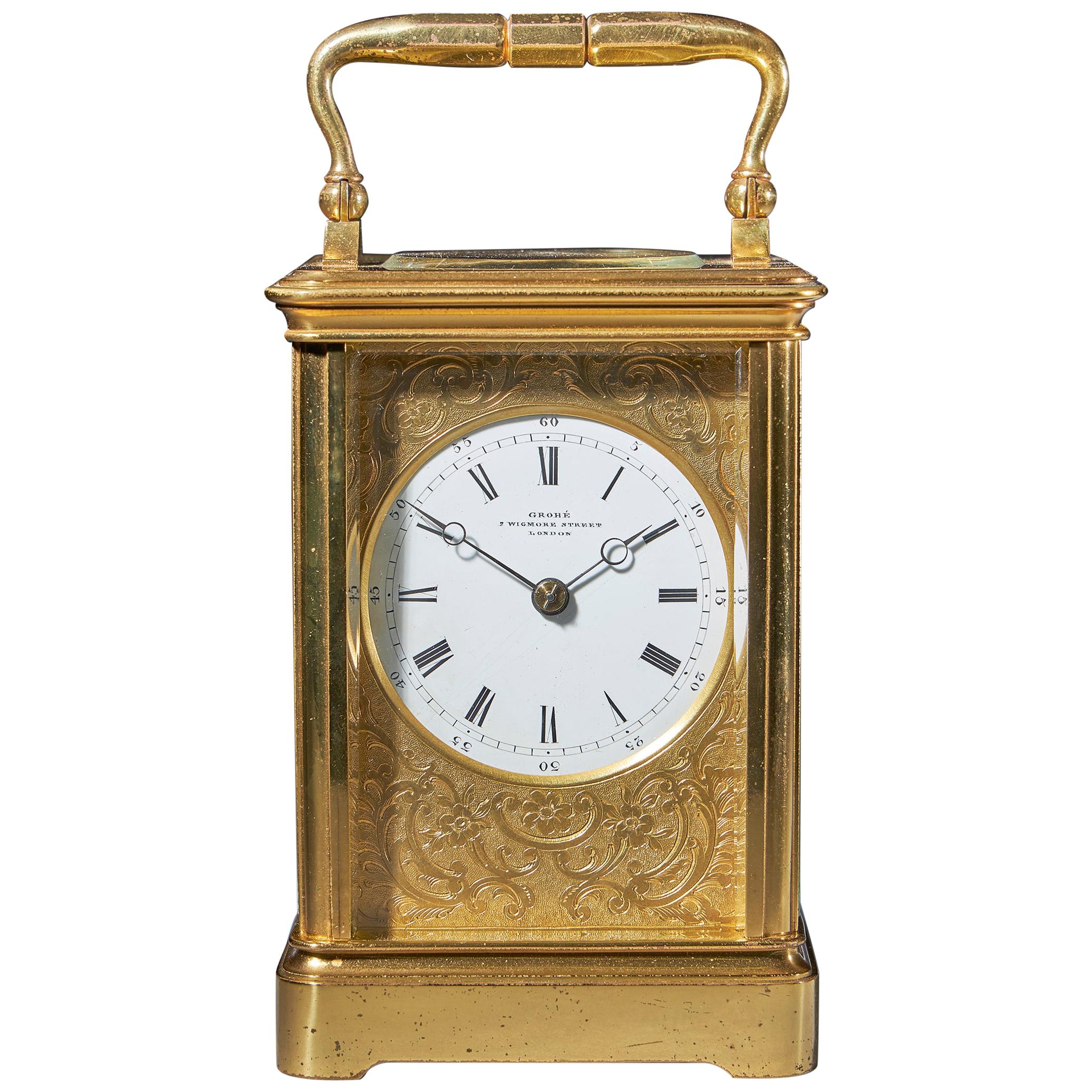
Striking 19th Century Carriage Clock with a Gilt-Brass Corniche Case by Grohé
Located in Oxfordshire, United Kingdom
Striking carriage clock with a gilt-brass corniche case by Grohé, circa 1880.
A most attractive eight-day striking carriage clock, signed on...
Category
Antique 19th Century French Neoclassical Carriage Clocks and Travel Clocks
Materials
Brass
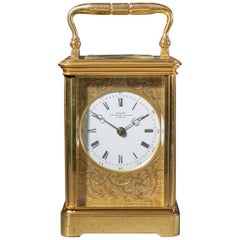
French Bronze Carriage Clock by Jules, Paris, c. 1840
Located in Los Angeles, CA
Graceful bronze carriage clock by Jules, Paris, c. 1840 (Late 19th Century), numbered 542 and includes "Jules A Paris" stamp as well. The piece is finely decorated with foliate engra...
Category
Antique 1840s French Carriage Clocks and Travel Clocks
Materials
Bronze
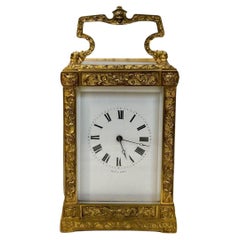
Antique French Sèvres-Style Gilt Carriage Clock with Enamel Dial, 19th Century
Located in Nottingham, GB
A refined 19th-century French Sèvres-style miniature carriage clock, beautifully crafted with an elegant gilt metal gorge case. Its striking pale blue/turquoise ground is enriched wi...
Category
Antique 19th Century Carriage Clocks and Travel Clocks
Materials
Brass
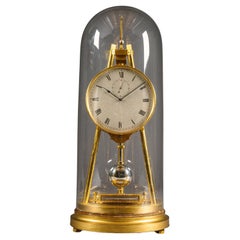
English Tripod Table Regulator Clock by Thomas Cole, Retailed by Hunt
Roskell
By Thomas Cole (Clockmaker)
Located in Brighton, West Sussex
A Fine English Tripod Table Regulator Clock by Thomas Cole, With Integral Thermometer and Barometer, Retailed by Hunt & Roskell, London
Signed to the dial for the retailer ‘Hunt & Roskell, London.’
No. 1318 /38
The circular six-inch silvered dial with cast bezel, signed ‘Hunt & Roskell, London’, above Roman chapters and blued steel spade hands, set with a large subsidiary seconds dial below XII, the centre finely engraved with scrolling strapwork decoration. The steel winding square protruding through an engraved and shaped plate immediately below 6 o'clock with handset achieved by adjustment to the rear. The movement with tapered plates joined by cylindrical screwed pillars, a two-part backplate, a going barrel, and deadbeat escapement. The pendulum suspended from the apex of the tripod from a G-bracket, with plumb line above, fine regulation achieved by a sliding cylindrical weight on the rod, terminating in a heavy silvered spherical bob secured via Cole's pendulum-locking system.
The case formed of three cylindrical rods set on a gilt and stepped circular base engraved with scrolling foliage, the recessed centre with a semi-circular glazed barometer with silvered register scale, blued steel hand and manually adjustable gilt recording hand. The tilted thermometer within an engraved and gilded surround. Below the tip of the pendulum is a beat scale resting on a bimetallic bar providing thermal compensation, the base resting on three adjustable gilt-metal levelling nuts.
Retaining its original glass dome and brass winding key.
England, Circa 1855.
This fine and rare timepiece by Thomas Cole is a masterpiece of design.
Described by Hawkins in 'Thomas Cole & Victorian Clockmaking' as “the first English table regulator for a gentleman’s library table,” Cole’s strut clock underwent over eight iterations before achieving a design that combined precision with extraordinary elegance.
The use of a tripod to determine the optimal pendulum suspension point is just one of several ingenious mechanisms Cole employed. Three adjustable nuts serving as feet allow for effective levelling of the clock, while a plumb line and bob ensure precise vertical alignment. Relocating the winding square directly beneath the dial eliminates the risk of scratching the surface or damaging the hands, while the inclusion of a thermometer, angled at 45 degrees, effectively conceals the beat scale and pendulum locking mechanism.
Ingeniously designed, the locking mechanism positioned just below the pendulum’s tip includes a beat scale resting on a brass bar that can be raised to secure the pendulum in place. This mechanism also provides thermal compensation through a bi-metallic strip, which automatically raises or lowers the bob in response to temperature fluctuations.
Both inventive and aesthetically striking, this rare clock exemplifies the highly ornamental Victorian timepieces...
Category
Antique 19th Century English Victorian Table Clocks and Desk Clocks
Materials
Brass, Bronze, Steel