Items Similar to Early 19th Century French Empire Mantel Clock, Portal Pendule, Paris circa 1820
Video Loading
Want more images or videos?
Request additional images or videos from the seller
1 of 22
Early 19th Century French Empire Mantel Clock, Portal Pendule, Paris circa 1820
$4,960.31
£3,691.30
€4,150
CA$6,864.17
A$7,368.04
CHF 3,923.10
MX$87,266.18
NOK 49,577.32
SEK 45,277.92
DKK 31,622.43
About the Item
Antique French round arch portal clock
France (Paris)
Bronze, enamel
Empire circa 1820
Dimensions: H x W x D: 47 x 26 x 12 cm
Description:
Very beautiful, strictly architecturally designed mantel clock, so-called portal clock.
Rectangular base standing on simple bell feet. Four flat, fluted pilasters with palm-leaf shaped capitals stand on top. They support the large round arch and the movement mounted in it.
The round arch front with its five archivolts is absolutely impressive in both its size and its fineness. We see ornamental bands as well as those of tendrils and foliage. The bezel is seemingly seamlessly integrated into the ensemble of arches and perfectly sets off the equally finely designed dial.
The black numerals and Breguet hands on white enamel ensure that the time is easy to read. Another simple hand indicates the date.
The clockmaker's signature is centred below the winding holes: Duval à Paris.
According to Tardy - Dictionnaire des Horlogers Francais, the Duval clockmaking family is documented in several locations in Paris in the first quarter of the 19th century. It can be assumed that the clock offered here was made in the workshop on the Quai de la Mégisserie, which existed there from 1815-1820.
A striking feature of the French pendule movement is the knife-edge suspension of the pendulum. Such suspensions are particularly rare and are otherwise primarily found in high-quality precision clocks.
The basic idea behind the knife-edge suspension is that, due to the lack of contact surface, the knife-edge support enables a practically friction-free pendulum movement. In addition, the centre of rotation of the pendulum is precisely defined by the cutting edge like in no other pendulum suspension [Klaus Dinger - Die Großuhr p. 42].
The clock strikes a bell on the half and full hour.
When dismantling and cleaning the movement, a signature with the date -1816- was noticed on the springs (see photo). As the springs were certainly not made by the clockmaker himself, but were bought in even then, it can be assumed that this signature was made by the springmaker.
Condition:
The movement has been completely dismantled and overhauled from the ground up. It runs reliably and accurately.
You will find a clock with a very similar appearance in the specialised literature:
Tardy - La Pendule Francaise 2ème Partie p. 388
- Creator:Duval (Clockmaker)
- Dimensions:Height: 18.51 in (47 cm)Width: 10.24 in (26 cm)Depth: 4.73 in (12 cm)
- Style:Empire (Of the Period)
- Materials and Techniques:
- Place of Origin:
- Period:
- Date of Manufacture:1815-1820
- Condition:Wear consistent with age and use. The movement has been completely dismantled and overhauled from the ground up. It runs reliably and accurately.
- Seller Location:Greven, DE
- Reference Number:1stDibs: LU5419243013612
About the Seller
5.0
Platinum Seller
Premium sellers with a 4.7+ rating and 24-hour response times
Established in 2014
1stDibs seller since 2020
220 sales on 1stDibs
Typical response time: 1 hour
- ShippingRetrieving quote...Shipping from: Münster, Germany
- Return Policy
More From This Seller
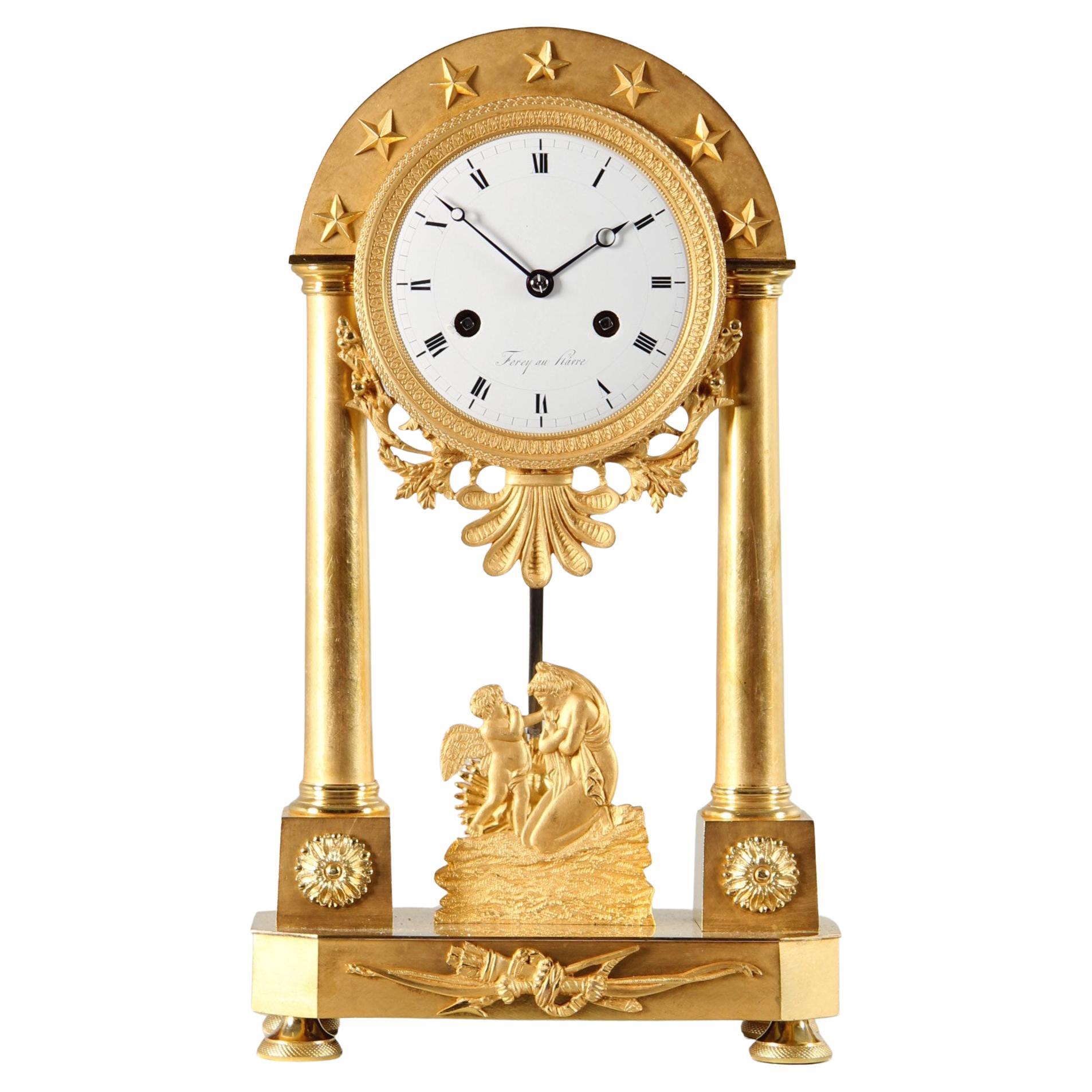
View AllEarly 19th Century French Mantel Clock, signed Ferey au Havre, Ormolu
Located in Greven, DE
Small mantel clock with bas-relief
France
Bronze, enamel
early 19th century
Dimensions: H x W x D: 33 x 19 x 9 cm
Description:
Antique, fire-gilt portal clock with figurative, Gre...
Category
Antique Early 19th Century French Empire Mantel Clocks
Materials
Bronze, Enamel, Ormolu

French Empire Ormulu Bronze Mantel Clock, Lepaute, Thomire, Paris, circa 1815
Located in Greven, DE
Ormulu pendule with depiction of friendship and love
Paris (Lepaute, Thomire)
fire-gilt bronze
Empire around 1815
Dimensions: H x W x D: 44 x 36 x 13 cm
French pendulum movement with eight days duration. Thread suspension and lock disc striking movement with strike on bell on the half and full hour.
White enamel dial with Roman hour numerals and Breguet hands.
Signature: LePaute & Fils / Hrl. du Roi (Pierre-Basile Lepaute (1750 - 1843) with his son Pierre-Michel Lepaute (1785-1849); from 1811 in joint workshop).
Description:
The extremely high quality pendulum shown here takes up a profound theme: Friendship, which combines with love and can thereby outlast time and death. As it is typical for the epoch of classicism, personifications and symbols are taken from the fund of ancient mythology and art and then developed further.
The main figure is a young woman in an antique, girded garment, standing barefoot and with crossed legs next to an altar, on which she is leaning with her left elbow. She gracefully bows her head towards a tempestuously approaching Cupid, grasps his right hand with her left and draws him to her bosom, the seat of the heart. The delicate ambivalence of flying towards and being held culminates in the trustingly intimate look that the two cast at each other.
The young woman personifies friendship, the winged Cupid love. As a sign of their intimate connection, two burning hearts appear on the altar next to the two, framed by the puffed scarf, which are closely bound together by a chain of flowers.
Next to them, on the altar slab, one can see an erected book with the title "Amitie" (French: amitie, friendship). Supporting the book is a pomegranate held by a ring of pomegranate flowers. The bursting seeds spill out of the cracked skin. Since ancient times, the pomegranate and its blossoms have been dedicated to the goddess Persephone, symbolizing the underworld and death, but also life and fertility. The myrtle interwoven in the pomegranate flower wreath of "friendship" also has a far-reaching symbolic power: the plant was dedicated to the goddess Aphrodite, stands for virginity, and was and is therefore obligatory in the bridal wreath...
Category
Antique Early 19th Century French Empire Mantel Clocks
Materials
Bronze, Enamel

19th Century Mantel Clock "Astronomy", France circa 1830
Located in Greven, DE
Antique mantel clock on the theme of astronomy
France
Bronze
Charles X around 1830
Dimensions: H x W x D: 48 x 19 x 10 cm
Description:
Unusual and beautifully crafted bronze mante...
Category
Antique 19th Century French Charles X Table Clocks and Desk Clocks
Materials
Bronze

French Directoire Pendule, Black Marble, Firegilded Bronze, circa 1800
Located in Greven, DE
Antique portal clock
France
marble, bronze, enamel
Directoire around 1800
Dimensions: H x W x D: 46 x 28 x 14 cm
Description:
Antique portal c...
Category
Antique Early 19th Century French Directoire Mantel Clocks
Materials
Belgian Black Marble, Bronze

Early 19th Century Ormolu Mantel Clock, Atala freeing Chactas, Paris, circa 1810
Located in Greven, DE
Mantel Clock "Atala and Chactas"
Paris
Bronze (fire-gilt and patinated), enamel
Empire around 1810
Dimensions: H x W x D: 40 x 32 x 11 cm
Description:
Very rare and extremely high quality French mantel clock, so-called Pendule Au Bon Sauvage.
Depicted are scenes from the love story "Atala or the love of two savages in the desert" written by Francois René Vicomte de Chateaubriand in 1801. At the beginning of the 19th century, this was probably the most famous love story in Europe, but today it has been forgotten.
The story, set in present-day Louisiana (USA), is roughly rewritten about the forbidden love between Chactas, a young Indian, and Atala, the beautiful daughter of a Spaniard.
Chactas is captured in a battle between two Indian tribes, chained to a palm tree and is to be sacrificed. Atala wants to save his life and convert him to Christianity. She unties him from the palm tree at night and they flee together into the wilderness of North America. Their love for each other grows stronger and stronger and they have prospects for a future together.
The story takes a tragic turn when Atala, who must remain a virgin due to a vow made by her mother, can no longer withstand the conflict of her feelings and commits suicide.
The main group of characters thus shows Chacta's liberation through Atala. Atala is leaning against a pile of logs. The animal fur thrown over the logs and the weapons leaning against the stack on the right give the impression of a night camp.
The bronze is of rarely beautiful quality, finely chiselled and makes the scene appear very lively. The contrast of fire-gilded and patinated bronze adds tension to the composition.
In the base we see the Entombment as the end of the tragic love story. This bronze work is also very detailed, the interplay of bright and matt gilding makes the flat relief appear much deeper than it is.
The depiction of the mantel clock presented here shows that the exotic was only known from stories and that the bronzier had his own ideas about the appearance of this distant world. The Indian, for example, has very European facial features and his skin was not black in reality, of course. The palm tree was also certainly not found in the North American wilderness.
The heart of the clock is a French pendulum movement, integrated into the wooden pile, with an eight-day power reserve and a lock plate striking a bell on the half and full hour. The pendulum is suspended on a thread, typical of the period. The classically shaped hands, so-called Breguet hands, are also typical of the time.
The enamelled dial has black Roman hour numerals, Arabic quarter hours and bears the signature: Le Roy hr. de Madame A PARIS.
Interesting facts:
The period from 1795 to about 1815 saw the creation of probably the most spectacular group of bronzes: The "Au bon Sauvage" pendulums - depictions of the "Noble Savage".
Today's viewers react to these objects with both fascination and irritation. Enthusiastic on the one hand about the obvious quality of the detailed bronzes and the allure of the exotic, on the other hand distanced and cautious because of the possible discrimination that is suspected behind them. The ambivalence of this feeling motivates the search for the conditions of origin of these pendulums.
Europeans found their new ideal of the natural man primarily in fictional and realistic travelogues about the Indians of North America...
Category
Antique Early 19th Century French Empire Mantel Clocks
Materials
Ormolu

Empire Mantel Clock - La Bibliotheque, Ormolu, France, Paris, circa 1820
By Le Roi
Located in Greven, DE
Mantel Clock - La Bibliotheque - In the study room
Paris
fire-gilt bronze, enamel
Empire around 1820
Dimensions: H x W x D: 38 x 28 x 19 cm
Description:
Scenery mounted on an oval...
Category
Antique Early 19th Century French Empire Mantel Clocks
Materials
Bronze

You May Also Like
French 19th Century Empire Portico Clock
Located in Baton Rouge, LA
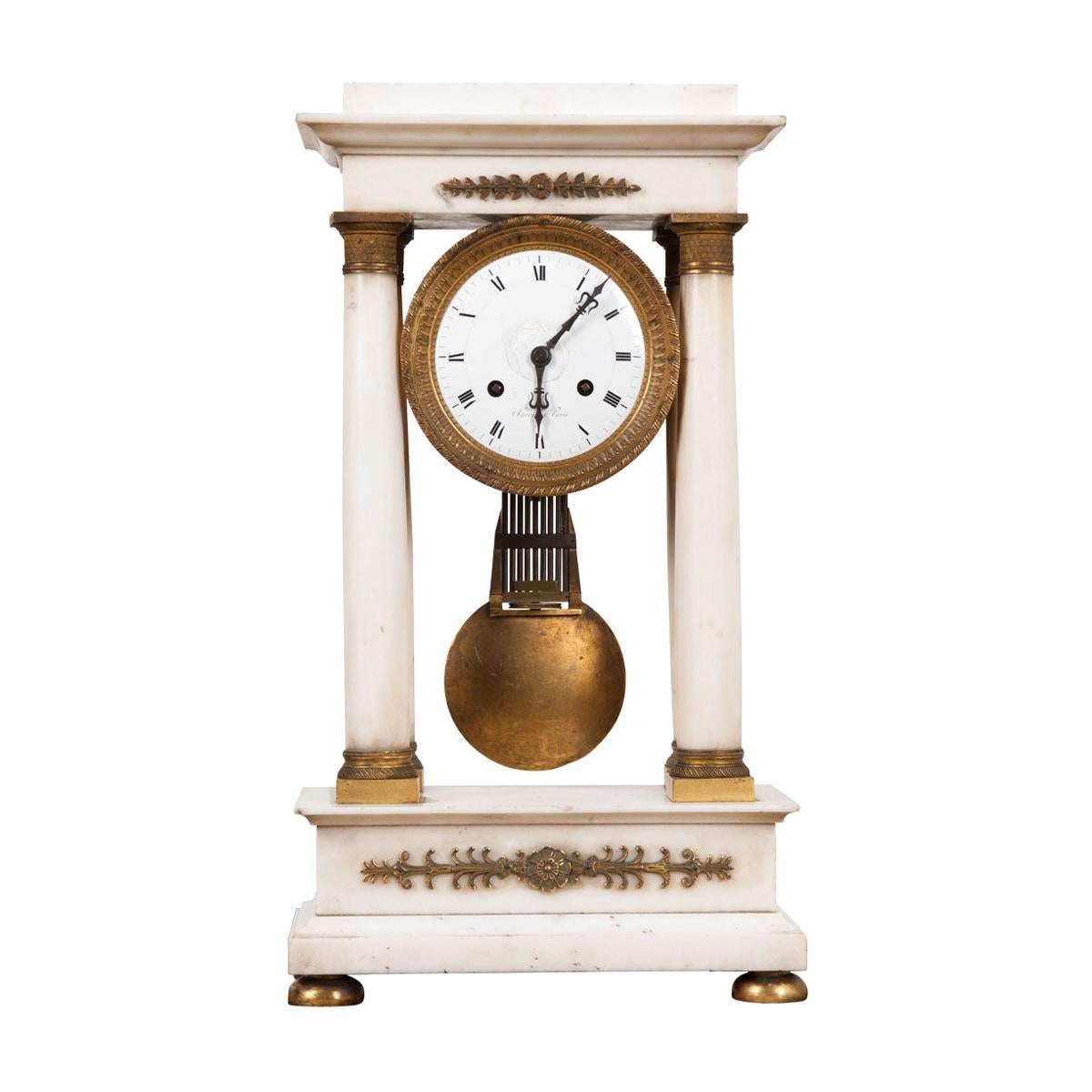
This elegant period Empire ormolu-mounted white marble portico clock, circa 1830, is from France. The floral-and-foliate ormolu-mounted frieze sits above four Doric columns with gilt...
Category
Antique 1830s French Empire Mantel Clocks
Materials
Marble
French Mid 19th Century Charles X Period Ormolu Portico Clock
Located in West Palm Beach, FL
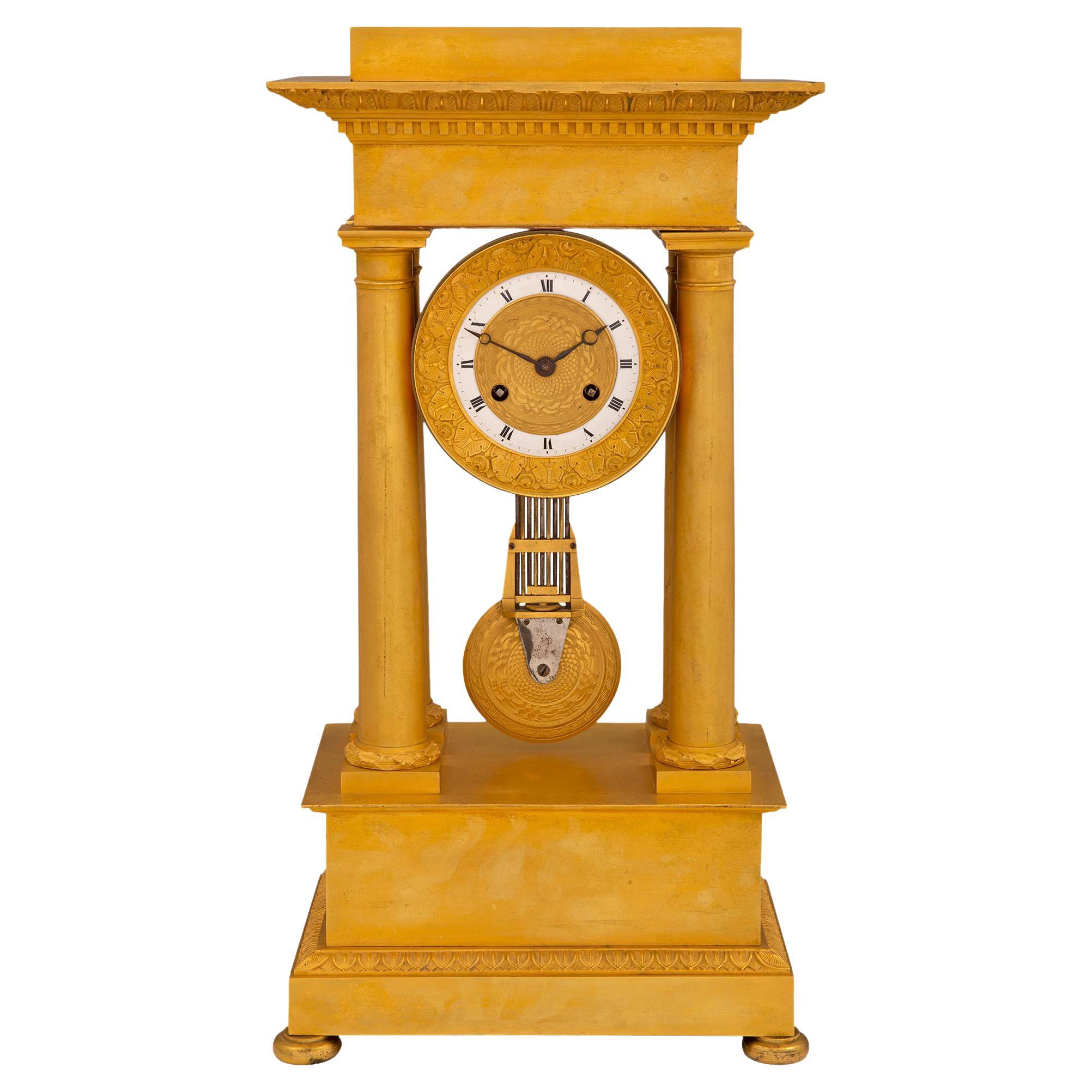
An exceptional French mid 19th century Charles X period ormolu portico clock. The clock is raised by fine bun feet below the rectangular base with an elegant mottled design and richl...
Category
Antique 19th Century French Charles X Mantel Clocks
Materials
Ormolu
19th Century French Empire Gilt Bronze Mantel Clock
Located in Dallas, TX
This 19th Century French Empire Mantle Clock features a stunning frame made of gilt bronze, exuding elegance and luxury typical of the Empire style. The clock showcases intricate det...
Category
Antique 19th Century French Mantel Clocks
Materials
Bronze
French Louis XVI Style Mantel Clock, 19th Century
Located in Brighton, Sussex
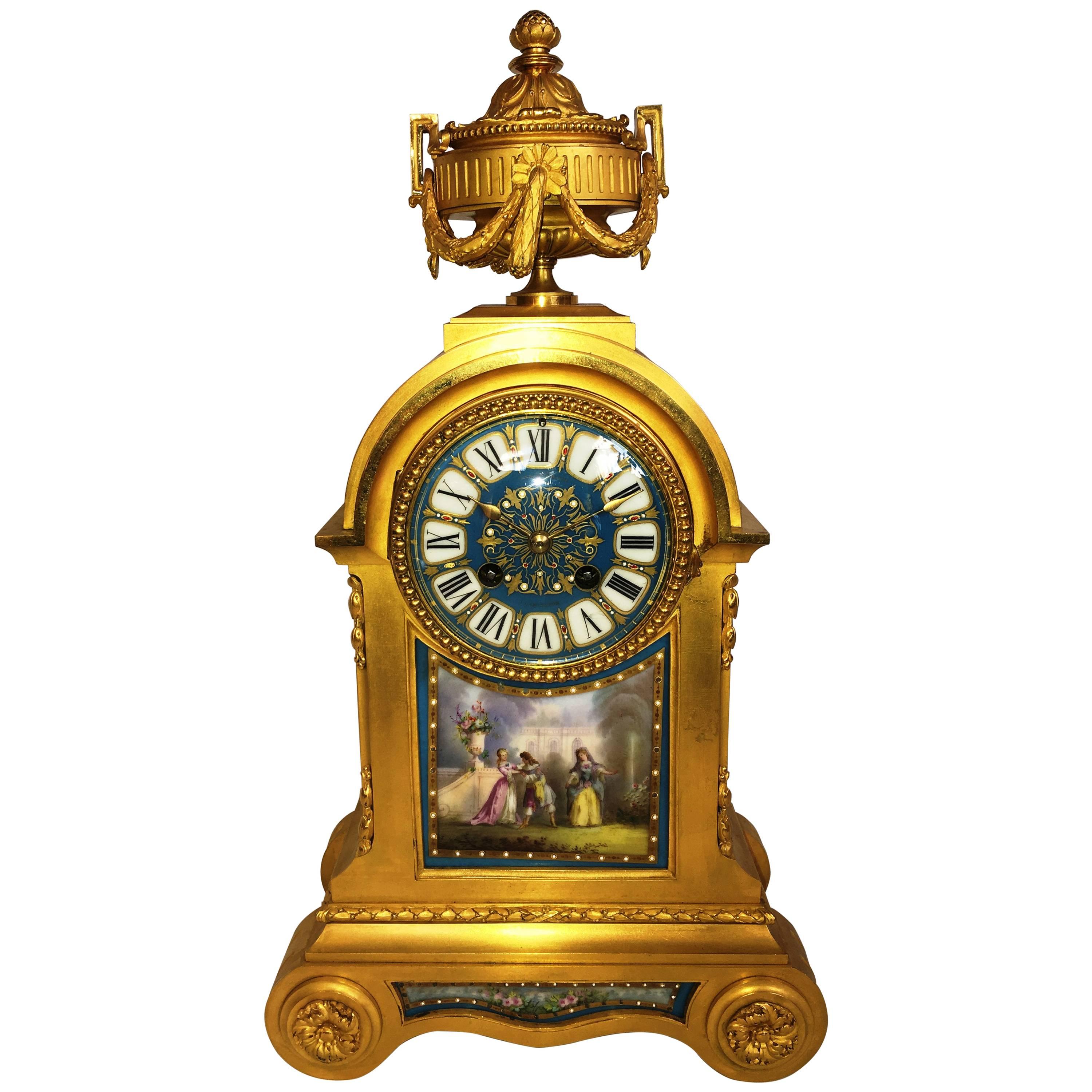
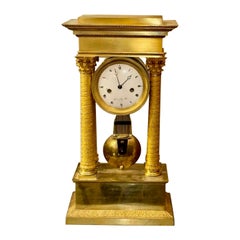
A very good quality 19th century French gilded ormolu mantel clock, having Sevres style porcelain panels, depicting a romantic scene, a gilded ormolu urn with swags above the clock f...
Category
Antique 19th Century French Mantel Clocks
Materials
Ormolu

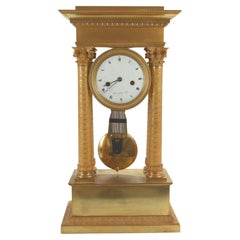
Very Large French 19th Century Empire Period Ormolu Bronze Portico Mantel Clock
Located in New York, NY
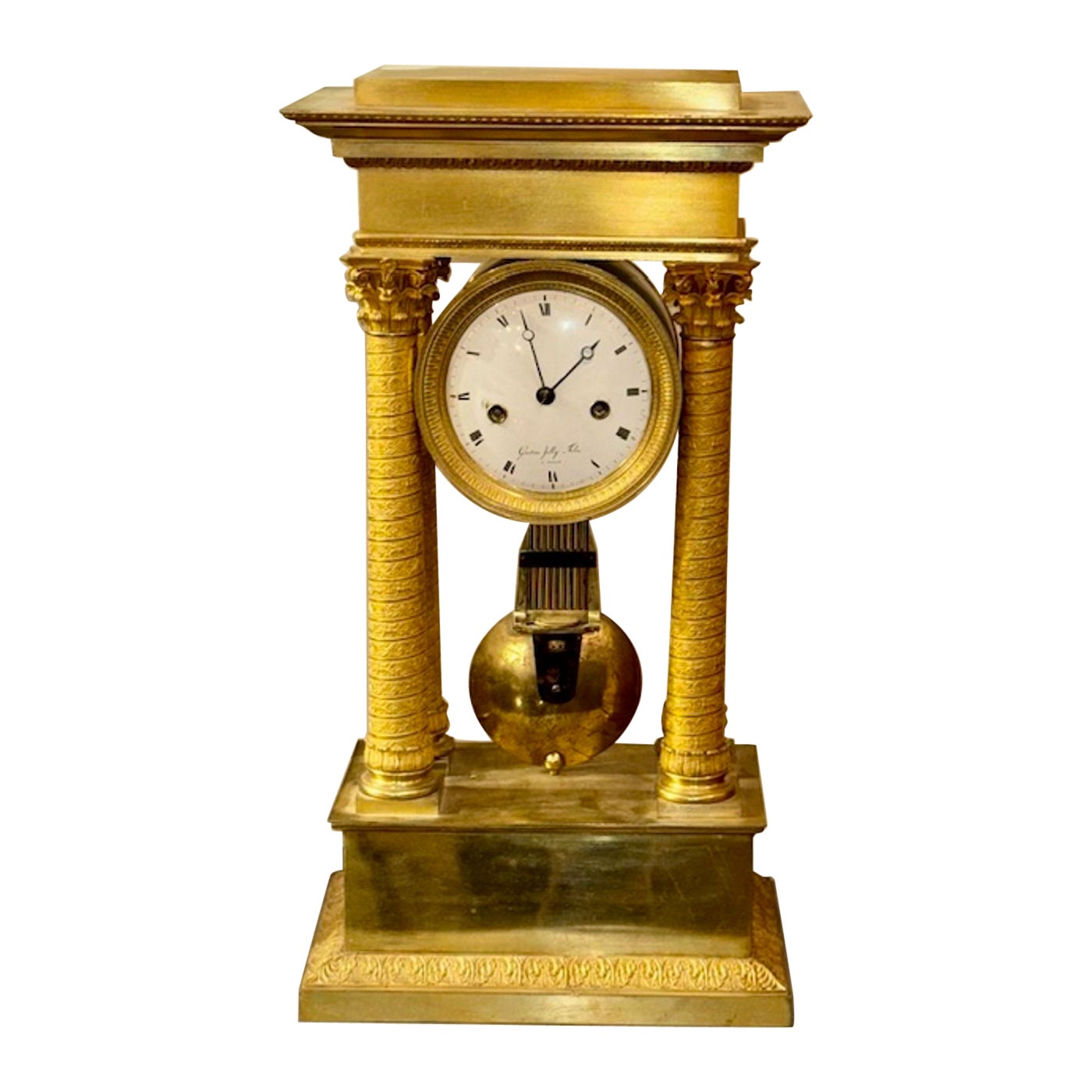
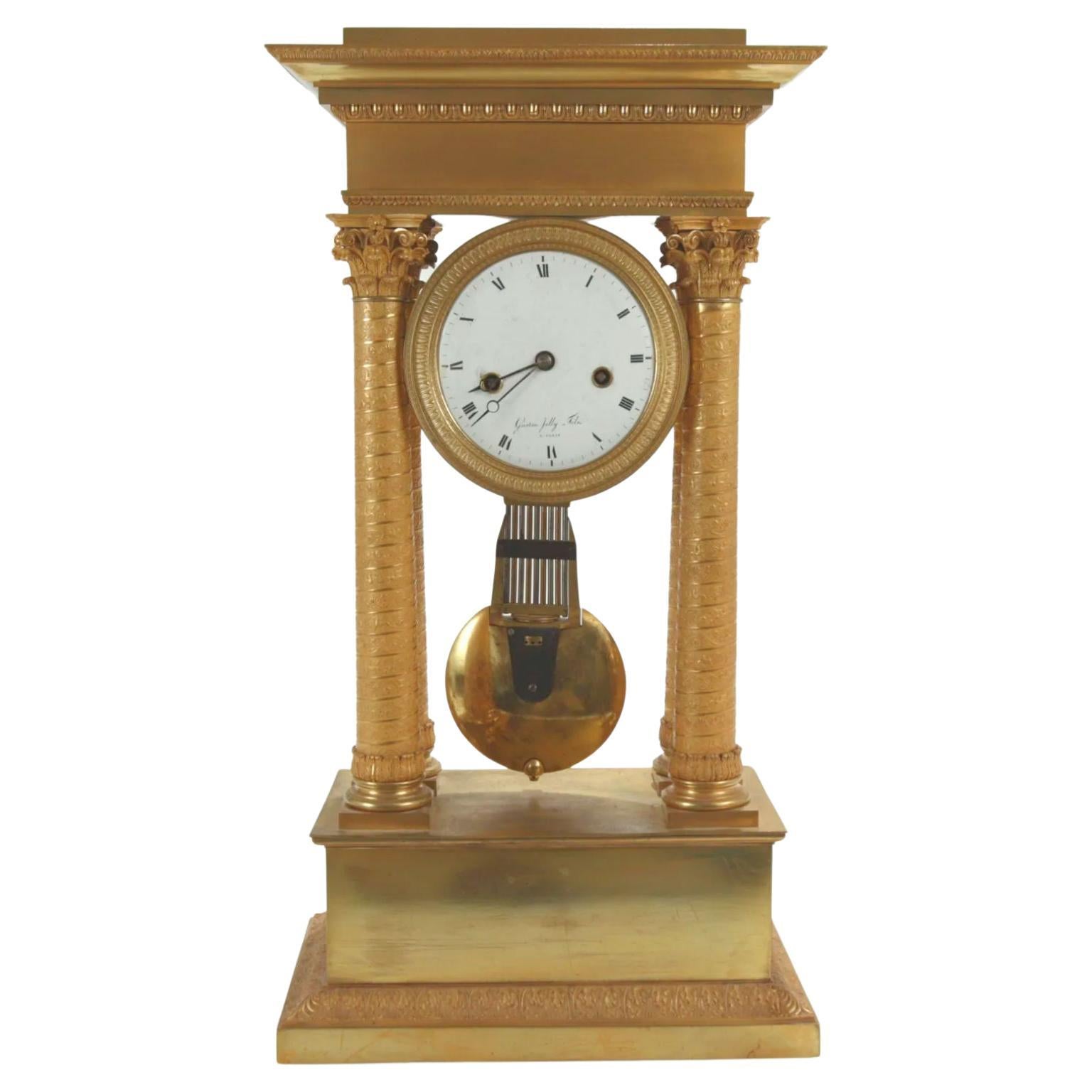
French Empire Ormolu Bronze Portico Mantel Clock by Gaston Jolly, Paris, Circa 1810s, with original pendulum.
Category
Antique Early 19th Century Empire Mantel Clocks
Materials
Bronze
French Empire Mantle Clock
By Negrier a Gueret
Located in Norwich, GB
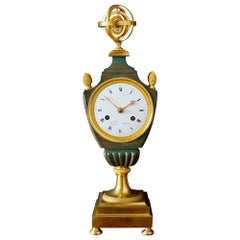
French Empire mantle clock, elegant patinated bronze vase shaped case standing on a stepped ormolu base with turned feet, four pineapple fin...
Category
Antique 1810s French Mantel Clocks
Materials
Bronze
More Ways To Browse
Breguet Antique
Breguet Numerals
Antique Round Clock
French Pendule
Pendule France
Pendule Empire
Portal Clock
Dior Clock
Duval Clock
Brass Clock Set
Antique Copper Rings
Bird Clock
Ormolu Figural Clock
Signed French Urn With Cherubs
Antique Arts And Crafts Clock
French Portico Clock
Antique English Mantel Clock
Clocks with Pendulums