Want more images or videos?
Request additional images or videos from the seller
1 of 12

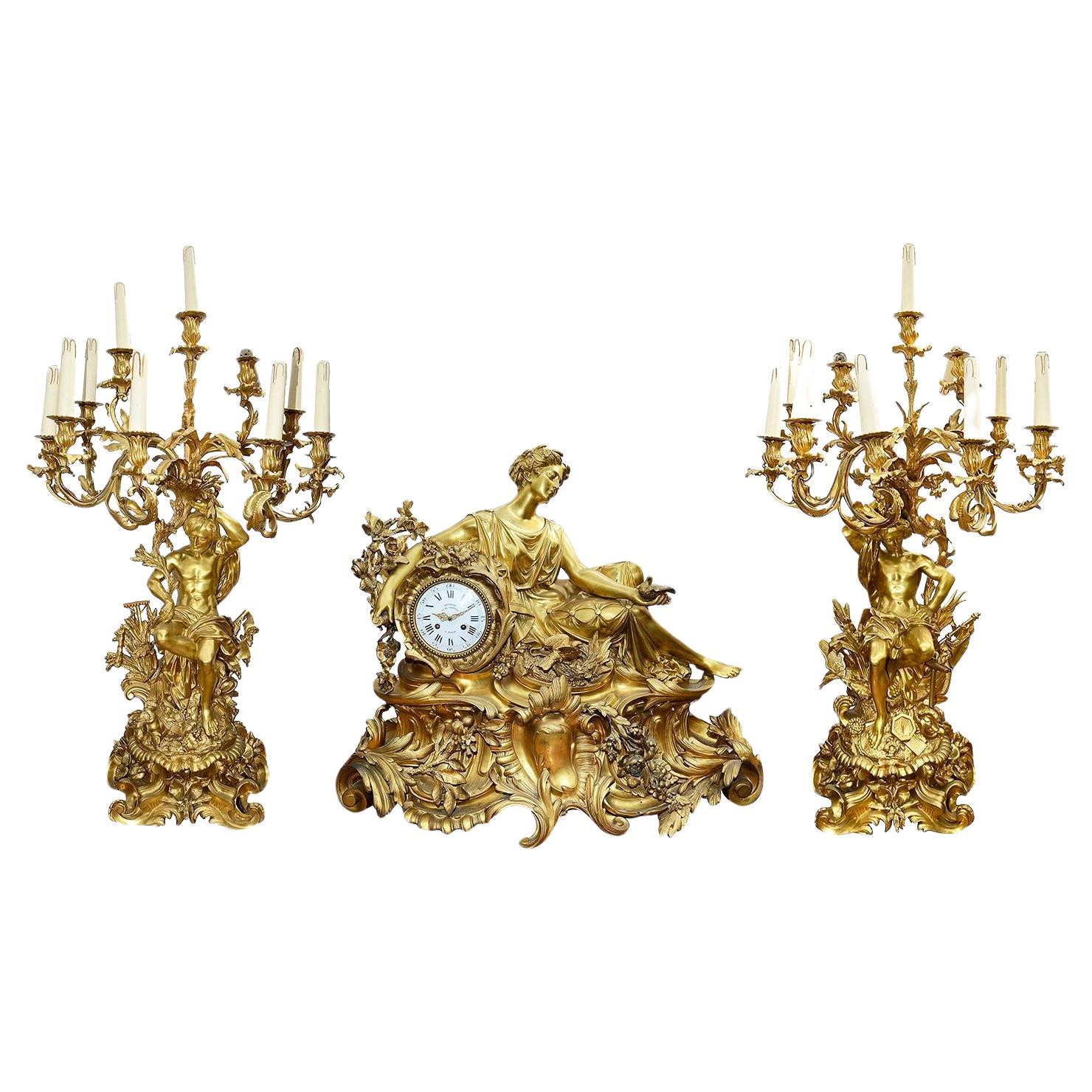
A Fine Louis XVI Style Clock Garniture by François Linke

$32,755.74
£24,000
€27,966.49
CA$45,188.18
A$49,495.06
CHF 26,059.15
MX$590,707.13
NOK 332,100.59
SEK 303,590
DKK 208,984.88

About the Item

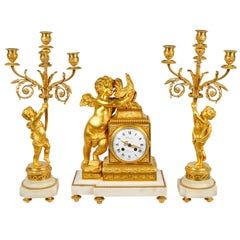
A Fine Louis XVI Style Gilt-Bronze and White Marble Three-Piece Clock Garniture, By François Linke. Comprising a mantle clock and a pair of four-light candelabra. The Louis XVI style case features a finely cast figure of the Goddess Diana and an exuberant Cupid rising on a pillar of clouds, the Goddess having confiscated his bow. The candelabra modelled en suite will cherubs holding candelabra. The twin train eight-day movement striking on a bell. The clock signed ‘F. Linke’ to the bronze. The dial signed 'F. Linke Paris'. The clock movement numbered '7636'. The candelabra with foundry stamp for ‘Maison COLIN’. France, Circa 1900. Dimensions of Clock: Height : 44 cm 17 inches Width : 28 cm 11 inches Depth : 12 cm 5 inches Weight : 12 kg 26 lbs Dimensions of Candelabra: Height : 71 cm 28 inches Width : 24 cm 9 inches Depth : 22 cm 9 inches Weight: 8 kg 18 lbs François Linke (1855-1946) François Linke was the most celebrated ébéniste of the late 19th and early 20th-century Belle Époque period. His furniture is highly prized for its exceptional craftsmanship and refined design. Like many of his contemporaries, Linke produced pieces reviving the French historical styles of Louis XIV, Louis XV, and Louis XVI. However, he also pioneered entirely new designs in collaboration with the sculptor Léon Messagé. Described as Le Style Linke, these creations blend Rococo exuberance with the fluidity of Art Nouveau and were unveiled to great acclaim at the 1900 Paris International Exhibition.
  • Creator:
  • Dimensions:
    Height: 17.33 in (44 cm)Width: 11.03 in (28 cm)Depth: 4.73 in (12 cm)
  • Style:
    Louis XVI (In the Style Of)
  • Materials and Techniques:
  • Place of Origin:
  • Period:
  • Date of Manufacture:
    Circa 1900
  • Condition:
    Wear consistent with age and use.
  • Seller Location:
    Brighton, GB
  • Reference Number:
    Seller: B767801stDibs: LU1028048041822

More From This Seller

View All
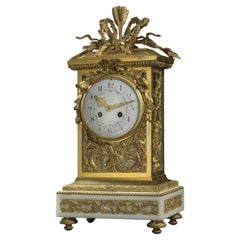
A Louis XVI Style Mantel Fine Gilt-Bronze Clock by François Linke
By François Linke
Located in Brighton, West Sussex
A Very Fine Gilt-Bronze Clock With A White Marble Base by François Linke. The case signed 'Linke'. This rare example of a clock by François Linke has a twin train eight-day mov...
Category

Antique 19th Century French Louis XVI Mantel Clocks

Materials

Marble, Enamel, Ormolu

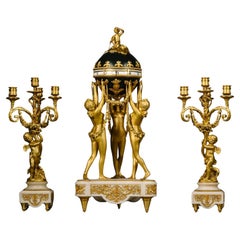
A Louis XVI Style Gilt and Patinated Bronze and Marble Clock Garniture
By Jollet Cie
Located in Brighton, West Sussex
A Louis XVI Style Gilt and Patinated Bronze and Marble Clock Garniture, Comprising a 'Pendule à Cercles Tournants' Modelled with the Three Graces and a Pair of Cherub Four-Light Cand...
Category

Antique 19th Century French Louis XVI Mantel Clocks

Materials

Marble, Ormolu

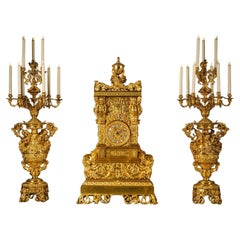
A Monumental Renaissance Revival Clock Garniture, Attributed to Feuchère
Located in Brighton, West Sussex
A Large and Important Louis Philippe Period Gilt-Bronze Three-Piece Clock Garniture. Attributed to the Feuchère family. The clock movement by Hémon. In the Renaissance revival style. Comprising a clock and a pair of nine-light candelabra. The clock case of architectural out-shape with cherubic term figures supporting a rectangular pediment centred by an urn. The sides of the clock tower cast in relief with strapwork and foliage. The dial inset with enamel Roman numeral chapters. The twin-barrel clock movement with tic-tac escapement, silk suspension and countwheel strike to bell. Pendulum and winding key. The candelabra as twin-handled vases supporting tiered branches with candle nozzles. Modelled en suite with naturalistic scrolls and foliage. Surmounted by finials modelled as an eagle toying with a serpent. The scrolled handles flanked by cherubic figures and serpents. The bodies fronted by bacchic masks and supported on socles bearing angels. France, Circa 1835. The clock movement signed ‘HEMON A PARIS’. The clockmaker Claude Hémon was established at rue de St. Martin circa 1810-1820. Dimensions, the clock: Height : 106 cm 42 inches Width : 58 cm 23 inches Depth : 38 cm 15 inches Weight : 72 kg Dimensions, the candelabra: Height : 104 cm 41 inches Width : 36 cm 14 inches Depth : 36 cm 14 inches Weight : 28 kg (each) This magnificent clock garniture of palatial size is designed in the Renaissance revival style and dates to the Louis Philippe period. Executed in sculptural gilt-bronze with leaves, scrolls, masks and exotic birds, the naturalistic ornament represents an elaborate system of allegories and mythological iconography which recall the influence of Italian Mannerist art in France. The distinctive design reflects a new style which replaced the neoclassism of the French Empire period. With the fall of Napoleon Bonaparte, artists and designers sought a new decorative vocabulary with which to aggrandise the Bourbon restoration. With the French revolution and Louis XVI’s execution still within living memory, it seemed too soon for a revival of the style of the Grand Siècle. Instead they looked further back to the time of François I, whose patronage of Italian artists had brought the Renaissance to France. The idea of a renaissance revival appealed to the new Bourbon monarchs and their patronage ignited great creativity in the arts. The reigns of Louis XVIII and Charles X, who were brothers of the late King, Louis XVI, and later of Louis Philippe I, nicknamed the Citizen King, coincided with the enlightenment and the dawn of the industrial age. Great technical progress was made in metallurgy and casting which raised the art of bronze making to new heights in the hands of great masters such as Pierre-Philippe Thomire (1751-1843) and Pierre- Jean-François Denière (1774-1866). The renaissance provided a rich and varied source book in architecture, furniture and other decorative arts for designers such as Claude Aimé Chenavard (1798-1838) whose Album de l’ornemaniste (1835) became a reference work. Léon Feuchère (1804-1857) also produced drawings of interiors, silver, bronzes and furniture and was a scion of the prominent family of bronze castors established by his grandfather Pierre-François Feuchère (1737-1823) who had worked as a gilder for the bronze caster Pierre Gouthière before setting up a bronze foundry that would become one of the largest in Paris under the management of his son Lucien-François (d. 1841) and grand-son Armand (1797-1866). A number of drawings by Léon Feuchère have recently been discovered by the Rijksmuseum and probably belonged to the collection of Louis-Philippe-Albert, duc d’Orléans, comte de Paris (1838-1894). Louis-Philippe-Albert was the grandson of the French king, Louis-Philippe I (1773-1850), who granted him the title of comte de Paris, and the son of Ferdinand-Philippe, duc d’Orléans (1810-1842). Ferdinand-Philippe was an important collector and sponsored many young artists to create metalwork objets d’art, notably a celebrated surtout de table made by Claude-Aimé Chenavard and Jean-Jacques Feuchère (1807-1852), a cousin of Armand and Léon. Principally remembered as a sculptor, Jean-Jacques Feuchère trained in the family foundry and designed small objects, cigar boxes...
Category

Antique Early 19th Century French Renaissance Revival Mantel Clocks

Materials

Bronze

Napoléon III Sèvres Style Clock Garniture
Located in Brighton, West Sussex
A fine Napoléon III gilt-bronze and sèvres style cobalt blue ground 'Jewelled' Porcelain Three-Piece Clock Garniture Comprising a mantel clock and a pair of five-light vase candel...
Category

Antique 19th Century French Napoleon III Mantel Clocks

Materials

Ormolu

Louis XVI Style Porcelain and Gilt-Bronze Lyre Clock Garniture, circa 1900
Located in Brighton, West Sussex
A fine Louis XVI style cobalt blue porcelain and gilt-bronze lyre clock garniture, with jewel set pendulum. French, circa 1900. The candelabra bearing a paper label to the und...
Category

Antique Late 19th Century French Louis XVI Mantel Clocks

Materials

Bronze

Louis XVI Style Gilt Bronze and White Marble Clock By François Linke, circa 1890
By François Linke
Located in Brighton, West Sussex
A fine Louis XVI style gilt bronze and white marble clock depicting Diana and Cupid, by François Linke.  French, circa 1890. Signe...
Category

Antique Late 19th Century French Louis XVI Mantel Clocks

Materials

Marble, Bronze

You May Also Like

Important 19th Century French clock garniture by Deniere.
By Maison Deniere
Located in Brighton, Sussex
A wonderfully impressive 19th Century French gilded ormolu clock garniture, by Deniere of Paris. The clock having a classical reclining maiden holding doves among flowers and foliage...
Category

Antique Late 19th Century French Louis XVI Mantel Clocks

Materials

Ormolu

French Mantle Clock Garniture in the Louis XVI Manner
Located in London, GB
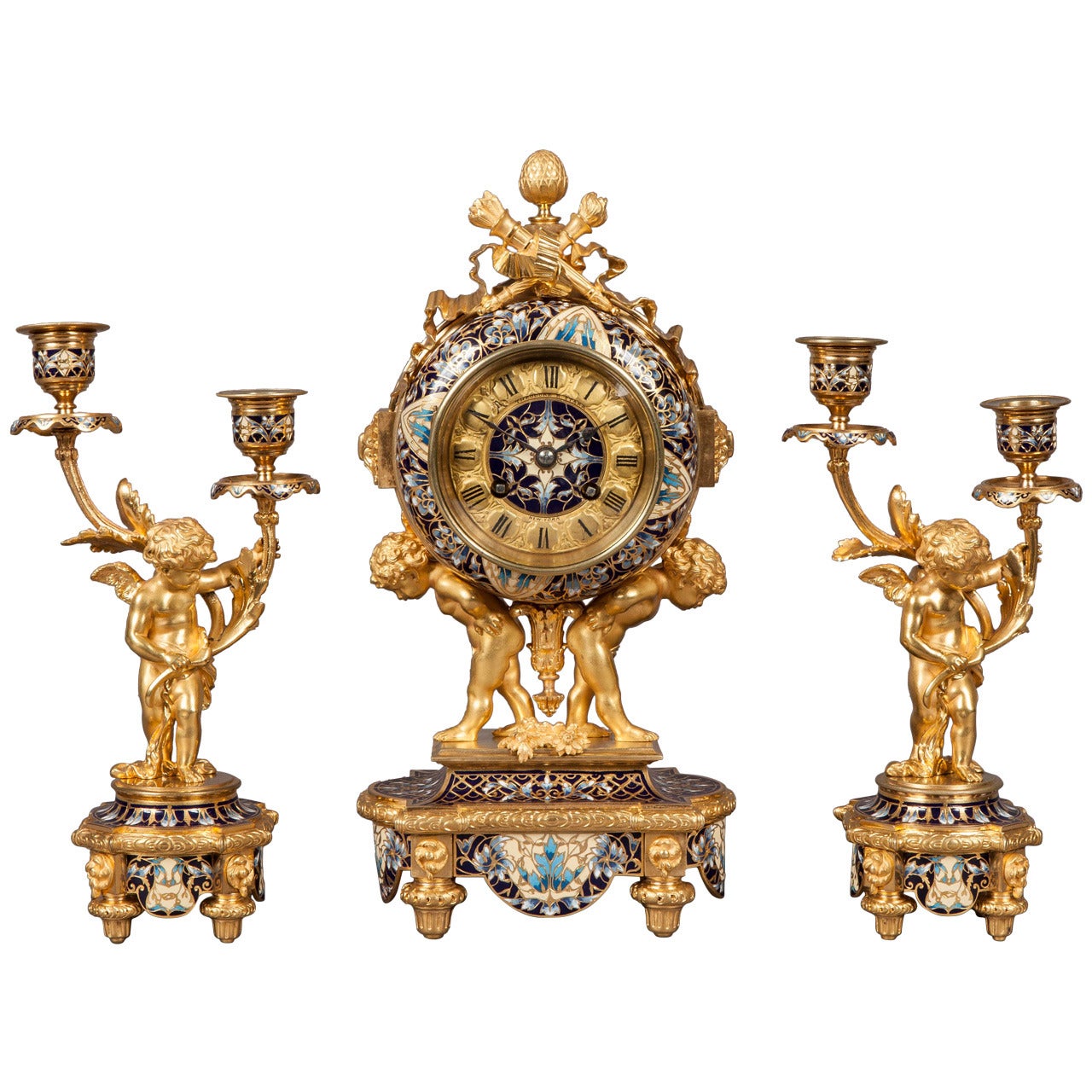
Constructed in gilt bronze and decorated with champleve´ enamel; the candelabra have toupie feet supporting the shaped circular bases, on which winged cherubs hold two armed candle a...
Category

Antique 1880s French Louis XVI Clocks

Materials

Enamel, Ormolu

French Louis XVI Style Mantel Clock + Candelabra, 19th Century
Located in Brighton, Sussex
A very good quality mid 19th Century French gilded ormolu Louis XVI style mantel clock with a matched pair of classical five brach candelabra, with putti supporting cornucopia. The c...
Category

Antique 19th Century French Louis XVI Mantel Clocks

Materials

Ormolu

French Louis XVI Style Clock Garniture
Located in Brighton, Sussex
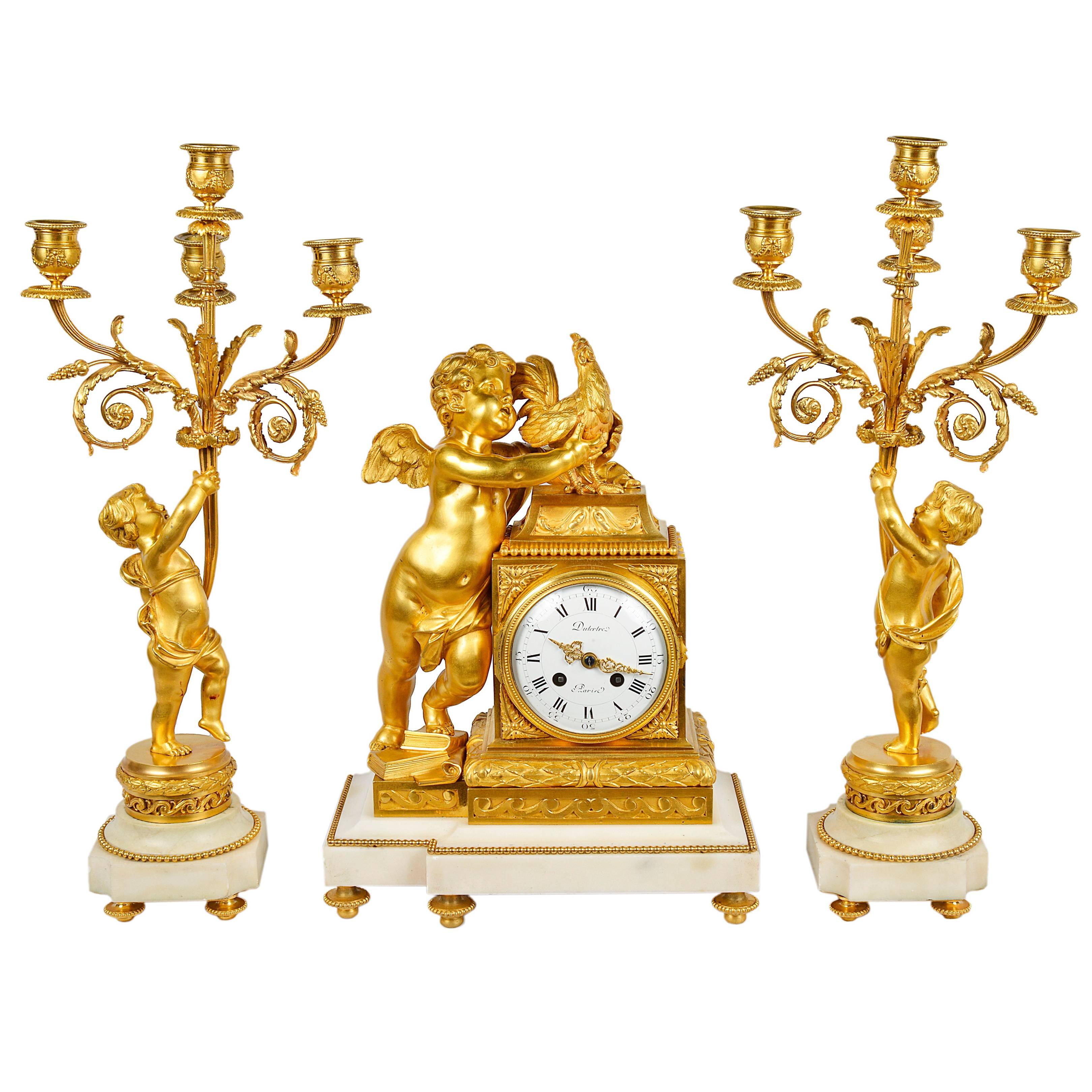
A very pleasing French gilded ormolu and white marble clock garniture in the Louis XVI style. The clock having a cherub holding a chicken, the white enamel clock face with an eight d...
Category

Antique 19th Century French Louis XVI Mantel Clocks

Materials

Marble, Ormolu

Fine Quality 19th Century Sevres Style Clock Garniture
By Manufacture Nationale de Sèvres
Located in Brighton, Sussex
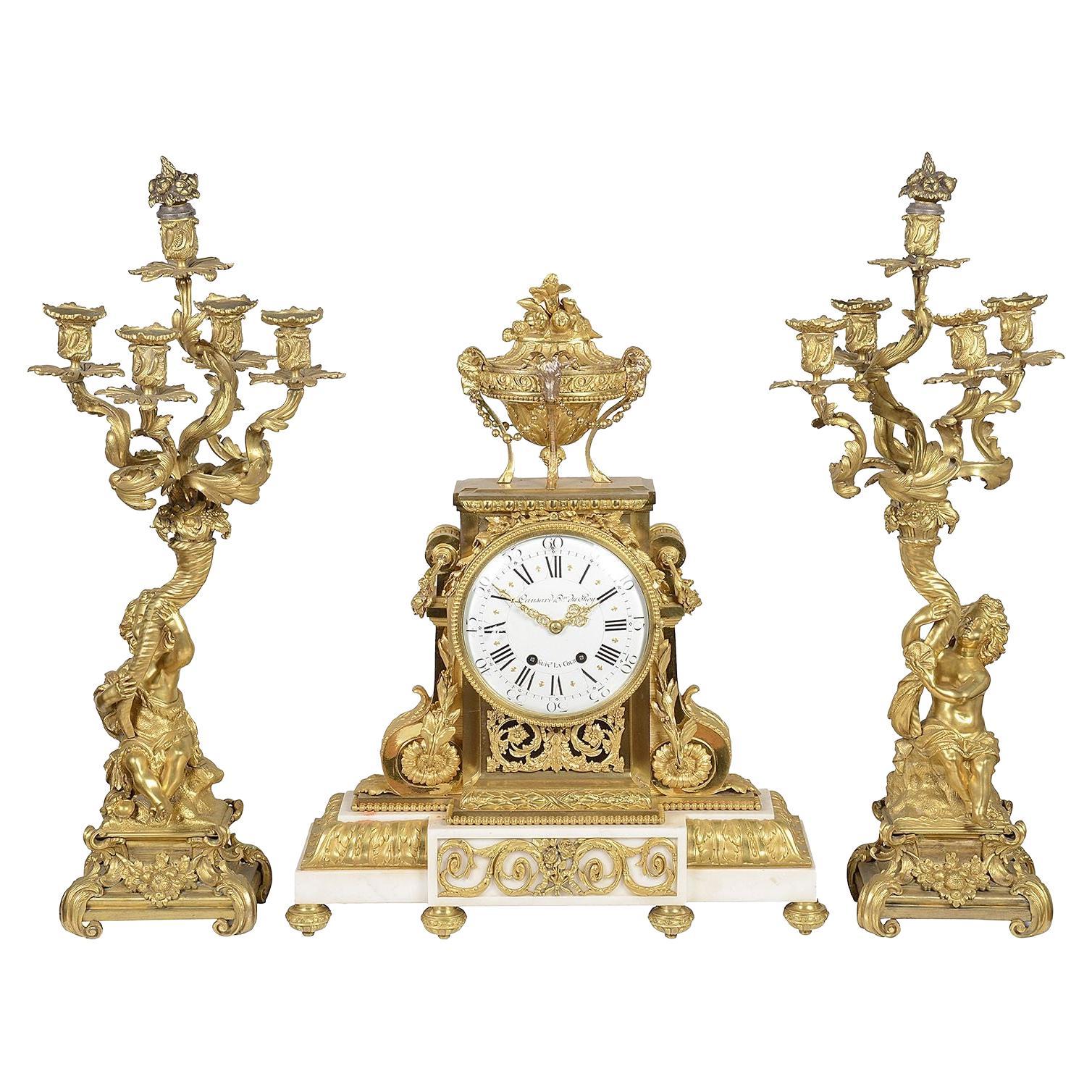
A fine quality 19th century French Sevres style porcelain and gilded ormolu clock garniture. The pair of five branch gilded ormolu candelabra each having Sevres style porcelain urns and pedestals with classical romantic scenes painted on them. The clock having an impressive lidded porcelain urn above with gilded handles either side, scrolling foliate ormolu mounts above the porcelain faced eight day duration clock that chimes...
Category

Antique 19th Century French Louis XVI Mantel Clocks

Materials

Ormolu

Large Louis XVI Style Gilded Clock Garniture
Located in Brighton, Sussex
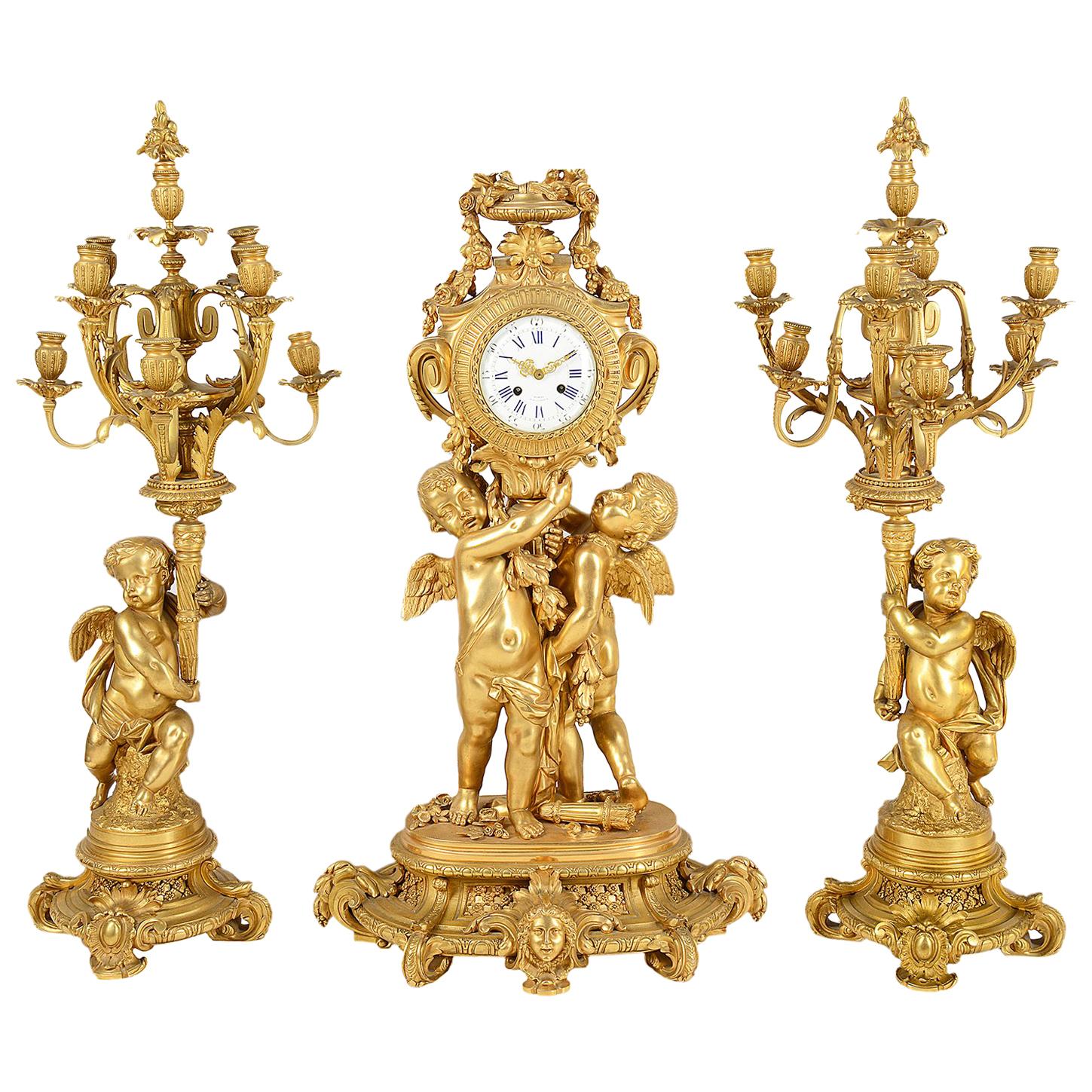
A very impressive gilded ormolu Louis XVI style clock garniture, the clock and candelabra being supported by winged cherubs, scrolling swags and foliage and classical mask...
Category

Antique 19th Century French Louis XVI Mantel Clocks

Materials

Ormolu