Items Similar to Late 18th/19th Century French Empire Mantle Clock By Parisian Clockmaker Lepaute
Want more images or videos?
Request additional images or videos from the seller
1 of 19
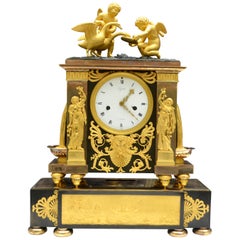
Late 18th/19th Century French Empire Mantle Clock By Parisian Clockmaker Lepaute
$51,097.17
£38,024.88
€42,750
CA$70,709.19
A$75,899.69
CHF 40,412.70
MX$898,946.76
NOK 510,706.09
SEK 466,417.10
DKK 325,749.14
About the Item
A Fine
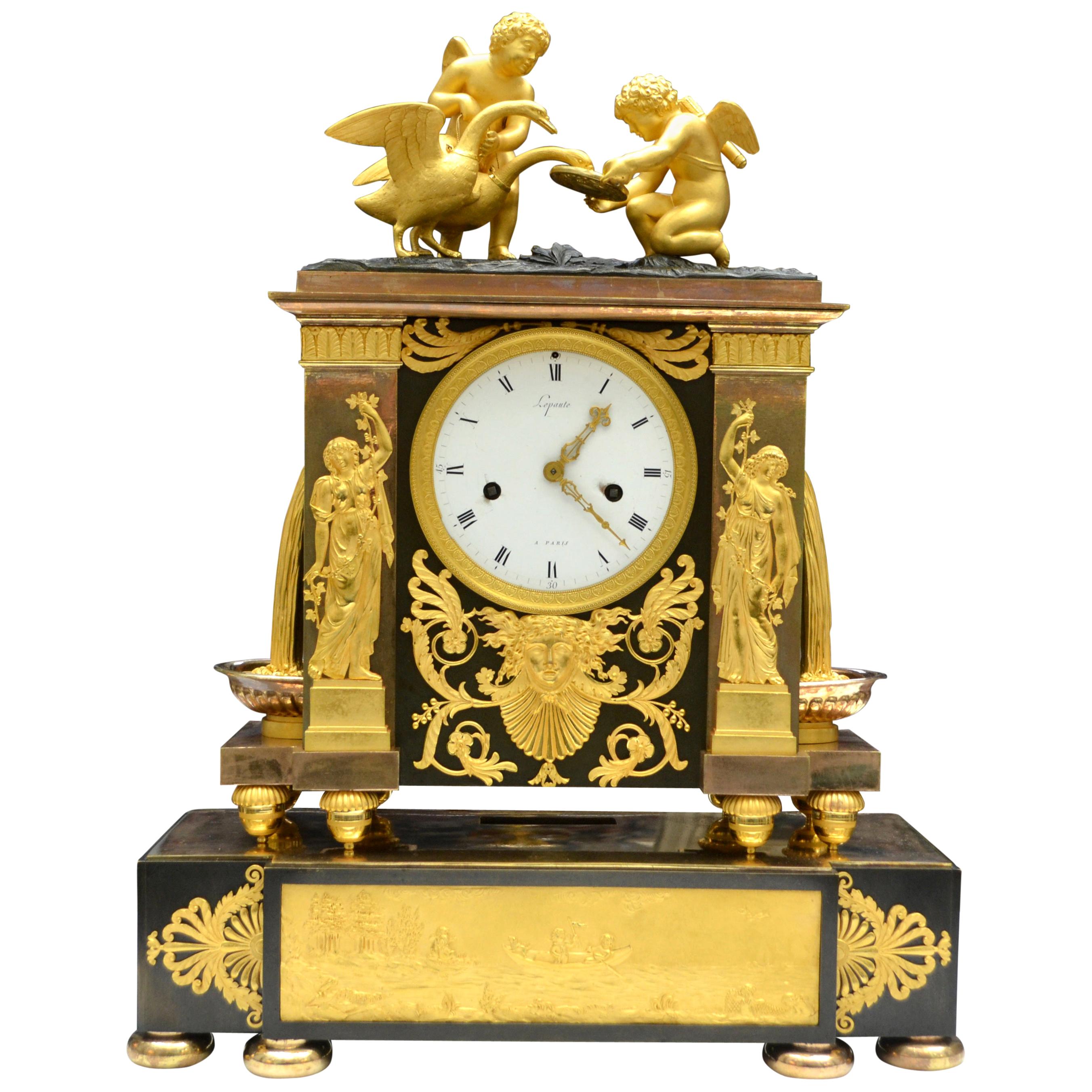
Most Impressive French Gilt, Patinated Bronze and White Marble Mantel Clock by Lepaute of Paris, France. Of impressive scale and refined Neoclassical design, the circular white enamel dial signed Lepaute à Paris within a gilt-bronze bezel surmounted by a finely cast and chased gilt bronze eagle with outspread wings perched on a laurel wreath. The clock flanked by two seated classical figures in dark patinated bronze, each reading from an open book, symbolising Knowledge and Wisdom. The central plinth panel finely cast with cherubs in relief, set upon a rectangular white marble base mounted with ormolu friezes of scrolling foliage and masks, raised on toupie feet.
The Lepaute family were among the most renowned horologists of the late 18th and early 19th centuries, supplying timepieces to the French royal court and many important clients of the Empire period. The fine casting and crisp chasing of this example, combined with its balanced architectural design, exemplify the high quality of Parisian clockmaking of the period.
Circa 1800-1810
France
Condition: Excellent overall condition with minor wear to gilding consistent with age. Movement complete and of fine quality. Fully serviced and in working order.
Key present.
Biography:
Jean André Lepaute (born November 23, 1720 in Thonne-la-Long ; † April 11, 1789 in Saint-Cloud ) was a French royal watchmaker .
Jean André Lepaute was born one of nine children of toolmaker , locksmith and guild master André Lepaute and his wife Elisabeth Doulet.
In 1740, at the age of twenty, Jean André went to Paris to apprentice with a clockmaker. Later, he founded his own company there. His good reputation as a clockmaker helped him secure many commissions for the construction of large public clocks . In 1747, his younger brother, Jean Baptiste Lepaute, came to Paris to work in the company.
During this time, he received a commission to build a large clock for the Palais du Luxembourg . Upon the delivery of the clock, he met the astronomer Nicole-Reine Étable de la Brière . The two fell in love and married on August 27, 1748. From then on, Jean André lived in the Palais du Luxembourg. The young couple often entertained friends from aristocratic circles. Together with his wife Nicole, he worked on calculations for his astronomical clocks , calendar clocks, and planetary machines .
In 1751 he began working as a royal clockmaker for Louis XV .
In 1754, the then-young Pierre Augustin Caron de Beaumarchais demonstrated a new escapement he had invented, the so-called double-comma escapement , to Jean André Lepaute. Lepaute immediately recognized the significance of this invention and published it under his own name at the French Academy of Sciences in 1754. Upon learning of this, Pierre Augustin Caron immediately wrote to the Academy. Using an article from the Parisian newspaper Mercure de France , which had reported on Beaumarchais's double-comma escapement even before Lepaute's publications, he was able to definitively prove that Beaumarchais was the originator of the new escapement. The Academy accepted his argument and granted him the patent .
In 1774, Jean André Lepaute retired from the business, leaving it to his nephews Pierre-Basile Lepaute and Pierre Henry Lepaute . He died a year after his wife at the age of 68 in Saint Claude, near Paris. Jean André Lepaute was the founder of the Lepaute watchmaking dynasty.
- Creator:Lepaute (Clockmaker)
- Dimensions:Height: 20.67 in (52.5 cm)Width: 27.56 in (70 cm)Depth: 6.11 in (15.5 cm)
- Style:Neoclassical (Of the Period)
- Materials and Techniques:
- Place of Origin:
- Period:
- Date of Manufacture:1800
- Condition:Wear consistent with age and use.
- Seller Location:Dublin, IE
- Reference Number:1stDibs: LU5735247464202
About the Seller
5.0
Vetted Professional Seller
Every seller passes strict standards for authenticity and reliability
Established in 2006
1stDibs seller since 2021
11 sales on 1stDibs
Typical response time: 1 hour
- ShippingRetrieving quote...Shipping from: Dublin, Ireland
- Return Policy
More From This Seller
View AllA Large 19th Century French Ormolu Mantle Clock In The Rococo Style
Located in Dublin, IE
A fine 19th century and substantial ormolu clock, of Rococo balloon form, sweeping acanthus swags, scrolls and floral flourishes, which is topped by classical cornucopias. The clock ...
Category
Antique 19th Century French Rococo Mantel Clocks
Materials
Ormolu
Early 19th Century French Marble Clock signed "lefebure fres 5 rue Beranger"
Located in Dublin, IE
A very fine 19th century Rouge Griotte marble and gilt bronze clock in the Louis XVI style decorated with gilt bronze motifs, of rectangular form the painted floral porcelain white e...
Category
Antique 19th Century French Louis XVI Mantel Clocks
Materials
Griotte Marble, Ormolu
19th Century French Louis XV Rococo Style Ormolu
Porcelain Mantle Clock
Located in Dublin, IE
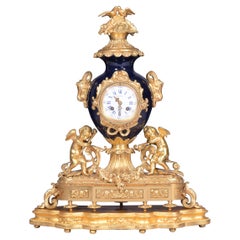
A very fine and most attractive 19th century French Louis XV Rococo Style ormolu and porcelain mantle clock, modelled as an urn with floral finial and goat head masks to the sides, o...
Category
Antique 19th Century French Louis XV Mantel Clocks
Materials
Ormolu
Early 19th Century English Regency Marble
Ormolu Mounted Mantel Clock
Located in Dublin, IE
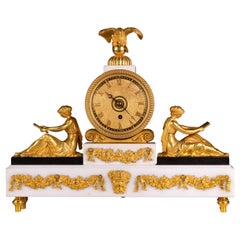
The superb English 19th century timepiece has a single train fusee movement with a gilt dial and raised numerals cased in a drum head. The two seated reading figures that flank the g...
Category
Antique Early 19th Century English Regency Mantel Clocks
Materials
Marble, Bronze, Ormolu
Early 19th Century French Empire Period Portico Clock
Located in Dublin, IE
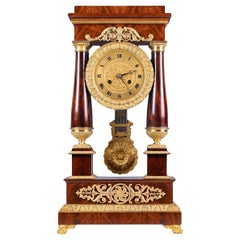
A fine early 19th century French Empire period Portico clock of exceptional quality in the Neo-classical style, the clock housed in a richly figured mahogany case with four tapering ...
Category
Antique Early 19th Century French Empire Mantel Clocks
Materials
Ormolu
19th century French Louis XVI style Rouge Marble Mantle Clock by Raingo Frères
By Raingo Frères
Located in Dublin, IE
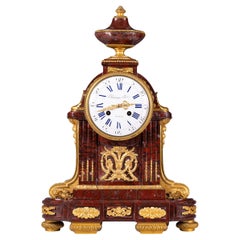
A very fine 19th century French Louis XVI style Rouge marble and ormolu mantle clock by Raingo Frères, Paris. The circular white enamel dial with Roman numerals and Arabic outer minu...
Category
Antique 19th Century French Louis XVI Mantel Clocks
Materials
Griotte Marble, Enamel, Ormolu
You May Also Like
Rare Late 18th Century Neoclassical Louis XVI Ormolu Mantel Clock
Located in Worpswede / Bremen, DE
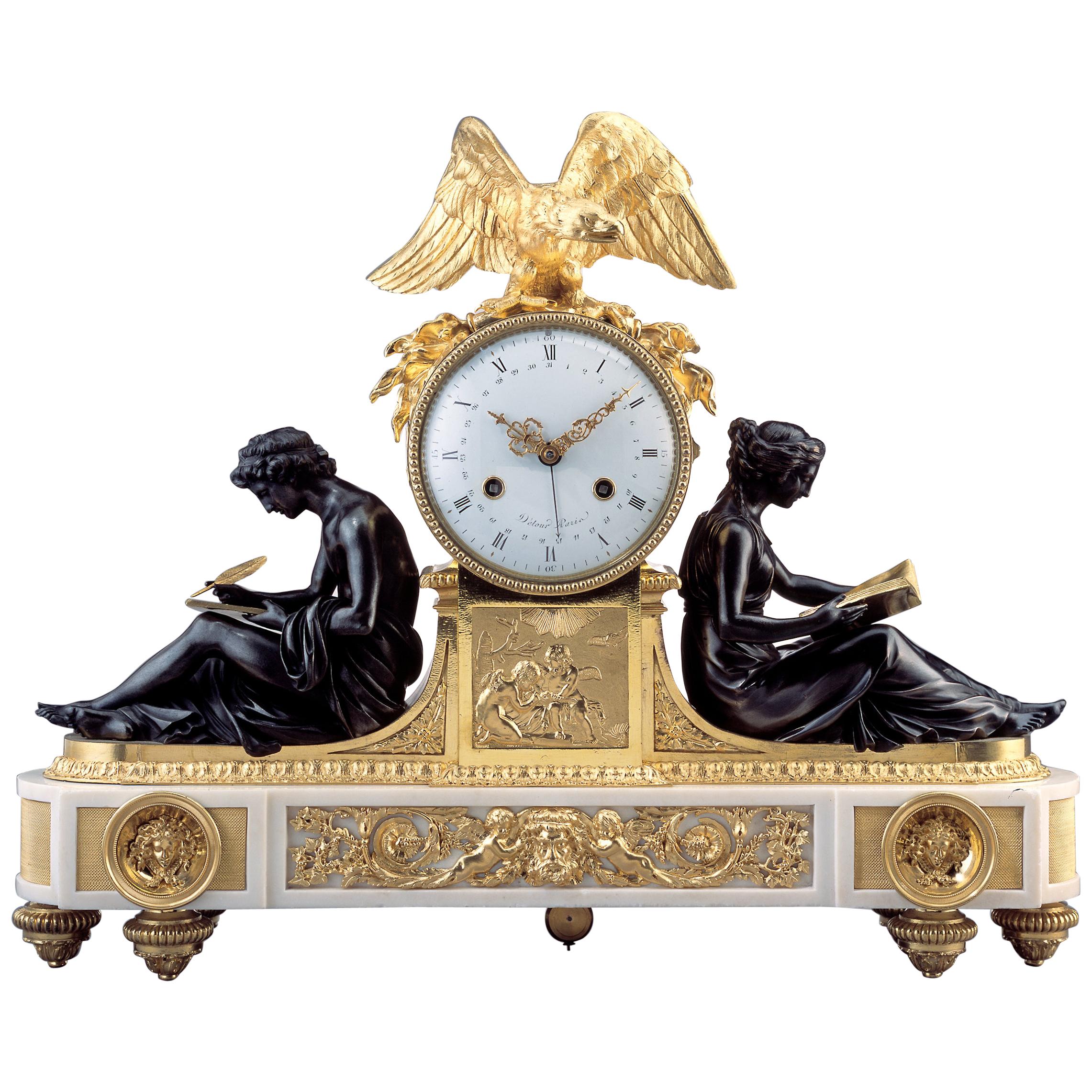
The circular white-enameled dial signed ”Detour Paris” with Roman hours and Arabic quarter marks, a further inner Arabic chapter ring for the day of month. Pierced gilt hands and a b...
Category
Antique Late 18th Century French Neoclassical Mantel Clocks
Materials
Marble, Bronze, Enamel
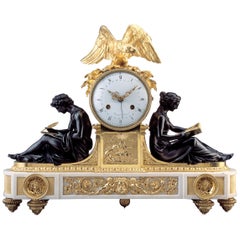
French Empire Style Mantel Clock, circa 1820
Located in Brighton, Sussex
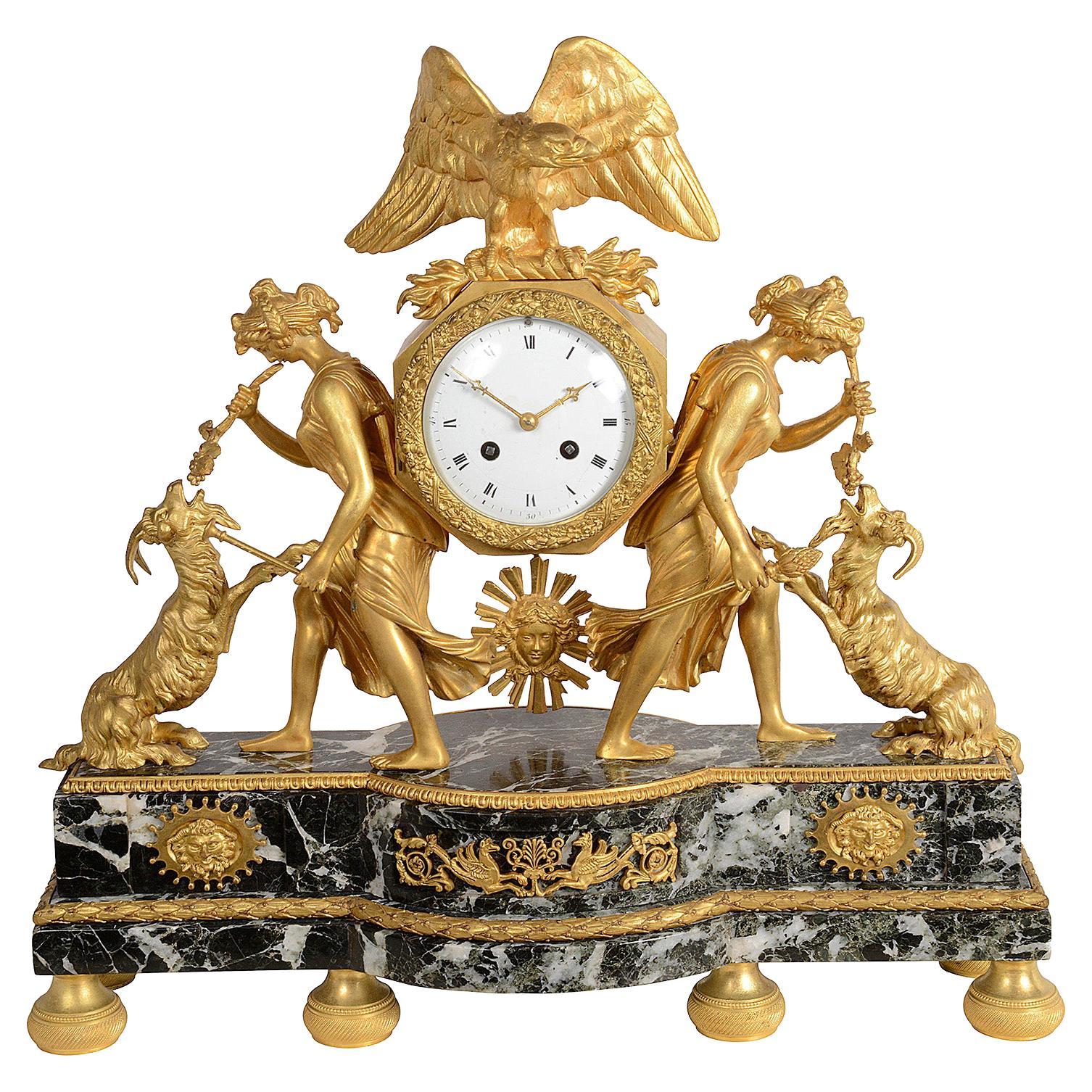
A very impressive and stylish early 19th Century gilded ormolu and green marble mantle clock, having two classical maidens either side feeding Rams, an Eagle above the circular white...
Category
Antique Early 19th Century French Empire Mantel Clocks
Materials
Marble, Ormolu
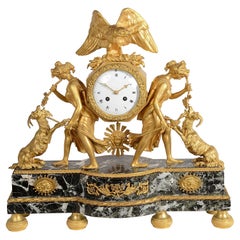
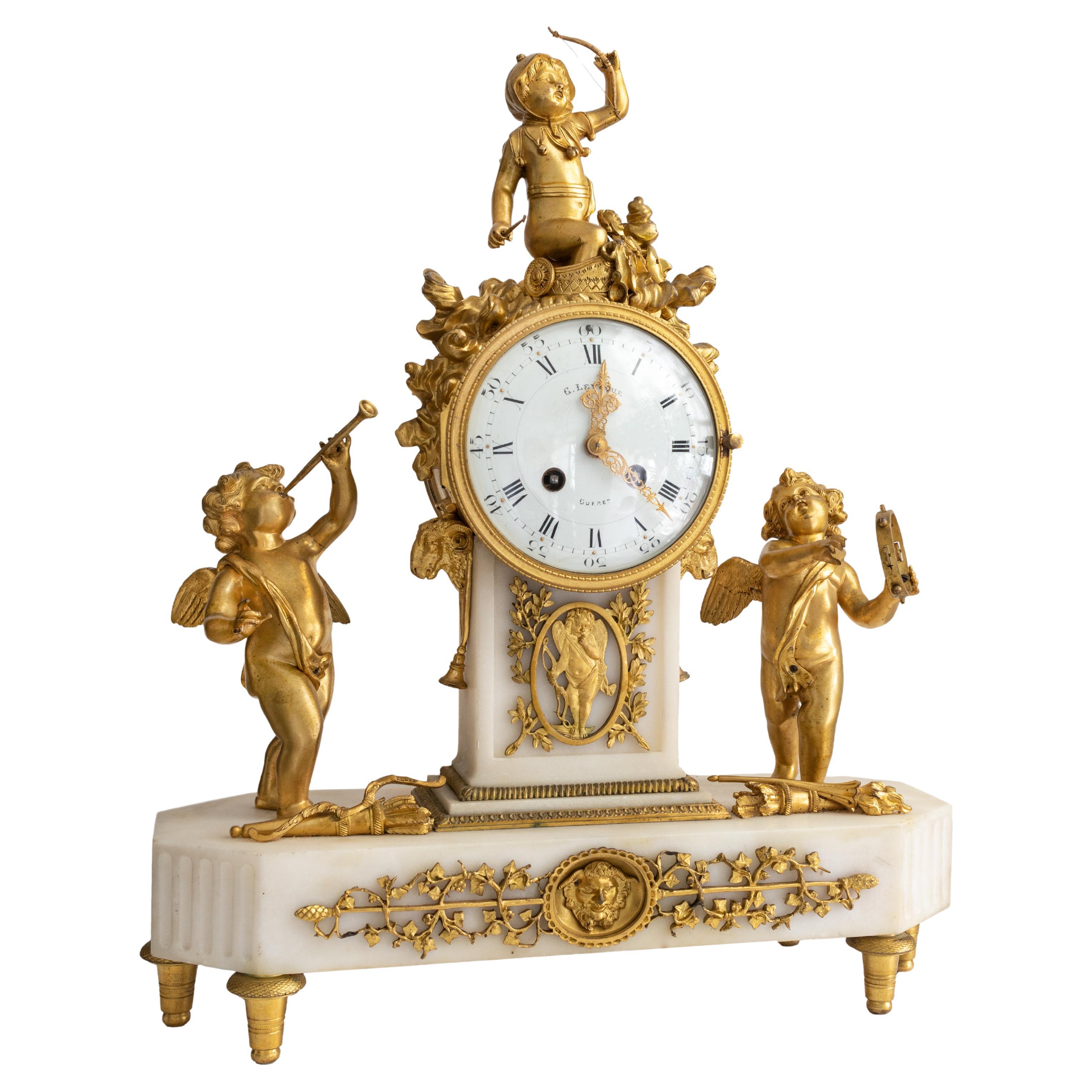
French Bronze Dore Mantle Table Clock by Leveque Guéret, 19th Century
By Guéret Frères
Located in Lisbon, PT
Louis XVI gilded bronze watch. Enamelled dial with hollow hands
White marble pedestal richly decorated with gilded bronze, and in the center a bas-relief with an ibex / goat symbol ...
Category
Antique 19th Century French Louis XVI Mantel Clocks
Materials
Marble, Metal, Brass, Bronze, Ormolu
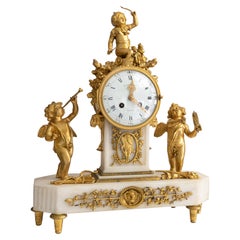
$5,881 Sale Price
20% Off
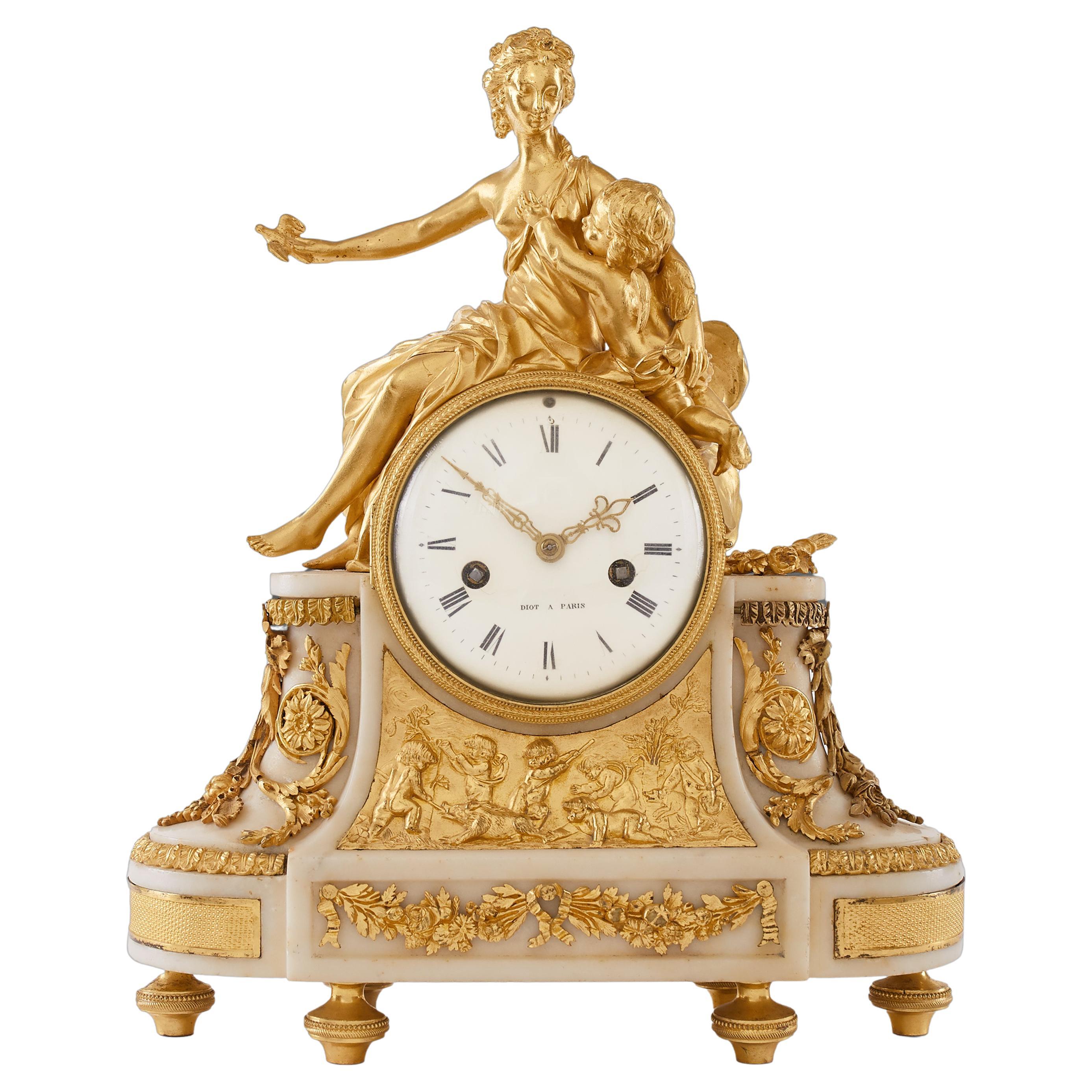
Mantel Clock 18th Century Louis XV Period by Diot À Paris
Located in Warsaw, PL
The Ancient Roman personifications of love and desire, Venus and Cupid, feature on this this fantastic Louis XVI mantel clock. Finely cast in resplendent gilt bronze, they are shown with a dove on Venus's hand, another ancient symbol of love. Venus is shown in draped clothing...
Category
Antique 18th Century French Louis XV Mantel Clocks
Materials
Marble, Bronze
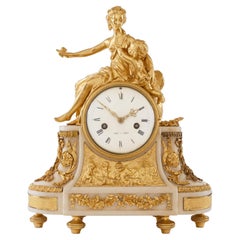
Rare French Empire Clock in Gilt and Patinated Bronze Signed Lepaute
By Jean-André Lepaute 1
Located in Vancouver, British Columbia
An extremely rare and important French Empire mantle clock signed by the master clock making dynasty of Jean-Andre Lepaute and his brother Jean-Baptiste Lepaute.
The case, in the form of an antique portal...
Category
Antique Early 19th Century French Empire Mantel Clocks
Materials
Bronze
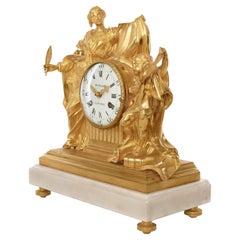
Mantel Clock 18th Century Louis XVI Period by Baillon À Paris
Located in Warsaw, PL
This exceptional mantel clock was crafted by Jean-Baptiste Baillon III, one of the most renowned and innovative horologists of his era. Baillon served an elite clientele, including t...
Category
Antique 18th Century French Louis XVI Mantel Clocks
Materials
Marble, Bronze
$5,593 Sale Price
28% Off