Items Similar to 19th Century Biedermeier Picture Clock, Austria, circa 1830
Video Loading
Want more images or videos?
Request additional images or videos from the seller
1 of 15
19th Century Biedermeier Picture Clock, Austria, circa 1830
$7,410.58
£5,514.72
€6,200
CA$10,254.90
A$11,007.67
CHF 5,861.02
MX$130,373.57
NOK 74,067.32
SEK 67,644.12
DKK 47,243.15
About the Item
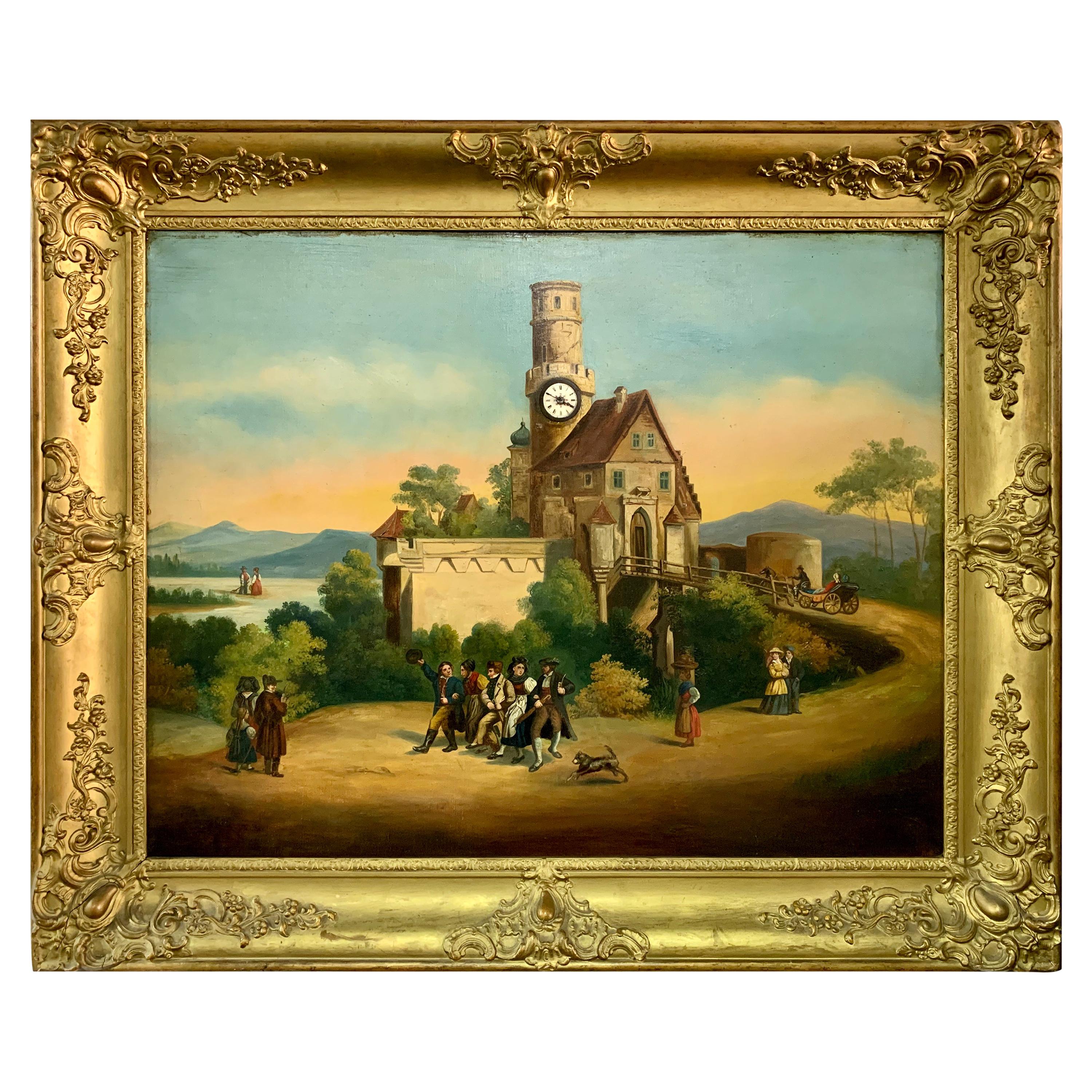
Biedermeier picture clock with fountain mechanism
Austria
Oil on iron sheet
circa 1830
Dimensions: H × W × D: 45 × 53 × 14 cm
Description:
This rare picture clock depicts a village scene with figures dressed in festive attire. A dancing couple forms the centerpiece, with other villagers seated at a table behind them. The couple on the left is seated on a stool, apparently waiting for the next dance. Musical entertainment is provided by a bagpiper standing on a barrel and a violinist at his side.
In the background, we see houses and the village church tower, into whose front face the clock face is integrated. On the sides are two winding holes, through which the movement and striking mechanism can be wound with a square key. A red and white flag flies from the tower, emphasizing the festive atmosphere.
The fountain in the front left is a special attraction: When the striking mechanism is triggered, a disc mounted behind the fountain starts to move, creating the impression of a flowing stream of water. This pours into a wooden trough, overflows and forms a small stream where several ducks are resting.
The painting is executed in oil on sheet iron, finely detailed and rich in color. The original ox-eye frame, typical of the period and region, effectively frames the work.
On the back, a rear panel guided in a groove can be opened. The mechanism now visible is a typical Austrian clockwork with a running time of about 36 hours, a short pendulum, and a striking mechanism with a tone spring. A single strike sounds on the half hour, and the number of hours is struck on the hour. The striking mechanism drives the aforementioned fountain disc via a simple cord.
Interesting facts:
In the early 19th century, picture clocks combined the artistry of painting with the skill of clockmakers. Wonderful works of this kind were created, particularly in Austria, Switzerland, and southern Germany, combining decorative genre paintings with clockworks and moving automata. The romanticized depiction of village life is characteristic of Biedermeier interior design and reflects both the desire for rural idyll and the affinity for technology of the time.
In contrast to the Alpine picture clocks, which were painted on iron or copper sheet, picture clocks with oil paintings on canvas were created at the same time in France, focusing on landscape and architectural scenes, while figurative representations were mostly dispensed with.
Condition:
Authentic, well-preserved painting with slight age-related craquelure, frame with slight plaster abrasion and normal signs of wear. The clockwork has been revised and is fully functional.
Similar items can be found in specialist literature:
Battenberg Antiquitäten-Kataloge - Becker / Küffner - Uhren p. 144
- Dimensions:Height: 17.33 in (44 cm)Width: 20.87 in (53 cm)Depth: 5.52 in (14 cm)
- Style:Biedermeier (Of the Period)
- Materials and Techniques:
- Place of Origin:
- Period:
- Date of Manufacture:1830
- Condition:Refinished. Wear consistent with age and use. Authentic, well-preserved painting with slight age-related craquelure, frame with slight plaster abrasion and normal signs of wear. The clockwork has been revised and is fully functional.
- Seller Location:Greven, DE
- Reference Number:1stDibs: LU5419246356342
About the Seller
5.0
Platinum Seller
Premium sellers with a 4.7+ rating and 24-hour response times
Established in 2014
1stDibs seller since 2020
220 sales on 1stDibs
Typical response time: 1 hour
- ShippingRetrieving quote...Shipping from: Münster, Germany
- Return Policy
More From This Seller
View All19th Century Mantel Clock "Astronomy", France circa 1830
Located in Greven, DE
Antique mantel clock on the theme of astronomy
France
Bronze
Charles X around 1830
Dimensions: H x W x D: 48 x 19 x 10 cm
Description:
Unusual and beautifully crafted bronze mante...
Category
Antique 19th Century French Charles X Table Clocks and Desk Clocks
Materials
Bronze
Early 19th Century French Mantel Clock, signed Ferey au Havre, Ormolu
Located in Greven, DE
Small mantel clock with bas-relief
France
Bronze, enamel
early 19th century
Dimensions: H x W x D: 33 x 19 x 9 cm
Description:
Antique, fire-gilt portal clock with figurative, Gre...
Category
Antique Early 19th Century French Empire Mantel Clocks
Materials
Bronze, Enamel, Ormolu
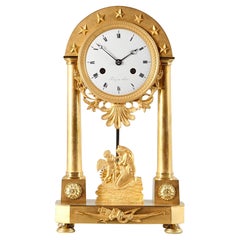
19th Century French Louis XVI Style "Astronomy" Mantel Clock, circa 1845
By Perrelet
Located in Greven, DE
French mantel clock "Astronomy"
Paris
Bronze, marble
Mid 19th century
Dimensions: H x W x D: 38 x 55 x 16 cm
Description:
A Louis XVI-style figural mantel clock mounted on a two-t...
Category
Antique 1840s French Louis XVI Mantel Clocks
Materials
Marble, Bronze
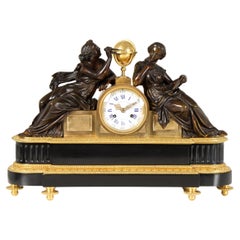
UNRESTORED German Mantel Clock, Circa 1880
Located in Greven, DE
Late 19th Century German Mantel Clock.
Walnut in shape of an old castle.
The movement needs to get overhauld. The clock is in unrestored condition.
Category
Antique Late 19th Century German Table Clocks and Desk Clocks
Materials
Walnut
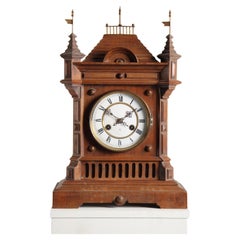
1830s French Table Clock, signed by LESIEUR á Paris, Pendule "Virgil the Poet"
By Lesieur
Located in Greven, DE
Pendule - Virgil the Poet
Paris
Bronze, marble
around 1830
Dimensions: H x W x D: 61 x 43 x 17 cm
Description:
Large and, at around 30 kg, very heavy French bronze clock from the ...
Category
Antique 1830s French Restauration Table Clocks and Desk Clocks
Materials
Siena Marble, Bronze
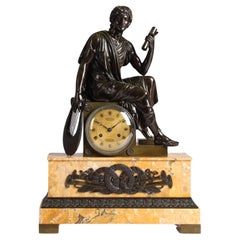
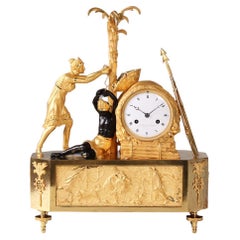
Early 19th Century Ormolu Mantel Clock, Atala freeing Chactas, Paris, circa 1810
Located in Greven, DE
Mantel Clock "Atala and Chactas"
Paris
Bronze (fire-gilt and patinated), enamel
Empire around 1810
Dimensions: H x W x D: 40 x 32 x 11 cm
Description:
Very rare and extremely high quality French mantel clock, so-called Pendule Au Bon Sauvage.
Depicted are scenes from the love story "Atala or the love of two savages in the desert" written by Francois René Vicomte de Chateaubriand in 1801. At the beginning of the 19th century, this was probably the most famous love story in Europe, but today it has been forgotten.
The story, set in present-day Louisiana (USA), is roughly rewritten about the forbidden love between Chactas, a young Indian, and Atala, the beautiful daughter of a Spaniard.
Chactas is captured in a battle between two Indian tribes, chained to a palm tree and is to be sacrificed. Atala wants to save his life and convert him to Christianity. She unties him from the palm tree at night and they flee together into the wilderness of North America. Their love for each other grows stronger and stronger and they have prospects for a future together.
The story takes a tragic turn when Atala, who must remain a virgin due to a vow made by her mother, can no longer withstand the conflict of her feelings and commits suicide.
The main group of characters thus shows Chacta's liberation through Atala. Atala is leaning against a pile of logs. The animal fur thrown over the logs and the weapons leaning against the stack on the right give the impression of a night camp.
The bronze is of rarely beautiful quality, finely chiselled and makes the scene appear very lively. The contrast of fire-gilded and patinated bronze adds tension to the composition.
In the base we see the Entombment as the end of the tragic love story. This bronze work is also very detailed, the interplay of bright and matt gilding makes the flat relief appear much deeper than it is.
The depiction of the mantel clock presented here shows that the exotic was only known from stories and that the bronzier had his own ideas about the appearance of this distant world. The Indian, for example, has very European facial features and his skin was not black in reality, of course. The palm tree was also certainly not found in the North American wilderness.
The heart of the clock is a French pendulum movement, integrated into the wooden pile, with an eight-day power reserve and a lock plate striking a bell on the half and full hour. The pendulum is suspended on a thread, typical of the period. The classically shaped hands, so-called Breguet hands, are also typical of the time.
The enamelled dial has black Roman hour numerals, Arabic quarter hours and bears the signature: Le Roy hr. de Madame A PARIS.
Interesting facts:
The period from 1795 to about 1815 saw the creation of probably the most spectacular group of bronzes: The "Au bon Sauvage" pendulums - depictions of the "Noble Savage".
Today's viewers react to these objects with both fascination and irritation. Enthusiastic on the one hand about the obvious quality of the detailed bronzes and the allure of the exotic, on the other hand distanced and cautious because of the possible discrimination that is suspected behind them. The ambivalence of this feeling motivates the search for the conditions of origin of these pendulums.
Europeans found their new ideal of the natural man primarily in fictional and realistic travelogues about the Indians of North America...
Category
Antique Early 19th Century French Empire Mantel Clocks
Materials
Ormolu
You May Also Like
Biedermeier Picture Clock with Musical Movement, Austria, circa 1825
Located in Incline Village, NV
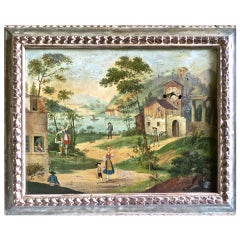
These painting clocks are very rare, especially containing the music box. Of Austrian manufacture circa 1820-1830, this Biedermeier picture (painting) clock is a naive and charming oil painting on metal, which depicts nine people dressed in colorful period clothes at various activities; a woman with her child and carrying fruit in a basket atop her head, two young lovers, a man in a boat, another man walking with his dog, while still another gentleman leaves the town hall. A woman at the window...
Category
Antique 19th Century Austrian Biedermeier Paintings
Materials
Metal
19th Century Swiss Mechanical Clock Painting, Circa 1820
Located in Vero Beach, FL
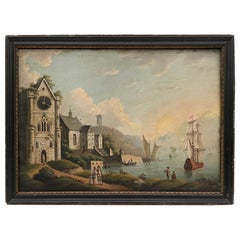
19th century Swiss mechanical clock painting circa 1820
This antique and unique clock painting is created in oil on metal circa 1820 in Switzerlan...
Category
Antique 19th Century Swiss Biedermeier Paintings
Materials
Metal
$2,720 Sale Price
20% Off
Early 19th Century Austrian Biedermeier Wall Clock
Located in Vancouver, British Columbia
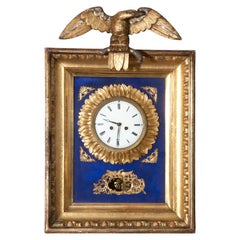
A traditional Austrian Biedermeier wall clock featuring a rectangular carved and gilded wood frame clock face; surmounted by a gilt bronze winged eagle. The decorations on the frame ...
Category
Antique Early 19th Century Austrian Biedermeier Wall Clocks
Materials
Bronze
$1,134 Sale Price
37% Off
Mantel Clock with Genre Scene, Vienna 19th Century
Located in Greding, DE
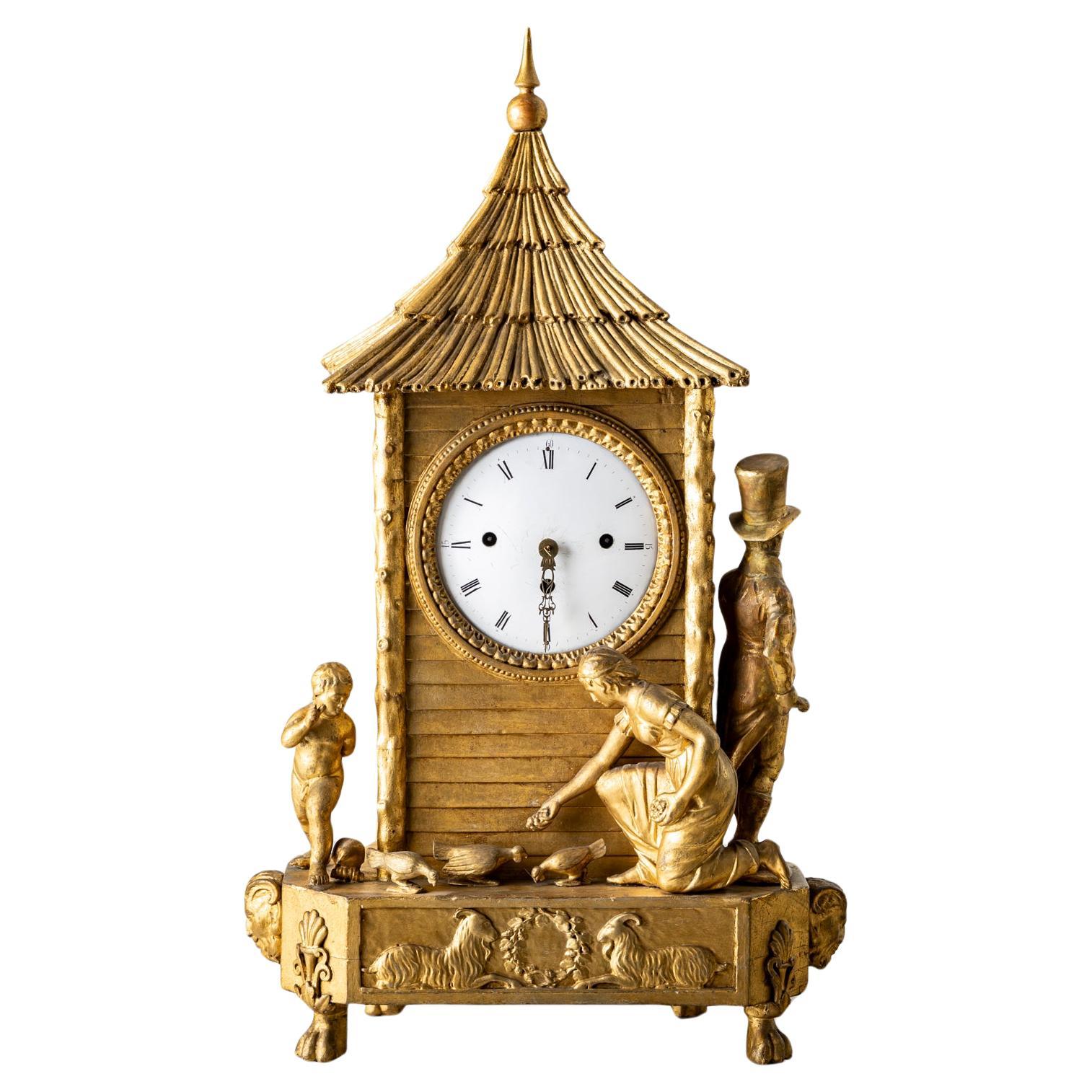
Mantel clock in a gold-patinated wooden case with enameled clock face and octagonal pedestal with paw feet. The clock case rises above it in the shape of a wooden hut with a pointed ...
Category
Antique 19th Century Austrian Biedermeier Mantel Clocks
Materials
Wood
19th Century Musical Picture Clock
Located in Tarzana, CA
A large well-detailed musical picture clock. The oil painting on canvas depicts a village scene in Europe with manor home, mountains at sunset in...
Category
Antique 1850s European Paintings
Materials
Canvas, Giltwood
Biedermeier Portal Clock, probably Vienna ca. 1820/30
Located in Greding, DE
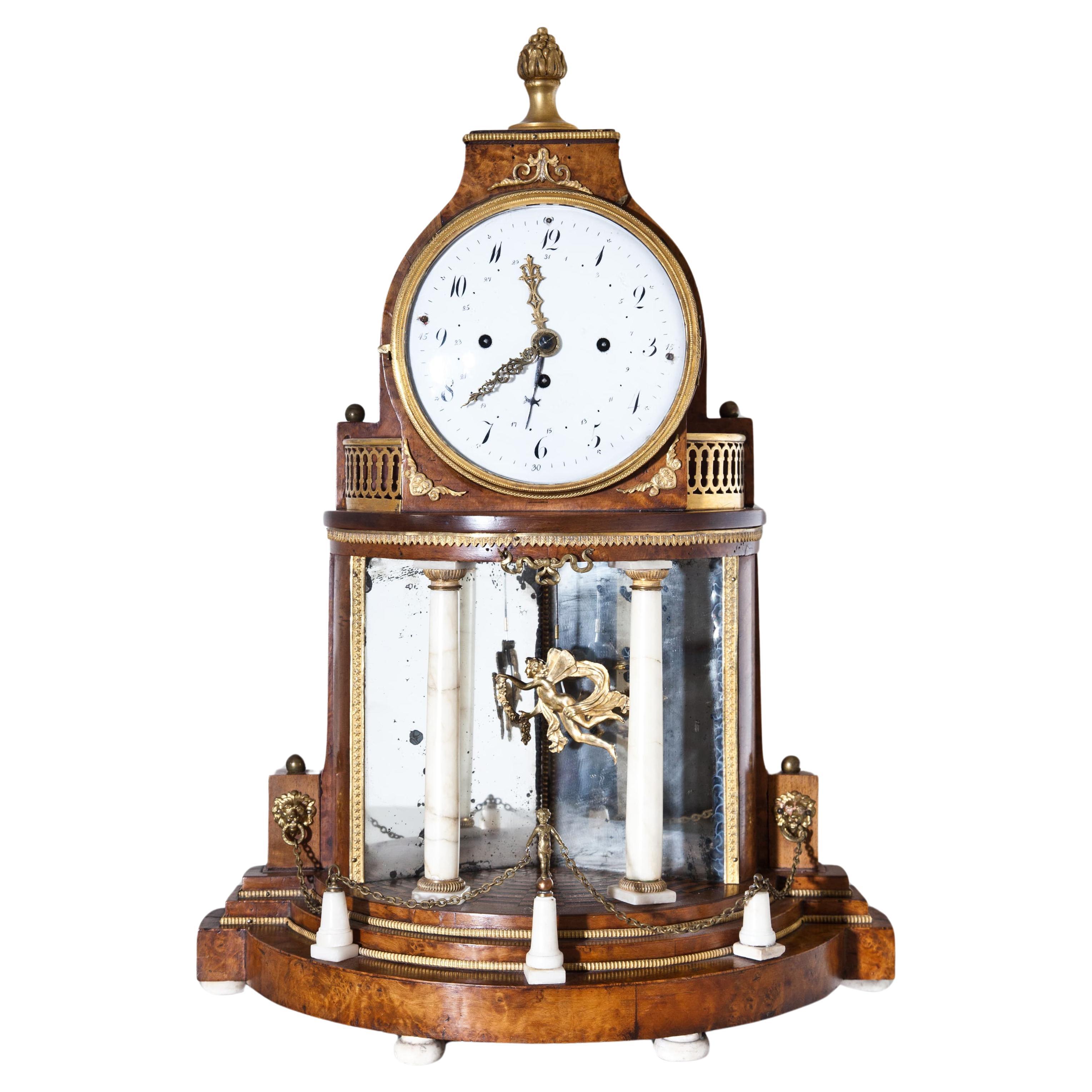
Biedermeier portal clock in an architecturally structured walnut case with alabaster columns, bronze fittings and mirrored rear wall. The clockwork with date and sound spiral. Pendul...
Category
Antique 1820s Austrian Biedermeier Mantel Clocks
Materials
Brass