Items Similar to Antique Art Nouveau Inkwell, Signed Gaston Bigard, 1910s, France
Want more images or videos?
Request additional images or videos from the seller
1 of 9
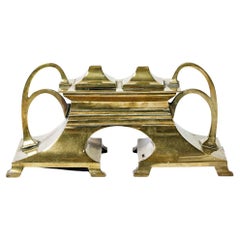
Antique Art Nouveau Inkwell, Signed Gaston Bigard, 1910s, France
$488.55
£363.90
€410
CA$672.78
A$732.30
CHF 388.02
MX$8,807.04
NOK 4,933.58
SEK 4,521.08
DKK 3,123.93
About the Item
Exceptional beautiful inkwell by the french artist and sculptor Gaston Bigard.
Signed at the lid "BIGARD".
Ceramic with authentic craquele lacquer and a brass lid with beautiful Art Nouveau design of flowers and leaves.
France, around 1910.
- Creator:Gaston Bigard (Sculptor)
- Dimensions:Height: 2.37 in (6 cm)Width: 3.55 in (9 cm)Depth: 3.94 in (10 cm)
- Style:Art Nouveau (Of the Period)
- Materials and Techniques:
- Place of Origin:
- Period:
- Date of Manufacture:Circa 1910
- Condition:Wear consistent with age and use. Nice and cleaned condition with signs of age and use.
- Seller Location:Greven, DE
- Reference Number:1stDibs: LU5419237947922
About the Seller
5.0
Platinum Seller
Premium sellers with a 4.7+ rating and 24-hour response times
Established in 2014
1stDibs seller since 2020
216 sales on 1stDibs
Typical response time: 1 hour
- ShippingRetrieving quote...Shipping from: Münster, Germany
- Return Policy
More From This Seller
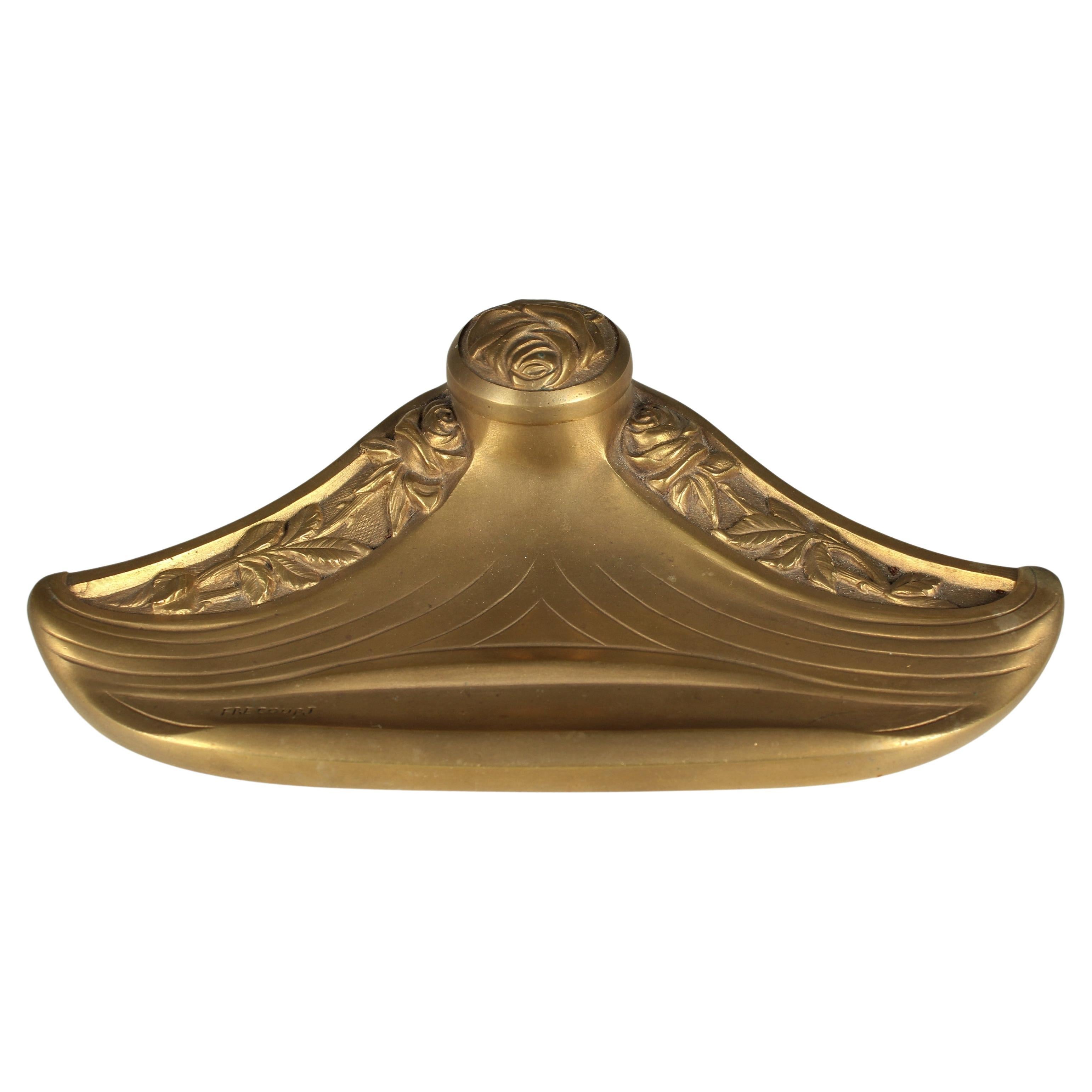
View AllAntique Art Nouveau Inkwell By Maurice Frecourt, Bronze Doré, 1910s, France
By Maurice Frecourt
Located in Greven, DE
Beautiful Art Nouveau inkwell by Maurice Frecourt (*1890 - ?).
Signed by the french artist "Frecourt".
The original tint insert is in a nice condition.
Similar inkwells can be found...
Category
Early 20th Century French Art Nouveau Inkwells
Materials
Bronze, Gold
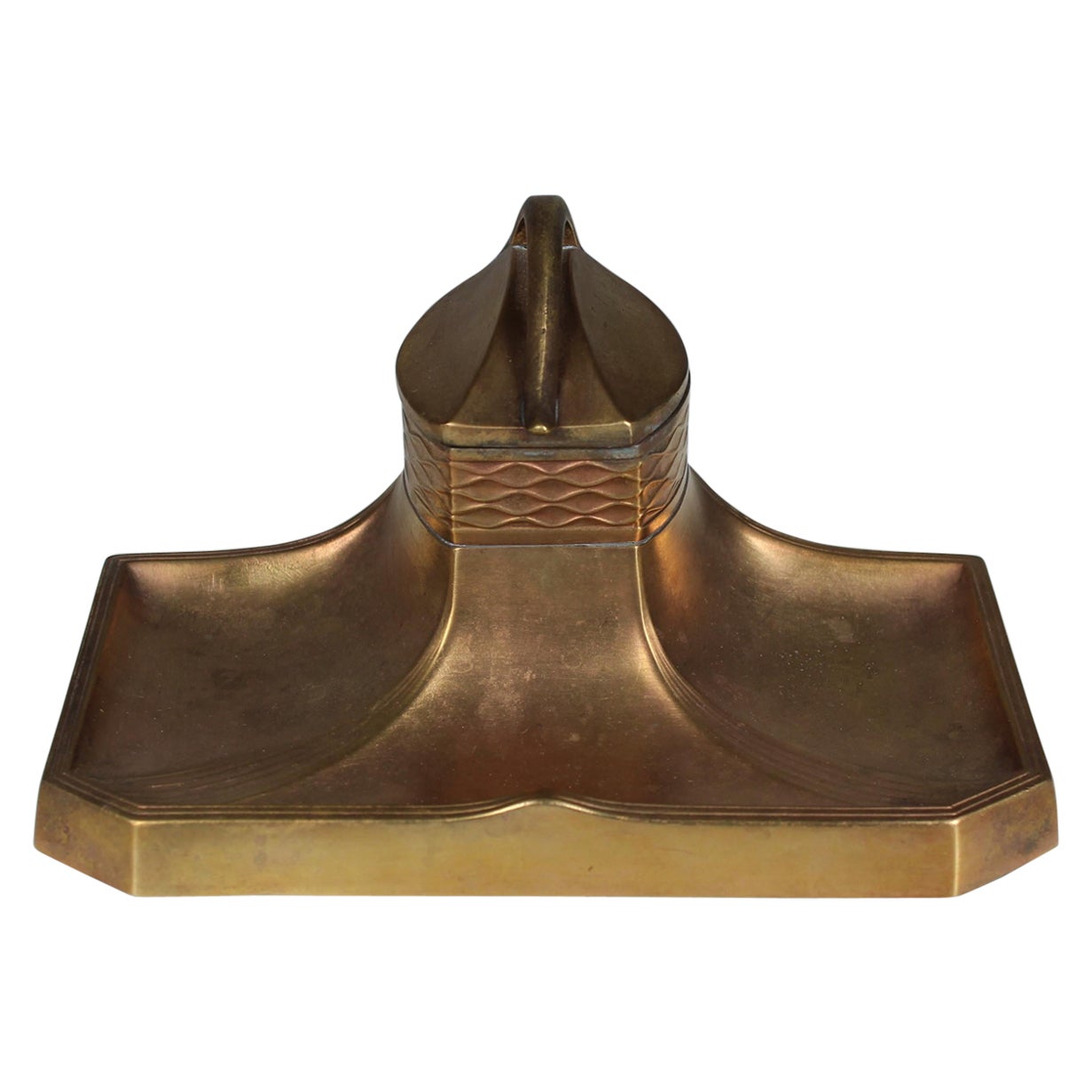
Antique Inkwell, Art Nouveau, Pen Tray, by WMF, circa 1910
Located in Greven, DE
Beautiful inkwell, Art Nouveau, by WMF.
Nice authentic condition.
.
Category
Early 20th Century Unknown Inkwells
Materials
Bronze
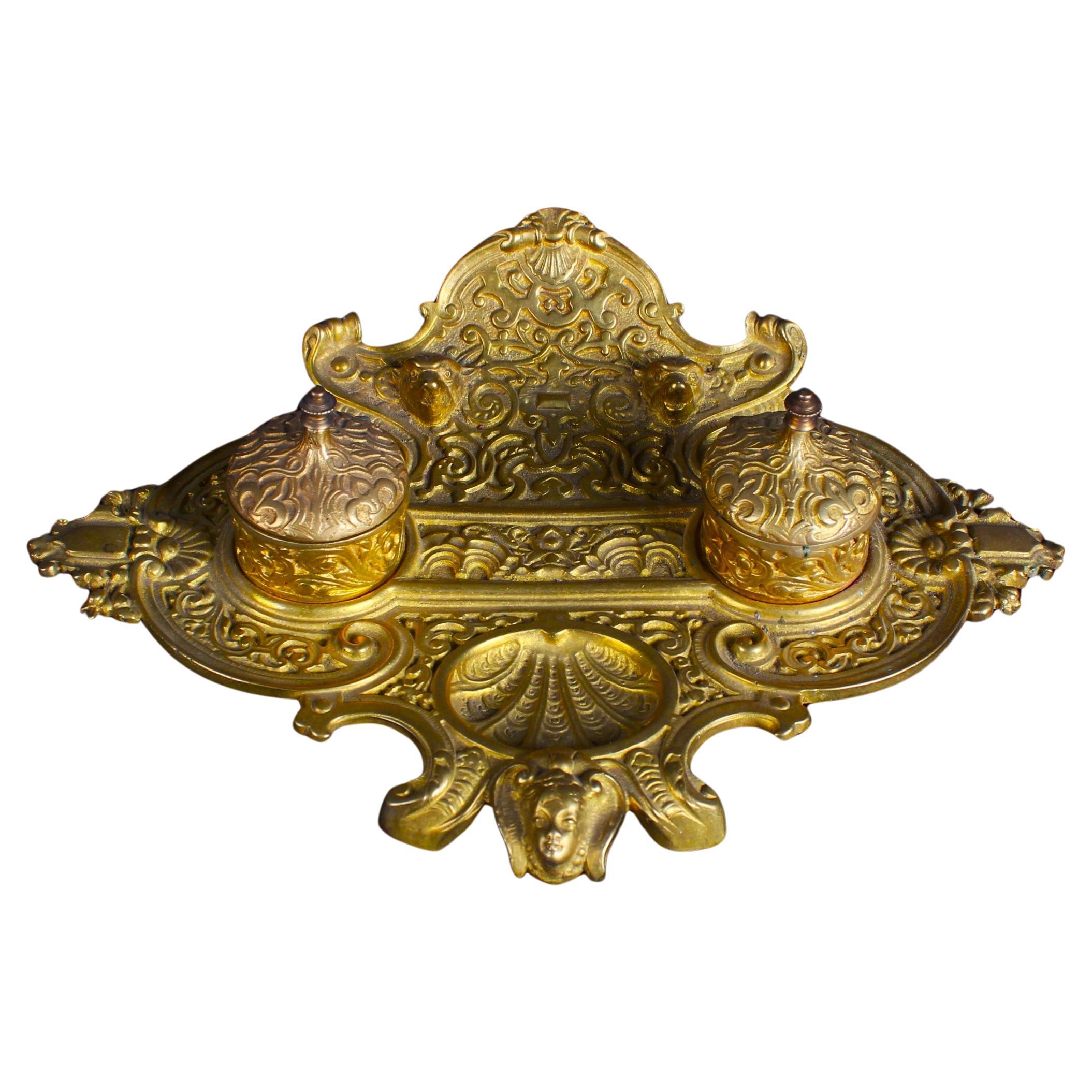
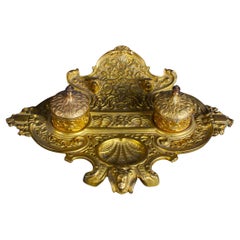
Antique Art Nouveau Inkwell, Bronze Doré, France, 1900s
Located in Greven, DE
Beautiful Art Nouveau Inkwell from France, 1900- 1920s.
This special inkwell is decorated all over with typical Art Nouveau ornaments. The attention to detail is reflected in the pen...
Category
20th Century French Art Nouveau Inkwells
Materials
Brass, Bronze
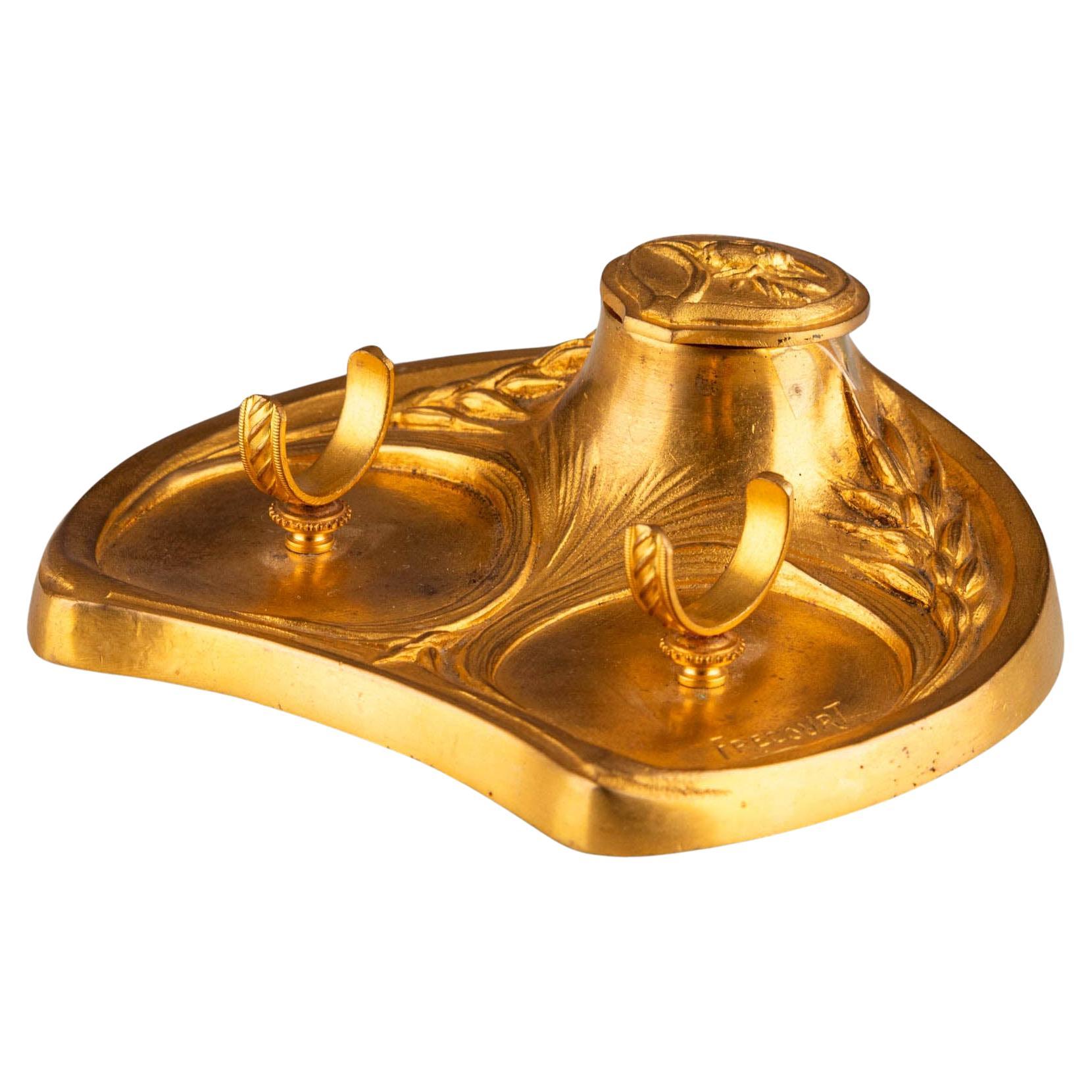
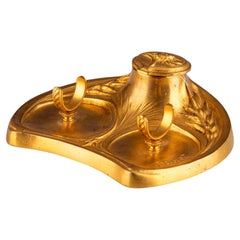
Early 20th Century Art Nouveau Inkwell
Located in Greven, DE
French Inkwell with Sheaf of Grain Decoration, signed "Frecourt"
France, circa 1900
Gilded metal, glass
Dimensions: H × W × D: 5 × 12 × 11 cm
Description:
A compact French inkwell ...
Category
Early 20th Century French Art Nouveau Inkwells
Materials
Metal
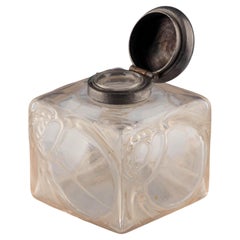
Inkwell with Beetle Relief, France, Art Nouveau, Early 20th Century
Located in Greven, DE
Inkwell with Beetle Relief
Origin: France
Material: clear pressed glass, silver-plated metal lid
Date: circa 1900
Dimensions:
H × W × D: 11 × 8 × 8 cm
Description:
Square inkwell ...
Category
Early 20th Century French Art Nouveau Inkwells
Materials
Pewter
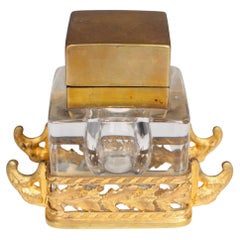
Antique Inkwell From France, Brass With Glass, 1880s
Located in Greven, DE
Beautiful antique inkwell, made from glass with brass.
France, circa 1880.
Category
Antique Late 19th Century French Late Victorian Inkwells
Materials
Brass
$552 Sale Price
20% Off
You May Also Like
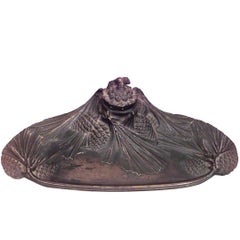
French Art Nouveau Bronze Inkwell
By Albert Cheuret
Located in Queens, NY
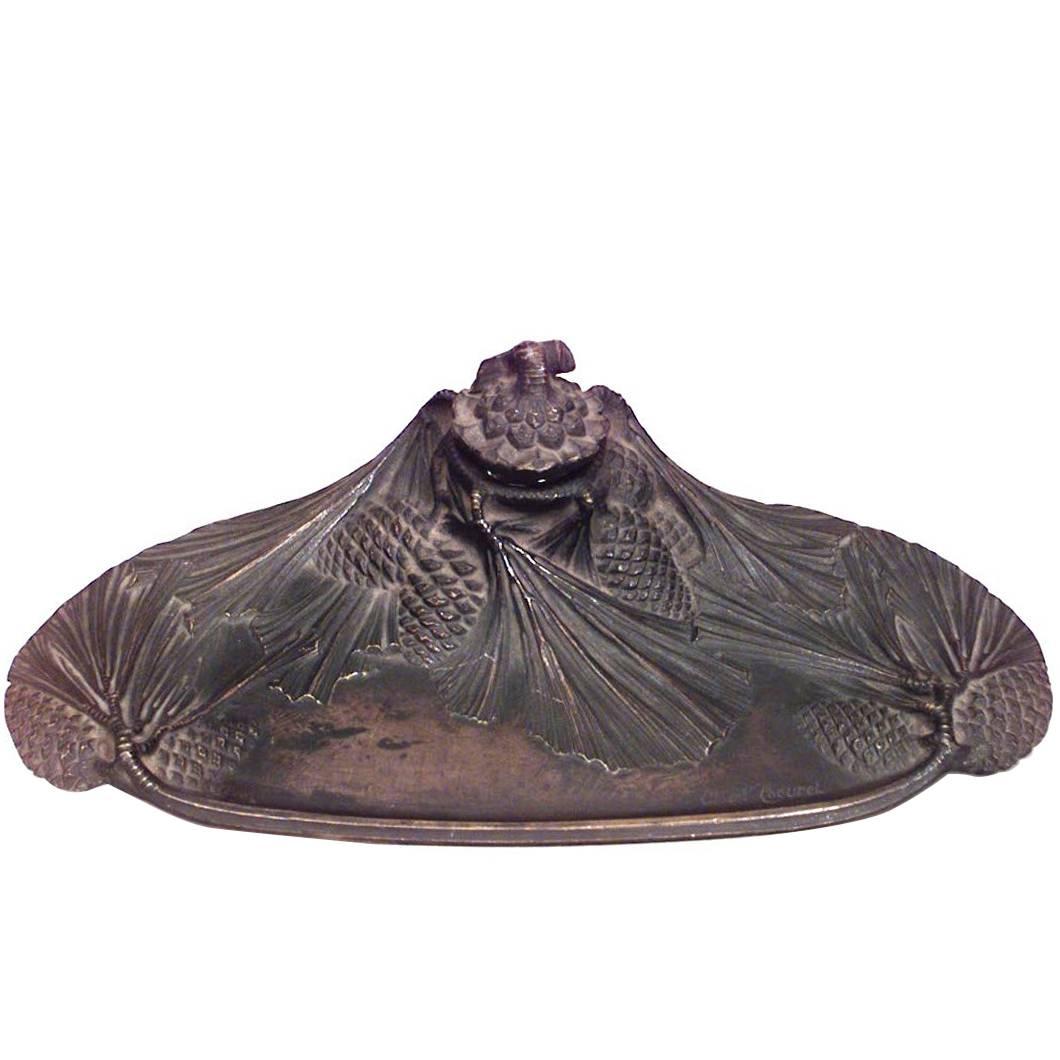
French Art Nouveau oval shaped bronze inkwell with pine cones and needles design (signed: ALBERT CHEURET)
Category
Antique Late 19th Century French Art Nouveau Inkwells
Materials
Bronze
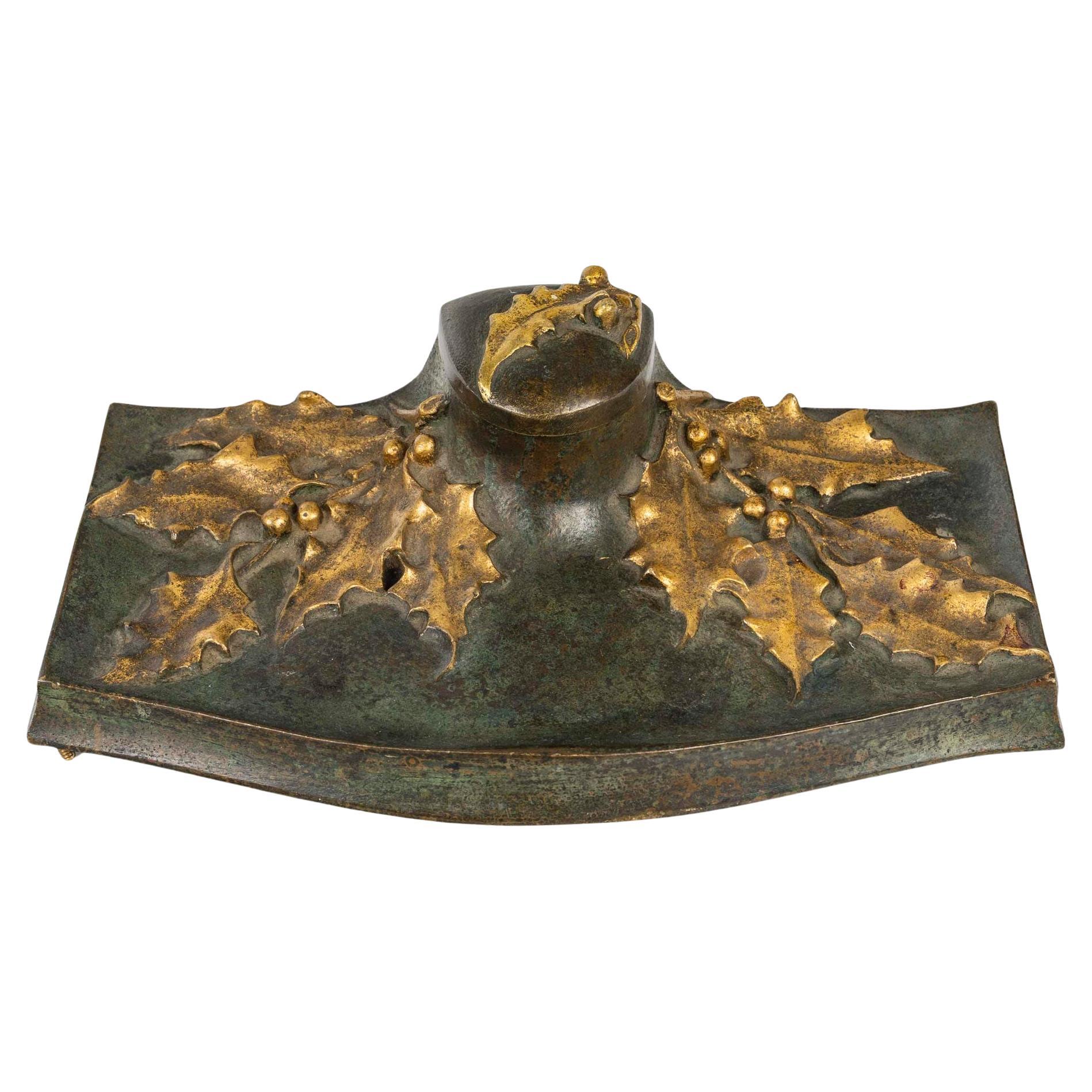
An Art Nouveau Patinated and Gilt Bronze Inkwell, Circa 1900.
Located in Saint-Ouen, FR
An Art Nouveau patinated and gilt bronze inkwell, circa 1900.
An Art Nouveau patinated and gilt bronze inkwell, signed, circa 1900, lacking the glass receptacle.
H: 5.5cm, W: 20cm, ...
Category
20th Century French Art Nouveau Inkwells
Materials
Bronze

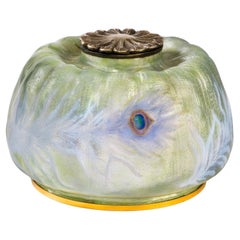
Eugène Feuillâtre "Pavot" Inkwell
By Eugène Feuillatre
Located in New York, NY
This stunning enamel, silvered metal, and gilt metal "Pavot" inkwell by Eugène Feuillâtre features peacock feather embellishments. The Inkwell lies under the gilded and silvered metal poppy seed pod lid, to which the title pavot (translated to English as poppy) refers. The vessel is vaguely pumpkin-shaped with negative space in a honeydew green, with white peacock feathers featuring purple and turquoise details.
Product Details:
Item #: S-21164
Artist: Eugène Feuillâtre
Country: France
Circa: 1900
Dimensions: 2.25" height, 3.5" diameter
Materials: Enamel, Silvered Metal, Gilt Metal
Signed: impressed Feuillâtre
Exhibition History: Examples of this inkwell can be found in the permanent collections of Musée d’Art et d’Histoire, Geneva (inv. no. E 01500), Musée des Arts Décoratifs, Paris (inv. no. 8746), and Museum für Kunst und Gewerbe, Hamburg (inv. no. 1966.1). Salon des Artistes français, 1898.
Literature: L. Bénédite, et. al., "Exposition Universelle de 1900: Les Beaux-Arts et les Arts Decoratifs," Gazette des Beaux-Arts, Paris, 1900, p. 510 (for a related example). H. Frantz, "E. Feuillatre, Emailleur," L’Art Décoratif, no. 28, Paris, January 1901, p. 166 (for a related example). C. Saunier, "Céramique, Verrerie, Émail," L’Art Décoratif, no. 34, Paris, July 1901, p. 155 (for a related example). R. Marx, La Décoration et les Industries d'Art à l'Exposition Universelle de 1900, Paris, 1901, p. 95 (for a related example). M. P. Verneuil, "L'Émail et les Émailleures," Art et Décoration, no. 2, Paris, February 1904, pp. 37-39 (for a related example). M. Rheims, L'Objet 1900, Paris, 1964, p. 34, no. 18 (for a related example). P. Garner, ed., The Encyclopedia of Decorative Arts 1890-1940, New York, 1978, p. 95 (for a related example). Die Jugendstil - Sammlung: Band 1: Künstler A-F, exh. cat., Museum für Kunst und Gewerbe, Hamburg, 1979, pp. 465-466, cat. no. 655. A. Duncan, The Paris Salons 1895-1914, Volume V: Objets d'Art & Metalware, Suffolk, 1994, p. 252 (for related examples). G. de Bartha, L'Art 1900: La Collection Neumann, New York, 1994, p. 128 (for a related example). J. T. Busch and C. L. Futter, Inventing the Modern World: Decorative Arts at the World’s Fairs, 1851-1939, exh. cat., Carnegie Museum of Art, Pittsburgh, 2012, p. 196, no. 9 (for a related example).
Macklowe Gallery Curator's Notes:
Eugène Feuillâtre’s career began in René Lalique’s enamelling...
Category
Early 20th Century French Art Nouveau Inkwells
Materials
Metal, Enamel
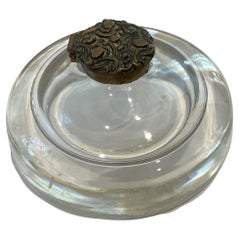
Art Nouveau Repousse Brass
Glass Inkwell
Located in Austin, TX
Circa 1900, this antique inkwell exemplifies the Art Nouveau period in decorative arts through the shape of its glass bowl and repousse brass-hinged cov...
Category
Early 20th Century European Art Nouveau Inkwells
Materials
Brass
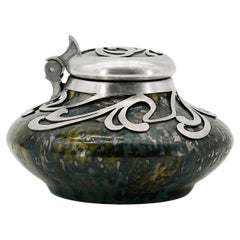
Pierre-Adrien DALPAYRAT French Art Nouveau Stoneware Inkwell, 1890
By Pierre-Adrien Dalpayrat
Located in Saint-Amans-des-Cots, FR
French Art Nouveau Inkwell by Pierre-Adrien Dalpayrat, France, circa 1890. A rare and exquisite Art Nouveau inkwell by renowned French ceramist Pierre-Adrien Dalpayrat (1844–1910). This finely crafted piece showcases Dalpayrat’s signature red copper-glazed stoneware, especially rich and luminous near the base. Elegantly mounted in pewter, the design exemplifies the organic flow and refined detail of the Art Nouveau period.
Dimensions: Height: 3.54 in. (9 cm) Diameter: 5.12 in. (13 cm)
Materials: Stoneware with pewter mount
Condition: Excellent+++++, museum-quality preservation
Markings: Incised signature "Dalpayrat 1500" under the base (see photo)
This inkwell is a collectible example of French ceramic art at the turn of the century—perfect for collectors of Art Nouveau, 19th-century French ceramics, or the works of Dalpayrat.
Adrien Dalpayrat (1844–1910): A Pioneer of French Ceramic Innovation
Adrien Dalpayrat was a French ceramicist and researcher who played a key role in the revival of stoneware at the end of the 19th century. Born in 1844 in Limoges, Dalpayrat studied drawing and porcelain painting in his hometown before beginning his professional career at the Jules Vieillard faience factory in Bordeaux. There, he met his wife, Marie Tallerie, with whom he had two sons—Albert and Adolphe—who would later become his primary collaborators.
Throughout his early career, Dalpayrat worked for several major ceramic manufacturers, including Ashwin (Valentine), Fouquet (Toulouse), François Blanc (Monaco), and Léon Sazerat (Limoges). In 1889, seeking greater independence, he moved to the Paris region and established his own studio in Bourg-la-Reine.
Collaborations and Artistic Evolution
Dalpayrat’s creative vision expanded through his collaboration with sculptor Alphonse Voisin-Delacroix. Together, they explored neo-Gothic and Palissy-inspired motifs, creating a remarkable ceramic bestiary. Following Voisin-Delacroix’s death in 1893, Dalpayrat partnered with Adèle Lesbros, which marked a shift in his work toward simpler, more refined vase forms influenced by Japonism.
Japanese art had been introduced to France during the 1867 Universal Exhibition, but it wasn’t until the 1878 Exhibition, particularly through the ceremonial stoneware used in the Japanese tea ceremony, that Japonism truly captivated French artists. This influence led Dalpayrat to create vessels with organic, vegetal, and animal-inspired forms.
Technical Mastery: The Secrets of Copper Red
Among all the ceramists of his time who sought to replicate the elusive Chinese “sang de boeuf” (oxblood) glaze, Adrien Dalpayrat was arguably the most successful. He didn’t simply reproduce the legendary copper red—he transformed it. By manipulating glaze thickness, firing temperature, atmosphere, and copper oxide content, he developed a unique palette of flamed and mottled red glazes that became his signature: the renowned Dalpayrat red.
He further enriched his pieces by introducing streaks and inclusions of turquoise, blue, green, and yellow—freeing the red glaze from monochromy and turning it into an expressive, living surface. His work pushed stoneware beyond function into expressive art, merging form and glaze in bold, sculptural harmony.
Beyond Ceramics: Bronze Mounts and Architectural Works
Dalpayrat also collaborated with renowned jewelers such as Ernest Cardeilhac and Keller to produce pieces mounted in gilt bronze, blending ceramics with decorative arts at the highest level.
In an effort to make his work more accessible, he opened a second faience workshop focused on simpler, more affordable pieces inspired by Nevers and Rouen ware. However, this venture faced financial difficulties and closed by 1900. The main family studio followed in 1906 as the popularity of Art Nouveau declined.
Dalpayrat then returned to Limoges, devoting his final years to painting and drawing until his death in 1910.
Legacy and Recognition
Despite financial struggles during his lifetime, Dalpayrat’s ceramics were widely acclaimed at major international exhibitions:
Bronze medal, World's Columbian Exposition, Chicago (1893)
Silver medal, Antwerp International Exhibition (1894)
Gold medal, Exposition Universelle, Paris (1900)
Today, his work is part of prestigious museum collections. In 2020, the Petit Palais in Paris acquired a large bird motif vase created in collaboration with Voisin-Delacroix, now on view in Room...
Category
Antique 1890s French Art Nouveau Inkwells
Materials
Pewter
Art nouveau golden brass inkwell 1900 jugendstil desk accessorie
Located in Neuilly-en- sancerre, FR
Art Nouveau
Large jugendstil golden brass inkwell
Original 1900 desk accessorie
Original good condition
Height 13 cm
Large 25 cm
Category
Early 20th Century European Art Nouveau Inkwells
Materials
Brass
More Ways To Browse
French Art Nouveau Ceramic
Antique Furniture Art Desk
Ceramic Craquele
Antique Brass Sign
Antique Inkwell And Pen Holder
Antique Pewter Inkwell
Antique Travel Inkwell
Antique Chinese Inkwell
Brass Inkwell Set
Inkwell Glass With Lid
Travelling Inkwell
Antique Bronze Double Inkwell
Antique Ink Well Inkwells
Desk Eagle
Antique Copper Inkwell
Brass Double Inkwell
19th Century Ink Wells
Antique Brass Glass Inkwell