Early 1900s Decorative Objects

to
299
2,493
6,609
26,228
86,351
29,420
15,757
36,017
20,603
1,092
3,343
4,244
2,262
6,177
8,424
7,941
3,514
1,878
904
112
70
57
37
24
23
15
15
13
11
9
8
6
5
3
1
1,205
608
560
370
369
1,133
1,123
1,954
749
377
310
268
Height
to
Width
to
2,493
2,493
2,493
60
50
43
36
27
Period: Early 1900s
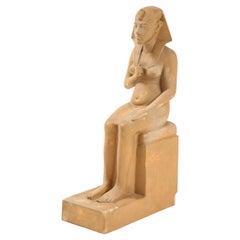
Grand Tour Statue of Pharaoh Hatshepsut After the Ancient Model
Located in Montreal, QC
Grand Tour statue of Pharaoh Hatshepsut after the ancient model. Hatshepsut was the fifth pharaoh of the Eighteenth Dynasty of Egypt and was the second historically confirmed female pharaoh, the first being Sobekneferu. The authentic ancient sculpture of Hatshepsut is located in Deir el-Bahri, Thebes, Egypt. Cast painted plaster. Provenance: The Collection of Charles de Beistegui, Château de Groussay. Charles de Beistegui (1894-1970), an enigmatic interior decorator whose passport was Spanish and whose wealth came from his family’s Mexican silver mines. Beistegui to indulge himself in the homes he decorated, such as his Chateau de Groussay...
Category

Egyptian Egyptian Antique Early 1900s Decorative Objects

Materials

Plaster

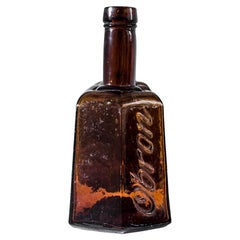
Vintage European Amber Glass Bottle
Located in High Point, NC
A vintage glass bottle from Europe, produced around 1900. Originally containing concentrated bouillon, the charming bottles were too beautiful to let go. Thick, light brown glass for...
Category

French Art Deco Antique Early 1900s Decorative Objects

Materials

Glass

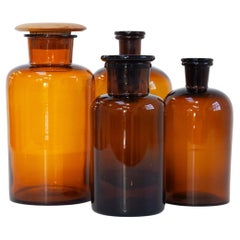
Antique Danish Pharmacy Glass Bottles, 1900s. Set of 4.
Located in Asaa, DK
Antique Danish Pharmacy Glass Bottles, 1900s. Set of 4. Set of four hand blown apothecary bottles in brown/golden amber glass with stoppers. Bottle sizes: Diameter 12.5 cm, height...
Category

Danish Industrial Antique Early 1900s Decorative Objects

Materials

Glass

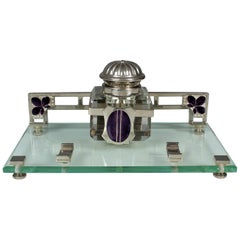
Antique Inkwell, Art Nouveau, Art Deco, Silverplated
Located in Greven, DE
Beautiful silver inkwell with purple ornaments. Nice authentic condition. Art Nouveau.
Category

Unknown Antique Early 1900s Decorative Objects

Materials

Metallic Thread

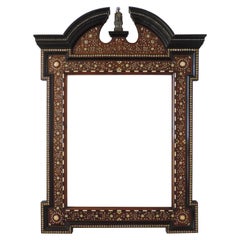
Italian Moorish Bone Inlay Frame with Saint, circa 1900
Located in Milan, IT
A beautiful Italian Moorish bone inlay frame with saint (Inscribed Roma) for a painting or a mirror. Very much in the Renzo Mongiardino Taste. Inner...
Category

Italian Moorish Antique Early 1900s Decorative Objects

Materials

Metal

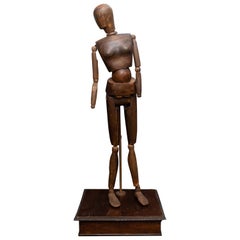
Early 20th Century Carved Wood Mannequin on Carved Wood Base
Located in New York, NY
A rare and interesting carved wood mannequin resting on a carved wood base from the first part of the 20th century.
Category

American Antique Early 1900s Decorative Objects

Materials

Wood

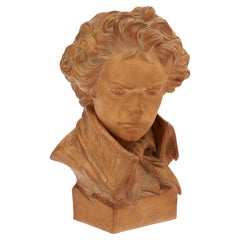
Antique Terracotta Bust of Beethoven
Located in Austin, TX
Antique bust from France made circa 1900. The sculpture is crafted in terracotta with a beautiful original patina. It showcases the bust of famed German composer, Beethoven including...
Category

French Antique Early 1900s Decorative Objects

Materials

Terracotta

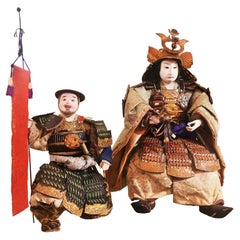
Samuraï Puppet Musha Nyngyo B Set of 2 Sculpture
Located in Paris, FR
Sculpture Samuraï Puppet Musha Nyngyo B Set of 2 with structure in wood, hand-carved wood, hand-painted wood, hand-lacquered wood, covered with hand-...
Category

Japanese Antique Early 1900s Decorative Objects

Materials

Silk, Wood

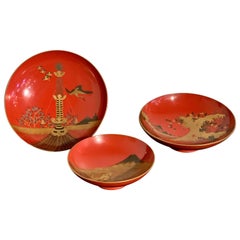
Japanese Lacquer Sake Cups, Set of 3, Meiji Period, Early 20th Century, Japan
Located in Austin, TX
A finely decorated set of 3 red lacquer sake cups, sakazuki, featuring views of Mt. Fuji, Meiji period, circa 1900, Japan. The lacquer sake cups, called sakazuki, of traditional p...
Category

Japanese Meiji Antique Early 1900s Decorative Objects

Materials

Lacquer

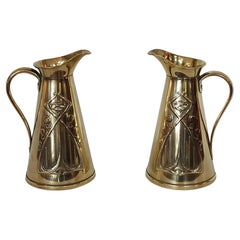
Pair of Joseph Sankey Sons Art Nouveau Jugs
Located in Altrincham, GB
Pair of Joseph Sankey & Sons Art Nouveau Jugs with sylised motifs - Bilston, Wolverhampton 1890-1932
Category

English Art Nouveau Antique Early 1900s Decorative Objects

Materials

Brass

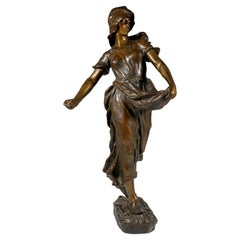
La Sémeuse , Large Art Nouveau Bronze Figure After Oscar Roty, Vienna, Ca 1899
Located in Vienna, AT
A young woman in a long dress with short sleeves, softly enveloping her body, with a scarf covering her hair and falling well over her face to protect her from the burning sun, walking across the field at a leisurely pace, holding out her apron with the seeds spread out in front of her with her left hand and making a sweeping gesture with her right. On a narrow, elongated natural plinth with rounded corners, with the artist's signature ‘Schork 99’ incised on the side, as well as the Goldscheider manufactory's pressed stamp, pressed model number and incised monogram ‘AH’ on the back behind the figure. This motif is particularly well known in France, where it adorned all French franc coins and postage stamps for many years and was continued in a stylised form on all cent coins of the euro after 2001. Louis Oscar Roty (1846 - 1911) This sower is very familiar to the French: she was depicted on the fifty-centime coin and on the one-, two- and five-franc coins until 2001, when a stylised version of her appeared on the ten-, twenty- and fifty-centime coins of the euro. The figure dates back to 1887, when Roty designed a prize medal for the Ministry of Agriculture, a project that was not pursued. When the Minister of Finance commissioned new coins in 1896, Roty was among the selected artists. He drew on the Sower of 1887, but transformed his robust farmer into a slender Marianne, who wore the Phrygian cap of freedom. The traditional profile of the Republic was abandoned in favour of a more active, standing figure. This effigy was criticised, but generally very well received: ‘The seeds she generously throws into the earth are the countless ideas that may one day germinate and flourish when we are no longer here’ (La Liberté, 8 October 1898). The gesture is more symbolic than realistic – we do not sow against the wind, which nevertheless makes the hair behind the sower flutter – but it makes the composition more dynamic. Originally, ‘The Sower’ was used on the fifty-centime to two-franc coins introduced in 1897 and 1898, before appearing on postage stamps in 1903. It is thus the most widely circulated work of art in France. Although not included in the Musée d'Orsay's medal collection, this wax drawing on slate, typical of the technique of a medallist, is one of the most beautiful pieces and demonstrates the virtuosity of Roty. (Musée d'Orsay, The Collections) Design by HANS SCHORK...
Category

Austrian Art Nouveau Antique Early 1900s Decorative Objects

Materials

Bronze

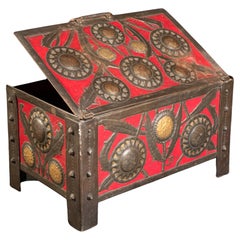
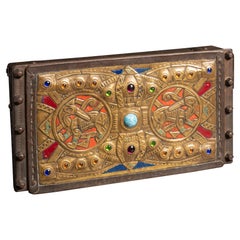
Art Nouveau Sunflowers Repoussé Box by Alfred Daguet
Located in Palm Beach, FL
Note: We highly recommend shipping through 1stDibs for its cost effectiveness, full insurance coverage, and reliable handling. While standard parcel services are an option, the defau...
Category

French Art Nouveau Antique Early 1900s Decorative Objects

Materials

Steel, Copper, Enamel

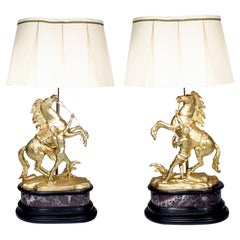
Pair French 19th/20th Century Gilt-Bronze Sculptures of The Marly Horses Lamps
Located in Los Angeles, CA
A Fine Pair of French 19th/20th Century Gilt-Bronze Sculptures of "The Marly Horses" (Now turned into lamps) After the original by Guillaume Coustou (French, 1677-1746). The large pair of equestrian bronze sculptures, finished in a gold patina, each depicting rearing horses with their groom, both raised on oval a black slate and Bardiglio marble bases and fitted with modern electrical twin-light brass fittings and cream colored shades. The base on an ebonized wooden platform. Circa: Paris, 1900-1920. Sculpture Base Height: 31 1/4 inches (79.8 cm) Base Width: 21 3/4 inches (55.3 cm) Base Depth: 12 3/4 inches (32.4 cm) Height to top of (Adjustable) shade fitting: 48 1/4 inches (122.6 cm) Shade Height: 15 inches (38.1 cm) Shade Width: 26 inches (66.1 cm) Shade Depth: 20 inches (50.8 cm) The original Marly Horses are two 1743–1745 Carrara marble sculpted groups by Guillaume Coustou. They were commissioned by Louis XV of France for the trough at the entrance to the grounds of his château de Marly. Coustou's last works, they were intended to replace two other sculpted groups, Mercury on Pegasus and Pegasus, Renown of Horses, both by Antoine Coysevox, which had been removed to the Tuileries Gardens in 1719. Louis XV chose the modellos in 1743 and the full-size sculptures were completed in only two years, being installed at Marly in 1745. They proved highly successful in reproduction, particularly on a smaller scale, and prefigured Théodore Géricault and other Romantic artists' obsession with equestrian subjects. The Marly horses were later also used as the central motif of the monochrome 819-line RTF/ORTF test card which was used on TF1 from 1953 until 1983. The originals were moved to the place de la Concorde in Paris in 1794 and Louis-Denis Caillouette (1790–1868) restored them in 1840. In 1984 it was concluded that the annual military parades on 14 July were damaging the sculptures and they were replaced by marble copies produced by Michel Bourbon in the studio of a subsidiary of Bouygues. The latter also gained the right to an extra copy, which was placed in Bouygues's social building. The original sculptures were moved to a former courtyard in the Richelieu wing of the Louvre Museum, which was renamed the 'cour Marly' in their honour, whilst Bourbon's two main copies were moved to the originals' first site near the trough at Marly, with work overseen by the architect Serge Macel. Guillaume Coustou the Elder (29 November 1677, Lyon – 22 February 1746, Paris) was a French sculptor of the Baroque and Louis XIV style. He was a royal sculptor for Louis XIV and Louis XV and became Director of the Royal Academy of Painting and Sculpture in 1735. He is best known for his monumental statues of horses made for the Chateau of Marly, whose replicas now stand in the Place de la Concorde in Paris. Coustou was a member of a family of famous sculptors; his uncle, Antoine Coysevox, was a royal sculptor; his elder brother, Nicolas Coustou was a sculptor, and his son Guillaume Coustou the Younger also become a noted royal sculptor. Like his older brother, he won the (Prix de Rome) of the Royal Academy which entitled him to study for four years at the French Academy in Rome. However, he refused to accept the discipline of the academy, gave up his studies, set out to make his own career as an artist. He worked for a time in the atelier of the painter Pierre Legros, and eventually returned to Paris. Upon his return to Paris, he assisted his uncle Coysevox in making two monumental equestrian sculptures, Fame and Mercury, for the Château de Marly, the new residence of Louis XIV near the Palace of Versailles, where he went to escape the crowds and ceremony of the Palace. He later (1740–1745), made his own horses, The Horses of Marly, his most famous works, to replace them. The horses reinvent the theme of the colossal Roman marbles of the Horse Tamers in the Piazza Quirinale, Rome. They were commissioned by Louis XV in 1739 and installed in 1745 at the Abreuvoir ("Horse Trough") at Marly. The horses were considered masterpieces of the grace and expressiveness of the French Late Baroque or Rococo style. After the Revolution they were moved from Marly to the beginning of the Champs-Élysées on the Place de la Concorde. The originals were brought indoors for protection at the Louvre Museum in 1984. In 1704 Coustou was received into the Académie royale de peinture et de sculpture. The work he made to mark his entrance was Hercules on the Pyre, now in the Louvre. It displays the special hallmark of the Baroque, a twisting and rising transverse pose, as well as highly skillful carving. He rose to become Director of the academy in 1733. Another of his major works from his later career, the statue of Maria Leszczynska, (1731)is on display at the Louvre. Coustou also created two colossal monuments, The Ocean and the Mediterranean among other sculptures for the park at Marly; the bronze Rhone, which formed part of the statue of Louis XIV at Lyons, and the sculptures at the entrance of the Hôtel des Invalides. Of these latter, the bas-relief representing Louis XIV mounted and accompanied by Justice and Prudence was destroyed during the Revolution, but was restored in 1815 by Pierre Cartellier from Coustou's model; the bronze figures of Mars and Minerva (1733–34), on either side of the doorway, were not interfered with. In 1714 for Marly he collaborated in two marble sculptures representing Apollo Chasing Daphne (both at the Louvre), in which Nicolas Coustou sculpted the Apollo and Guillaume the Daphne. About the same time he was commissioned to produce another running figure in marble, a Hippomenes designed to complement an Atalanta copied from the Antique by Pierre Lepautre...
Category

French Louis XV Antique Early 1900s Decorative Objects

Materials

Marble, Bronze

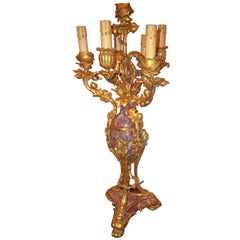
Lavender and Rouge Marble Gilt Bronze Candelabra Now a Lamp
Located in Nashville, TN
Richly cast and gilded bronze floral and foliate bronze mounts with rose blooms / buds for candle holder .Now wired as a lamp . Crack to marble dome repaired (see photo 4 ) . very de...
Category

French Beaux Arts Antique Early 1900s Decorative Objects

Materials

Marble

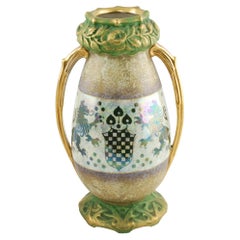
Riessner Kessel Amphora Turn Teplitz Two-Handled Vase with Iridized Glaze
Located in Cincinnati, OH
This striking amphora Art Nouveau vase was made in the Turn-Teplitz region of Bohemia by Riessner, Stellmacher & Kessel, established in 1892. The vase has an ovoid form with a thick molded floral and foliate band located at the neck. The body of the vase rests upon a raised pedestal foot decorated with a series of intertwined stylized roots. The neck and foot have been glazed in a matte green color with burnished gold highlights. The body of the vase is flanked by a pair of arched gilded handles made in the form of naturalistic woody branches. The body of the vase has been finished in a mottled matte glaze executed in a dull gold color enabling the cream color beneath to show through. The center of the vase transitions to a violet hue which is covered by a high glaze iridescent band having pink and purple undertones. The iridescent band features an armorial crest executed in black accented with gilded details. The crest itself consists of a checkerboard shield surmounted by a trio of stylized flowers with a spade motif, all of which are flanked by lions rampant. The design includes a series of large dots arrayed in a symmetrical manner. The opposite side of the vase echoes the motif found on the front and has a checkerboard shield, nine spade-shaped flowers and several dots. The vase is in excellent condition with no chips, cracks or repairs. As an antique item, the piece shows minor signs of age and use consisting of wear to the gilded decoration. The vase stands 11.75" tall and is 2.25" across the mouth. The foot is just over 5" in diameter and bears impressed marks including a circular ''Imperial Amphora Turn...
Category

Austrian Art Nouveau Antique Early 1900s Decorative Objects

Materials

Porcelain

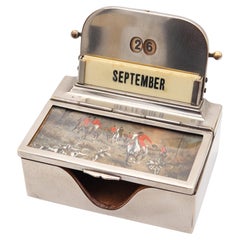
EDWARDIAN 1900 Mechanical Perpetual Desk Calendar With Painted Hunting Scene
Located in Miami, FL
An Edwardian perpetual desk calendar. This is a very unusual and beautiful mechanical desk perpetual calendar. This desk calendar was made in London England during the Edwardian per...
Category

English Edwardian Antique Early 1900s Decorative Objects

Materials

Silver Plate, Steel

Art Nouveau Repousse Stork Box by Alfred Daguet
Located in Palm Beach, FL
Alfred Louis Achille DAGUET (1875 - 1942) was a metalsmith active in Paris during the first part of the 20th century. His metalwork created prior to the outbreak of World War I, note...
Category

French Art Nouveau Antique Early 1900s Decorative Objects

Materials

Stone, Enamel, Brass, Iron

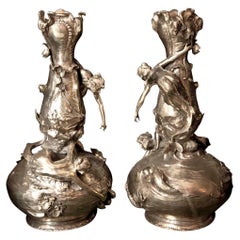
Pair of Big Vases WMF, German, 1909 in Silver Plated, Jugendstil, Art Nouveau
Located in Ciudad Autónoma Buenos Aires, C
2 Vases WMF Style: Jugendstil, Art Nouveau, Liberty year: 1909 Country: Germany Materials: silver plated Several of the WMF objects can be seen in museums. We have specialized in t...
Category

German Art Nouveau Antique Early 1900s Decorative Objects

Materials

Metal

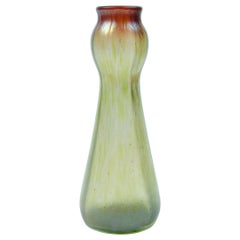
Loetz Art Nouveau vase whit Details of Irradiated glass 1900s
Located in Verviers, BE
Beautifully decorated whit Irradiated glass Rare to find with original condition The piece is in good condition and a real beauty! Photography fails to capture the simple elega...
Category

French Art Nouveau Antique Early 1900s Decorative Objects

Materials

Art Glass

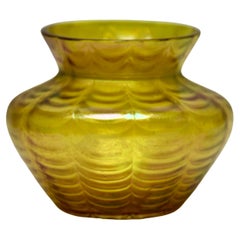
Iridescent Glass Vase Attributed to Loetz
Located in Buenos Aires, Argentina
Iridescent glass vase attributed to Loetz origin Austria, circa 1900 perfect condition oily motif.
Category

Austrian Art Deco Antique Early 1900s Decorative Objects

Materials

Art Glass

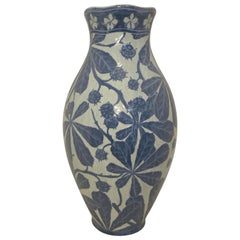
Josef Ekberg Ceramic Vase
Located in Hollywood, FL
This is a handmade, 1 off Sgraffito vase made by the Swedish ceramic artist Josef Ekberg in 1901. He was one of Sweden's top ceramic artist at the time. He started working at the Gus...
Category

Swedish Art Nouveau Antique Early 1900s Decorative Objects

Materials

Ceramic

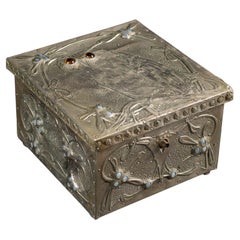
Art Nouveau Owl Repoussé Box with Moonstones by Alfred Daguet
Located in Palm Beach, FL
This piece features dozens semi-precious moonstones. Alfred Louis Achille DAGUET (1875 - 1942) was a metalsmith active in Paris during the first part of the 20th century. His metalw...
Category

French Art Nouveau Antique Early 1900s Decorative Objects

Materials

Zinc

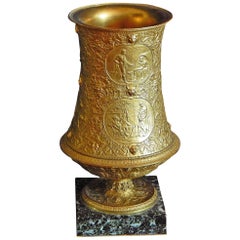
"Roman and Greek Myths", Fabulous Gilded Bronze Urn with Male Nudes, Levillain
Located in Philadelphia, PA
Teeming with male nudes and mythological scenes illustrating stories such as Diogenes' search for an honest man, and Romulus and Remus' role in the birth of Rome, this rare bronze urn was sculpted by Ferdinand Levillain, France's master of bas relief at the turn of the last century. Levillain was famous for his low reliefs in medallic work and finely-detailed bronze objects, and was greatly admired in his day for giving a modern interpretation to Greek and Roman subjects. This stunning gilded bronze urn...
Category

French Belle Époque Antique Early 1900s Decorative Objects

Materials

Bronze

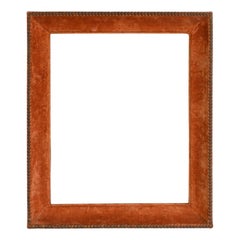
Fabric Covered Picture Frame
Located in London, England
Large oak picture frame covered in original burnt orange velvet and brass studding. U.K 1900. H 74cm x W 63cm x D 9cm
Category

British Antique Early 1900s Decorative Objects

Materials

Velvet, Oak

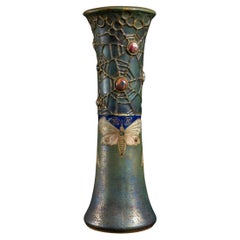
Art Nouveau Gres Bijou Butterfly Spiderweb Fluted Vase by RStK Amphora
Located in Palm Beach, FL
Note: We highly recommend shipping through 1stDibs for its cost effectiveness, full insurance coverage, and reliable handling. While standard parcel services are an option, the defau...
Category

Austrian Art Nouveau Antique Early 1900s Decorative Objects

Materials

Earthenware, Glass

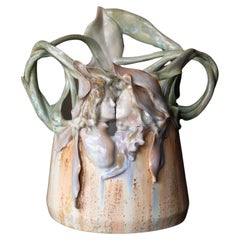
Jugendstil "The Kiss" Vase by Gottlieb Elster for Konigliche Porzellan (KPM)
Located in Palm Beach, FL
Note: We highly recommend shipping through 1stDibs for its cost effectiveness, full insurance coverage, and reliable handling. While standard parcel services are an option, the defau...
Category

Jugendstil Antique Early 1900s Decorative Objects

Materials

Porcelain

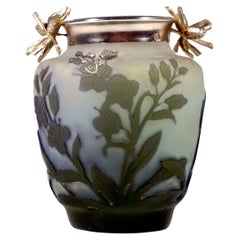
Émile Gallé Art Nouveau Cameo Vase With Silver Mounting, Nancy, France 1904
Located in Vienna, AT
Bulbous shoulder vase on a flush stand, short neck piece of colourless glass with white powder meltings, overlay in blue-violet and green, meadow flower decoration etched in various stages, matt etched inside and outside, Cameo signature 'Gallé' with star on the wall between the plants.. Mounted with later silver mouth in a smooth, slightly flared design, decorated on the outside with two sculptural branch and cone bundles. Silver mount hallmarked 'Minerve casquée' for 950 silver, France, and master's mark. Hand-made Cameo Glass: Glass overlaid with several layers, with high-cut worked out motifs. Since the middle of the 19th century, the design has also been done by etching. Cameo glass vessels were already being made in antiquity; at the end of the 19th century, Émile Gallé further developed this glass art, created Art Nouveau designs and employed a large factory in Nancy...
Category

French Art Nouveau Antique Early 1900s Decorative Objects

Materials

Glass

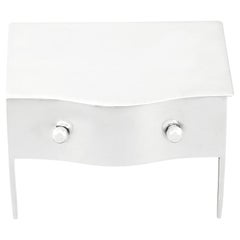
20th Century Edwardian Sterling Silver Jewelry Box
Located in Jesmond, Newcastle Upon Tyne
An exceptional, fine and impressive antique Edwardian English sterling silver jewelry box; an addition to the ornamental silverware collection This exceptional antique silver jewelry box, in sterling standard, has been modelled in the form of a dressing table. The surface of this Edwardian jewelry box is plain and embellished with two applied sterling silver balls to the anterior convex arched surface, replicating the details of the draw handles. The original hallmarked hinged cover is plain and parallels the shape of the body, opening to reveal the original segmented velvet interior. The weighted base of this exceptional antique box retains the original leatherette covering to the underside. The box is supported by four subtly tapering pillar style legs Note: The majority of such boxes have a wood lining to the interior; it is a sign of quality when boxes have unlined interiors in addition to a solid silver cover. Condition This antique silver box is an exceptional gauge of silver, exceptional quality and in exceptional presentation condition. The box has been professionally polished and is in presentation condition. The original interior and leatherette covering have wear in keeping with age and use. Full hallmarks struck to the surface of the body and part hallmarks to the interior of the cover are all very clear. Reflections in photographs may detract from the true representation of this piece of antique Edwardian jewelry...
Category

English Edwardian Antique Early 1900s Decorative Objects

Materials

Silver, Sterling Silver

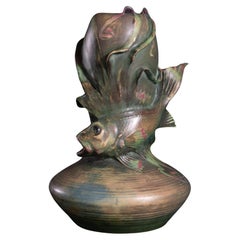
Art Nouveau Vase with Exotic Fish by Eduard Stellmacher for RStK Amphora
Located in Palm Beach, FL
Model #4598. Hard Earthenware. Riessner, Stellmacher and Kessel (RSt&K), consistently marked pieces with the tradename “Amphora” by the late 1890s and became known by that name. The ...
Category

Austrian Art Nouveau Antique Early 1900s Decorative Objects

Materials

Earthenware

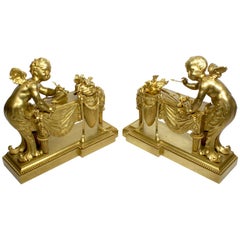
Pair of French 19th Century Louis XV Style Cherub Gilt-Bronze Chenets Andirons
Located in Los Angeles, CA
A very fine and charming pair of French 19th-20th century Louis XV style Belle Époque figural gilt-bronze chenets. The finely chased whimsical ormolu andirons, each surmounted with a...
Category

French Louis XV Antique Early 1900s Decorative Objects

Materials

Bronze, Ormolu

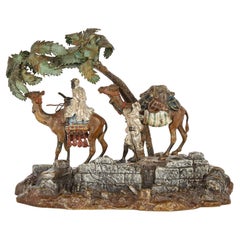
Viennese Cold-Painted Orientalist Bronze Group by Franz Bergman
Located in London, GB
Viennese cold-painted Orientalist bronze group by Franz Bergman Austrian, c.1900 Height 12cm, width 15cm, depth 9cm This small but intricately crafted and designed bronze group ...
Category

Austrian Moorish Antique Early 1900s Decorative Objects

Materials

Bronze

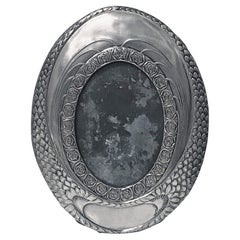
WMF Large Pewter Oval Photograph Frame C.1910
Located in Toronto, Ontario
WMF large pewter oval photograph frame C.1910. Relief decorated with a band of roses within a border of overlapping leaves, WMF marks to reverse and B O/X ...
Category

Antique Early 1900s Decorative Objects

Materials

Pewter

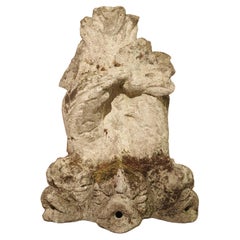
Antique French Stone Fountain Piece with Triple Dolphin Spouts, Circa 1900
Located in Dallas, TX
This charming French fountain piece with triple dolphin spouts was made circa 1900. The dolphins are made from reconstituted stone, which is natural lim...
Category

French Antique Early 1900s Decorative Objects

Materials

Stone

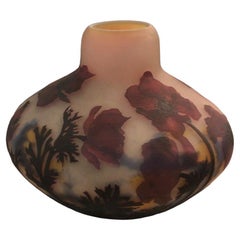
Vase ( Poppies Flowers) , Sign: Muller Fres Luneville, Jugendstil, Art Nouveau
Located in Ciudad Autónoma Buenos Aires, C
Vase Sign: Muller Freres Luneville acid worked Muller Feres The heart of the company was formed by five brothers (Henri, Desire, Eugene, Pierre, Victor) from a glass making family wh...
Category

French Art Nouveau Antique Early 1900s Decorative Objects

Materials

Art Glass

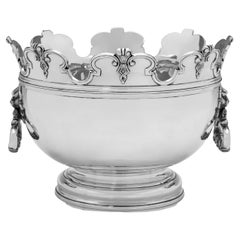
Large and heavy Victorian sterling silver Monteith bowl made in 1900
Located in London, London
Hallmarked in Sheffield in 1900 by Goldsmiths & Silversmiths Co., this very attractive, Victorian, Antique Sterling Silver Bowl, is in the Monteith design, with a shaped rim, and cas...
Category

English Victorian Antique Early 1900s Decorative Objects

Materials

Sterling Silver

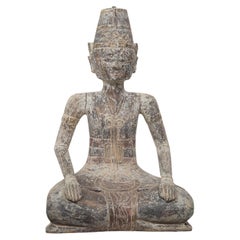
Statue Balinese figure of a seated Hindu priest
Located in Milano, IT
In the heart of Bali, amidst the lush tropical landscapes and the whispers of ancient traditions, stands a mesmerizing wooden statue that tells a tale of devotion and serenity. This ...
Category

Thai Anglo-Indian Antique Early 1900s Decorative Objects

Materials

Teak

Italian 19th-20th Century Life-Size Marble Sculpture Titled "Searching for Love"
By Vito Pardo
Located in Los Angeles, CA
A very fine museum quality Italian 19th-20th century life-size marble sculpture titled "Searching for Love" by Vito Pardo (Italian, born in Venice in 1872) Depicting a semi-nude life...
Category

Italian Rococo Antique Early 1900s Decorative Objects

Materials

Marble, Bronze

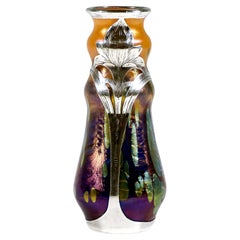
Loetz Art Nouveau Vase New-Red Cytisus Silver Mount, Austria-Hungary, circa 1902
Located in Vienna, AT
Finest Bohemian Art Nouveau glass vase in the form of a blown, baluster-shaped body with a flared rim. Silver mounting in the form of chased flowers, enclosing the body of the vase l...
Category

Austrian Art Nouveau Antique Early 1900s Decorative Objects

Materials

Glass

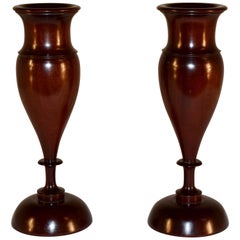
Pair of Lignum Vitae Vases, circa 1900
Located in High Point, NC
Pair of lignum vitae vases from England circa 1900. They are gracefully hand turned and have a wonderful shape. The turned rims give way to shaped collars and bulbous bases, supporte...
Category

English Edwardian Antique Early 1900s Decorative Objects

Materials

Wood

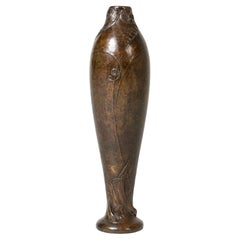
Art Noveau Bronze vase by Gerda Backlund, Sweden, ca 1900
Located in Stockholm, SE
Beautiful Art Noveau vase in patinated bronze, designed by Gerda Backlund. Slender, curvesome form with relief decor of grasses draping around the base, unfolding ferns around the to...
Category

Swedish Scandinavian Modern Antique Early 1900s Decorative Objects

Materials

Bronze

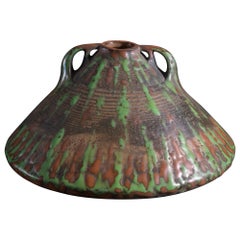
Amphora Vase in the Shape of Geometric Cone by Paul Dachsel for Kunstkeramik
Located in Palm Beach, FL
Paul Dachsel was the son-in-law of Alfred Stellmacher, the founder of Amphora Pottery company in Turn-Teplitz, then in Austria. Very little is known or was written about Dachsel. He ...
Category

Austrian Art Nouveau Antique Early 1900s Decorative Objects

Materials

Earthenware

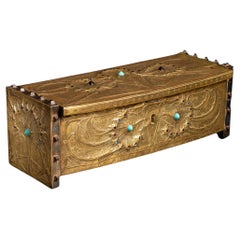
Art Nouveau Dandelion Repoussé Box by Alfred Daguet
Located in Palm Beach, FL
Note: We highly recommend shipping through 1stDibs for its cost effectiveness, full insurance coverage, and reliable handling. While standard parcel services are an option, the defau...
Category

French Art Nouveau Antique Early 1900s Decorative Objects

Materials

Brass, Steel

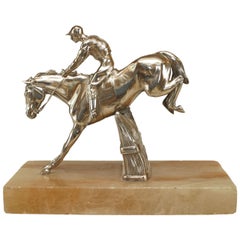
Victorian deskBronze Horse and Jockey
Located in Queens, NY
English Victorian silver plated bronze figure of horse and jockey jumping grass fence on white onyx rectangular shaped base
Category

English Edwardian Antique Early 1900s Decorative Objects

Materials

Onyx, Bronze, Silver Plate

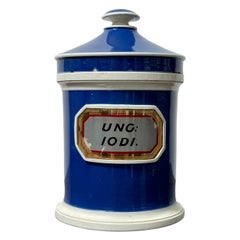
Antique Vintage Victorian Ceramic Apothecary Medicine Shop Display Jar Bottle
Located in Sale, GB
- A beautiful blue and white Victorian apothecary jar, circa 1900. - Excellent glass and gilt lettered plaque to the front with original lid. ...
Category

British Antique Early 1900s Decorative Objects

Materials

Pottery

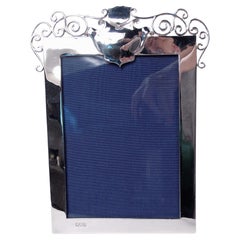
Antique English Edwardian Classical Sterling Silver Picture Frame, 1905
Located in New York, NY
Edwardian Classical sterling silver picture frame. Made by Eels Brothers & Browne in London in 1905. Plain and flat rectangular surround; mounted to top open scrollwork with small ar...
Category

English Edwardian Antique Early 1900s Decorative Objects

Materials

Sterling Silver

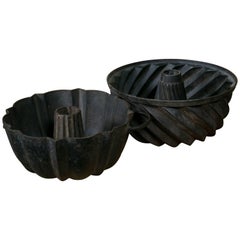
Pair Dutch Antique Cast Iron Kugelhopf Cake Molds, circa 1900
Located in Houston, TX
Two antique cast iron traditional Kugelhopf cake pan molds from the Netherlands, circa 1900. One features diagonal ridges and the other vertical. Pan on botto...
Category

Dutch Country Antique Early 1900s Decorative Objects

Materials

Iron

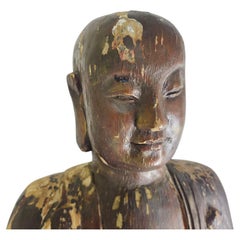
Early 20thC Hand Carved Tall Wooden Buddha With Ball in Hand
Located in Port Jervis, NY
Tall hand carved Buddha from the late 19thC or early 20thC. Buddha holding a ball calmly in his left hand. Ball representing peace and prosperity and dispersement of wealth. Fair co...
Category

Chinese Chinoiserie Antique Early 1900s Decorative Objects

Materials

Hardwood, Paint

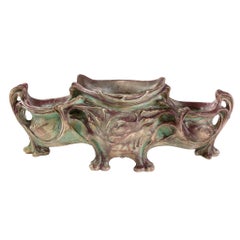
Hector Guimard Large Glazed Ceramic Planter
Located in New York, NY
An ocean of sinuous, sweeping lines frozen in motion, this large-scale ceramic Art Nouveau planter by Hector Guimard (executed by Gilardoni et Brault, Choisy-le-Roi), demonstrates in an arresting array of earthen greenish and purplish hues, and is sensational from every angle. The planter is constructed of a central component with two flanking portions in slightly reduced proportions, unified by the complex constellation of swirling lines and undulating surfaces that adorn the entire composition. Artist: Designed by Hector Guimard, executed by Gilardoni et Brault, Choisy-le-Roi Country: France Circa: 1900s Dimensions: 9.25" height, 26.25" width, 11.5" depth Materials: Ceramic Provenance: Lloyd and Barbara Macklowe, New York; Sotheby's New York, Important Art Nouveau from the Collection of Lloyd and Barbara Macklowe, December 2, 1995, lot 562; Marsha Miro, Bloomfield Hills, Michigan; Christie's New York, Masterpieces of Art Deco: The Marsha Miro Collection...
Category

French Art Nouveau Antique Early 1900s Decorative Objects

Materials

Ceramic

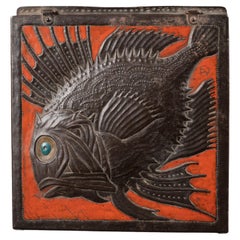
Art Nouveau Scorpion Fish Repoussé Box by Alfred Daguet
Located in Palm Beach, FL
Alfred Louis Achille DAGUET (1875 - 1942) was a metalsmith active in Paris during the first part of the 20th century. His metalwork created prior to the outbreak of World War I, note...
Category

French Art Nouveau Antique Early 1900s Decorative Objects

Materials

Enamel, Steel

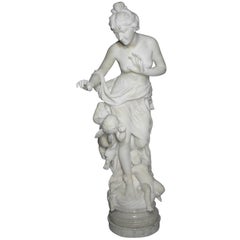
Young woman with jug, Carrara marble, signed Bonnal, early 20th century
Located in NICE, FR
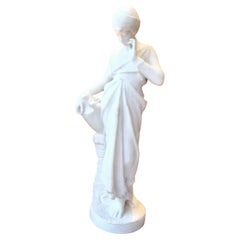
Charming sculpture of a young woman carrying a jug, signed by Bonnal on the back and inspired by “Rebecca at the Well” by 19th-century Italian School artist Guglielmo Pugi. The sculpture in fine white Carrara marble, created between the end of the 19ᵉ century and the beginning of the 20ᵉ century, depicts a pensive, lascivious young woman dressed in the fashion of the turn of the century: she wears a turban from which escapes curls of hair and a bracelet characteristic of the period; the cut of her dress is also very elaborate for a simple peasant woman. The finely embroidered motifs on the dress and turban are further evidence of the sculptor's mastery. A delicate, feminine piece that will look great in a hallway or on a dressing table, and will make a lovely gift for an aesthete woman. Guglielmo Pugi lived in Florence, where he ran a sculpture workshop with his two sons. Their workshop, “Guglielmo Pugi e Figli”, was mainly dedicated to exports, particularly to the United States. Guglielmo Pugi's work, emblematic of the Art Nouveau style, is characterized by direct carving in alabaster and Carrara marble (often white or veined). Some of his sculptures are now housed in Volterra's Historical Alabaster Museum. Many of his works were shown at major international exhibitions, such as the 1901 Pan-American Exposition in Buffalo and the 1904 Exposition...
Category

Art Nouveau Antique Early 1900s Decorative Objects

Materials

Marble

Italian 19th-20th Century Carved Alabaster Bust of a Young Girl with a Bandana
Located in Los Angeles, CA
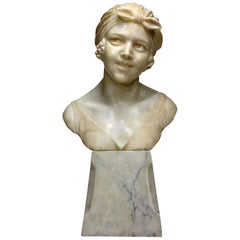
A charming Italian 19th-20th century carved alabaster bust of a young girl. The young beauty posing with a direct gaze, her hair tied with a head bandana tied on her forehead wearing a tank top, raised on a tapered alabaster stand...
Category

Italian Belle Époque Antique Early 1900s Decorative Objects

Materials

Alabaster

Shell Inlaid Bowl
Located in New York, NY
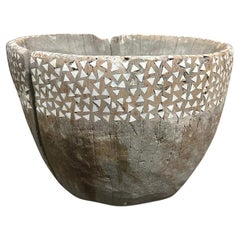
A beautiful sculptural antique bowl from Sumatra. Circa 1900. We added by hand shells inlaid into the outer top section. It’s all in the details. Full dimensions; Top 15″ diameter x ...
Category

Organic Modern Antique Early 1900s Decorative Objects

Materials

Wood, Teak, Reclaimed Wood, Shell

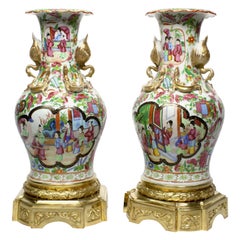
Pair Louis XVI Style Chinese-Export Ormolu Mounted Famille Rose Porcelain Vases
Located in Los Angeles, CA
A fine pair of Louis XVI style chinoiserie gilt-bronze mounted Chinese export famille rose porcelain vases. The ovoid hand painted porcelain body with dual scenes of a sword presenta...
Category

Chinese Chinese Export Antique Early 1900s Decorative Objects

Materials

Ormolu

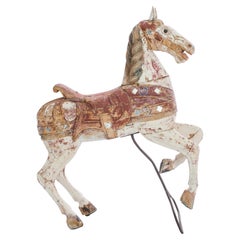
1900s Belgian Wooden Horse on Metal Stand
Located in High Point, NC
A wooden horse, made in Belgium, circa 1900. The horse is positioned in a dynamic pose, front legs raised in a canter. A flowing mane, decorative saddle and tack, carved with fine detail. A cheery white...
Category

Belgian Antique Early 1900s Decorative Objects

Materials

Wood

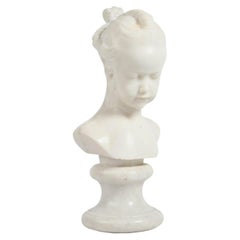
Antique Continental Carved White Marble Bust of a Young Girl with Braids
Located in San Francisco, CA
beautifully carved, the serene marble sculpture depicting a young girl's bust with three quarter face in a downward gaze; in a classical style with the girl's hair intricately braide...
Category

French Greco Roman Antique Early 1900s Decorative Objects

Materials

Marble

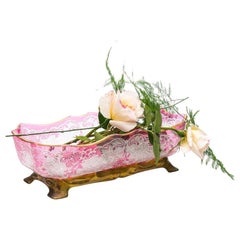
Baccarat Flower Pattern Acid Etched Bowl, Magenta Pink, 1900, France
Located in Rijssen, NL
Glorifying the effects of refracted light for 170 years, the iconic Baccarat products are well-known over the world. A Large Art Nouveau Baccarat Flower and leaf Pattern Pink Acid E...
Category

French Art Nouveau Antique Early 1900s Decorative Objects

Materials

Crystal

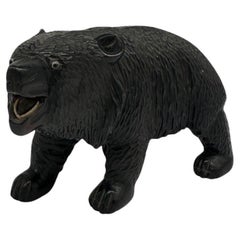
Ainun Black Bear Hand Carved Wood Sculpture with Glass Eyes
Located in Van Nuys, CA
A traditional Ainu bear carving typically depicts a black bear with stylized features, often emphasizing its strength and significance in Ainu cultur...
Category

Neoclassical Antique Early 1900s Decorative Objects

Materials

Wood

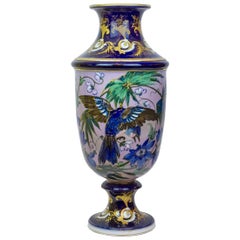
Large Aesthetic Porcelain Vase with Floral and Bird Decorations
Located in New York, NY
A large and unusual Aesthetic Movement porcelain vase with hand-painted floral and bird decorations. Stock number: PP31.
Category

French Antique Early 1900s Decorative Objects

Materials

Porcelain

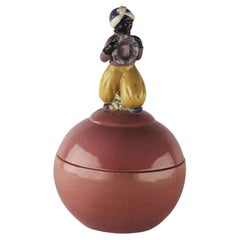
Viennese Secession Ceramic Box
Located in Buenos Aires, Argentina
Viennese seseion ceramic box Ceramic Origin Austria circa 1900 Very good condition and no restorations Sealed at its base Some chips on the lid ring due to wear and tear. Pink, black and yellow color with orientalist character on its cover. We are Saint John, a company dedicated to the trade...
Category

Austrian Vienna Secession Antique Early 1900s Decorative Objects

Materials

Ceramic

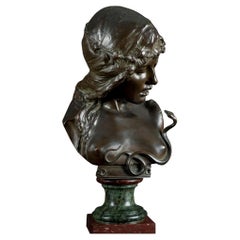
Eve and the Serpent Symbolist Bronze Sculpture by Isidore De Rudder
Located in Palm Beach, FL
Rare, full size example of this piece. Isidore De Rudder (1855 - 1943) was active/lived in Belgium.
Category

Belgian Art Nouveau Antique Early 1900s Decorative Objects

Materials

Onyx, Marble, Bronze