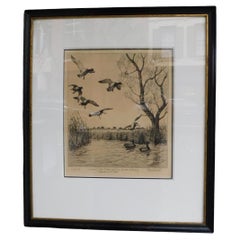
Arne Jacobsen Royal Hotel Sas Frame with Picasso 1925 Print
About the Item
- Creator:Arne Jacobsen (Designer)
- Dimensions:Height: 27.96 in (71 cm)Width: 0.99 in (2.5 cm)Depth: 20.08 in (51 cm)
- Materials and Techniques:
- Place of Origin:
- Period:
- Date of Manufacture:1950 s
- Condition:Glass have some traces of use.
- Seller Location:Brussels, BE
- Reference Number:1stDibs: U120717934049
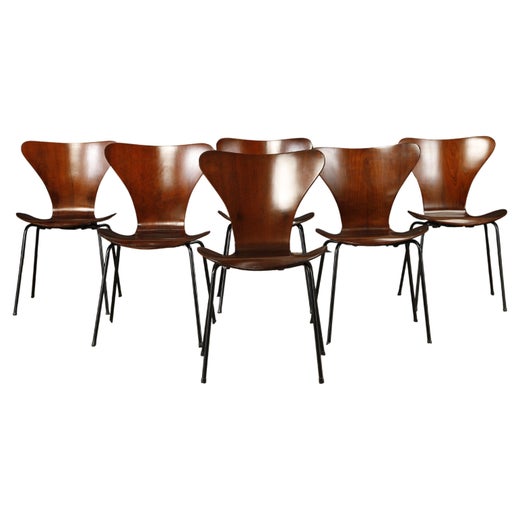
Arne Jacobsen
The eye-catching work of the Danish architect and designer Arne Jacobsen often introduces new collectors to mid-20th century furniture. With their fluid lines and sculptural presence, Jacobsen’s signature pieces — the elegant Swan chair and the cozy-yet-cutting edge Egg chair, both first presented in 1958 — are iconic representations of both the striking aesthetic of the designers of the era and their concomitant attention to practicality and comfort. Jacobsen designed furniture that had both gravitas and groove.
Though Jacobsen is a paragon of Danish modernism, his approach to design was the least “Danish” of those who are counted as his peers. The designs of Hans Wegner, Finn Juhl, Børge Mogensen and others grew out of their studies as cabinetmakers. They prized skilled craftsmanship and their primary material was carved, turned and joined wood. Jacobsen was first and foremost an architect, and while he shared his colleagues’ devotion to quality of construction, he was far more open to other materials such as metal and fiberglass.
Many of Jacobsen’s best-known pieces had their origin in architectural commissions. His molded-plywood, three-legged Ant chair (1952) was first designed for the cafeteria of a pharmaceutical company headquarters. The tall-backed Oxford chair was made for the use of dons at St. Catherine’s College, Oxford, whose Jacobsen-designed campus opened in 1962 (while still under construction). The Swan, Egg and Drop chairs and the AJ desk lamp were all created as part of Jacobsen’s plan for the SAS Royal Copenhagen Hotel, which opened in 1960. (The hotel has since been redecorated, but one guest room has been preserved with all-Jacobsen accoutrements.)
To Jacobsen’s mind, the chief merit of any design was practicality. He designed the first stainless-steel cutlery set made by the Danish silver company Georg Jensen; Jacobsen’s best-selling chair — the plywood Series 7 — was created to provide lightweight, stackable seating for modern eat-in kitchens. But as you will see from the objects on 1stDibs, style never took a backseat to function in Arne Jacobsen’s work. His work merits a place in any modern design collection.
Find authentic Arne Jacobsen chairs, tables, sofas and other furniture on 1stDibs.
You May Also Like
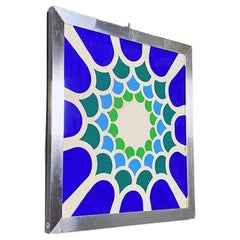
Vintage 1970s Italian Space Age Picture Frames
Metal
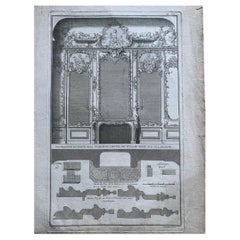
Antique 18th Century French Louis XV Picture Frames
Paper
Antique 1880s English Picture Frames
Oak

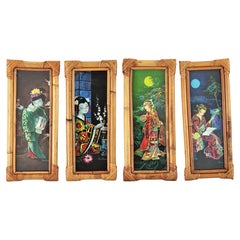
Mid-20th Century Spanish Mid-Century Modern Prints
Bamboo, Rattan, Paper
20th Century American Picture Frames
Paper
Early 20th Century English Georgian Prints
Glass, Wood, Paper
Antique 19th Century French Neoclassical Prints
Gold Leaf

Early 20th Century English Georgian Prints
Wood, Paper, Glass
Antique Mid-19th Century Chinese Picture Frames
Paper
Vintage 1950s American Modern Prints
Glass, Giltwood, Paint, Paper
Still Thinking About These?
All Recently ViewedRead More
The 21 Most Popular Mid-Century Modern Chairs
You know the designs, now get the stories about how they came to be.
Arne Jacobsen’s Egg Chair Scrambled the Idea of What a Wingback Could Be
The curvaceous Egg was designed to cradle the body and offer privacy. Later, it became the seat of choice for bosses in movies, too.