
Want more images or videos?
Request additional images or videos from the seller
1 of 11

Extremely RareHarry Bertoia Necklace Sterling Silver Lapis Coral ca. 1940

$65,000
£49,231.46
€56,540.64
CA$91,086.26
A$99,029.13
CHF 52,505.36
MX$1,187,108.13
NOK 667,316.13
SEK 611,352.30
DKK 422,569.68

About the Item

Extremely rare combination pendant attached to custom-made chain by Harry Bertoia in sterling silver, containing one Lapis Lazuli and one Coral. This piece comes from a private collection. Provenance will accompany the piece. The work has been added to the Harry Bertoia Catalogue Raisonné and assigned the following catalogue raisonné number: D.JE.78. Although associated with Mid-Century Modern furniture, Harry Bertoia was originally a jewelry designer who used both sterling silver, precious stones and gem stones. The pendant measures: 1.25" long x 1" wide. The necklace measures: 11" length with a measurement of 22" overall length. The chain and closure are all handcrafted and in his unique design. Lapis Lazuli measures 20mm round supported by one 6 mm red coral. Total weight is 33 grams. The following is from Beverly H. Twitchell, PhD, author of Bertoia: The Metalworker, London: Phaidon, 2019. She provides a very informative critique of Bertoia and his jewelry. Wearable Art an Important Design for a Necklace “Before Harry Bertoia enrolled at the Cranbrook Academy of Art in 1937 he had already mastered traditional jewelers’ techniques, but his engagement with Modernism led him to invent and use more direct methods. Instead of precious metals and gems, Bertoia made jewelry that appealed through its design, craftsmanship and the nature of its materials. That approach would make Bertoia a direct predecessor of the American Studio Crafts movement. So complex and cumulative are human perception and memory that we often do not know from where our own ideas come and without firm evidence, it is impossible to think we can establish the origins of an artist’s ideas. While his jewelry is entirely modern, chokers with multiple small pendants had come from ancient Mediterranean cultures: Mesopotamia, Egypt, Greece and Italy, even from Europe and America at the turn of the last century. Did Bertoia see works in books, journals or at the Detroit Institute of Arts that resonated with him or did he invent this on his own, as he would so many other forms? Bertoia found inspiration in nature from an early age on a small farm in Italy and later in Cranbrook’s woods, on the beaches of southern California and in the fields near his home in eastern Pennsylvania where he lived after 1950. The fluidity and motion of the his jewelry characterize much of his art. In that spirit, too, he made jewelry that suited human anatomy and was animated by its wearer’s movement. Bertoia had the instincts of an engineer, as the intricacy of the present lot’s clasp and overall construction of the jewelry demonstrates. Large jewelry by Bertoia is very rare. A delight to the eye, and like all of Bertoia’s work it is timeless.” Harry Bertoia (1915 – 1978) was an Italian-born American artist, jewelry creator and modern furniture designer. He was born in San Lorenzo d-Arzene, Pordenone, Italy. At age 15 he moved to Detroit, Michigan to live with his older brother, Oreste. He quickly learned English and the bus schedule and enrolled in Cass Tech High School in Detroit (1930-1936) where he studied art and design and learned the skill of handmade jewelry making. At that time, there were three jewelry and metals teachers Louise Green, Mary Davis and Greta Pack. After graduating in 1936 he attended the Art School of the Detroit Society of Arts and Crafts now known as the College for Creative Studies. In 1937 he received a scholarship to study at the Cranbrook Academy of Art where he encountered Walter Gropius, Edmund N. Bacon, Ray and Charles Eames and Florence Knoll for the first time. In 2019, the Harry Bertoia Foundation launched a Catalogue Raisonne project, which seeks to document and research the diverse and extensive artistic practice of the artist. The goal is to provide a comprehensive record and resource of Bertoia’s work, and will include his painting, graphics (including monotypes), furniture, jewelry, metal work, sound recordings, and sculpture. An ongoing project, the Harry Bertoia Catalogue Raisonne will be available online, published in stages and regularly updated to reflect ongoing research. Bertoia received a scholarship to The Cranbrook Academy of Art in Bloomfield Hills, Michigan. It was designed by architect and faculty member, Eliel Saarinen who collaborated with Charles and Ray Eames on chair and furniture design. It is the country’s top ranked, graduate-only program in architecture, design and fine art. Each year, just 75 students are invited to study and live on the landmark Saarinen-designed campus in Bloomfield Hills, which features: private studios, state-of-the art workshops, the renowned Cranbrook Art Museum and 300 acres of forests, lakes and streams, all a short drive from the city of Detroit. The focus at Cranbrook is on studio practice in one of ten disciplines including Architecture, 2D and 3D Design, Ceramics, Fiber, Metalsmithing, Painting, Photography, Print Media, and Sculpture. The program is anchored by celebrated Artists- and Designers-in-Residence, one for each discipline, all of whom live and practice on campus alongside the graduate students. Numerous creative artists who are alumni of Cranbrook include: Florence Knoll, Jack Lenor Larsen, Donald Lipski, Duane Hanson, Nick Cave, Hani Rashid, George Nelson, Urban Jupena (Nationally recognized fiber artist), Artis Lane (the first African-American artist to have her sculpture, "Sojourner Truth," commissioned for the Emancipation Hall in the Capital Visitor Center in Washington DC), Cory Puhlman (televised Pastry Chef extraordinaire), Thom O’Connor (Lithographs), Paul Evans (Brutalist-inspired sculpted metal furnishings), Eugene Caples (small bronze images/abstract), Morris Brose (Bronze Sculptures), Herb Babcock (blown glass), Larry Butcher (mixed media), Lauren Anais Hussey (Abstract), and Andrea Eis (film, photography).

More From This Seller

View All
"Abundance" Lalique Crystal
By Lalique
Located in Bloomfield Hills, MI
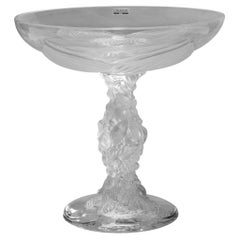
"Abundance" was produced in Circa 2008. This magnificent design was produced in a limited edition of 99, this being number 47. The foot has the etched trademark signature with the copyright symbol: Lalique France. The piece is both clear and frosted silky crystal with a wide shallow footed bowl molded with a flower on the interior and fruit and foliage molded on the baluster. This is a unique and extraordinary Art Nouveau design. It measures 15.125'' H x 15'' Dia. René Lalique’s name is synonymous with French Art Nouveau decorative arts. Born in 1860 he first began designing fine jewelry in Paris in 1881, but pursuing increasingly more innovative experimentation in glass commencing around 1883, he eventually created crystal pieces. Early works used the familiar "lost wax" technique by which the model is made in wax while a mold is formed around the model. Then, the wax is melted and molten glass is poured into the mold. Lalique glass was made in this manner until approximately 1905 at which time the factory was redesigned for a larger production. Without the hand-formed pieces and unique molds, the individual uniqueness of each example of Lalique glass came to an end. The success of this venture resulted in the opening of his own glassworks at Combs-la-Ville in 1909. During the art nouveau period, Lalique was well known for a wide variety of objects including perfume bottles, vases, inkwells, decorative boxes, and bookends. Lalique glass is lead based, either mold blown or pressed. Characteristically the glass is crystal in combination with acid-etched relief. In addition to vases, clocks, automobile mascots...
Category

Early 2000s French Glass

Materials

Crystal

Bing Grondahl Porcelain Figurine "BLUE PARROTT"
By Bing Grøndahl
Located in Bloomfield Hills, MI
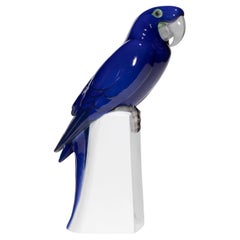
Blue Parrot on its perch appears to be the perfect companion. Its attention is perked and it looks as if it is about to begin a conversation about a cracker you may be holding. It co...
Category

Vintage 1970s Danish Porcelain

Materials

Porcelain, Paint

Robert Bielat Sculpture Cast Bi-Metal Stone Wood "TRUE EAST"
Located in Bloomfield Hills, MI
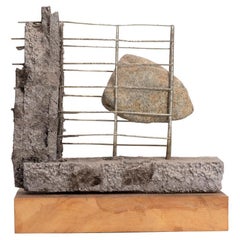
SALE ONE WEEK ONLY "Robert Bielat was an artist’s artist, a sobriquet applied to those whose work is brilliant but idiosyncratic, deeply compelling in a way that is obvious to those who can see it, but not necessarily so to the market or to the arbiters...
Category

21st Century and Contemporary American Expressionist Abstract Sculptures

Materials

Stone, Cast Stone, Metal, Aluminum

Tony Rosenthal Abstract Sculpture Blackened Steel Red Blushes
By Tony Rosenthal
Located in Bloomfield Hills, MI
SALE ONE WEEK ONLY UNTITLED is an abstract blackened steel sculpture that has a continuous lively movement. The positioning of the heavy metal is suggestive of dance. There are similarities to the sculptors, Robert Sestok and Tony Smith, who both worked in bronze and painted steel with similar cut out pieces and abstract designs. Untitled has a joyous aura and its small size makes it a charming intimate piece. It might have been a maquette for a much larger piece. The design works in this 14" height as it would in a 14' height. There is a Letter of Certification that will accompany the sculpture. Tony Rosenthal (1914 - 2009) is best known for creating a staggering list of monumental public art sculptures. For over seven decades Tony Rosenthal created an arc of sculpture in a variety of sizes, styles and media, including wood, steel, bronze, brass, cement and aluminum. Every day millions see, enjoy and interact with art created by Rosenthal in cities around the world. In New York City alone, five Rosenthal public art sculptures have been beloved and visible 24/7 for over four decades, yet Rosenthal is not a household name. Art dealer Joseph K. Levene, told The New York Times, Tony Rosenthal "reminds me of a character actor. You know the face but not the name. With him, you know the art." Tony Rosenthal dedicated his life to creating art and actively created sculpture everyday in his Southampton, New York studio until he passed away at the age of 94, July 28, 2009. At nine Rosenthal learned the fundamentals of carving sculpture when his mother, an opera singer enrolled him in children's classes at the Art Institute of Chicago where he learned how to carve sculptures in soap. In 1936 Rosenthal earned a B.F.A. from the University of Michigan, and in 1952 became the first instructor of sculpture at the University of California, Los Angeles. In 1950 Rosenthal was recipient of the San Francisco Museum of Modern Art’s sculpture award; in 1967, Rosenthal received the outstanding achievement award from the University of Michigan and in 1963 a Ford Foundation Grant. 
After graduating from the University of Michigan, Rosenthal became studio assistant to Alexander Archipenko, the figurative master sculptor, casting bronzes in exchange for sculpture lessons; at night, Rosenthal taught evening classes in drawing and sculpture. In 1939, Rosenthal enrolled at Cranbrook Academy of Art, studying with Carl Milles, Cranbrook's sculptor in residence; there, Rosenthal forged friendships with husband and wife designers Charles Eames and Ray Eames and the sculptor Lilian Swann Saarinen the wife of architect, Eero Saarinen.   Decades later Rosenthal acknowledged his gratitude to Cranbrook by donating his archives to them. The Cranbrook Cube, 1984, a 90" painted aluminum cube is in the Cranbrook Museum collection. In 1942, Rosenthal was drafted into the U.S. Army; while stationed in Paris Rosenthal forged friendships with George Braque, Andre Derain, Le Corbusier and Constantin Brancusi, routinely organizing and accompanying groups of soldiers on studio visits. Through multiple visits to Brancusi's Paris studio, Rosenthal learned to create and forge metal sculpture...
Category

Late 20th Century American Modern Abstract Sculptures

Materials

Steel

Claude Conover Ceramic Stoneware Vessel Signed "Comitan" Inscribed Decorations
By Claude Conover
Located in Bloomfield Hills, MI
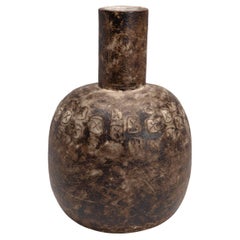
SALE ONE WEEK ONLY "Comitan" is a stoneware vessel, 1980s, with a handsome elongated neck and full-body. The surface has a rich warm patina with cryptic scratches, stripes and hatchings marking the body. This gorgeous piece is a perfect example of Conover's best work. Claude Conover was a ceramic sculpture artist described as falling within the styles of American, Modern and Contemporary Design. In 1983 he won The Cleveland Arts Prize competition in the visual arts for his bold and unique ceramic pieces that reflect strength of form and endurance unusual in the field. Using his own clay stoneware and mostly monochromatic colors, Conover decorated the surfaces with cryptic scratches, stripes and hatchings. Although decorative in intent, the indecipherable incised lines on his ceramics suggest some prehistoric unreadable script. The resultant works evoke a timeless monumentality reminiscent of ancient vessels whose utilitarian purpose is now lost to us. Within this limited repertoire, he produced beautiful, eternal works of art. Although Conover’s large impressive pots are his best work, he also made other forms, such as bowls, lamps, and ceramic animal sculpture. Conover was born in Pittsburgh and educated at the Cleveland Institute of Art, where a number of prominent artists also attended: Brian Michael Bendis, Marc...
Category

Vintage 1980s American Vases

Materials

Ceramic, Stoneware

John Glick Plum Street Pottery Signed Monumental Ceramic Charger
By John Glick
Located in Bloomfield Hills, MI
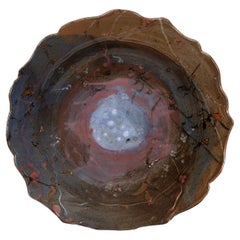
The ceramic charger with scalloped edge is an example of the kind of work by which John Glick became so famous. He was seduced by the effects of the reduction kiln, which decreased the levels of oxygen during firing, inducing the flame to pull oxygen out of the clay and glazes changing the colors of the glazes depending on their iron and copper content. In this way he achieved the rich gradients of ochre and umber and variations in stippling and opacity. It is signed on verso. John was an American Abstract Expressionist ceramicist born in Detroit, MI. Though open to artistic experimentation, Glick was most influenced by the styles and aesthetics of Asian pottery—an inspiration that shows in his use of decorative patterns and glaze choices. He has said that he is attracted to simplicity, as well as complexity: my work continually reflects my re-examination that these two poles can coexist… or not, in a given series. Glick also took influences from master potters of Japan, notably Shoji Hamada and Kanjrio Kawai, blending their gestural embellishments of simple forms with attitudes of Abstract Expressionism. He was particularly drown to the work of Helen Frankenthaler whose soak-stain style resonated with Glick’s multi-layered glaze surfaces, which juxtaposed veils of atmospheric color with gestural marks and pattern. He spent countless hours developing and making his own tools in order to achieve previously unseen results in his work with clay and glaze. Glick’s “Plum Tree Pottery” (now a designated historic landmark in Farmington Hills, Michigan) studio opened around 1965 and closed in the summer of 2016. It was a private studio space for John and a number of his students and assistants. He believed his shapes evolved guided by forces apparently outside his control. This was instinctual, intellectual and due to his openness to change, fusing into what he thought was the most positive force behind a potter’s approach: evolution and growth. Some have called it inspiration. John was not only a major figure in the Detroit creative community, but in the ceramics world at large. According to Shelley Selim in her book on John, “John Glick: A Legacy in Clay” John remains: “one of the most recognizable names in the field of studio pottery – known for lecturing, publishing, and offering workshops widely – and his work has been featured in well over a hundred local, national and international exhibitions since he was a college student in the late 1950s.” Along with this John has mentored over thirty studio apprentices over five and a half decades, received numerous grants and awards for his work, and has been prolific, with an estimated 300,000 ceramic wares throughout the world. He received his Masters from Cranbrook Academy of Art in Bloomfield Hills, Michigan, working with Maija Grotell, a legendary and influential teacher. Grotell was noted for her deep interest in the human connection to nature’s rhythms and patters. These ideas often grounded her dialog with her students including Glick, affecting, a profund and lasting influence on his future work. This famous Art Academy was designed by architect and faculty member, Eliel Saarinen who collaborated with Charles and Ray Eames on chair and furniture design. Numerous creative artists who are alumni of Cranbrook include: Harry Bertoia, Florence Knoll, Jack Lenor Larsen, Donald Lipski, Duane Hanson, Nick Cave, Hani Rashid, George Nelson, Urban Jupena (Nationally recognized fiber artist), Artis Lane (the first African-American artist to have her sculpture, "Sojourner Truth," commissioned for the Emancipation Hall in the Capital Visitor Center in Washington DC), Cory Puhlman (televised Pastry Chef extraordinaire), Thom O’Connor (Lithographs), Paul Evans (Brutalist-inspired sculpted metal furnishings), Eugene Caples (small bronze images/abstract), Morris Brose (Bronze Sculptures), Herb Babcock (blown glass), Larry Butcher (mixed media) and Lauren Anais Hussey...
Category

1990s American Expressionist Decorative Dishes and Vide-Poche

Materials

Ceramic

You May Also Like

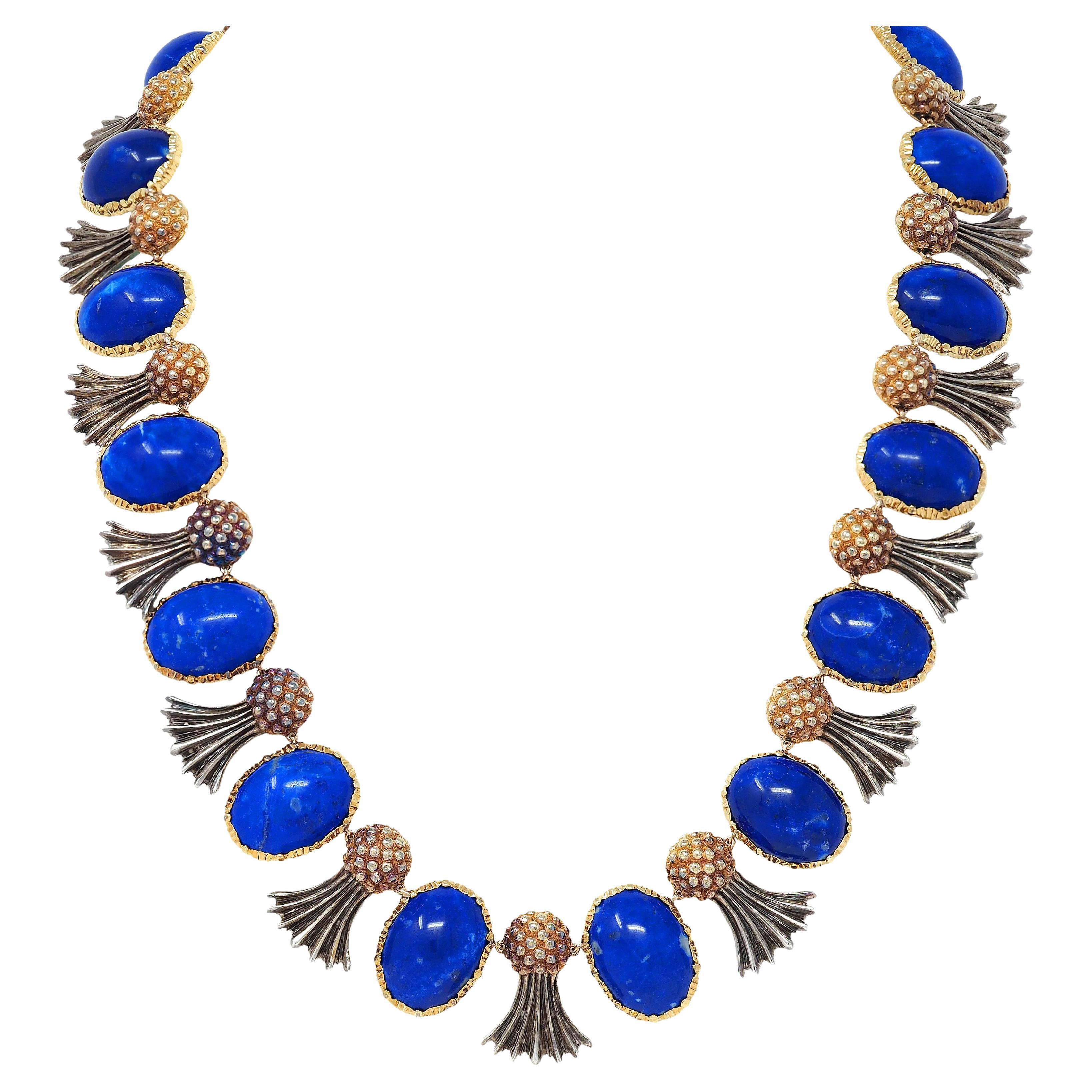
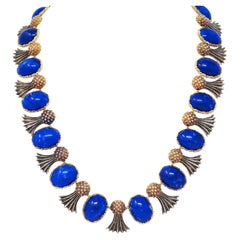
Buccellati 1960 s Lapis Lazuli 18K Gold Silver Vintage Pineapple Fringe Necklace
By Buccellati
Located in Philadelphia, PA
Designed as a garland of bezel set lapis lazuli and pineapples alternating in pattern Lapis measures 17.0 x 8.0 mm - opaque ultramarine blue with white mottling Displaying subtle pyr...
Category

Vintage 1960s Pendant Necklaces

Materials

Lapis Lazuli, Gold, 18k Gold, Yellow Gold, Silver, Sterling Silver
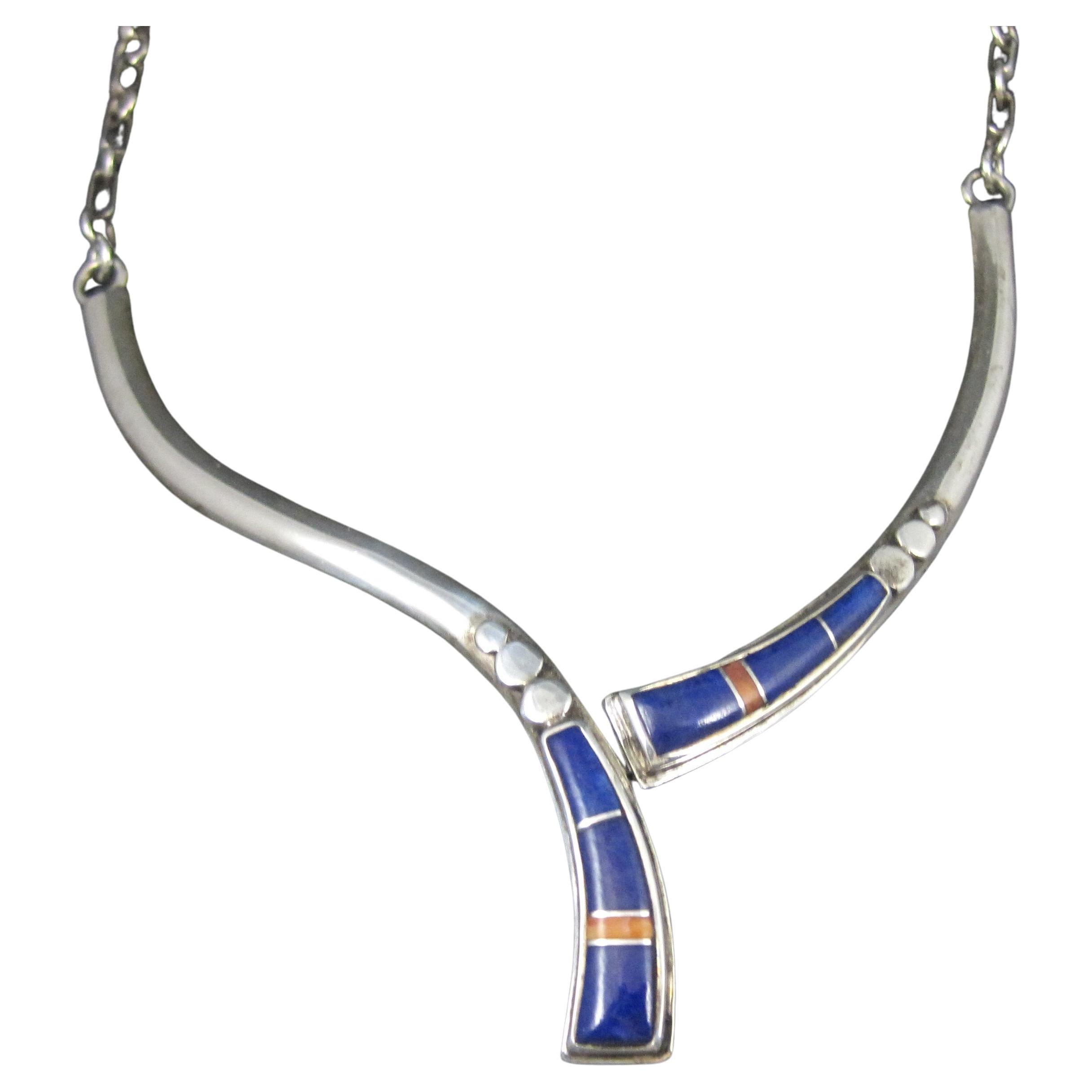
Vintage Southwestern Sterling Lapis Lazuli Spiny Oyster Inlay Necklace
Located in Webster, SD
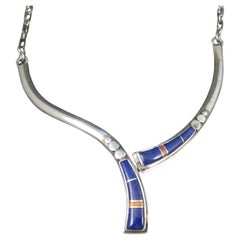
This gorgeous, vintage Southwestern necklace is sterling silver with lapis lazuli and spiny oyster inlay. Apx 18 inches from end to end - 10 1/2 inches from clasp to tip of the Y whe...
Category

Late 20th Century American Native American Drop Necklaces

Materials

Lapis Lazuli, Sterling Silver

Handmade Mexican Sterling Silver Link Necklace with Lapis and Chrysicola Inlay
Located in Berkeley, CA
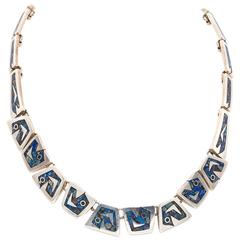
Handmade, detailed, carved, and inlaid link necklace with varying stones of lapis and chrysicola. This incredible necklace is made of Mexican sterling silver and stamped with the des...
Category

Vintage 1980s Mexican Modern Link Necklaces

Materials

Lapis Lazuli, Sterling Silver

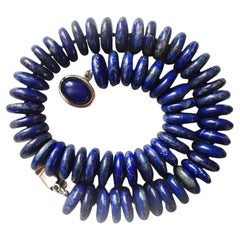
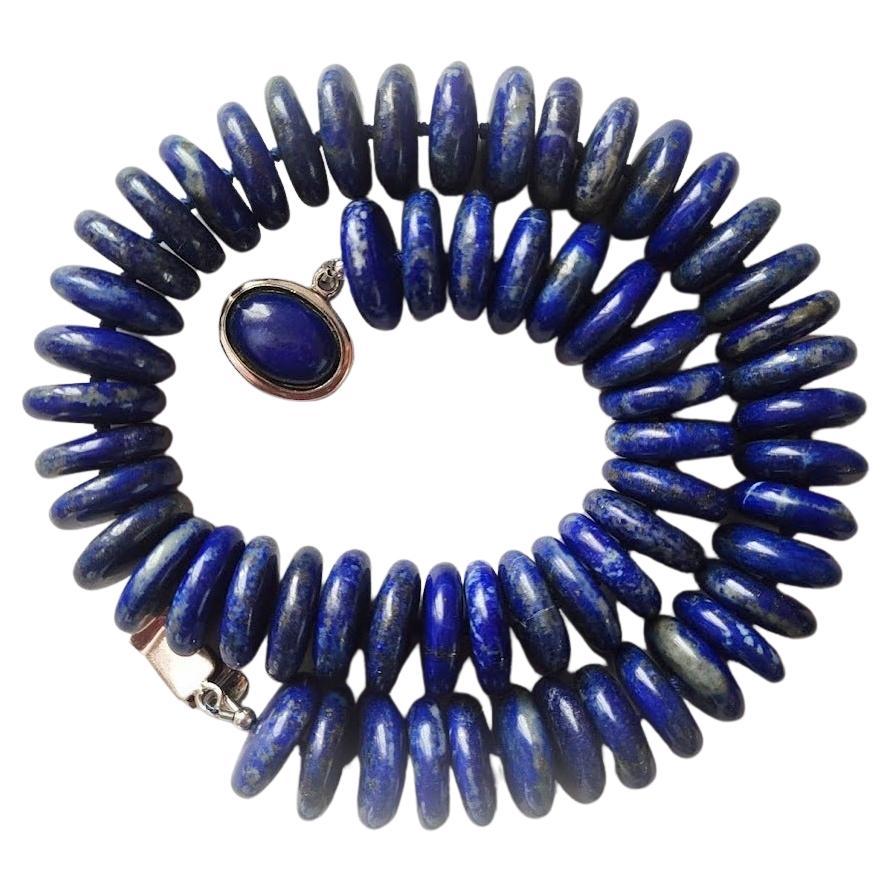
Lapis Lazuli Rondelle Beads Necklace
Located in Chesterland, OH
The length of the necklace is 19 inches ( 48 cm). The size of the rondelle beads is 20 mm. The necklace is made of gems in saturated, deep, dark blue with inclusions of gold pyrite. ...
Category

2010s American Art Deco Beaded Necklaces

Materials

Lapis Lazuli, Sterling Silver

Lapis Lazuli Rondelle Beads Necklace
$880 Sale Price
20% Off
Free Shipping
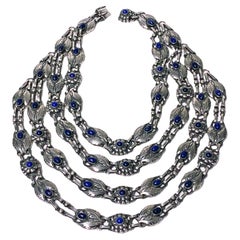
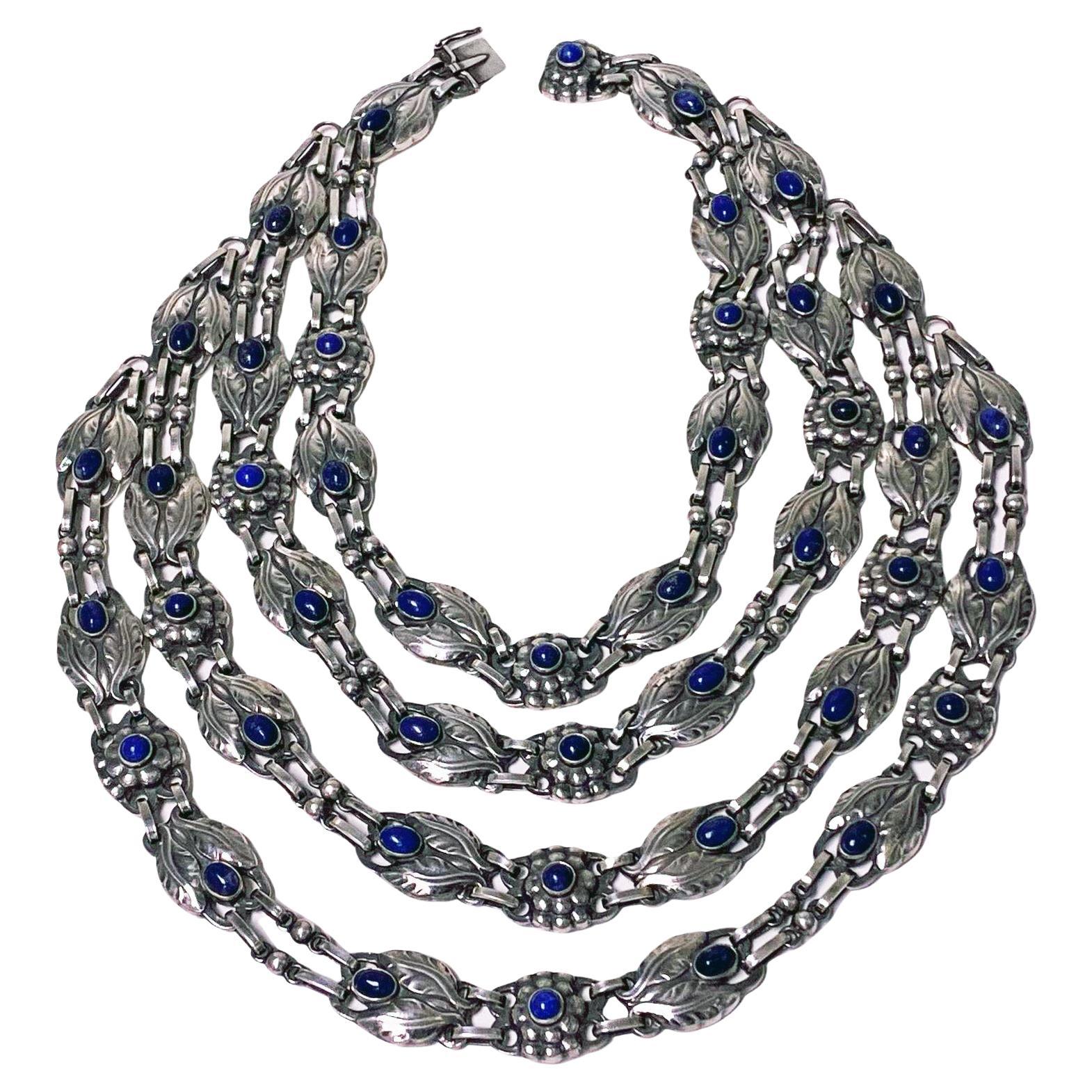
Georg Jensen 4 strand Lapis and Sterling Silver Necklace C.1933
By Georg Jensen
Located in Toronto, ON
Very rare collectors piece Georg Jensen Lapis and Sterling Silver Necklace, four-tiered graduated strand design No 1, C.1933. Bezel set oval and round lap...
Category

Vintage 1930s Danish Art Nouveau Link Necklaces

Materials

Lapis Lazuli, Sterling Silver

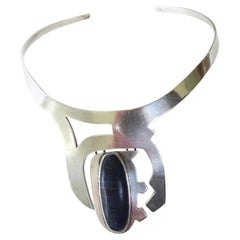
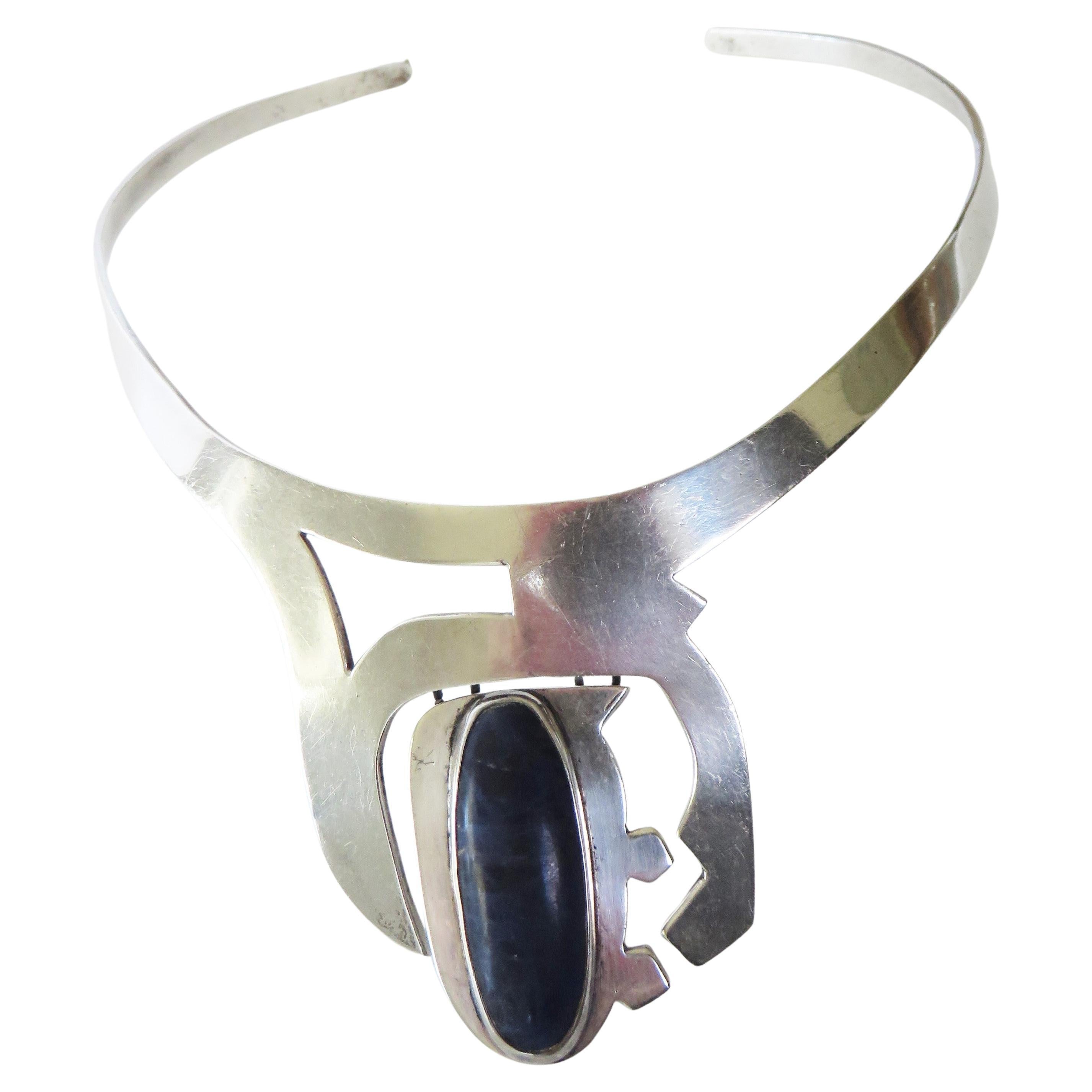
Taxco Lapis Lazuli Articulated Sterling Silver Necklace
By Taxco
Located in Water Mill, NY
A fabulous sterling silver choker with an articulated sterling silver framed 1 1/4" X 1/4" elongated oval blue lapis lazuli stone dangling from the center from Taxco, Mexico. Inner ...
Category

Vintage 1970s Mexican Choker Necklaces

Materials

Lapis Lazuli, Silver, Sterling Silver