Items Similar to Theo Niermeijer abstract modern plant sculpture 1970
Want more images or videos?
Request additional images or videos from the seller
1 of 16
Theo Niermeijer abstract modern plant sculpture 1970
$5,384.62
£4,023.77
€4,550
CA$7,497.81
A$8,057.18
CHF 4,323.15
MX$94,908.69
NOK 54,358.77
SEK 49,656.38
DKK 34,685
About the Item
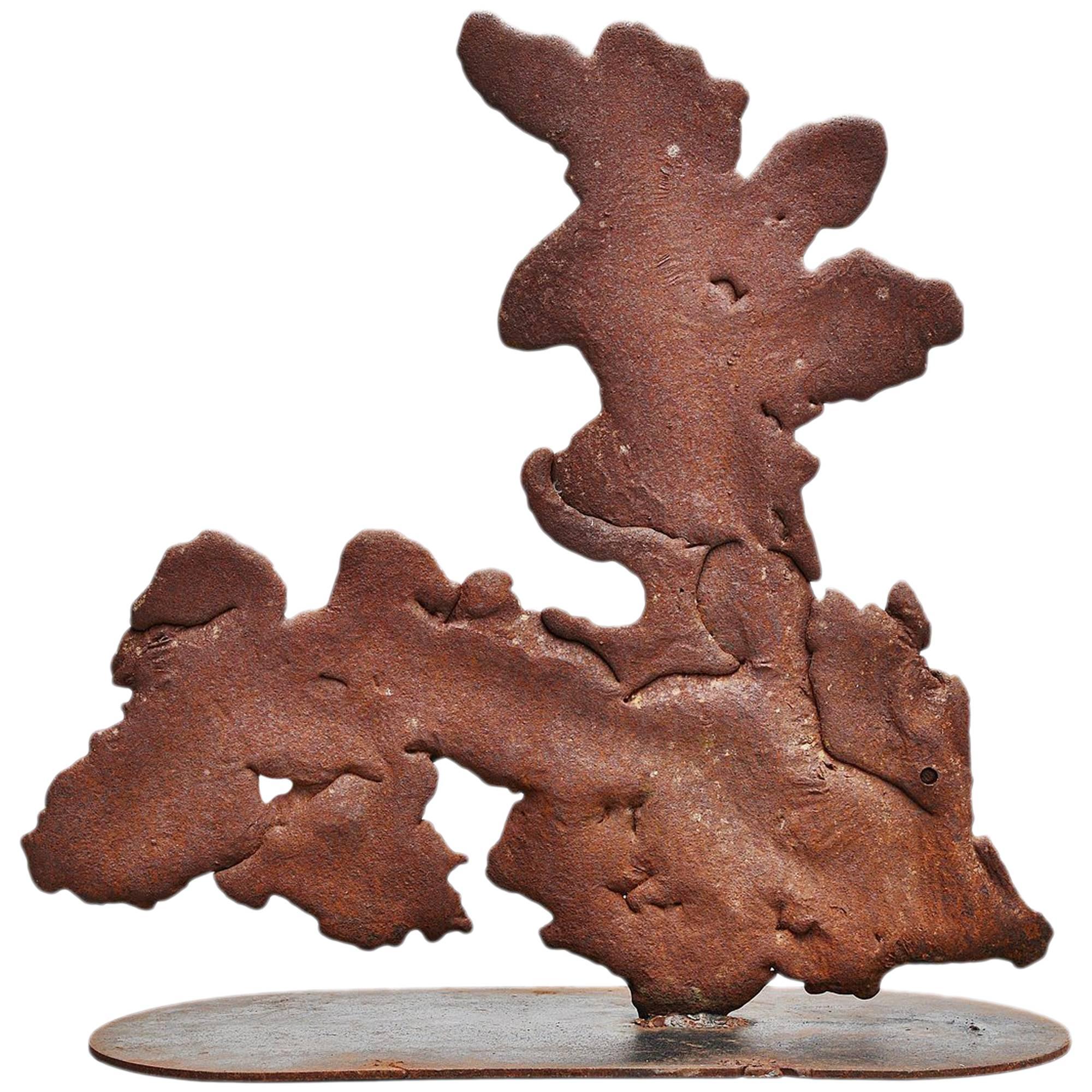
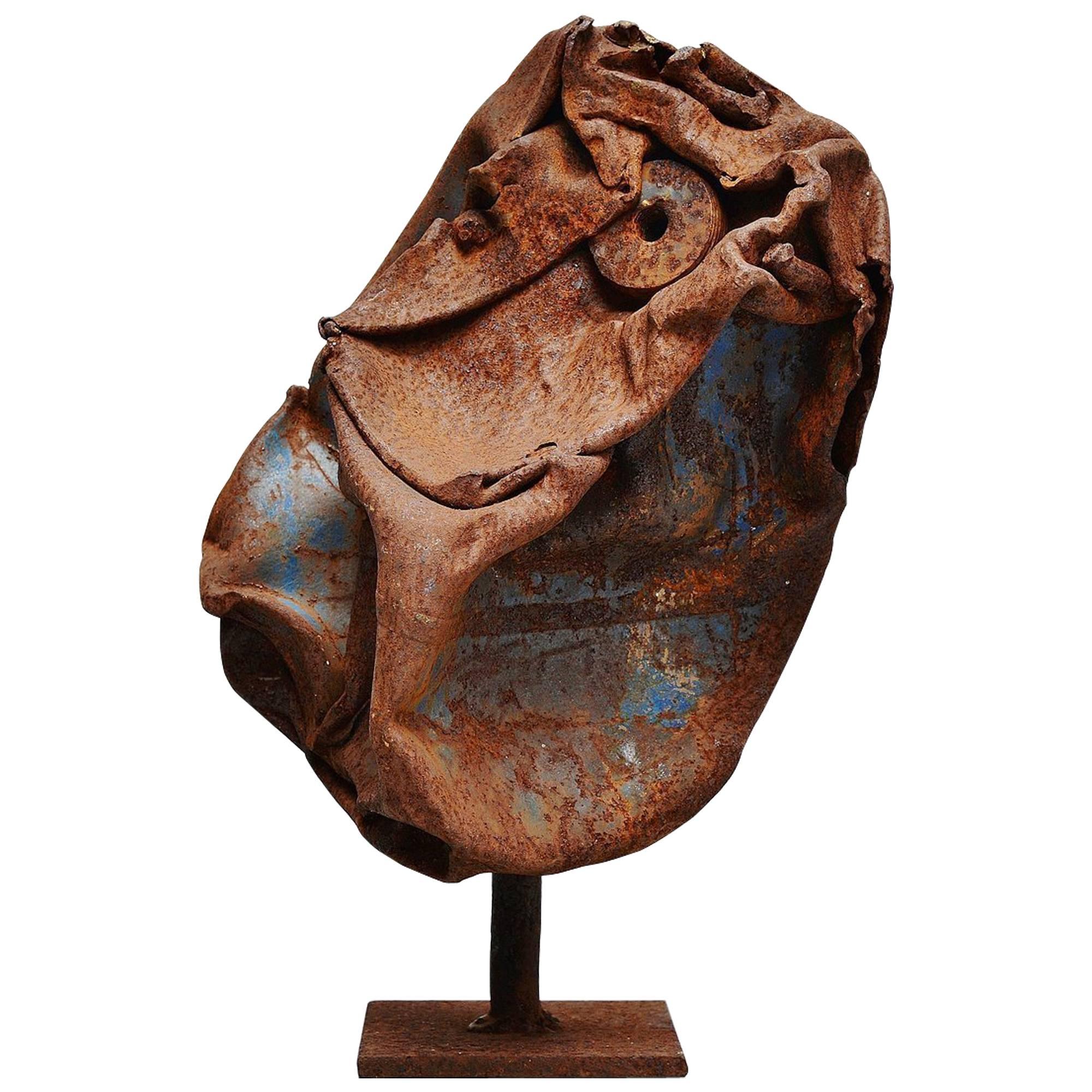
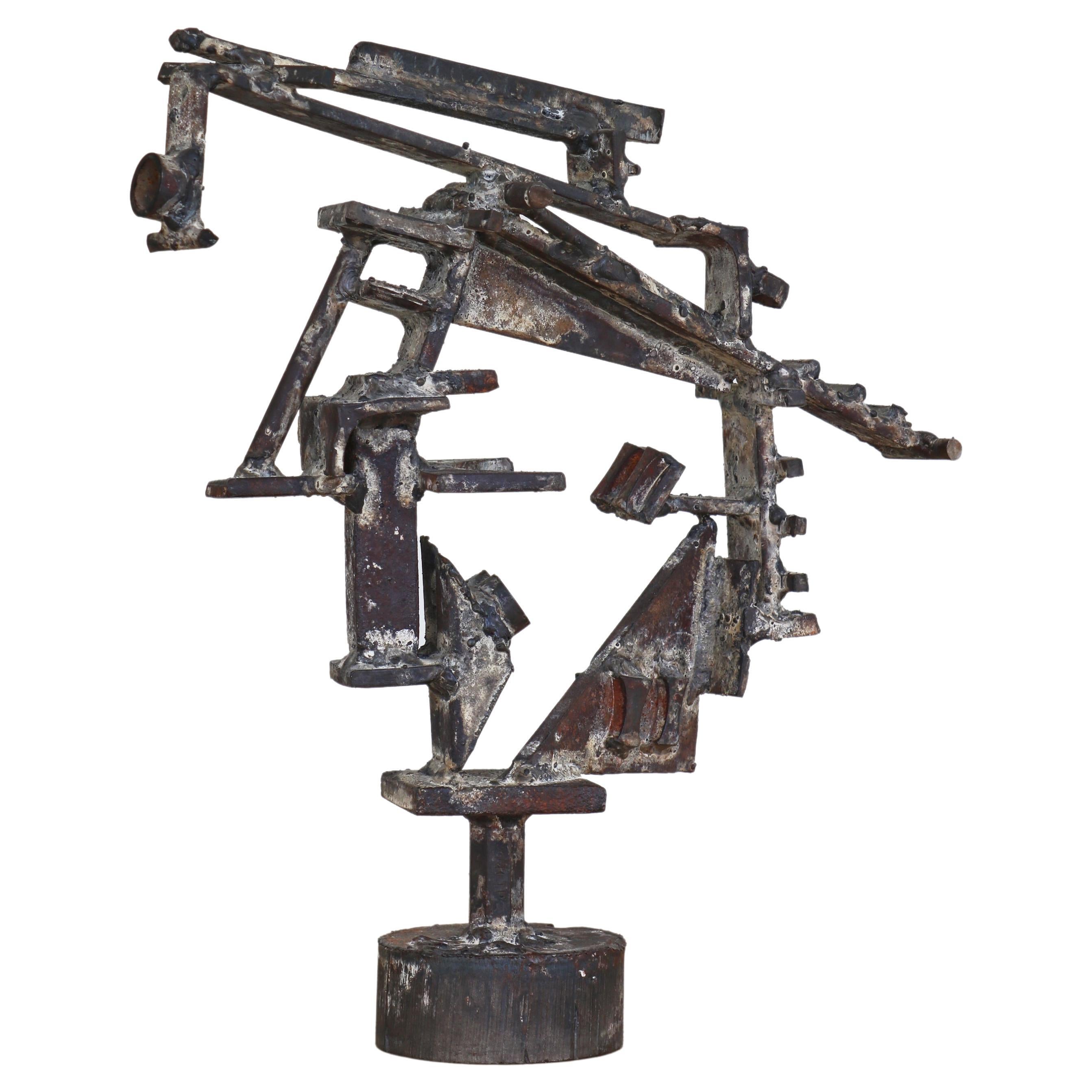
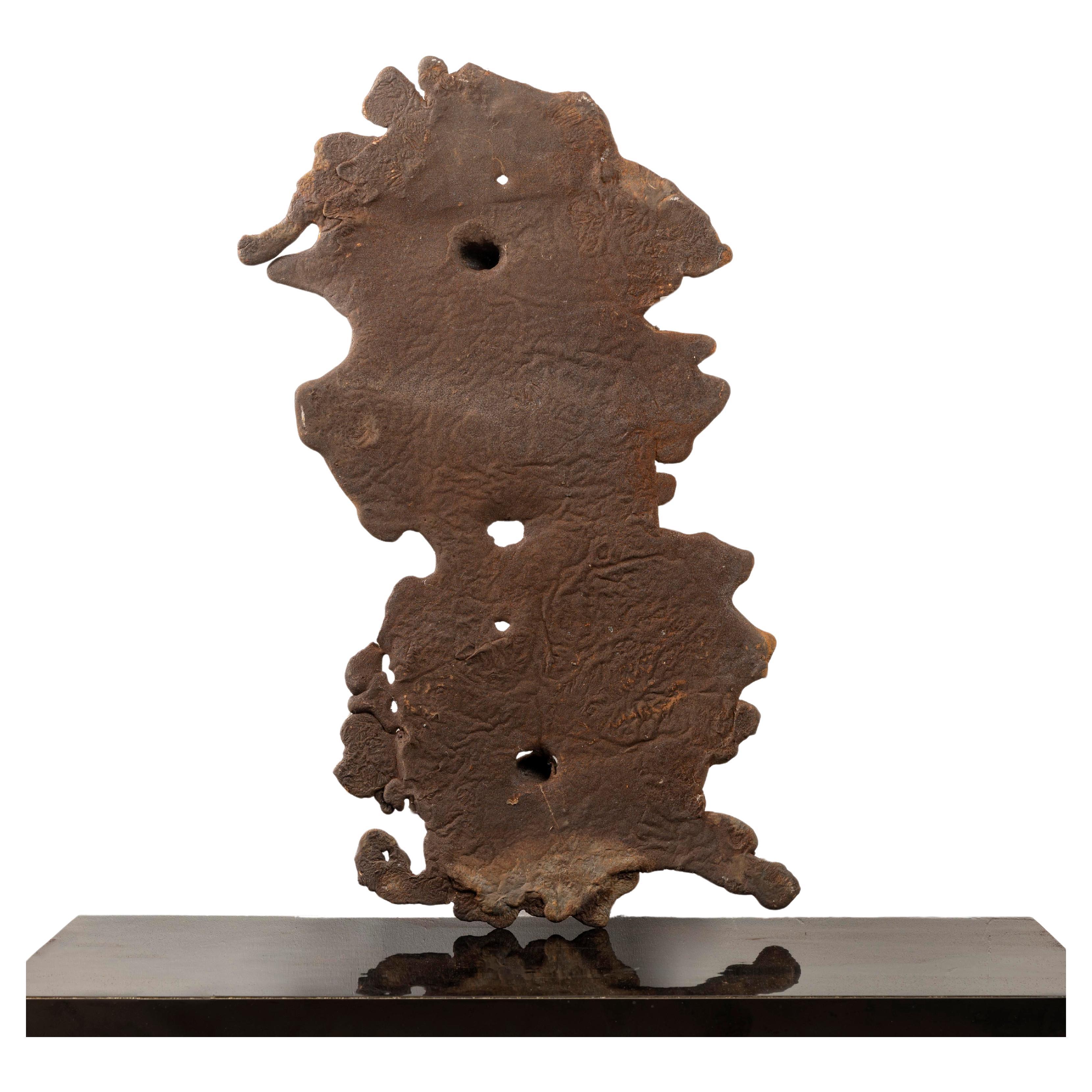
This striking iron sculpture, designed by Theo Niermeijer (1940–2005) in Amsterdam in 1970, is a powerful example of his distinctive artistic vision. Large and heavy, the piece is crafted from oxidized metal, which has been smashed, shaped, and welded into an abstract form reminiscent of a modernist tree or plant. Its raw, industrial aesthetic, combined with its organic structure, creates a fascinating contrast between nature and man-made materials.
Niermeijer was known for using salvaged metal waste to create his sculptures, making each piece entirely unique. During the early years of his career, he was deeply experimental, exploring different forms and styles before solidifying his artistic identity. This piece, created during the 1970s, reflects his mastery of material and his ability to breathe life into discarded metal, transforming it into a bold and poetic work of art.
Nicknamed the “Iron Poet,” Niermeijer’s work often carries an expressive, almost meditative quality. Influences from the Far East, which he encountered during his extensive travels, are evident in his approach to form and material. Throughout his career, he studied and trained in Amsterdam, Antwerp, and Warsaw, later journeying across North Africa, Iceland, the United States, and the Middle and Far East. These travels enriched his artistic language, contributing to the spiritual and minimalist qualities found in many of his sculptures.
This particular piece was acquired directly from Theo Niermeijer’s private collection, further adding to its significance. Designed to be displayed both indoors and outdoors, it is a timeless and thought-provoking sculpture that blends industrial strength with organic fluidity.
Theo Niermeijer (1940–2005) was a Dutch sculptor, painter, and graphic artist, best known for his raw and expressive iron sculptures. Throughout his career, he sought to elevate discarded materials into works of art, often working with oxidized and industrial metals. His nickname, the “Iron Poet,” reflects his ability to create deeply evocative pieces from rough, seemingly lifeless materials. A passionate traveler and student of various artistic disciplines, his work was heavily influenced by his experiences abroad, particularly in Asia. Today, Niermeijer’s sculptures are highly regarded for their unique fusion of industrial strength and artistic sensitivity, making him a key figure in 20th-century Dutch sculpture.
- Creator:Theo Niermeijer (Artist)
- Dimensions:Height: 37.01 in (94 cm)Width: 37.8 in (96 cm)Depth: 15.75 in (40 cm)
- Style:Brutalist (In the Style Of)
- Materials and Techniques:
- Place of Origin:
- Period:
- Date of Manufacture:1970
- Condition:Wear consistent with age and use.
- Seller Location:Roosendaal, NL
- Reference Number:1stDibs: LU933048334872
Theo Niermeijer
Theo Niermeijer was born in 1940 in Amsterdam. All his works are unique, he made his sculptures of metal waste mostly. Especially in the beginning, he was searching for a style. Niermeijer was an energetic man and an avid traveler. He followed various artists training in Amsterdam, Antwerp and Warsaw and traveled through North Africa, Iceland, the United States and the Middle and the Far East. In particular, the influences of the Far East are visible in Niermeijer's work. He is also called the "Iron poet" and not for no reason.
About the Seller
4.9
Vetted Professional Seller
Every seller passes strict standards for authenticity and reliability
Established in 2007
1stDibs seller since 2012
987 sales on 1stDibs
Typical response time: 1 hour
Associations
20th Century Specialists
- ShippingRetrieving quote...Shipping from: Roosendaal, Netherlands
- Return Policy
More From This Seller
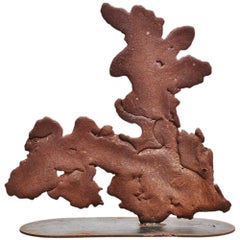
View AllTheo Niermeijer Abstract Modern Plant Sculpture, 1970
By Theo Niermeijer
Located in Roosendaal, Noord Brabant
Very nice iron sculpture designed by Theo Niermeijer (1940-2005) Amsterdam, 1970. This large and heavy sculpture is made of oxidized metal, smashed and welded into this abstract mode...
Category
Vintage 1970s Dutch Mid-Century Modern Abstract Sculptures
Materials
Steel
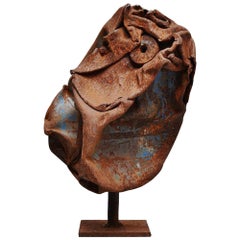
Theo Niermeijer Abstract Modern Trash Sculpture, 1970
By Theo Niermeijer
Located in Roosendaal, Noord Brabant
Very nice iron sculpture designed by Theo Niermeijer (1940-2005) Amsterdam, 1970. This large and heavy sculpture is made of oxidized metal, smashed and bent into this abstract modern...
Category
Vintage 1970s Dutch Mid-Century Modern Abstract Sculptures
Materials
Metal
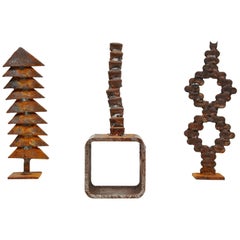
Theo Niermeijer Set of Iron Sculptures, 1970
By Theo Niermeijer
Located in Roosendaal, Noord Brabant
Very nice set of 3 iron sculptures designed by Theo Niermeijer (1940-2005) Amsterdam, 1970. This set of 3 geometrical sculptures are made or welded iron parts and the small sculpture...
Category
Vintage 1970s Dutch Mid-Century Modern Abstract Sculptures
Materials
Steel
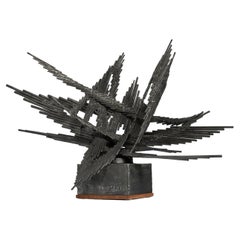
Piero Ruggeri abstract modern iron sculpture Italy 1970
By G. Ruggeri
Located in Roosendaal, Noord Brabant
Impressive abstract modern iron sculpture made by Piero Ruggeri in his own atelier in Italy, 1970s. This is a very typical work by Ruggeri but he usually...
Category
Vintage 1970s Italian Mid-Century Modern Abstract Sculptures
Materials
Iron
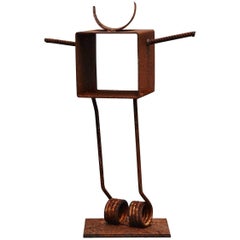
Theo Niermeijer Abstract Modern Figure Sculpture, 1970
By Theo Niermeijer
Located in Roosendaal, Noord Brabant
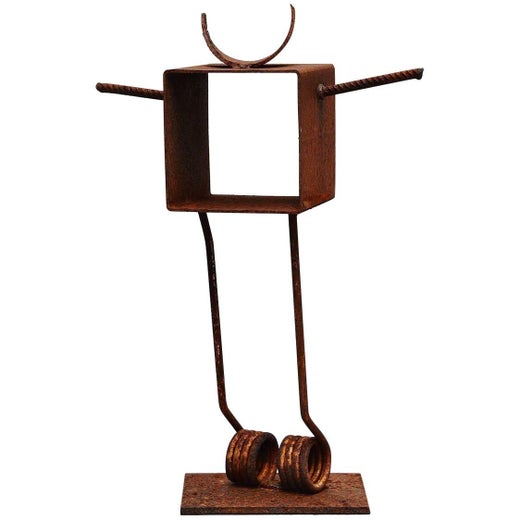
Very nice iron sculpture designed by Theo Niermeijer (1940-2005) Amsterdam, 1970. This large and heavy sculpture is made of oxidized metal, bent and welded into this abstract modern ...
Category
Vintage 1970s Dutch Mid-Century Modern Abstract Sculptures
Materials
Steel
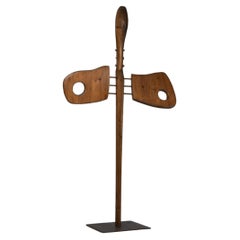
Hans van Eerd monumental sculpture Netherlands 1972
Located in Roosendaal, Noord Brabant
Truly impressive sculpture designed and made by Hans van Eerd, the Netherlands 1972. This sculpture represents the artist's early work and was directly acquired from the artist. It h...
Category
Vintage 1970s Dutch Mid-Century Modern Abstract Sculptures
Materials
Metal
You May Also Like
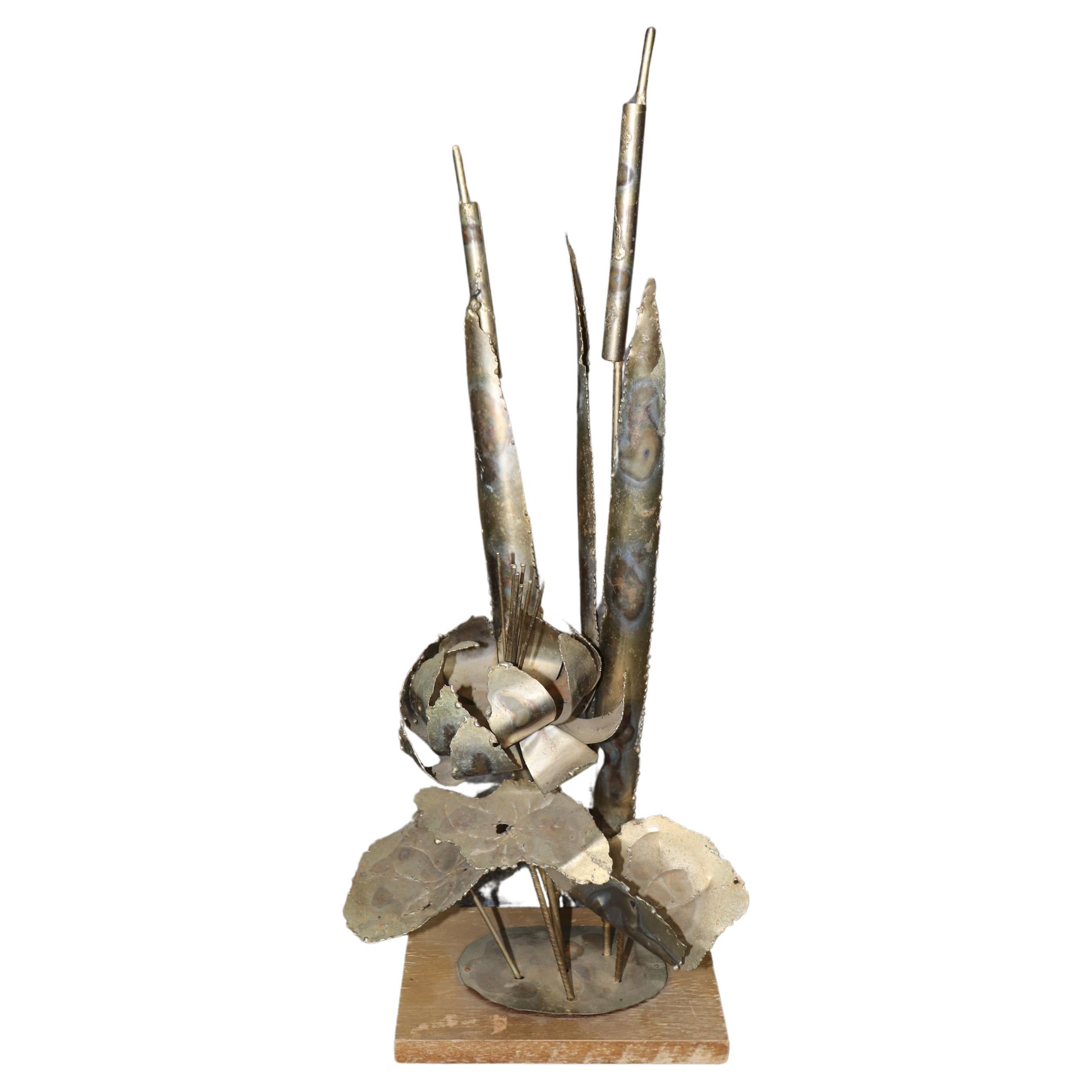
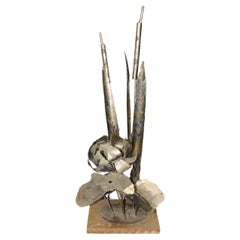
Abstract Metal Brutalist Style Sculpture of Plant
By Paul Evans
Located in Swedesboro, NJ
Dimensions- H: 23 1/4in W: 9 3/4in D: 7in
This mid century Paul Evans style Brutalist metal flower sculpture is truly unique and scr...
Category
20th Century Unknown Brutalist Abstract Sculptures
Materials
Metal
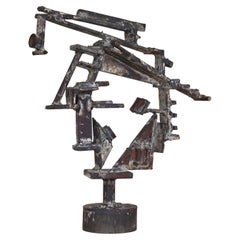
Scandinavian Abstract Modernism Iron Sculpture by Erik Aalykke, Denmark, 1960s
Located in Odense, DK
Unique sculpture handmade by Danish artist Erik Aalykke in his own studio in the 1960s. The piece is made from acid treated iron with a beautiful patina.
Erik Aalykke (1923-83) used...
Category
Vintage 1960s Danish Scandinavian Modern Abstract Sculptures
Materials
Iron
Claude Viseux, Abstract Sculpture, 1960, Steel Cast on Sand
By Claude Viseux
Located in SAINT-SEVER, FR
Claude Viseux est un peintre, sculpteur et graveur aquafortiste et lithographe français né le 3 juillet 1927 à Champagne-sur-Oise et mort le 9 novembre 2008 à Anglet.
'est dans les années 1959-1960 que la sculpture de Claude Viseux, qualifiée de « protéiforme, onirique, fantastique » — ami de Max Ernst, Man Ray, Francis Ponge et Henri Michaux, il ne désavoue pas une parenté avec le Surréalisme9 — se substitue à la peinture, ses premières réalisations étant les objets trouvés en bord de mer qu'il pétrifie dans la cire10 d'une part, les empreintes de pierres et d'algues coulées en bronze d'autre part.
En 1960, il signe le Manifeste des 121 titré « Déclaration sur le droit à l’insoumission dans la guerre d’Algérie ».
En 1961, ses expérimentations s'orientent vers les corps organiques, notamment avec sa série Ostéales constituée d'assemblages d'os fossilisés qu'il patine ou au contraire décape, qu'il visse, scie, assemble et plastifie. Les Concrétudes ou Coulées directes qui suivent en 1961-1962 sont obtenues à partir de coulées de métal en fusion dans le sable, générant des reliefs qu'il soude sur des plaques d'acier. Il va cependant adopter rapidement l'acier inoxydable — qu'il est avec Pol Bury parmi les premiers à employer en sculpture — comme matériau de prédilection. « Il assemble divers rebus industriels — tuyaux, écrous, boulons, cuves… — pour créer des sculptures à mi-chemin du mécanique et du biologique » restitue ainsi Sophie Serra11. Claude Viseux, qui fréquente alors Jean Tinguely, Piotr Kowalski, Michel Guino, Takis et César, confirme : « Ma récupération de l'élément industriel s'élargit vers les aciers spéciaux, avec un essai de vocabulaire formel : des barres, des profilés, des sphères, des rotules, des fonds de cuves, des chambres à combustion de Boeing, des tubulures, des soupapes de navire »9.
« L'artiste entre au cœur de la réalité industrielle, prospecte dans les chaînes de montage de Renault et rôde dans les terrains vaques autour des usines », restitue donc l'encyclopédie Les Muses : « il récupère ferrailles, pièces détachées, débris de voitures, vieux châssis, toute une série d'éléments devenus inutiles. Ils les assemblent, tels quels, sans les modifier. Des créatures agressives ou pathétiques vont surgir de ce combat physique et dialectique que l'artiste livre avec la matière et entrer dans le domaine d'une poétique étrange, surnaturelle5 ». Dans les années 1967-1970, Les « structures actives » en acier inoxydable procèdent ainsi de la production industrielle de série. Elles se répartissent en familles de formes combinatoires composées par addition, soustraction, multiplication, division. Il confirme : « le monde industriel est ma nature, mon bouillon de culture, où je cherche des corps, des familles de corps, des genres, des espèces, dans un aller-retour de l'artificiel au naturel pour confondre les règnes, pour en inventer d'autres selon une géométrie organique qui féconde les différents types de structures, qui aménage la forme concernée par la forme à venir »9. En 1968, Claude Viseux s'installe à la villa Baudran à Arcueil, atelier qu'il conservera jusqu'en 1992.
Si des corps imaginaires naissent ainsi des pièces mécaniques que Claude Viseux emprunte à l'automobile, à l'avion et au bateau, en 1972, « la symétrie de ces formes pures en inox », constate Lydia Harambourg, « l'amène à s'interroger sur la notion d'équilibre instable »12. Ses Instables sont de la sorte exposés à la Biennale de Venise en 1972 où, rappelle encore Lydia Harambourg, une salle entière est consacrée « aux dessins qui reprennent son vocabulaire mécanique identitaire de sphères, toupies, hélices, anneaux, astrolabes et balanciers »12. Les Instables sont de même, en 1973, présentés à la galerie Le Point cardinal à Paris où Claude Viseux avait déjà exposé en 1968 avec Henri Michaux et Joaquin Ferrer...
Category
Vintage 1950s French Abstract Sculptures
Materials
Steel
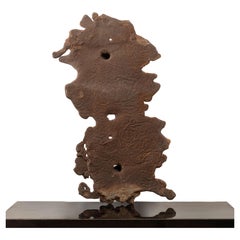
Brutalist Sculpture Abstracted Plant Forms on Terracotta Base
By Paul Evans, Curtis Jeré
Located in New York, NY
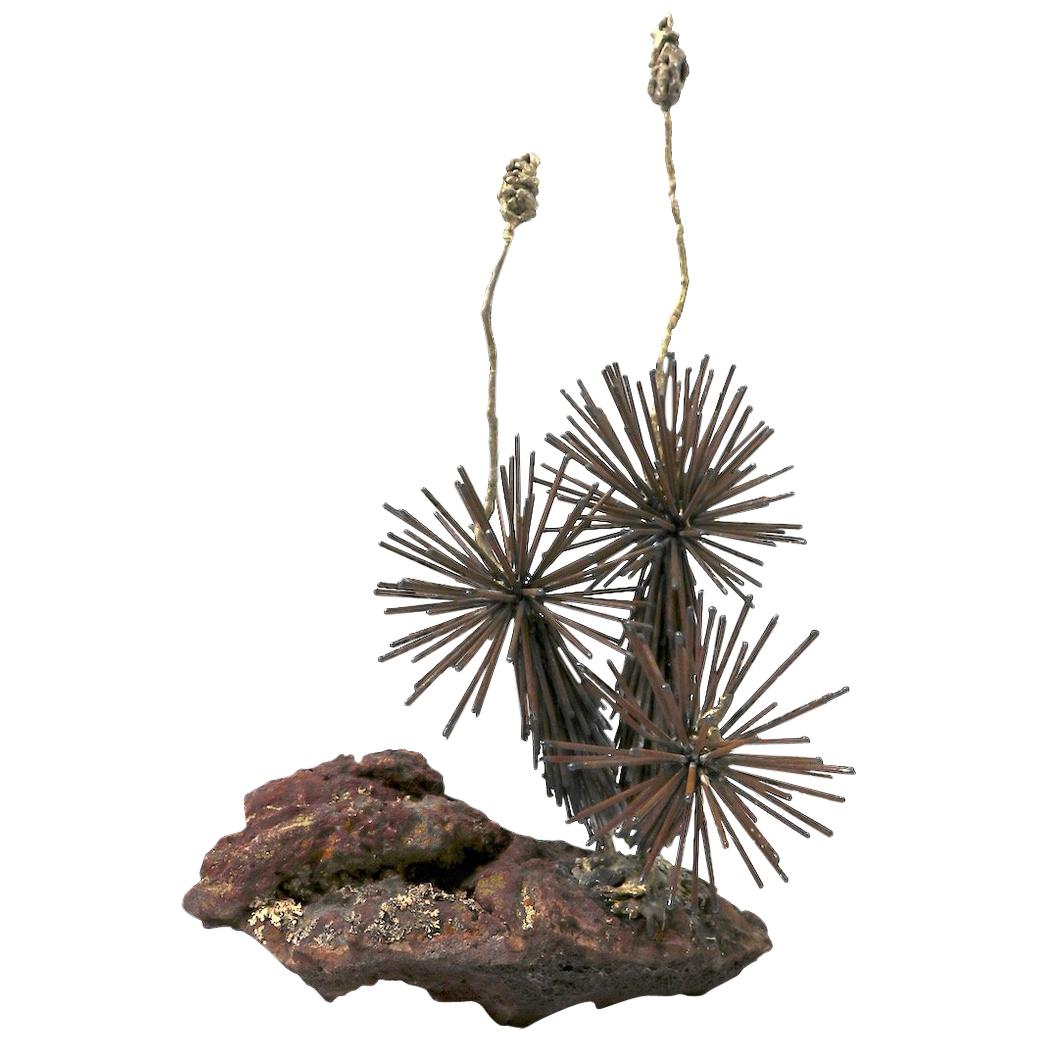
Brutalist stylized plant form growing out of the terracotta earth base. Well done metal work reminiscent of Paul Evans, or Jere.
Category
Mid-20th Century American Brutalist Figurative Sculptures
Materials
Metal
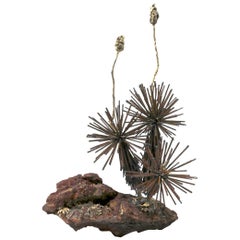
Mid-Century Brutalist Abstract Organic Bronze
Marble Sculpture signed Marion N
Located in New York, NY
This remarkable Mid-Century Brutalist abstract sculpture, crafted by American artist Marion N. circa 1966, is a stunning representation of organic forms brought to life through the m...
Category
Vintage 1960s American Mid-Century Modern Abstract Sculptures
Materials
Marble, Bronze

Mid Century Modern Brutalist Welded Abstract Expressionist Sculpture
Located in Surfside, FL
Neo-Dada Abstract Sculpture: Assemblages
In contrast, abstract sculpture followed a slightly different course. Rather than focusing on non-figurative subject matter, it concentrated...
Category
Mid-20th Century Abstract Expressionist Abstract Sculptures
Materials
Metal