Items Similar to 19th Century Pair of Japanese Bronze Lions Bookends, Meiji Period
Want more images or videos?
Request additional images or videos from the seller
1 of 14
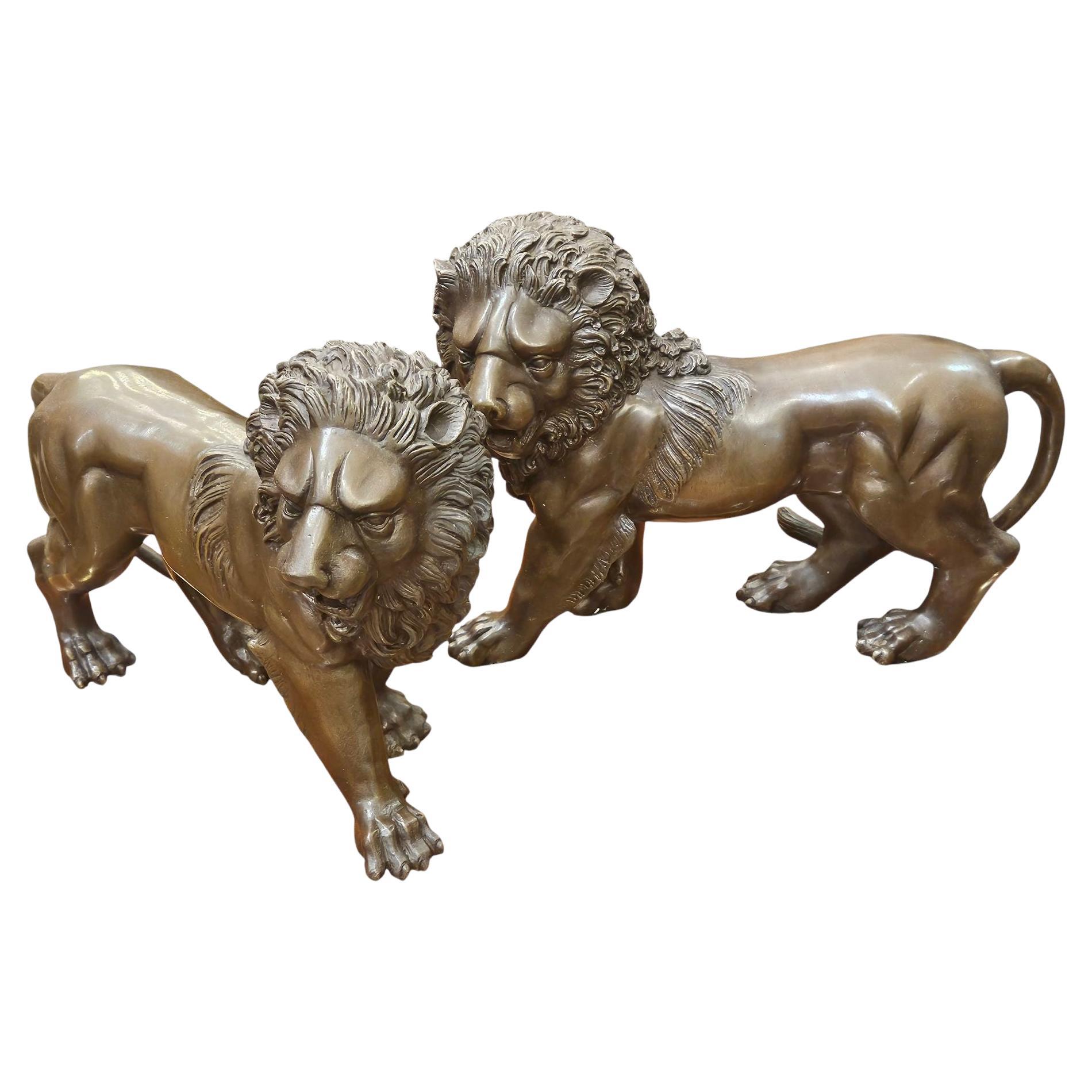
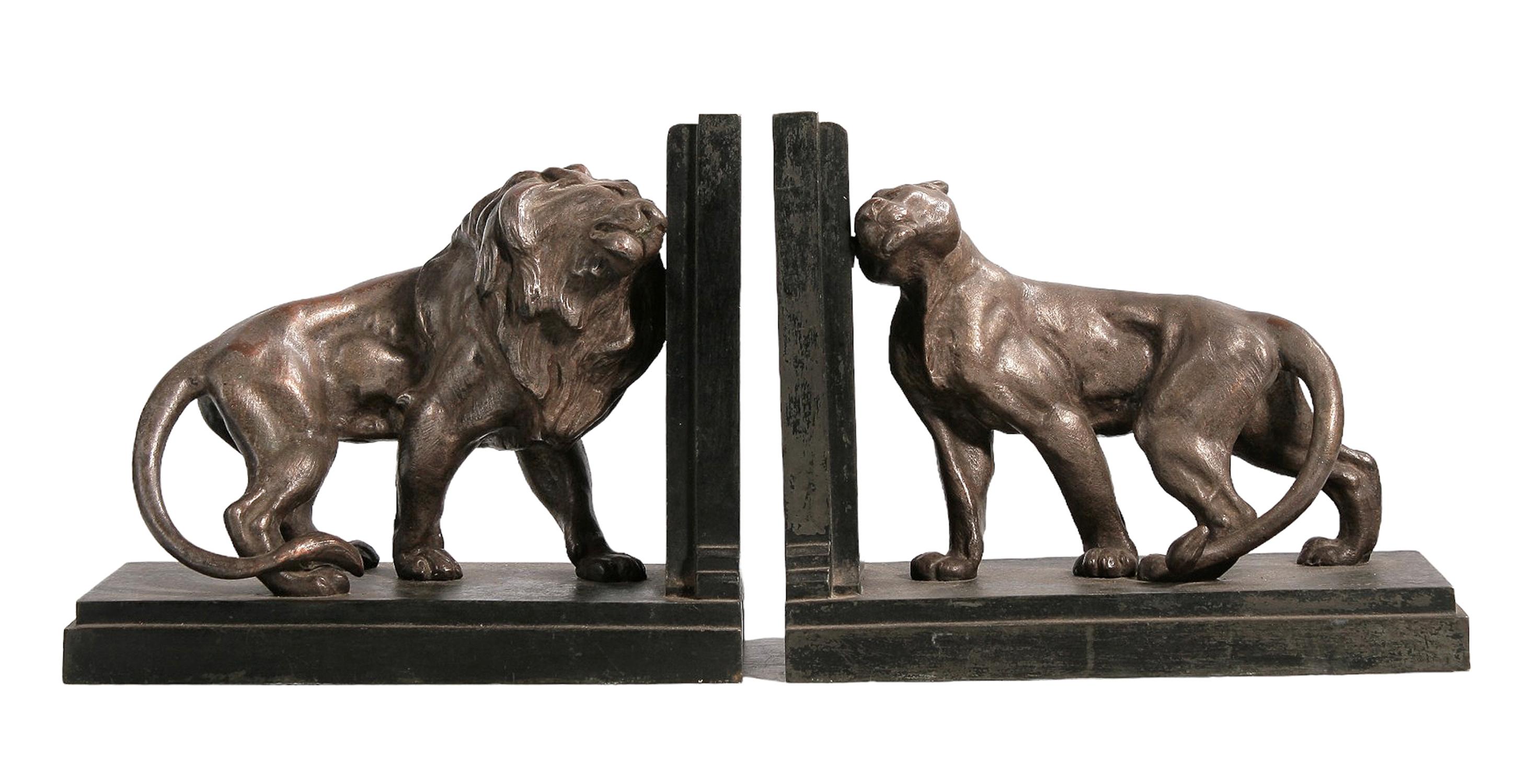
19th Century Pair of Japanese Bronze Lions Bookends, Meiji Period
$2,600
£1,970.25
€2,270.49
CA$3,677.12
A$3,954.43
CHF 2,114.44
MX$47,689.32
NOK 26,738.57
SEK 24,362.28
DKK 16,965.56
About the Item
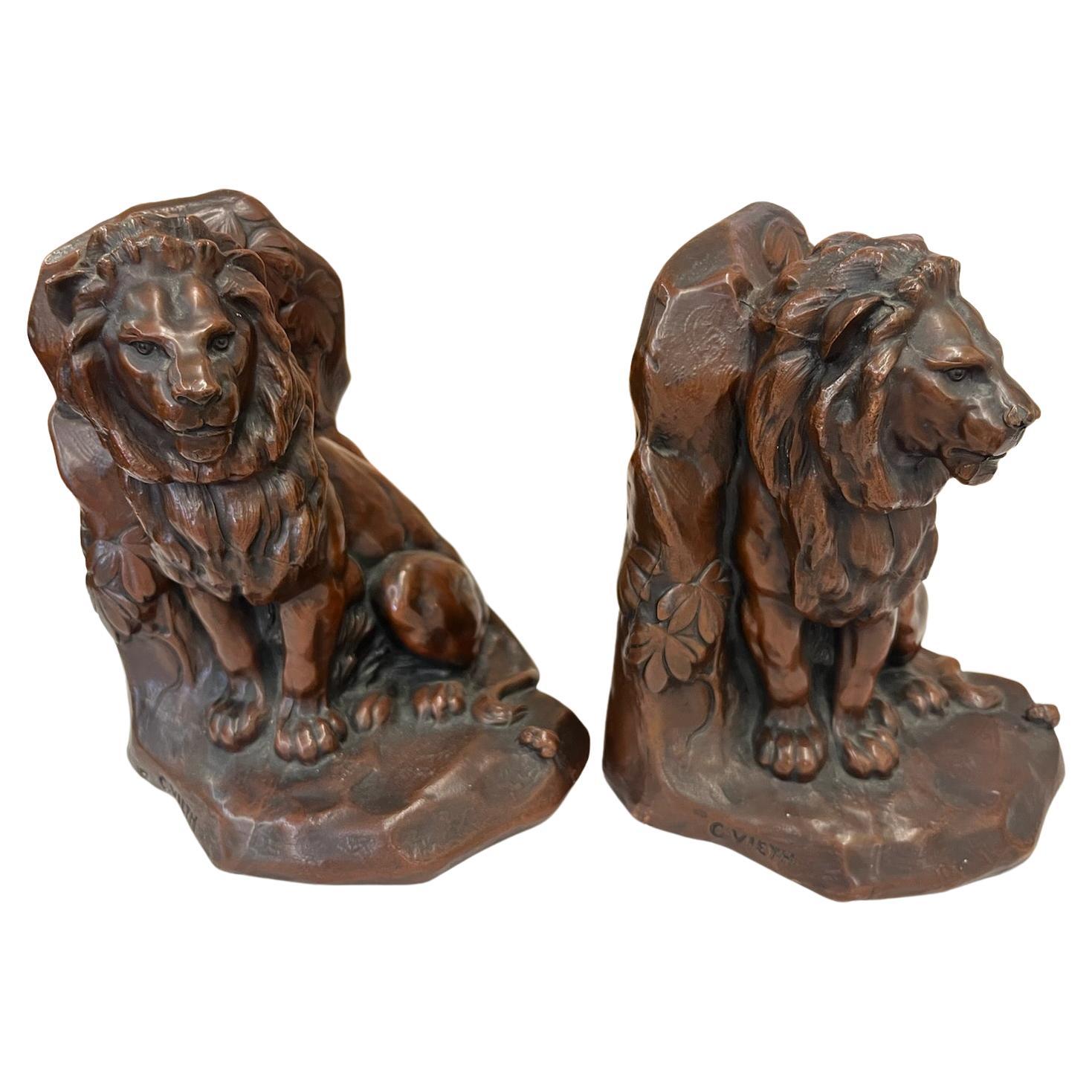
This superb and rare pair of Japanese Meiji period bronze bookends are cast in solid bronze and depict a pair of Lions, with their heads raised. These finely sculpted pieces are beautifully finished with great detail to the hair texture. When displayed as book supports, they look superb with a row of fine leather books resting between them. These pieces are both signed on their bases.
We have specialized in the sale of Art Deco and Art Nouveau and Vintage styles since 1995. If you have any questions we are at your disposal. Pushing the button that reads 'View All From Seller'. And you can see more objects to the style for sale. Why are there so many antiques in Argentina?
In the 1880 – 1940 there was a grate wave of immigration encouraged by the periods of war that were taking place. 1st World War took place between 1914 and 1918 2nd World War took place between 1939 and 1945 The immigrants options were New York or Buenos Aires. Tickets were cheap and in Buenos Aires they were welcomed with open arms, as it was a country where everything was still to be done. Argentina was the country of new opportunities, labour was needed and religious freedom was assured, in many cases the of the family travel first until they were settled and then the rest of the family members join them. In the immigrant museum “Ellis Island Immigrant Building” in New York you can se the promotional posters of the boats that would take them to a new life. Between the years 1895 and 1896, Argentina had the highest DGP (gross domestic product) per capita in the world according to the Maddison Historical Statistics index, this situation arose due to the large amount of food being exported to European countries, which were at war. The Argentinean ships left the port of Buenos Aires with food, but they returned with furniture, clothes and construction elements, (it´s common to see this the old buildings of the historic neighbourhood of San Telmo, the beams with the inscription “Made in England)”, as well as many markets that were built in Buenos Aires, such us the San Telmo Market, whose structure was brought by ship and afterwards assembled in 900 Defensa Street. With the great influence of European immigrants living in the country, the children of the upper classes travelled to study in France, resulting in the inauguration of “La Maison Argentinienne”, on 27th of June 1928, in the international city of Paris, which hosted many Argentinians that were studying in Frace. It´s the fourth house to be built after France, Canada and Belgium, being the first Spanish-speaking one. Still in place today (17 Bd Jourdan, 75014, Paris, France). Many of the children of these wealthy families who attended international art exhibitions, museums and art courses abroad, took a keen interest in the European style. This is why Buenos Aires was at the time referred as “The Paris of South America”. Between the years 1890 and 1920 more than a hundred Palaces were built on Alvear Avenue the most exclusive avenue in Buenos Aires. Today some of these palaces have been transformed into museums, hotels and embassies. In the year 1936, the Kavanagh building was inaugurated, it was the tallest reinforced concrete building in South America. During 1994 the American Society of Civil Engineers distinguished it as an “international engineering milestone”, and it´s now considered a World Heritage of Modern Architecture. At the time was common to hire foreign architects such as Le Corbusier, who visited Buenos Aires/Argentina in 1929 and in 1948 he drew up the blueprints for a house built in La Plata City (which was declared a World Heritage Site). In 1947, the Hungarian architect Marcelo Breuer designed “Parador Ariston” in the seaside city of Mar del Plata. After an Argentinean student at Harvard University convinced him to come to Argentina. He worked on an urban development project in the Casa Amarilla, area of La Boca. The Ukrainian architect, Vladimiro Acosta, arrives in Argentina in 1928 and worked as an architect until que moved to Brazil. Antonio Bonet, a Spanish architect who worked with Le Corbusier in Paris, arrives in Argentina in 1937, where he carried out several architectural works and in 1938 designs the well-known BFK chair. Andres Kálnay, of Hungarian origin, made around 120 architectural masterpieces, among which the former Munich brewery stands out, he even made the furniture’s design. The German architect, Walter Gropius, director of the Bauhaus, lived in Argentina, where he wrote articles for “Sur” magazine and founded in Buenos Aires, an architectural firm with Franz Möller, who was also an architect, where he built two houses. At the same time several famous designers decided to immigrate to Argentina, among them we can find the well-known French designer, Jean-Michel Frank, who arrived in the country in 1940 and also worked for the Rockefeller family. Special pieces were made, which were sold exclusively in the country, such as the well-known German company “WMF”, who sold their products by catalogue, which were chosen by the ladies of high society in the list of wedding gifts, as well as the pieces designed by Christofle. The Swiss sculptor Alberto Giacometti, made special pieces for Argentinean mansions. In 1904 the first Jansen branch outside Paris was established in Buenos Aires, as the Argentinean clientele demanded a large amount of furniture, from the end of the 19th century to the mid-20th century. In 1970, the brand Rigolleau Argentina made pieces authorised by Lalique. The brands Maple and Thompson also set up shop in the country. The French plastic artist, Marcel Duchamp moved to Argentina in 1918-1919. Glass signed Gallé, Charder, Leverre, Schneider, Muller and other French firms. They were bought in flower shops and were given to ladies with beautiful floral arrangements. Some furniture manufacturers travelled to international fairs and bough the patterns to produce the furniture in Argentina, such as the furniture firm Englander and Bonta, who bought the patterns in Italy. It is worth mentioning that in Argentina we have the largest community of Italians outside of Italy, as it is estimated that 70 percent of the inhabitants have at least one Italian descendant, followed by Spanish immigrants. The most Important furniture stores in Argentina: Comte is founded in 1934 (under the direct management of Jean Michel Frank in 1940). Nordiska (Swedish company established in 1934). Churba in 1960, a company that brought foreign designers to present their furniture in the country: Denmark: (Arne Jacobsen, Finn Juhl, Bender Madsen, Ejner Larsen, Poul Kjaerholm, Hans Wegner) Sweden: (Hans Agne Jakobsson, Gustavsberg) United States: (Herman Miller) Finland: (Lisa Johansson, Folke Arstrom, Tapio Wirkkala, Alvar Aalto, Timo Sarpaneva) Swedish Factory: (Orrefors) Italy: (Littala, Vico Magistretti, Emma Gismondi, Gae Aulenti, Angelo Mangiarotti, Elio Martinelli, Gianna Celada, Angelo Mangiarotti, Mario Bellini, Carlo Scarpa) Finland: (Olivia Toikka) Plata Lappas (Lappas Silver): a goldsmith shop founded in 1887 in Argentina by Alcibiades Lappas of Greek origin. In 2019, in Argentina took place “the Art Deco world congress” . Argentina currently has more than 100 Art Deco buildings and another 90 Art Nouveau buildings throughout the city of Buenos Aires. Argentina is a country that has not been involved in many wars, which is why it has been a refuge for works of art and antiques from different periods of time, unlike European countries. That is way many collectors, museums and antique dealers from all over the world visit it, you should not miss the opportunity to visit this great country.
- Dimensions:Height: 5.52 in (14 cm)Width: 5.2 in (13.2 cm)Depth: 4.73 in (12 cm)
- Style:Meiji (Of the Period)
- Materials and Techniques:Bronze,Cast
- Place of Origin:
- Period:
- Date of Manufacture:1870-1910
- Condition:Wear consistent with age and use. Slight Time wear.
- Seller Location:Buenos Aires, AR
- Reference Number:1stDibs: LU2027333731422

About the Seller
4.9
Vetted Professional Seller
Every seller passes strict standards for authenticity and reliability
Established in 2002
1stDibs seller since 2016
343 sales on 1stDibs
Typical response time: <1 hour
- ShippingRetrieving quote...Shipping from: Buenos Aires, Argentina
- Return Policy
More From This Seller
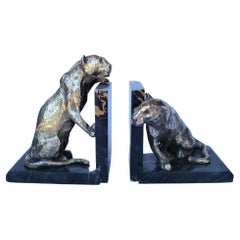
View AllPair of French Lion and Tiger Bookends
Located in Buenos Aires, Olivos
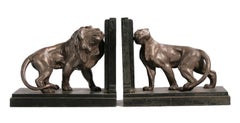
Pair of French Lion and Tiger Bookends
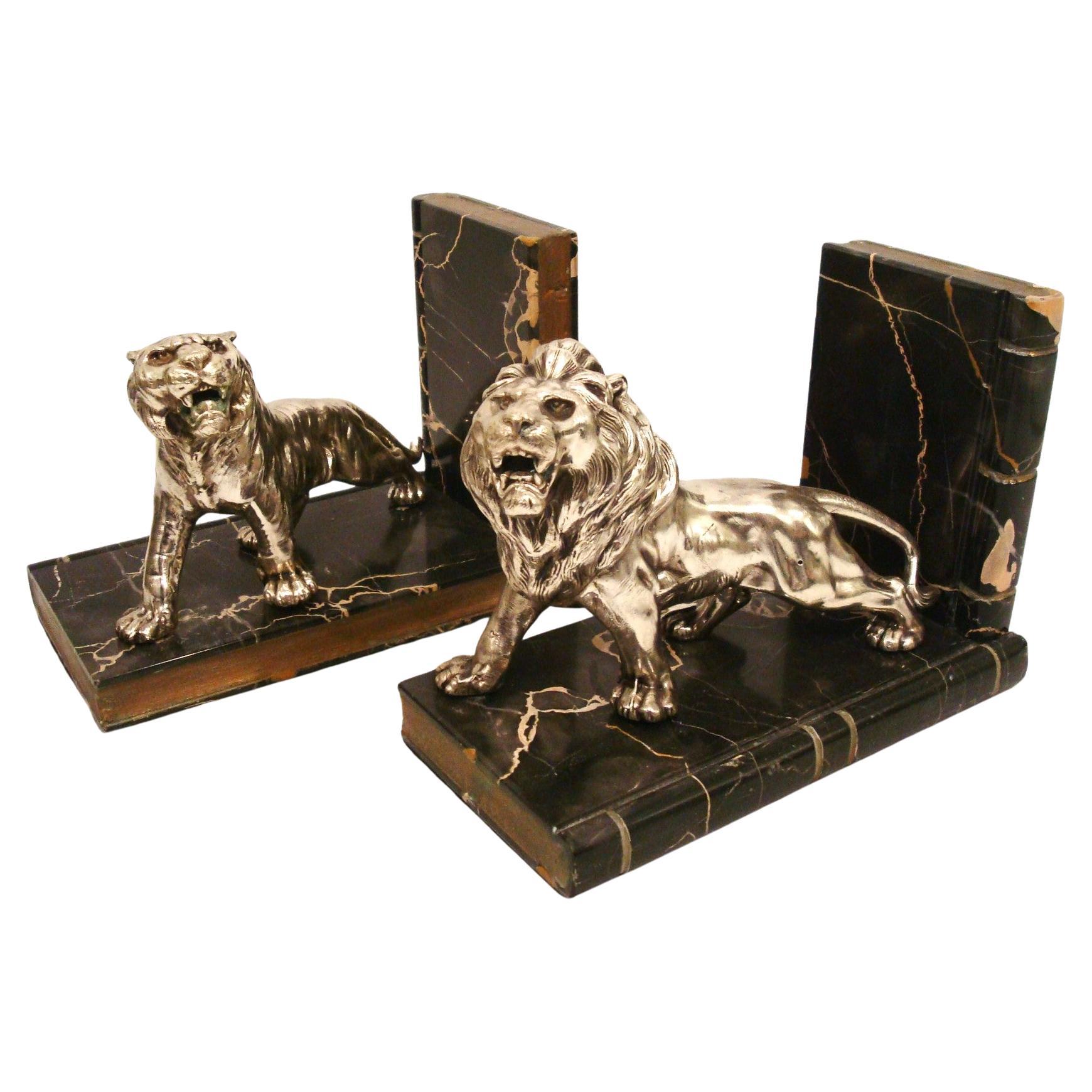
A pair of bookends. Each bookend features a metallic sculpture of a big cat, with one being a lion and the other a tiger. The sculptures are mo...
Category
Early 20th Century French Empire Animal Sculptures
Materials
Marble, Metal
$1,700 / set
Gilt Bronze Guardian Lions Bookends. Signed H. Payen, France 1920´s
By H. Payen
Located in Buenos Aires, Olivos
Gilt Bronze Guardian Lions Bookends. Signed H. Payen, France 1920´s.
Fantastic Pair of Lion Bronze sculptures, mounted over marble bases.
Very Good confitions.
We have specialized ...
Category
Early 20th Century French Art Deco Animal Sculptures
Materials
Marble, Bronze
Art Deco Silvered Bronze Lioness Figures Bookends by Roger Godchaux
By Godchaux
Located in Buenos Aires, Olivos
Roger Godchaux (1878 - 1958): two lioness figures / sculptures
Silvered bronze mounted as bookends on marble plinths; both with plaque to base inscribed "Godchaux Sclp./ Susse Fres...
Category
Vintage 1930s French Art Deco Animal Sculptures
Materials
Marble, Bronze
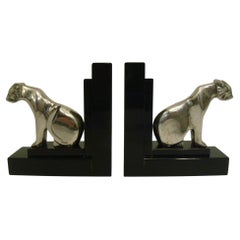
Art Deco Silvered Bronze Tiger Bookends - France 1930´s
Located in Buenos Aires, Olivos
Art Deco Silvered Bronze Tiger Bookends - France 1930´s
Tigers are mounted over Belgium Black Marble.
We have specialized in the sale of Art Deco and A...
Category
Mid-20th Century French Art Deco Bookends
Materials
Belgian Black Marble, Bronze
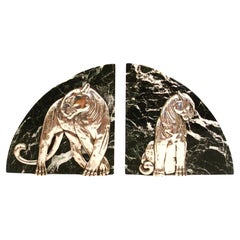
Art Deco Pair of Panther Bookends, Silvered Bronze and Marble - France, 1920s
By Paul Jouve
Located in Buenos Aires, Olivos
Art Deco pair of panther bookends. Silvered bronze and marble. Made in France, 1920s. Both stamped France. Heavy marble bookends.
In the style of Paul Jouve. They will give a chic lo...
Category
Early 20th Century French Art Deco Bookends
Materials
Marble, Bronze
$2,999 / set
Free Shipping
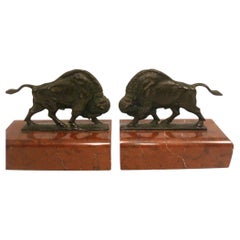
Antique Pair Of American Buffalo Bison Bronze and Marble Bookends 1920´s
Located in Buenos Aires, Olivos
Antique Pair Of American Buffalo Bison Metal Bookends.
Excellent details Bronze Sculptures, mounted over marble base.
Excellent condition.
We have specialized in the sale of Art Dec...
Category
Early 20th Century French Art Deco Bookends
Materials
Marble, Bronze
$1,199 Sale Price / set
33% Off
You May Also Like
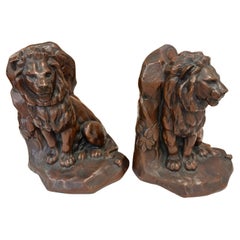
Pair of Signed Bronze Lion Bookends, Circa 1900
Located in Los Angeles, CA
Pair of lion Bronze bookends with great weight lions are well proportioned. Great patina from age.
Category
Early 20th Century American Adirondack More Desk Accessories
Materials
Bronze
$716 Sale Price
20% Off
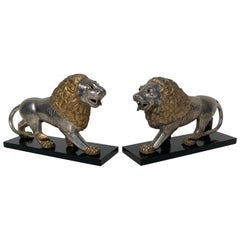
Pair of Silvered Brass Anglo Indian Lion Sculptures Bookends
Located in North Hollywood, CA
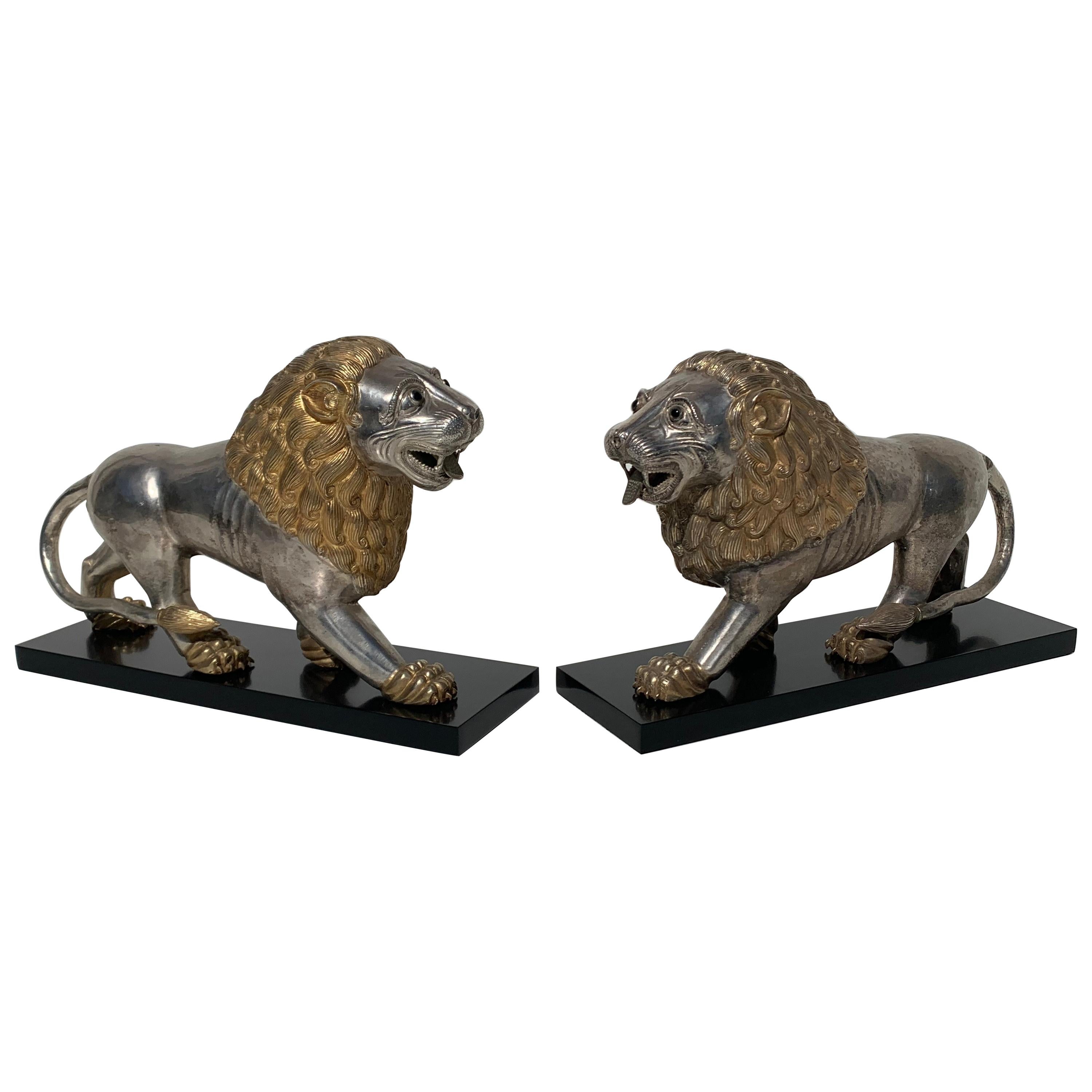
Pair of silvered brass Anglo Indian guarding lion sculptures or bookends.
Category
Antique Mid-17th Century Anglo-Indian Animal Sculptures
Materials
Brass
$2,600 Sale Price / set
20% Off
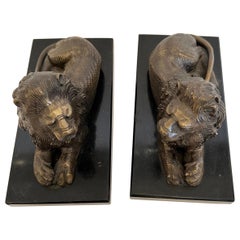
Pair of Bookends Having Recumbent Bronze Lions on Belgian Slate Bases
Located in Hopewell, NJ
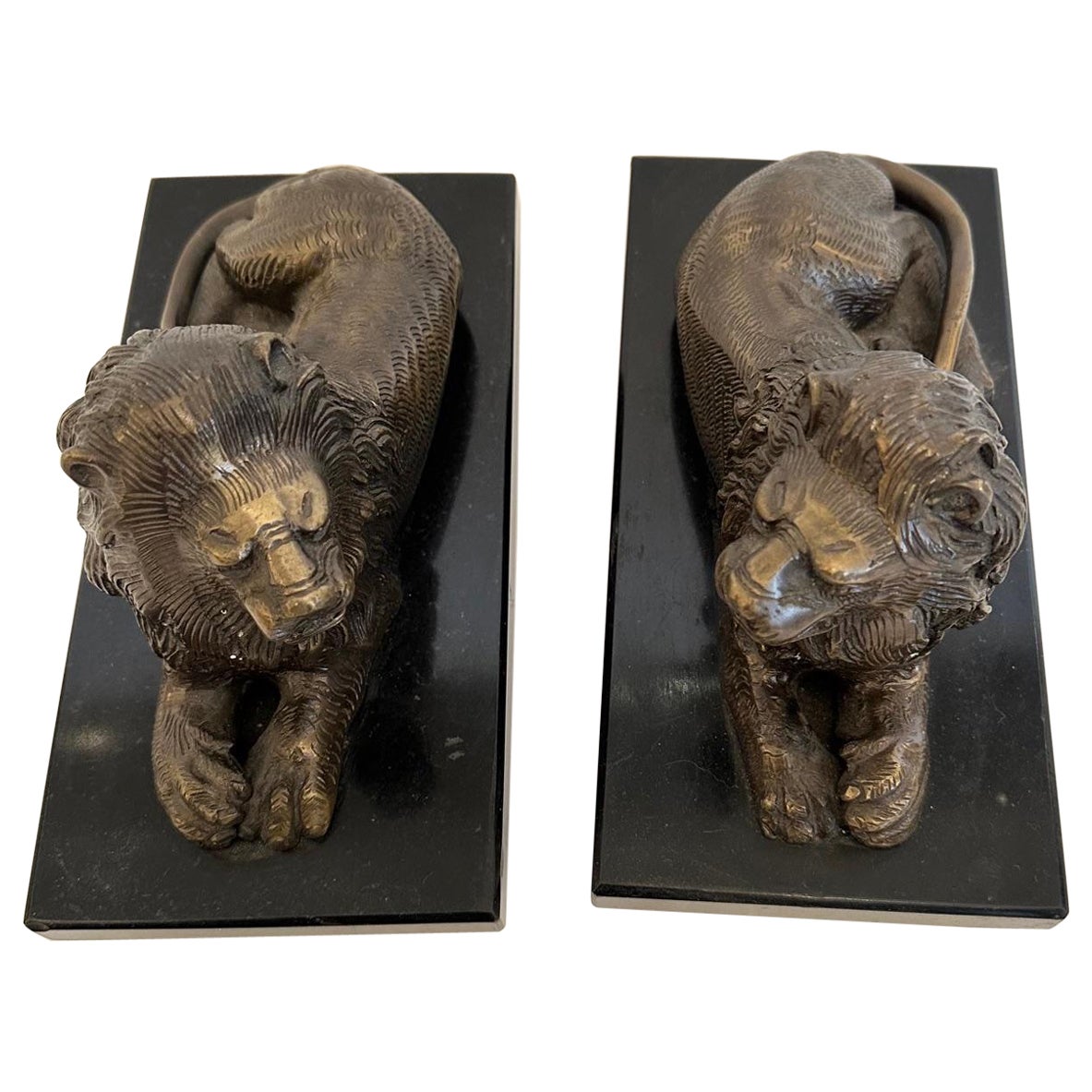
Handsome pair of bookends or desk accessories having recumbent bronze lions on belgian slate bases.
Category
Vintage 1960s French Bookends
Materials
Slate, Bronze
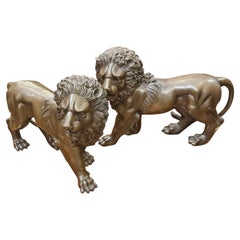
Pair of Bronze Medici Lions
Located in London, GB
A Lovely Pair of Medici Bronze Lions
Lovely Patina and Definition
C20th
Category
Late 20th Century Unknown Renaissance Animal Sculptures
Materials
Bronze
$961 Sale Price / set
20% Off
Set of Art Déco Bronze and Marble Lions Couple Bookends by Émile Carlier, France
By Émile Nestor Joseph Carlier 1
Located in North Miami, FL
Pair of early 20th century Art Déco bronze and marble lions couple bookends by Émile Carlier, France
By: Émile Nestor Joseph Carlier
Mater...
Category
Vintage 1920s French Art Deco Bookends
Materials
Stone, Marble, Metal, Bronze, Copper
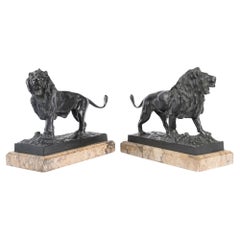
Jules Moigniez (1835-1894), « Lions » Pair of Bronze Sculptures circa 1880
By Jules Moigniez
Located in Saint-Ouen, FR
A Pair of French patinated-bronze studies of walking lions
Cast after the models by Jules Moigniez
On rectangular marble bases
Each signed J. Moigniez
Circa 1880
Jules Moigniez (18...
Category
Antique 1880s French Napoleon III Animal Sculptures
Materials
Marble, Bronze
$5,063 Sale Price
22% Off
More Ways To Browse
Mid Century Danish Directors Chairs
Meiji Bronze Sculptures
Jean Michel Frank Leather Chair
Bronze Animal Sculpture Japan
Japanese Lion
Meiji Bronze Animal
Meiji Bronze Animal Sculptures
Lion Bookends
Japanese Lion Sculpture
Bookends Japan
Antique Lion Bookends
La Period Furniture
Meiji Lion
Bronze Lion Japan
Bronze Lion Bookends
Meiji Bronze Lion
Meiji Bronze Bookends
Antique Bird Sculpture