Video Loading
Want more images or videos?
Request additional images or videos from the seller
1 of 16

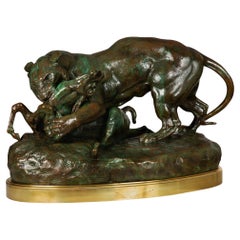
Antoine Louis Barye Cheval Surpris Par Un Lion

$54,000
£40,631.47
€46,941.76
CA$75,814.81
A$81,904.84
CHF 43,574.17
MX$985,538.18
NOK 551,741.15
SEK 504,582.32
DKK 350,678.33

About the Item

Antoine-Louis Barye (French. 1796 - 1875) Cheval surpris par un lion, seconde version (Horse surprised by a lion, second version) Modelled circa 1833, cast probably before 1875 Signed on base "Barye", Bronze: 15.25 Inches Tall x 14.5 Inches Wide x 6 Inches Deep (38.75 cm x 36.85 cm x 15.25 cm) Provenance: The Estate of William H. Truettner to be sold for the benefit of The William H. Truettner Fellowship at Smithsonian American Art Museum. William Truettner, Curator of 18th and 19th Century Painting and Sculpture at the National Museum of American Art, now known as the Smithsonian American Art Museum, Literature: M. Poletti and A. Richarme, Barye. Catalogue raisonné des sculptures, Paris, 2000, no. A122, p. 256 Stuart Pivar, The Barye Bronzes: A Catalogue Raisonne., Suffolk England 1974. A146, p 201. Condition: Very good detail with original dark green, red and brown patina, some rubbing, light abrasions. No damage or restorations. This is among Barye's most forceful compositions. There seems to be some disagreement among scholars about when the group was conceived. Some maintain that the model can be identified with the Jeune lion attaquant un cheval that Barye exhibited at the Salon in 1833 whereas Poletti and Richarme suggest that Barye would not have been likely to change the name of a model over the course of his career and think the model was first edited around 1850. The present lot, the second version, is Barye's further development of the original and was first cast by the artist in 1857. The composition is almost mathematically arranged as a series of parallel lines. Note, for example, the direction of the horse's rear leg, the lion's back and the horse's neck. The naturalistic base gives the horse an unstable, slippery footing. By stylizing the terrasse, and thinning the tree trunk from the original model, Barye attained a more vertically oriented group. The horse's tail is stretched and the head is directed further upwards to give the sense that the animal is tipping backwards under the lion's weight. There are casts of this version of the Cheval Surprise in the Musée du Louvre, the Walters Art Gallery in Baltimore and the Metropolitan Museum of Art. From 1823 Barye frequented the menagerie of the Musée National d'Histoire Naturelle, where he could scrutinize the wild animals preserved in their natural attitudes. Another such occasion was called to his attention by his friend Delacroix in a letter: 'Le lion est mort. Au galop. Le temps qu'il fait nous activer'. The lion in question was one of Admiral Rigny's great lions in the Paris Menagerie whose corpse had been transferred to the Laboratoire d'Anatomie. There the painter and the sculptor took anatomical drawings from the carcass and the lion was placed in a number of lifelike positions, including being suspended with paws extended in the manner of the Cheval Surprise par un lion. Inspired by George Stubbs, and Giambologna's Lion Attacking a Horse, Barye reinterpreted the idea with his Romantic realism. AVANTIQUES is dedicated to providing an exclusive curated collection of Fine Arts, Paintings, Bronzes, Asian treasures, Art Glass and Antiques. Our inventory represents time-tested investment quality items with everlasting decorative beauty. We look forward to your business and appreciate any reasonable offers. All of our curated items are vetted and guaranteed authentic and as described. Avantiques only deals in original antiques and never reproductions. We stand behind our treasures with a full money back return policy if the items are not as described.Please feel free to make any reasonable offers and thank you!
  • Creator:
  • Dimensions:
    Height: 15.5 in (39.37 cm)Width: 14.5 in (36.83 cm)Depth: 6 in (15.24 cm)
  • Style:
    Beaux Arts (Of the Period)
  • Materials and Techniques:
    Bronze,Cast,Patinated
  • Place of Origin:
  • Period:
  • Date of Manufacture:
    1855
  • Condition:
    Wear consistent with age and use.
  • Seller Location:
    Dallas, TX
  • Reference Number:
    1stDibs: LU1774247331142

More From This Seller

View All
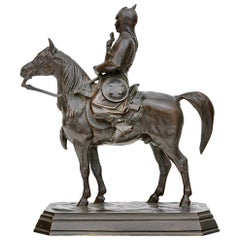
Antoine-Louis Barye (French, 1796-1875) Guerrier du Caucase Bronze Figure
By Antoine-Louis Barye
Located in Dallas, TX
Antoine-Louis Barye (French, 1796-1875) "Guerrier du Caucase" cast bronze sculpture depicting a Caucasian warrior in full armor rendered in fine detail riding on his horse. Cast ci...
Category

Antique 1870s French Beaux Arts Figurative Sculptures

Materials

Bronze

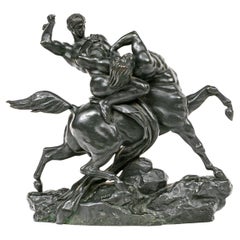
Antoine Louis Barye Theseus Slaying the Centaur Bienor Bronze
By Antoine-Louis Barye
Located in Dallas, TX
Antoine Louis Barye Theseus Slaying the Centaur Bienor Black Patinated Bronze Group. A French bronze group entitled 'Thesee combattant le centaure Bienor, esquisse' (Theseus slaying...
Category

Antique 1850s French Beaux Arts Figurative Sculptures

Materials

Bronze

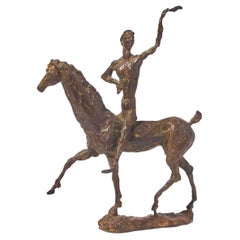
Walter Linck (Swiss, 1903-1975) Bronze Don Quixote 1944
Located in Dallas, TX
Walter Linck (Swiss, 1903-1975) Don Quixote, 1944 Bronze with brown patina Signed W. Linck, dated and numbered I (on base) Height: 21 5 in. (54.3cm) Sold by Order of the Board of Tru...
Category

Vintage 1940s Swiss Mid-Century Modern Figurative Sculptures

Materials

Bronze

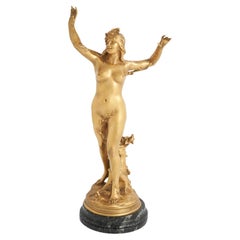
Francois Raoul Larche (1860-1912) LA SEVE or Métamorphose de Daphné
By François-Raoul Larche
Located in Dallas, TX
Francois Raoul Larche (1860-1912) LA SEVE or Métamorphose de Daphné Gilt Bronze Art Nouveau Sculpture Cast, Gilt Bronze or Marble base France, c. 1900, Signed "Raoul Larche," number...
Category

Antique Early 1900s French Art Nouveau Figurative Sculptures

Materials

Bronze

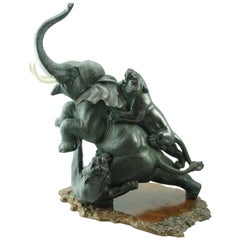
Japanese Meiji Genryusai Seiya Bronze Elephant and Tigers
Located in Dallas, TX
Japanese Meiji Genryusai Seiya bronze elephant and tigers, circa 1890. This moving and detailed bronze grouping depicts a savage attack by two viscous...
Category

Antique 1890s Japanese Meiji Animal Sculptures

Materials

Bronze

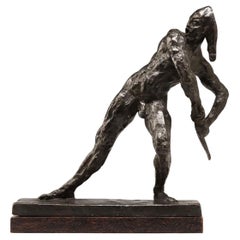
Emile Antoine Bourdelle “Arlequin” Bronze Sculpture Valsuani Foundry
By Émile Antoine Bourdelle
Located in Dallas, TX
Emile Antoine Bourdelle (French, 1861-1929) Bronze Sculpture L' Arlequin. Conceived in 1905 and cast around 1954 A rare museum quality impressionist - Brutalist interpretation of a harlequin swordsman in bronze with black/brown patina. Bears the cast signature E. A. BOURDELLE top of the base, © by Bourdelle along one side. Foundry seal of A. VALSUANI CIRE PERDUE. On corner. Measures 16 x 16.5 x 5 inches. Very good condition throughout, no damage, repair or heavy wear. Scratches and wear to patina throughout commensurate of material age and use. Provenance: The estate of Morton and Estelle Sosland.In Kansas City, the Sosland family name is synonymous with both giving, and the arts. Of their many contributions to the community, 'The Soslands gave one of the nation's finest private collections of American Indian art to the Nelson-Atkins' museum. The content of this auction bears testament to their keen eye and varied interests. In September 1893 Bourdelle joined the studio of Auguste Rodin. His collaboration with Rodin lasted fifteen years. In 1895, he received his first official commission, a war monument for the city of Montauban. His proposed plans, different from traditional monuments, created a scandal. Rodin intervened on his behalf, and the monument was finally erected in 1902. In 1900, Bourdelle demonstrated his independence from Rodin's style with a bust of Apollo. In the same year, Bourdelle, Rodin and the sculptor Desbois opened a free school of sculpture, the Institut Rodin-Debois-Bourdelle. One of the students was Henri Matisse, who later produced some remarkable sculpture, but the school did not last long. Bourdelle in his studio sketching Grace Christie In 1905, Bourdelle had his first personal exhibition, in the gallery of the foundry-owner Hébrand. With the support of Hébrand and the material assistance of his foundry, Bourdelle was able to make larger works and earn greater recognition. His father died in 1906, and Bourdelle changed his first name to simply Antoine, after his father. He married his second wife, Cléopatre Sevastos (1892-1972), who was of Greek origin. She and their daughter, Rhodia, became a frequent inspiration for his works.[6] In 1908, Bourdelle left the studio of Rodin and set out on his own. In 1909 he exhibited a new work, Hercules the Archer at the annual Salon of the Societé Nationale des Beaux-Arts. He began to teach at the Académie de la Grande Chaumière, where his students included Giacometti, Isaac Frenkel and Adaline Kent...
Category

Vintage 1940s French Brutalist Figurative Sculptures

Materials

Bronze

You May Also Like

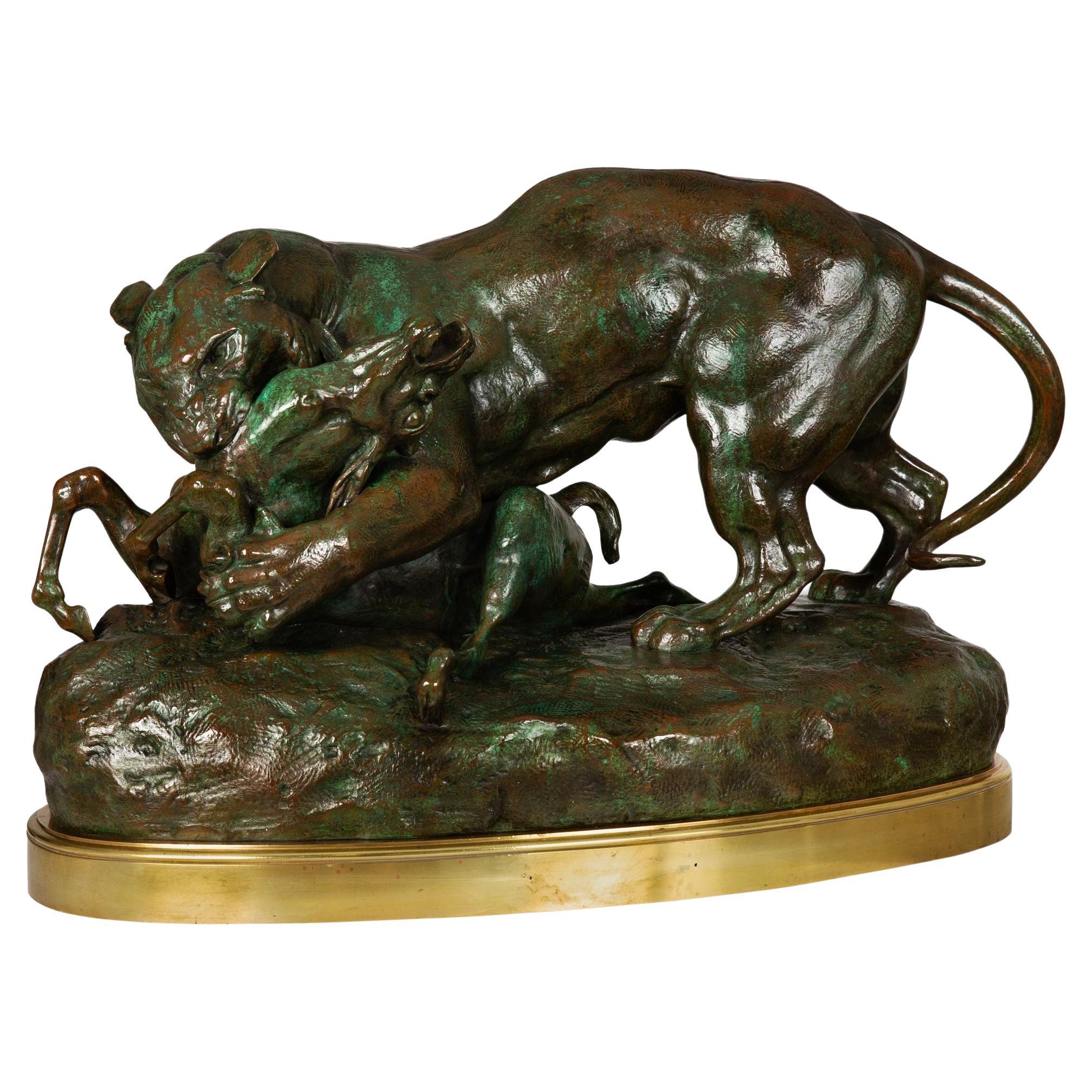
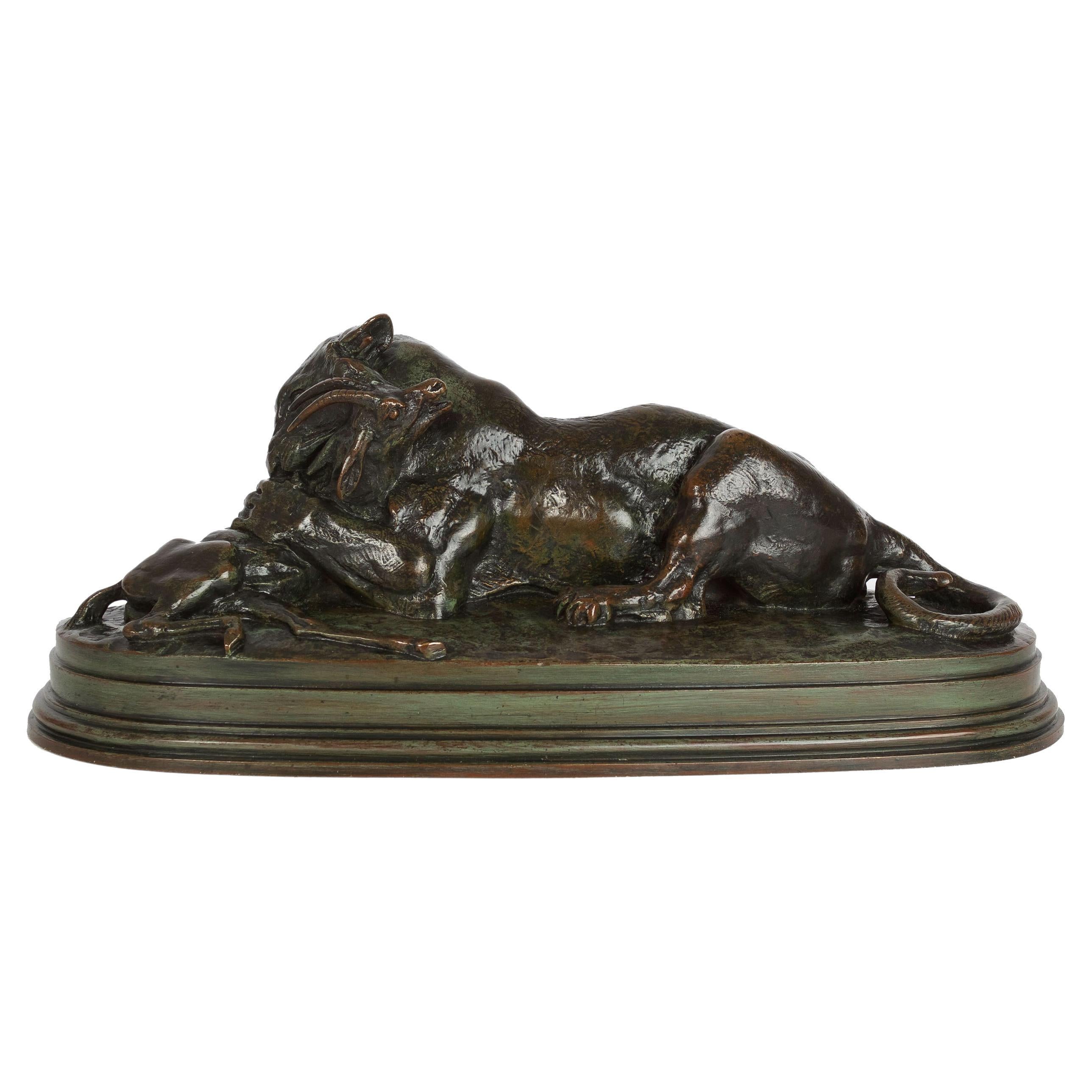
Bronze Sculpture “Tiger Surprising an Antelope” by Antoine-Louis Barye
By Antoine-Louis Barye
Located in Shippensburg, PA
ANTOINE-LOUIS BARYE French, 1796-1875 "Tigre Surprenant une Antilope (terrasse sans profil)" (1862) Green, brown and red patinated sand-cast bronze over original raised rim signed...
Category

Antique 19th Century French Romantic Animal Sculptures

Materials

Bronze

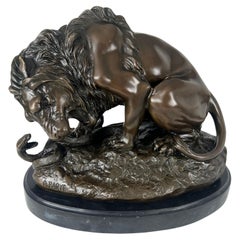
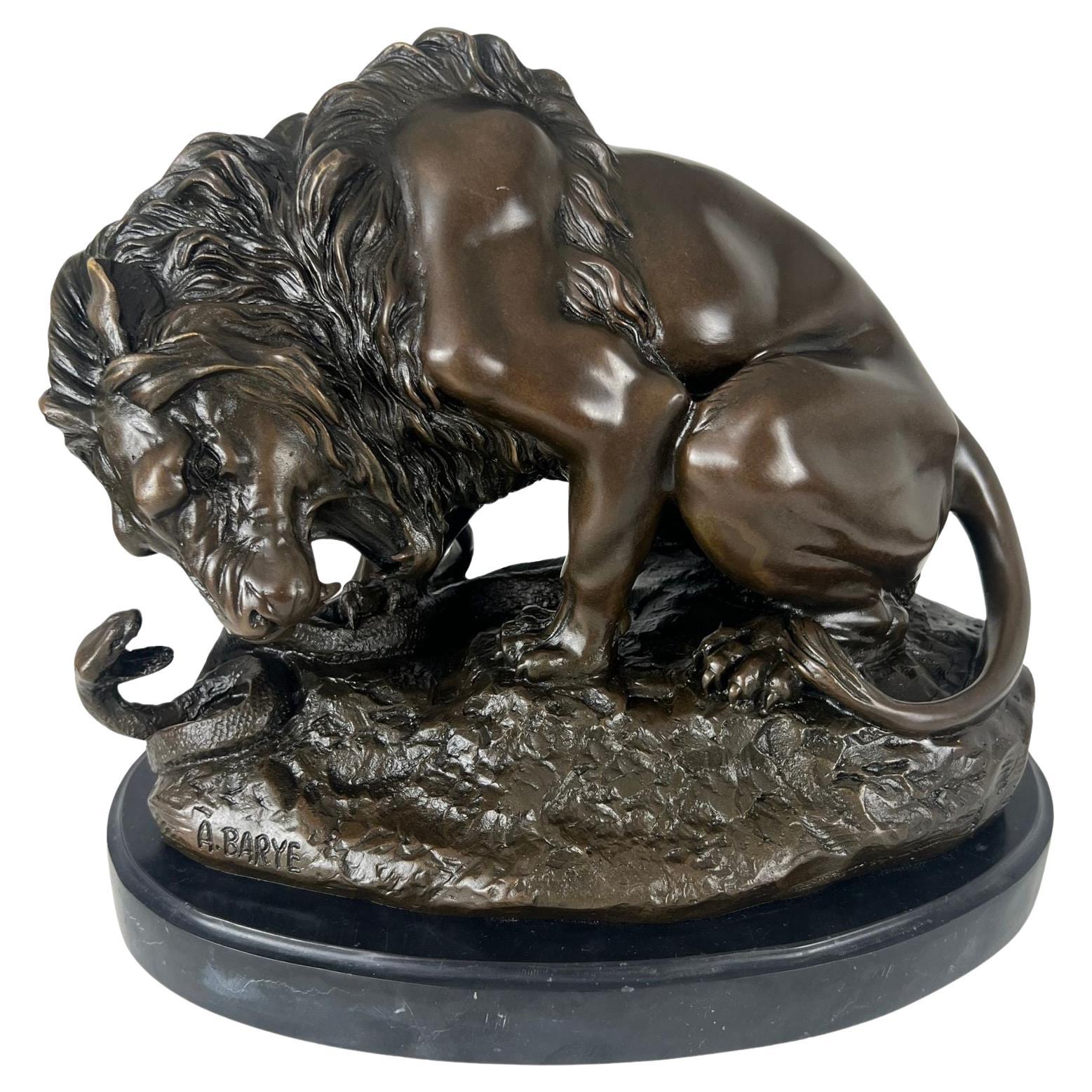
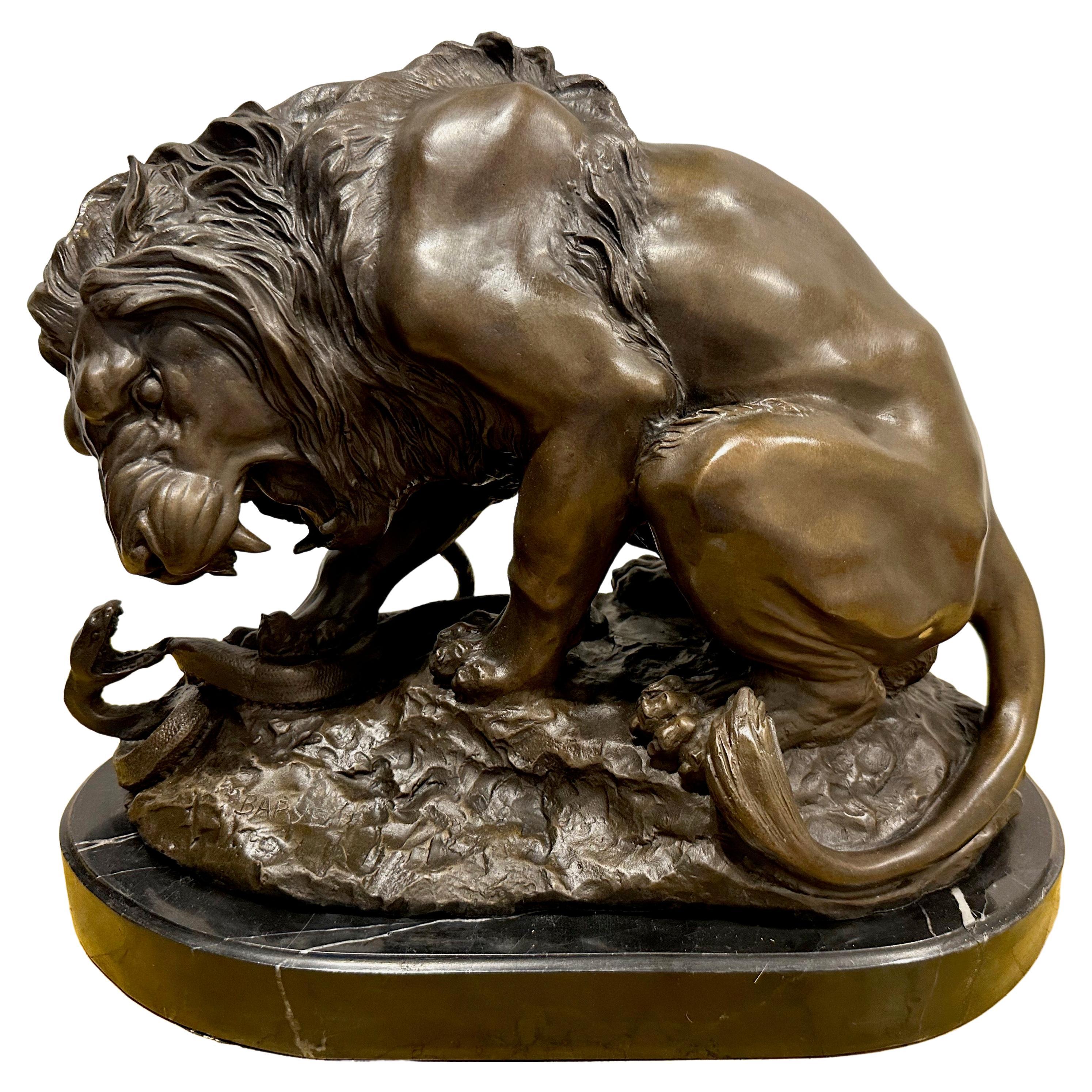
Bronze Sculpture, Lion with Snake, After A. Barye, France, 20th Century.
By Antoine-Louis Barye, Warranty Paris JB Depose
Located in Regensburg, DE
Solid bronze figure of a lion fighting a snake, a famous motif by A. BARYE. Engraved on the plinth “A. BARYE” (Antoine-Louis Barye, 1795–1875), one of the most important French sculp...
Category

Vintage 1970s French Neoclassical Animal Sculptures

Materials

Marble, Bronze

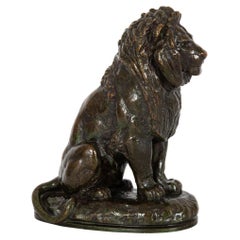
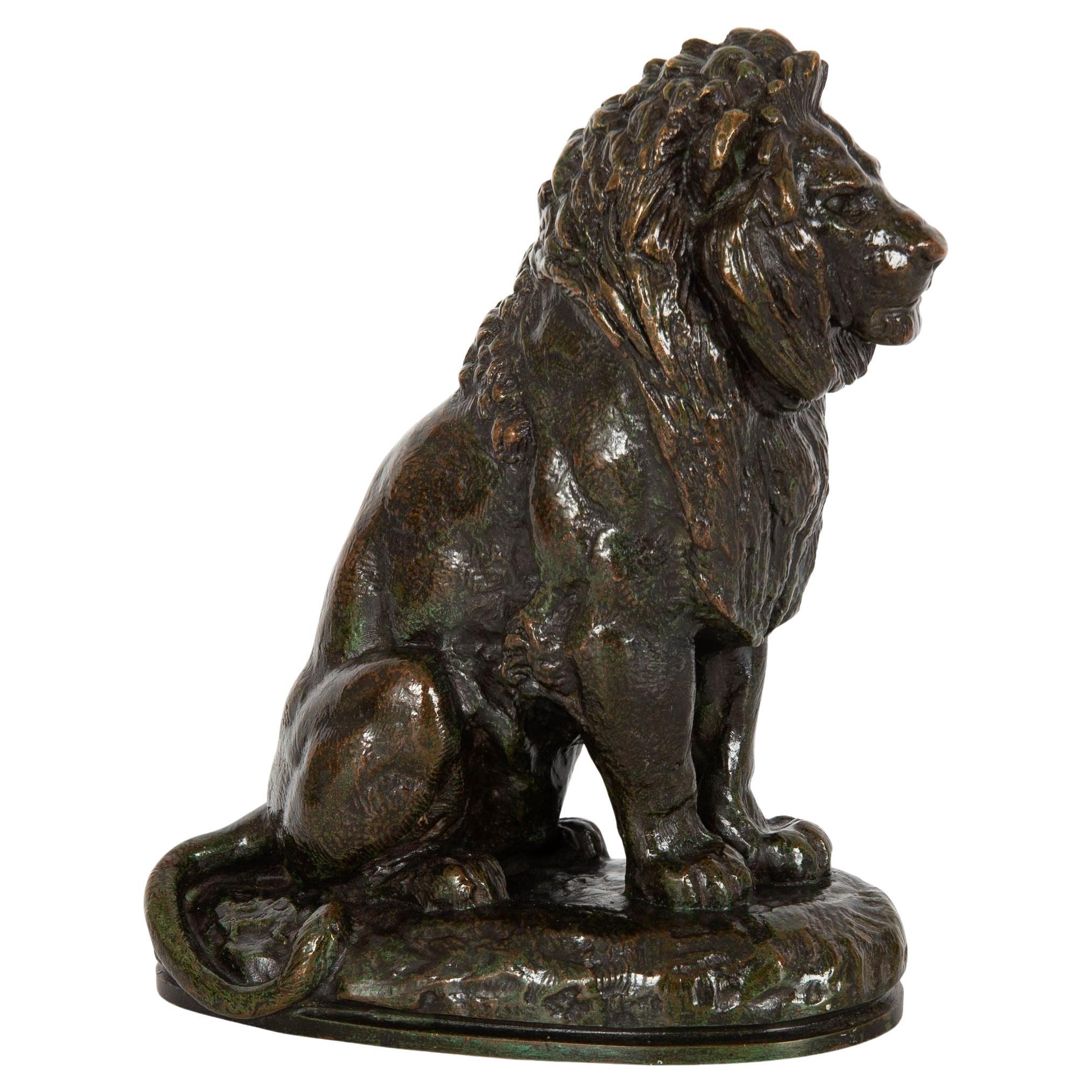
Bronze Sculpture “Lion Assis No. 2”, Antoine Louis Barye, circa 1880
By Antoine-Louis Barye
Located in Shippensburg, PA
Initially modeled by Barye in 1846 as a commission by Louis-Phillipe for the Tuilleries Gardens at a cost of 10,000 francs, the life-size sculpture sat near to Barye's Lion au Serpent until it was later moved in 1867 to the grand entrance to Pavilion de Flore and a pair was crafted for it using a mechanical technique. This incensed Barye, as he insisted a mate must be sculpted to oppose Lion Assis...
Category

Antique 19th Century French Romantic Animal Sculptures

Materials

Bronze

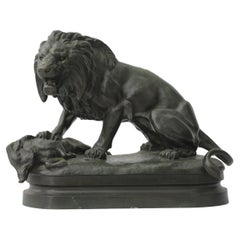
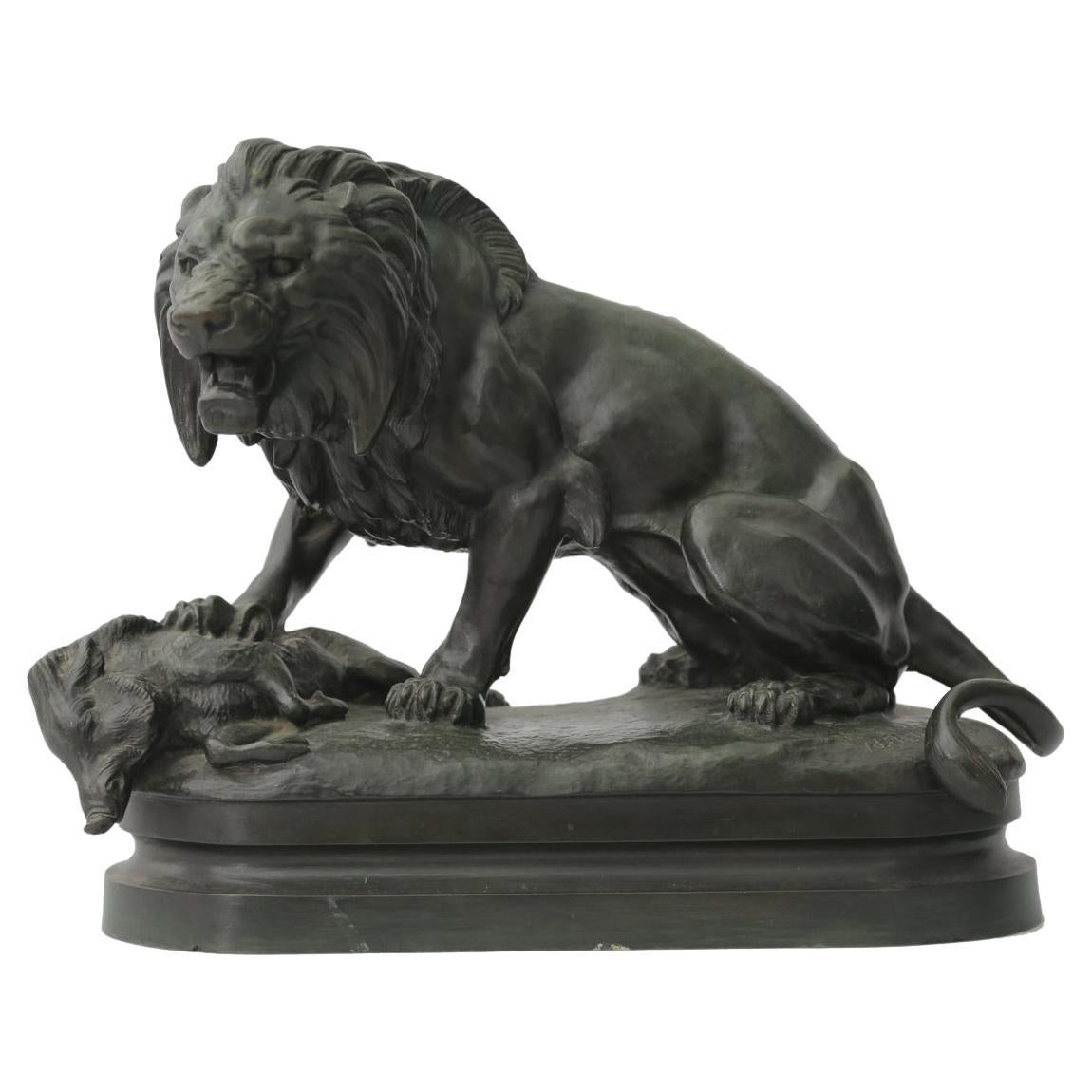
"Tuant un Sanglier" After Alfred Barye (French, 1839–1882) Bronze, c. 1900
By Alfred Barye
Located in West Palm Beach, FL
After Alfred Barye (FRENCH, 1839–1882) bronze lion sculpture, "Lion - Tuant un Sanglier," a male lion standing over his prey, a wild boar; signed on base on right side, raised on a c...
Category

Early 20th Century French Neoclassical Animal Sculptures

Materials

Marble, Bronze

French Antique Bronze Sculpture "Tiger Devouring Gazelle" by Antoine-Louis Barye
By F. Barbedienne Foundry, Antoine-Louis Barye
Located in Shippensburg, PA
ANTOINE-LOUIS BARYE French, 1795-1875 "Tigre Dévorant une Gazelle (second edition)" Verde and autumnal patinated bronze Signed in cast "BARYE", incised "F. Barbedienne Fondeur" c...
Category

Antique 19th Century French Romantic Animal Sculptures

Materials

Bronze

Antoine-Louis Barye 1795-1875 Signed Bronze of Lion Crushing a Snake ca. 1870
By Antoine-Louis Barye
Located in CH
Antoine-Louis Barye (Paris, 1795–1875) Lion Crushing a Snake Bronze with brown patina, signed “Barye”; mounted on a black marble base A powerful bronze sculpture depicting the drama...
Category

Antique Late 19th Century French Romantic Animal Sculptures

Materials

Marble, Bronze