Items Similar to Bronze Sculpture Woman
s Face by Umberto Mastroianni
Want more images or videos?
Request additional images or videos from the seller
1 of 13
Bronze Sculpture Woman
s Face by Umberto Mastroianni
$4,188.25
£3,128.19
€3,500
CA$5,770.08
A$6,288.37
CHF 3,329.96
MX$75,529.95
NOK 42,158.07
SEK 38,760.20
DKK 26,663.94
About the Item
1940s "Face". Lost wax bronze. Signed.
Biography
Sculptor, painter, and printmaker Umberto Mastroianni was born in Fintana Liri, Italy, on September 21, 1910. His formal training began as a teenager when he traveleld to Rome to study at the Accademia di San Marcello, and began apprenticing with his uncle Domenico Mastroianni in his sculpture studio in Via Margutta. In 1926 he moved to Turin to work in the studio of classical sculptor Michele Guerrisi. At this time political upheaval stirred in Europe with the rise of Nazism, and politics and art held equal influence over the young artist. Around 1930 Mastroianni entered the second-wave Italian Futurist circle, and he was secured an inagural exhibition by the artist Filipo De Pisis in Genoa in 1931. The art world at this time was undergoing divisions within genres, as sociopolitical ideology began to uproot Europe. This led to the split between the followers of Futurist founder Filipo Marinetti, a Mussolini admirer and promoter of Fascism, and the newer, younger Futurists who felt sympathetic with the Italian Resistance. Drafted into Mussolini's military as World War II took hold, he soon abandoned his service and joined the Resistance. At this time, he was exposed to the ideologies of Abstract Expressionism and was drawn to its sense of freedom, incorporating non-objectivity into his work throughout the 1940s.
In the mid 1940s he settled briefly in Paris, experimenting with entirely non-representational works. His first major show in this style was held at Paris' Galerie de France in 1952 to critical acclaim, and he soon established himself as a leading Italian abstractionist as well as a vocal proponent of European Modernism. He began exhibiting throughout Europe, the United States, and Japan, and he returned to Italy to take a position as headmaster at the Accademia delle Belle Arti, Bologna in 1960. That same year, he purchased a home in Marino, where he established a private studio while continuing to teach and exhibit. In the 1970s he began incorporating poetry into his daily routine, and wrote article as well on the topic of art for Rome's Il Messaggero. In 1990, he founded the Fondazione U. Mastroianni with works from 1935 - 1990. In 1993 his "Monument to Resistance" was unveiled in Poggibonsi, Siena.
He continued to live and work in Marino until his death on February 25, 1998.
- Creator:Umberto Mastroianni (Artist)
- Dimensions:Height: 15.75 in (40 cm)Width: 7.09 in (18 cm)Depth: 5.91 in (15 cm)
- Style:Modern (Of the Period)
- Materials and Techniques:
- Place of Origin:
- Period:
- Date of Manufacture:1940
- Condition:
- Seller Location:Milan, IT
- Reference Number:1stDibs: LU2140338711072
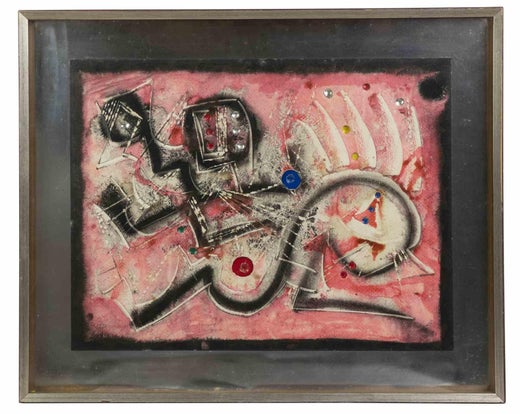
Umberto Mastroianni
Umberto Mastroianni (September 21, 1910 in Fontana Liri – February 25, 1998 in Marino, Italy), was an Italian abstract sculptor. In 1989, he received the first Praemium Imperiale for sculpture. During World War II, he was in the Italian resistance movement. He was the uncle of the actor Marcello Mastroianni and the film editor Ruggero Mastroianni. The Museo Civico Umberto Mastroianni was established in his honour. The son of Vincenzo Mastroianni and his second wife Luigia Maria Vincenza Conte, Umberto was an uncle of the actor Marcello Mastroianni: in fact, his father Vincenzo had had a son named Ottone from his first wife, Concetta Conte, sister of his second wife, who was Marcello's father. Umberto arrived in Rome as a 14-year-old in 1924, where he attended drawing courses at the Accademia di San Marcello at the same time as his uncle Domenico's studio. He moved two years later, in 1926.
The young Umberto modelled portraits of archaic taste, in terracotta, which were later transferred to bronze castings: myth and religious subjects were Umberto Mastroianni's stylistic hallmark in the pre-war period, alongside stylistic exercises with little boy heads and his favourite subject being masks of young women, with light and persuasive features. In 1930 came the first official recognition, the Tourism Prize, offered by the Ministry of Education and, shortly afterwards, the first exhibitions at national and European level. His first solo exhibition in 1931 at the ‘Galleria Genova’ in Genoa. From 1933 onwards, he regularly exhibited at national trade union exhibitions and was invited to all the Quadriennali in Rome, the Promotrici in Turin and the Biennali in Venice. In 1935 he took part in the Quadriennale in Rome for the first time, the following year in the Venice Biennale. His pictorial works on poor materials also date back to the early 1940s: he is the first Italian abstract sculptor, the leader of the 20th century revolution and an artist of absolute international importance. These are dynamic abstract-geometric forms that acquire depth in terracotta, plaster, cardboard and rough sacks (jute), coloured and scraped. Mastroianni's poetics decisively took up the echoes of the plastic dynamism of Boccioni's ascendancy, revisiting and broadening its contents and cultural references. Some of his early post-war works in worn-out jute (works of very small dimensions, almost as if they were relics of ancient civilisations, later found) are preserved in the Galleria d'arte moderna in Rome, the Tate Gallery in London, and the Salomon Guggenheim Museum in New York. In fact, his research, starting from direct references to the Futurist season, to Brancusi's Cubist season, to John Arp's and Henry Moore's plastics, hinges on the study and rendering of dynamic values, understood and conferred in the structures understood as a clot of lines of force, the generative nucleus of an explosion of gestures blocked by the weight of matter, trapped in matter. The subsequent evolution is the landing to the Informal season, (1950-1961) a completely autonomous phase, another act of his extraordinary creative personality.
About the Seller
5.0
Gold Seller
Premium sellers maintaining a 4.3+ rating and 24-hour response times
Established in 2006
1stDibs seller since 2016
331 sales on 1stDibs
Typical response time: 1 hour
- ShippingRetrieving quote...Shipping from: Asti, Italy
- Return Policy
More From This Seller
View AllPaloma Jet Model Bronze and Brass Sculpture by Miguel Berrocal
By Miguel Berrocal
Located in Milan, Italy
Bronze and Brass sculpture Paloma Jet designed and produced by Miguel Berracal in 1976. Limited editions of 2000 copies. Number 637. Signed under the left wing.
Biography
Miguel Ort...
Category
Vintage 1970s Italian Modern Figurative Sculptures
Materials
Bronze, Brass
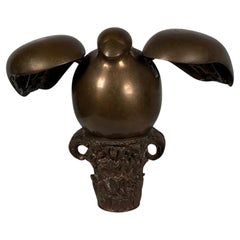
Bronze Sculpture by Carmelo Cappello
By Carmelo Cappello
Located in Milan, Italy
Bronze sculpture designed and produced by Carmelo Cappello in 1944.Single piece. Original signature and date.
Biography
Carmelo Cappello was born in 1912 in Italy.
Carmelo Cappello ...
Category
Vintage 1940s Italian Mid-Century Modern Figurative Sculptures
Materials
Bronze
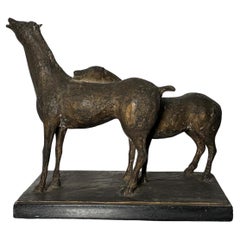
Ceramic Sculpture Face Model by Ambrogio Pozzi for Superego Editions, Italy
By Ambrogio Pozzi, Superego Editions
Located in Milan, Italy
Ceramic sculpture Face model from Faces Collections designed by Ambrogio Pozzi and produced by Studio Superego in 2008. Signed and numbered.
Biography:
Ambrogio Pozzi was born in 1...
Category
Early 2000s Italian Modern Figurative Sculptures
Materials
Ceramic
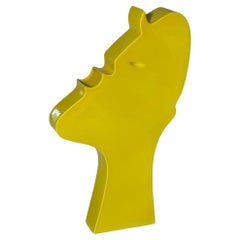
Ceramic Sculpture Face Model by Ambrogio Pozzi for Superego Editions, Italy
By Ambrogio Pozzi, Superego Editions
Located in Milan, Italy
Ceramic sculpture Face model from Faces Collections designed by Ambrogio Pozzi and produced by Studio Superego in 2008. Signed and numbered.
Biography:
Ambrogio Pozzi was born in 1...
Category
Early 2000s Italian Modern Figurative Sculptures
Materials
Ceramic
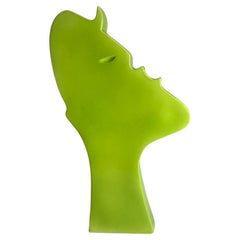
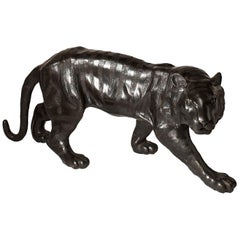
Spectacular Bronze Sculpture, Italy
Located in Milan, Italy
Sculpture in bronze lost-wax casting,.
Origin from a Como private house in circa 1970.
Category
Antique 1670s Italian Modern Animal Sculptures
Materials
Bronze
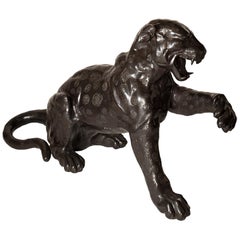
Spectacular Bronze Sculpture, Italy
Located in Milan, Italy
Sculpture in bronze lost-wax casting,.
Origin from a Como private house in circa 1970.
Category
Vintage 1970s Italian Modern Animal Sculptures
Materials
Bronze
You May Also Like
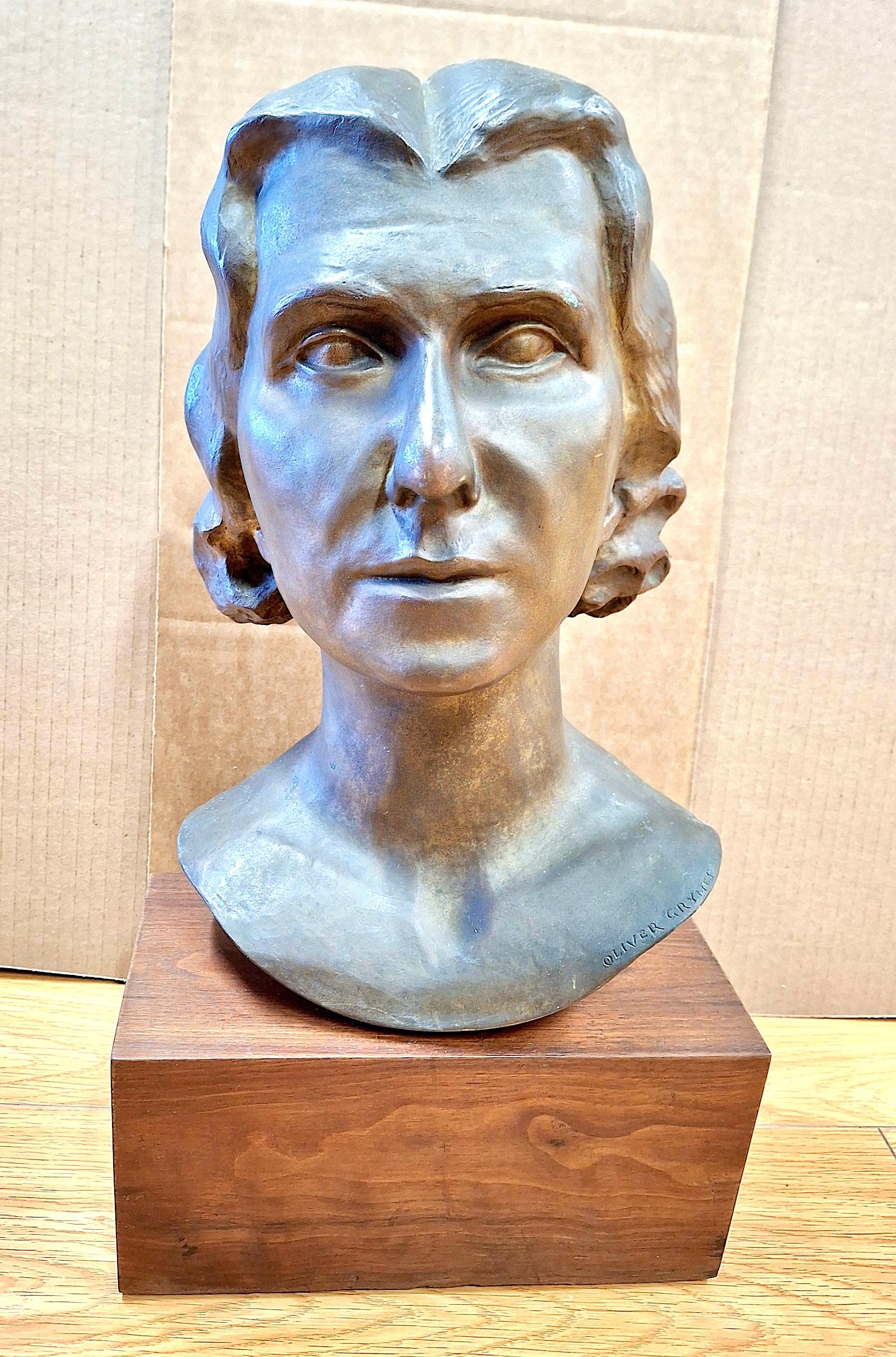
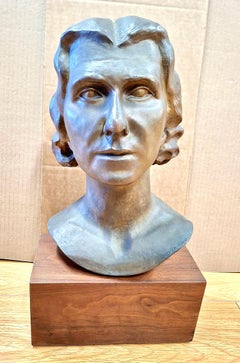
Early 20th-century Female Bronze Bust on Stand by Oliver Grymes
Located in San Francisco, CA
She’s certainly no beauty, possibly in her 30s, but there’s a strength and clarity about this woman. She does her long hair into a complex chignon, a practical style in those years p...
Category
Early 20th Century American Realist Figurative Sculptures
Materials
Bronze
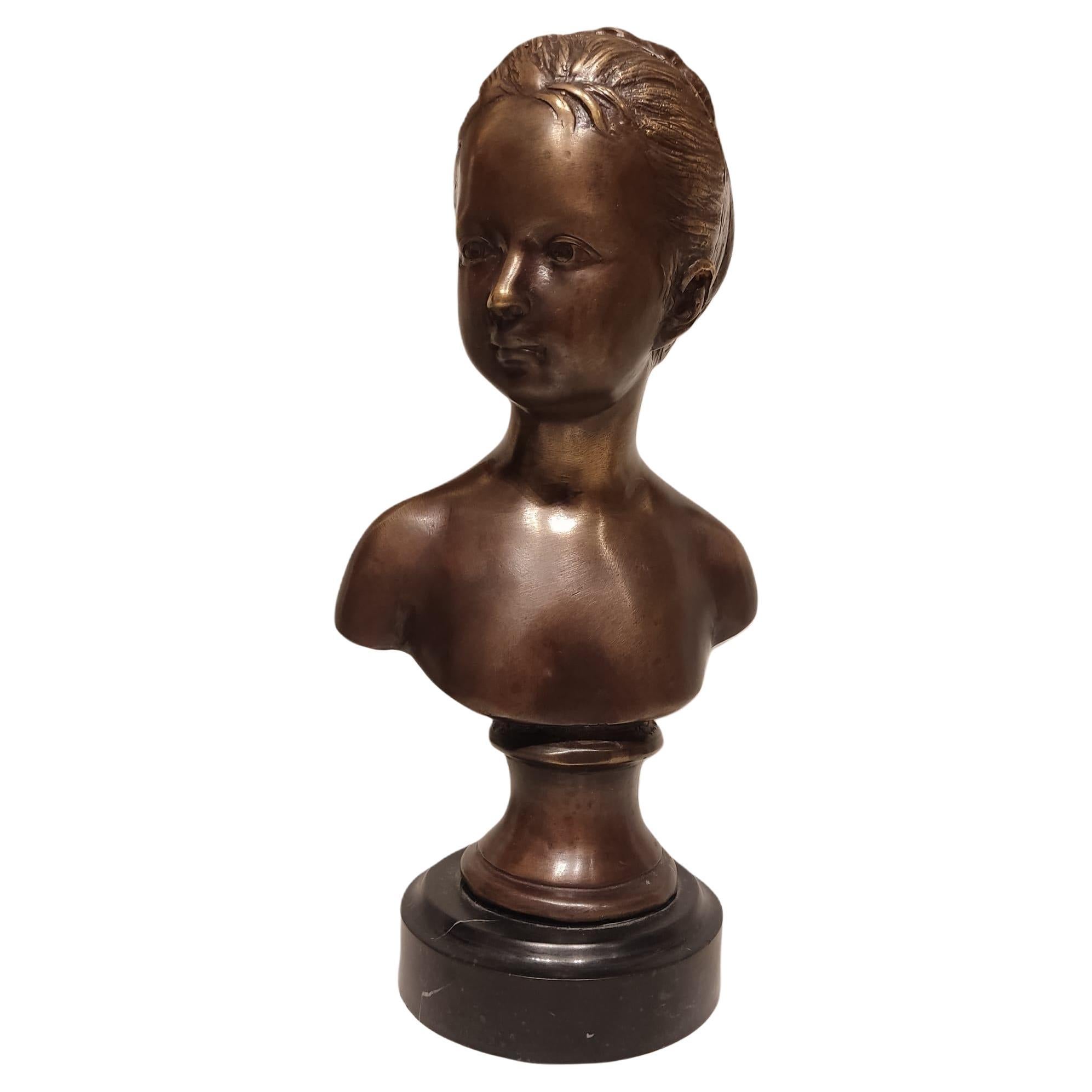
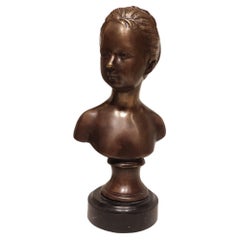
19th Century French Bronze Bust of Louise Brongniart
Located in Dresden, DE
This 19th-century French bronze bust depicts Louise Brongniart, daughter of the distinguished Neoclassical architect Alexandre-Théodore Brongniart (1739–1813). It is based on the ori...
Category
Antique 19th Century French Neoclassical Busts
Materials
Bronze
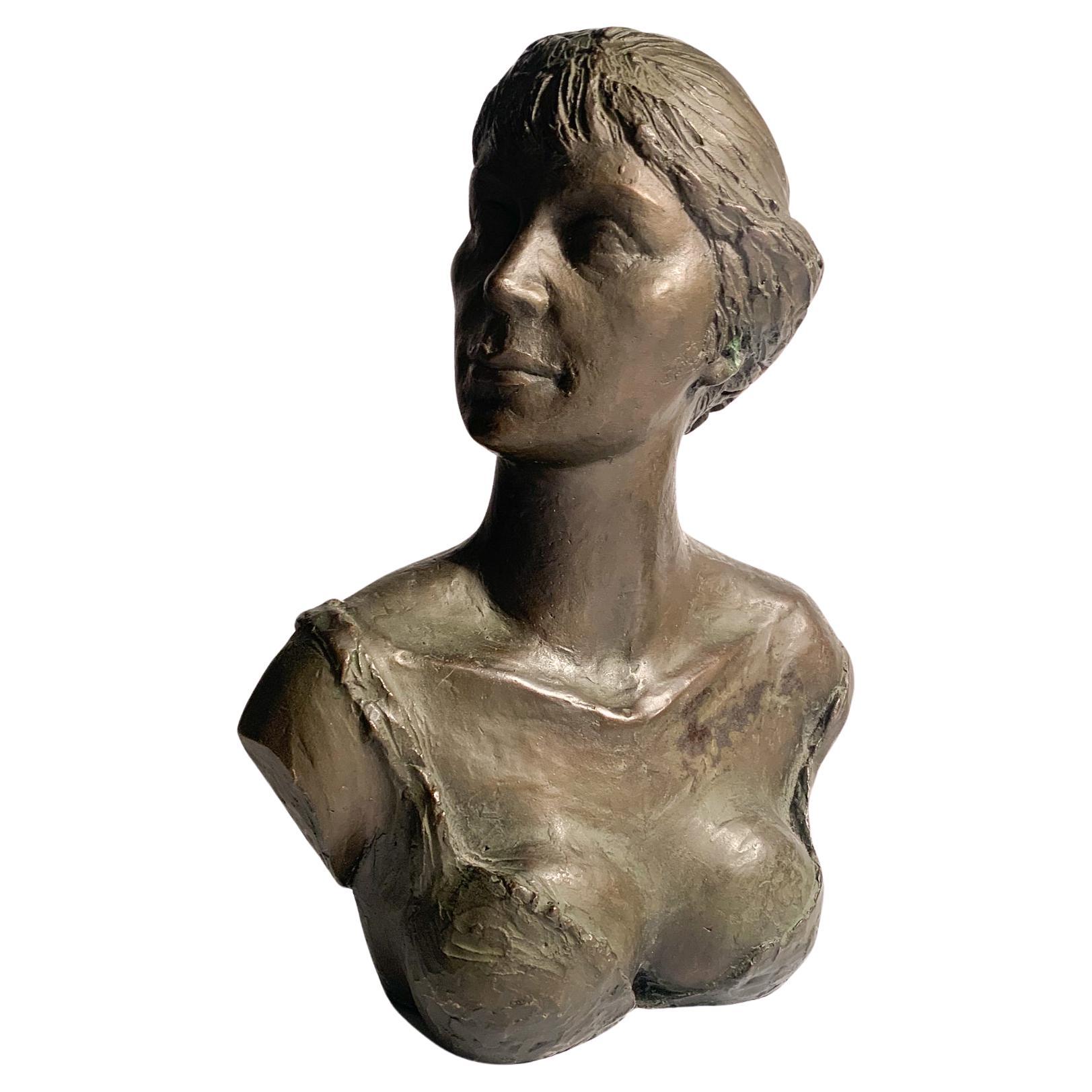
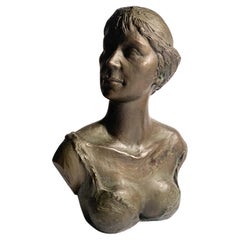
Bust of a Lady in Lost Wax Bronze Sculpture by Giuseppe Motti, 1950s
Located in Milano, MI
Bronze female bust made with the lost wax technique, created by Giuseppe Motti (1908 - 1988) in the 1950s
Ø 24 cmØ 12 cm h 31 cm
Category
Vintage 1950s Italian Mid-Century Modern Busts
Materials
Bronze
$1,287 Sale Price
20% Off
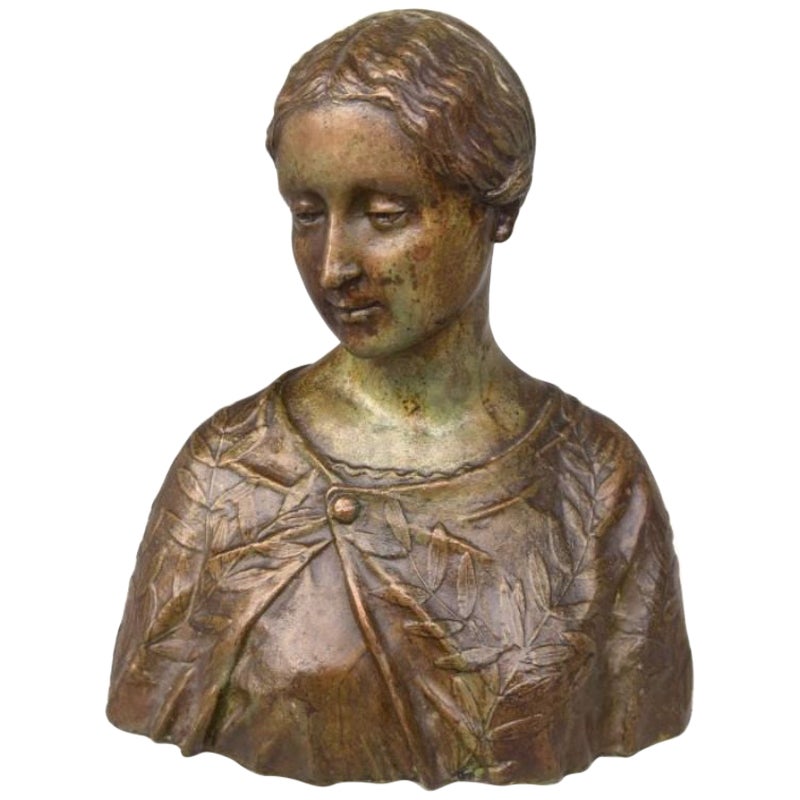
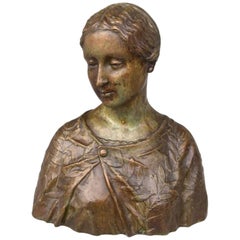
Renaissance Girl Bronze Bust
Located in Marseille, FR
Bronze bust of a young girl from the Renaissance, late 19th century, illegible signature, altered patina, 30 cm high, 25 cm wide and 12 cm deep.
Additional information:
Material:...
Category
Antique Late 19th Century Busts
Materials
Bronze
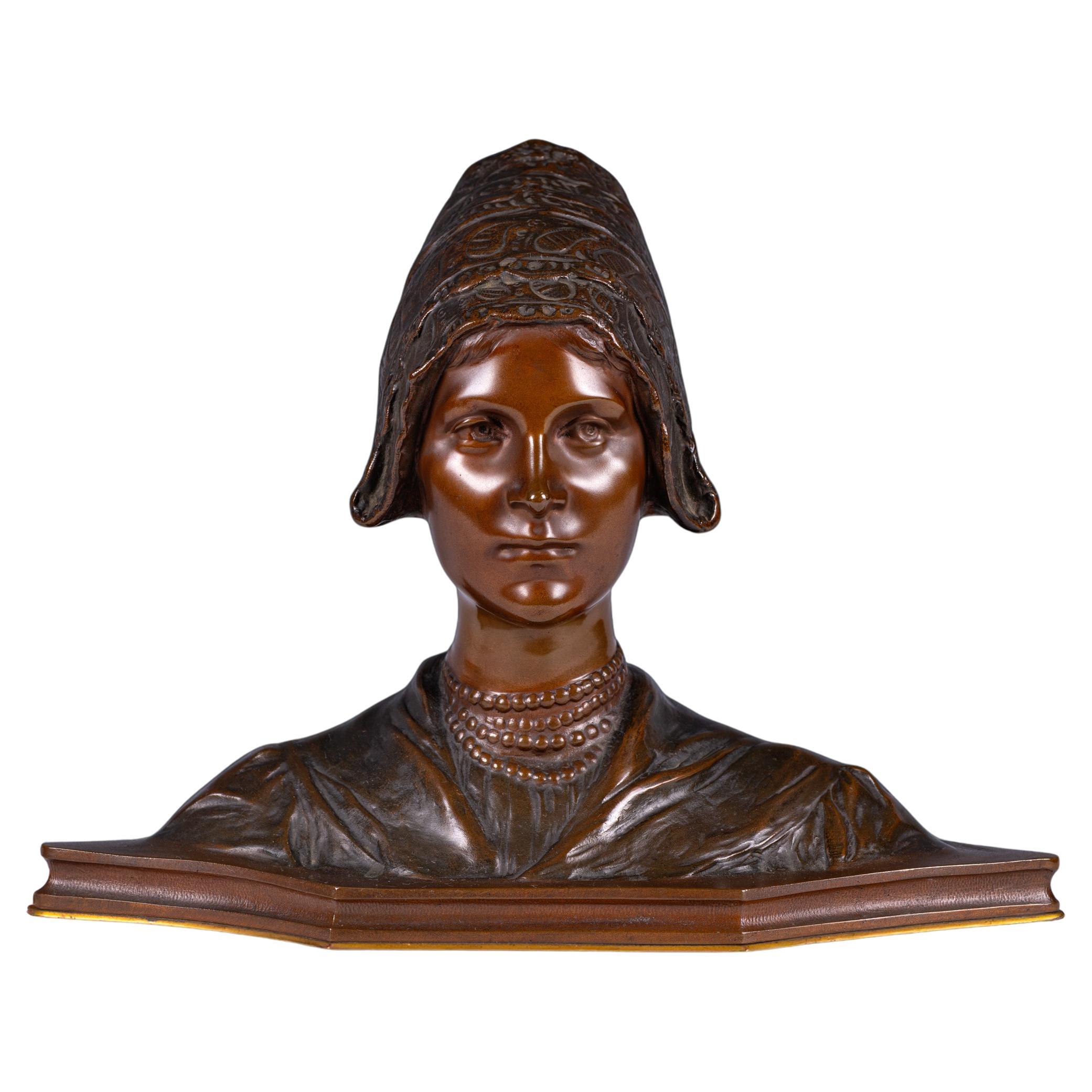
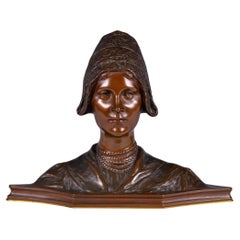
An Art Nouveau Bronze Bust Signed By Austrian Artist H. Muller Of A Young Woman
By Hans Muller
Located in Dublin, IE
A well-modelled bronze bust depicting a young woman wearing a traditional regional bonnet and layered dress, rendered with finely detailed textures throughout the fabric and headwear...
Category
Antique Late 19th Century Austrian Art Nouveau Busts
Materials
Bronze
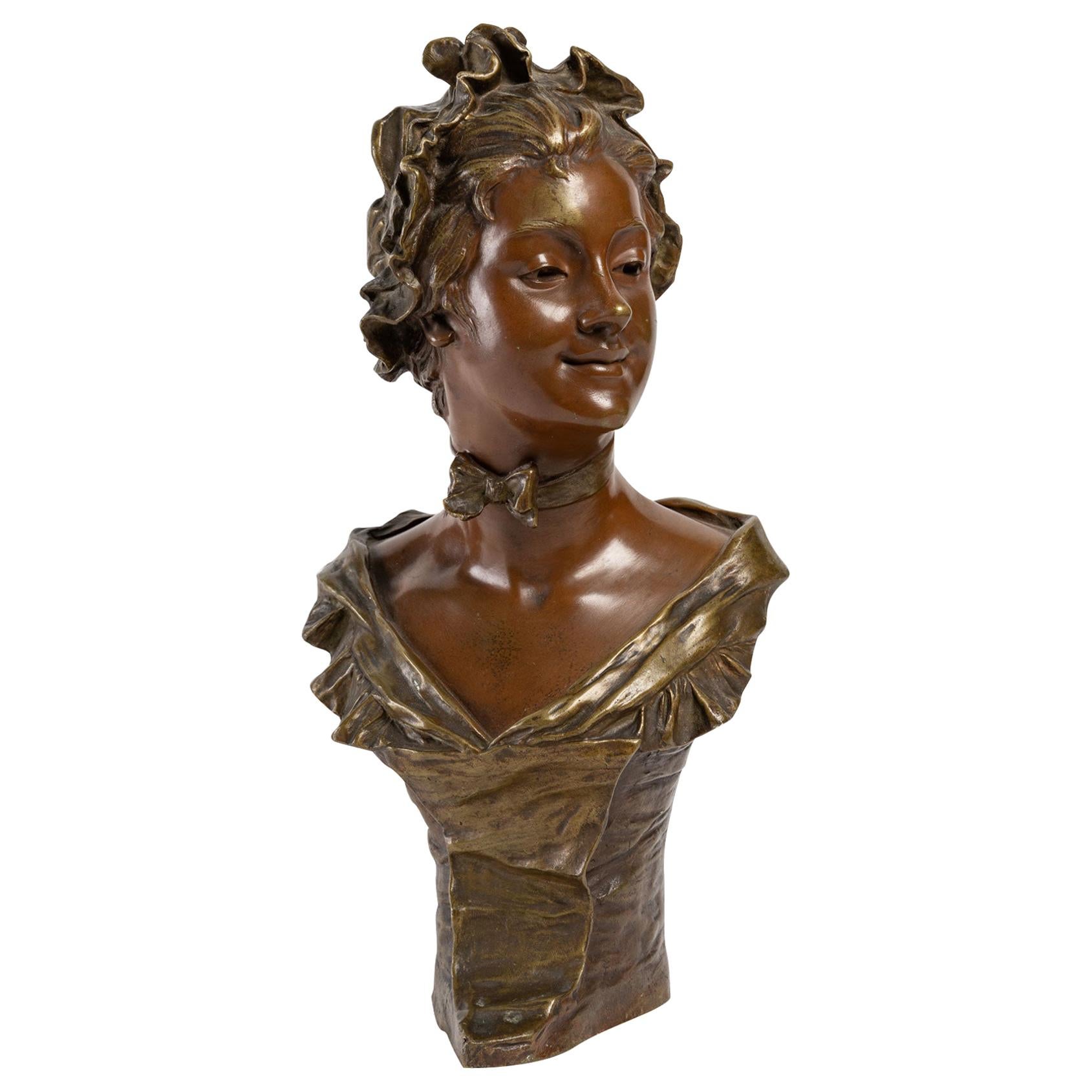
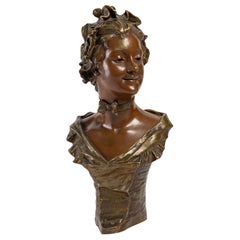
Bronze Sculpture by Georges Van Der Straeten
Located in Saint-Ouen, FR
Bronze sculpture by Georges Van Der Straeten (1856-1928), stamped "Société des bronzes de Paris".
Measures: H 34 cm, W 19 cm, D 16 cm.
Category
Early 20th Century French Napoleon III Busts
Materials
Bronze
$2,680 Sale Price
20% Off
More Ways To Browse
Bronze Face Sculpture
Italy Drafting
Vintage Deer Head
Wood Netsuke
Antic Antique
Antique Bronze Tiger
Antique Dog Collars
Art Deco Bronze Bird
Boxer Dog
Bronze Herons
Carved Cat Furniture
Carved Horse Head Furniture
Chicken Sculptures
Fremiet Emmanuel
Murano Dolphin
Murano Uranium Glass
Venetian Glass Sculpture
Vintage Brass Cranes