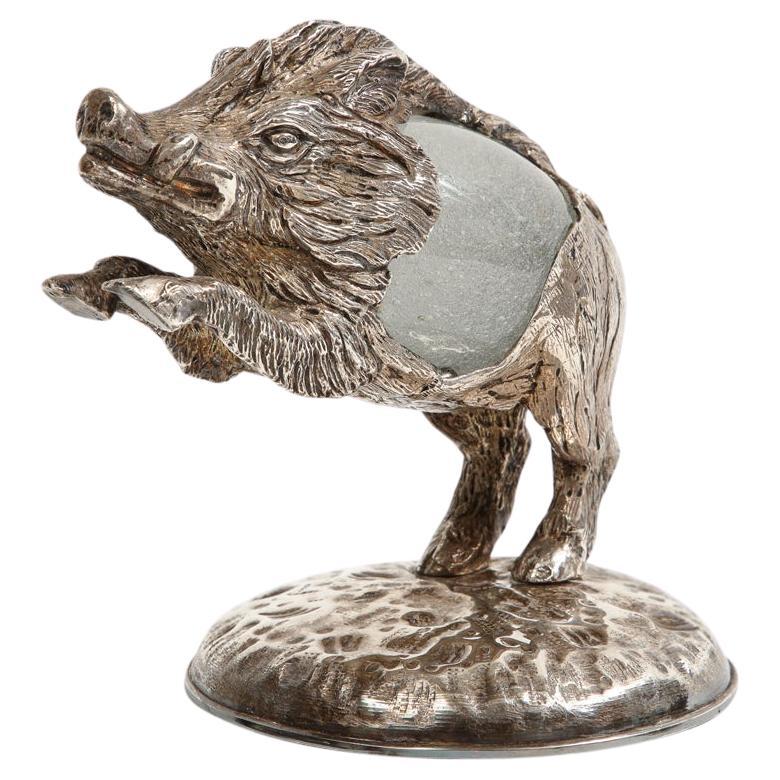
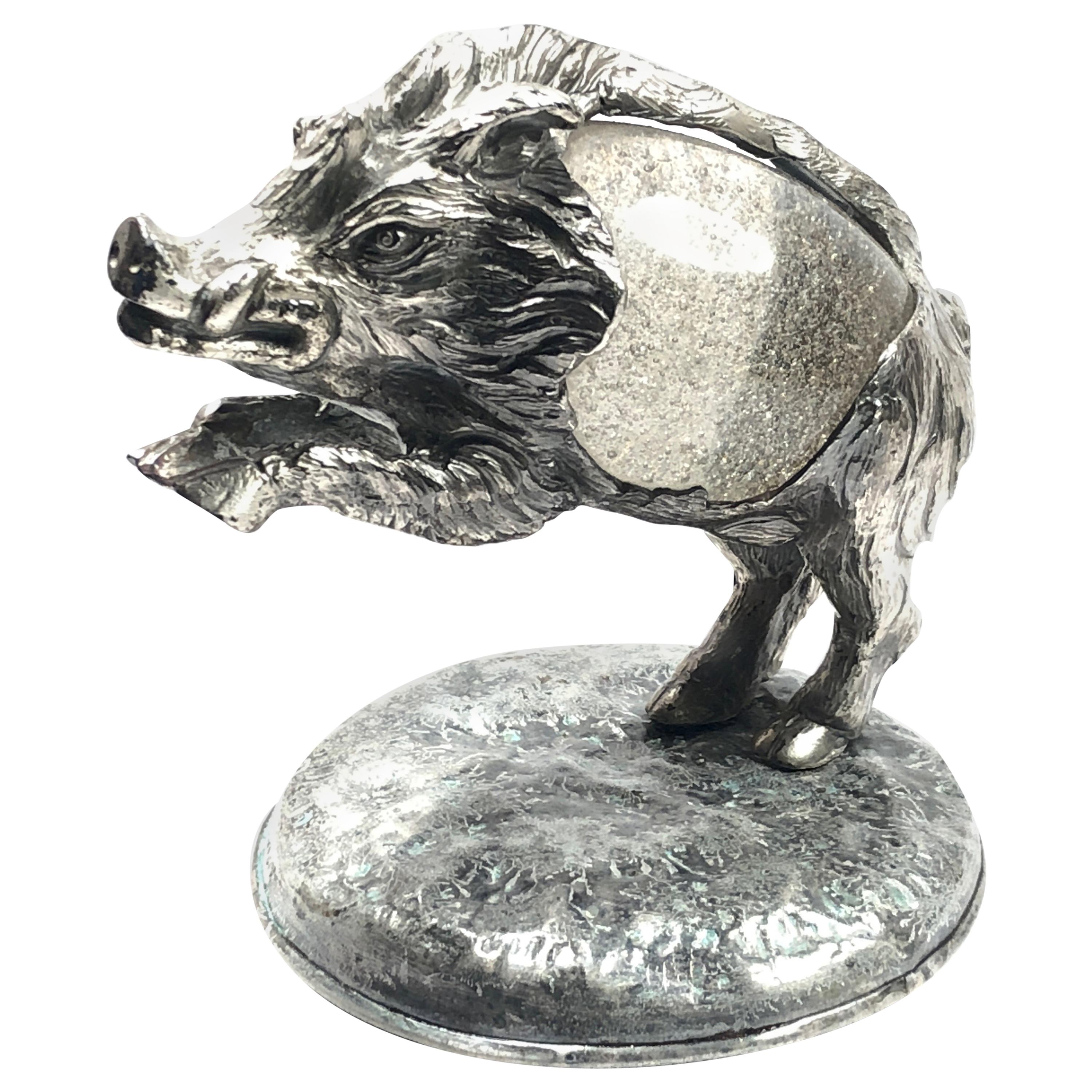
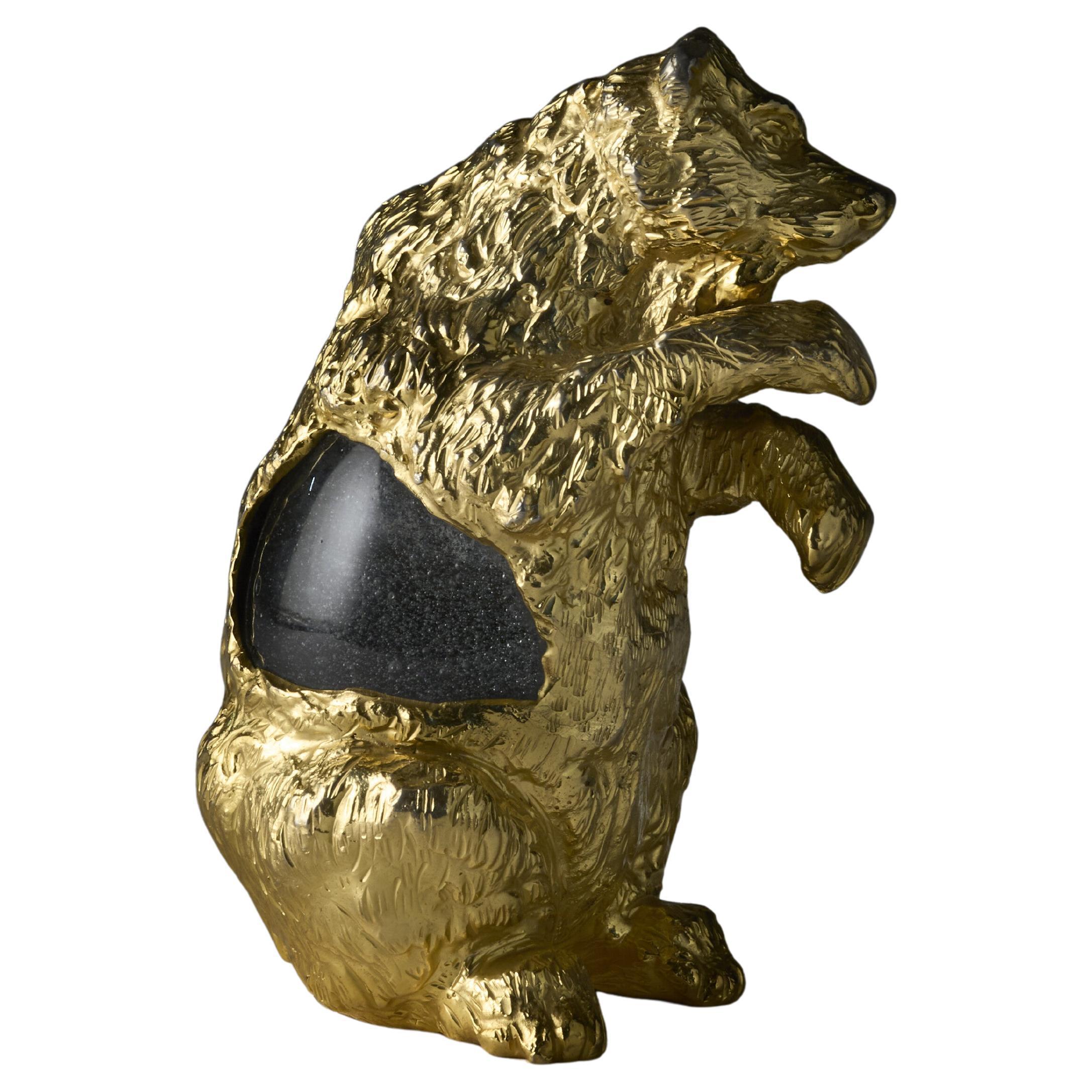
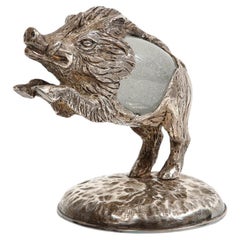
Cinghiale’ Silvered Bronze and Murano Glass Sculpture by Gabriella Crespi 1970s
About the Item
- Creator:Gabriella Crespi (Designer),Barovier&Toso (Designer)
- Dimensions:Height: 5.99 in (15.2 cm)Diameter: 5.99 in (15.2 cm)
- Materials and Techniques:
- Place of Origin:
- Period:
- Date of Manufacture:1970 circa
- Condition:Wear consistent with age and use.
- Seller Location:Milano, IT
- Reference Number:1stDibs: LU10529246879012
Gabriella Crespi
Bronze discs that open up like clamshells for storage and fold back in to become side tables. Sleek cubes barely suspended off the ground that transform into full-size dining tables. Clean-lined boxes that contain multilevel shelving. Looking at the work of Italian designer Gabriella Crespi, born in 1922 and who still produced furniture in her Milan studio until her death in 2017, it’s hard to believe that many of these highly functional pieces — modernist Rubik’s Cubes of materials, colors and ergonomics — were created decades ago.
Among her best-known creations, the bronze Ellisse table, 1976, and her bronze-and-lacquer Yang-Yin bar, 1979, encapsulate a designer who had a strong dualism in her vision, mixing humble and precious materials, for instance, or creating geometric shapes that were softened by sensual surfaces.
Crespi began studying architecture in 1944 at the Politecnico, in Milan, where she was among just a handful of women, and became profoundly influenced by the work of Charles-Édouard "Le Corbusier" Jeanneret and Frank Lloyd Wright. After getting married and having children, she launched her own collections, from jewelry to furniture, and soon gained a loyal following, with design houses such as Maison Dior snapping pieces up for their own lines.
She began work on her most iconic collection, Plurimi, in the late 1960s, and the series — including her Dama table, which plays on the themes of volume, light and adaptability that Crespi has explored throughout her career — flourished through the 1970s and early ’80s. Then there is her famed Z desk, from a mid-1970s series, which manages to be both stylish and humorous, looking like it’s ready to leap off the floor at any moment. Well-born and beautiful, Crespi garnered attention among the jet set. She was a muse to Valentino, and her pieces appeared in the homes of Princess Grace of Monaco, the Shah of Iran and Greek shipping magnate George Livanos.
In 1987, with her children now adults, the designer surprised everyone when she moved to the foot of the Indian Himalayas to study with the guru Sri Muniraj. This turned into a 20-year self-imposed exile that, if anything, made her pieces even more sought-after by collectors.
Find vintage Gabriella Crespi furniture on 1stDibs.
Barovier&Toso
Partnerships come and go within the community of glass-making artisans on the Venetian island of Murano, where business relationships seem as complex as the shifting alliances in the notoriously acrimonious Italian parliament. Formed in 1942 by members of families with centuries of experience in the craft, Barovier&Toso has proven to be one of the most enduring and prosperous Italian glass manufactories of recent decades. Under the nearly 50-year artistic directorship of cofounder Ercole Barovier (1889–1974), the company created buoyant traditional pieces such as chandeliers, sconces and other lighting fixtures, and it pioneered an array of innovative modernist glass designs with bold colors, patterns and surfaces.
The Barovier dynasty began in 1295, when Jacobello Barovier, mentioned in historical documents as a master glassblower, began pinching, cutting, blowing and twisting a molten mixture of sand and minerals into incandescent works of art. It remained entirely family-owned until the mid-20th century, when it merged with another glassworks to become Barovier&Toso.
To appeal to gentler, more conservative tastes, Barovier&Toso produced a range of lilting, sinuous lighting pieces that are often described as embodying “Liberty Style” — the Italian term for Art Nouveau, taken from the name of famed London department store Liberty Co., which promoted 19th-century organic textile designs and Arts and Crafts-style furniture in the manner of William Morris. The hallmarks of the style in Barovier&Toso works are elements of glass in the shape of thick leaves, fronds and flower petals, deployed along with other naturalistic ornament in sconces, pendants and chandeliers.
Ercole Barovier began his personal aesthetic transition toward modernism in the 1930s with his Primavera series of vases and animal sculptures — idiosyncratic milky-white and clear glass filled with tiny bubbles and hairline interior fissures that he produced for Artisti Barovier, a firm headed by his father and uncle. Later, with Barovier&Toso, he would explore such novel styles as the mosaic-like Pezzato glass; fluid Spiral patterns; the pebbly textured Barbarico line and the complex, layered and highly colored abstractions of the Oriente series of vases and bowls.
Traditional or modern, Barovier&Toso — still under family control — has produced one of the finest and most diverse catalogues of Murano glass in the last 100 years.
Find antique Barovier&Toso chandeliers, serveware, decorative objects and more on 1stDibs.
- ShippingRetrieving quote...Shipping from: Milano, Italy
- Return Policy
More From This Seller
View AllVintage 1920s French Art Deco Animal Sculptures
Bronze
Vintage 1930s Italian Vases
Glass
Vintage 1970s Italian Vases
Glass, Murano Glass
Vintage 1920s French Art Deco Figurative Sculptures
Marble, Bronze
Vintage 1930s Italian Table Lamps
Glass
Vintage 1960s Mid-Century Modern Table Lamps
Copper, Steel
You May Also Like
Vintage 1970s Italian Mid-Century Modern Animal Sculptures
Metal
Vintage 1970s Italian Mid-Century Modern Animal Sculptures
Silver Plate
20th Century European Sporting Art Animal Sculptures
Marble, Bronze
Vintage 1970s European Models and Miniatures
Metal
Antique Early 19th Century Italian Grand Tour Animal Sculptures
Serpentine
20th Century English Sterling Silver
Sterling Silver