Items Similar to Fine Antique French Bronze Sculpture of Bison and Jaguar by Georges Gardet
Want more images or videos?
Request additional images or videos from the seller
1 of 21
Fine Antique French Bronze Sculpture of Bison and Jaguar by Georges Gardet
$3,900
£2,946.64
€3,375.95
CA$5,441.76
A$5,931.25
CHF 3,135.80
MX$71,400.94
NOK 39,801.08
SEK 36,489.46
DKK 25,218.53
About the Item
GEORGES GARDET
French, 1863-1939
"Bison et Jaguar" (1892)
Medium brown patinated sand-cast bronze cast circa 1920
Signed G. GARDET, cold-stamped 6963
Foundry cachet (undoubtedly Siot-Decauville) delaminated verso leaving a blank seal
17" W (base 14 1/2" W) x 8 3/4" H x 5 1/4" D
Originally exhibited by Georges Gardet in 1892, the monumental version of this sculpture was acquired for the entrance of the Museum of Laval in the same year and remains one of Gardet's most popular and recognized works. Like the majority of his work, the present example was cast without doubt by the foundry of Siot-Decauville - the cachet delaminated from the prepared circular void at some point in the past, but there is no question it was cast by their house. The model is cold-stamped in their typical manner 6963 verso.
The fine modeling and casting of the sculpture is typical the work Gardet produced during his lifetime, the surface finished in a wonderful nuanced dark brown patina with red-oxide undertones coming through together with autumnal hues of lighter brown and caramel bronze.
Literature
Further Reading:
Bronzes of the Nineteenth Century: A Dictionary of Sculptors, Pierre Kjellberg, p. 341-345
Animals in Bronze, Christopher Payne, p. 180/f. Catl36 (present example, noted at 8 1/2" H); p. 405 (biography)
The Animaliers, James Mackay, p. 65
Bronze Sculpture of 'Les Animaliers', Jane Horswell, p. 265 (present example, noted at 8 1/2" H)
E. Benezit Dictionary of Artists, Vol. V, Gründ, 2006, p. 1332 (biographical
sale results)
Revue Encyclopédique : Recueil Documentaire Universel Et Illustré, 1892, p. 957 (in depth contemporary discussion of "Bison et Jaguar" the same year of exhibition)
Christies, 28 November 2007, Sale 1910, lot 140 (titled "Lion attaquant un bison", 9" H, cast by Siot, retailed by Tiffany, # 6447); achieved $ 11,250 USD
Condition Report:
Trace rubbing wear around the raised relief of the base. Hints of wear to other raised elements, including the Bison's head, a few places along the ridge of its back, the horns and other small wear points. Fine original patina preserved under wax. Cleaned, polished and ready to place.
ref. 511QIU09Z
About silla antiques
art
Established in 2009, we have available in our 9000 square foot brick-and-mortar gallery an ever-changing selection of carefully curated and catalogued furniture, decorative arts, paintings, sculpture and estate jewelry. Our company has long specialized in sculpture circa 1860 through 1930 and as such the gallery always has a very large collection of exceptional European and American sculpture available on display.
The gallery is located at 117 W Burd Street in Shippensburg, Pennsylvania and is open by appointment only. We welcome your visit and would love to meet with you at the shop. For clients located outside of the area, we are always available to discuss items by video conferencing or by phone.
- Creator:Georges Gardet (Sculptor)
- Dimensions:Height: 8.75 in (22.23 cm)Width: 17 in (43.18 cm)Depth: 5.25 in (13.34 cm)
- Style:Romantic (Of the Period)
- Materials and Techniques:
- Place of Origin:
- Period:
- Date of Manufacture:1920
- Condition:
- Seller Location:Shippensburg, PA
- Reference Number:Seller: 511QIU09Z1stDibs: LU1059048033192
About the Seller
4.9
Recognized Seller
These prestigious sellers are industry leaders and represent the highest echelon for item quality and design.
Platinum Seller
Premium sellers with a 4.7+ rating and 24-hour response times
Established in 2009
1stDibs seller since 2014
522 sales on 1stDibs
Typical response time: 1 hour
- ShippingRetrieving quote...Shipping from: Shippensburg, PA
- Return Policy
More From This Seller
View AllFrench, Antique Bronze Sculpture of Aberdeen Angus Bull by Isidore Bonheur
By Isidore Jules Bonheur
Located in Shippensburg, PA
ISIDORE JULES BONHEUR
French, 1827-1901
Taureau Aberdeen-Angus" (Standing Aberdeen-Angus Bull)
Patinated sand-cast bronze Signed to base "I. BONHEUR"
Item # 211HDB17Z
An exquisite and very rare casting of an Aberdeen-Angus bull, an unusual and distinctive breed of cattle from Scotland, this sculpture by Isidore Jules Bonheur is almost without a doubt cast by the foundry of his brother-in-law Hippolyte Peyrol and a rather early model as well in light of the distinctive construction method. In her text on the selection of 46 animal bronzes in the collection of the Georgia Museum of Art, Eleanor Luciano notes regarding this model that "Bonheur is never recorded to have been to Scotland, where he would have seen this unusual breed. Rosa Bonheur painted in Scotland, and its seems likely that Isidore would have drawn the idea for this bull either from one of her sketches or from an agricultural show in France. The animal's rich mane and strong modeling make this one of the most successful." Notable is the very fine surface patination which exhibits a glassy finish with a complex range of colors presenting in the body of the bull, overall being medium brown but augmented with an underlying reddish hue against auburn highlights. The base is signed "I. BONHEUR" in the typical manner.
Museum Collections:
* National Gallery of Art, Washington DC, acc. no. 2006.128.3
* Georgia Museum of Art, University of Georgia...
Category
Antique 19th Century French Romantic Animal Sculptures
Materials
Bronze
Bronze Sculpture “Panther Seizing Stag” after Antoine-Louis Barye
Barbedienne
By F. Barbedienne Foundry, Antoine-Louis Barye
Located in Shippensburg, PA
ANTOINE-LOUIS BARYE
French, 1796-1875
"Panthère Saissant un Cerf" (Panther Seizing a Stag, on a terrace with profiles)
Sand-cast bronze with verde autumnal patination
Signed in bas...
Category
Antique 19th Century French Romantic Animal Sculptures
Materials
Bronze
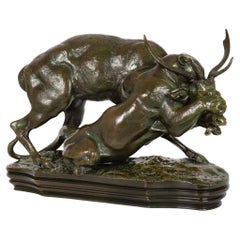
Rare 26” Georges Gardet “Desert Drama” Antique French Bronze Sculpture
By Georges Gardet
Located in Shippensburg, PA
GEORGES GARDET
French, 1863-1939
"Le Drame au Désert"
Patinated bronze Signed in cast "Georges Gardet" cold-stamped 3105 conceived 1887, cast circa 1910
Item # 411RAL12A
A ver...
Category
20th Century French Romantic Animal Sculptures
Materials
Bronze
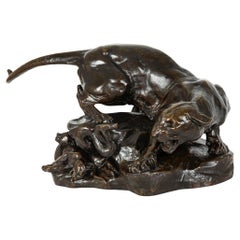
French Antique Bronze Sculpture of Tiger Carrying Gazelle by Paul-Édouard Delabr
By Paul Edouard Delabriere
Located in Shippensburg, PA
A nice early 20th century casting of Paul-Édouard Delabrierre's Tiger Carrying a Gazelle, the present model features a nice overall chiseled surface with the stripes of the tiger bro...
Category
20th Century French Romantic Animal Sculptures
Materials
Marble, Bronze
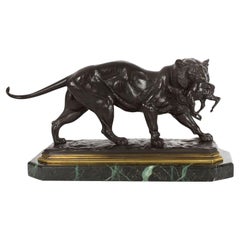
Bronze Sculpture "Panther of Tunisia" After Antoine-Louis Barye, Barbedienne
By Antoine-Louis Barye, F. Barbedienne Foundry
Located in Shippensburg, PA
ANTOINE-LOUIS BARYE
French, 1796-1875
"Panther of Tunisia no. 2"
Patinated sand-cast bronze signed BARYE in base, signed F. Barbedienne Fondeur to edge of base
Underside incised 2...
Category
Antique 19th Century French Romantic Animal Sculptures
Materials
Bronze
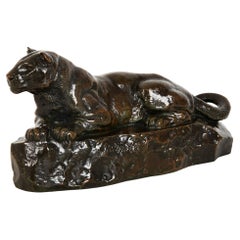
French Antique Bronze Sculpture “Panther of Tunisia” by Antoine-Louis Barye
By Antoine-Louis Barye
Located in Shippensburg, PA
ANTOINE-LOUIS BARYE
French, 1796-1875
Panther of Tunisia [smaller version]
Sand-cast patinated bronze
Signed in cast BARYE
Cast executed last quarter of the 19th century
3 1/2" H ...
Category
Antique 19th Century French Romantic Animal Sculptures
Materials
Bronze
You May Also Like
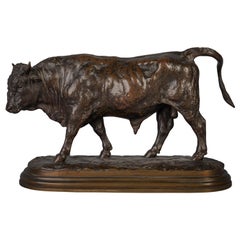
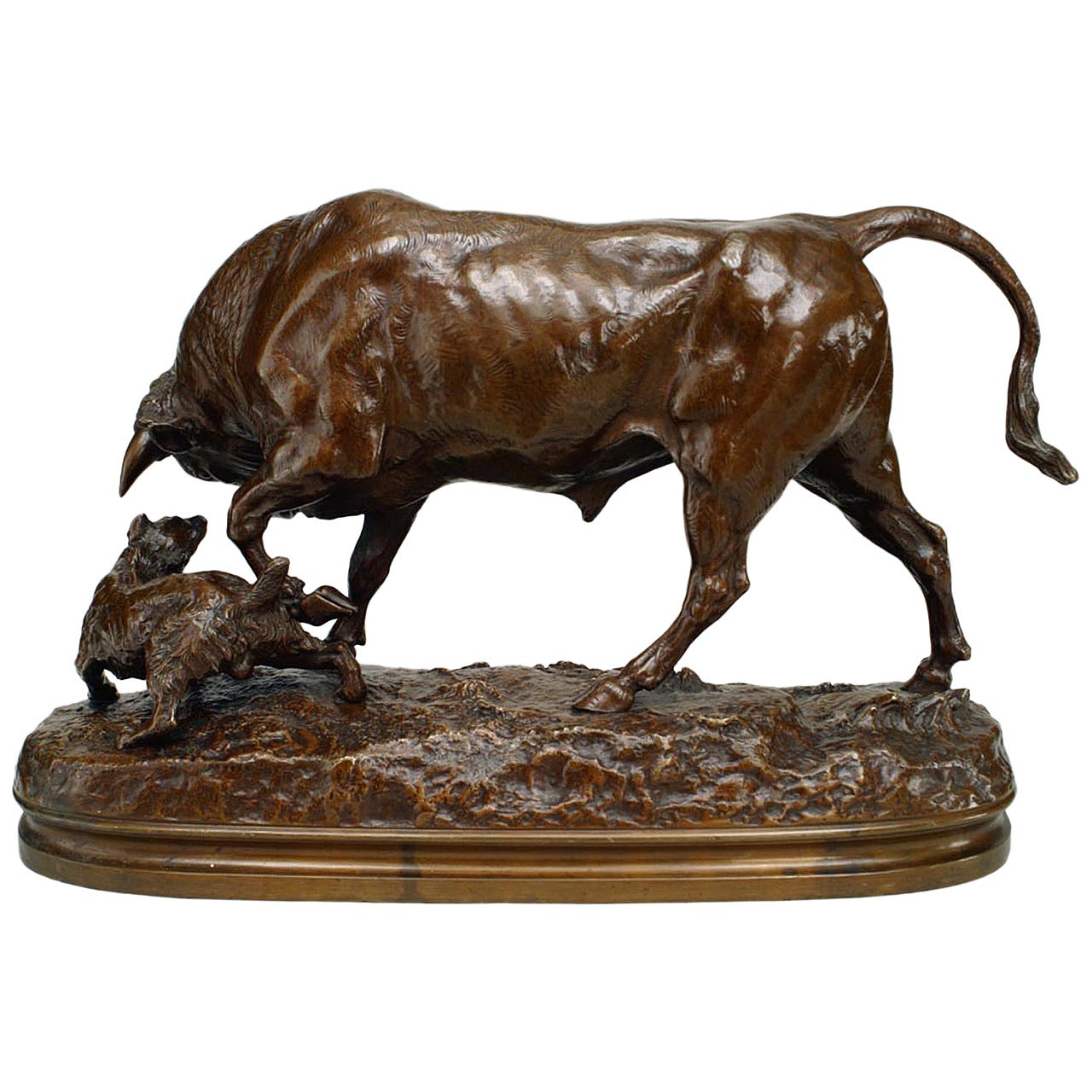
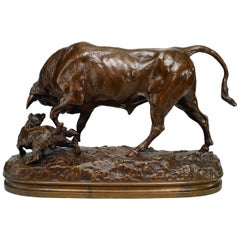
French Bronze Figure of a Charging Bull by Valton
By Charles Valton
Located in Queens, NY
French bronze figure of bull with attacking dog on an oval base (signed alton),
19th or 20th century.
Category
Antique Late 19th Century French Sculptures
Materials
Bronze
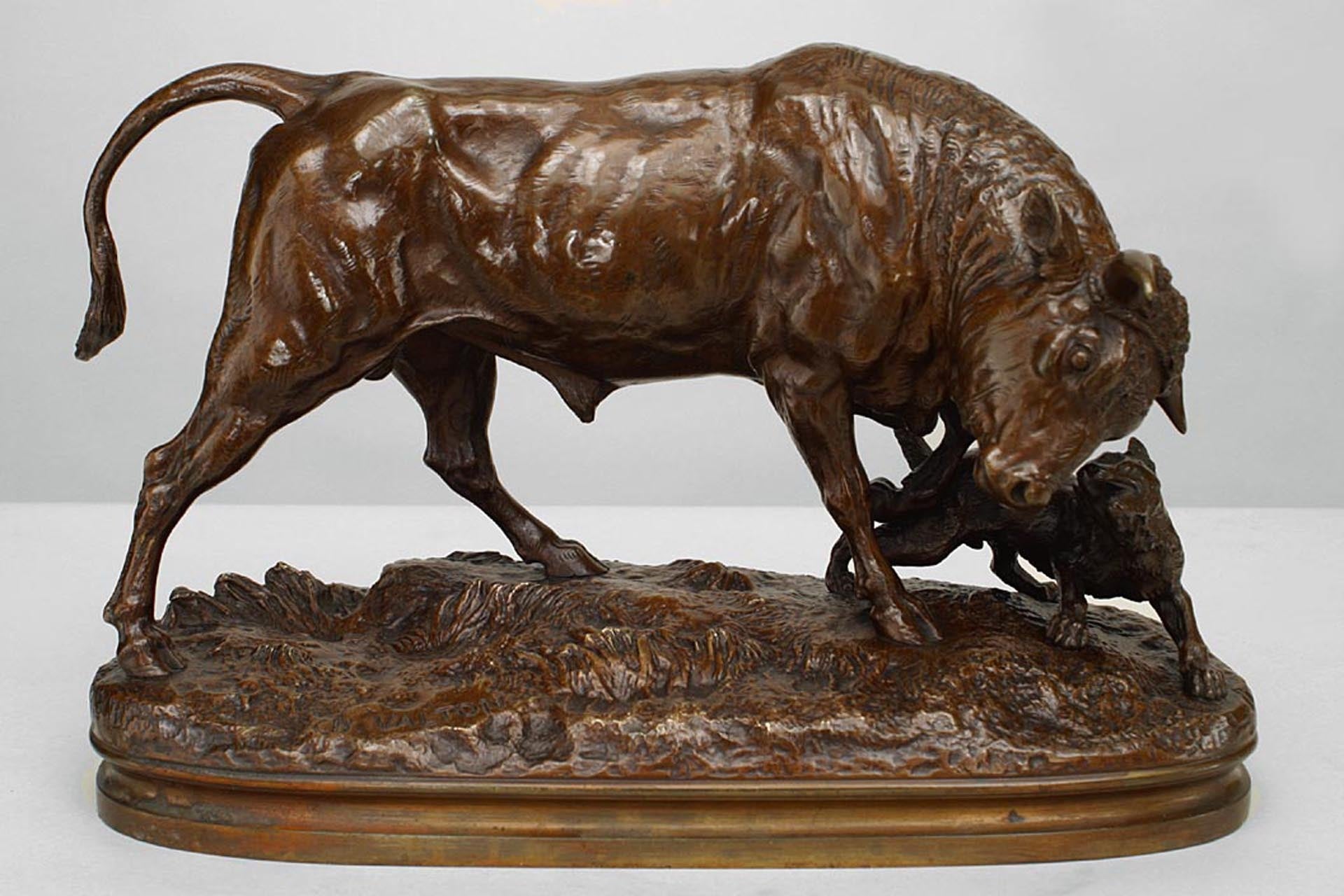
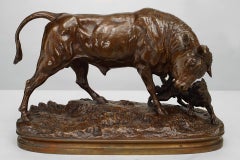
French Bronze Bull and Dog
By Charles Valton
Located in Queens, NY
French bronze figure of bull with attacking dog on an oval base (Valton) (19/20th Cent.)
Category
Antique 19th Century French Animal Sculptures
Materials
Bronze
$12,000
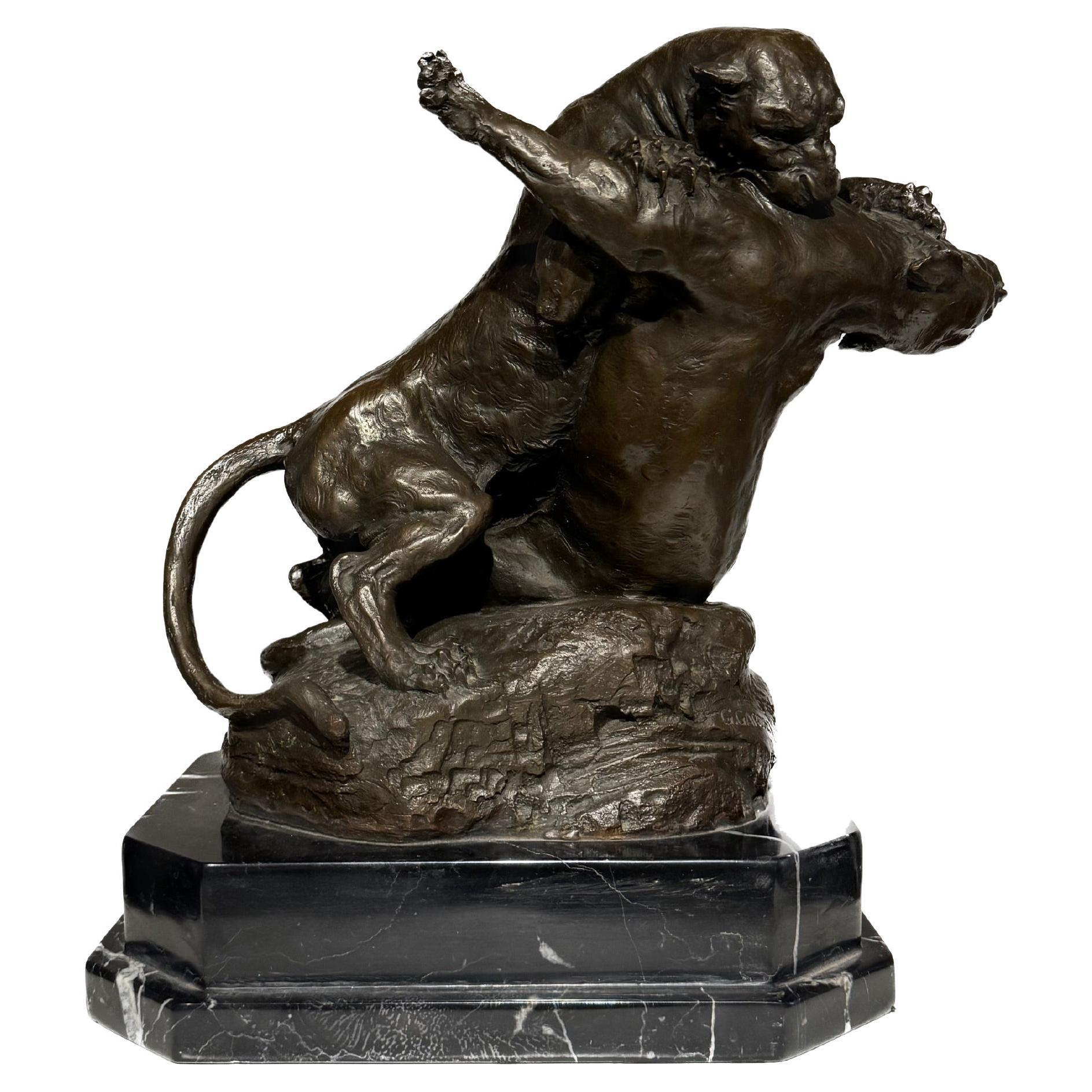
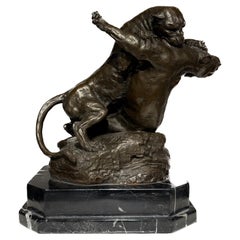
French Bronze Sculpture of Two Fighting Panthers Signed G. Gardet
By George Gardet
Located in Miami, US
French Bronze Sculpture of Two Fighting Panthers on Marble Base, Signed G. Gardet
A captivating French bronze sculpture depicting two panthers locked in an intense struggle, signed ...
Category
Early 20th Century French Animal Sculptures
Materials
Marble, Bronze
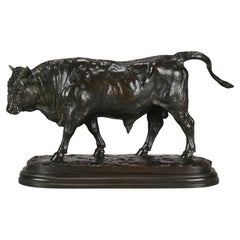
19th Century Animalier French Bronze Entitled "Taureau Debout" by Rosa Bonheur
By Rosa Bonheur
Located in London, GB
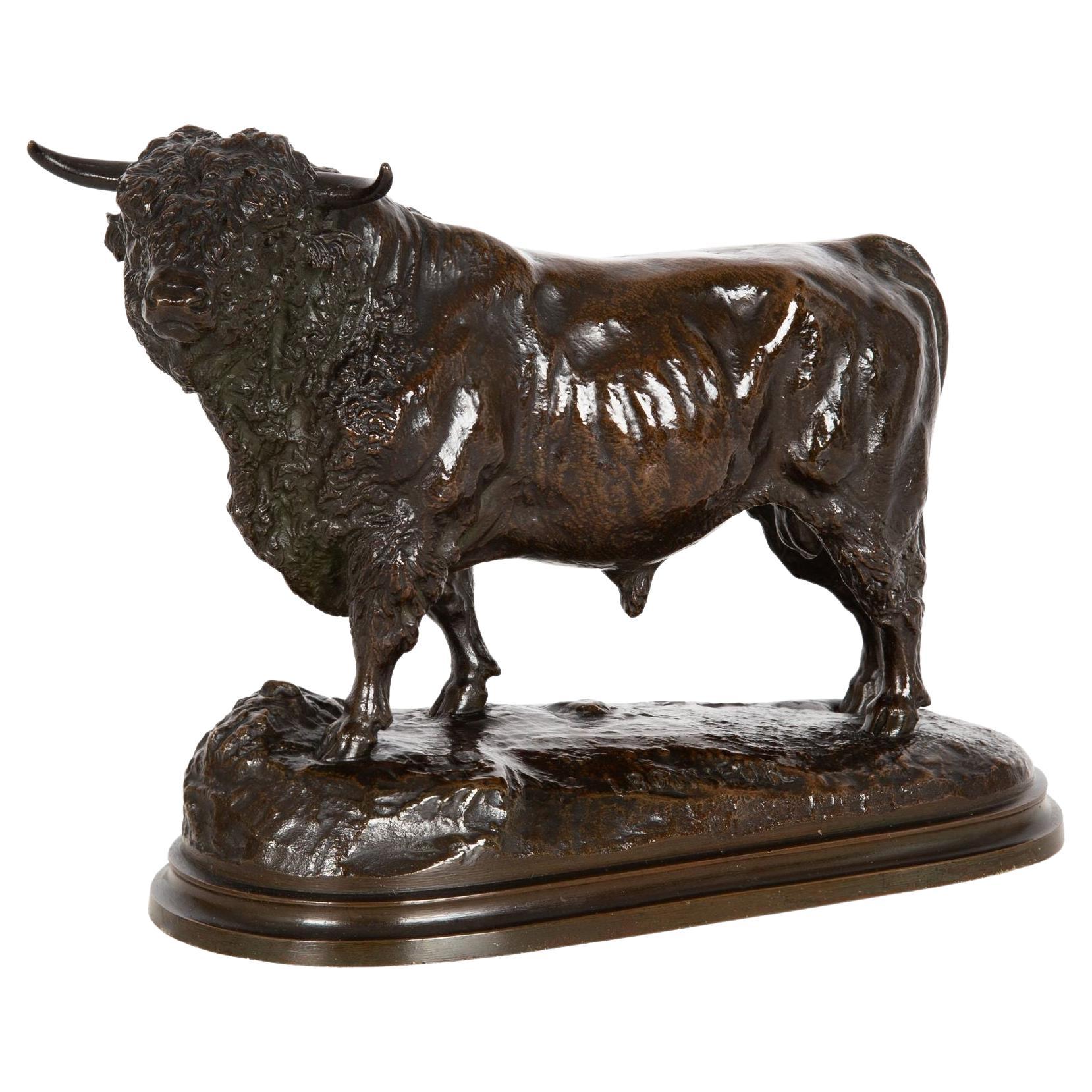
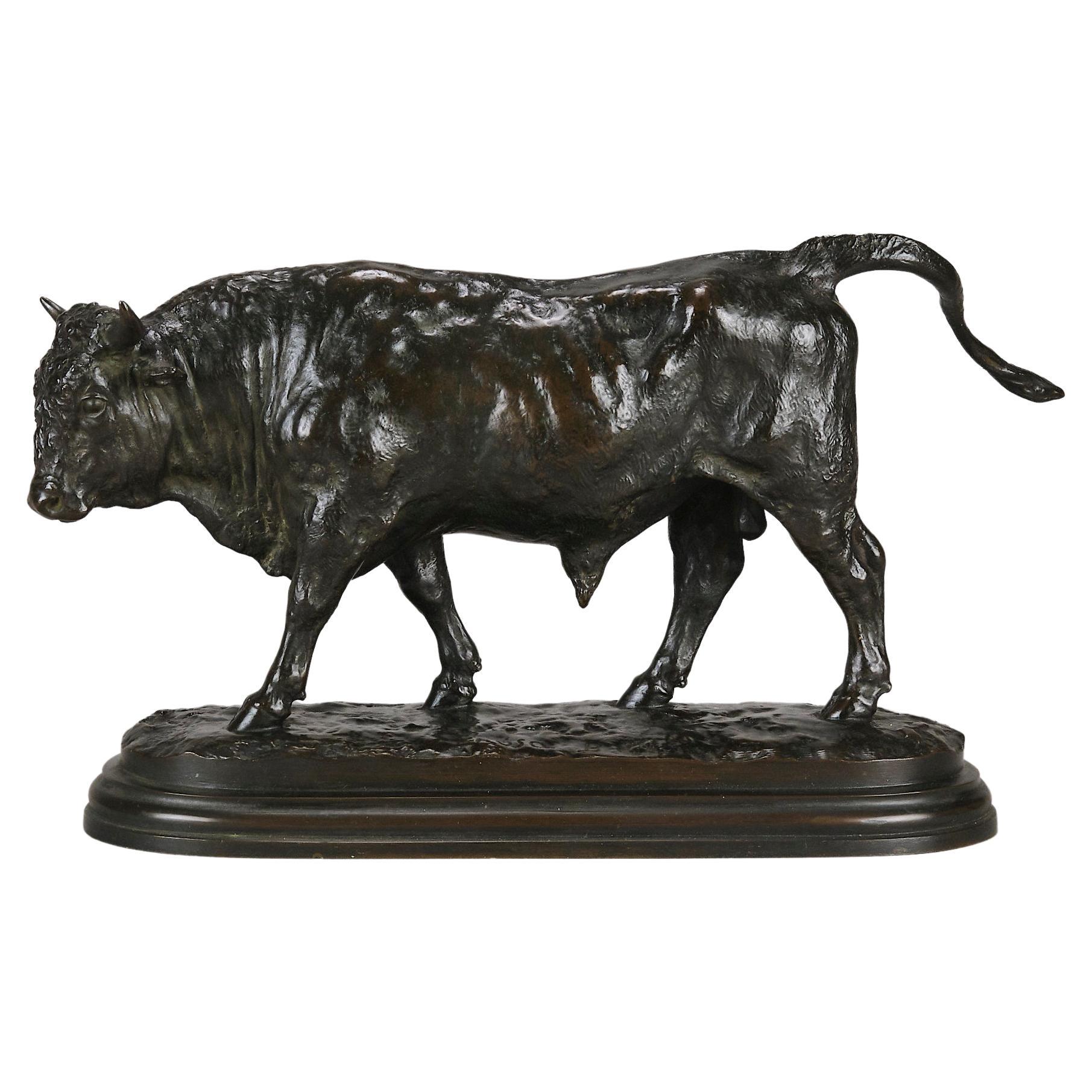
"Taureau Debout" by Rosa Bonheur.
An excellent late 19th Century French animalier bronze study of a standing bull with fine hand chased surface that accentuates the muscle definition of the subject, signed Rosa B.
ADDITIONAL INFORMATION
Measures: Width: 32 cm
Height: 18 cm
Depth: 11cm
Condition: Excellent Original Condition
Circa: 1870
Materials: Bronze
Book reference: Animals in Bronze by Christopher Payne
Page no. 174
DESCRIPTION
Bonheur, Rosa (1822-1899)
The most popular artist of nineteenth-century France, Rosa Bonheur was also one of the first renowned painters of animals and the first woman awarded the Grand Cross by the French Legion of Honor. A professional artist with a successful career, Bonheur lived in two consecutive committed relationships with women.
Born on March 16, 1822 in Bordeaux, Marie Rosalie Bonheur was the oldest of the four children of Raimond Oscar Bonheur (1796-1849) and Sophie Marquis. Bonheur's father was an art teacher who came from a poor family, while her mother, a musician, had descended from a middle-class family and had been her husband's art student.
Bonheur's father, who taught drawing and landscape painting, was an ardent member of the utopian Saint Simeon society.
The group held idealistic beliefs about the reform of work, property, marriage, and the role of women in society. Most importantly, for the artist's future, the Saint Simeons questioned traditional gender norms and firmly believed in the equality of women. While teaching artistic techniques to his oldest daughter, Raimond Bonheur also encouraged her independence and taught her to consider art as a career.
In 1828 Raimond Bonheur joined the Saint Simeons at their retreat outside Paris. Sophie and the children joined him in Paris the following year. Four years later, however, Raimond abandoned his family to live in isolation with his fellow Saint Simeons.
Sophie Bonheur died in 1833 at the age of thirty-six. Rosa was only eleven years old when her mother died, but she was aware of the heavy price her mother paid for married life with a man who was more dedicated to his own ideals than to meeting his family's needs. Rosa also saw that her mother's marriage led to poverty and her death from exhaustion.
After her mother's death, Bonheur was taken in by the Micas family who resided nearby. Mme Micas and Bonheur's mother had been friends. When Mme Bonheur died, the Micas family paid Raimond Bonheur's debts and cared for Rosa. Their daughther, Nathalie, who would later become an amateur inventor and unschooled veterinarian, and Rosa became enamored with each other.
When Rosa Bonheur began her career as a professional artist, she had already been trained by her father who had allowed her to study in all male classes. Rosa also learned by sketching masterworks at the Louvre from the age of fourteen, and later, by studying with Léon Cogniet.
From the very beginning, Bonheur's favorite subject was animals. She learned their anatomy completely by dissecting them in local slaughterhouses. She also visited the horse market two times a week. Study of animals by direct observation led to the formation of the realist style in which Bonheur worked.
It was for such work that Bonheur obtained written permission from the French government to wear men's slacks. Her working attire also consisted of a loose smock and heavy boots that protected her feet from the dangerous environment in which she painted. The style of dress that the artist adopted for work and home may well have been influenced by her father's attire, which was based on St. Simeonian clothing experiments. Bonheur also cropped her hair, perhaps to facilitate her work. She did, however, always wear dresses for social occasions because she knew that appropriate dress would further her career.
Bonheur earned a successful living as a painter of animals. She exhibited at the annual Paris Salon regularly from the age of nineteen in 1841 through 1853, when she was thirty-one. She won the salon's gold medal at the age of twenty-six in 1848 and was commissioned by the French government to paint Plowing on the Nivernais in 1849. In the same year Bonheur and her sister Juliette became directors of l'École gratuite de dessin pour les jeunes filles, a post their father had once held.
Bonheur completed her most renowned work, The Horse Fair, in 1855. The successful representation of percherons (a breed native to Normandy) was purchased by Ernest Gambart, a London art dealer whose gallery specialized in work by French artists. He exhibited The Horse Fair in London where Bonheur visited with Nathalie. Queen Victoria requested a private viewing of the painting at Windsor Castle. It would later be purchased in 1887 by Cornelius Vanderbilt and donated to the new Metropolitan Museum of Art in New York City.
Bonheur's trip to England allowed her to meet Charles Eastlake, then President of the Royal Academy, John Ruskin, the English writer and critic, and Edwin Landseer, the British animalier. She also toured the English and Scottish countrysides and executed some paintings based on her observations of new breeds of animals found there.
Gambart made engravings of Bonheur's work, including The Horse Fair, and sold them in England, Europe, and the United States. Bonheur became one of the most renowned painters of the time. Little girls, such as Anna Klumpke in the United States, even had dolls in her likeness, much as American girls played with Shirley Temple dolls...
Category
Antique 19th Century French Art Nouveau Animal Sculptures
Materials
Bronze
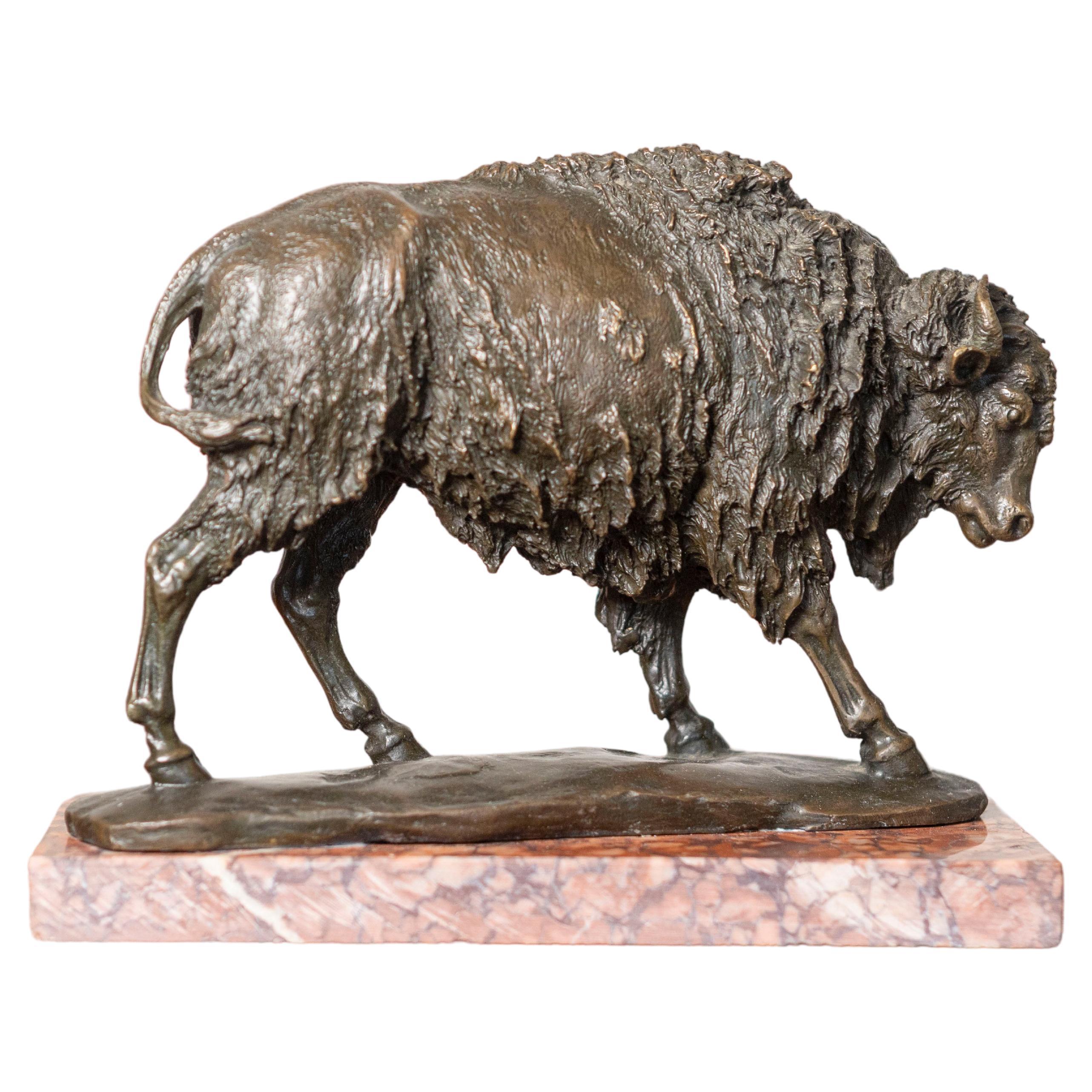
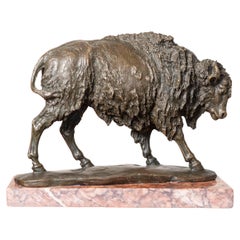
20th-Century French Bronze Sculpture of a Bison on a Marble Base
Located in Atlanta, GA
This striking 20th-century French bronze sculpture depicts a majestic bison in mid-stride, showcasing impressive realism and attention to detail. The textured surface of the bronze m...
Category
20th Century French Animal Sculptures
Materials
Marble, Bronze
French Bronze Figure of a Bull, by Rosa Bonheur
Located in New York, NY
Inscribed "Rosa B" and stamped with the "Peyrol" foundry on the base.
Category
Antique 1860s Animal Sculptures
Materials
Bronze