Items Similar to Japanese Meiji Bronze Okimono by Yoshimitsu Depicting a Bear and Alligator
Want more images or videos?
Request additional images or videos from the seller
1 of 12
Japanese Meiji Bronze Okimono by Yoshimitsu Depicting a Bear and Alligator
$4,945.08
£3,600
€4,216.67
CA$6,794.29
A$7,389.54
CHF 3,916.19
MX$88,542.18
NOK 49,772.74
SEK 45,598.60
DKK 31,517.97
About the Item
FREE WORLDWIDE SHIPPING
A DYNAMIC MEIJI PERIOD BRONZE OKIMONO BY YOSHIMITSU FEATURING A BEAR AND ALLIGATOR IN COMBAT.
From our Japanese collection, we are pleased to present this exceptional Meiji period bronze okimono by the sculptor Yoshimitsu. The dynamic composition captures a moment of high drama between two powerful creatures: a bear and an alligator locked in confrontation. The alligator, poised with its jaws agape, springs onto the back of the snarling bear, which turns to face its attacker in a fierce, reactive posture.
The bronze is finely cast with lifelike attention to anatomical detail, from the textured fur of the bear to the scaled, sinewy body of the alligator. Both figures are full of tension and movement, rendered in a natural patina that enhances their realism. The work is signed beneath the bear in a rectangular cartouche, reading 芳光作 (Yoshimitsu-saku), denoting ‘made by Yoshimitsu.’
Dating to circa 1890, during the late Meiji period (1868-1912), this okimono reflects the era’s fascination with realism and the natural world, themes frequently explored by Japanese bronze artists of the time. The group is presented on a carved wooden base with scrolling feet, designed to elevate and complement the strength of the subject.
BRONZE
Bronze has been one of the most widely used materials in art and design for centuries, valued for its strength, durability, and ability to capture fine detail. Popular from ancient civilisations to the 19th century, bronze has been used for statues, decorative objects, and functional pieces alike. In the late 19th century, artists in Vienna, including Franz Xaver Bergmann, perfected the technique of cold-painting, adding rich layers of colour to bronze without firing. This innovation, along with the timeless appeal of bronze’s patina and texture, ensures that antique bronze objects remain highly collectible today.
MEIJI PERIOD (1868-1912)
The Meiji era marked Japan’s transformation into a modern nation and a golden age of decorative arts. With the end of samurai rule and Japan’s opening to the West, artisans produced works of exceptional quality for both domestic and international audiences. Supported by the government through world fairs and Imperial commissions, Japanese lacquerware, cloisonné, satsuma ceramics, bronzes, and ivory carvings reached collectors worldwide. Many leading artists of the time, including Makuzu Kozan and Namikawa Yasuyuki, were honoured as Imperial Household Artists, ensuring the Meiji period remains one of the most celebrated eras of Japanese art.
MEASUREMENTS
Figure 13cm High x 25.5cm Wide x 18cm Deep (5.12 x 10 x 7.1 Inches)
Stand 3cm High x 32cm Wide x 22.5cm Deep (1.18 x 12.6 x 8.86 Inches)
- Creator:Saeki Yoshimitsu (Maker)
- Dimensions:Height: 6.3 in (16 cm)Width: 12.6 in (32 cm)Depth: 8.86 in (22.5 cm)
- Style:Meiji (Of the Period)
- Materials and Techniques:
- Place of Origin:
- Period:
- Date of Manufacture:Circa 1890
- Condition:
- Seller Location:Newark, GB
- Reference Number:Seller: BADD1stDibs: LU6971247466062
About the Seller
5.0
Vetted Professional Seller
Every seller passes strict standards for authenticity and reliability
Established in 2019
1stDibs seller since 2022
40 sales on 1stDibs
Typical response time: 3 hours
- ShippingRetrieving quote...Shipping from: Newark, United Kingdom
- Return Policy
More From This Seller
View AllJapanese Meiji Period Bronze Monkey Group Sculpture Okimono Shosai
Located in Newark, England
Featuring Seven Japanese Macaques
Form our Japanese collection, we are delighted to offer this Japanese Bronze Monkey Group by Shosai. The Japanese Bronze Group displaying a male father monkey and his infants playing around and being mischievous with Persimmon fruit. The monkeys modelled as Japanese macaque monkeys (snow monkey). The bronze okimono is beautifully patinated with a highly lifelike and naturalistic casting signed to the underside Shosai 正齊鋳. The Bronze group dates to the Meiji Period (1868-1912) circa 1885.
Japanese macaque (snow monkey) is a terrestrial Old World monkey species that is native to Japan. They are known as snow monkeys because some live in areas where snow covers the ground for long periods each year hence their nickname. No other non-human primate lives further north or in a colder climate than the snow monkey. Individuals have brownish grey fur, pinkish-red faces, and short tails. Two subspecies are known and their conservation Status is of least concern. In Japan, the species is known as Nihonzaru ニホンザル, 日本 (Japan/Nihon) and saru 猿 (monkey) to distinguish it from other primates, but the Japanese macaque is the only species of monkey in Japan.
The Japanese macaque features heavily in the religion, folklore, and art of Japan, as well as in proverbs and idiomatic expressions in the Japanese language. They are often seen in paintings, block prints and represented in all manner of carvings from Okimono to netsuke. Many of these art forms reside in the world’s most famous museums and collections, some of the most prominent pieces by artists such as Mori Sosen and Kawanabe Kyosai. In Shinto belief (Japan’s indigenous religion/nature religion) legendary mythical beasts known as raiju sometimes appeared as monkeys and kept Raijin (the god of lightning/storms) company. In another well known tale the three wise monkeys who warn people to “see no evil, hear no evil and speak no evil” can be seen depicted in relief over the door of the famous Tosho-gu shrine in Nikko.
Meiji Period was an era of Japanese history that spanned from 1868 to 1912. It was the first half of the Empire of Japan, when the Japanese people began to build a paradigm of a modern, industrialised nation state and emergent great power, influenced by Western countries and aesthetics. As a result of radically different ideas, the changes to Japan were profound and it affected the social structure, politics, economy, military, and foreign relations across the board. The period corresponded to the reign of Emperor Meiji and was preceded by the Keio era and was succeeded by the Taisho era.
Cultural Art during the Meiji Period was of particular interest to the government and they overhauled the art export market which in turn promoted Japanese arts via various world’s fairs, beginning in Vienna at the world fair in 1873. The government heavily funded the fairs and took an active role organising how Japan’s culture was presented to the world including creating a semi-public company named Kiritsu Kosho Kaisha (First Industrial Manufacturing Company). The Kiritsu Kosho Kaisha was used to promote and commercialise exports of Japanese art and established the Hakurankai Jimukyoku (Exhibition Bureau) to maintain quality standards. For the 1876 Centennial International Exhibition in Philadelphia, the Japanese government created a Centennial Office and sent a special envoy to secure space for the 30,000 items that would be displayed. The Imperial Household also took an active interest in arts and crafts, commissioning works by select artists to be given as gifts for foreign dignitaries further emphasising the high quality and importance of Japanese art. Just before the end of the 19th century in 1890, the Teishitsu Gigeiin (Artist to the Imperial Household) system was created to recognise distinguished artists. These artists were selected for their exceptionally high quality wares and talent in their own industry. Over a period of 54 years Seventy artists were appointed, amongst these were ceramicist Makuzu Kozan and cloisonné enamel artist...
Category
Antique Late 19th Century Japanese Meiji Sculptures and Carvings
Materials
Bronze
Japanese Antique Silvered Bronze Minogame by Ryūbundō Meiji Period
Located in Newark, England
FREE WORLDWIDE SHIPPING
LEGENDARY JAPANESE MINOGAME
From our Japanese collection, we’re pleased to offer this Meiji period silvered bronze minogame Okimono by Ryūbundō.
Cast in si...
Category
Antique Early 1900s Japanese Meiji Sculptures and Carvings
Materials
Silver, Bronze
Japanese Bronze Okimono Sculpture by Yamamoto Kozan
Located in Newark, England
YOUNG MAN WOOD CUTTING
From our Japanese collection, we are pleased to offer this Japanese Bronze Okimono by Yamamoto Kozan. The Japanese Bronze Sculpture cast in Bronze with a natu...
Category
Early 20th Century Japanese Meiji Sculptures and Carvings
Materials
Bronze
French Bronze Jaguar Qui Marche No. 2 (Walking Jaguar) by Antoine Barye
By Antoine-Louis Barye
Located in Newark, England
SIGNED BAYRE
From our Sculpture collection, we are delighted to offer this Jaguar Qui Marche No. 2 (Walking Jaguar) Bronze by Antoine-Louis Barye. The Jaguar Qui Marche translates ...
Category
Antique Late 19th Century French Belle Époque Animal Sculptures
Materials
Bronze
Japanese Bronze Figure by Miyao Eisuke, Meiji Period
By Eisuke Miyao 1
Located in Newark, England
FREE WORLDWIDE SHIPPING
A FINELY DETAILED JAPANESE BRONZE FIGURE BY MIYAO EISUKE, MEIJI PERIOD, CIRCA 1890.
From our Japanese collection, we a...
Category
Antique Late 19th Century Japanese Meiji Sculptures and Carvings
Materials
Bronze
Japanese Bronze and Mixed Metals Koro by Kumagai, Meiji Period
Located in Newark, England
FREE WORLDWIDE SHIPPING
From our Japanese collection, we are pleased to present this Japanese Bronze and Mixed Metals Koro by Kumagai, dating to the Meiji Period (1868–1912).
The ...
Category
Antique Late 19th Century Japanese Meiji Metalwork
Materials
Gold, Silver, Bronze
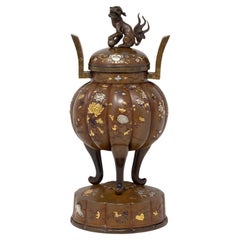
You May Also Like
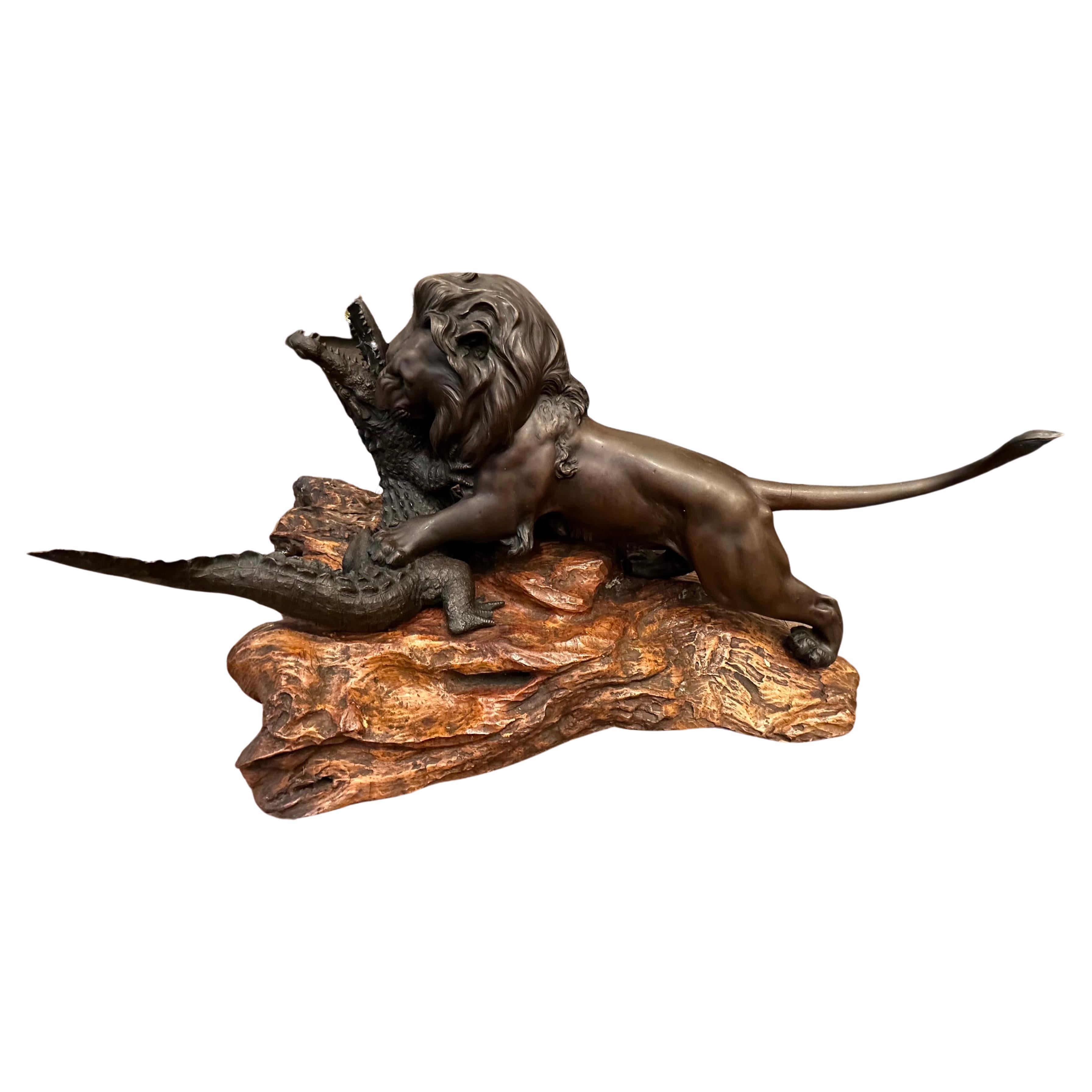
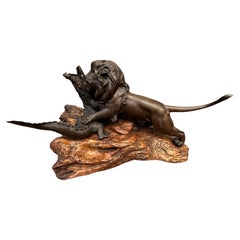
Meiji Period Japanese Bronze Lion And Crocodile On Wooden Base
Located in Southall, GB
A delightful Meiji Period Japanese bronze lion and crocodile on a root wood base. A skilfully hand crafted piece that encapsulates the splendour of each animal from the lush lions mane and muscular body to the scales and ridges of the toughened skin of the crocodile. The expressions of both the lion and the crocodile are clear and crisp, caught in the midst of a battle for life and death. The lions eyes...
Category
Antique Mid-19th Century Japanese Meiji Animal Sculptures
Materials
Bronze
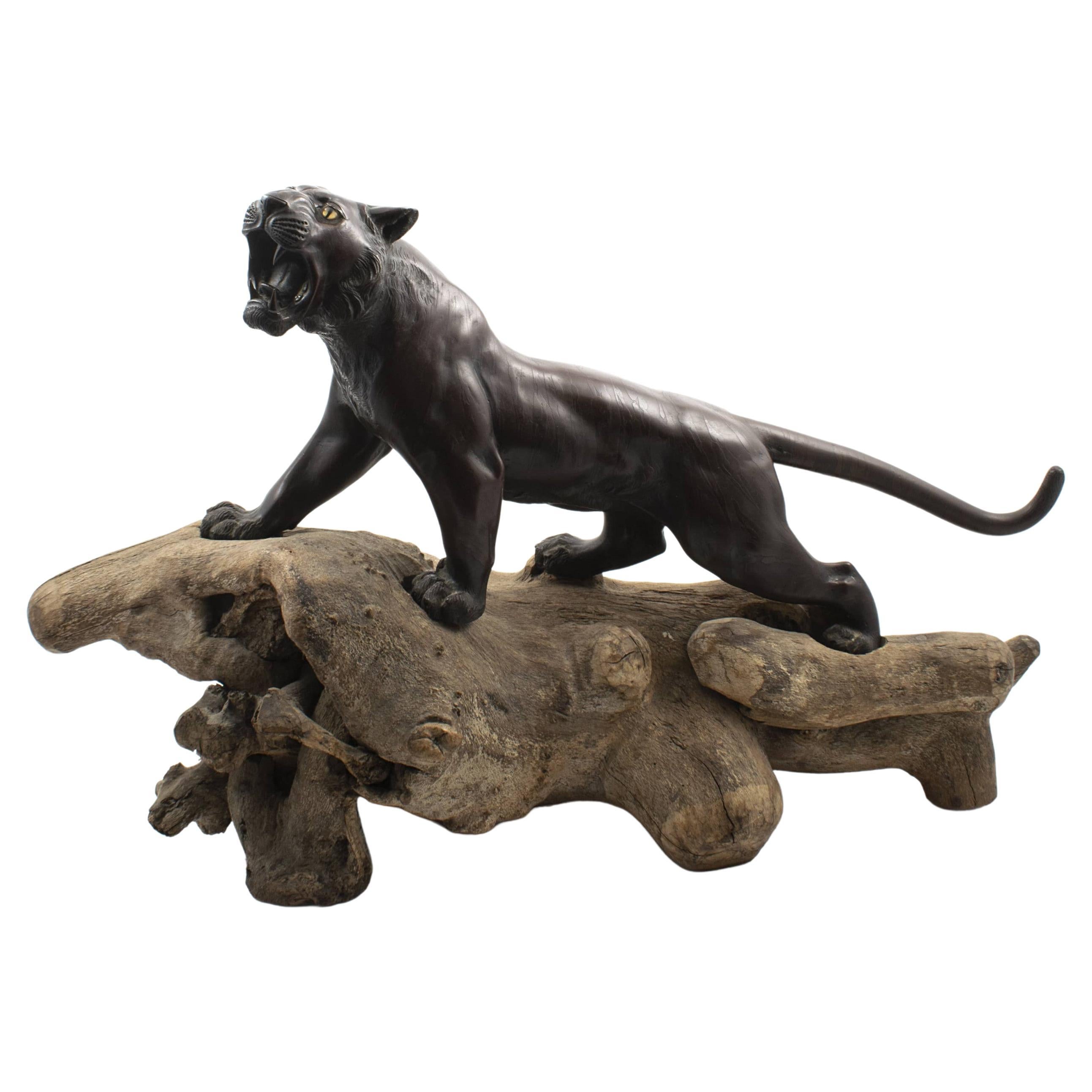
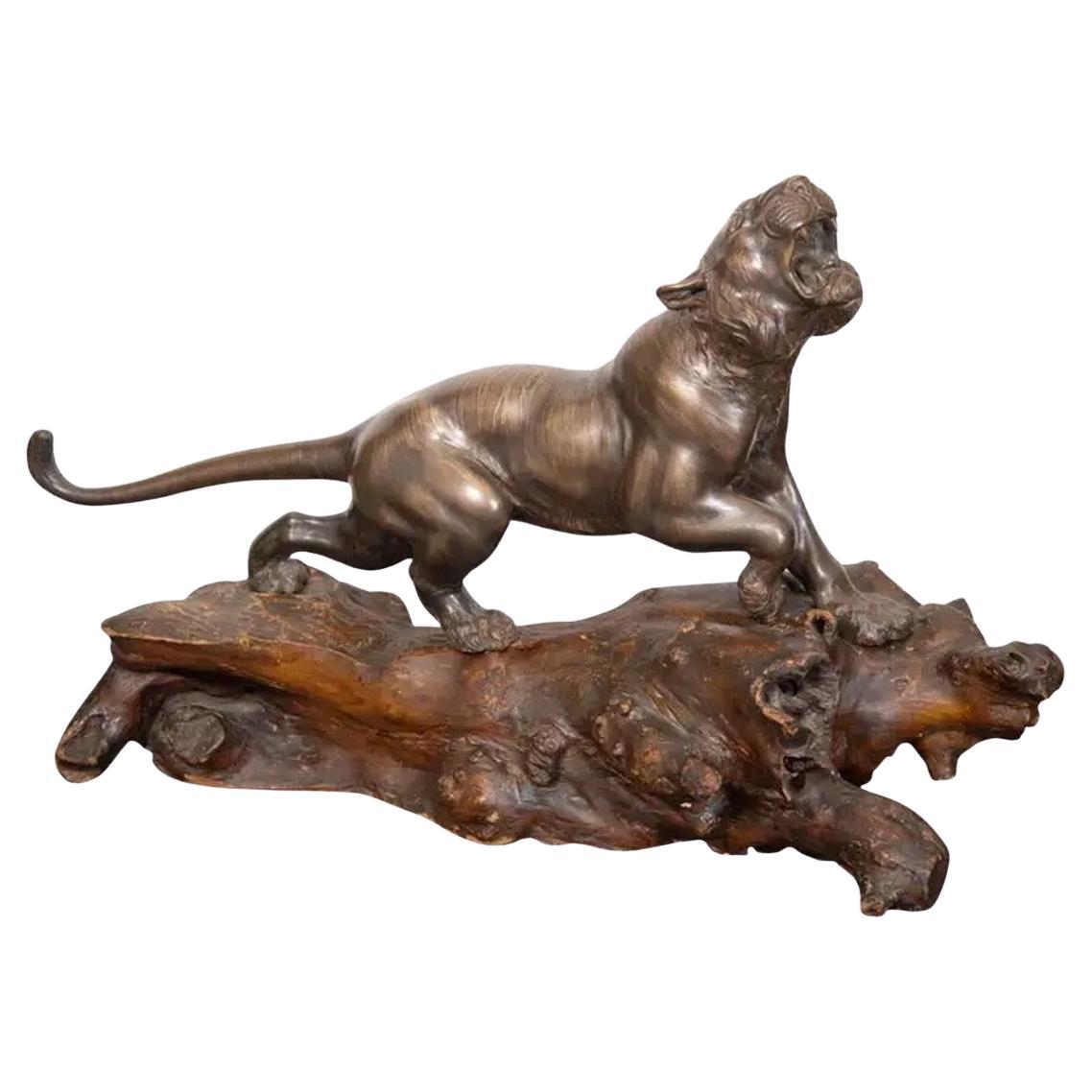
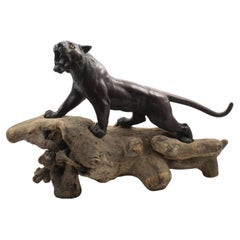
Large Japanese Tiger in Patinated Bronze, Signed. MEIJI / TAISHO
By Kosai Taisho
Located in Kastrup, DK
Japanese tiger in reddish brown patinated bronze with glass eyes.
Signed.
Made in very high quality on original plinth root wood.
Meiji period 1852-1912.
Category
Early 20th Century Japanese Meiji Animal Sculptures
Materials
Bronze
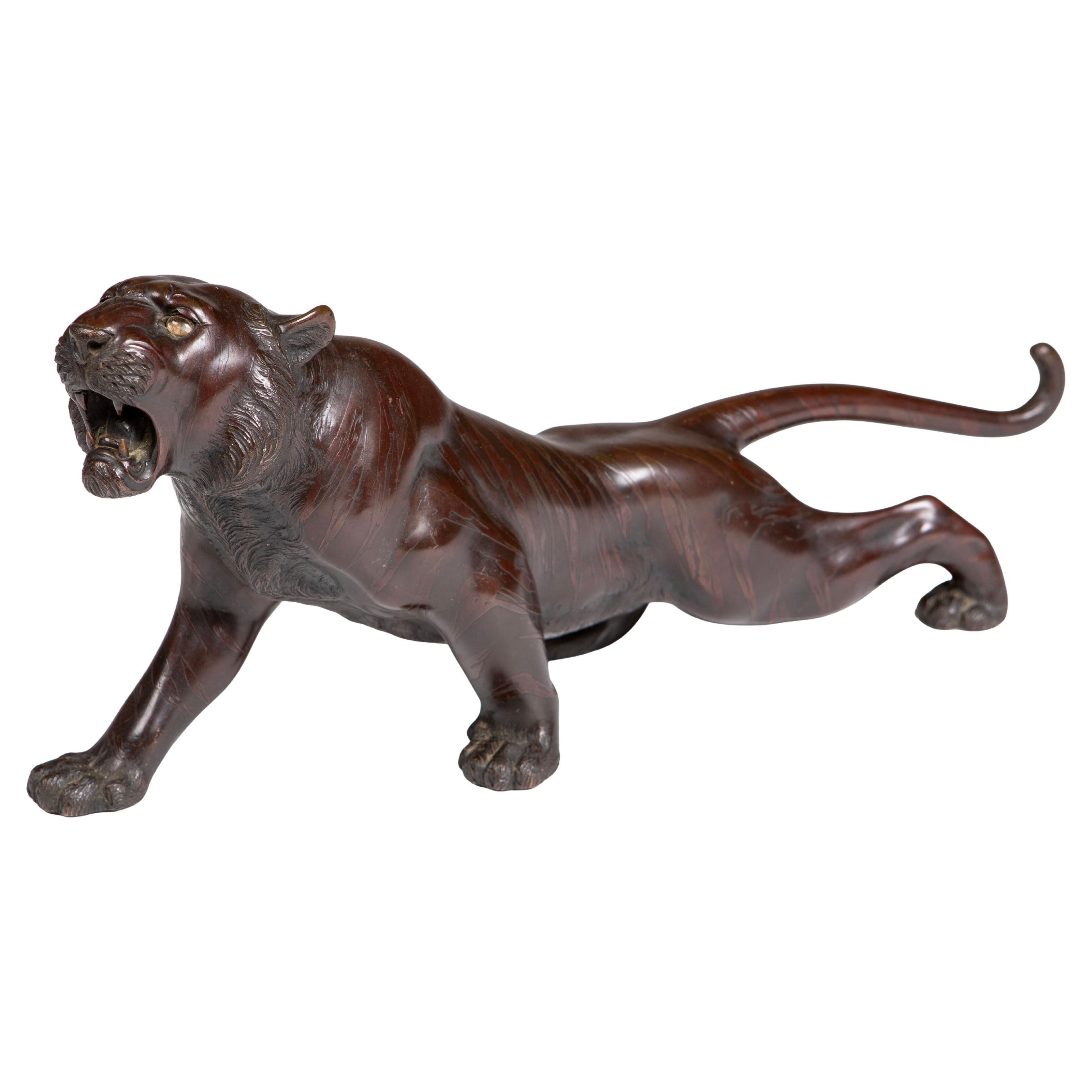
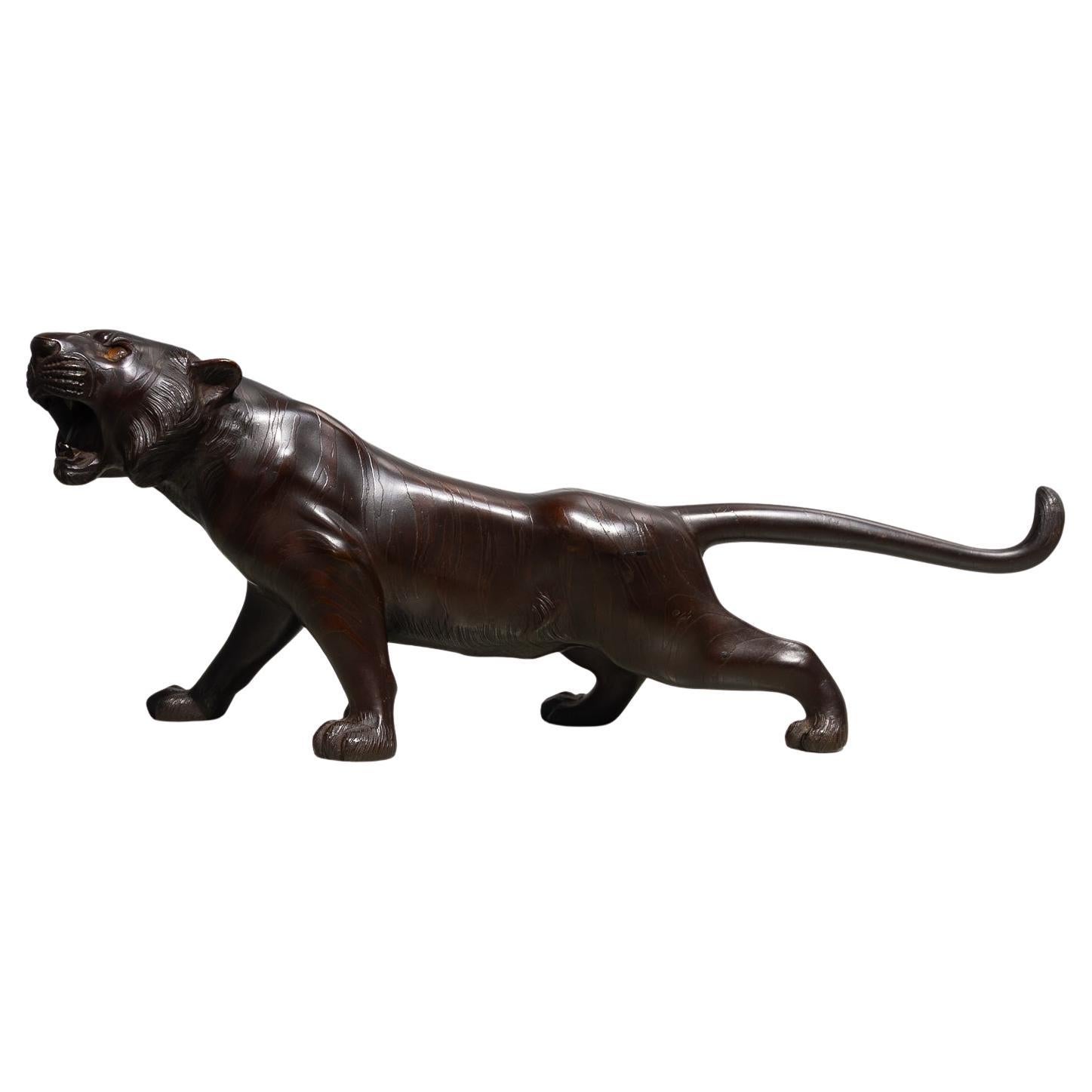
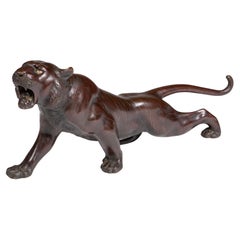
Japanese Meiji Bronze Tiger Sculpture with Stamped Signature
Located in Kastrup, DK
apanese bronze tiger from the Meiji period, featuring a warm brown-red patina.
The piece is crafted to a high standard, modelled with realistic proportions in a dynamic forward-movin...
Category
Antique Late 19th Century Japanese Meiji Animal Sculptures
Materials
Bronze
Japanese Meiji Bronze Tiger Sculpture, 1900s.
Located in Asaa, DK
Japanese Meiji Bronze Tiger Sculpture, 1900s.
A japanese patinated solid bronze sculpture of a roaring tiger from the Meiji-period. Complete with o...
Category
Early 20th Century Japanese Meiji Sculptures and Carvings
Materials
Bronze
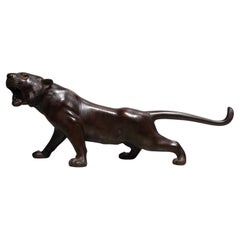
A 19th Century Japanese Signed Bronze Tiger Sculpture, Circa 1860s
Located in New York, NY
19th Century Japan
Tiger
Bronze Sculpture
Circa 1860s
DIMENSIONS
Tiger with base is 33" L x 21" H x 21" D
The bronze tiger is 28" L x 15" H
ABOUT
A finely cast bronze sculpture of a...
Category
Antique 1860s Japanese Japonisme Animal Sculptures
Materials
Bronze
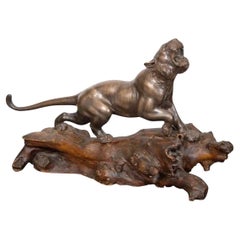
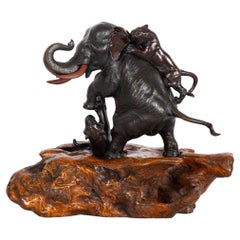
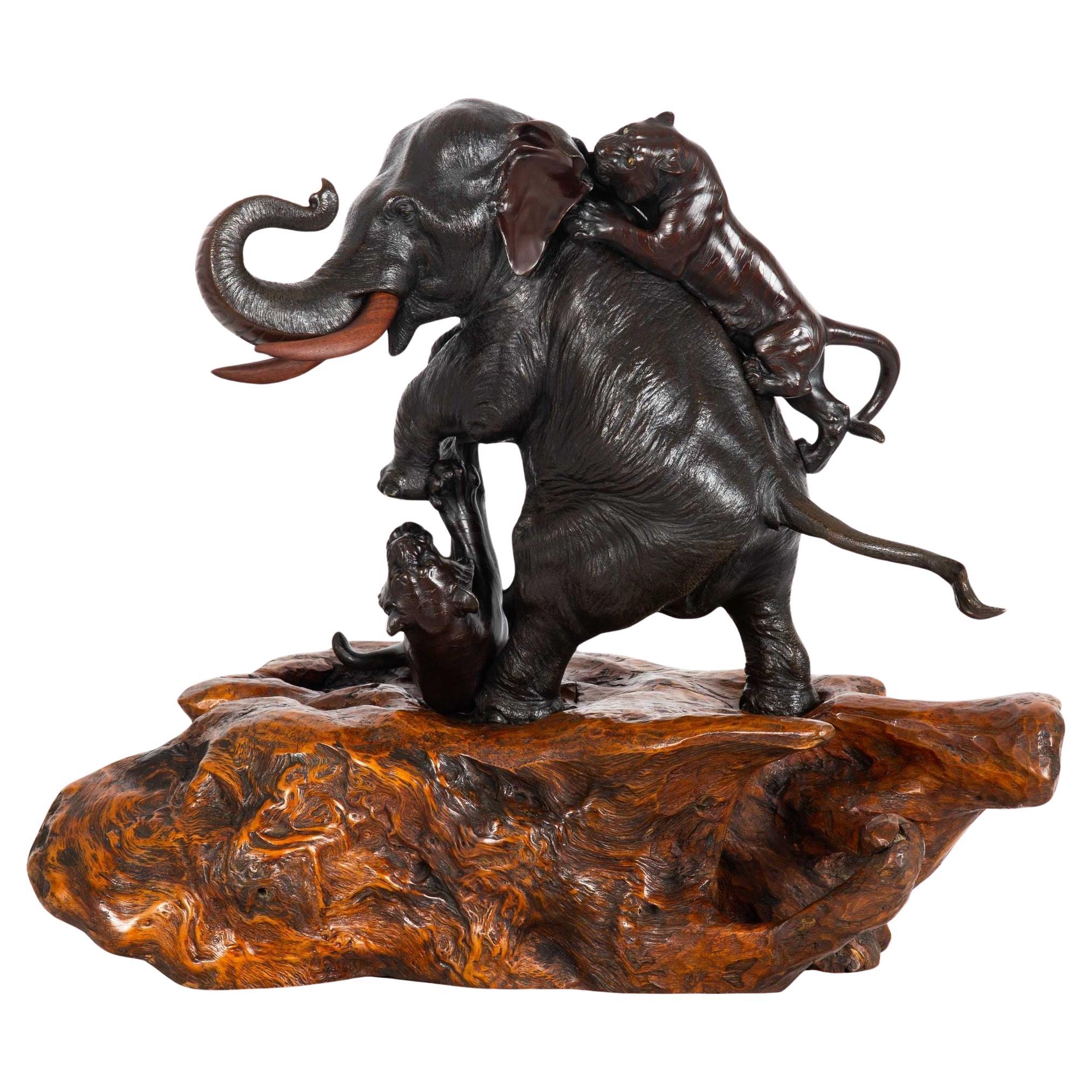
Large Japanese Meiji Bronze Sculpture Elephant and Tigers by Mitsumoto
Located in Shippensburg, PA
MEIJI PERIOD BRONZE OKIMONO OF ELEPHANT BEING ATTACKED BY TWO TIGERS
Workshop of Omori Mitsumoto (kôgen), 大森光元, Japan, circa 1900
Cast and patinated bronze, hardwood base, two carved...
Category
Early 20th Century Japanese Meiji Animal Sculptures
Materials
Bronze