Items Similar to ‘Le Grand Jockey
by Isidore Jules Bonheur
Want more images or videos?
Request additional images or videos from the seller
1 of 17
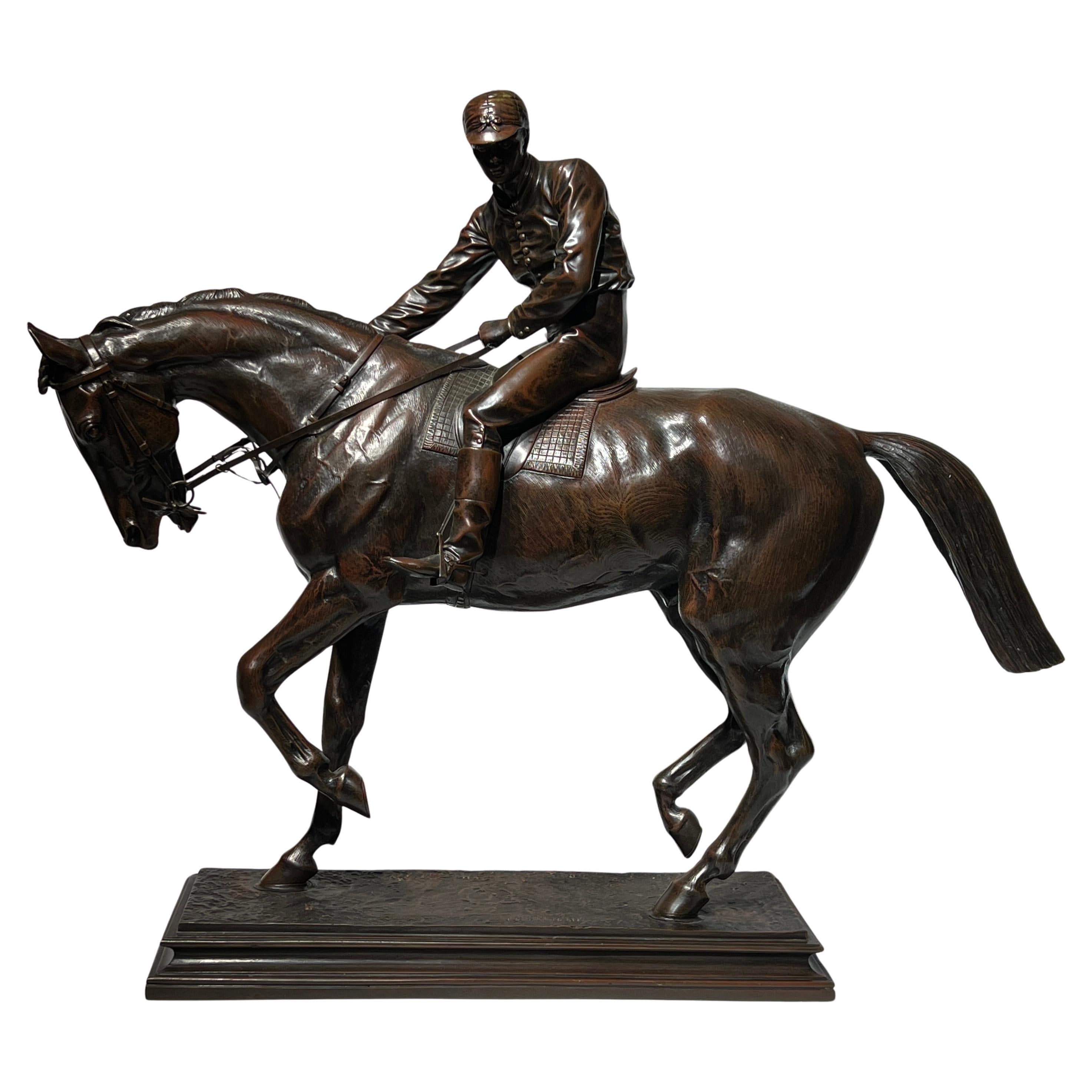
‘Le Grand Jockey
by Isidore Jules Bonheur
$116,758.87
£85,000
€99,571.96
CA$160,409.17
A$174,397.12
CHF 92,465.55
MX$2,090,579.26
NOK 1,175,189.71
SEK 1,076,633.55
DKK 744,174.34
About the Item
Isidore Jules Bonheur (French, 1827-1901)
‘Le Grand Jockey ‘
Signed 'I Bonheur' and with foundry stamp PEYROL EDITEUR'.
Bronze, rich mid-brown patina.
The name Isidore-Jules Bonheur is synonymous with the great animalier school of sculptors of the late 19th century. Amongst Bonheur’s wide variety of animal sculptures exhibited at the Salon, there were a number of mounted equestrian models, including three designs of jockeys on horseback shown in 1864, 1879 and 1886. The most famous of these is Le Grand Jockey, of which the present cast is a rare, large, and fine example.
It shows a victorious jockey patting his horse on the neck in congratulation, perfectly chiselled especially with precision work for the veins, tendons and muscles, as well as the rider's jacket and the horse's mane. First exhibited at the 1879 Salon in bronze, under the title ‘Un Jockey’, it was displayed alongside another equestrian group, Un cavalier, époque de Louis XV (nos. 4817 and 4816 respectively). Exhibited again four years later at the Exposition Nationale des Beaux-Arts in 1883 and for the third time at the Universal Exhibition of 1889, where Bonheur received the prestigious Medaille d'Or. Le Grand Jockey was subsequently edited in four different sizes, the present cast being an example of the second largest.
Son of the painter Raymond Bonheur and brother of Rosa Bonheur, Isidore Bonheur was born in 1827 in Bordeaux and trained with his father. He exhibited in 1848 for the first time at the Salon des Artistes Français and entered the School of Fine Arts in Paris where he turned his attention to sculpture.
Bonheur had a close working relationship with his brother-in-law, the celebrated Parisian founder Hippolyte Peyrol, who was married to his sister Juliette (1830-1891). These close ties resulted in the production of exceptionally cast and finely chased bronzes, often identified, as here, by Peyrol's tiny cachet. Peyrol was a master caster and his foundry in Paris is rightly considered one of the finest of the period.
France, Circa 1890.
Literature
S. Lami, ‘Dictionnaire des sculpteurs de l’école française du XIXe siècle’, vol. 1, Paris, 1916, pp.127-130; J. Horswell, ‘Les Animaliers’, Woodbridge, 1971, p. 209; M. Forrest, Art Bronzes, Pennsylvania, 1988, p. 227.
M. Forrest, ‘Art Bronzes’, Pennsylvania, 1988, p. 227.
Pierre Kjellberg, ‘Les Bronzes du XIX e siècle’, Dictionnaire
des Sculpteurs, Paris 1987, l’Amateur Ed. Pages 102 et
103.
Isidore-Jules Bonheur (1827-1901) was the son of the painter Raymond Bonheur and younger brother of Rosa Bonheur, the famous sculptor. He was born in Bordeaux and studied painting, at first with his father and then with the Ecole des Beaux Arts in Paris, moving on to sculpture in 1848.
He made his debut at the Paris Salon in 1848 with a painting and plaster study of the same subject ‘African horseman attacked by a lioness’. From then onwards, Bonheur exhibited regularly at the Salon as well as other exhibitions, winning medals in 1865 and 1869 together with the prized Gold Medal at the Exposition Universelle of 1889.
He was awarded the Legion d’Honneur in 1895.
Most of Bonheur’s casts were by his uncle by marriage, Hippolyte Peyrol, whose tiny foundry mark is often very difficult to find.
Bonheur’s studies range from farm animals, bears and tigers in a very naturalistic vein to equestrian groups. Although noted primarily for his small groups he did complete two large scale commissions, one to his sister Rosa, at Fontainbleau and the other, two stone lions at the steps of the Royal Palais de Justice, Paris. Bonheur became part of the group of animal sculptors of the late nineteenth century known as ‘Les Animaliers’
Working in a realistic manner, Bonheur was an acute observer of nature - his animals were not ‘humanised’ but modelled to catch a pose characteristic of the particular species. He achieved this particularly well with his sculptures of horses, which, usually more relaxed than spirited, are among his most successful works.
Literature
Jane Horswell, Bronze Sculptures of ‘Les Animaliers’ , p201
Pierre Kjellberg, Les Bronzes du XIX Siècle, p101.
- Creator:Isidore Jules Bonheur (Sculptor)
- Dimensions:Height: 24.41 in (62 cm)Width: 29.53 in (75 cm)Depth: 6.3 in (16 cm)
- Materials and Techniques:Bronze,Patinated
- Place of Origin:
- Period:
- Date of Manufacture:circa 1890
- Condition:Wear consistent with age and use.
- Seller Location:Brighton, GB
- Reference Number:Seller: B768701stDibs: LU1028030498032
About the Seller
5.0
Recognized Seller
These prestigious sellers are industry leaders and represent the highest echelon for item quality and design.
Established in 1964
1stDibs seller since 2014
60 sales on 1stDibs
Typical response time: 2 hours
Associations
The British Antique Dealers
AssociationLAPADA - The Association of Arts
Antiques Dealers
- ShippingRetrieving quote...Shipping from: Brighton, United Kingdom
- Return Policy
More From This Seller
View AllJohn Willis-Good, (British, 1845 - 1879), ‘After The Race’
By John Willis Good
Located in Brighton, West Sussex
John Willis-Good (British, 1845 - 1879)
‘After The Race’.
A Silvered Bronze Equestrian Group Cast By Elkington & Co, Birmingham.
Depicting a racehorse with jockey up, at the dynam...
Category
Antique 19th Century English Figurative Sculptures
Materials
Slate, Bronze
‘The Monkey Rider’, Paul Joseph Raymond Gayrard
Located in Brighton, West Sussex
‘The Monkey Rider’ – Paul Joseph Raymond Gayrard (1807 - 1855).
Signed to the base ‘Paul Gayrard’ and dated 1846.
A rare patinated bronze group of a monkey in the guise of a Jockey riding a racehorse, startled by a barking dog at his feet.
French, Dated 1846.
The mid-nineteenth century saw a surge of interest in animalier bronzes with whimsical and anthropomorphic subjects becoming particularly fashionable. In a similar vain to Christophe Fratin’s humanised depiction's of Bears posed as lamp lighters, dentists and reading books, Gayrard created his famous Monkey bronzes. He was awarded a First Class Medal at the 1846 Salon for his humorous group ‘The Monkey Steeplechase’, which can be related to subject of the present sculpture, ‘Monkey Rider’.
With the publication of Darwin’s ‘Origin of Species in 1859’ the popularity of anthropomorphically conceived subjects began to decline. As such these sculptures were only created during a very brief window of time and are consequently very rare.
PAul Joseph Ryamond Gayrard
Paul Joseph Raymond Gayrard (1807 – 1855) born in Clermont-Ferrand, France.
He studied at an early age under his father the sculptor and engraver Raymond Gayrard, before becoming a student of François Rude and later David d'Angers.
He first exhibited at the Paris Salon in 1827 and continued to submit works throughout his lifetime winning a Second Class Medal in 1834 and a First Class Medal in 1846 and 1848. His last recorded exhibit was in 1855.
He executed many busts of notables of the day which proved popular with the haute bourgeois, but it was his talent for animalier that confirmed his reputation as a sculptor of considerable talent. His known bronze animal models date from the years 1846 until 1848 with his powerful plaster of a 'Harness Horse...
Category
Antique Mid-19th Century French Animal Sculptures
Materials
Bronze
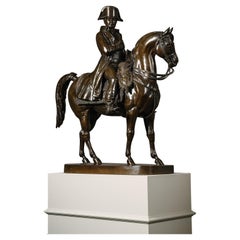
Emperor Napoleon on Horseback, Cast by Susse Frères, Paris
By Susse Freres
Located in Brighton, West Sussex
A Large Patinated Bronze Sculpture of Emperor Napoleon on Horseback, Cast by Susse Frères, Paris, From the Model By Alfred Émilien O'Hara, Comte de Nieuwerkerke (1811-1892).
Dark br...
Category
Antique 19th Century French Napoleon III Figurative Sculptures
Materials
Bronze
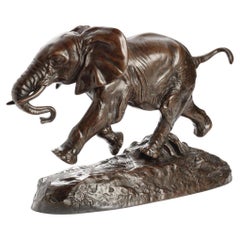
Antoine Louis Barye, Bronze Model of
Elephant De Senegal
By Ferdinand Barbedienne, Antoine-Louis Barye
Located in Brighton, West Sussex
Antoine-Louis Barye (French, 1795-1875).
‘Éléphant du Sénégal’ (‘Senegalese Elephant’).
Patinated bronze.
Cast by Ferdinand Barbedienne, Paris, from the model by Antoine-Louis B...
Category
Antique 19th Century French Animal Sculptures
Materials
Bronze
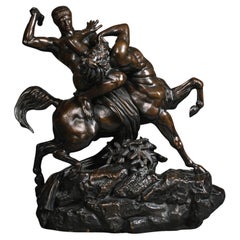
Antoine Louis Barye (1795-1875),
Theseus fighting the centaur Bianor
By Antoine-Louis Barye
Located in Brighton, West Sussex
A Fine Patinated Bronze Group, Entitled 'Thesée Combattant le Centaure Bianor' ('Theseus Fighting the Centaur Bianor'), Cast by Ferdinand Barbedienne, From the Model By Antoine Louis...
Category
Antique 19th Century French Classical Greek Figurative Sculptures
Materials
Bronze
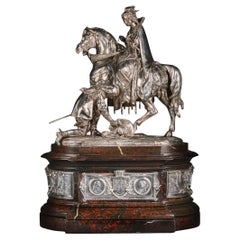
The Warwick Cup
, A Victorian Silver Racing Trophy by Elkington
By Elkington
Co.
Located in Brighton, West Sussex
The Warwick Cup
An Important Victorian Silver Presentation Horse Racing Trophy For The 1853 Warwick Races, by Elkington & Co. England. Modelled by Pierre-Emile Jeannest (French, 18...
Category
Antique 19th Century English Victorian Figurative Sculptures
Materials
Marble, Silver
You May Also Like
Large Bronze Sculpture of a Jockey on Thoroughbred by Isidore Jules Bonheur
By Isidore Jules Bonheur
Located in New York, NY
An exceptional casting and finely patinated bronze sculpture of jockey on thoroughbred racehorse by Isidore Jules Bonheur (1827-1901), measuring 24 in tall, 26 in wide and 6 in deep....
Category
Antique Late 19th Century French Figurative Sculptures
Materials
Bronze
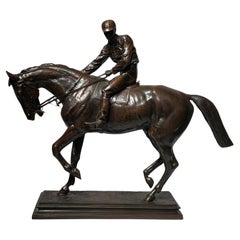
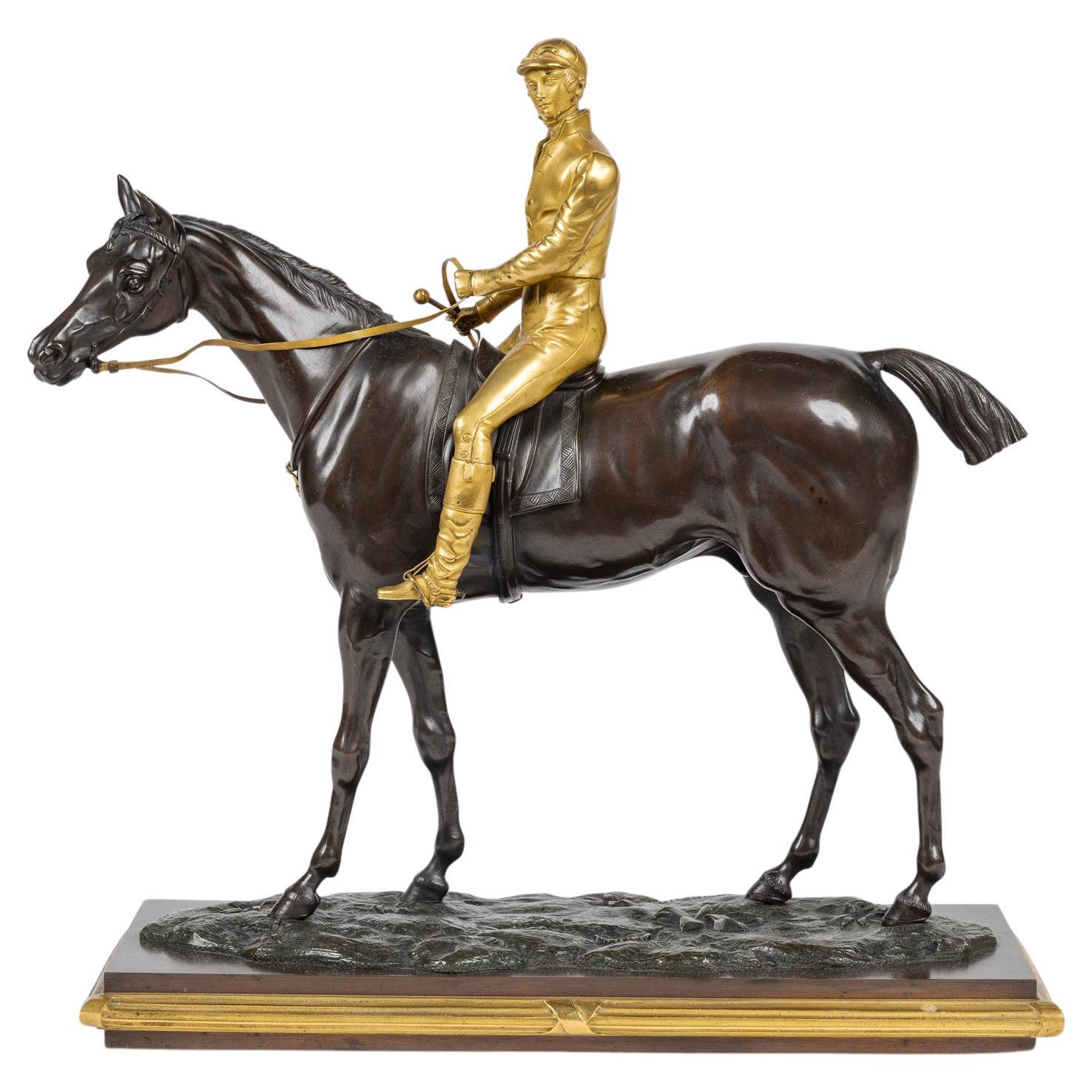
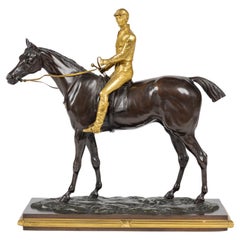
Isidore-Jules Bonheur, A Rare Gilt and Patinated Bronze Jockey on A Horse
By Isidore Jules Bonheur
Located in Queens, NY
Isidore-Jules Bonheur (French, 1827–1901)
A Rare Gilt and Patinated Bronze Jockey on A Horse, circa 1875.
Introducing a truly exceptional and highly s...
Category
Antique 19th Century French Sporting Art Animal Sculptures
Materials
Bronze
$13,500 Sale Price
50% Off
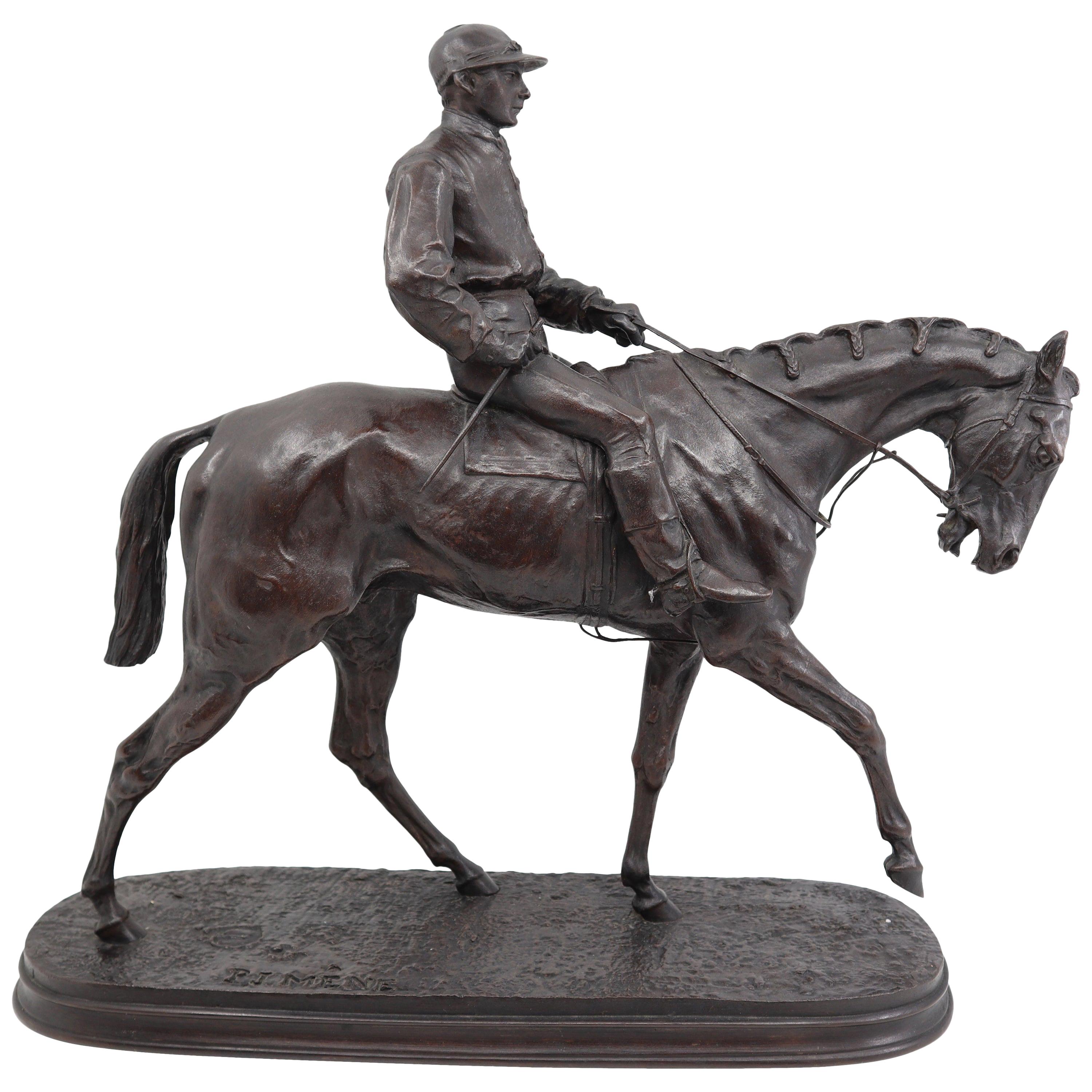
French Bronze Jockey on Horse by Pierre Jules Mêne
By Pierre Jules Mêne
Located in Lantau, HK
A self-taught artist, Piere-Jules Mêne (1810-1879) dedicated his entire career to making bronze statues, which were met with great success among both French and international clients...
Category
Antique 19th Century French Animal Sculptures
Materials
Bronze
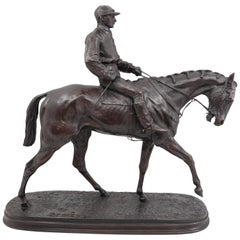
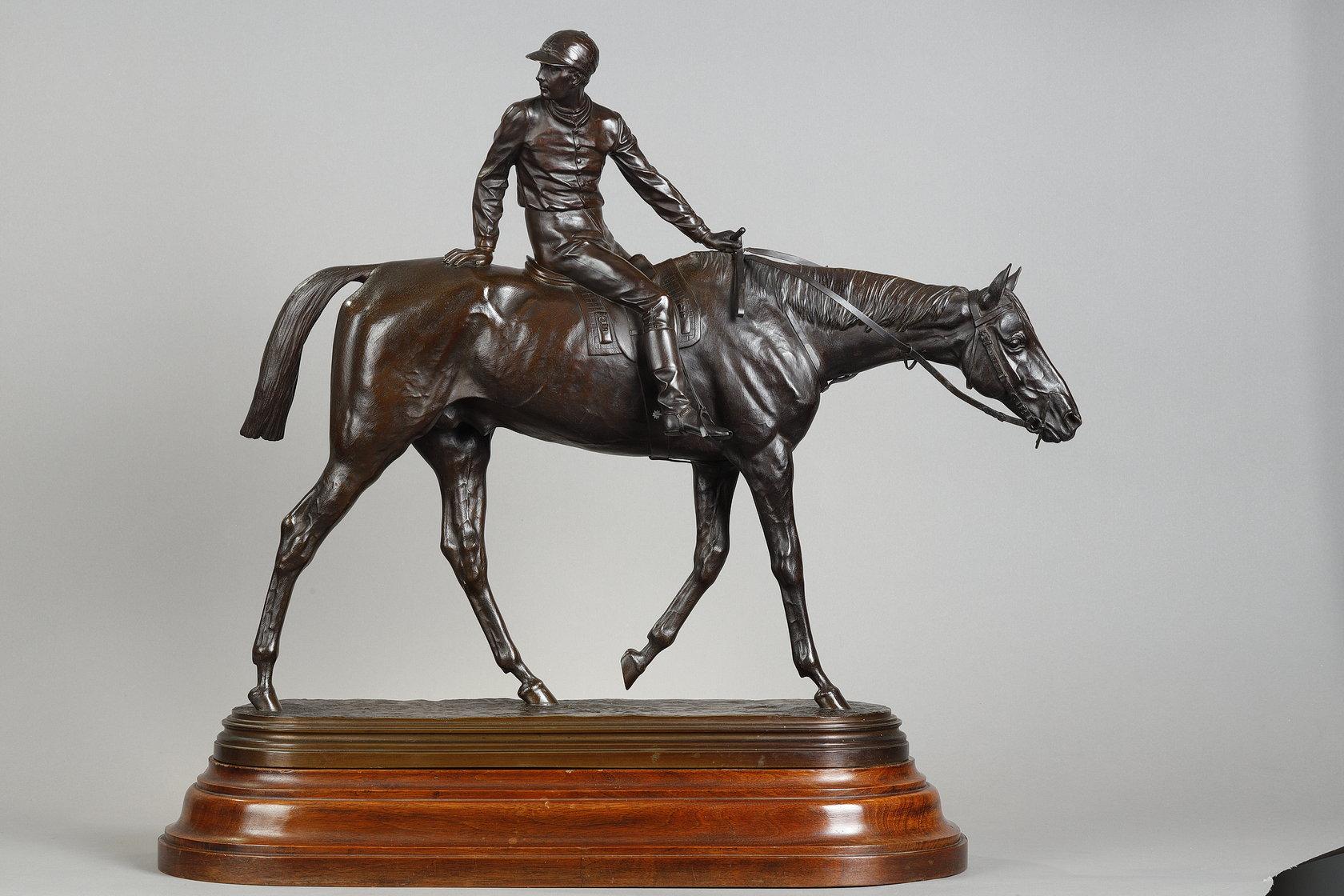
Jockey Winner
By Isidore Jules Bonheur
Located in PARIS, FR
Jockey Winner
by Isidore BONHEUR (1827-1901)
A rare and magnificent bronze group with a dark brown patina
Signed on the base "I. Bonheur"
A period cast by "Peyrol" (with the foundry stamp)
Standing on a molded wooden base
France
circa 1880
height of the bronze : 53,5 cm
total height with the base : 62 cm
total length : 68 cm
depth : 24 cm
Biography:
Isidore Jules Bonheur (1827-1901) was a French painter and sculptor. Isidore first received an artistic apprenticeship from his father Raymond and his older sister Rosa, then, in 1827, he entered the School of Fine Arts in Paris. After practicing...
Category
1880s French School Figurative Sculptures
Materials
Bronze
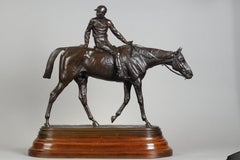
French 19th Century Equestrian Bronze Sculpture after Pierre-Jules Mêne
Located in London, GB
An equestrian sculpture
after Pierre-Jules Mêne
A naturalistic, carefully detailed and beautifully patinated bronze model of a jockey on his galloping horse, the realistic topogr...
Category
Antique 19th Century French Sporting Art Animal Sculptures
Materials
Bronze
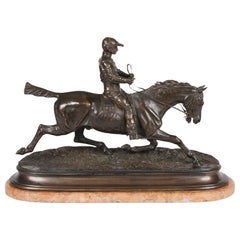
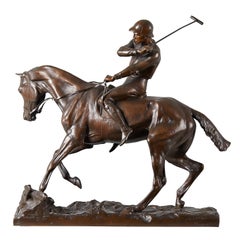
Joseph Cuvelier Equestrian Bronze, circa 1860
Located in Petworth, West Sussex
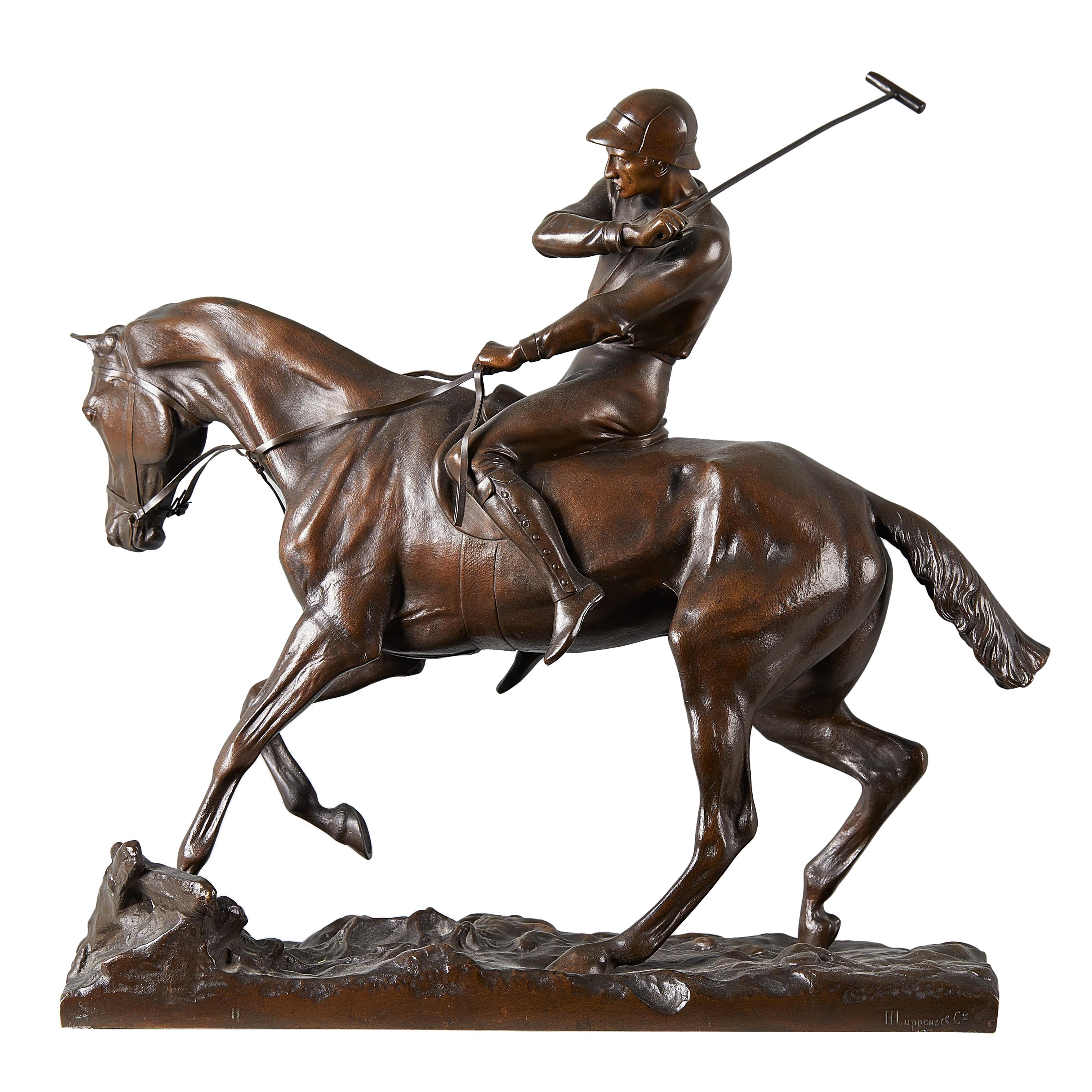
A Joseph Cuvelier (French 1833-1879) bronze equestrian model of a polo player, circa 1860, cast by H. Luppens & Cie, dark brown patina.
Category
Antique Mid-19th Century French Figurative Sculptures
Materials
Bronze
$5,109 Sale Price
20% Off
More Ways To Browse
Antique Farm Animals
Antique Stone Lions
Horseman Antique
Animalier Bronze
19th Century Bronze Equestrian Sculptures
Bonheur Bronze
Jockey Sculpture
Jockey On Horse
Bronze Jockey
Bonheur Bronze Sculpture
Le Grand Jockey
Large Brass Animal Sculpture
Wooden Carved Horse
Art Deco Peacock
Black Murano Glass Animals
Buffalo Sculpture
Crystal Swan
Deer Bronze