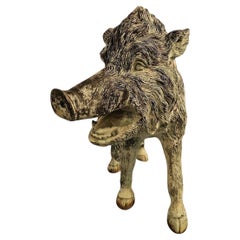
Items Similar to Monumental Uffizi Boar or Il Porcellino by Austin and Seeley
Want more images or videos?
Request additional images or videos from the seller
1 of 5
Monumental Uffizi Boar or Il Porcellino by Austin and Seeley
$31,427.64
$39,284.5420% Off
£23,040
£28,80020% Off
€26,761.73
€33,452.1620% Off
CA$43,299.42
CA$54,124.2820% Off
A$47,224.11
A$59,030.1320% Off
CHF 25,016.15
CHF 31,270.1820% Off
MX$566,149.99
MX$707,687.4920% Off
NOK 318,594.51
NOK 398,243.1420% Off
SEK 291,331.04
SEK 364,163.8020% Off
DKK 199,936.33
DKK 249,920.4120% Off
About the Item
A mid-19th century model of the Uffizi Boar, called 'Il Porcellino', by Austin
Seeley, the seated figure of the boar on an integral square plinth.
This cast stone model of the Uffizi Boar takes its name from a 17th-century bronze fountain by sculptor Pietro Tacca, made for Cosimo II de' Medici and originally placed in the Loggia at the Mercato Nuovo in Florence. This civic space was also known as the Loggia del Porcellino, named after the boar as rubbing the statue's nose is said to bring great wealth. Made in the 1630s, it was modelled after an earlier marble version (Italian, 2nd-1st century BC) discovered in Rome in 1556 on the slopes of the Esquiline Hill, itself thought to be based on a lost Greek Hellenistic bronze version. After restoration, the marble statue was brought to Florence in 1568 as a gift from Pope Pius IV to Duke Cosimo I de’ Medici, initially placed in the Pitti Palace. Both this marble and the 17th-century bronze versions are now housed in the Uffizi Gallery in Florence. It remained an immensely popular subject for Grand Tourists, who collected their own versions. It is a testament to the commercial prowess of Austin and Seeley to produce such an iconic model for their wealthiest clients.
Notes:
A design for a model of the Uffizi Boar is illustrated in Austin and Seeley's catalogue the 'Specimen Book of Austin
Seeley's Artificial Stone Manufactory, London', 1844, p. 9. Austin
Seeley were known as suppliers of fine garden statuary to the largest country houses in England and similar stone examples can be found at Osborne House on the Isle of Wight, Castle Howard in Yorkshire, and Chatsworth House in Derbyshire. Felix Austin entered into business making artificial stone in 1828, having purchased moulds from a firm that had gone out of business. He established his works in New Road, London, describing himself variously as an architect, statuary mason and sculptor as well as artificial stone maker. His material was not the same as the ceramic body used by Mrs. Coade, but made from Portland cement, broken stone, pounded marble and course sand (The Builder, 1868). However, like Mrs. Coade, he encouraged leading architects and designers to work for him. Around 1840 he entered into partnership with John Seeley; Seeley had trained at the Royal Academy Schools and also made an artificial stone, which he called 'artificial limestone'. In 1841 they published their first catalogue Collection of Ornaments at Austin
Seeley's Artificial Stone Works for Gardens, Parks and Pleasure Grounds, etc. from their address in New Road. The preface to this catalogue begins 'Austin's Artificial Stone is of a light tone, requires no painting or colouring, will not sustain injury from the severest winter, and, being impervious to wet, is particularly applicable to all kinds of water-works. Its superiority is now so thoroughly established, that the most eminent Architects and scientific Gentlemen have expressed, in the highest terms, their approbation of its durability, and close resemblance to real stone.'
- Attributed to:Austin Seeley (Manufacturer)
- Dimensions:Height: 55.91 in (142 cm)Width: 43.31 in (110 cm)Depth: 70.87 in (180 cm)
- Style:Grand Tour (Of the Period)
- Materials and Techniques:
- Place of Origin:
- Period:
- Date of Manufacture:c.1844
- Condition:Repaired. Wear consistent with age and use.
- Seller Location:London, GB
- Reference Number:Seller: 162661stDibs: LU1603235660712
About the Seller
No Reviews Yet
Vetted Professional Seller
Every seller passes strict standards for authenticity and reliability
Established in 1989
1stDibs seller since 2015
47 sales on 1stDibs
Typical response time: 1 to 2 days
- ShippingRetrieving quote...Shipping from: London, United Kingdom
- Return Policy
More From This Seller
View AllLarge Patinated Bronze Venus De Medici
Located in London, GB
A fine late 19th century Neapolitan patinated bronze figure of the Venus de Medici after the antique. Likely cast by the Fonderia Sommer, Naples. The F...
Category
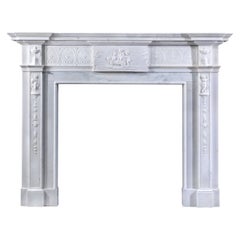
Antique 19th Century Italian Neoclassical Fireplaces and Mantels
Materials
Bronze
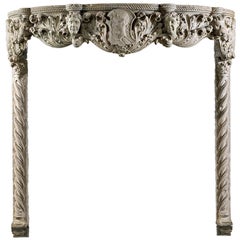
Venetian Renaissance Antique Fireplace from the 15th Century
By Giorgio da Sebenico
Located in London, GB
A large and rare Venetian Renaissance antique fireplace mantel from the fifteenth century. This extremely rare chimneypiece is carved in Pietra d’...
Category
Antique 15th Century and Earlier Italian Renaissance Fireplaces and Mantels
Materials
Marble
$183,327 Sale Price
20% Off
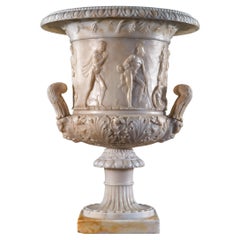
Large 18th Century Alabaster Copy of the Medici Vase
Located in London, GB
A very fine 18th century alabaster copy of the Medici Vase, after the antique. Almost certainly made in Italy for a wealthy Grand Tourist and a faithful copy of one of the most renow...
Category
Antique Mid-18th Century Italian Neoclassical Vases
Materials
Alabaster
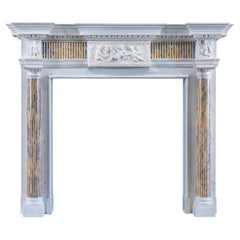
Fine Neoclassical Siena Inlaid Chimneypiece
Located in London, GB
A fine and grand neoclassical chimneypiece in statuary marble with Siena marble inlay. The boldly carved breakfront shelf sits above a high relief egg and dart undershelf and a finel...
Category
Antique 1760s English George III Fireplaces and Mantels
Materials
Marble
$73,331 Sale Price
20% Off
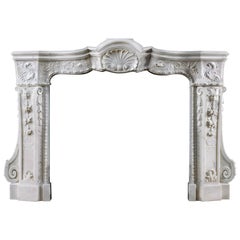
Rare 18th Century Italian Baroque Fireplace in Finely Carved Statuary Marble
Located in London, GB
A rare 18th century Italian Baroque fireplace mantel in finely carved statuary marble. The generously moulded arched shelf forms the upper part of a serpent...
Category
Antique Mid-18th Century Italian Baroque Fireplaces and Mantels
Materials
Statuary Marble
George III Statuary Marble Chimneypiece
Located in London, GB
A fine eighteenth century George III chimneypiece in statuary marble. The solid reverse breakfront shelf sits above a frieze which is delicately carved with a stylised foliate design...
Category
Antique Late 18th Century English George III Fireplaces and Mantels
Materials
Statuary Marble
You May Also Like
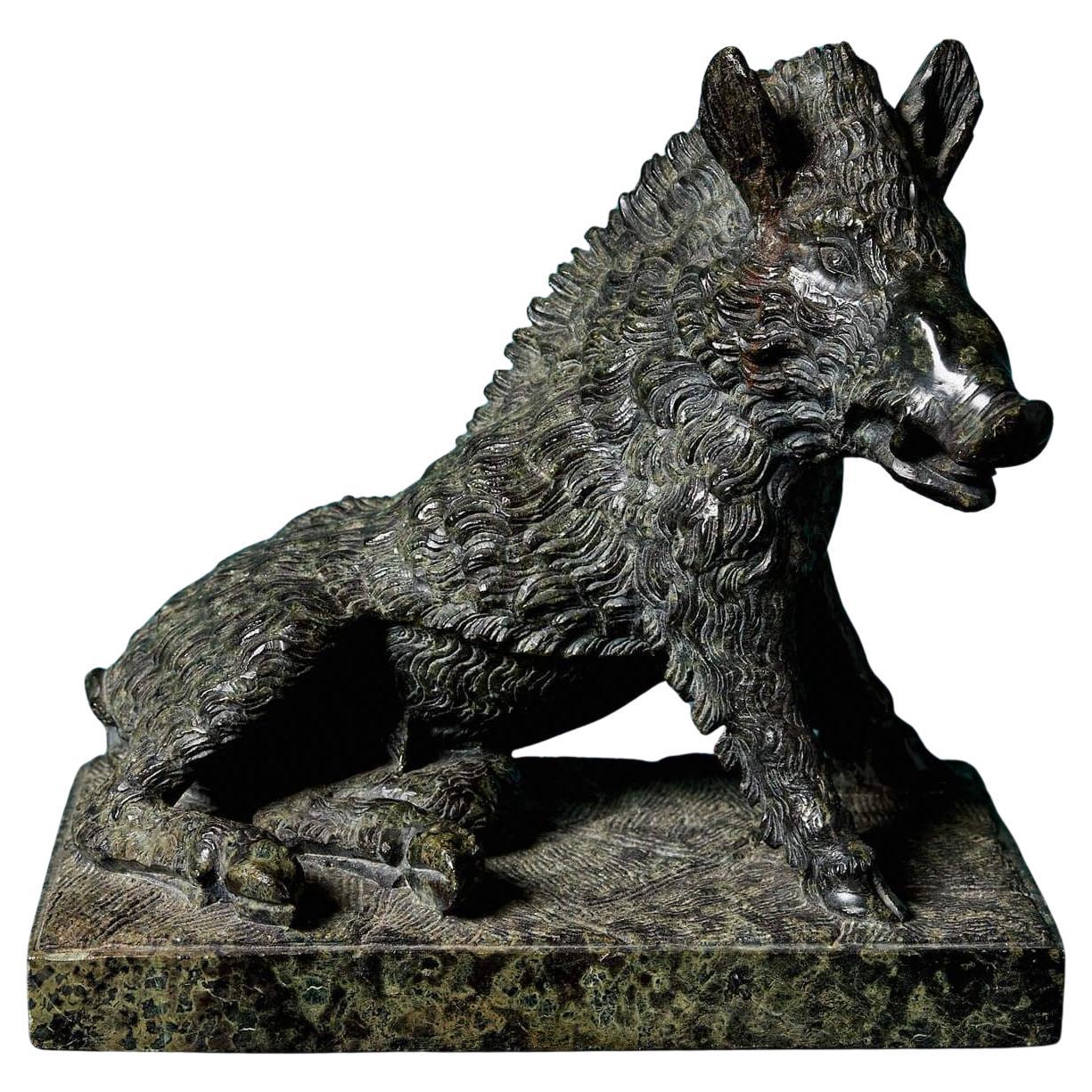
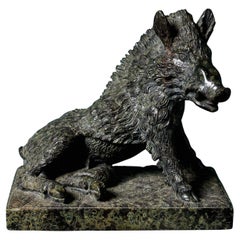
Antique Italian Serpentine Sculpture after the Uffizi Boar
Located in Wormelow, Herefordshire
An antique Italian carved serpentine sculpture after the Uffizi boar dating to the early 19th century.
This seated wild boar displays impressive carved details and a pleasing scale ...
Category
Antique Early 19th Century Italian Grand Tour Animal Sculptures
Materials
Serpentine
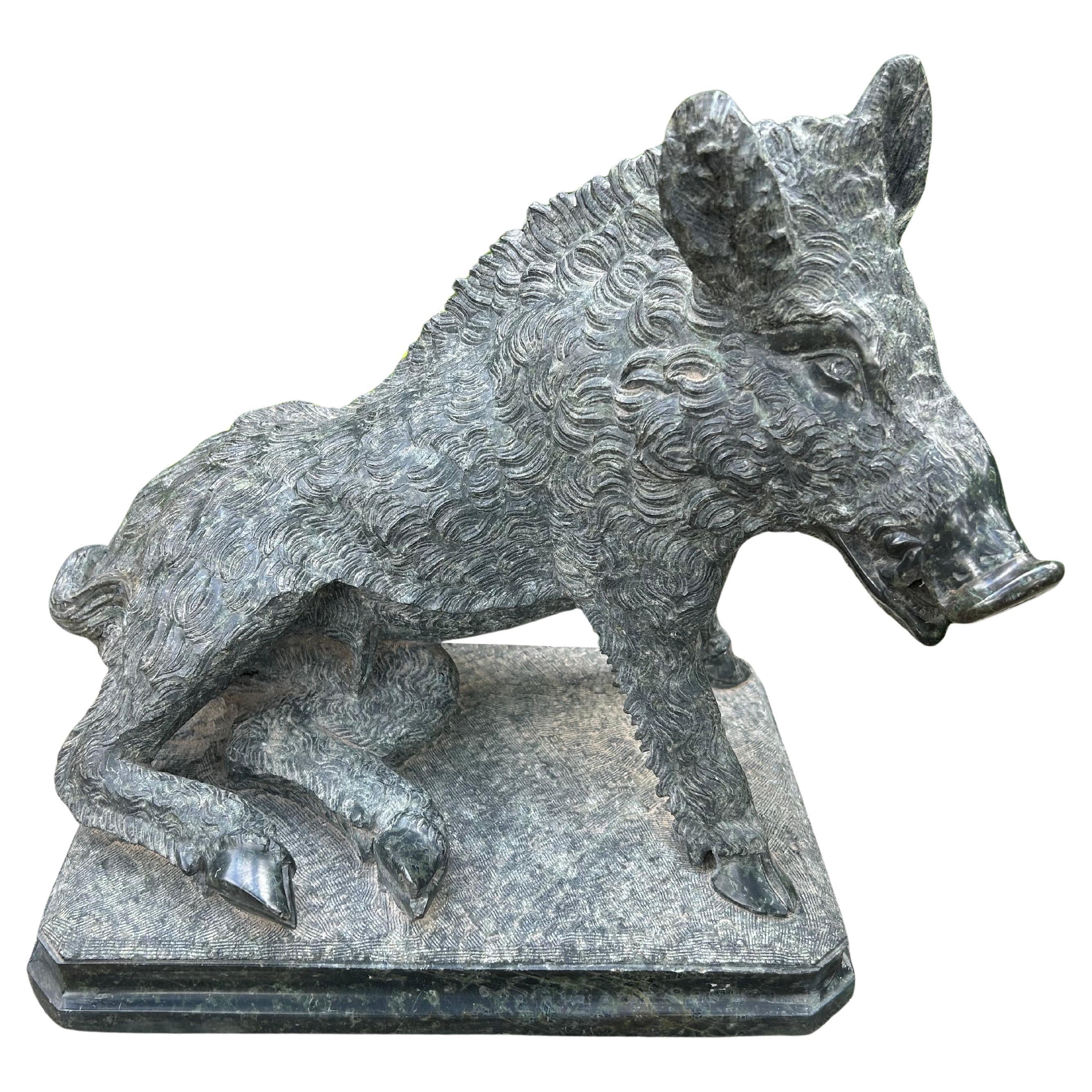
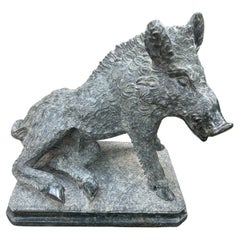
Italian Carved Marble Boar Sculpture
Located in Houston, TX
Italian Carved Marble Boar Sculpture.
We offer a well carved copy of the original Italian marble boar sculpture located in Florence Italy. This version...
Category
Vintage 1920s Italian Classical Roman Animal Sculptures
Materials
Marble
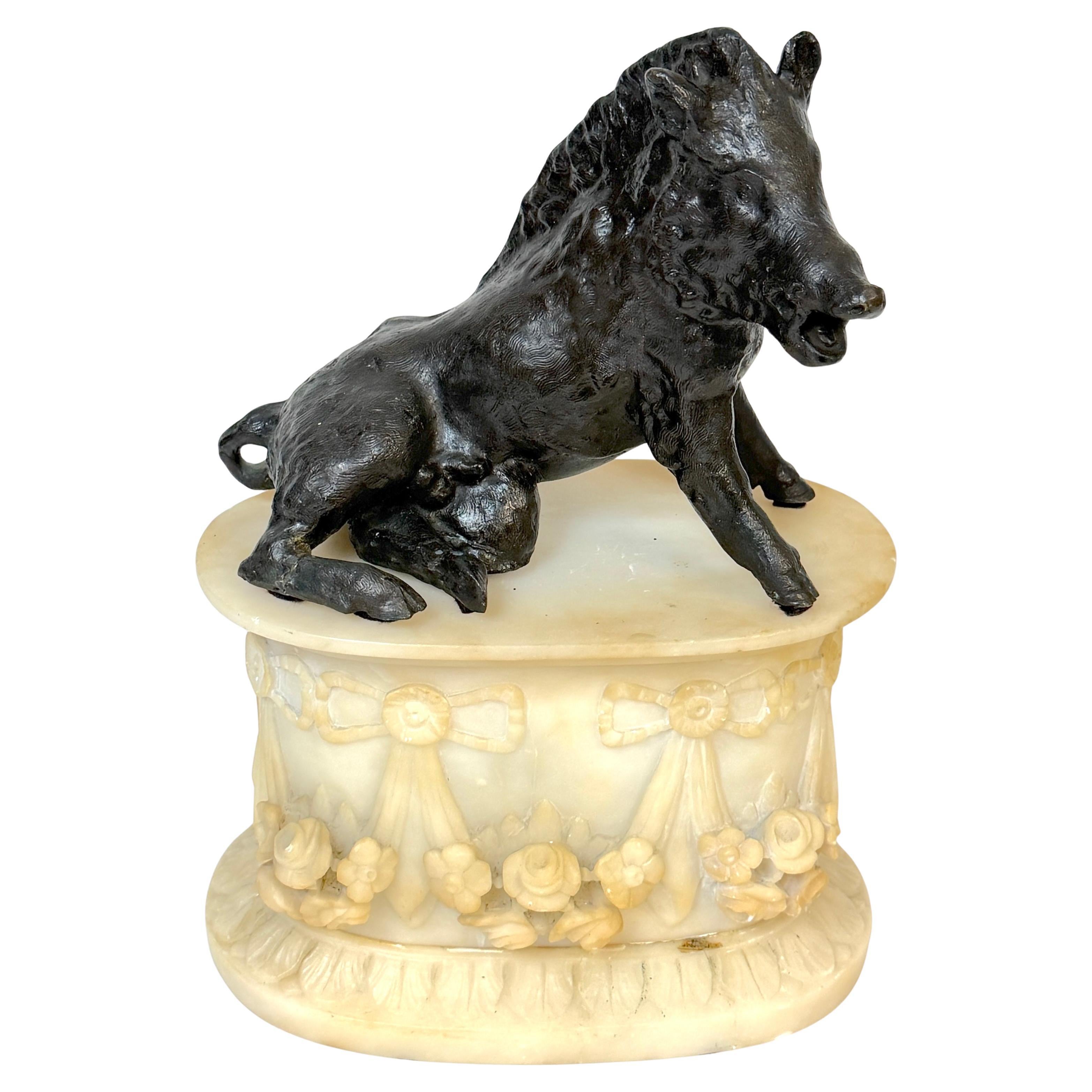
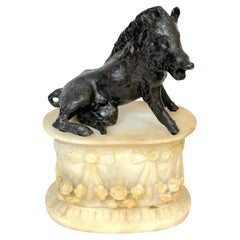
Grand Tour Bronze Reduction Il Porcellino “Borghese Boar” Carved Alabaster Base
Located in West Palm Beach, FL
Grand Tour Bronze Reduction of Il Porcellino “Borghese Boar” Mounted on a Carved Alabaster Neoclassical Plinth
Italy, 19th Century
A finely cast Grand Tour bronze model of the celeb...
Category
Antique 19th Century Italian Grand Tour Animal Sculptures
Materials
Alabaster, Bronze
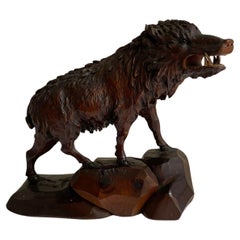
Woodcarved Wild Boar, Italy 1930 ca
Located in Sacile, PN
Beautiful handmade woodcarved wildboar, excellent work of very talented artist. The details and the muzzle of the animal denote the quality of the work.
Category
Vintage 1930s Italian Art Deco Animal Sculptures
Materials
Wood
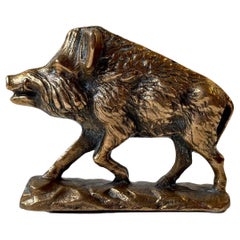
Antique Wild Boar Sculpture in Bronze, France, 1920s
Located in Esbjerg, DK
Small desk og mantle bronze depicting a young wild boar standing on a log. Fine detailing and a rich golden patina. Signed/marked France to its base. Where it was made circa 1920-25....
Category
Vintage 1920s French Late Victorian Animal Sculptures
Materials
Bronze
$485 Sale Price
44% Off
Spanish Mid-Century Bronze Wild Boar Sculpture, 1950s
Located in Madrid, ES
An extraordinary Spanish bronze sculpture from the 1950s, depicting a powerful wild boar in a bold and lifelike stance. Executed with remarkable detail, the piece captures the animal...
Category
Mid-20th Century European Mid-Century Modern Animal Sculptures
Materials
Bronze