Items Similar to Pair of Antique Chinese Han Dynasty Pottery Red Horse Head Funerary Tomb Figures
Want more images or videos?
Request additional images or videos from the seller
1 of 21
Pair of Antique Chinese Han Dynasty Pottery Red Horse Head Funerary Tomb Figures
$1,995per set
£1,514.57per set
€1,746.05per set
CA$2,822.20per set
A$3,038.36per set
CHF 1,627.10per set
MX$36,611.13per set
NOK 20,529.49per set
SEK 18,787.80per set
DKK 13,047.17per set
About the Item
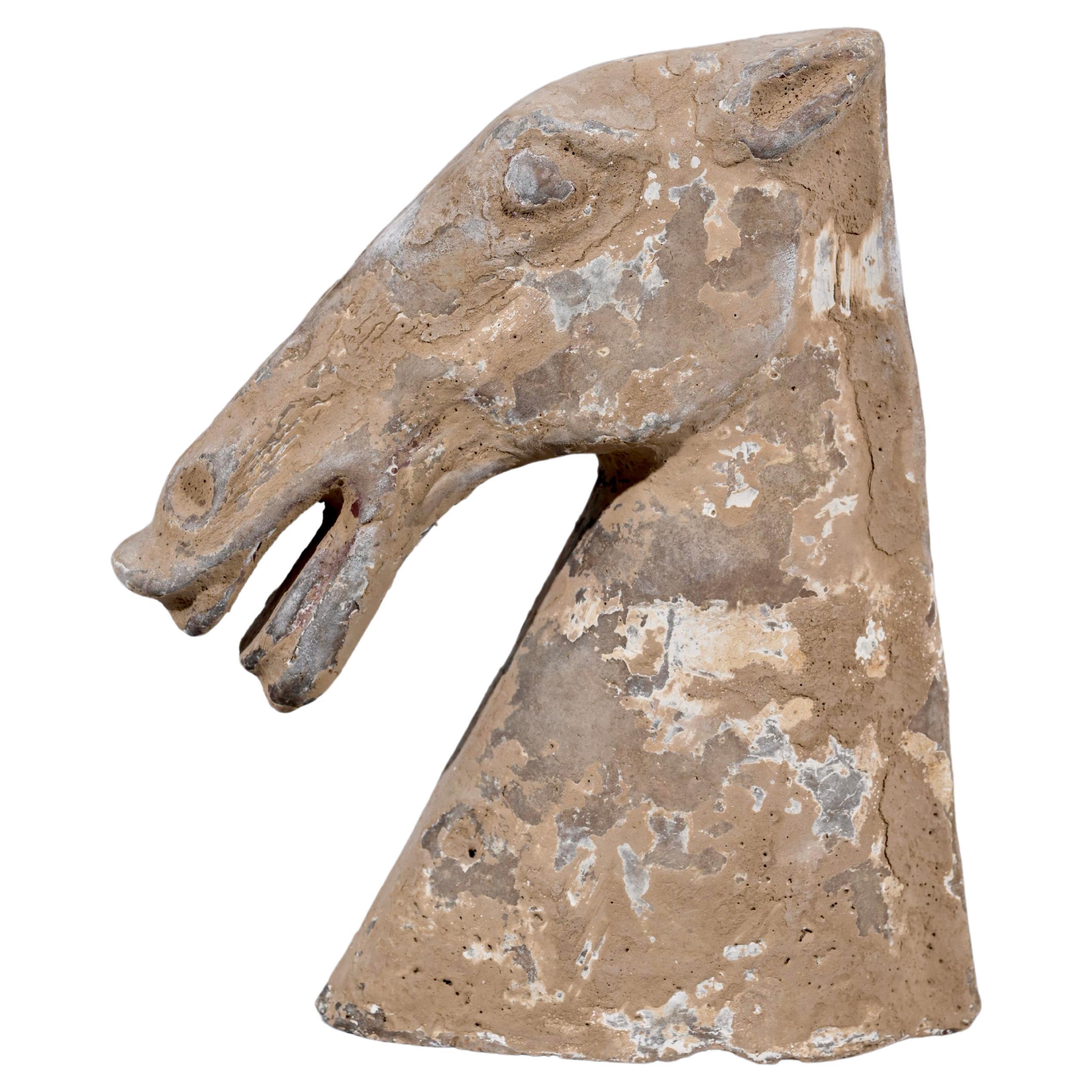
A 2000 year old pair of similarly styled antique Chinese pottery horse heads dating to the Han dynasty (206 BC-AD 220)
Large authentic painted grey clay terracotta sculptural tomb objects, one with red pigment, one with red over white slip decoration, both crisply molded, carved and detailed.
These finely carved horse head funerary figures feature excellent attention to detail and realistic characteristics, moldeled with an upright mane, the wooden ears missing, likely long deteriorated, a normal and expected feature considering the age.
The Han Dynasty horse head is a fascinating object that demonstrates the importance of horses in the culture and economy of the time. Horses were not only working animals, but also symbols of status and power.
Representations of horses such as these, as well as less common full figure examples, were placed in the tombs of important people, with the intention of accompanying the deceased on their journey to the afterlife.
Horse head figurines made for funerary purposes have been excavated from tombs dated to the Warring States period (475-220 B.C.E) and throughout the Han period.
Horses were highly prized in China after being introduced from the West. Chinese legend tells of a breed of horse called tianma that could run 300 miles a day and sweat blood at the end of the journey.
The remnants of strong organic red paint pigment visible, especially in the folds and textured areas of the figurines indicate that it was once painted red, like other horse figurines produced at the time, to illustrate this story.
Superb museum quality examples, sure to add sophisticated antique character, charm, elegant rustic warmth, rich historical depth and cultural interest to any space!
Dimensions: (approx)
Each: 6.5" Tall x 2" Wide x 6.5" Deep
Condition Report:
Pair of two (2) similarly styled / not identical examples. Both in very good original antique condition. Stable, sturdy. Attractive appearance, with remnants of worn pigment, fading, nicks, chips, abrasions and accretions, typical wear commensurate with age, use, handling and exposure.
- Dimensions:Height: 6.5 in (16.51 cm)Width: 2 in (5.08 cm)Depth: 6.5 in (16.51 cm)
- Sold As:Set of 2
- Style:Han (Of the Period)
- Materials and Techniques:
- Place of Origin:
- Period:
- Date of Manufacture:206 BC-AD 220
- Condition:Wear consistent with age and use. Minor losses. Minor fading. Very good original antique condition with beautifully aged patina, warmth and depth. Remnants of worn pigment, fading, nicks, chips, losses, abrasions and accretions, typical wear commensurate with age, use, handling and exposure. Presents splendidly.
- Seller Location:Forney, TX
- Reference Number:1stDibs: LU5977247255942
About the Seller
4.8
Platinum Seller
Premium sellers with a 4.7+ rating and 24-hour response times
Established in 2013
1stDibs seller since 2021
317 sales on 1stDibs
Typical response time: 1 hour
- ShippingRetrieving quote...Shipping from: Forney, TX
- Return Policy
More From This Seller
View AllAntique Ming Dynasty Chinese Earthenware Horse Sculpture Míngqì Tomb Figure
Located in Forney, TX
A scarce 600 year old (approx) Chinese pottery Ming Dynasty (1368-1644) large glazed earthenware míngqì tomb figure, modeled as horse sculpture with saddle, stirrups, and integral ba...
Category
Antique 15th Century and Earlier Chinese Ming Sculptures and Carvings
Materials
Earthenware
Vintage Nahua Pottery Chililico Hidalgo Mexican Folk Art Animal Candleholders
Located in Forney, TX
A most charming pair of two rare and whimsical indigenous Nahua peoples pottery animal folk art candleholders.
Handmade in the village of Chililico, Hidalgo, Central Mexico, primiti...
Category
Mid-20th Century Mexican Folk Art Sculptures and Carvings
Materials
Pottery
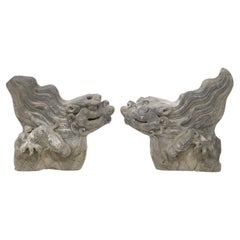
Chinese Ming Dynasty Architectural Terracotta Roof Tile Figure Qilin Foo Dog pr
Located in Forney, TX
A remarkable pair of large Ming Dynasty (1368-1644) earthenware Imperial roof decorations - ornamental architectural terracotta roof tile beasts.
15th/16th century or earlier, Northern China, most likely Forbidden City, Dongcheng District, Beijing, figural pottery modeled as mythical qilin (foo dog / guardian lion), the crouching beast with legs back and flaming body depicted ready to pounce. Retaining partial remnants of the red wax export seal, indicating they are authentic and were legally exported out of the country.
Dimensions: (approx)
Largest: 18" Tall, 19" Wide, 8" Deep
History:
Chinese roof tiles have been a part of Chinese architecture for over 2,000 years. These unique and beautifully crafted tiles have become an integral part of traditional Chinese culture, and have gained international recognition for their beauty and cultural significance. In this article, we will explore the different types of Chinese roof tiles, their construction, cultural significance, preservation and restoration techniques, and modern uses.
Chinese imperial roof decorations or roof charms or roof-figures (Chinese: 檐獸/檐兽; pinyin: yán shòu) or "walking beasts" (Chinese: 走獸/走兽; pinyin: zǒu shòu) or "crouching beasts" (Chinese: 蹲獸/蹲兽; pinyin: Dūn shòu) were statutes placed along the ridge line of official buildings of the Chinese empire. Only official buildings (palaces, government buildings, and some temples) were permitted to use such roof decorations.
Occasionally arranged in an outward marching procession with various different examples, the number and type indicating the importance of the duties performed within the building or within the courtyard protected by a gate. With a maximum number of nine, the mythical beast was one of the highest in rank, thus modeled set to pounce upon the man and lower ranking creatures, ready to devour them should they stray from performing their duties with faithfulness and rectitude
The Design and Construction of Chinese Roofs:
The roof design is an important aspect of Chinese architecture, with each component of the roof playing a specific role. Chinese roof tiles fit into the overall design of the roof and are placed on top of wooden supports called purlins. The interlocking system of Chinese roof tiles ensures that they stay in place and prevent leaks. Ridge tiles...
Category
Antique 16th Century Chinese Ming Sculptures and Carvings
Materials
Earthenware, Terracotta
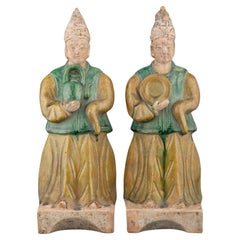
Chinese Ming Dynasty Antique Sancai Glazed Attendants Tomb Figure Pair
Located in Forney, TX
A pair of large antique Chinese polychrome ceramic attendants, Ming Dynasty (1368-1644).
Outstanding 500+ year old Sancai glazed earthenware pottery tomb figures, exceptionally executed figural form, exquisitely detailed, one holding a teapot, the other holding a charger, rising on rare sculptural plinth...
Category
Antique 15th Century and Earlier Chinese Ming Sculptures and Carvings
Materials
Ceramic, Earthenware
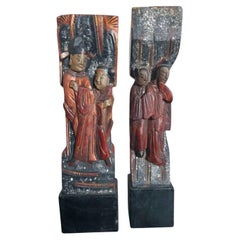
Pair of Qing Dynasty Chinese Religious Temple Architectural Ornament
Located in Forney, TX
A scarce pair of Qing Dynasty temple architectural ornaments, the decorative antique building element fragments each elaborately hand carved, polychrome painted and lacquered, richly detailed featuring two figural pairs accented...
Category
Antique Early 19th Century Asian Folk Art Architectural Elements
Materials
Mother-of-Pearl, Wood, Lacquer, Paint
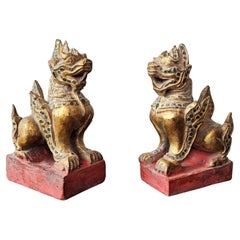
Antique Southeast Asian Burmese Jeweled Carved Qilin Foo Lion Figure Statue Pair
Located in Forney, TX
A near pair of antique Southeast Asian Burmese jeweled parcel gilt wooden temple guardian figure carvings. circa 1900
Hand carved in Burma (present day Myanmar) in the late 19th / early 20th century, most likely the Mandalay region, each richly detailed and gilded, adorned with inset green colored mirrored cut glass mosaic inlays, depicting mythical qilin / stylized lion temple guardian, rising on integral red lacquered platform base,
Dimensions: (approx)
Each: 7" Tall, 2.5" Wide, 4" Deep;
A charming pair of small highly decorative table sculptures / shelf statues...
Category
Early 20th Century Southeast Asian Folk Art Sculptures and Carvings
Materials
Cut Glass, Wood, Giltwood, Lacquer
You May Also Like
Chinese Han Dynasty Pottery Horse Head
Located in Bradenton, FL
Chinese Han Dynasty Pottery Horse Head. Crisply modelled with sharp features, including a gaping mouth, nostrils, eyes, ears and an alert exp...
Category
Antique 15th Century and Earlier Chinese Han Animal Sculptures
Materials
Pottery
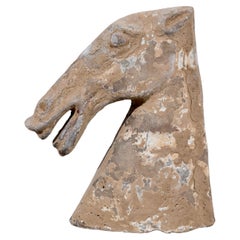
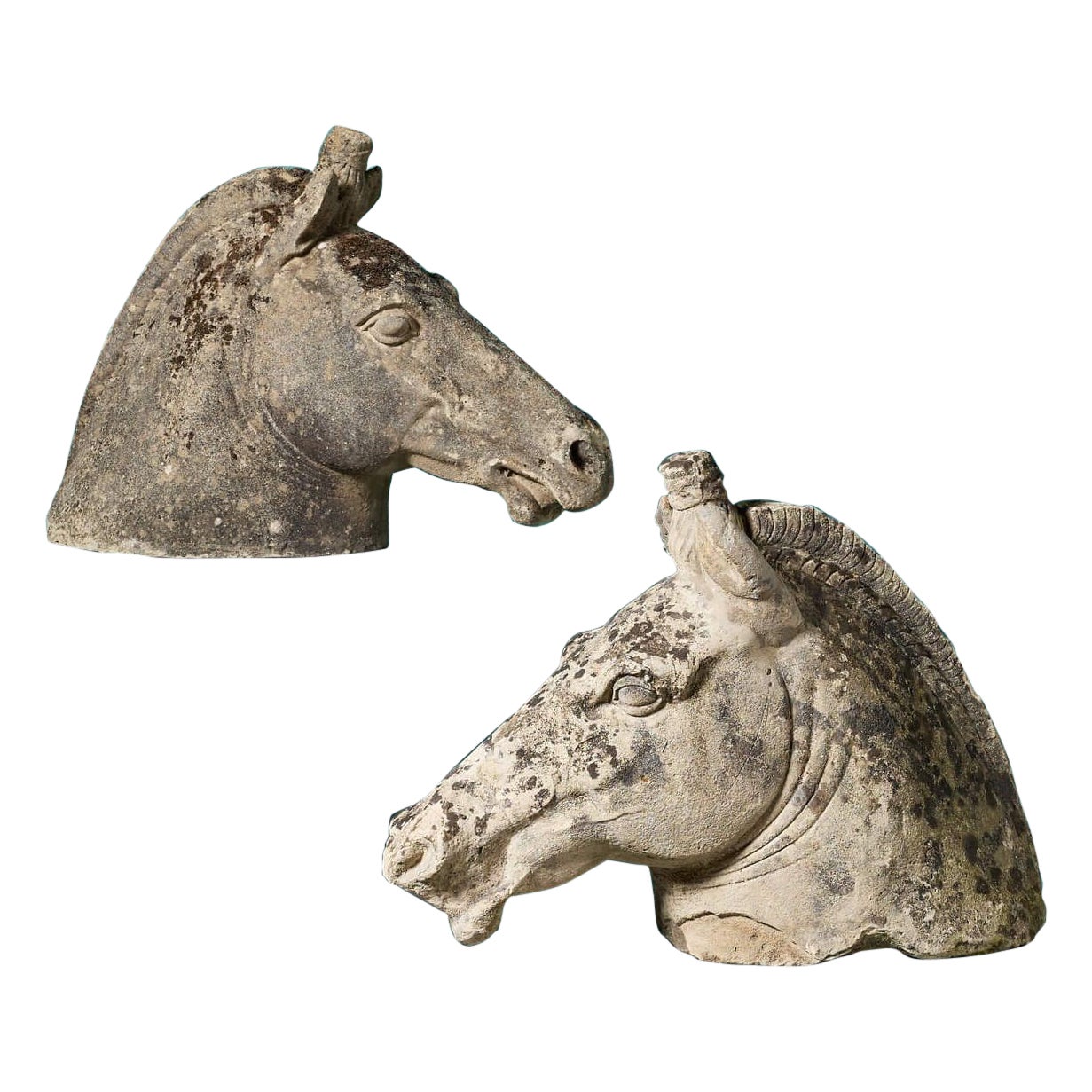
Pair of Roman Style Weathered Stone Horse Heads
Located in Wormelow, Herefordshire
An interesting pair of lifesize Roman style composition stone horse heads, beautifully weathered by exposure to the elements over many years.
Well-sculpted, the maker has captured t...
Category
Early 20th Century English Neoclassical Garden Ornaments
Materials
Sandstone
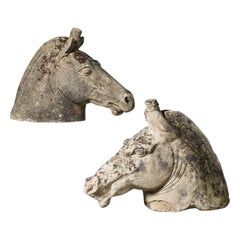
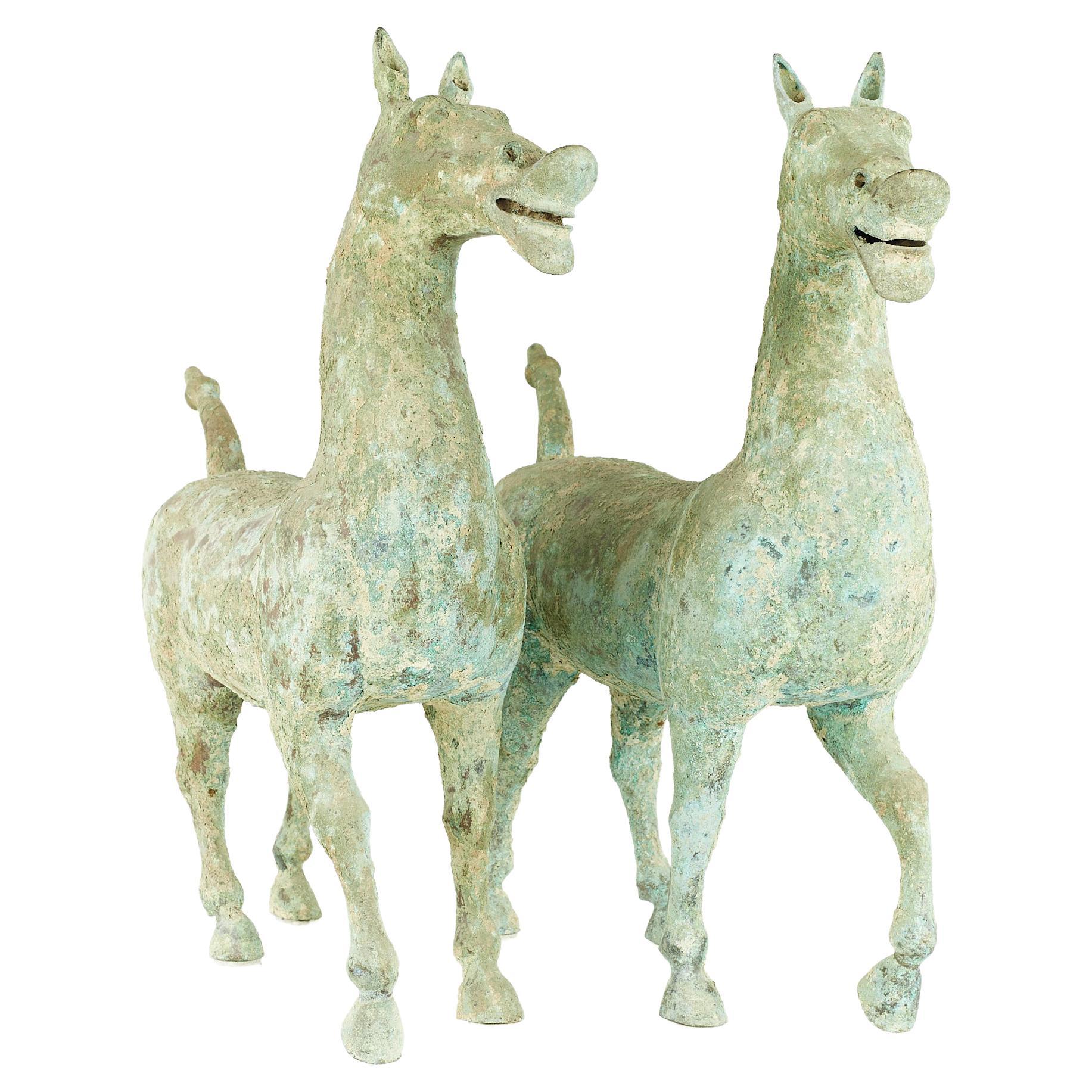
Han Dynasty Style Mid Century Terracotta Horse, Pair
Located in Franklin Park, IL
Han Dynasty style mid century Terracotta Horse - pair
Each figurine measures: 7 wide x 23 deep x 24 inches high
We take our photos in a controlled lighting studio to show as mu...
Category
Vintage 1970s American Mid-Century Modern Animal Sculptures
Materials
Terracotta
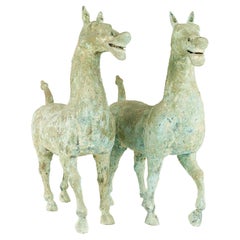
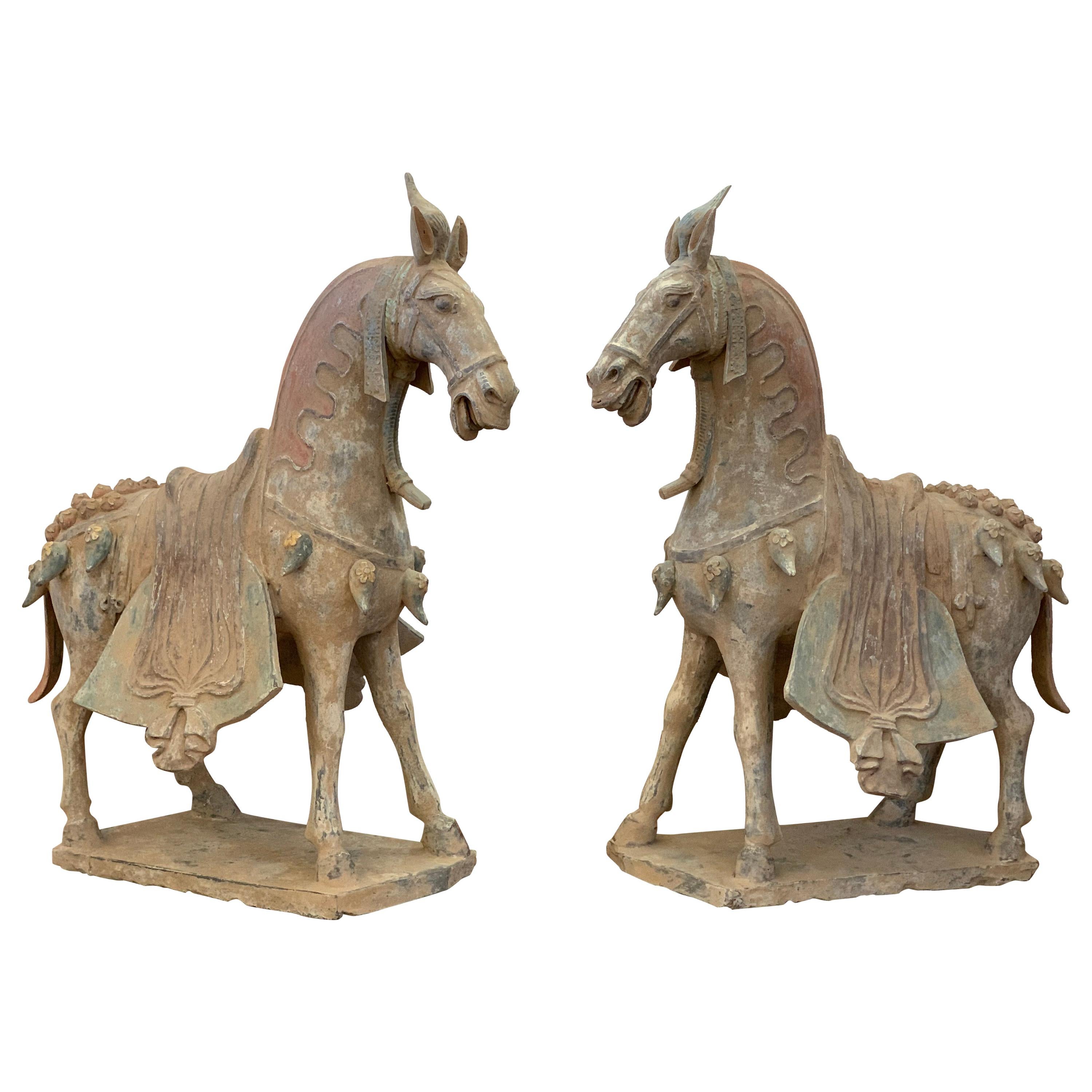
Northern Wei Dynasty Terracotta Horses, TL Tested,
386 AD-535 AD
Located in Miami, FL
A massive pottery pair of horses standing on all fours and striding with its right hoof forward. Extended snout ends in parted lips showing teeth beneath in a braying attitude. Low relief bridle on face and well defined eyes. Raised mane down back of the neck
A fantastic example of the Wei dynasty horses.
Large, exquisite walking Ferghana horses with great attention paid to anatomical detail were the choice of the wealthy. The horse was second only in importance to the dragon. It was supposed to possess magical powers which the early Chinese were eager to explore. It would be the horse that would carry the deceased to the next life and it would be the amount of horses that an individual owned that would guarantee his ongoing status in the hereafter.
Thermoluminescence certificate from Madrid Labs included.
In southern China, people turned to Daoism, and mingqi, as well as above-ground sculptures, became ever more infused with animal iconography and energized with dynamic lines.
The north of China was eventually united by nomadic Tuoba invaders who founded the Northern Wei dynasty...
Category
Antique 15th Century and Earlier Chinese Han Antiquities
Materials
Terracotta
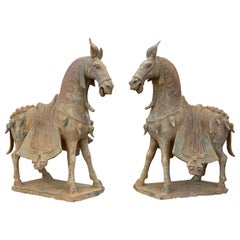
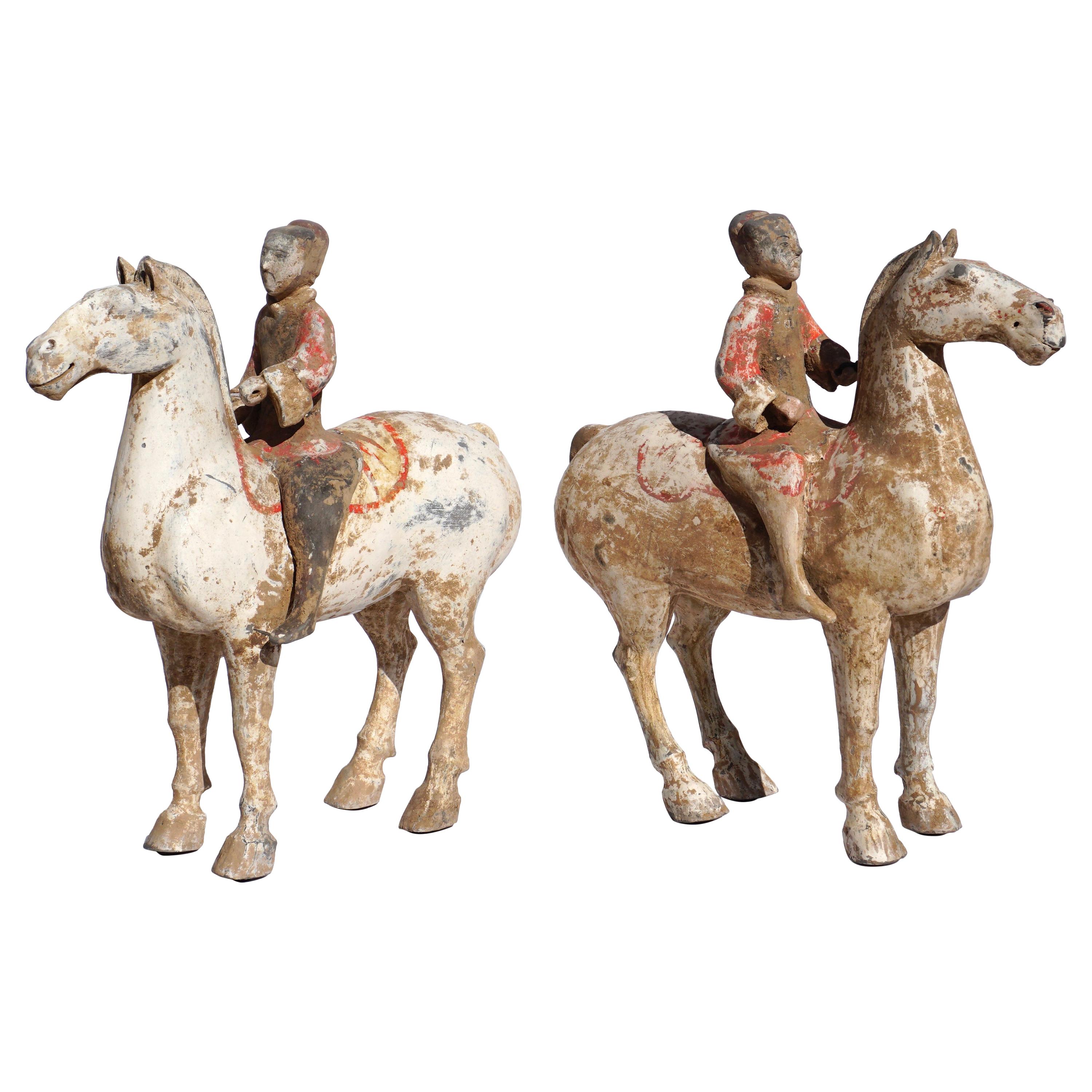
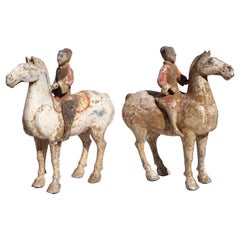
Pair of Han Dynasty pottery Horses and Equestrian Riders
Located in Dallas, TX
A wonderful pair of Ex Sotheby’s painted Polychrome equestrian horse and riders made from gray pottery, presents beautifully and guaranteed authentic with provenance and COA.
Measures: Height 11.5 inches and width 11 inches
Condition: Possible professional restorations but not detectable.
Provenance: Sotheby’s London. 16th November, 1999. Lot 12 (2 of 4 horsed in that lot)
Sotheby’s New York, NY September 14, 2019.
AVANTIQUES is dedicated to providing an exclusive curated collection of Fine Arts, Paintings, Bronzes, Asian treasures, Art Glass and Antiques. Our inventory represents time-tested investment quality items with everlasting decorative beauty. We look forward to your business and appreciate any reasonable offers. All of our curated items are vetted and guaranteed authentic and as described. Avantiques only deals in original antiques and never reproductions. We stand behind our treasures with a full money back return if the items are not as described.
The importance of the horse in the history and culture of China can be viewed, in part, through the artistic legacy of this great civilization. In sculpture, painting, and literature, horses were glorified and revered. Horses were believed to be related to mythological dragons, reflecting their sacred status within society. During the unification of China under the Han Dynasty, bands of mounted nomadic warriors from the north threatened the country. In order to thwart their attacks, the Chinese sought to import stronger, faster steeds from Central Asia (as opposed to the Mongol ponies used by the invaders), eventually leading to the creation of the Silk Road. This small sculpture of a mounted soldier reveals the crucial military role of the horse. When compared to the diminutive stature of the rider, the importance of the horse becomes readily apparent. This creature provided security and strength, allowing the empire to secure its borders and expand its influences across Central Asia. The magnificent regalia of the horse, including a brilliantly painted saddle in red and green/gold, reflect the respect this animal received. The warrior as well is gorgeously decorated with a painted red tunic and gray chest...
Category
Antique 15th Century and Earlier Chinese Han Animal Sculptures
Materials
Pottery
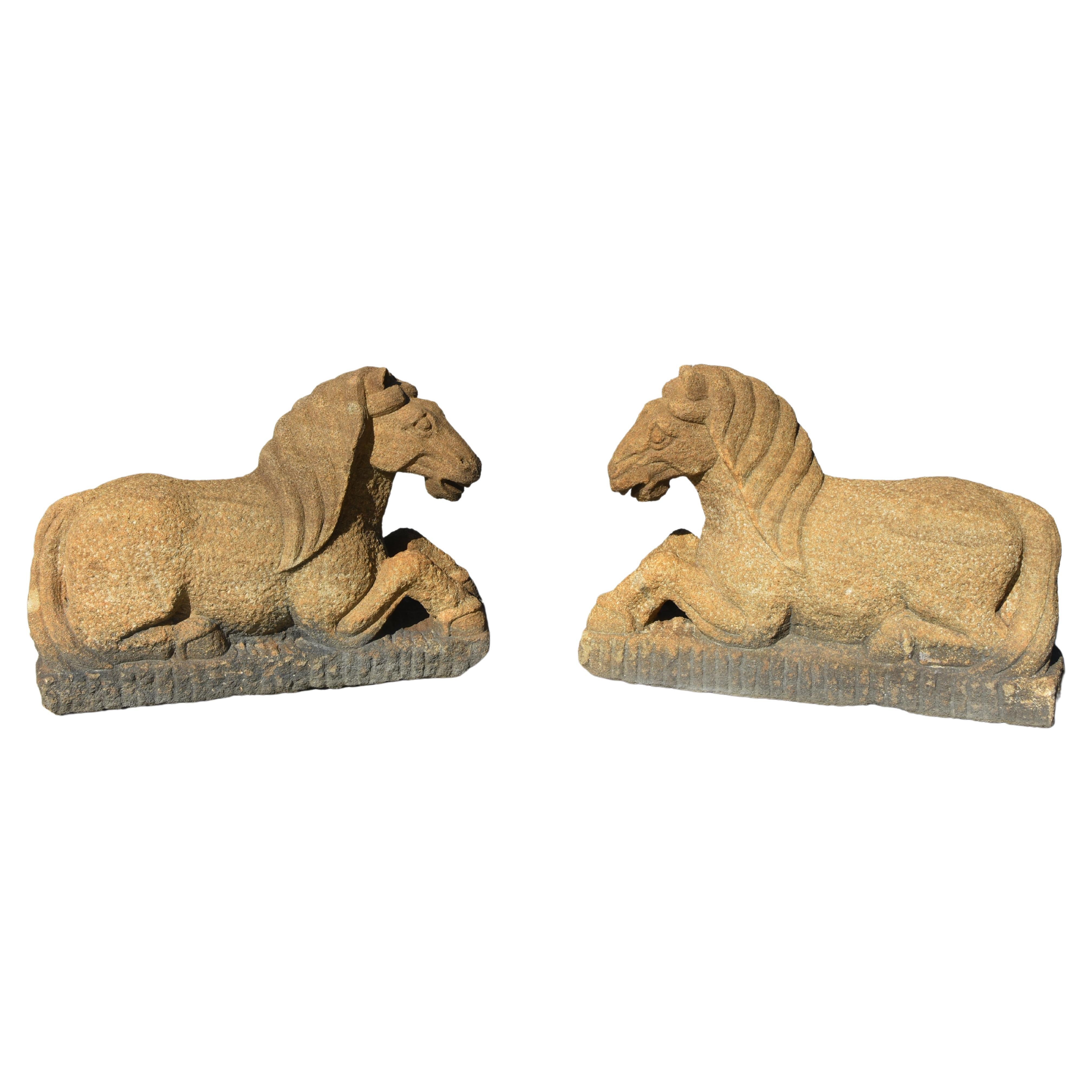
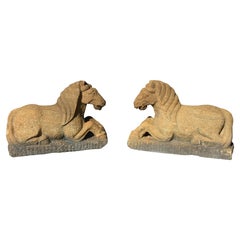
Pair Sandstone Horses Large Garden Animal Statue
Located in Somis, CA
A pair of hand carved, large solid stone horse statues. The recumbent horses are crafted with two legs tucked under the body and tail flicked to o...
Category
20th Century Chinese Han Sculptures and Carvings
Materials
Sandstone
$2,500 Sale Price / set
77% Off