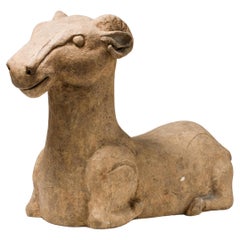
Items Similar to Stone Horned Bull Sculpture Decorative Objects, Ancient Pixiu Patina Home Decor
Video Loading
Want more images or videos?
Request additional images or videos from the seller
1 of 17
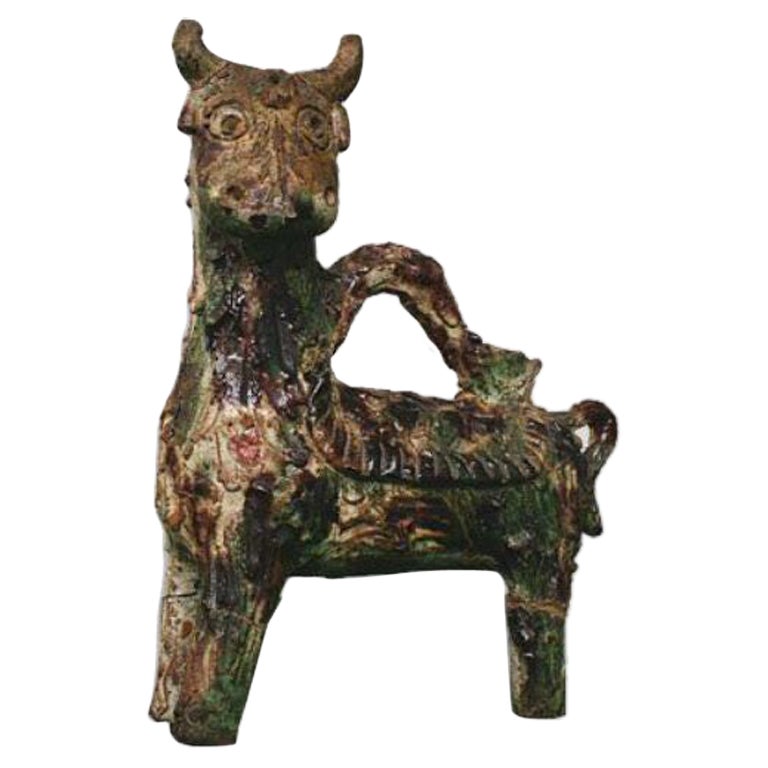
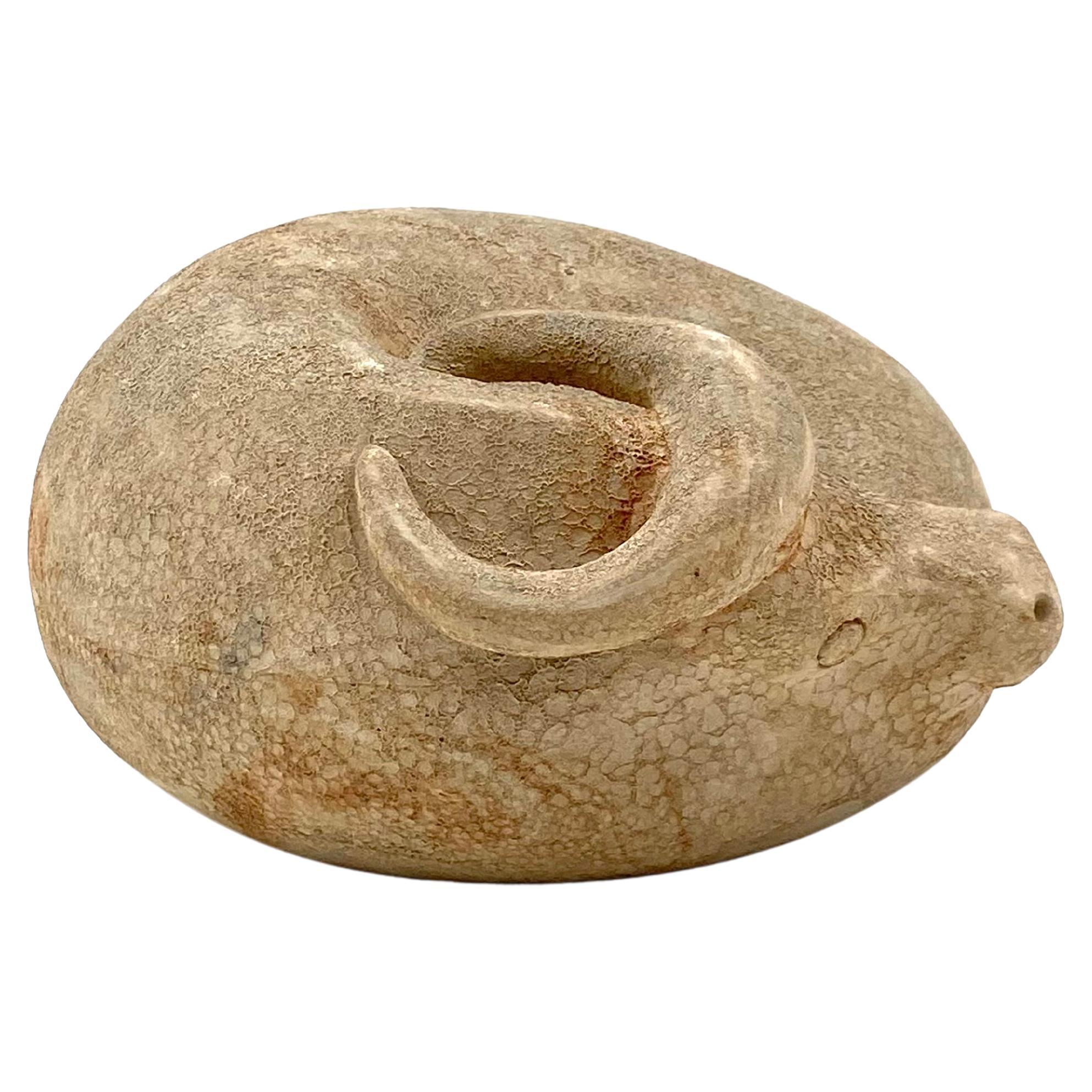
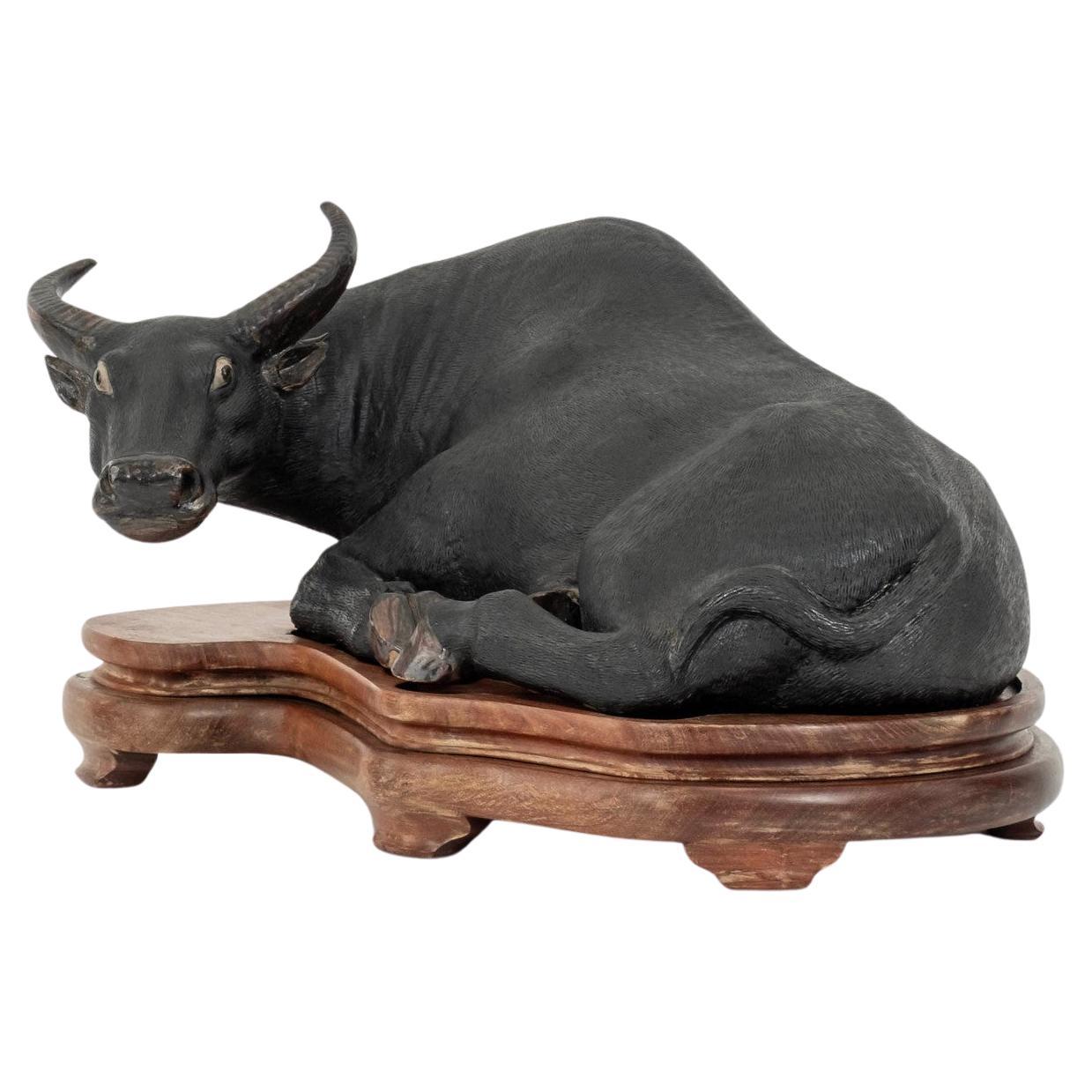
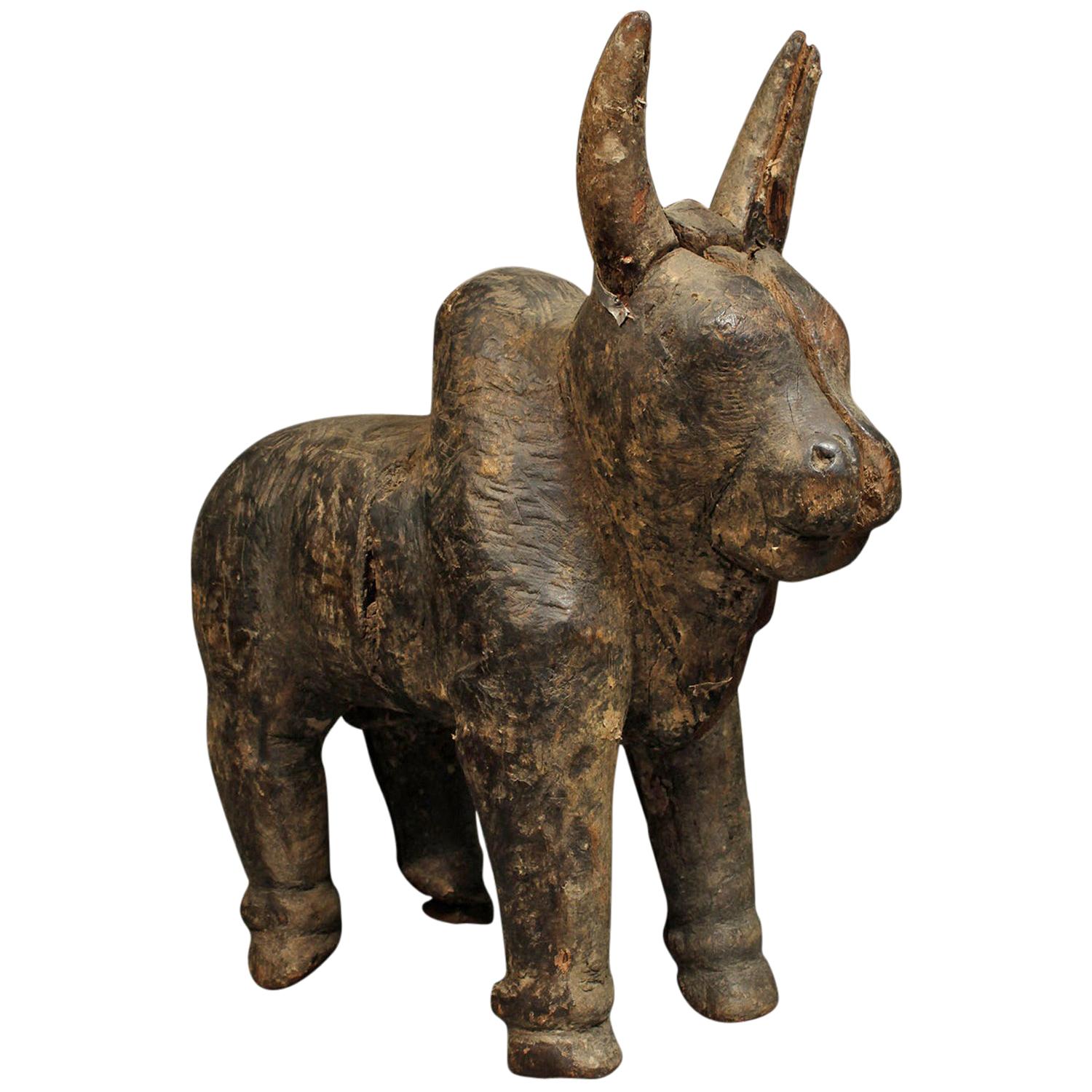
Stone Horned Bull Sculpture Decorative Objects, Ancient Pixiu Patina Home Decor
$1,371.65
$1,714.5620% Off
£992
£1,24020% Off
€1,168.98
€1,461.2320% Off
CA$1,888.01
CA$2,360.0120% Off
A$2,039.67
A$2,549.5820% Off
CHF 1,085.12
CHF 1,356.4020% Off
MX$24,542.72
MX$30,678.4120% Off
NOK 13,739.94
NOK 17,174.9220% Off
SEK 12,565.55
SEK 15,706.9320% Off
DKK 8,732.90
DKK 10,916.1220% Off
About the Item
Hand Created Sculpture Decorative Objects, stone Horned Bull, Ancient Pixiu for Home Decor
In tradition
As for all other Zoroastrian cosmological beliefs, the primary source of information on the primordial ox is the Bundahishn, a 9th-century text. In this text, the primordial ox is a hermaphrodite, having both milk and semen. It is "white, bright like the moon, and three measured poles in height".
In Shahnameh and other epic poems, which reflect the myths, the life of primitive and ancient
In Iranian societies, animals and others are important and go beyond their normal
features and status. Myths are truths of the thoughts and ideas of the first people, which are
mixed with different stories and are expressed symbolically and cryptically. Epic events are
usually the result of linking these myths to history. Among the animals, "cow" is one of the actors
that is mentioned in Ferdowsi's Shahnameh and other epic poems, and has its themes and
themes. This article aims to examine the place of the cow in the myths and civilizations of the past,
as well as in the most valuable epic work, Shahnameh and five other epic poems (Garshasbnameh,
Kushnameh, Bahmannameh, Banogshsabnameh and Borzoonameh) and the most important
mythological themes. Extract, classify and analyze the epic and ritual of this animal. These themes
are the lexical and symbolic meaning of the cow, the place of the cow in myths and ancient Iran, the
relationship between the creation and death of Kiomars with the cow, the cow's relationship with the human
psyche and moon, Heroic Cow, Heroic Breeding, Sculpture or Composition, Gausser Stick,
Cow, Name of the Tower in the Sky, Cattle Totem
Griffin’s role in Iranian artwork can be described in three historical periods:
Prehistoric era, Achaemenid era, and Sassanid era.
Prehistoric era
The patterns acquired from this period are related to the Marlik Hills, Lorestan, and Ziwiyeh areas. There are also artworks with the figure of combination creatures, including the bird’s head and the body of a four-footed animal from the Amlash Hasanlu area. The figure of the Eagle has also been observed on ancient Persia's pottery and cylinder seals. Eagles with widespread wings are painted among the Ilam cylindrical seals and jellies of silk hills in Kashan. In the Shusha tiles (related to the third millennium), the golden medallion is represented by the figure of an eagle with open wings, as well as Lorestan’s bronze works, artefacts near Amlash and Marlik, and Hasanlu’s golden bowl (early 2nd millennium BC) are also decorated with the figure of Eagle. But the oldest Griffin sample in Persian art has been observed on the metal container from the Marlik hill. The history metal cup of Marlik is taken back to three thousand years ago, the end of the second millennium and the early millennium BC. Four gryphons are on the four sides of the upper edges embossed on the Golden Cup. Another example of a Griffin is a small golden jewellery set of eight centimetres in height, derived from the Ziwiyeh of Kurdistan, dating back to the fifth century BC.
Griffin in the Achaemenid period:
Griffin samples date back to the Achaemenid period of 500 BC. The artistic form of these particular creatures dates back to the Achaemenid Period and represents the most memorable Griffins of all ages. Achaemenid Griffins are made up of large sizes in capitals to small ones in jewellery. One of the patterns found on the margin of the Pazyryk carpet of the Achaemenid period is a Griffin, which is repeated in the form of a winged lion alternatively. The other type of Griffin, specific to the Achaemenid era and the inventions of the time, is the horned Griffin observed in Achaemenid jewellery samples. The combination of the eagle’s head and the hands of the lion with the bird’s paw has also been added to these jewels. Adding the horn doubles the sanctity and respect attribute of this creature.
Griffin in the Sassanid period:
The figure of the Eagle in the Sassanid period has great importance. In many Sassanian artworks, the figure of the eagle or only the eagle’s wings is portrayed. Still, the figure of the gryphon, in a way that was previously common, was changed into a bird called the Sassanid Simorgh. This bird combines a lion’s body; a head belongs to a dog or lion with wings, an eagle’s claw, and sometimes a tail of peacock’s feathers. This mythological and giant bird, generally seen in all Sassanid works of metal, stone and textiles, meant bringing happiness and goodness of life to its owner. The Sassanid Simorgh seems the same as the Achaemenid Griffin, which has roots in literature, mythical stories, Pahlavi texts, and religious songs of India and Iran.
Height approx. 28 cm, 21 x 18 cm.
Condition
Excellent Condition
- Dimensions:Height: 8.67 in (22 cm)Width: 11.03 in (28 cm)Depth: 7.09 in (18 cm)
- Style:Art Deco (Of the Period)
- Materials and Techniques:
- Place of Origin:
- Period:
- Date of Manufacture:1960
- Condition:
- Seller Location:Wembley, GB
- Reference Number:Seller: DEC741stDibs: LU967940279002
About the Seller
5.0
Platinum Seller
Premium sellers with a 4.7+ rating and 24-hour response times
Established in 1980
1stDibs seller since 2013
534 sales on 1stDibs
Typical response time: <1 hour
Associations
International Confederation of Art and Antique Dealers
Associations
- ShippingRetrieving quote...Shipping from: Southampton, Hampshire, United Kingdom
- Return Policy
More From This Seller
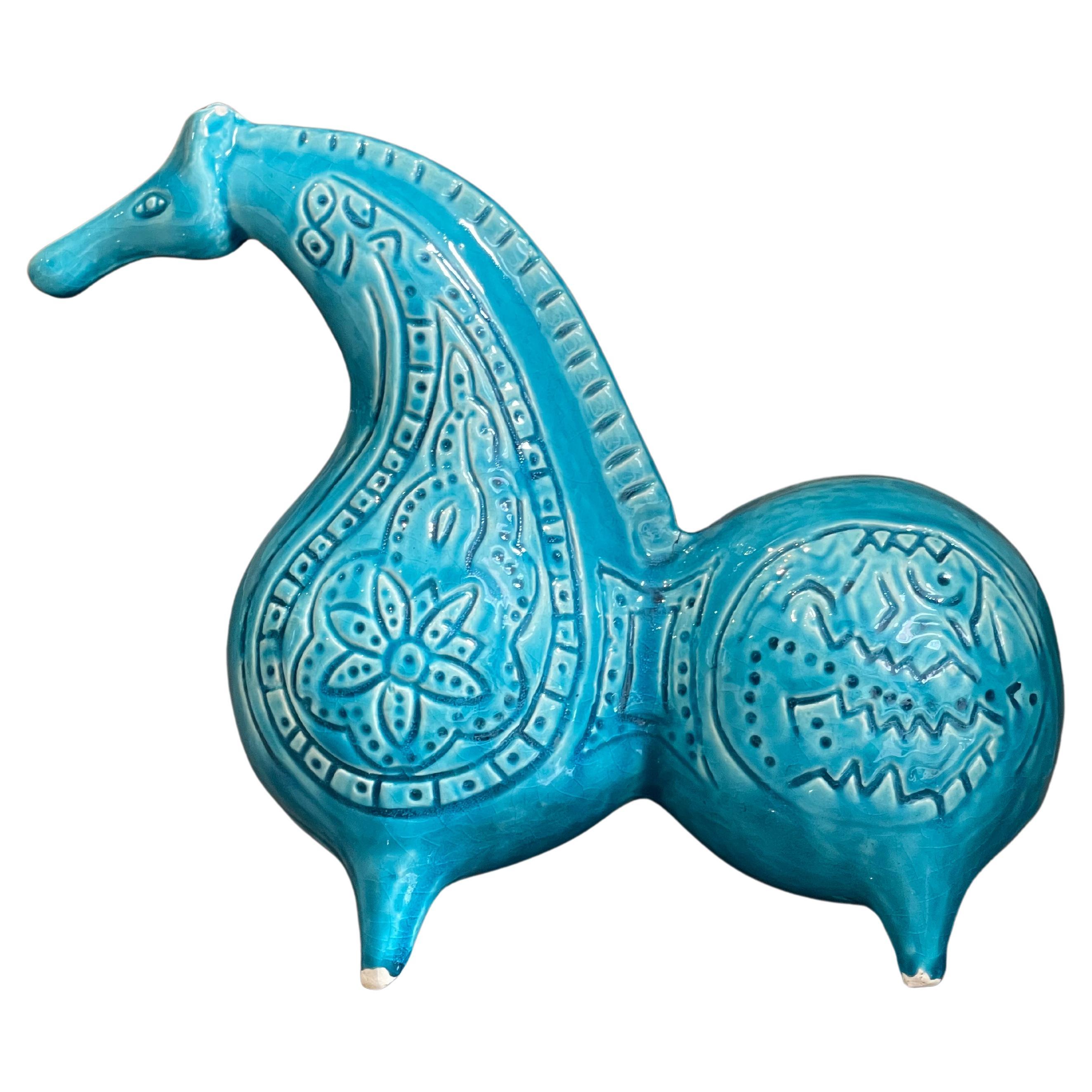
View AllHand Ceramic Abstract Horse Sculpture Decorative Ancient Pixiu Glazed Home Decor
Located in Wembley, GB
Turquoise Blue Hand Ceramic Abstract Horse Sculpture Decorative Ancient Pixiu Glazed Home Decor
In tradition
Anahita, the Persian goddess associated with water, fertility, and wisd...
Category
Vintage 1970s West Asian Art Deco Abstract Sculptures
Materials
Gold Plate, Brass
$1,216 Sale Price
20% Off
Free Shipping
Sculpture Decorative Sculpture, Stone Horned Bull, Ancient Pixiu for Home Decor
Located in Wembley, GB
Sculpture Decorative Objects, stone Horned Bull, Ancient Pixiu for Home Decor
In tradition
As also for all other Zoroastrian cosmological beliefs, the primary source of information ...
Category
Vintage 1940s West Asian Hollywood Regency Animal Sculptures
Materials
Gold Plate, Brass
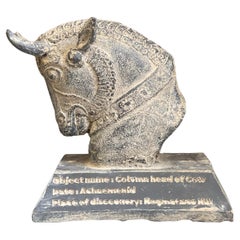
$1,327 Sale Price
20% Off
Free Shipping
Antique Hand Carve Sculpture African Green Malachite Stone Figurine Rhinoceros
Located in Wembley, GB
Beautifully stylized figurine with a great balance of harmony stood, portraying the inner world's beauty through pure beauty.
This Valuable unique art piece is a great chance to brin...
Category
Vintage 1930s Zimbabwean Art Deco Figurative Sculptures
Materials
Malachite
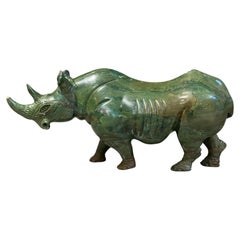
$719 Sale Price
20% Off
Free Shipping
A Set Of 3 Antique Sculpture Decorative Stone Figurine of Cat Rhinoceros Dolphin
Located in Wembley, GB
Beautifully stylized a set of 3 figurines with a great balance of harmony stood, portrays the beauty of the inner world through pure beauty.
This Valuable unique art piece is a great...
Category
Vintage 1930s Swedish Art Deco Figurative Sculptures
Materials
Ceramic, Acrylic, Wood, Fruitwood, Driftwood, Pine, Bog Wood
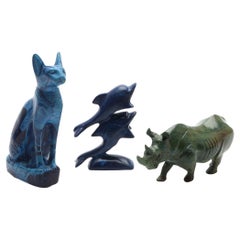
$2,060 / set
Free Shipping
Decorative Bronze Figure of a Bull, Home Decor Objects After Jules Moigniez
Located in Wembley, GB
Bronze Sculpture “Bovine Family” After Jules Moigniez, French Animalier Art
An exquisite bronze sculpture titled “Bovine Family”, after the renowned Fren...
Category
Antique Early 1800s French Art Deco Sculptures and Carvings
Materials
Bronze
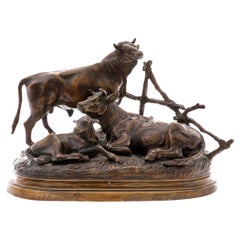
$2,654 Sale Price / item
48% Off
Free Shipping
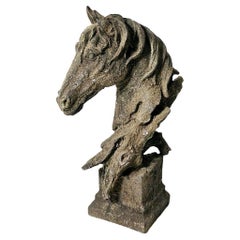
Antique Horse Head Sculpture Iron Figurine Busts Home Decor Plinth Metal Head
Located in Wembley, GB
Beautifully created antique horse head figurine with a great balance of harmony, it portrays the beauty of the inner world through love and beauty....
Category
Antique 1880s Greek Art Deco Animal Sculptures
Materials
Metal, Iron, Sheet Metal
$1,084 Sale Price
39% Off
Free Shipping
You May Also Like
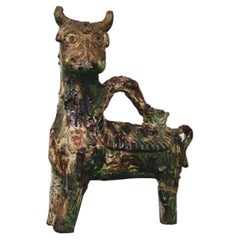
Glazed Ceramic Cow (Asia)
Located in Marseille, FR
Statuette representing a glazed ceramic cow (Asia) from a private collection on Asia (a paste is missing). Unknown origin, unknown time.
Additional information:
Material: Earthenwar...
Category
Antique 19th Century Animal Sculptures
Materials
Ceramic
Early Chinese Stone Horse Sculpture
Located in Sheffield, MA
This early Chinese carved stone horse has markings of an elaborate bridle and is an impressive showpiece.
Category
Antique 19th Century Chinese Archaistic Animal Sculptures
Materials
Stone
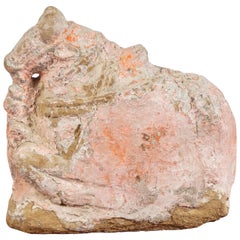
Mid-century ceramic lying bull, Petucco and Tolio, Nove Italy 1960s
Located in Firenze, IT
Mid-century ceramic lying bull
Ceramic art workshop Giovanni Petucco and Antonio Tolio, Nove Italy 1960s
H 14.5 - 24 cm diam.
Conditions: excellent, no defects
Category
Vintage 1960s Italian Mid-Century Modern Animal Sculptures
Materials
Ceramic
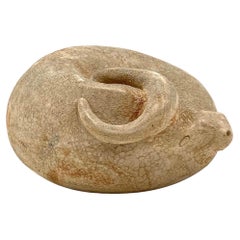
Ceramic Chinese Ox
Located in Houston, TX
Early 20th Century Chinese Ceramic Ox sculpture featuring a well-detailed combed and slightly textured finish and decorated in an opaque, matt glaze...
Category
20th Century Chinese Animal Sculptures
Materials
Ceramic, Wood
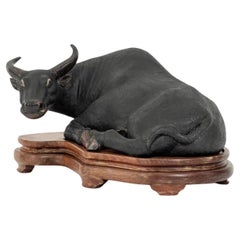
$6,800
19th Century Large Buffalo Statue from Burma
Located in Point Richmond, CA
19th century exceptionally large buffalo mold from Burma
Materials: wood, metal
Measures: H 23 in x L 18.5 in, 58.4 cm x 47 cm.
Wooden buffalo mold for making papier mâché toy...
Category
Antique 19th Century Burmese Tribal Sculptures and Carvings
Materials
Metal
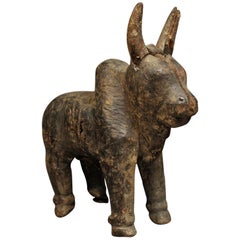
A Large Earthenware Terracotta Goat
Located in seoul, KR
This terracotta goat characterized by stylized features common to the period. Such animal figures might have served ritualistic or religious purposes, ...
Category
Antique 15th Century and Earlier Chinese Han Antiquities
Materials
Earthenware