Items Similar to Antique Carved Sandstone Head from Cockermouth
Want more images or videos?
Request additional images or videos from the seller
1 of 5
Antique Carved Sandstone Head from Cockermouth
$2,019.85
£1,475
€1,728.99
CA$2,781.50
A$3,027.59
CHF 1,604.21
MX$36,411.41
NOK 20,397.17
SEK 18,691.75
DKK 12,915.42
About the Item
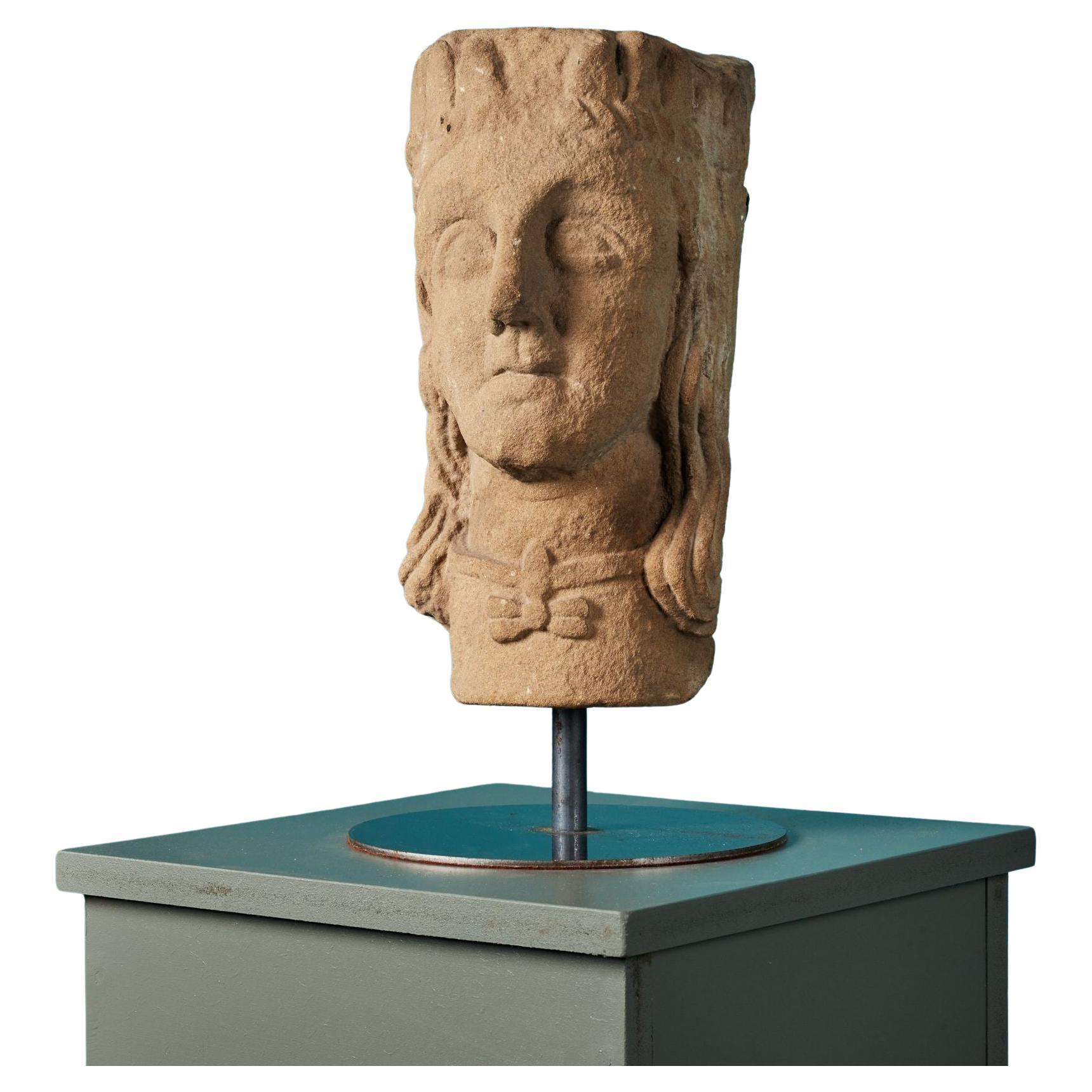
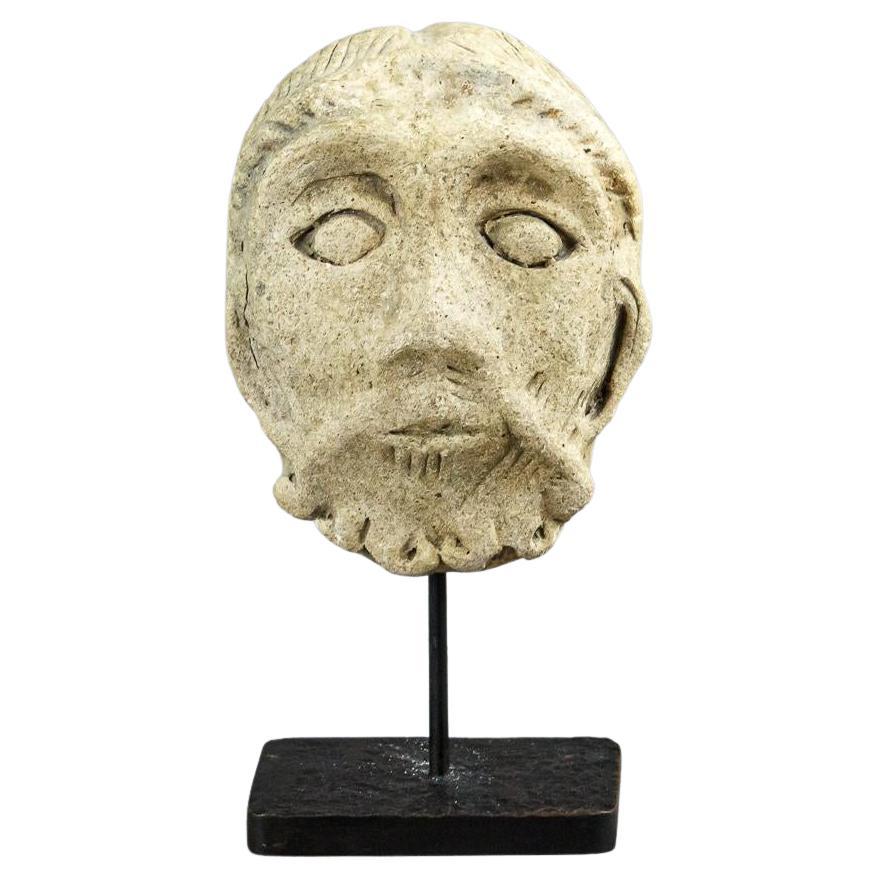
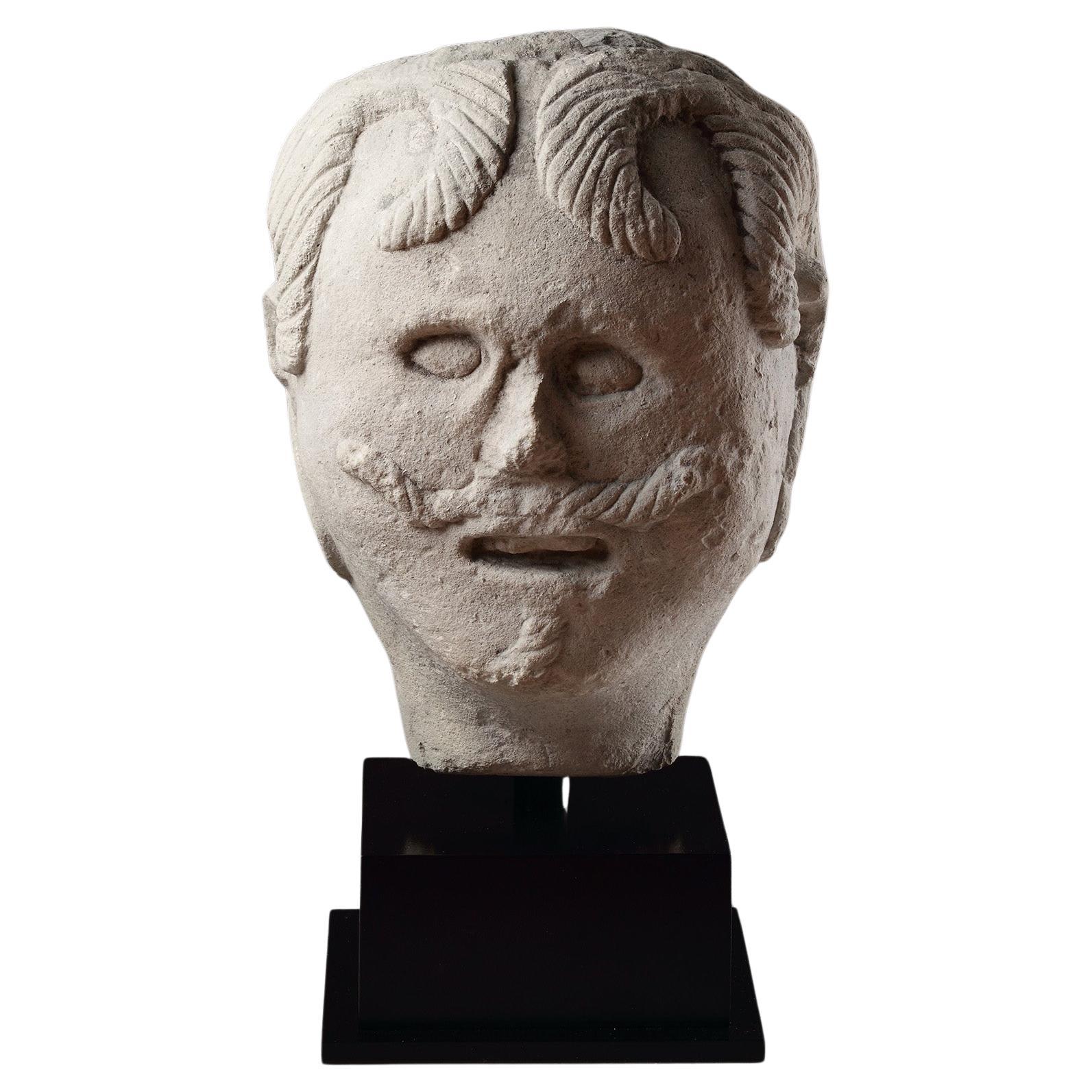
Antique carved sandstone head dating back to 1800. This carefully crafted piece has certainly stood the test of time - at 200 years old the details of this distinguished gentlemen are still very much intact. He is a moustached man, with a Victorian look, giving a deep and direct stare.
Cockermouth
The head originates from the town of Cockermouth, which is located at the junction of the Derwent and Cocker rivers and considered the gateway to the western Lake District and the Solway Coast. The town is classified as an architectural gem with 105 listed buildings, and stone for older buildings was quarried locally. This sculpture is made from Lazonby Red Sandstone, which has a high Quartz content that gives it a distinct sparkle in the sunlight.
Additional dimensions:
Stone head only: H20.5 x W16 x D17 cm
- Dimensions:Height: 14.18 in (36 cm)Width: 7.88 in (20 cm)Depth: 9.06 in (23 cm)
- Style:Victorian (In the Style Of)
- Materials and Techniques:
- Period:
- Date of Manufacture:1800
- Condition:Good structural condition. Weathered. Small scuffs and losses. No repairs. Later mounted onto a custom steel stand.
- Seller Location:Wormelow, GB
- Reference Number:Seller: 9351041stDibs: LU2096336458942
About the Seller
4.9
Platinum Seller
Premium sellers with a 4.7+ rating and 24-hour response times
Established in 2006
1stDibs seller since 2016
782 sales on 1stDibs
Typical response time: 5 hours
- ShippingRetrieving quote...Shipping from: Wormelow, United Kingdom
- Return Policy
More From This Seller
View AllEnglish Medieval Stone Head Mounted onto Steel Stand
Located in Wormelow, Herefordshire
A medieval stone carving of a female head dating form the 16th century. Reclaimed from Northern England and mounted on a modern steel stand.
Additional...
Category
Antique 15th Century and Earlier English Medieval Sculptures and Carvings
Materials
Stone, Steel
Antique Lipscombe
Co. Glazed Buff Terracotta Mask Head
By Lipscombe
Co.
Located in Wormelow, Herefordshire
A late 19th century glazed buff terracotta mask head of a putto or cherub by Lipscombe & Co, modelled after Francois Duquesnoy (1597-1643).
The expressive face of this antique sculp...
Category
Antique Late 19th Century English Victorian Busts
Materials
Ceramic, Stoneware
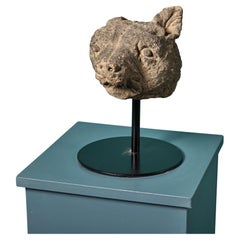
Antique Carved Stone Bear Head Sculpture
Located in Wormelow, Herefordshire
An antique carved sandstone head of a bear, mounted to a custom steel display stand. This sculpture is thought to have been part of a corbel in a grand ...
Category
Antique Early 17th Century English Georgian Animal Sculptures
Materials
Sandstone, Stone
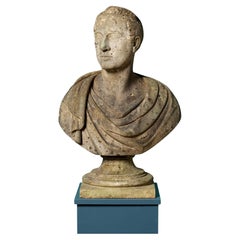
Jospeh Nollekens (1814) Weathered Antique Marble Bust
By Joseph Nollekens
Located in Wormelow, Herefordshire
A weathered antique marble bust attributed to the the studio of late 18th century/early 19th century sculptor, Joseph Nollekens R.A. Signed ‘J.Nol...
Category
Antique Early 19th Century English Regency Busts
Materials
Marble
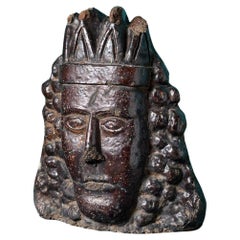
17th Century Stoneware Bust of James II
Located in Wormelow, Herefordshire
A rare 17th century glazed stoneware bust of King James II. James ruled as King James II of England and VII of Scotland from 1685 - 1688.
Handcrafted, this old antique bust offers a...
Category
Antique Mid-17th Century English Busts
Materials
Stoneware
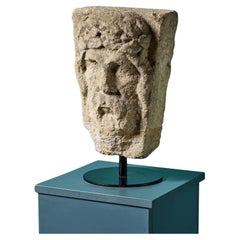
Antique Limestone Keystone of an English King
Located in Wormelow, Herefordshire
An antique carved limestone keystones of an English king, salvaged from a period building in East Anglia.
Displayed on a modern steel stand in a sleek black finish, this keystone is...
Category
Antique Mid-18th Century English Georgian Mounted Objects
Materials
Stone, Limestone, Steel
You May Also Like
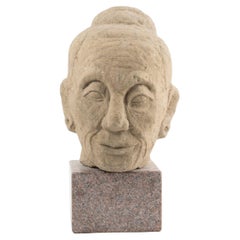
Sandstone Head of a Lohan
Located in Kastrup, DK
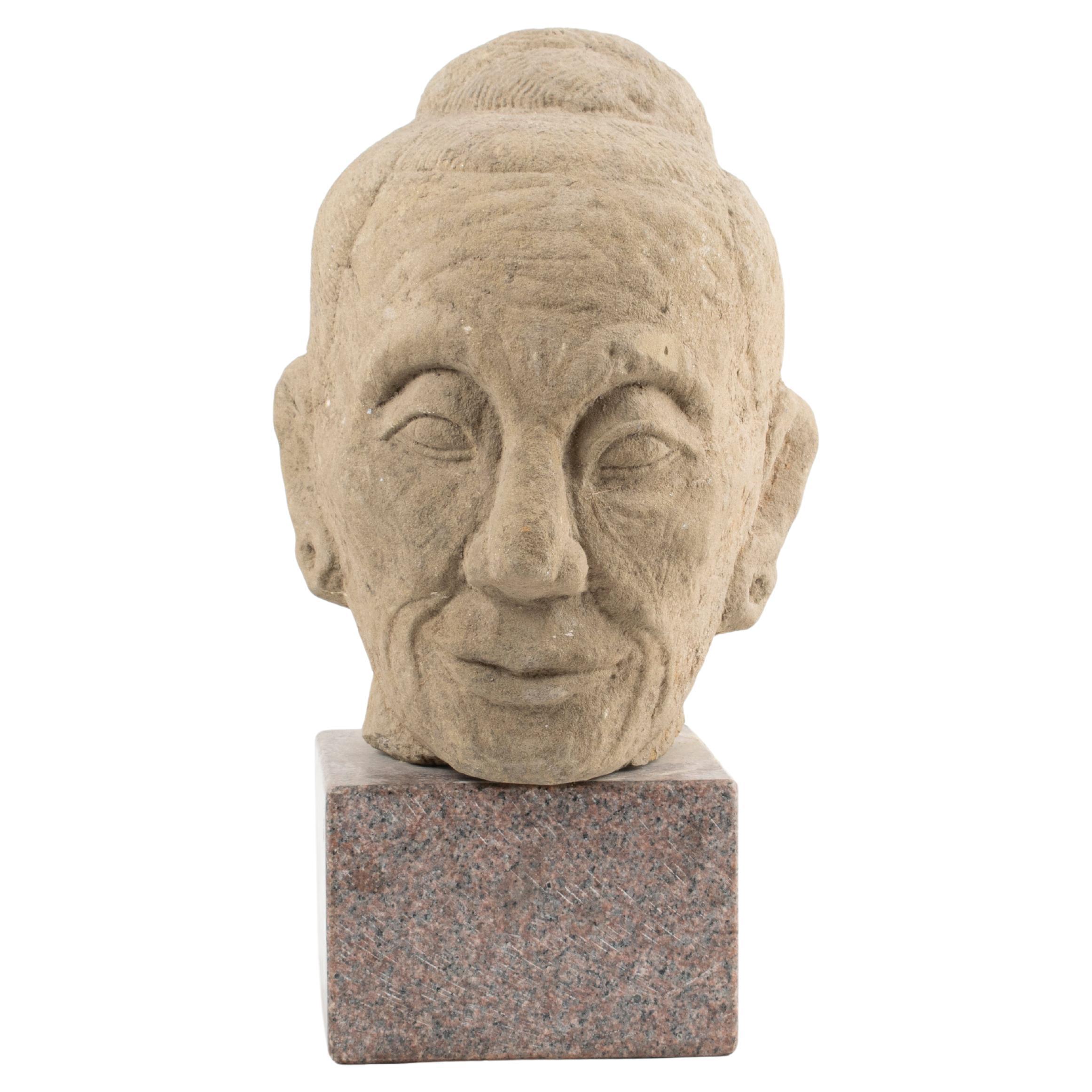
16-17th century hand-carved sandstone head of a Lohan.
Skillful execution, highlighting the face with vigorous modeling and harmoniously expression.
In original and untouched condition. Mounted on later granite plinth...
Category
Antique 17th Century Chinese Other Mounted Objects
Materials
Granite, Sandstone
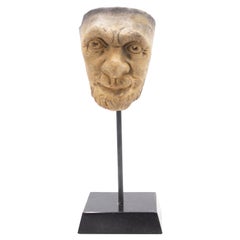
Continental German Terra-Cotta Mask
Located in Queens, NY
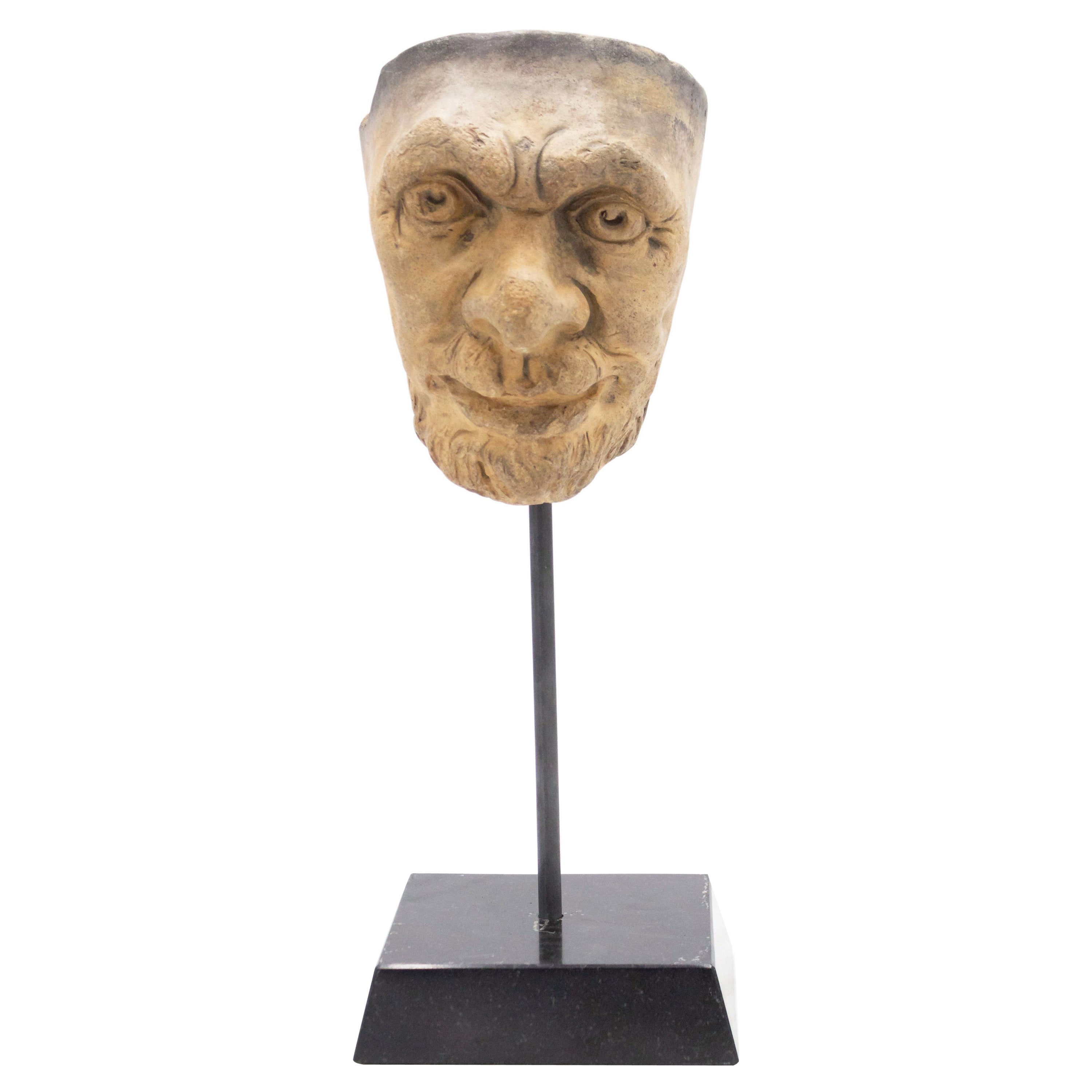
Continental German (late 19th Cent) sculpted terra-cotta master mask mold of a bearded old man with furrowed brow displayed on a square black marble base stand (part of a collection)...
Category
Antique 19th Century German Other Busts
Materials
Marble
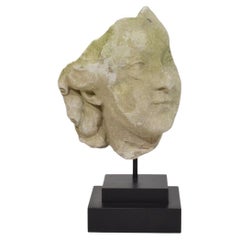
French, 18th Century Carved Stone Head Fragment
Located in Buisson, FR
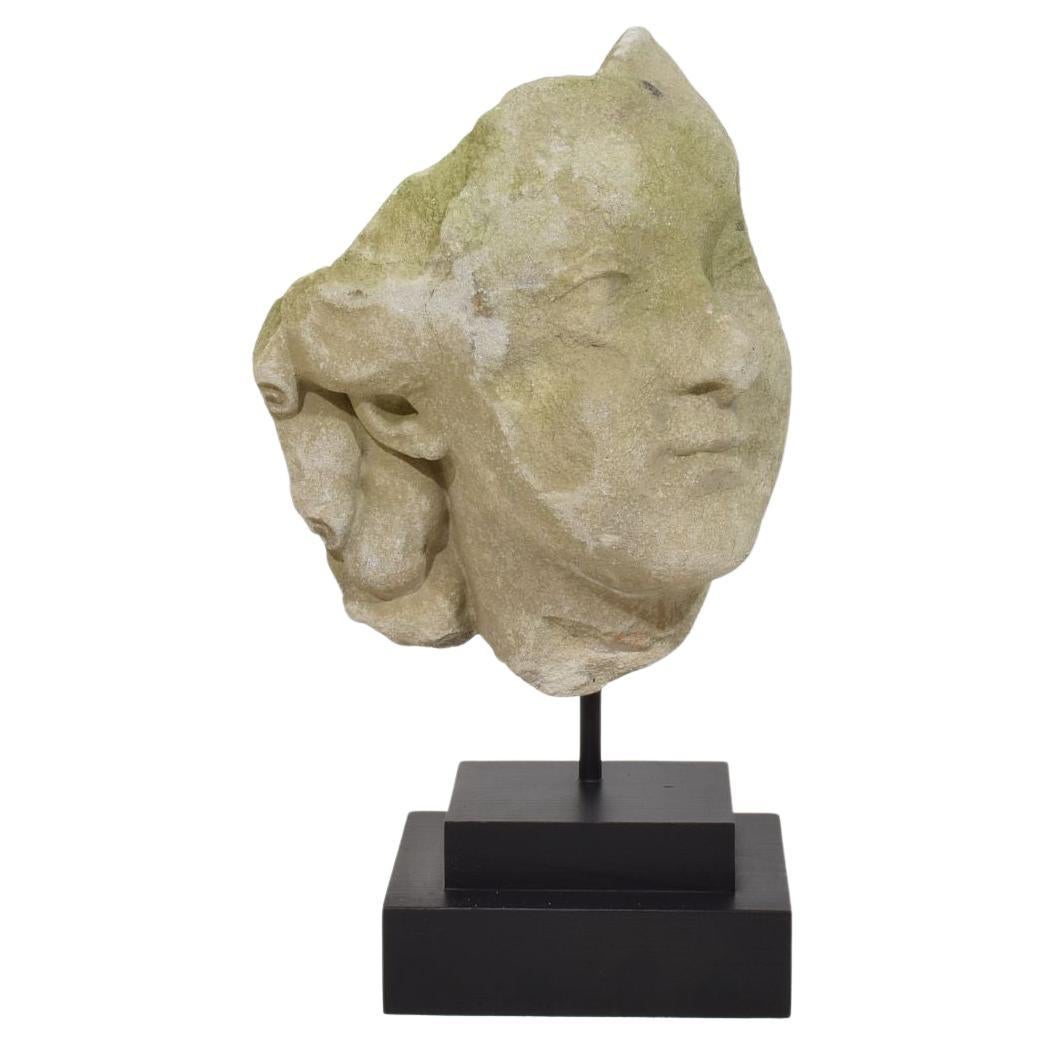
Magnificent carved stone head fragment with a very beautiful and strong expression.
France, circa 1750.
Beautiful weathered and small losses.
Measurement is with the wooden base.
H:3...
Category
Antique 18th Century French Baroque Figurative Sculptures
Materials
Stone
$1,519 Sale Price
32% Off
Romanesque Antique Carved Stone Head
Located in Pease pottage, West Sussex
Engaging Romanesque Antique Carved Stone Head, intriguing linear incised hair, tightly curled beard and moustache, wide eyes and pronounced e...
Category
Antique 15th Century and Earlier French Figurative Sculptures
Materials
Limestone
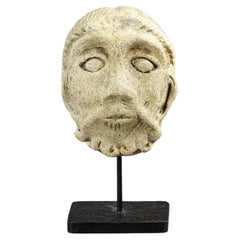
European Carved Limestone Celtic Votive Head of a Male Warrior
Located in London, GB
A Large European Carved Limestone Celtic Votive Head of a Male Warrior Wearing a Typical Flowing Moustache Small Beard and Curling Locks of Hair Stiffened with Lime Wash the Slit Mouth Open as if in Command
Circa 1st Century BC - 1st Century AD
Size: 31cm high, 22cm wide, 25cm deep - 12¼ ins high, 8¾ ins wide, 9¾ ins deep / 42cm high - 16½ ins high (with base)
From about 500 BC, first Greek and later Roman historians mention peoples living in a large area of non-mediterranean Europe as Celts. These classical chroniclers seem to have recognised these communities as having sufficient shared cultural traditions to justify their being given a common name, ‘Keltoi’ by the Greeks, and ‘Celtae’ or ‘Galli’ by the Romans. The earliest allusions to Celts by such Greek historians as Herodotus (485 - 425 BC) were followed by Polybius (200 - 118 BC) and Livy (59 BC - AD 17) who discuss the expansion of the Celts from their central European homelands during the 4th and 3rd centuries BC. They document the presence of Celts in Spain, France, Italy, Greece and Asia Minor, specifically central Turkey. They testify to the successful Roman resistance to the Celts in Italy, after the ignominy of the sacking of Rome by them in 387 BC, and describe the huge defeat suffered by the Celts at the battle of Telemon in northern Italy in 225 BC. The Celts in Greece who sacked the sacred site of Delphi in 279 BC were defeated by King Antigonos Gonatas of Macedon in 278 - 277 BC and in Turkey by Altalus of Pergamon in 240 BC. The Celts in Spain fell under the shadow of Rome from 2nd Century BC and the Celtic heartland known by the Romans as ‘Gaul’ was conquered by the Romans under Julius Caesar in the mid 1st Century BC. Britain was not referred to as Celtic by the ancient historians, but Caesar recognised the close similarities between Britain and Gaul especially in their political organisation. Tacitus (55 - 120 AD) and others chronicled the conquest of Britain between 43 and 84 AD some mentioning the fierce nature of the Celts who went into battle naked.
Celtic art therefore belongs to an artistic tradition in the early history of Europe which is no less important than that of the classical world. Art was central to Celtic identity and was closely related to the objects which it decorated. The Celts were used to seeing art as an integral part of their everyday lives.
Provenance:
Ex Finch and Co...
Category
Antique 15th Century and Earlier European Busts
Materials
Limestone
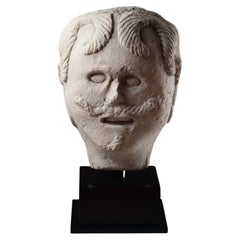
Stone Head Sculpture, United Kingdom, XVIIth Century
Located in MARSEILLE, FR
Sculpted stone head on a modern base, of a mustachioed man
According to the 1983 sales certificate, it would be a 17th century sculpture, even before, of United Kingdom or Ireland o...
Category
Antique 17th Century British Medieval Figurative Sculptures
Materials
Stone
More Ways To Browse
Antique Sandstone
Stone Head
Sandstone Carved
Antique Stone Head
Sandstone Head Sculpture
Ludwig Van Beethoven
Marble Bust Girl
Apollo Belvedere Sculpture
Egypt Bust
Lion Bust
Dior Plaster
Marble Bust Apollo
Plaster Bust Of A Child
Sculpture Terracotta Man
Bust Plaster Male
Plaster Bust Roman
Portrait Bust Bronze
Villanis Bronze