Items Similar to Antique Venetian Stone Head of a Roman Gladiator
Want more images or videos?
Request additional images or videos from the seller
1 of 16
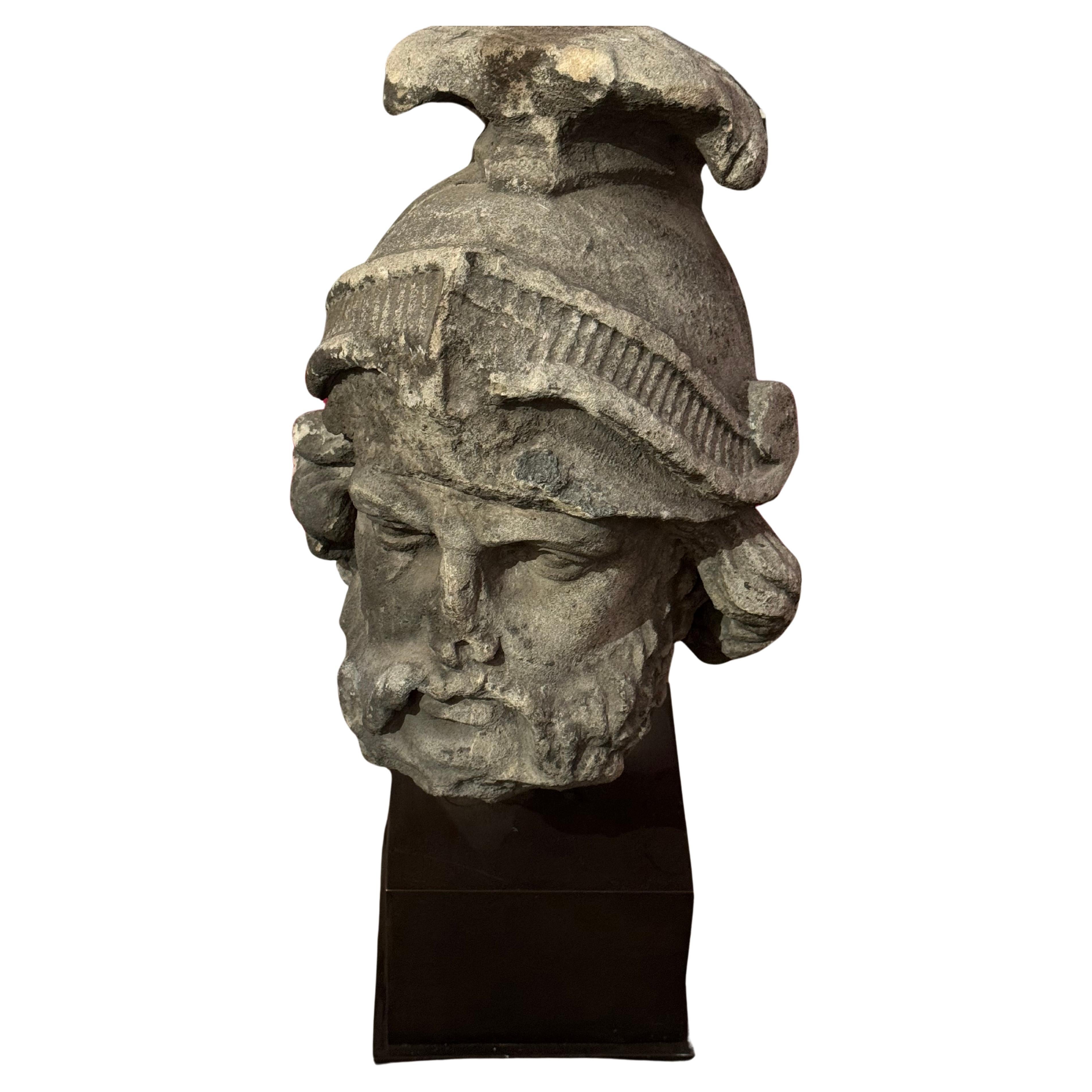
Antique Venetian Stone Head of a Roman Gladiator
$2,539.94
£1,850
€2,174.55
CA$3,521.75
A$3,787.34
CHF 2,025.10
MX$45,674.27
NOK 25,608.77
SEK 23,332.88
DKK 16,248.70
About the Item
Antique Venetian Sandstone Head of a Roman Gladiator is a captivating piece of art that showcases the exquisite craftsmanship of the Venetian artisans. This stunning sculpture depicts the head of a Roman gladiator, capturing the strength and determination of these ancient warriors. The sandstone material adds a touch of authenticity and durability to the piece, ensuring its longevity.
The intricate details of the gladiator’s facial features, such as the chiseled jawline, intense gaze bring the sculpture to life. The artist’s attention to detail is evident in every aspect of this masterpiece, from the carefully sculpted facial expressions to the realistic texture of the sandstone.
The head is elegantly raised on a wooden plinth, adding a touch of sophistication and allowing it to be displayed prominently in any setting. Whether placed in a museum, art gallery, or as a focal point in a private collection, this Antique Venetian Sandstone Head of a Roman Gladiator is sure to captivate and inspire all who lay eyes upon it. A true testament to the rich history and artistic prowess of the Venetian craftsmen, this sculpture is a must-have for any art enthusiast or collector.
- Dimensions:Height: 16.54 in (42 cm)Width: 7.49 in (19 cm)Depth: 6.3 in (16 cm)
- Materials and Techniques:
- Place of Origin:
- Period:
- Date of Manufacture:1790
- Condition:Wear consistent with age and use. Good condition with battle scares. The Galea has had some repairs over time.
- Seller Location:Lincoln, GB
- Reference Number:Seller: 106861stDibs: LU7210238816582

About the Seller
5.0
Platinum Seller
Premium sellers with a 4.7+ rating and 24-hour response times
Established in 2019
1stDibs seller since 2022
50 sales on 1stDibs
Typical response time: 2 hours
- ShippingRetrieving quote...Shipping from: Lincoln, United Kingdom
- Return Policy
More From This Seller
View All18th-Century Carved Wooden Head of a Philosopher / Religious Figure
Located in Lincoln, GB
18th-Century Carved Wooden Head of a Philosopher / Religious Figure
This finely carved wooden head dates to the 18th century and likely represents a philosopher / religious figure. It reflects the stylistic traditions of Flemish and German woodcarving from the Renaissance period, renowned for their expressive realism and meticulous detail. Such works often formed parts of larger altarpieces, devotional sculptures, or decorative ensembles within ecclesiastical settings.
The sculptor’s craftsmanship is evident in the finely rendered facial features, intricately carved beard, and textured hair—hallmarks of Northern European wood carving...
Category
Antique 18th Century Busts
Materials
Wood
A Rare French Carved Architectural Fragment: Baroque Putto Head from Rouen Cathe
Located in Lincoln, GB
A Fine Example of Continental Ecclesiastical Iconoclasm
This exceptionally rare and characterful wooden fragment is a powerful testament to the turbulent religious and political hist...
Category
Antique 18th Century French Architectural Elements
Materials
Wood
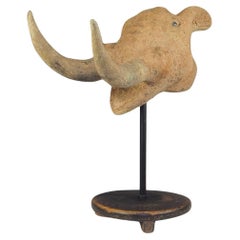
Antique Hand Carved Wooden Head Sculpture of a Mythical Animal
Located in Lincoln, GB
Hand Carved Wooden Head Sculpture of a Mythical Animal
Head covered with raw earth afrian clay and glass eyes
Striking carved tusks
Category
Antique 19th Century Belgian Anglo-Indian Animal Sculptures
Materials
Clay, Glass, Wood
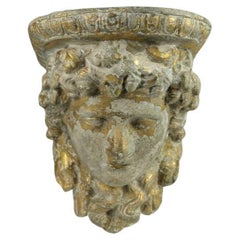
Vintage Decorative Gilt Cast Concrete Alexander the Great Display Shelf
Located in Lincoln, GB
Description
Vintage Decorative Gilt Cast Concrete Alexander the Great Display Shelf
This highly decorative objet d’art can be displayed as a wall shelf or as a standalone piece on ...
Category
20th Century Wall-mounted Sculptures
Materials
Concrete
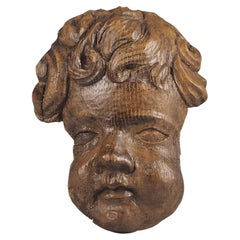
Antique Carved Oak Cherub Head Wall Hanging
Located in Lincoln, GB
Exquisite Antique Carved Oak Cherub Head Wall Hanging is a stunning representation of craftsmanship from a bygone era, likely once part of a larger decorative ensemble.
The piece sh...
Category
Antique 19th Century Figurative Sculptures
Materials
Wood
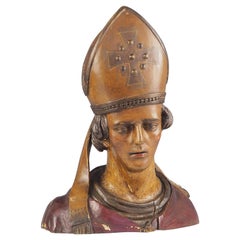
18th Century Bust of a Bishop finished in polychrome.
Located in Lincoln, GB
Antique Polychrome Carved Bust of a Bishop
18th Century Bust of a Bishop is a truly remarkable piece that showcases the exceptional craftsmanship and historical significance of the e...
Category
Antique 18th Century French Baroque Busts
Materials
Wood
You May Also Like
18th Century Roman Stone Hand-Carved Classical Warrior
Located in West Hollywood, CA
18th Century Classical Warrior Mounted Bust
Hand-Carved Out of Solid Roman Stone
Sourced from Rome, Italy by Martyn Lawrence Bullard
Category
Antique 18th Century Italian Classical Roman Mounted Objects
Materials
Stone
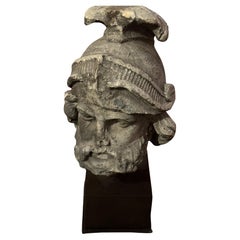
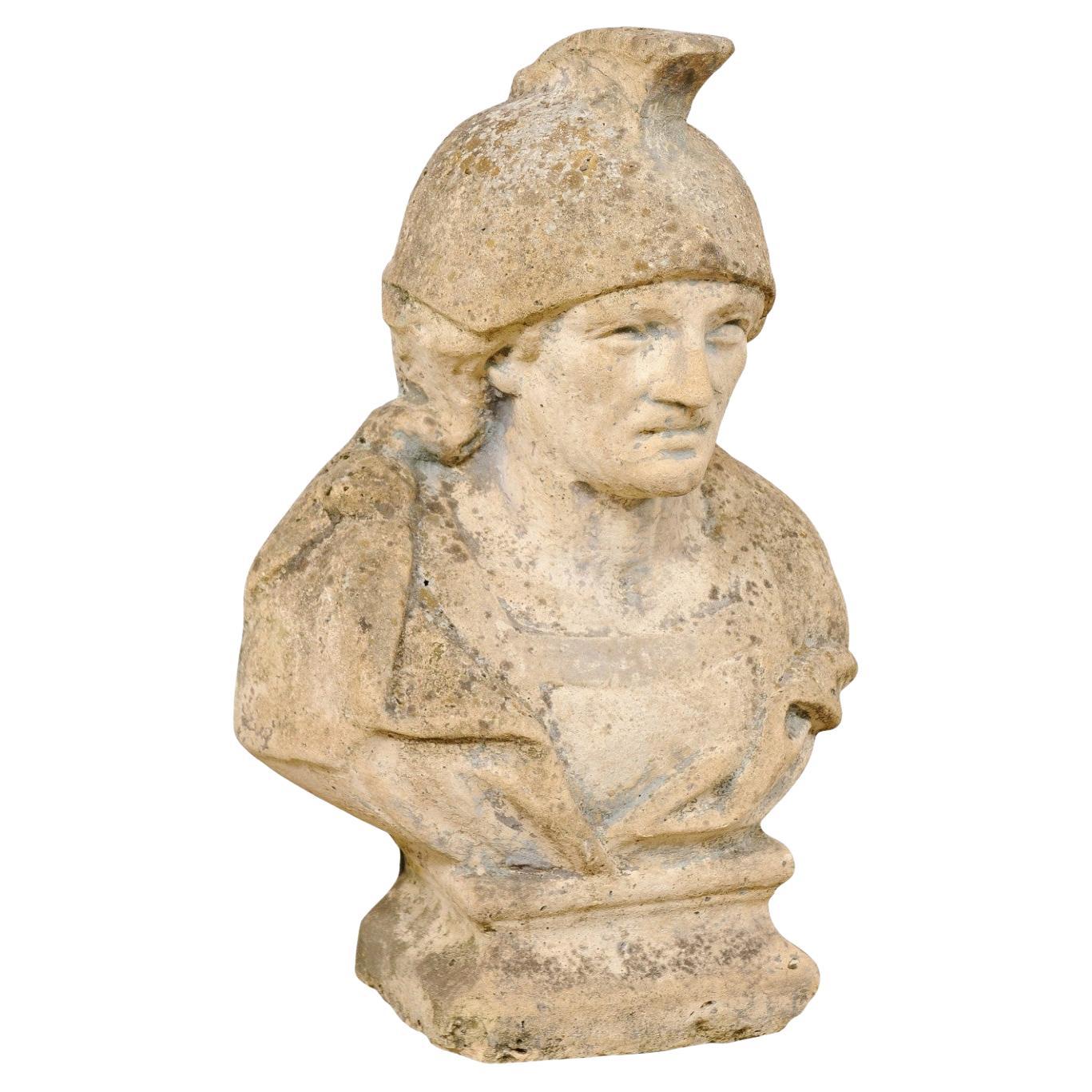
Spanish Cast-Stone Male Bust w/Helmet, 2 Ft Tall
Located in Atlanta, GA
A Spanish cast-stone bust art piece. This vintage decoration from Spain, created from cast stone, features a male bust, in military attire with Roman-style helmet. There is a nicely ...
Category
20th Century Spanish Busts
Materials
Cast Stone
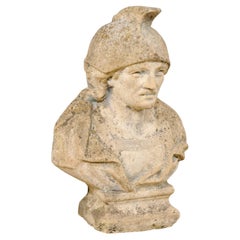
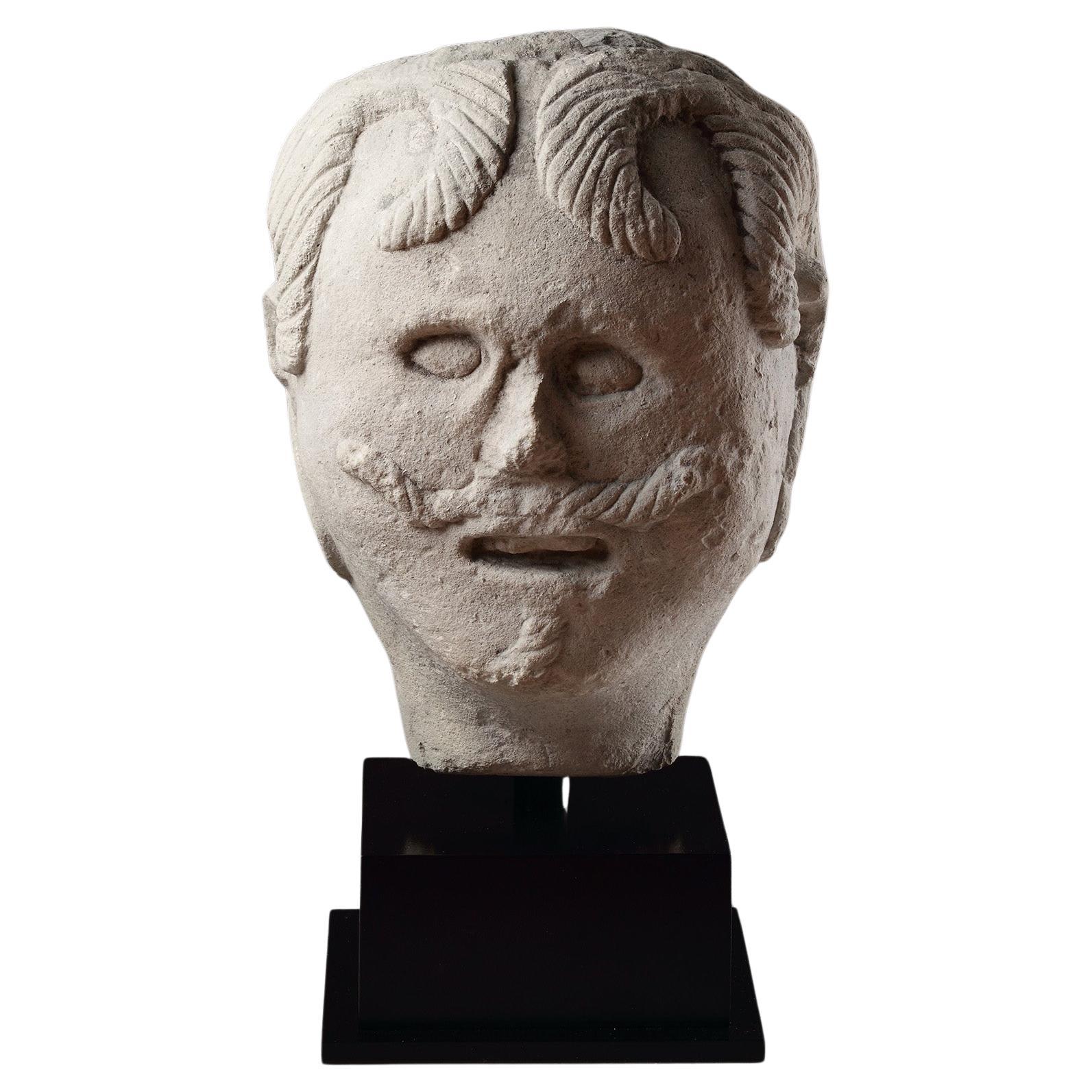
European Carved Limestone Celtic Votive Head of a Male Warrior
Located in London, GB
A Large European Carved Limestone Celtic Votive Head of a Male Warrior Wearing a Typical Flowing Moustache Small Beard and Curling Locks of Hair Stiffened with Lime Wash the Slit Mouth Open as if in Command
Circa 1st Century BC - 1st Century AD
Size: 31cm high, 22cm wide, 25cm deep - 12¼ ins high, 8¾ ins wide, 9¾ ins deep / 42cm high - 16½ ins high (with base)
From about 500 BC, first Greek and later Roman historians mention peoples living in a large area of non-mediterranean Europe as Celts. These classical chroniclers seem to have recognised these communities as having sufficient shared cultural traditions to justify their being given a common name, ‘Keltoi’ by the Greeks, and ‘Celtae’ or ‘Galli’ by the Romans. The earliest allusions to Celts by such Greek historians as Herodotus (485 - 425 BC) were followed by Polybius (200 - 118 BC) and Livy (59 BC - AD 17) who discuss the expansion of the Celts from their central European homelands during the 4th and 3rd centuries BC. They document the presence of Celts in Spain, France, Italy, Greece and Asia Minor, specifically central Turkey. They testify to the successful Roman resistance to the Celts in Italy, after the ignominy of the sacking of Rome by them in 387 BC, and describe the huge defeat suffered by the Celts at the battle of Telemon in northern Italy in 225 BC. The Celts in Greece who sacked the sacred site of Delphi in 279 BC were defeated by King Antigonos Gonatas of Macedon in 278 - 277 BC and in Turkey by Altalus of Pergamon in 240 BC. The Celts in Spain fell under the shadow of Rome from 2nd Century BC and the Celtic heartland known by the Romans as ‘Gaul’ was conquered by the Romans under Julius Caesar in the mid 1st Century BC. Britain was not referred to as Celtic by the ancient historians, but Caesar recognised the close similarities between Britain and Gaul especially in their political organisation. Tacitus (55 - 120 AD) and others chronicled the conquest of Britain between 43 and 84 AD some mentioning the fierce nature of the Celts who went into battle naked.
Celtic art therefore belongs to an artistic tradition in the early history of Europe which is no less important than that of the classical world. Art was central to Celtic identity and was closely related to the objects which it decorated. The Celts were used to seeing art as an integral part of their everyday lives.
Provenance:
Ex Finch and Co...
Category
Antique 15th Century and Earlier European Busts
Materials
Limestone
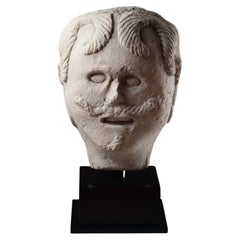
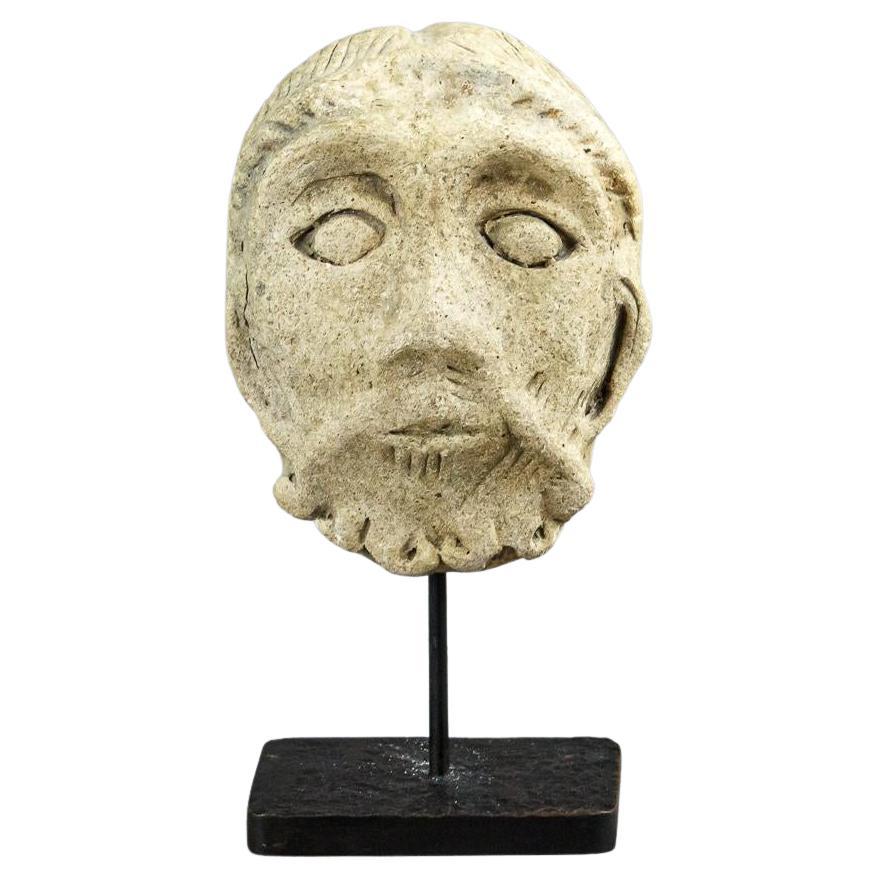
Romanesque Antique Carved Stone Head
Located in Pease pottage, West Sussex
Engaging Romanesque Antique Carved Stone Head, intriguing linear incised hair, tightly curled beard and moustache, wide eyes and pronounced e...
Category
Antique 15th Century and Earlier French Figurative Sculptures
Materials
Limestone
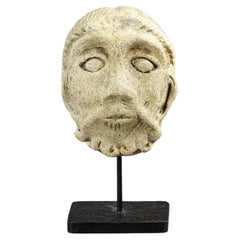
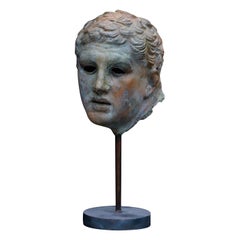
Borghese Gladiator Bust Sculpture
By Raffaello Romanelli
Located in Milan, IT
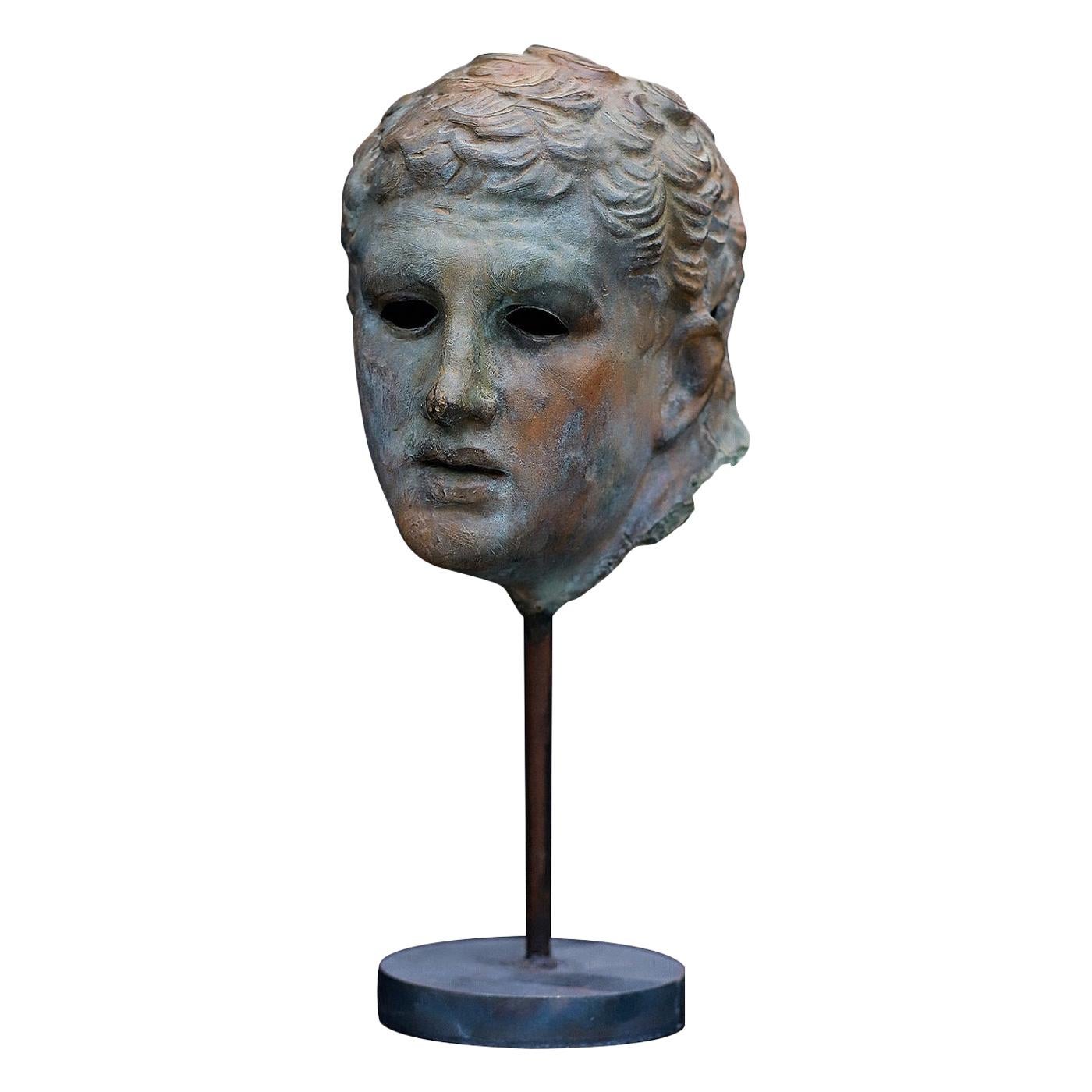
This decorative sculpture rests on a metal pedestal, representing the face of the Borghese Gladiator, a Greek statue dating back to the 1st century BC and preserved today in the Louvre Museum. This piece's irregular cut and antiqued patina recreate the corrosive bronze surfaces of Ancient sculptures found in the seabed, such as the Riace bronzes.
Category
2010s Italian Sculptures and Carvings
Materials
Bronze
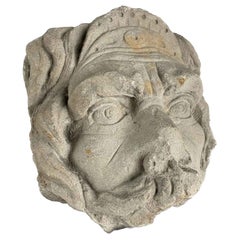
20th Century Italian Stone Fountain Mask
Located in Milano, MI
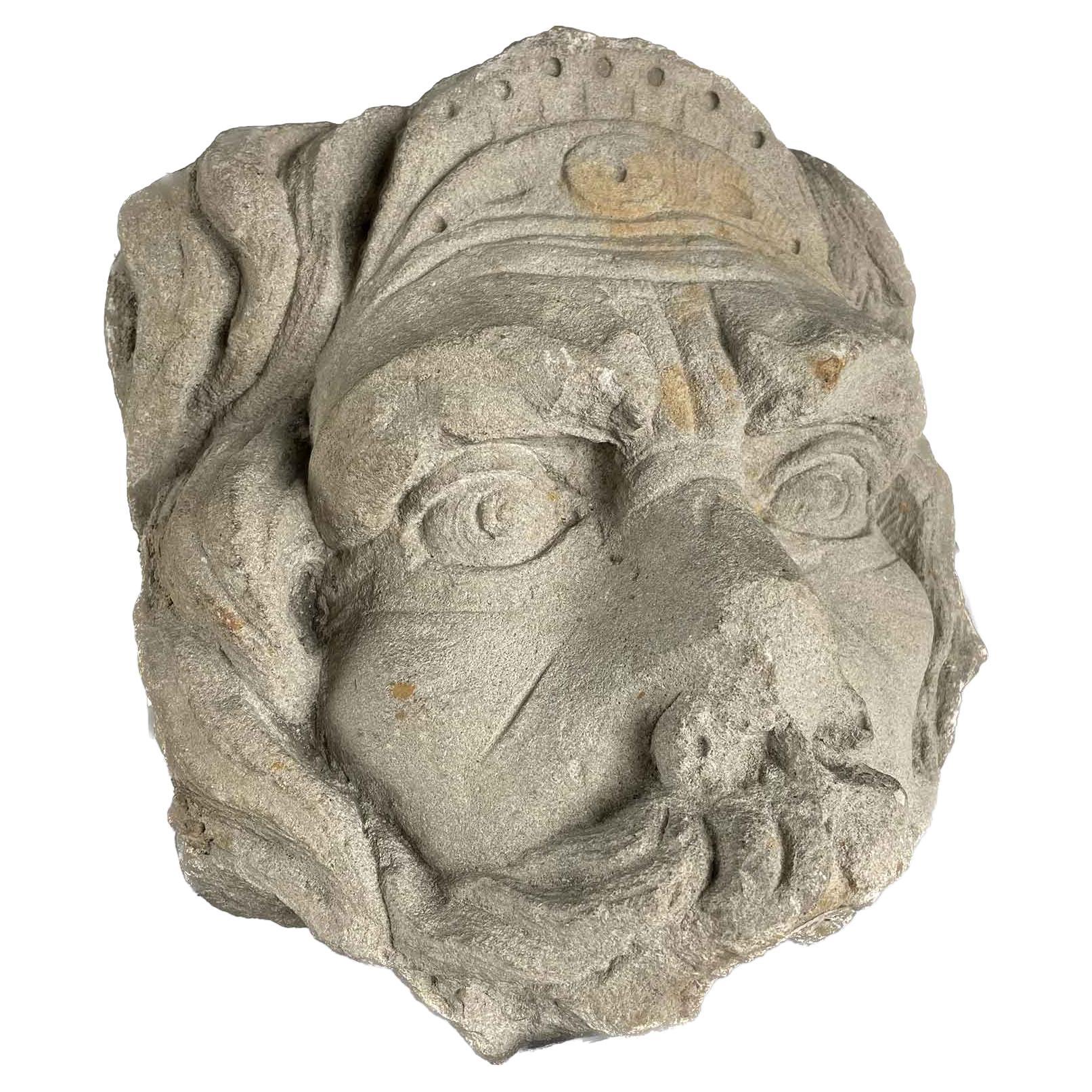
This antique stone mask was probably used in a fountain. It is a very decorative Italian antique object. The mask fits as decorative object on a bureau o...
Category
Early 20th Century European Classical Roman Animal Sculptures
Materials
Stone
More Ways To Browse
Stone Head
Antique Stone Head
Venetian Sculpture
Stone Head Sculpture
Antique Roman Stone
Antique Limestone Sculpture
Roman Gladiator
Gladiator Sculpture
Limestone Head
Venetian Bust
Roman Stone Head
African Carved Bust
Antique Marble Head
Augustus Bust
Bronze Bust Patina
Bust Of Homer
Large Plaster Bust
Marie Antoinette Bust