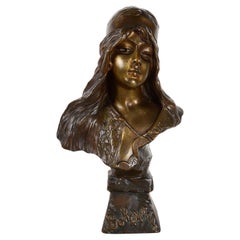
Items Similar to Late 19th Century French Bronze Sculpture "Salome" by Emmanuelle Villanis
Want more images or videos?
Request additional images or videos from the seller
1 of 14
Late 19th Century French Bronze Sculpture "Salome" by Emmanuelle Villanis
$11,580.09
£8,450
€9,936.30
CA$16,060.42
A$17,290.50
CHF 9,259.40
MX$208,344.42
NOK 116,827.99
SEK 106,916.48
DKK 74,248.04
About the Item
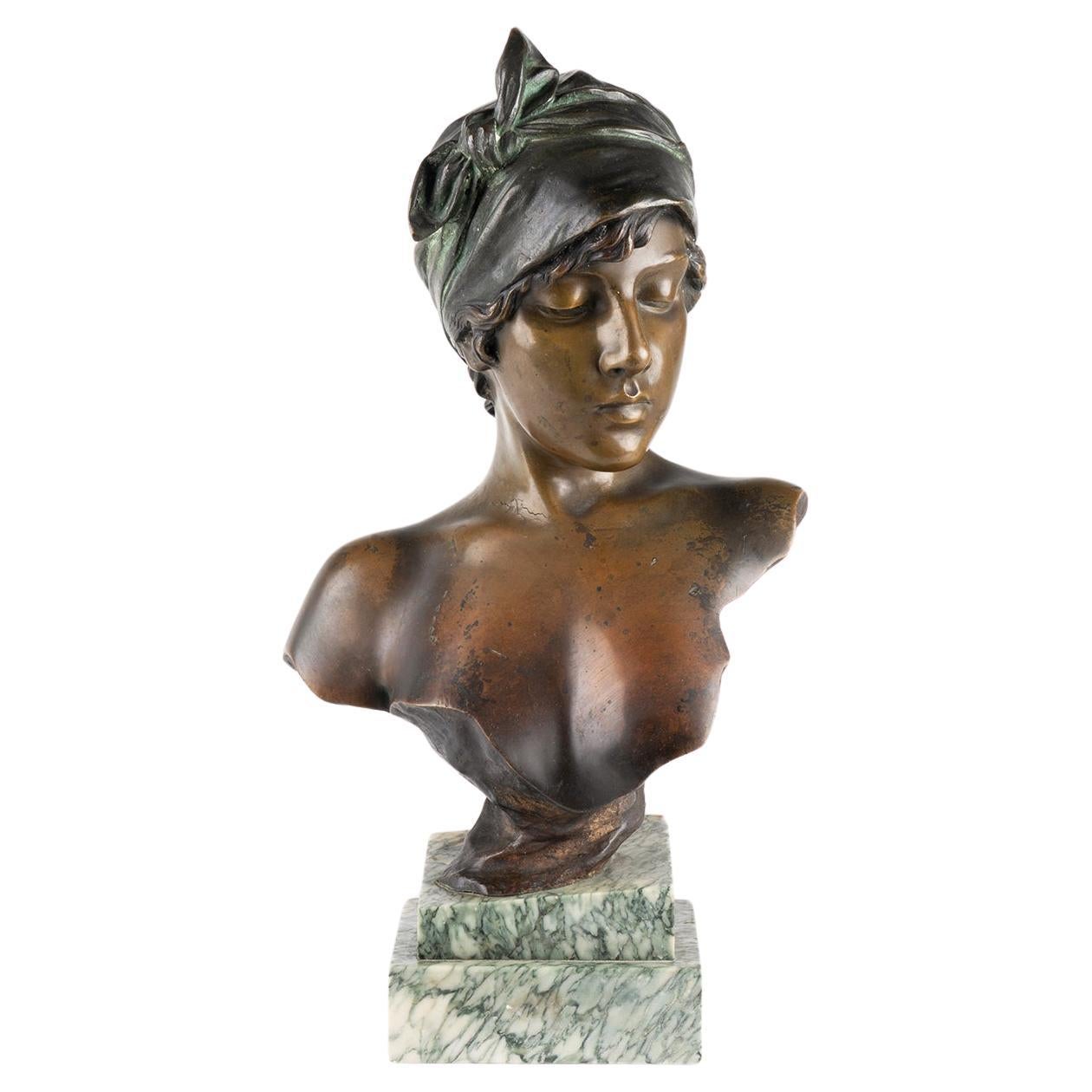
A beautiful patinated Art Nouveau bronze bust of a young Art Nouveau beauty with excellent variegated rich brown patina and excellent hand chased surface detail, signed E.Villanis
titled and with Societe des Bronzes foundry pastille
ADDITIONAL INFORMATION
Height: 57 cm
Width: 32 cm
Depth: 22 cm
Condition: Excellent Original Condition
Circa: 1890
Materials: Bronze
Book Ref: Emmanuel Villanis by Josje Hortulanus-de Mik
Page No: 31
SKU: 8827
ABOUT
Emmanuel Villanis
Emmanuel Villanis was an industrious man. He is believed to have created some 200 to 250 pieces. His oeuvre pre-eminently consisted of busts and full body statues. Most of these were manufactured in bronze, but there are also models in white metal and terra cotta. Different patinas were used. The bronzes were mainly cast by the Societé de Bronzes de Paris and can be recognised by the round stamp (cachet) at the back of the statue. In addition, reliefs, vases, lamps, clocks and ink stands are recorded . Vases and lamps were mostly made of tin, and there are also marble statues. Pieces in which ivory is used are as rare as silver statues.
Villanis was inspired by women. He dedicated almost his complete works to them. One model in particular was portrayed many times by him. His portrayals of children may be less known, but are nevertheless wonderfully done. His statues are always in perfect proportion and are full of expression: dreamy-eyed, happy, sirene, indifferent, cheeky, serious, sad, detached, melancholy.
His style can always be recognised by his use of hollowed out eyeballs. The name of the statue can usually be found on the base in scrolled script and the signature of Emmanuel Villanis is always visible and legible.
This subject 'Farfalla' meaning 'Butterfly' is based on the beautiful Japanese character in the famous tragic opera - Madam Butterfly
Giacomo Puccini's Opera "Madama Butterfly"
Act I
Benjamin Franklin Pinkerton, a young US Navy lieutenant stationed in Japan, has arranged with Goro, a marriage broker, to acquire a 15-year-old Japanese bride, Cio-Cio-San(also known as Butterfly). Pinkerton has taken a 999-year lease on a home overlooking Nagasaki harbour; this lease, as well as his marriage, can conveniently be cancelled at a month’s notice. Sharpless, the American Consuland Pinkerton’s friend, arrives to witness the signing of the wedding contract. He warns Pinkerton not to treat the marriage lightly, as his bride-to-be is truly in love with him. Pinkerton claims to be smitten with Butterfly, but he then proposes a toast to the American woman he will one day wed. Butterfly arrives. She tells Sharpless that her family was once wealthy, but hard times forced her to become a geisha. After Butterfly admits that her father is dead, Goro tells Pinkerton that he committed ritual suicide at the Emperor’s command. Butterfly’s relatives arrive and the formalities proceed. The festivities are interrupted when the Bonze, Butterfly’s uncle, enters to denounce her for forsaking their ancestral religion. Pinkerton angrily orders the guests to leave. He comforts the distraught Butterfly, and the newlyweds proclaim their love.
Act II
Pinkerton has been gone from Nagasaki for three years. Suzuki, Butterfly’s companion, fears that he will not keep his promise to return, yet Butterfly is sure that he will. Sharpless arrives to read Butterfly a letter he has received from Pinkerton, who has since taken an American wife. Goro interrupts, ushering in Prince Yamadori, a potential suitor for Butterfly who she dismisses. When Sharpless finally reads Pinkerton’s letter to Butterfly, she gradually realises that she has been abandoned. She sends for her young son, Sorrow, certain that Pinkerton will return when he learns that he has a son. Butterfly insists that she would rather die than be a geisha again. Suddenly, a cannon booms in the harbour, signaling the arrival of Pinkerton’s ship. Butterfly and Suzuki decorate the house and await Pinkerton’s return inan all-night vigil.
Act III
Early in the morning, Pinkerton, his American wife Kate, and Sharpless arrive at Butterfly’s house. Butterfly is asleep, so they ask Suzuki to tell her that they wish to take Sorrow away to live with them in America. Pinkerton flees in remorse. Butterfly enters to discover Kate there and soon realises who she is. She reluctantly agrees to surrender her child if Pinkerton will come for him in half an hour. After bidding farewell to Sorrow, Butterfly takes the only option she feels is left to her. Pinkerton rushes into the house and faces the consequences of his actions.
- Creator:Emmanuel Villanis (Artist)
- Dimensions:Height: 22.45 in (57 cm)Width: 14.57 in (37 cm)Depth: 8.67 in (22 cm)
- Style:Art Nouveau (Of the Period)
- Materials and Techniques:
- Place of Origin:
- Period:
- Date of Manufacture:1890
- Condition:Wear consistent with age and use.
- Seller Location:London, GB
- Reference Number:Seller: 88271stDibs: LU3216347025042
Emmanuel Villanis
Emmanuel Villanis (b. 1858 d. 1914). Originally from Lille, France and of Italian descent, the artist studied in Turin at the Accademia Albertina, under master sculptor Odoardo Tabacchi, before settling in Paris in 1885. A prolific producer of busts during his career, he enjoyed international acclaim for his work. He had a penchant for producing bronzes (particularly busts) of beautiful young women, mainly in the Art Nouveau style. During his lifetime he exhibited widely in Paris, Milan, Chicago, New York and Vienna, his bronzes are both beautiful and highly desirable.
About the Seller
5.0
Vetted Professional Seller
Every seller passes strict standards for authenticity and reliability
Established in 1936
1stDibs seller since 2017
87 sales on 1stDibs
Typical response time: 1 hour
- ShippingRetrieving quote...Shipping from: London, United Kingdom
- Return Policy
More From This Seller
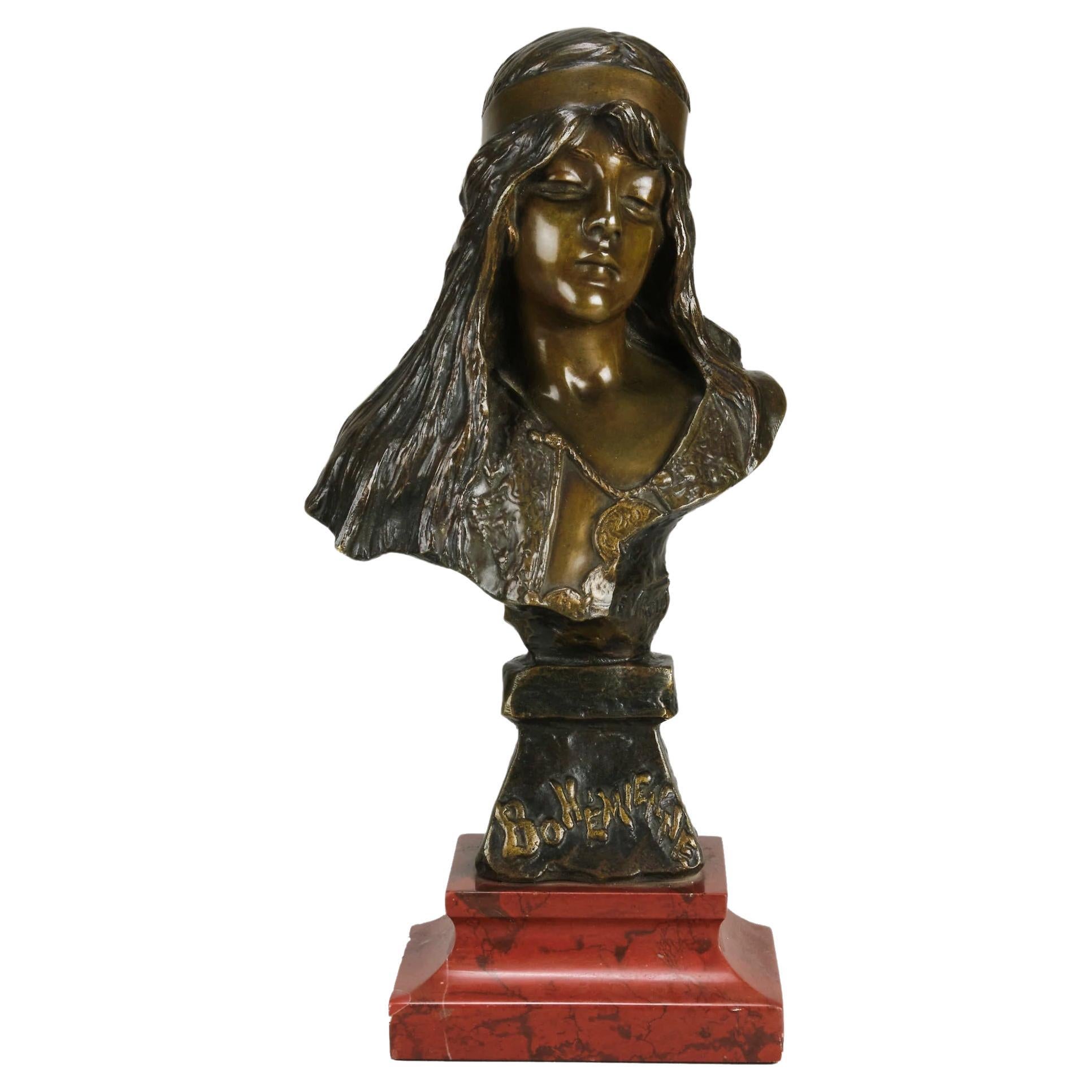
View All19th Century Art Nouveau Bronze Bust Entitled "Bohémienne" by Emmanuel Villanis
By Emmanuel Villanis
Located in London, GB
Captivating late 19th century French bronze bust of a beautiful woman, enhanced by the variegated rich brown patination and excellent tactile surface detail, raised on an integral bronze base with raised title to the fore. Signed ?E Villanis and further raised on a breche griotte stepped and shaped marble plinth
ADDITIONAL INFORMATION
Height: 33 cm
Width: 16 cm
Depth: 11 cm
Condition: Excellent Original Condition
circa: 1890
Materials: Bronze
Book Ref: Emmanuel Villanis by Josje Hortulanus-de Mik
Page No: 17
SKU: 8616
ABOUT
Puccini's Opera - La Bohème
SYNOPSIS - A group of friends are living a Bohemian life in Paris and trying to make their livings creating art. Rodolfo, the writer, falls in love with the seamstress, Mimi, while Marcello, the painter, and Musetta, the singer, are the on-and-off-again couple by their sides. When the four are happy, they spend their time celebrating life and love. However, Mimi is revealed to be very ill, and Rodolfo struggles to come to terms with the fact that she will inevitably die. Rodolfo and Mimi break up, and months later, Musetta discovers Mimi extremely sick and close to death. She brings Mimi to Rodolfo and Marcello's apartment. Rodolfo immediately takes her in and tries to nurse her back to health, but he is too late. Almost as soon as the two are reunited and have professed their love for one another, Mimi succumbs to her illness and dies.
Emmanuel Villanis
Emmanuel Villanis was an industrious man. He is believed to have created some 200 to 250 pieces. His oeuvre pre-eminently consisted of busts and full body statues. Most of these were manufactured in bronze, but there are also models in white metal and terra cotta. Different patinas were used. The bronzes were mainly cast by the Societé de Bronzes de Paris and can be recognised by the round stamp...
Category
Antique Late 19th Century French Art Nouveau Busts
Materials
Marble, Bronze
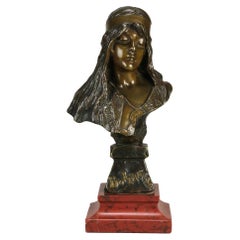
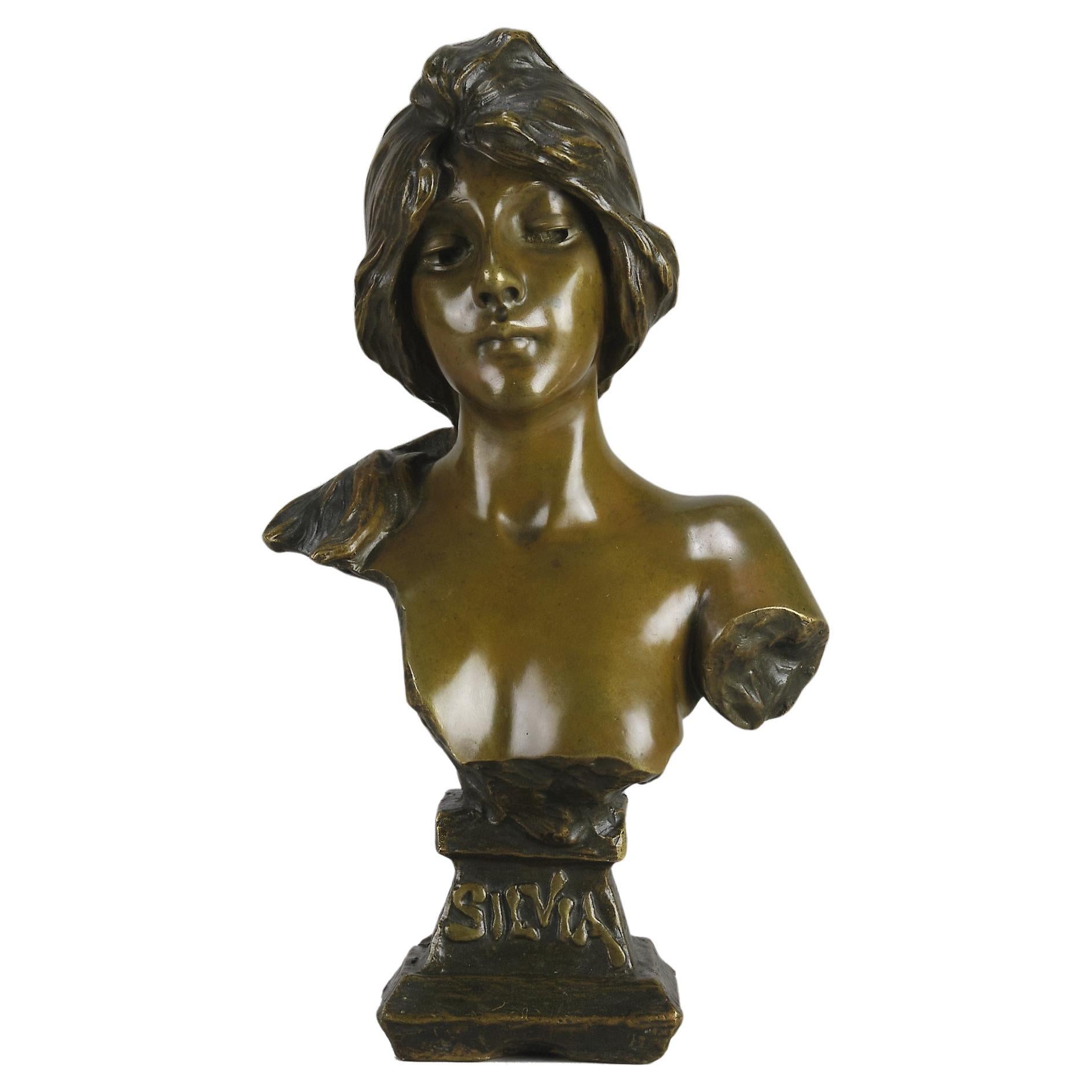
Late 19th Century Art Nouveau Bust entitled "Silvia" by Emmanuel Villanis
By Emmanuel Villanis
Located in London, GB
A very fine late 19th century French bronze bust of an attractive classical maiden modelled in the Art Nouveau style, with fabulous multi hued patination of brown and a subtle green, accentuating the excellent hand finished detail. Signed E Villanis, with Societe des Bronzes foundry seal, numbered and with raised title to the fore.
ADDITIONAL INFORMATION
Height: 28 cm
Width: 16 cm
Depth: 10 cm
Condition: Excellent Original Condition
circa: 1890
Materials: Bronze
Book Ref: Emmanuel Villanis by Josje Hortulanus-de Mik
Page No: 79
SKU: 8775
ABOUT
Sylvia Ballet - Silvia
Sylvia, (the spelling is different in french) is a classical ballet. It features a nondescript mythical setting and a late nineteenth-century score, in which it's themes correlate to giving it a more classical feel, however, it was quite revolutionary for its time. The score was and still is recognized for its greatness. Delibes' work is certainly the best appreciated aspect of the ballet for its innovation, creativity, and maturity. Frederick Ashton's choreography complements the music very well in this respect, staying true to the spirit of the original production while incorporating modern techniques and adding his own unique touch.
The ballet itself follows Sylvia who is a loyal follower of Diana (the goddess of the hunting and chassitity). The story starts with Sylvia being stalked by the diety Eros. When she discovers this they fire their bows at each other respectively. However only Eros's shot is true and wounds Sylvia. This is where she is kidnapped by an unknown assailant later revealed to be Orion.
Sylvia escapes the caves of Orion by getting her captor intoxicated and pleading to Eros to rescue her. When he begrudgingly rescues her he takes her to the temple of Diana where her love awaits. This leads her to repeal her oath of Chassity taken as a follower of Diana.
Emmanuel Villanis
Emmanuel Villanis was an industrious man. He is believed to have created some 200 to 250 pieces. His oeuvre pre-eminently consisted of busts and full body statues. Most of these were manufactured in bronze, but there are also models in white metal and terra cotta. Different patinas were used. The bronzes were mainly cast by the Societé de Bronzes de Paris and can be recognised by the round stamp...
Category
Antique Late 19th Century French Art Nouveau Busts
Materials
Bronze
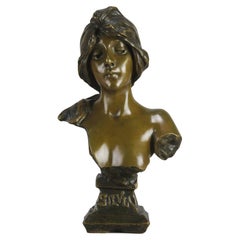
Late 19th Century Art Nouveau Bust Entitled "Cendrillon" by Emmanuel Villanis
By Emmanuel Villanis
Located in London, GB
An attractive late 19th Century Art Nouveau French bronze bust exhibiting deep multi-hued patination and excellent detail. The beautiful character wearing a head dress and a loosely draped blouse representing ’Cinderella’ from the famous French opera. The bronze is signed E Villanis and titled to the fore on its integral bronze base.
ADDITIONAL INFORMATION
Height: 30 cm
Width: 19 cm
Depth: 12 cm
Condition: excellent original condition
Circa: 1890
Materials: Bronze
Book Ref: Emmanuel Villanis by Josje Hortulanus-de Mik
Page No: 35
SKU: 8773
ABOUT
Villanis Cendrillon
Emmanuel Villanis was an industrious man. He is believed to have created some 200 to 250 pieces. His oeuvre pre-eminently consisted of busts and full body statues...
Category
Antique 19th Century French Art Nouveau Figurative Sculptures
Materials
Bronze
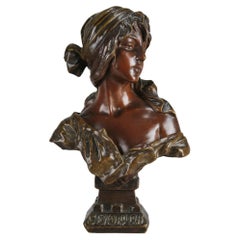
Late 19th Century Art Nouveau Bust Entitled "Lola" by Emmanuel Villanis
By Emmanuel Villanis
Located in London, GB
Stunning Art Nouveau bronze bust depicting the character "Lola" modelled in the midst of an inquisitive look. The study has a multi hued patination of colours that accentuate the very fine hand chased surface detail. Signed ?E Villanis...
Category
Antique 19th Century French Art Nouveau Busts
Materials
Bronze
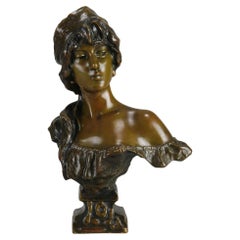
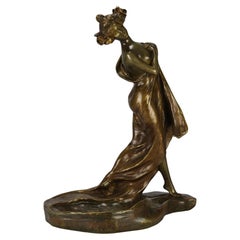
Late 19th Century Art Nouveau Bronze "Nouveau Lady" by Georges Van Der Straeten
By Georges Van der Straeten
Located in London, GB
A delightful Art Nouveau Bronze figure of a young beauty scantily dressed with only a shawl draped across her body in a striking pose. The surface of the bronze with rich golden/brow...
Category
Antique Late 19th Century Belgian Art Nouveau Figurative Sculptures
Materials
Bronze
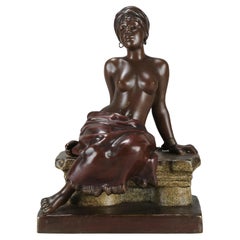
Late 19th Century Art Nouveau Bronze figure "Slave Girl" by Emmanuel Villanis
By Emmanuel Villanis
Located in London, GB
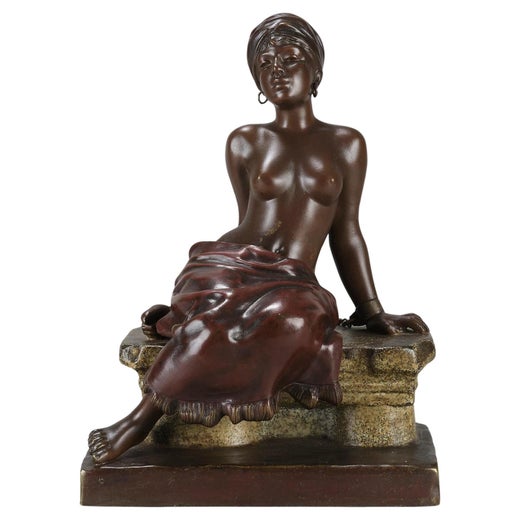
A beautiful patinated Art Nouveau bronze study of a young Art Nouveau beauty sat upon a wall wearing chains with excellent variegated rich brown patina and excellent hand chased surf...
Category
Antique Late 19th Century French Art Nouveau Figurative Sculptures
Materials
Bronze
You May Also Like
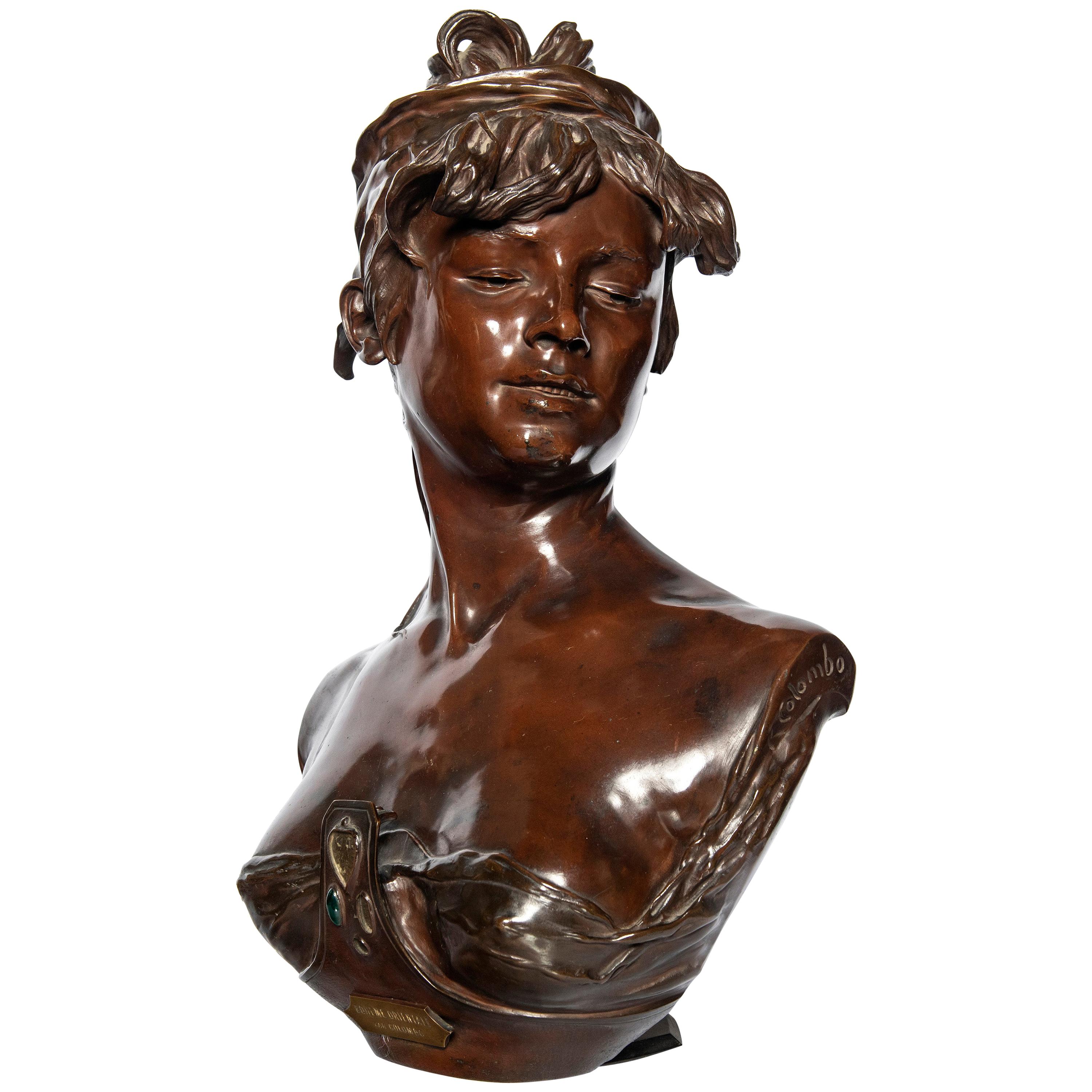
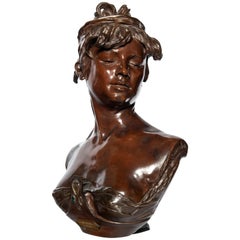
Cast Bronze Woman Bust "Bohême Orientale" Signed R. Colombo, Paris, 1884
By Renzo Colombo
Located in Buenos Aires, Buenos Aires
Cast bronze woman bust "Bohême Orientale" signed R. Colombo, Paris, 1884.
(Renzo Colombo 1856-1885).
Bronze plaque at front "Bohême Orientale par Colombo".
Category
Antique 1880s French Art Nouveau Busts
Materials
Bronze
$12,000 Sale Price
20% Off
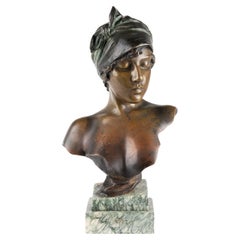
Sculpture in bronze and marble base, Art Nouveau period, circa 1900.
By Emmanuel Villanis
Located in Saint-Ouen, FR
Sculpture by Emmanuel Villanis in bronze and marble base, Art Nouveau period, circa 1900.
H: 40cm, W: 21cm, D: 15cm
Category
Antique Early 1900s French Art Nouveau Busts
Materials
Marble, Bronze
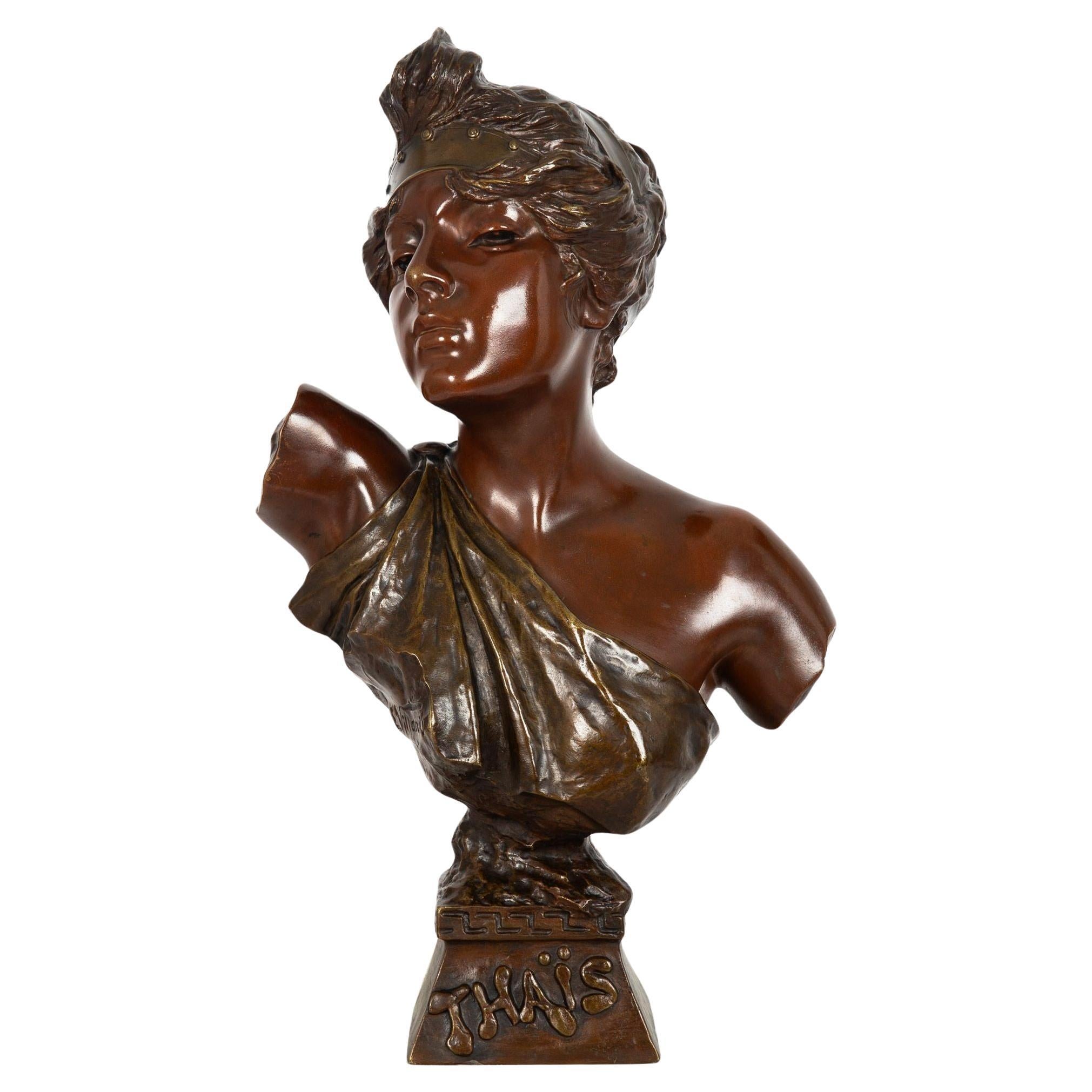
French Art Nouveau Bronze Sculpture “Bust of Thais” by Emmanuel Villanis
By Emmanuel Villanis
Located in Shippensburg, PA
EMMANUEL VILLANIS
French, fl. 1880-1920
"Bust of Thais"
Cast signature to shoulder "E. Villanis" cold-stamped "3264"
"CB" with foundry cachet of "Societe des Bronzes de Pari...
Category
20th Century French Art Nouveau Busts
Materials
Bronze
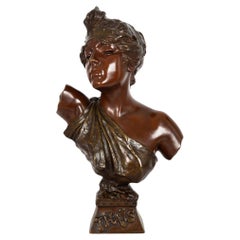
Janotte
Emmanuel Villanis Art Nouveau Bronze Bust, French, 1890
By Emmanuel Villanis
Located in Forest Row, East Sussex
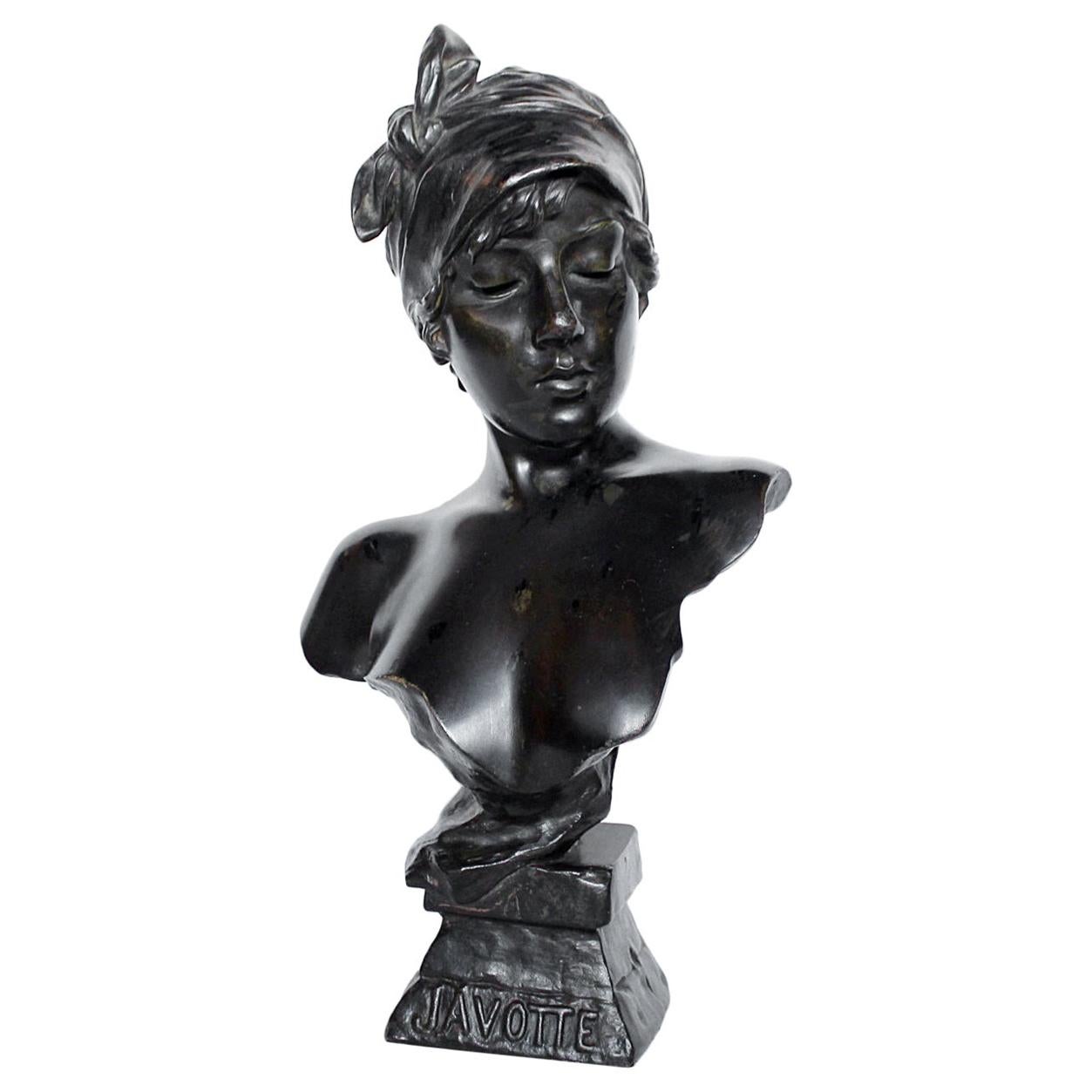
Janotte, an Art Nouveau, patinated bronze bust of a young lady with head scarf. Dark brown patination. Set on an integral plinth. Signed Villanis under shoulder.
Signed Villanis u...
Category
Antique Late 19th Century French Art Nouveau Busts
Materials
Bronze
$4,522 Sale Price
25% Off
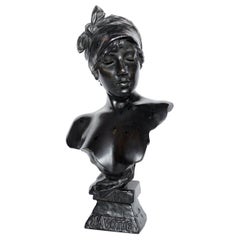
Emmanuel Villanis "Cendrillon" Bronze Bust
By Emmanuel Villanis
Located in Astoria, NY
Emmanuel Villanis (French, 1858-1914) "Cendrillon" Patinated Bronze Bust, signed to proper left shoulder and titled on rectangular socle base. 21" H x 13.5" W x 8" D. Provenance: Fro...
Category
Antique Late 19th Century French Art Nouveau Busts
Materials
Bronze
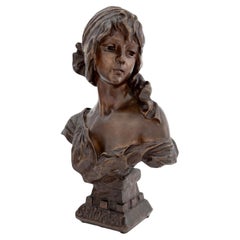
Bronze bust of a Bohemian young girl, 1920
Located in Brighton, Sussex
Enchanting patinated bronze bust of a young Bohemian girl.
Batch 81 G340/24 DNYZ
Category
Early 20th Century French Art Nouveau Abstract Sculptures
Materials
Bronze