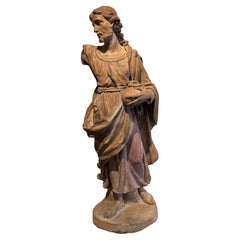
Items Similar to 18th Century Italian Bozzetto
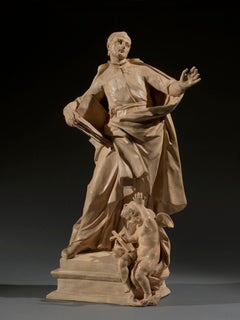
Saint Paul on Patmos
c. 1720–1730 Terracotta
Video Loading
Want more images or videos?
Request additional images or videos from the seller
1 of 10
18th Century Italian Bozzetto
Saint Paul on Patmos
c. 1720–1730 Terracotta
$5,617.54
£4,200.86
€4,700
CA$7,744.83
A$8,500.14
CHF 4,466.95
MX$101,149.91
NOK 57,100.85
SEK 52,178.88
DKK 35,815.94
About the Item
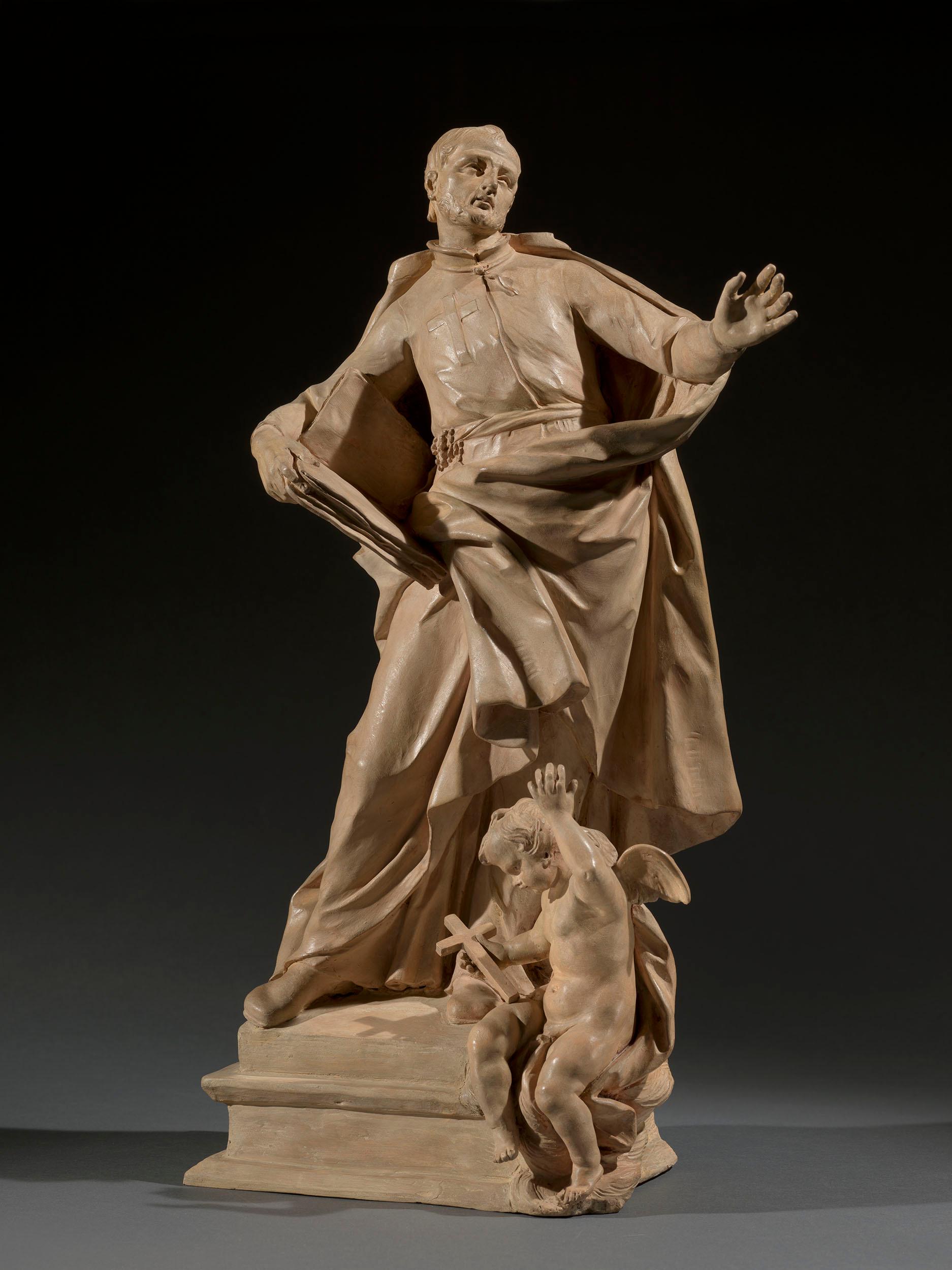
Italian, Bozzetto, 'Saint Paul on Patmos', c. 1720–1730.
Terracotta, monogrammed 'J F'.
This expressive and finely modelled Italian terracotta bozzetto was likely created in Rome around 1720/30. The dynamic composition depicts Saint Paul on Patmos, accompanied by an angelic figure. The sculpture is monogrammed 'J F', suggesting a workshop-related commission and indicating that the piece functioned as an official preparatory model for a larger sculptural project.
Executed in terracotta, the work displays the characteristic immediacy, spontaneity, and sculptural 'sketch quality' that defines 18^(th)-century bozzetti. The vigorously modelled drapery, twisting movement, and emotionally charged gestures reveal the artist's direct hand, capturing the creative process before the final execution in marble, wood, or stucco.
Bozzetti were crucial to artistic conception, mediating between invention and final realisation. In the Baroque period and the early 18^(th) century, particularly in Rome, they played a central role in sculptors' workshops, functioning as both tools of internal design and presentation models for patrons. Their immediacy, the visible hand of the artist and the retention of the initial creative impulse make them highly sought-after collector's items today.
The present example is a powerful demonstration of this tradition, showcasing a fully developed compositional idea with strong volumetric tension and lively surface modulation that has been preserved with notable integrity. The monogram 'J F' further underscores its purpose within an active workshop environment, distinguishing it from anonymous study pieces.
Material: Terracotta
Origin: Italy (possibly Rome), c. 1720–1730
Marking: Monogram 'J F'
This is a rare and expressive Baroque bozzetto with exceptional presence and artistic immediacy — an outstanding piece for collectors of early Italian sculpture.
- Dimensions:Height: 16.54 in (42 cm)Width: 4.73 in (12 cm)Depth: 6.7 in (17 cm)
- Style:Baroque (Of the Period)
- Materials and Techniques:
- Place of Origin:
- Period:1720-1729
- Date of Manufacture:1720-1730
- Condition:Wear consistent with age and use.
- Seller Location:Epfach, DE
- Reference Number:1stDibs: LU5243247661962
About the Seller
4.9
Gold Seller
Premium sellers maintaining a 4.3+ rating and 24-hour response times
Established in 1986
1stDibs seller since 2020
63 sales on 1stDibs
Typical response time: 3 hours
- ShippingRetrieving quote...Shipping from: Epfach, Germany
- Return Policy
More From This Seller
View All18th Century Models, Bozettis 4 Elements Limewood German, Franconia
Located in Epfach, DE
The four beautiful models, called Bozettis, portray the four elements fire, water, earth and air. They are of good quality and wonderfully fine carved with a love for details. For ex...
Category
Antique 1770s German Figurative Sculptures
Materials
Softwood
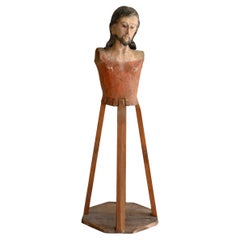
17th Century Processional Figur Mannequins Jesus Christus Carved Painted Wood
Located in Epfach, DE
An unusual and rare processional or lecturer figure from the 17th century, also called Mannequins. Carved from wood and of very good quality. A detailed and particular elaboration of...
Category
Antique Early 17th Century German Baroque Busts
Materials
Wood
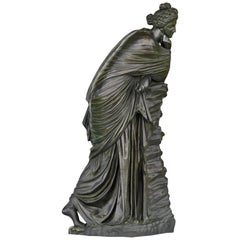
19th Century Bronze Figure "Polyhymnia" Sign. J.Walz. Muse
Located in Epfach, DE
19th century bronze figure "Polyhymnia" France or Austrian sign. J.Walz.
The figure is worked out by J.Walz (death:1922). He has worked in Paris and Vienna for Victor Tilgner.
The figure "Polyhymnia" is worked after the famous antique...
Category
Antique Late 19th Century French Classical Greek Figurative Sculptures
Materials
Bronze
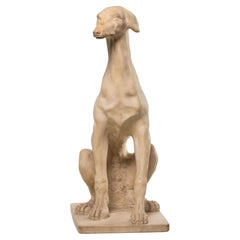
19th Century Terracotta Greyhound Presepi Naples Italy
Located in Epfach, DE
This exquisite terracotta sculpture of a seated greyhound dates from the early 19th century and was probably made in Naples. With a height of 54 cm and a base measuring 29 x 22 cm, t...
Category
Antique Early 19th Century Italian Animal Sculptures
Materials
Terracotta
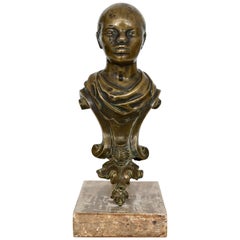
Rare Venice Door Knocker Bronze, 17th Century
Located in Epfach, DE
A rare and very charming door knocker, Venice, 17th century
in bronze with special patina.
Category
Antique Late 17th Century Italian Baroque Figurative Sculptures
Materials
Bronze
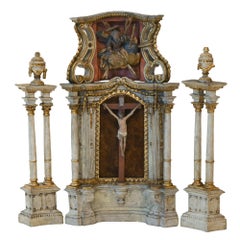
18th Century Altar Modell, South Germany, with Original Painting, Wood
Located in Epfach, DE
18th century Altar Modell, South Germany, with original painting, wood
A rare altar model with original painting, in the middle Jesus Christus and on the ...
Category
Antique Late 18th Century German Louis XVI Models and Miniatures
Materials
Wood
You May Also Like
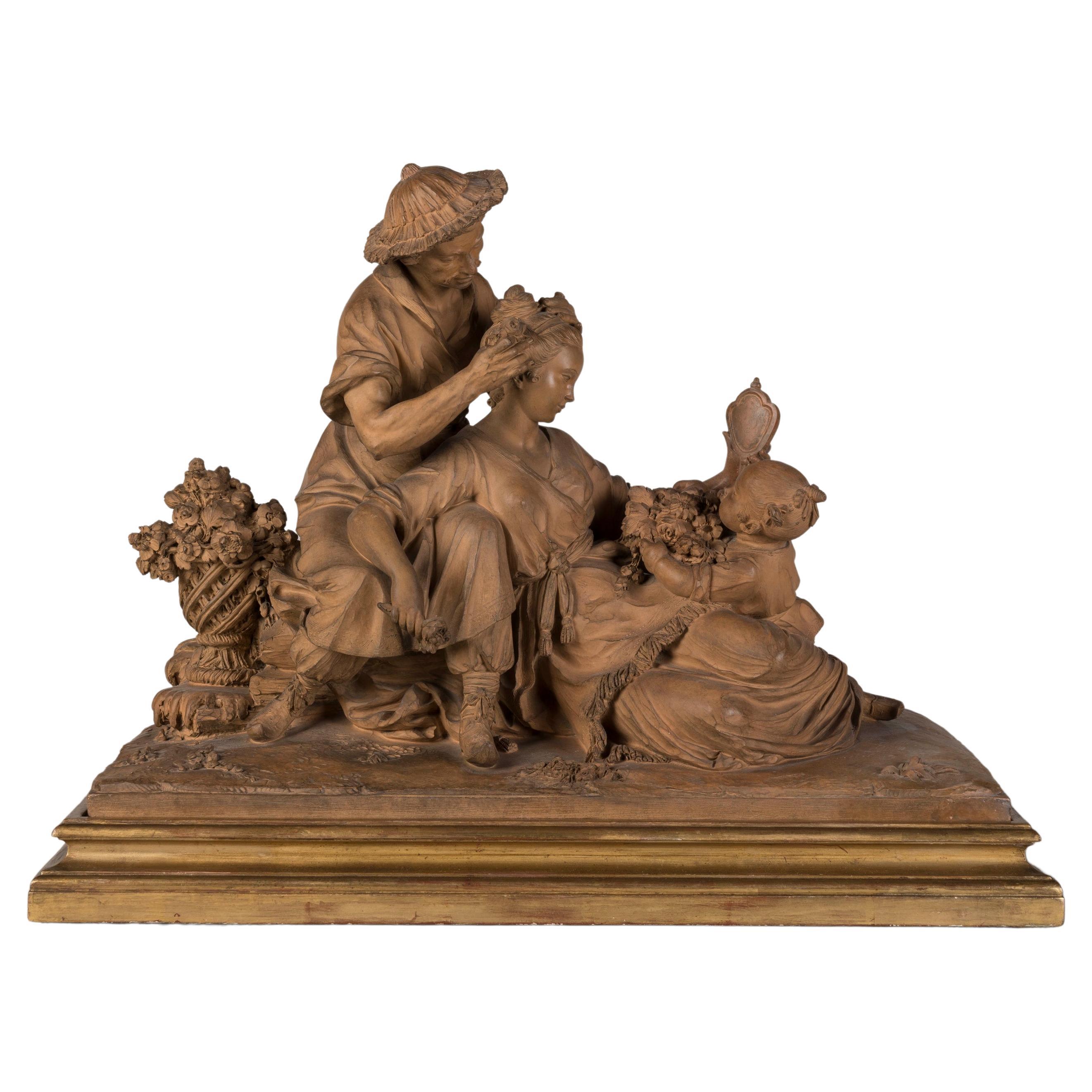
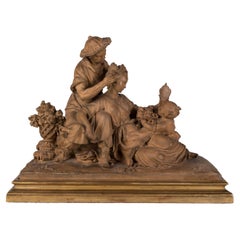
19th century Terracotta Chinoiserie Sculptural Group after François Boucher
By François Boucher
Located in London, GB
A Chinoiserie Sculptural Group
After François Boucher
This refined terracotta sculpture of a lady at her toilette was a popular motif first depicted in a painting by François Bouche...
Category
Antique 19th Century French Figurative Sculptures
Materials
Terracotta
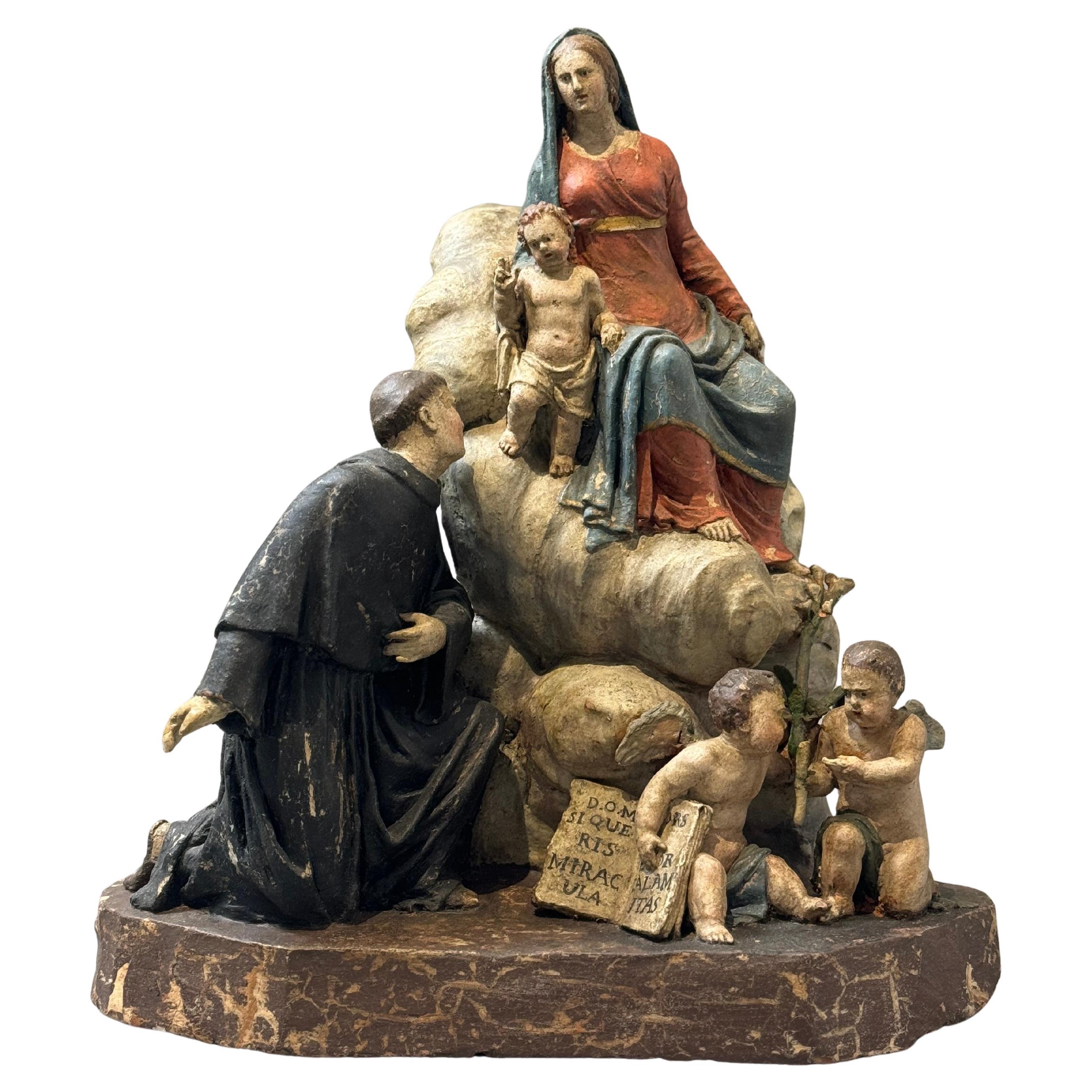
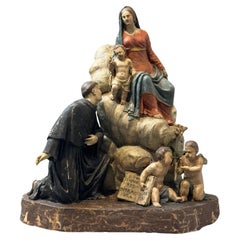
Angelo Piò (1690-1769), gruppo scultoreo in terracotta - XVIII secolo
Located in Fidenza, IT
Gruppo scultoreo in terracotta dipinta di Angelo Piò, raffigurante la Vergine Maria, il bambin Gesù, Sant'Antonio e i cherubini. Bologna, XVIII secolo.
Angelo Gabriello Piò (Bologna...
Category
Antique 18th Century Italian Figurative Sculptures
Materials
Terracotta
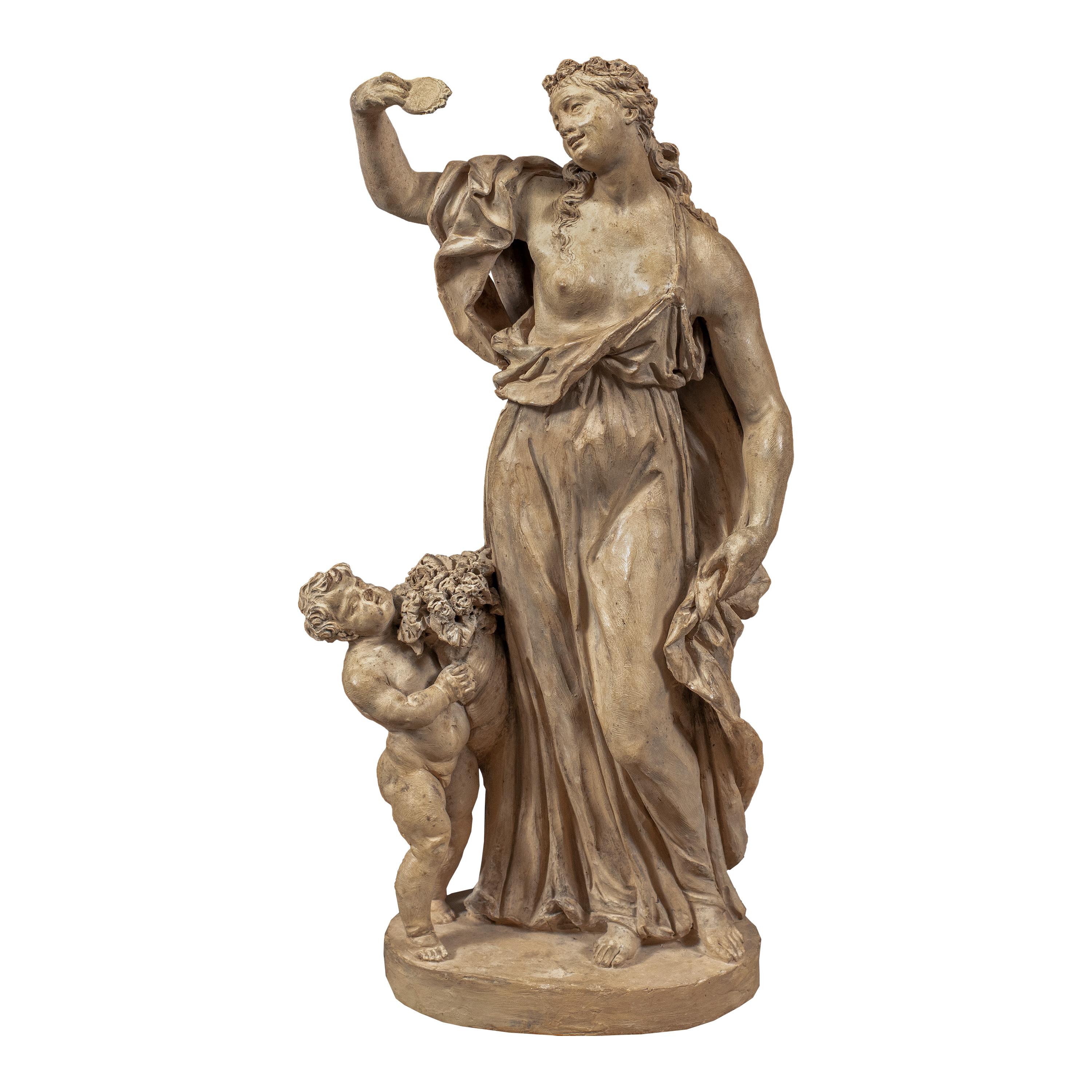
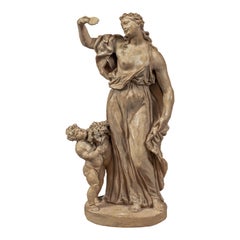
Rococò Italian artist - 18th century terracotta figure sculpture - Allegory
Located in Varmo, IT
Terracotta sculpture - Allegory of Vanity. Italy, 18th century.
17 x 12 x 42 cm high.
Made entirely of terracotta. It depicts a bare-breasted girl holding a mirror and a cherub wit...
Category
Mid-18th Century Rococo Figurative Sculptures
Materials
Terracotta
Roman 18th century terracotta model for the sculpture of San Camillo de Lellis
Located in London, GB
This remarkably fluid terracotta bozetto was made in preparation for Pietro Pacilli’s most important public commission, a large-scale marble statue of San Camillo de Lellis for the nave of St Peter’s Basilica in Rome. Expressively modelled, this terracotta sculpture is a rare and significant work made by a major Roman sculptor at a transformative moment of European sculpture. Pacilli began his working life on the great Baroque decorative projects initiated in the seventeenth century, but he found success as a restorer of ancient sculpture working to finish antiquities for a tourist market, becoming an important figure in the emergence of an archaeologically minded Neoclassicism. Pacilli trained Vincenzo Pacetti and provided important decorative work for the Museo Pio-Clementino, at the same time he is recorded restoring some of the most celebrated antiquities excavated and exported during the period.
Pacilli was born into a family of Roman craftsmen, his father Carlo was a wood carver, and Pacilli is recorded working with him on the Corsini Chapel in San Giovanni Laternao as early as 1735. In 1738 his terracotta model of Joseph and Potiphar’s Wife won the first prize in the second class of the sculpture concorso at the Accademia di San Luca, this is particularly notable as Bartolomeo Cavaceppi came third. He worked as a carver and stuccoist completing works for the churches of San Marco and SS. Trinita dei Domeniciani Spagnoli. Pacilli operated as a sculptor and restorer of antiquities from his studio at the top of the Spanish Steps, close to Santa Trinita dei Monti, where he is listed as a potential vendor to the Museo Pio-Clementino in 1770.
In 1763 Pacilli completed a silver figure of San Venanzio for the treasury of San Venanzio. He is recorded as Pacetti’s first master and it was evidently through Pacilli that he began to acquire his facility as a restorer of ancient sculpture. Pacilli, at his studio ‘poco prima dell’Arco della Regina alla Trinita dei Monti,’ exercised, what the nineteenth-century scholar, Adolf Michaelis called ‘rejuvenating arts’ on several important pieces of classical sculpture, including in 1760 the group of a Satyr with a Flute for the natural brother of George III, General Wallmoden, Hanovarian minister at Vienna. In 1765, Dallaway and Michaelis record that Pacilli was responsible for the restorations, including the addition of a new head, to the Barberini Venus which he had acquired from Gavin Hamilton. The Venus was then sold to Thomas Jenkins, who in turn passed it on to William Weddell at Newby Hall. In 1767 Pacilli exported a series of ancient busts ‘al naturale’ including portraits of Antinous, Julius Ceaser and Marus Aurelius, also a statue of a Muse and a Venus. As early as 1756 Pacilli seems to have been operating as an antiquarian, helping to disperse the collection of the Villa Borrioni. Pacilli supplied sculpture to notable British collectors, including Charles Townley, who on his first trip to Italy purchased the Palazzo Giustiniani statue of Hecate from Pacilli. Pacilli was involved with the Museo Pio Clementino from its conception, supplying busts of Julius Ceaser and a Roman Woman as well as completing stucco putti surmounting the arms of Pope Bendedict XIV to signal the entrance to the new Museo Critiano.
In 1750 Il Diario Ordinario del Chracas announced that Pacilli had begun work on a sculpture of San Camillo de Lellis for St Peter’s. Camillo de Lellis founded his congregation, the Camillians, with their distinctive red felt crosses stitched on black habits in 1591. Having served as a soldier in the Venetian army, Camillo de Lellis became a novitiate of the Capuchin friars, he moved to Rome and established a religious community for the purpose of caring for the sick. In 1586 Pope Sixtus V formerly recognised the Camillians and assigned them to the Church of Santa Maria Maddalena in Rome. Camillo de Lellis died in 1614 and was entombed at Santa Maria Maddalena, he was canonised by Benedict XIV on June 26, 1746. It was an occasion that prompted the Camillians to make a number of significant artistic commissions, including two canvases by Pierre Subleyras showing episodes from San Camillo’s life which they presented to Benedict XIV. In 1750 Pacilli was commissioned to fill one of the large niches on the north wall of the nave with a sculpture of San Camillo.
The present terracotta bozetto presumably had two important functions, to enable Pacilli to work out his ideas for the finished sculpture and at the same time to show his design to the various commissioning bodies. In this case it would have been Cardinal Alessandro Albani and Monsignor Giovan Francesco Olivieri, the ‘economo’ or treasurer of the fabric of St Peter’s. Previously unrecorded, this terracotta relates to a smaller, less finished model which has recently been identified as being Pacilli’s first idea for his statue of San Camillo. Preserved in Palazzo Venezia, in Rome, the terracotta shows San Camillo with his left hand clutching his vestments to his breast; the pose and action more deliberate and contained than the finished sculpture. In producing the present terracotta Pacilli has expanded and energised the figure. San Camillo is shown with his left hand extended, his head turned to the right, apparently in an attempt to look east down the nave of St Peter’s. The model shows Pacilli experimenting with San Camillo’s costume; prominently on his breast is the red cross of his order, whilst a sense of animation is injected into the figure through the billowing cloak which is pulled across the saint’s projecting right leg. The power of the restrained, axial contrapposto of bent right leg and outstretched left arm, is diminished in the final sculpture where a baroque fussiness is introduced to the drapery. What Pacilli’s terracotta demonstrates, is that he conceived the figure of San Camillo very much in line with the immediate tradition of depicting single figures in St Peter’s; the rhetorical gesture of dynamic saint, arm outstretched, book in hand, head pointed upwards was perhaps borrowed from Camillo Rusconi’s 1733 sculpture of St. Ignatius...
Category
18th Century Baroque Figurative Sculptures
Materials
Terracotta
French 18th Century Terra Cotta Statue from Paris
Located in West Palm Beach, FL
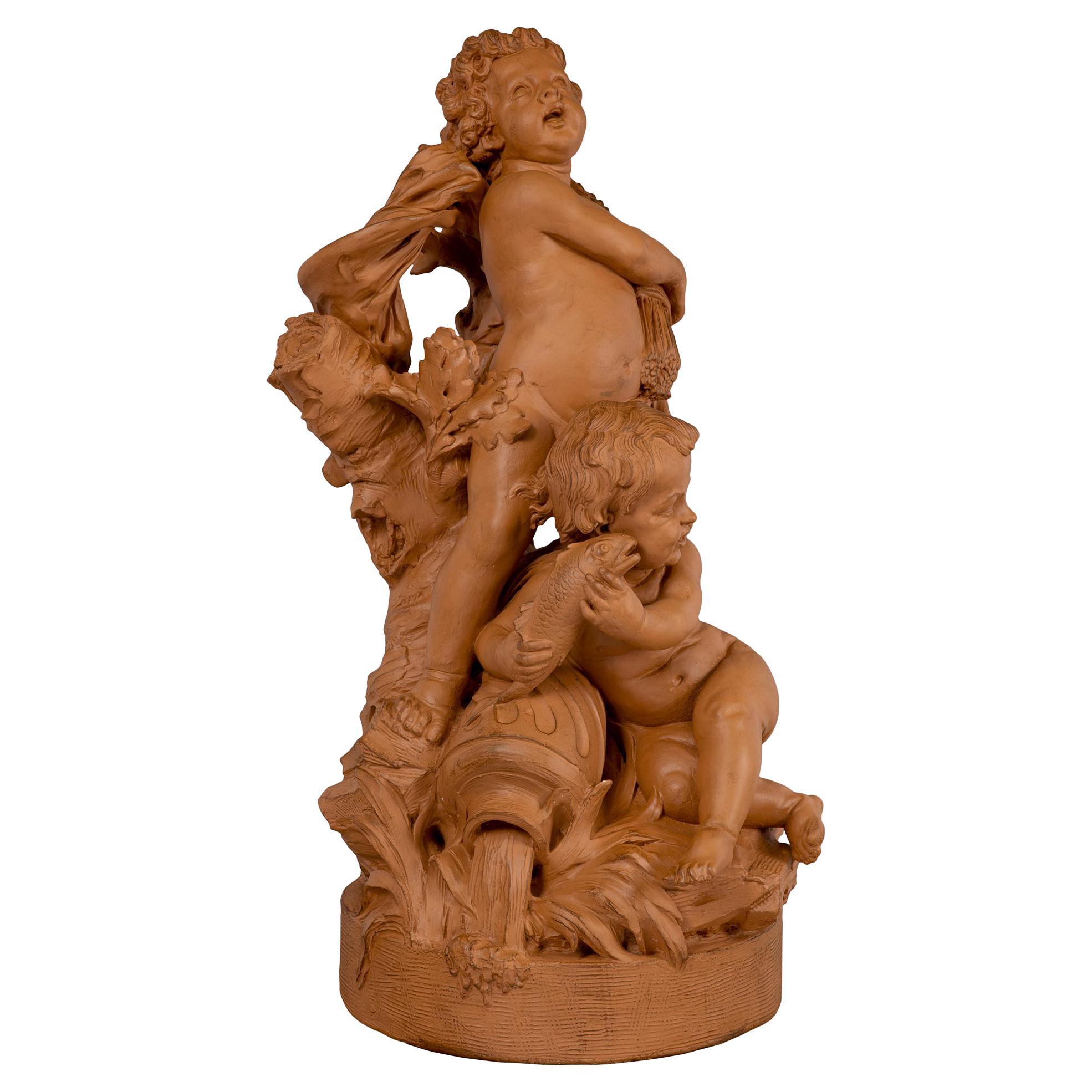
A striking and extremely charming French 18th century terra cotta statue from Paris. The high-quality statue is raised by a circular etched base. The base is decorated with a rocky t...
Category
Antique 18th Century French Figurative Sculptures
Materials
Terracotta
Christ blessing - A large original terracotta, France 18th century
Located in PARIS, FR
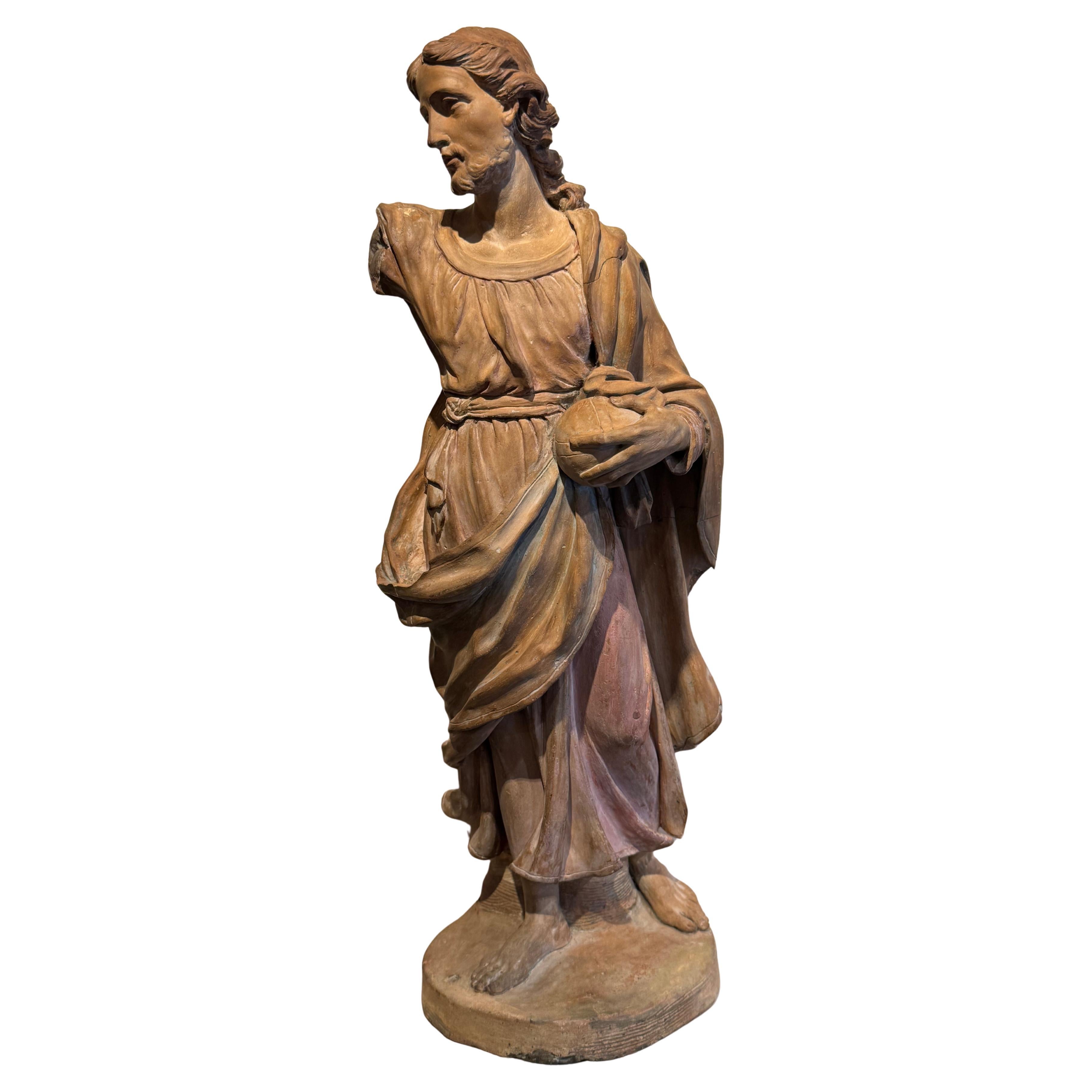
Large original terracotta depicting Christ blessing, carrying the globe in his left hand. Traces of polychromy, missing the right arm, and a fold in the drapery, but very beautiful o...
Category
Antique Mid-18th Century French Baroque Figurative Sculptures
Materials
Terracotta