Items Similar to 18th Century Personification of the Day Alabaster Sculpture
Want more images or videos?
Request additional images or videos from the seller
1 of 13
18th Century Personification of the Day Alabaster Sculpture
$2,754.96
£2,060.75
€2,300
CA$3,796.20
A$4,172.95
CHF 2,190.78
MX$49,619.34
NOK 28,134.56
SEK 25,627.54
DKK 17,528.39
About the Item
18th century
Personification of the Day
Alabaster, cm 11.5 x 17.5 x 5
With base cm 14.5 x 20,8 x 11.7
Il Giorno is a marble sculpture (160x150 cm) that Michelangelo made between 1526 and 1531 in the New Sacristy in San Lorenzo in Florence. In particular it is one of the four allegories of the Parts of the Day, and is located to the right on the sarcophagus of the tomb of Giuliano de' Medici, Duke of Nemours.
Giuliano de' Medici, Duke of Nemours, the first figure of the Medici House to obtain a noble title, died in 1516 at the age of thirty-seven. Three years later his nephew Lorenzo, Duke of Urbino, also disappeared, extinguishing the legitimate lines of descent of the main branch of the family, to the great dismay of Pope Leo X (Giovanni de' Medici, brother and uncle of the two dukes, respectively)who had spent so much on the rise of his family. It was in these circumstances that the decision was made to entrust to Michelangelo the construction of a princely tomb for the two deceased offspring, to be inserted in the family church, San Lorenzo in Florence and which later took the name of New Sacristy. Having decided to make a twin environment to the oldest Old Sacristy of Brunelleschi, it was decided to bury in this new monumental shrine also the two "Magnifici", Lorenzo (m. 1492) and Giuliano (m. 1478), respectively father and uncle of the pope. The redesign of the New Sacristy began around 1519, and work began in 1521. After the interruption for the pope’s death, they resumed in 1524, when the artist, for the new Medici pontiff Clement VII, definitively established the architectural structure of the complex. Models for the tombs of the two "dukes" were prepared that year. The work lasted a long time and Michelangelo arrived at a solution with a smaller number of statues than planned: only three instead of five or seven. The Day was probably begun in 1526, when the tomb of Lorenzo was finished and that of Giuliano started. The statue had to be completed after the resumption of work following the forced pause of the siege of Florence and its consequences, being left to a state of conspicuous "non-finito" at the departure of the artist for Rome in 1534. The Day is represented as a male personification, half-stretched and naked, like the other statues in the series. It had as model, perhaps, the river deities of the arch of Septimius Severus, the Torso of the Belvedere of which resumed the powerful anatomical structure in tension. He also resumed the pose of the Child in the youthful Madonna della Scala and that of one of the bronze nudes in the vault of the Sistine Chapel. It is the only one, among the series of allegories, to give its back to the viewer, in a pose opposite to that of the nearby Night. The left elbow is bent in support, while the right arm stretches backwards to look for something: only the forearm is actually sculpted, the hand is lost in the unmarked part. The legs are overlapped in the opposite direction to the rotation of the torso and this screwing is also evidenced by the rotation of the head towards the viewer. The bearded face, just rough-hewn, shows only a mysterious expression, highly evocative and emblematic because of its incompleteness. The work has received numerous interpretations: political symbol of rebellion from slavery, or autobiographical theme of the drive towards freedom; symbol of Christian light or personification of life; allegory of fire or temper collerico; personification of action, pain, anger, contempt or revenge. The work in question is taken from the famous statue of Michelangelo and is located between the late eighteenth and early nineteenth century in the middle of the period of the Grand Tour during which the noble scions went to Italy to explore the beauty and build collections, Like those of the famous Charles Townley (1737-1805), who came to Italy four times, he accumulated an incredible amount of classical works including vases, bronzes and coins, to which was added a large library with manuscripts and prints. The artist follows the features of the statue without that sense of non-finto that pervades the work of Michelangelo, and fixes the plastic tension in a noble material such as alabaster, which gives the exemplary high quality and preciousness.
- Similar to:Michelangelo Buonarroti (Sculptor)
- Dimensions:Height: 4.73 in (12 cm)Width: 8.27 in (21 cm)Depth: 5.12 in (13 cm)
- Materials and Techniques:
- Period:
- Date of Manufacture:18th Century
- Condition:Wear consistent with age and use.
- Seller Location:Milan, IT
- Reference Number:1stDibs: LU5918233427722
About the Seller
5.0
Vetted Professional Seller
Every seller passes strict standards for authenticity and reliability
Established in 2000
1stDibs seller since 2021
30 sales on 1stDibs
- ShippingRetrieving quote...Shipping from: Milan, Italy
- Return Policy
More From This Seller
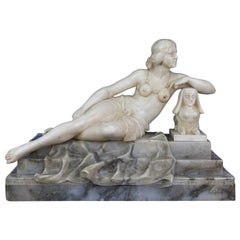
View All20th Century Reclining Woman with Sphinx Sculpture Alabaster
Located in Milan, IT
20th Century
Reclining woman with Sphinx
Alabaster, 43 x 60 x 25 cm
The sculpture depicts a young and charming odalisque lying languidly on a refined sheet. The face with d...
Category
20th Century Italian Figurative Sculptures
Materials
Alabaster
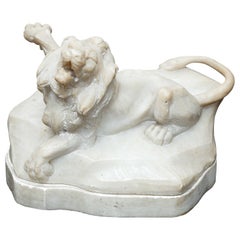
Lion Marble sculpture from the 17th century
Located in Milan, IT
XVII Century
Lion
Marble, 30 x 43 x 25
The object under consideration is configured as a marble sculpture referable to the 17th century, characterized by a strong, visceral langua...
Category
Antique 17th Century Italian Animal Sculptures
Materials
Marble
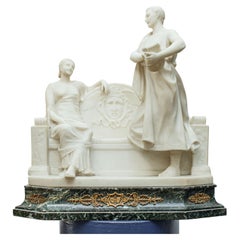
Early 20th Century Gallant Scene with Citadel White and Green Marble Sculpture
Located in Milan, IT
Early 20th century
Gallant scene with citadel
White marble and green marble from the Alps, cm 59 x 48 x 29
Signed on the back "G. Abell"
The refined marble group describes the...
Category
Early 20th Century Italian Figurative Sculptures
Materials
Marble
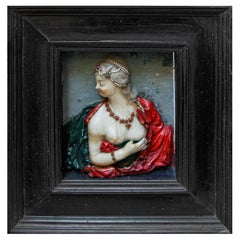
German ceroplast from the 17th century, Bust of a woman
Located in Milan, IT
German ceroplast from the 17th century
Bust of a gentlewoman
Wax, 36x32.5 cm
The use of making wax figures was very common, since ancient times, among the Greeks and Romans, and, ...
Category
Antique 18th Century and Earlier Italian Other Figurative Sculptures
Materials
Ceramic
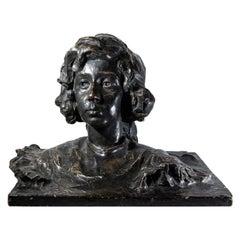
19th Century Young Woman Portrait Plaster Sculpture
Located in Milan, IT
Nineteenth century
Young woman portrait
Measures: Plaster, 50 x 40 x H 40 cm
Dated 10 - 1 - MCMI
The emergence of a "disheveled manner" in sculpture is affirmed since the 1880s with Giuseppe Grandi, author of the Monument to the Five Days of Milan, Ernesto Bazzaro, Paolo Troubetzkoy...
Category
Antique 19th Century Italian Figurative Sculptures
Materials
Plaster
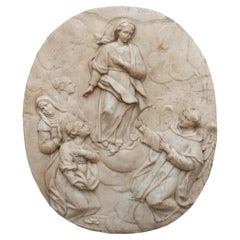
18th Century Immaculate Conception with Saints Sculpture Marble
Located in Milan, IT
18th century
Immaculate Conception and saints
Marble, 60 x 50 x 9 cm
In the center of the marble oval we find an Immaculate Conception accompanied by St. Vincent Ferrer (identifiable thanks to the presence of the wings and the Dominican dress), and by two saints of difficult identification, one of them with a monastic habit.
The theme of the Immaculate Conception began to appear in artistic works ever since the debate began, which saw the Franciscans and the ramifications of the Benedictine Order lined up on one side, linked to the thought of Anselmo d'Aosta and Bonaventura da Bagnoregio, and on the other the Dominicans, linked to the discussion offered by Thomas Aquinas...
Category
Antique 18th Century Italian Figurative Sculptures
Materials
Marble
You May Also Like
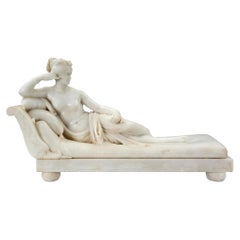
Italian 19th Century Neoclassical White Carrara Marble Sculpture
Located in West Palm Beach, FL
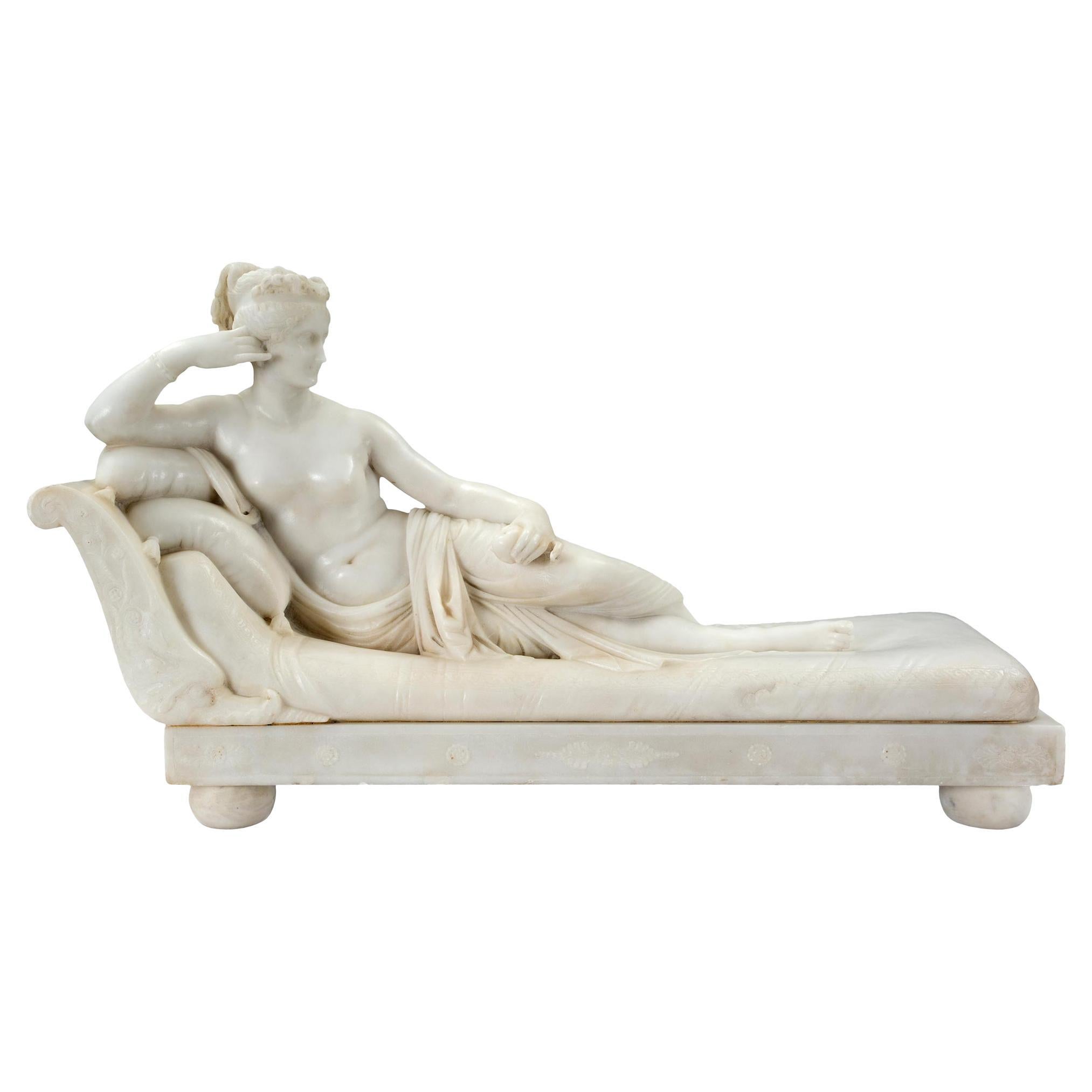
A spectacular Italian 19th century neo-classical white carrara marble sculpture of Paulina Bonaparte signed by Carlo Fossi. Paulina was...
Category
Antique 19th Century Italian Neoclassical Figurative Sculptures
Materials
Carrara Marble
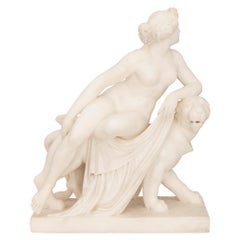
Italian 19th Century Alabaster Statue of the Greek Goddess Ariadne
Located in West Palm Beach, FL
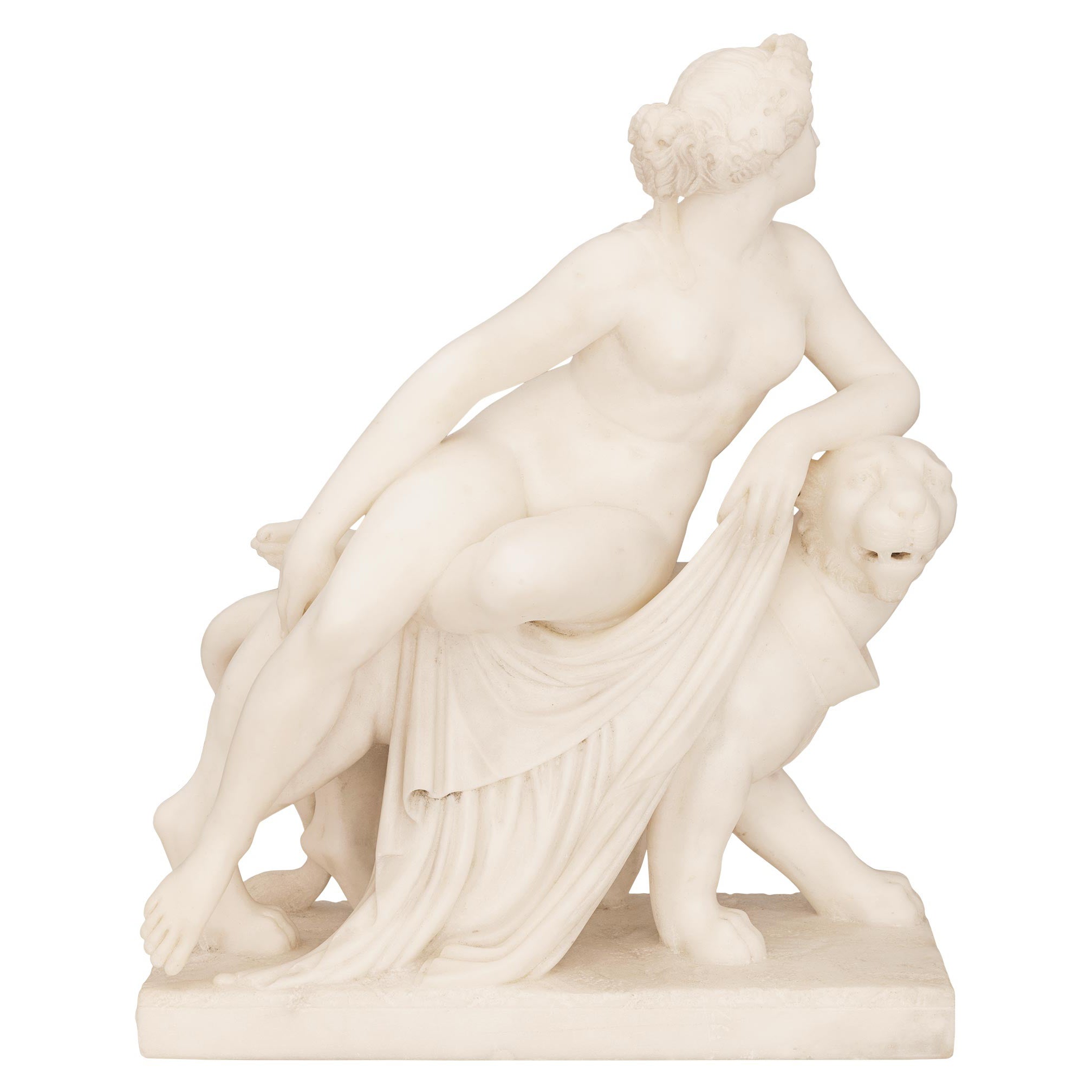
A striking and very high quality Italian 19th century alabaster statue of the Greek goddess Ariadne seated on her panther signed P. Bazzanti Florence. The statue is raised by a rectangular base with a fine wrap around mottled border and wonderfully executed ground like design. Above is the beautiful Ariadne seated on her panther with her hair tied in a richly sculpted updo while holding an exceptional flowing garment. In Greek mythology, Ariadne was daughter to Minos, the son of Zeus. Associated with mazes and labyrinths because of her involvement in the myths of the Minotaur and Theseus. Shown here riding on one of her husband's, Dionysius God of wine and festivities, panthers. Wonderful attention to detail throughout.
Pietro Bazzanti (1842-1881), Son of the renowned sculptor Nicolò Bazzanti, was a central figure in the production of Florentine sculpture...
Category
Antique 19th Century Italian Figurative Sculptures
Materials
Marble
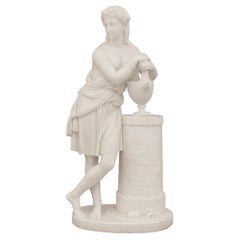
An Italian early 19th century marble statue by Carmelo Fontana
Located in West Palm Beach, FL
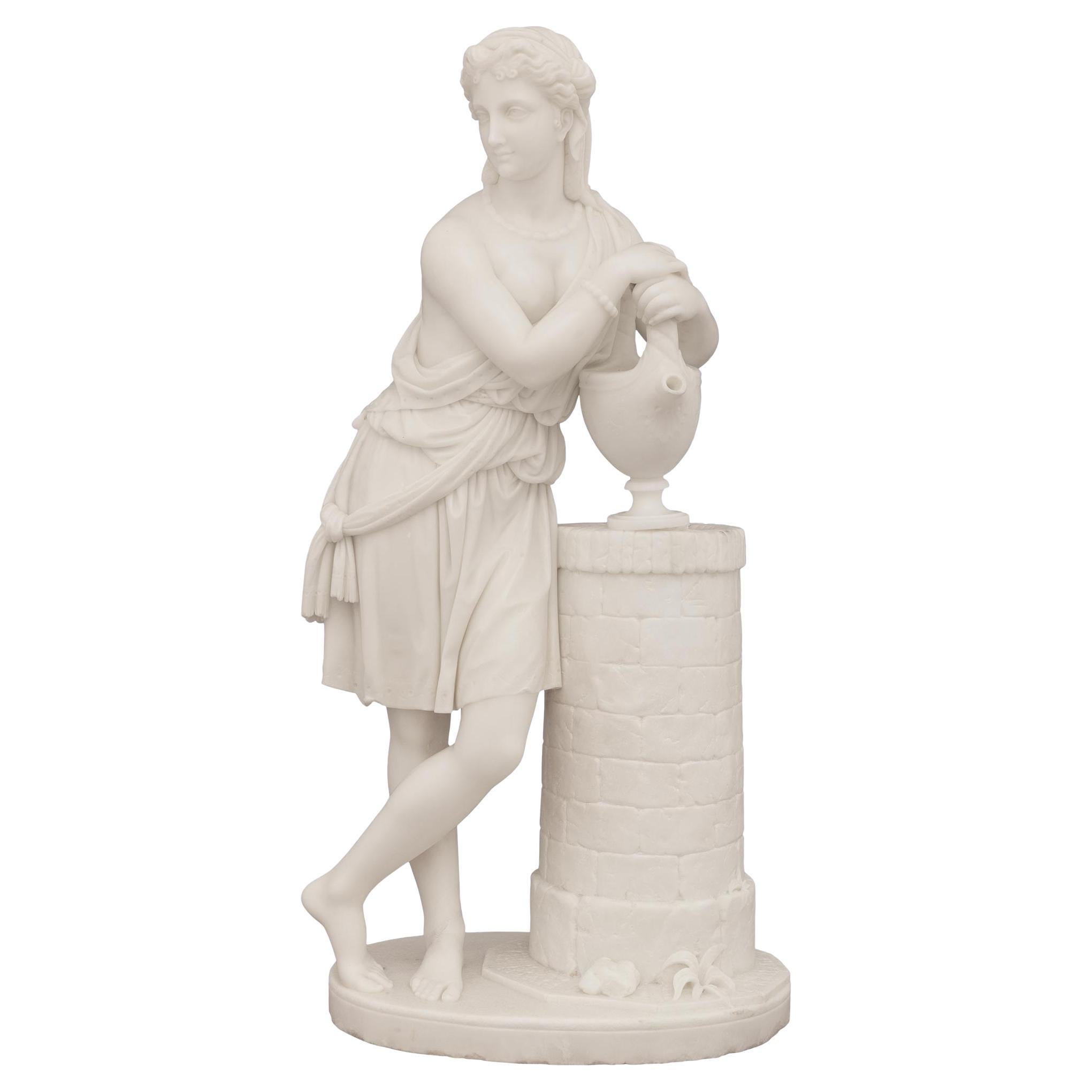
A spectacular and highly detailed Italian early 19th century white Carrara marble statue of Rebecca at the well, signed by Carmelo Fontana (1775-1825). Rebecca is standing pro...
Category
Antique Early 19th Century Italian Figurative Sculptures
Materials
Carrara Marble
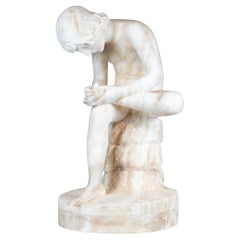
19th Century Alabaster Figure Of The Spinario (Boy with Thorn)
Located in Dublin, IE
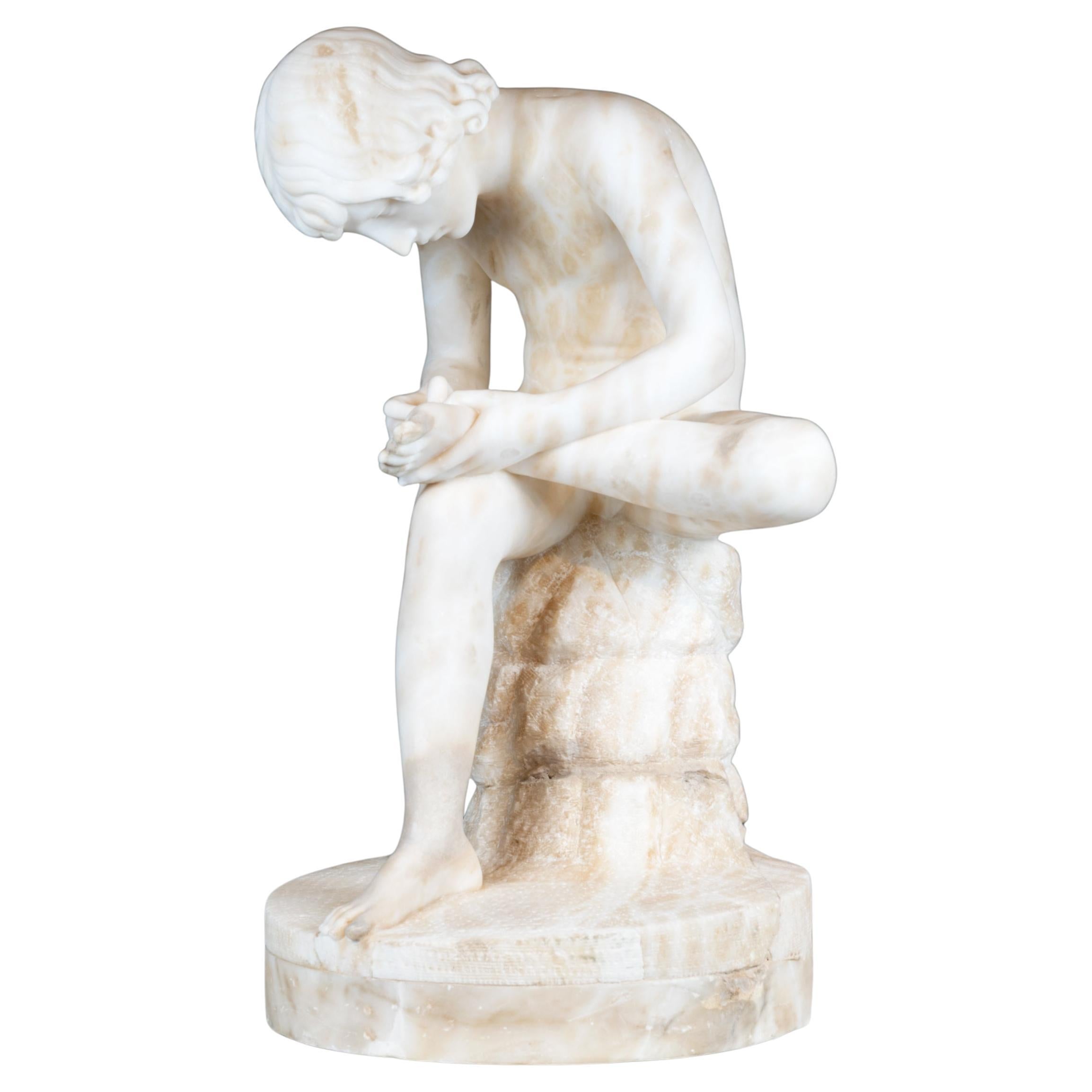
A well-executed alabaster figure of a nude boy seated on a rocky base, leaning forward intently as he removes a thorn from his foot. The carving demonstrates fine anatomical detailin...
Category
Antique 19th Century Italian Grand Tour Figurative Sculptures
Materials
Alabaster
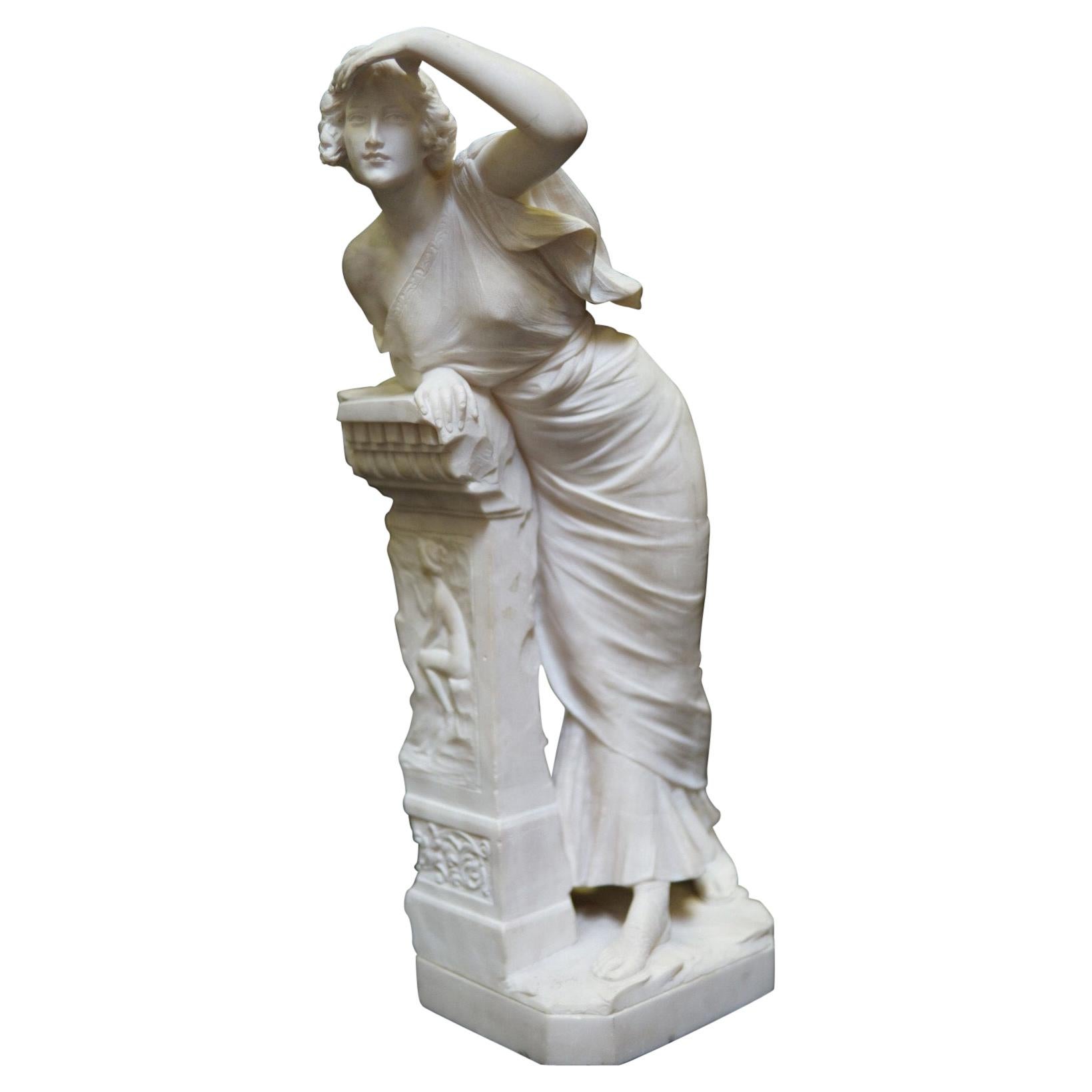
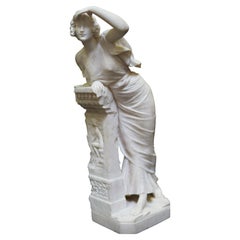
Italian Neoclassical Style Hand-Carved Alabaster Sculpture, 19 Century
Located in Cypress, CA
Fine Italian neoclassical style hand-carved white Alabaster sculpture depicting a standing maiden dressed in neoclassical garments/ leaned on an architectural pedestal, portraying a ...
Category
Antique Late 19th Century Italian Neoclassical Figurative Sculptures
Materials
Alabaster
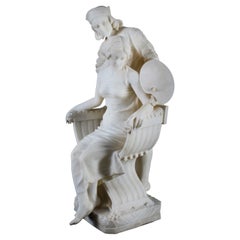
Antique Large Alabaster Sculpture P. Emilio Fiaschi 19th Century
By Emilio Fiaschi
Located in London, GB
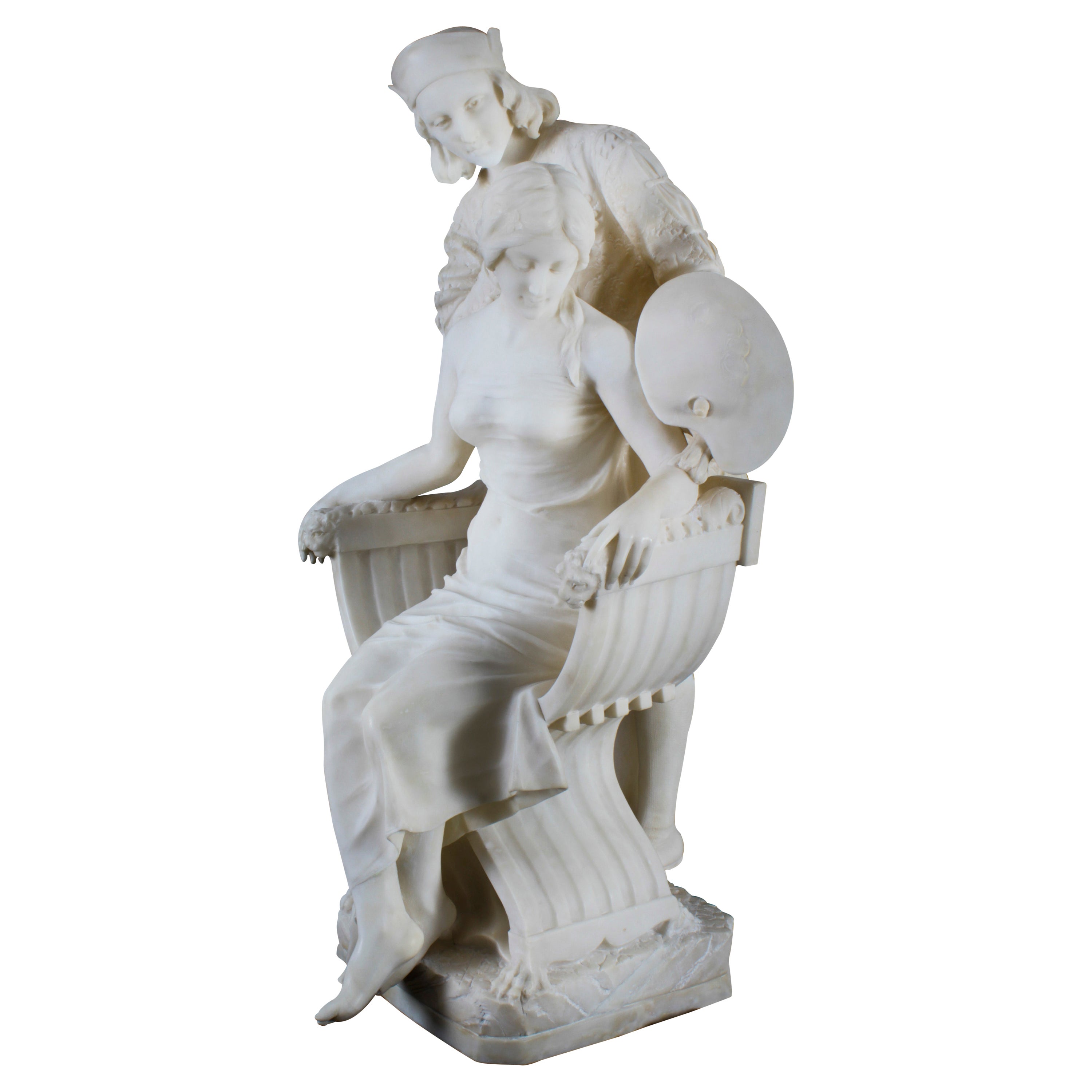
This is a splendid antique Italian carved alabaster sculpture of a figural group titled 'The Artist's Muse' by P. Emilio Fiaschi (Italian, 1858-1941), circa 1890 in date.
This finely carved sculpture depicts a beautiful young couple modelled as a young artist in Renaissance dress holding a palette and leaning over a maiden seated in a Savonarola chair with paw...
Category
Antique 1890s Italian Figurative Sculptures
Materials
Alabaster
More Ways To Browse
Antique Bronze Coins
Sculpture Of Michelangelo
Michelangelo Buonarroti
Naked Statue
Giuliano De Medici
Staffordshire Flatback
Amour Furniture
Antique Italian Wood Carvings
Antique Wand
Carl Mill
Carl Milles
Egypt Statue
Giambologna Sculptures
Marble Sculpture On Pedestal
Metal Sculpture Man
Sphinx Head
Tree Of Life Sculpture
Wisconsin Chair