1 of 7
19th Century Carved and Polychrome Dutch Family
$8,750List Price
About the Item
- Creator:Joaquín Bilbao y Martinez (Sculptor)
- Dimensions:Height: 25 in (63.5 cm)Width: 12.75 in (32.39 cm)Depth: 10 in (25.4 cm)
- Materials and Techniques:Marble,Polychromed
- Place of Origin:
- Period:
- Date of Manufacture:circa 1907
- Condition:
- Seller Location:Salt Lake City, UT
- Reference Number:1stDibs: LU100174860013
Authenticity Guarantee
In the unlikely event there’s an issue with an item’s authenticity, contact us within 1 year for a full refund. DetailsMoney-Back Guarantee
If your item is not as described, is damaged in transit, or does not arrive, contact us within 7 days for a full refund. Details24-Hour Cancellation
You have a 24-hour grace period in which to reconsider your purchase, with no questions asked.Vetted Professional Sellers
Our world-class sellers must adhere to strict standards for service and quality, maintaining the integrity of our listings.Price-Match Guarantee
If you find that a seller listed the same item for a lower price elsewhere, we’ll match it.Trusted Global Delivery
Our best-in-class carrier network provides specialized shipping options worldwide, including custom delivery.You May Also Like
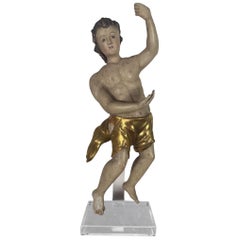
19th Century Carved Polychrome and Giltwood Statue of a Putti
Located in Los Angeles, CA
A finely carved polychrome and giltwood figure depicting a lively putti (cherub), shown in dynamic motion with one arm raised and the other curved across the chest. The youthful figu...
Category
Antique 19th Century Italian Baroque Figurative Sculptures
Materials
Wood, Giltwood, Paint
$2,200 Sale Price
21% Off
H 41 in W 17 in D 9 in
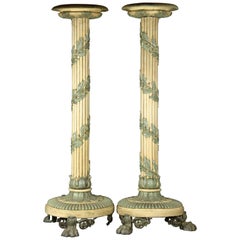
Pair of Pedestals Carved and Polychrome Wood, 19th-20th Century
Located in Madrid, ES
Pair of pedestals formed by a base elevated on lion claws with scrolls and birds, and a grooved shaft that ends in two circular moldings, decorated with plant and architectural eleme...
Category
Early 20th Century European Neoclassical Revival Figurative Sculptures
Materials
Other
$2,992
H 43.31 in W 14.97 in D 14.97 in
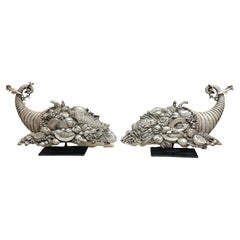
Pair of Continental Carved and Polychromed Wooden Cornucopias, 19th Century
Located in West Palm Beach, FL
Pair of Continental Carved and Polychromed Wooden Cornucopias, 19th Century
These finely carved and polychromed wooden cornucopias exemplify the enduring symbolic power of the horn of plenty in European decorative arts. Each composition is rendered in high relief, the ribbed horn issuing an abundant cascade of fruit and vegetables—pomegranates, grapes, melons, pumpkins, gourds, citrus, corn, and floral sprays—arranged with exuberant Baroque fullness. Now mounted on forged iron bases for display, the pair measures 20" high × 28" wide × 3.5" deep, including stands 12.5" x 6" (carvings alone 28" wide × 17" high × 3.5" deep).
The Cornucopia in History
Originating in antiquity, the cornucopia (Latin cornu copiae) was first associated with Amalthea, the goat who suckled the infant Zeus, whose horn became a miraculous source of nourishment. In Roman culture it was carried by deities of abundance—Fortuna, Abundantia, and Ceres—as an emblem of civic prosperity and the cycles of nature. Revived in the Renaissance and Baroque periods, the cornucopia became a favored motif in architecture, painting, and decorative arts, symbolizing divine blessing, seasonal plenty, and the wealth of the natural world.
Iconography of the Fruits and Vegetables
The profusion of produce is not merely decorative but encodes symbolic meanings rooted in both classical and Christian traditions:
Pomegranates—fertility, eternal life, and resurrection.
Grapes—festivity, vintage, and the Eucharistic blood of Christ.
Melons and Watermelon Slices—sensual abundance, refreshment, and ephemeral pleasure.
Pumpkins and Gourds—autumn harvest, transformation, and the cycles of plenty.
Corn (Maize)—sustenance and prosperity, reflecting New World influence on European symbolism.
Citrus Fruits—health, luxury, and Mediterranean prosperity.
Floral Sprays—seasonal beauty and the transience of life, underscoring vanitas themes common in still-life art.
This allegorical language aligns the carvings with the broader European tradition of abundance imagery found in still-life painting, silverwork, and architectural ornament.
Continental Style and Possible Origin
The sculptural density, dramatic overlapping of forms, and naturalistic rendering suggest a Continental origin, likely Austrian, German, or Italian, c. late 19th century. While Swedish decorative carving of the same era tends toward flatter surfaces and folk stylization, these examples embody a more theatrical Baroque and Rococo inheritance, later enhanced with a polychrome or silver-toned surface to heighten their decorative impact. Originally conceived as architectural appliqués...
Category
Antique 19th Century European Neoclassical Figurative Sculptures
Materials
Hardwood
$6,500 / set
H 20 in W 28 in D 6 in
19th Century Spanish Colonial Religious Figure In Carved And Polychromed Wood
Located in Bradenton, FL
19th Century Spanish Colonial wood and polychromed hand carved figure of a Santos or possibly Jesus. The practice of creating Santos figures began in Spain and they usually wore orna...
Category
Antique 18th Century Spanish Colonial Figurative Sculptures
Materials
Wood

$1,850
H 35 in W 9.5 in D 9.5 in
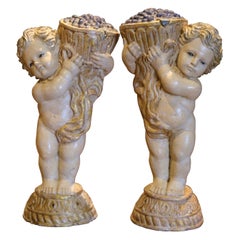
Pair 19th Century Italian Carved Polychrome and Painted Young Bacchus Statues
Located in Dallas, TX
Decorate a wine cellar or a wet bar with this elegant matching pair of antique cherub carvings, with child Bacchus god of wine, reprensenting the grape harvest and the enjoyment of w...
Category
Antique Mid-19th Century Italian Neoclassical Figurative Sculptures
Materials
Oak
$3,200 / set
H 20.5 in W 9.5 in D 7 in
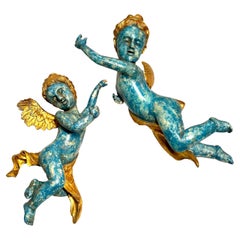
Pair of Hand-Carved Polychrome Gilt Wood Cherubs, Italy, 19th Century
Located in Madrid, ES
This pair of cherub sculptures was hand carved in Italy during the 19th century and executed in polychrome wood with gold leaf details. The figures represent traditional cherubs, a r...
Category
Antique 19th Century Italian Rococo Revival Figurative Sculptures
Materials
Gold Leaf
$2,273 / set
H 11.03 in W 20.48 in D 7.88 in
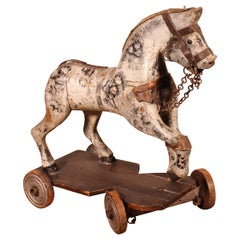
19th Century Polychrome Wooden Horse
Located in Brussels, Brussels
Elegant little carved wooden horse from the 19th century in polychrome wood
Very beautiful polychromy which has a lot of charm
Old child's toy with the front wheels which moves
...
Category
Antique 19th Century British Aesthetic Movement Toys and Dolls
Materials
Fruitwood
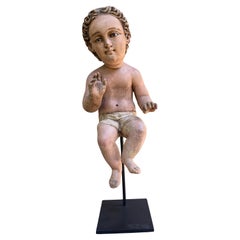
19th Century Blonde Polychrome Madonna
Located in Los Angeles, CA
This hand-carved wooden figure represents the Virgin Mary as a child, known as Niña María, a revered devotional subject in Spanish Colonial art. Crafted in 19th-century Guatemala, th...
Category
Antique 19th Century Guatemalan Spanish Colonial Figurative Sculptures
Materials
Gesso, Glass, Wood, Paint
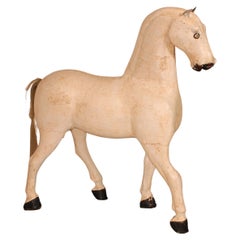
19th Century Polychrome Wooden Horse
Located in Brussels, Brussels
Elegant carved wooden horse from the 19th century in polychrome wood from England
Very beautiful movement which has a lot of charm
Beautiful patina
The dimensions include the bo...
Category
Antique 19th Century British Victorian Figurative Sculptures
Materials
Wood
19th Century European Polychrome Carved Wood Figure of a Dickensian Character
Located in Southall, GB
An extremely fine European polychrome carved wood figure of a Dickensian character, circa 1900. In the form of a gentleman with long side whiskers....
Category
Antique 19th Century French Figurative Sculptures
Materials
Wood

$4,839
H 35 in W 13 in D 10 in