Items Similar to Antique French Plaster Figure Of A Shepherd With Glass Eyes
Want more images or videos?
Request additional images or videos from the seller
1 of 21
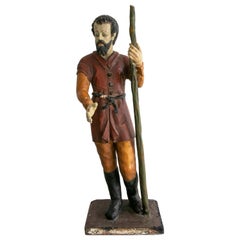
Antique French Plaster Figure Of A Shepherd With Glass Eyes
$995
£751.69
€862.02
CA$1,388.33
A$1,510.93
CHF 800.94
MX$18,177.67
NOK 10,158.54
SEK 9,294.35
DKK 6,439.95
About the Item
An antique plaster statue of a religious figure, likely a shepherd or a saint, possibly from a Nativity scene, late 19th, early 20th century. The figure, with glass eyes. holds a staff and wears a robe, consistent with depictions of shepherds. It is surmounted on a plaster plinth, with incised letters, Raffl, Marque Paris as well as a metal foundry tag as shown.
Dimensions: 21 1/2" H, 10" W, 15" D
Condition: Please see detail photos. Various signs of age include an old repair to staff (see photos) minor flaking, wear, nicks. Presents well overall.
- Dimensions:Height: 21.5 in (54.61 cm)Width: 10 in (25.4 cm)Depth: 15 in (38.1 cm)
- Style:Neoclassical (In the Style Of)
- Materials and Techniques:
- Place of Origin:
- Period:
- Date of Manufacture:Early 20th Century
- Condition:Wear consistent with age and use. Minor losses. Minor fading. Old repair to staff as shown.
- Seller Location:Bridgeport, CT
- Reference Number:Seller: 4607981stDibs: LU1755246895502
About the Seller
5.0
Vetted Professional Seller
Every seller passes strict standards for authenticity and reliability
1stDibs seller since 2015
2,171 sales on 1stDibs
Typical response time: <1 hour
- ShippingRetrieving quote...Shipping from: Bridgeport, CT
- Return Policy
More From This Seller
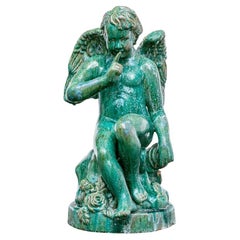
View AllLarge Glazed Terracotta Putto Garden Sculpture
Located in Bridgeport, CT
A large garden sculpture in the form of a seated winged putto with hand to lips appearing to shush. The putto is sitting on a plith among flowers and has one hand on a quiver. The gr...
Category
20th Century Renaissance Statues
Materials
Terracotta
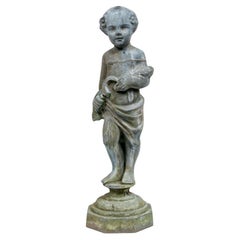
Antique Cast Lead French Style Garden Statue Of A Putto With Wheat Sheaf
Located in Bridgeport, CT
The figure of a French style putto holding a sickle and wheat sheaf representing the harvest as one of the four seasons' figures. Standing on an octagonal base.
Dimensions:
27" H ...
Category
Antique 19th Century French Provincial Statues
Materials
Lead
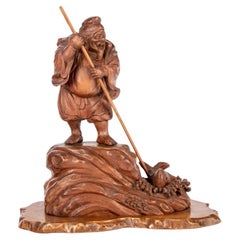
Oriental Carved Wood Group Of Fisherman And A Carp
Located in Bridgeport, CT
A portly fisherman dressed in robe and cap stands on a rocky base and spears a carp below in the waves. Mounted on a separate shaped base. Red character marks on the base.
Dimensio...
Category
20th Century Figurative Sculptures
Materials
Wood
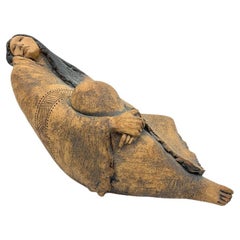
Jean Juhlin (Am. B. 1931) Stoneware Signed Sculpture 1985
Located in Bridgeport, CT
Stoneware sculpture depicting a reclining Indian female figure. The barefoot woman attired in a shawl with an intricate pierced design. The female is in reclining position with her a...
Category
20th Century American Rustic Figurative Sculptures
Materials
Stoneware
Adolpho Cipriani
Italian, Active 1880-1930
Alabaster Figure
By Adolfo Cipriani
Located in Bridgeport, CT
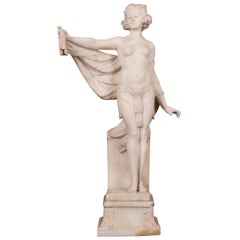
The shy semi-nude maiden, her hair in ringlets with rosette ornaments, is dressed in a loincloth with wings in relief and chains. She is wrapped in a long cloak that she holds out to...
Category
Early 20th Century Italian Classical Greek Figurative Sculptures
Materials
Alabaster
Antique Carved Wood Head Of A Male Mounted On Panel
Located in Bridgeport, CT
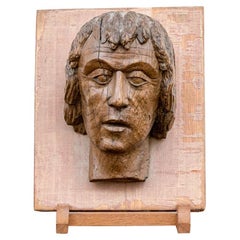
A well carved hardwood bust reminiscent of sacred and religious sculpture of the Gothic and Renaissance eras. Antique carved wood head of a mal...
Category
Antique 19th Century Renaissance Busts
Materials
Hardwood
You May Also Like
Large Sculpture of a Shepherd
Located in Madrid, ES
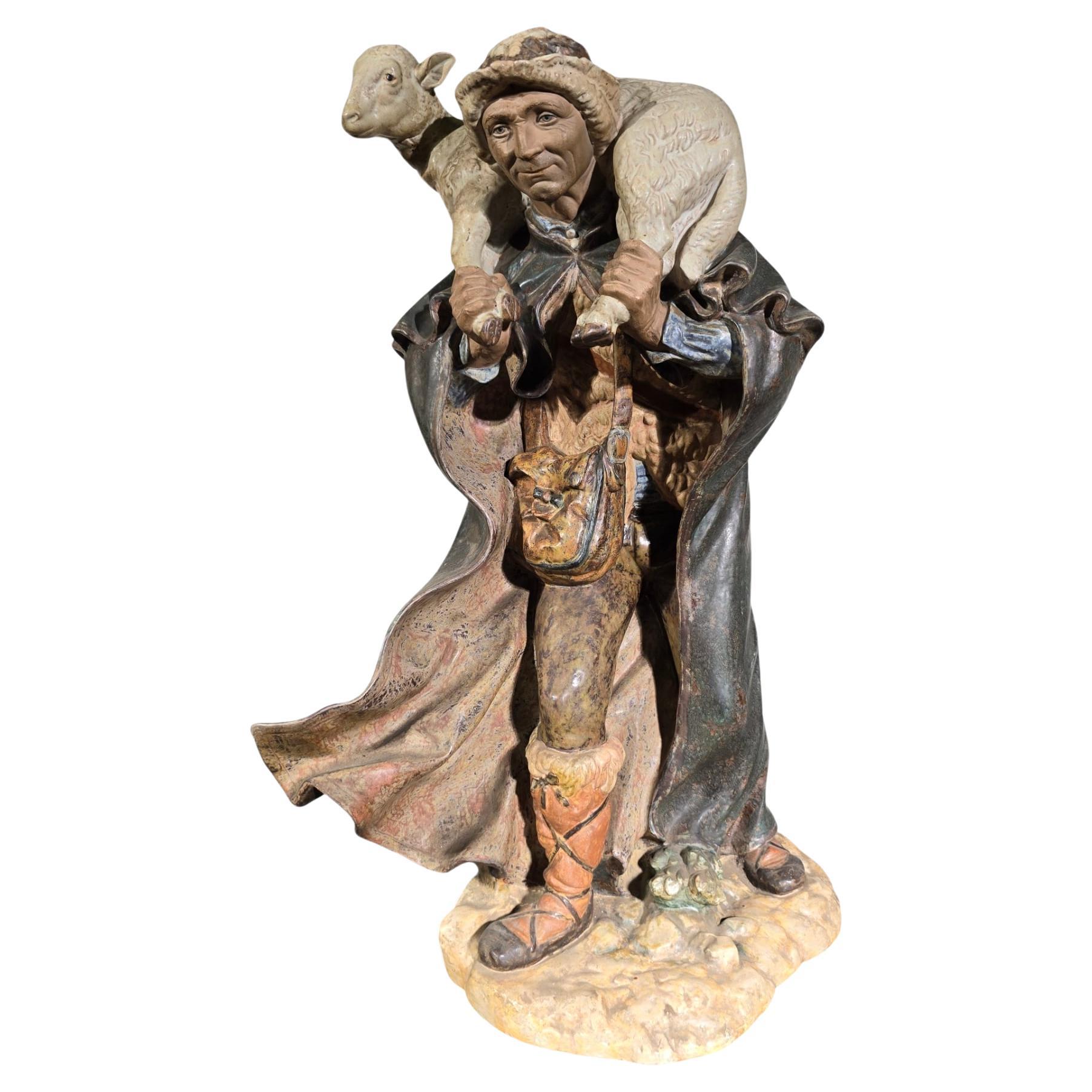
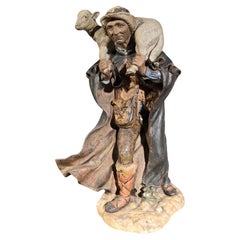
This impressive large sculpture depicts a shepherd carrying a lamb on his shoulders. The piece is notable for its realism and expressive strength. The sculpture is in perfect conditi...
Category
Mid-20th Century Figurative Sculptures
Materials
Porcelain
Antique Wooden Carved Crib Figurine of a Shepherd
Located in Berghuelen, DE
Antique Wooden Carved Crib Figurine of a Shepherd
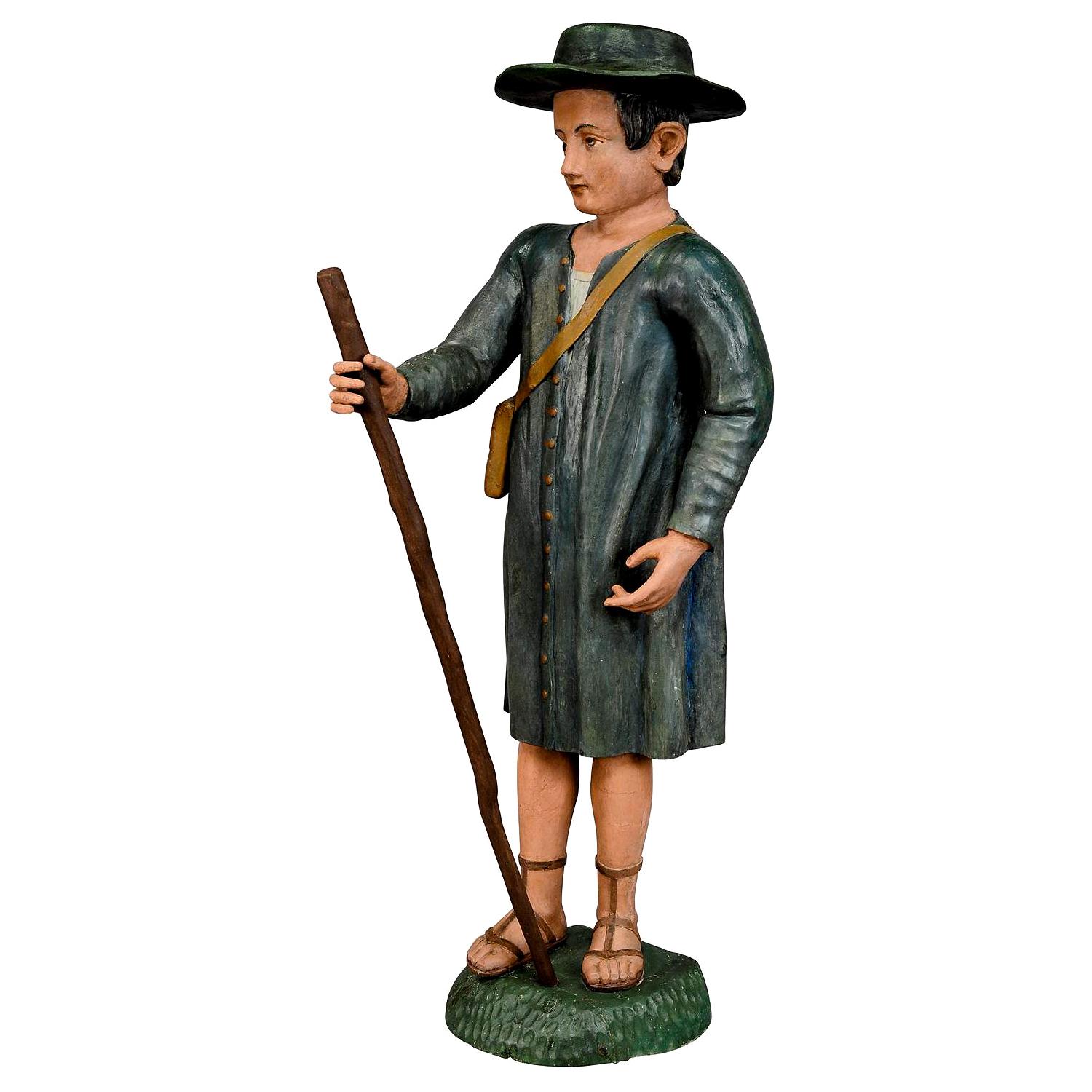
A large antique wooden carved statue of a shepherd, probably from a Christmas crib. Handcarved in Germany in the second half of the...
Category
Antique Mid-19th Century German Black Forest Figurative Sculptures
Materials
Wood
19th Century Spanish Wooden Painted Figure Sculpture of a Saint Holding a Stick
Located in Marbella, ES
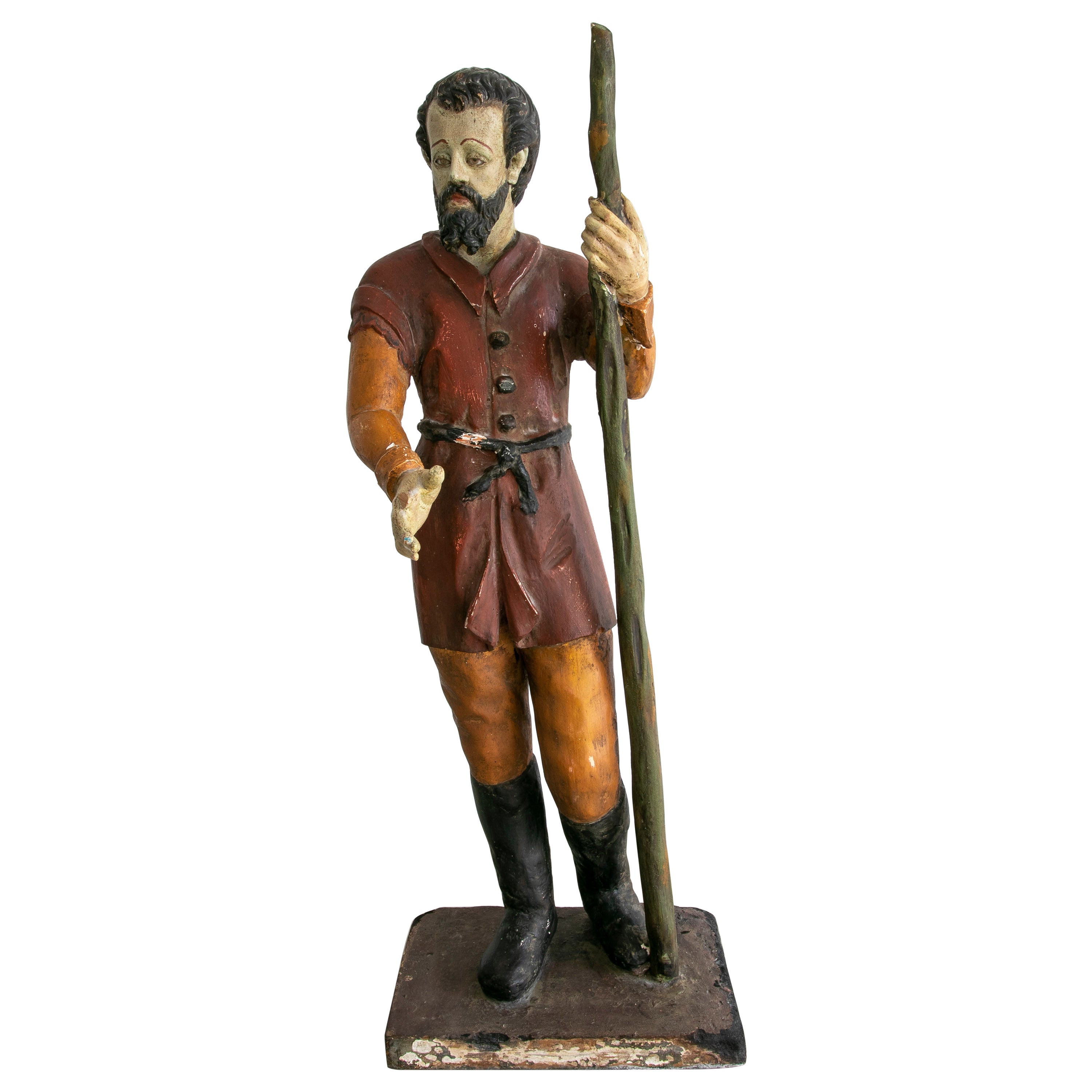
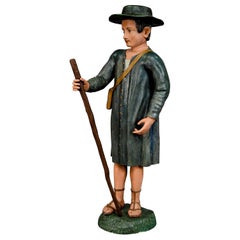
Mid 19th century Spanish wooden painted hand carved figure sculpture of a saint holding a long stick.
Category
Antique Mid-19th Century Spanish Figurative Sculptures
Materials
Wood
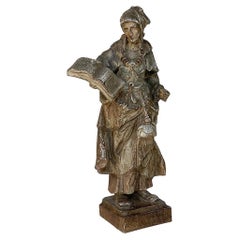
18th Century French Hand Carved and Painted Wood Statue
Located in Dallas, TX
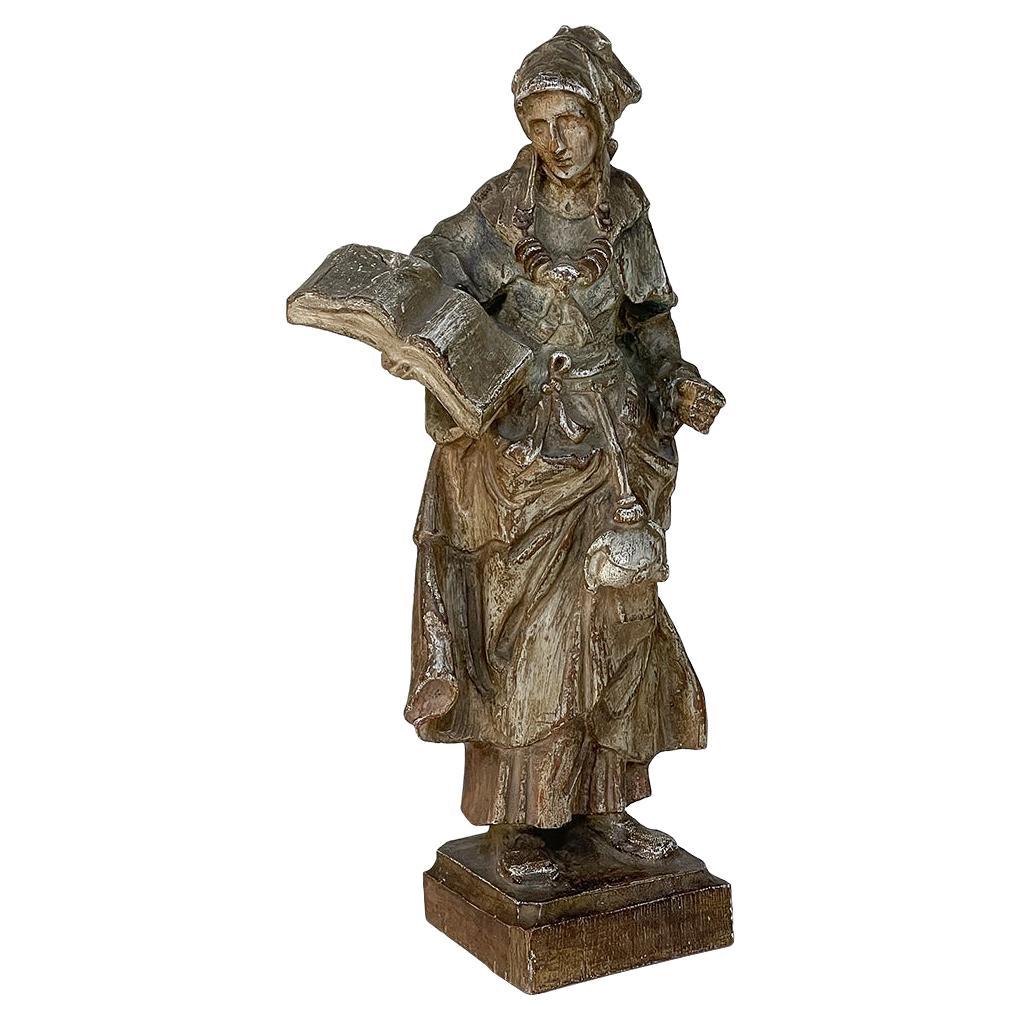
18th century French hand carved and painted wood statue still shows vestiges of its original painted finish. Depicting a nun reading a bible, the n...
Category
Antique Late 18th Century French Rustic Figurative Sculptures
Materials
Oak, Paint
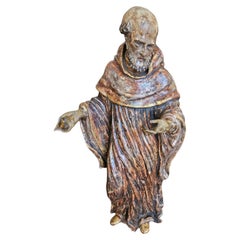
18th Century Italian Giltwood and Polychrome Saint
Located in Los Angeles, CA
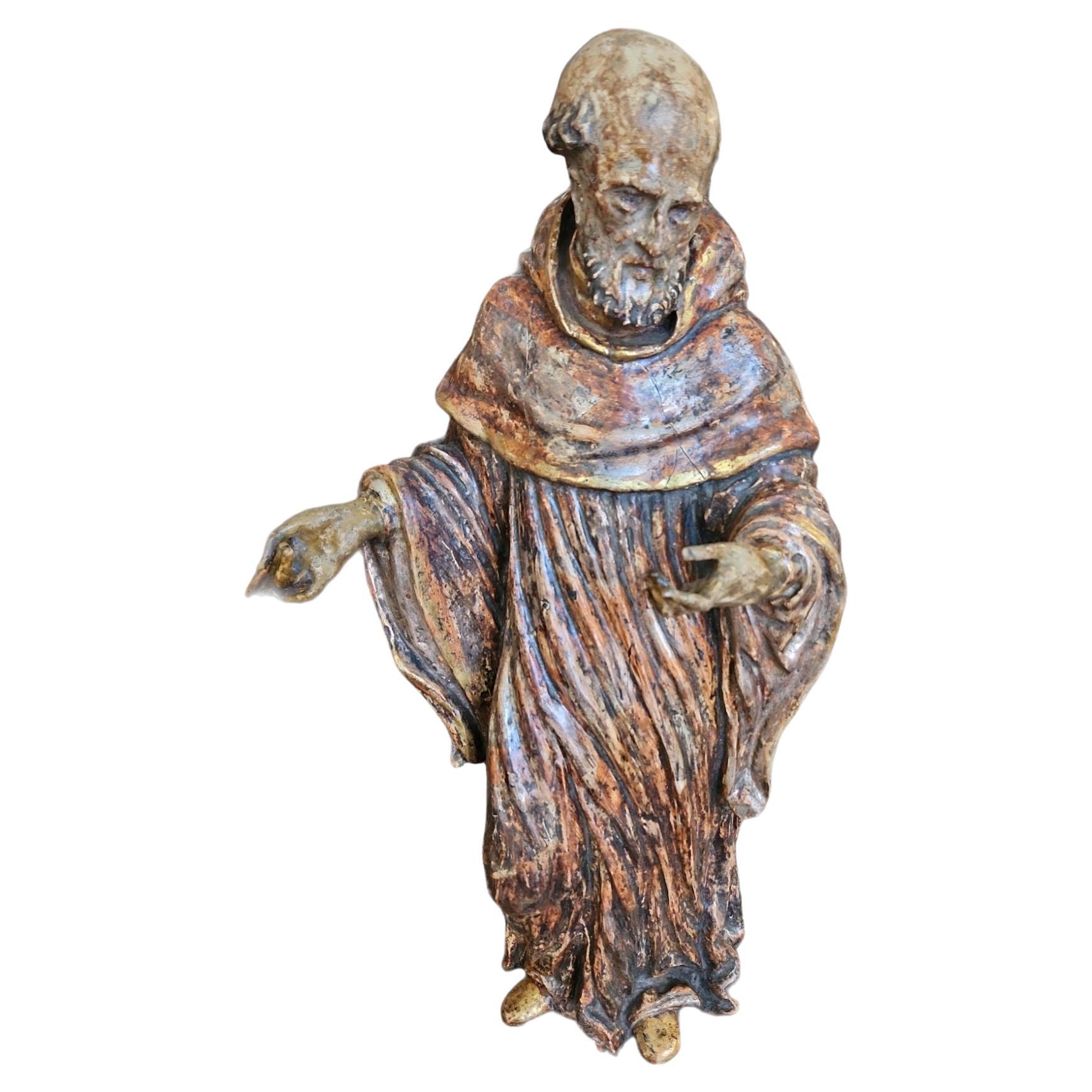
In excellent condition considering age. Some losses and chips as expected with the age. From a beautiful home in Santa Barbara.
Category
Antique 18th Century Italian Neoclassical Figurative Sculptures
Materials
Giltwood
Sculpture in Polychrome Wood Representing Saint Anthony Hermit
Located in Saint-Ouen, FR
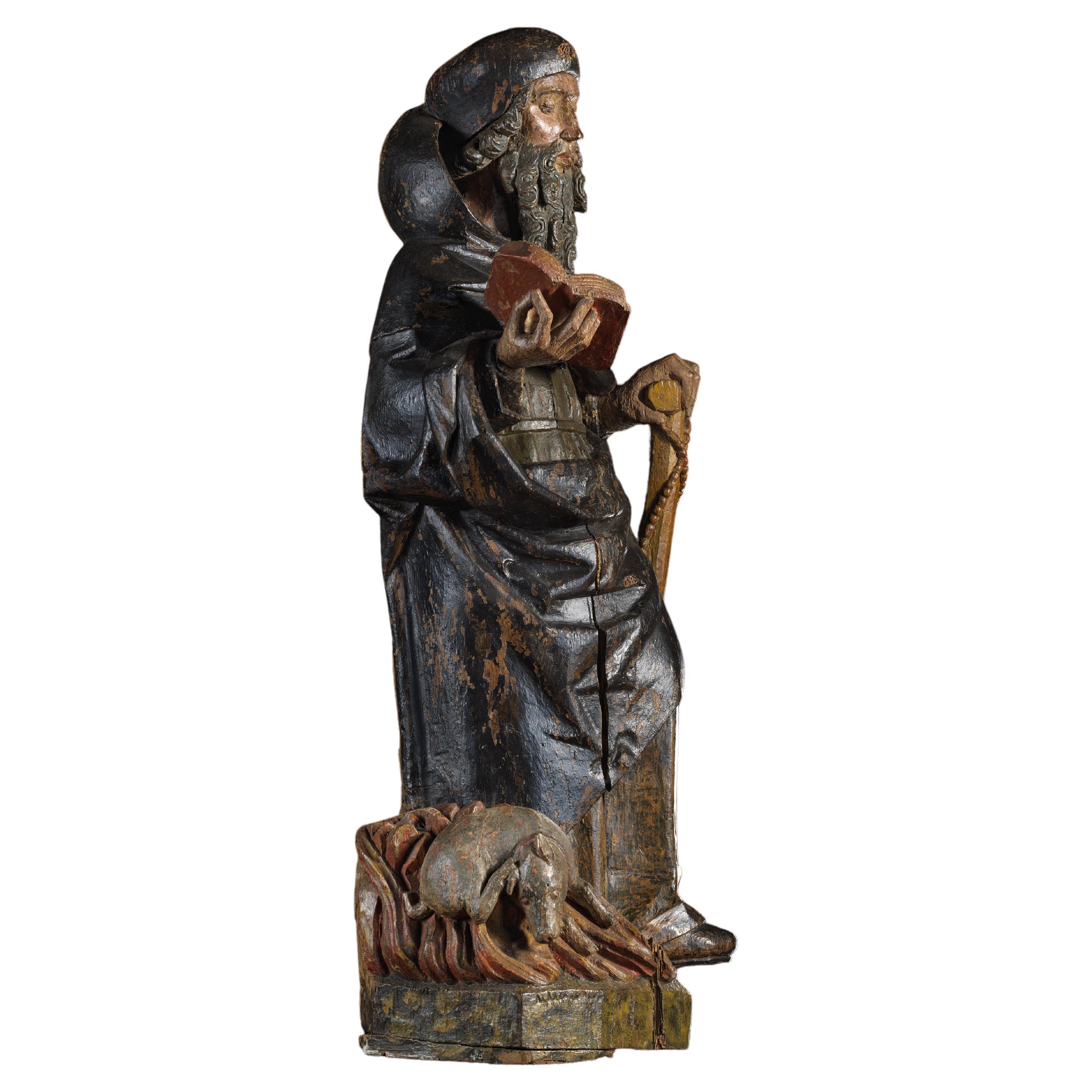
Sculpture In Polychrome Wood Representing Saint Anthony Hermit
Origin : East of France
Period : End of the 15th century
Measures: Height : 97 cm
Width : 32 cm
Depth : 26 cm
Polychrome wood
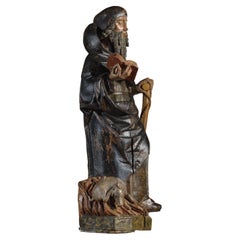
The saint is represented by an old, bearded man, dressed in a hooded monk’s habit over the tunic of his religious order. He is stood upright, holding an open book, La Règle des Antonnites, in his right hand. In the other hand, he is holding a staff in the form of the Greek letter tau with a rosary hanging down over it. At his feet lies a pig wearing a small bell around its neck.
He rests on his right leg, whilst the left advances forward as if he were about to start walking. His belted tunic, forming several rectilinear pleats, is covered by a habit which is open only at the waist, therefore revealing these pleats. He is also wearing a hooded scapular over his shoulders.
His thick hair escapes from under a distinctive hat, forming a collection of finely sculpted ringlets. This fine detail is also applied to the four long ringlets of his superb beard, which sit just below the shorter ones of his moustache.
His face is a picture of harmony, with lowered eyes and his small mouth lost amongst the abundance of hair.
At his feet on a pedestal of flames, hinting to the fire of Saint Anthony no doubt, a pig trying to scratch its ear.
Born in 251 in Upper Egypt, he withdrew into solitude at a very young age. He would have been plagued in the desert with extremely diabolical temptations.
He payed a visit to Saint Paul the hermit towards the end of his life. He was the dean of the Thébaïde anchorites, who was miraculously fed by a crow. On the day that Saint Anthony visited, the crow brought two portions of bread in its beak instead of one.
Some time after, having learnt of the death of his venerable brother, Saint Anthony went to bury him with the help of two lions.
The King of Catalonia pleaded to come and exorcise his posessed wife and children. He left Thébaïde for Barcelona. He appeared at the house of the provost André, bringing him a sow in his mouth, a monstrous piglet born without eyes. André wanted to kill it but Anthony stopped him, telling him that the poor beast wanted to ask for healing, as the King had done for his offspring.
He made a sign of the cross on the piglet and it suddenly acquired its sight and the members which it did not have at birth. After which, André, guided by Saint Anthony, exorcised the Queen of Catalonia in the same way whilst she knelt at his feet.
Théophile discovered the body of Saint Anthony wrapped in a palm fibre tunic which he had been given by Saint Paul the Hermit.
In the Red Sea Desert there are two Coptic, IV century, monasteries which stand next to each other, one dedicated to Saint Anthony, the other to Saint Paul the Hermit. They are the oldest monasteries in the Christian world.
The body of the famous hermit was transported to Constantinople and would have been transferred into the abbaye, Saint Antoine-en-Viennois, Dauphine.
The Antonnite Order was a charitable order which specialised in treating contagious diseases. The fire of Saint Anthony, was identified by doctors as a grangrenous ergotism, caused by a diet of rye bread contaminated with the parasite ergot. The effect of this is the drying out of hands and feet which then need amputation, the plague and then later syphilis. All the skin diseases came from Saint Anthony.
Saint Anthony’s pilgrimage to Dauphine rivaled that of Saint Jacques to Compostela. Thanks to the various commanderies created by the mother house, Saint Anthony’s cult spread throughout Christianity.
In order to maintain commanderies and their hospitals, the Antonnites resorted to pig farming. They enjoyed having the benefit of letting their pigs roam freely through the streets of the villages, with little bells round their necks that had a recognisable chime so that they were able to find them. This privilege was very envied by other monastic Orders.
Saint Anthony was the patron saint of several crafts such as basket makers and gravediggers.
However it is to the pig that he owes the majority of his patronages; pigkeepers, pig sellers, butchers, porc butchers, brush makers who use pig bristle and bell-ringers because of the pig bells...
Category
Antique 15th Century and Earlier Figurative Sculptures
Materials
Wood