Items Similar to Antique Grand Tour Patinated Bronze Figure of Narcissus 1870, 19th Century



Video Loading
Want more images or videos?
Request additional images or videos from the seller
1 of 11
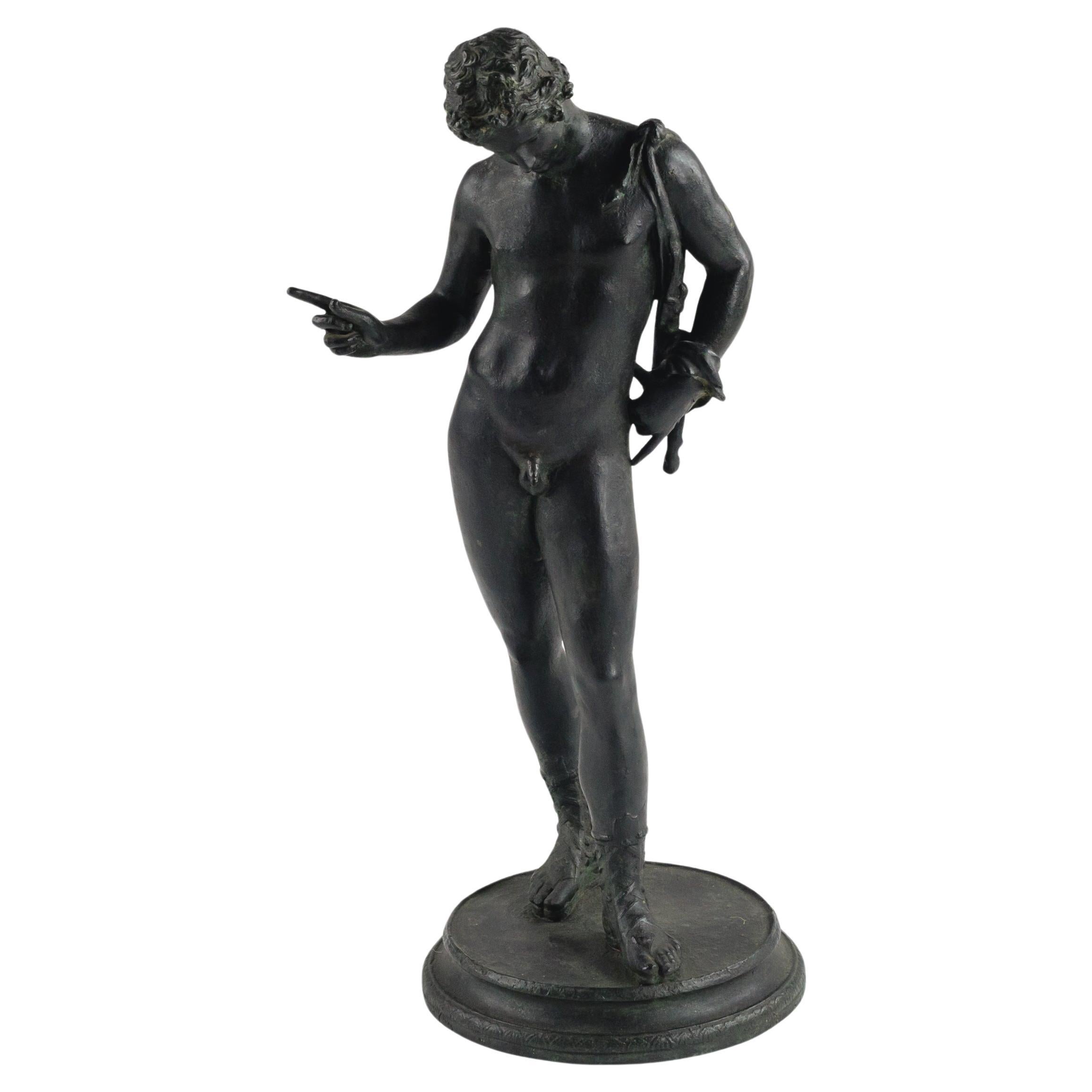
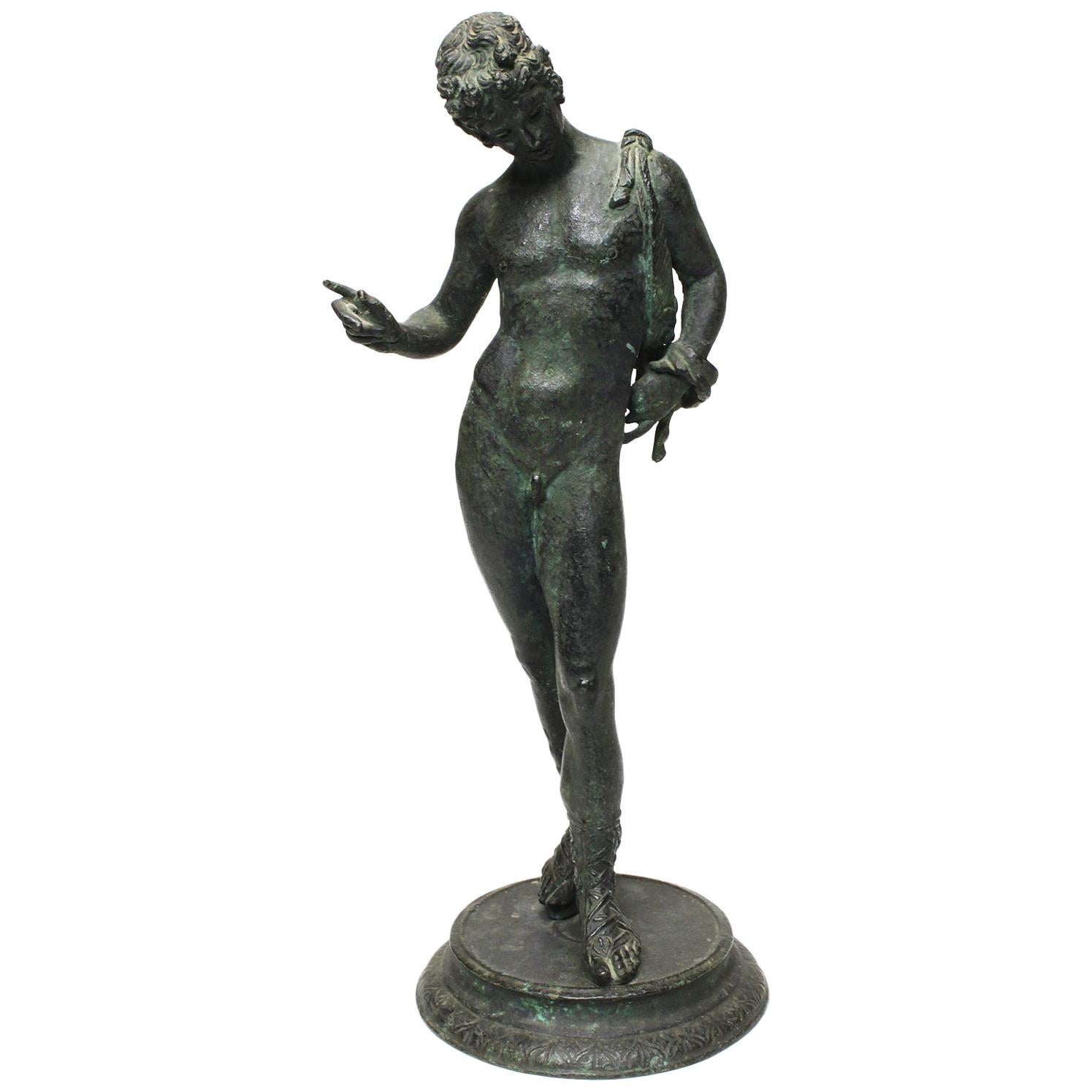
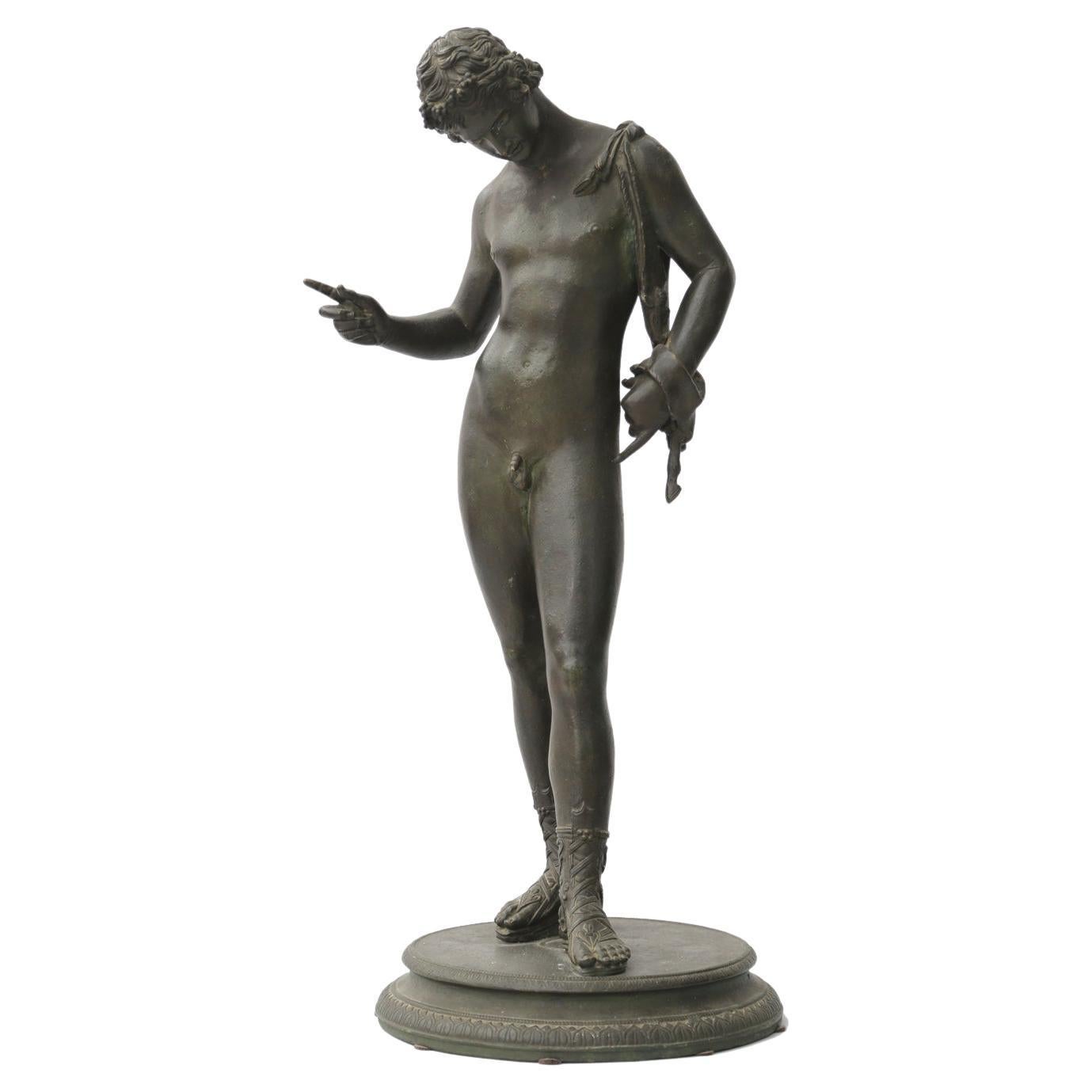
Antique Grand Tour Patinated Bronze Figure of Narcissus 1870, 19th Century
$2,590.86
£1,900
€2,206.26
CA$3,570.08
A$3,924.38
CHF 2,060.28
MX$46,663.75
NOK 26,458.72
SEK 24,101.03
DKK 16,484.30
About the Item
This is a superb antique Grand Tour patinated bronze figure of Narcissus, dating from the last quarter of the 19th Century.
Narcissus was a hunter in Greek mythology and he was distinguished for his beauty.
This stunning patinated bronze classical figure is after the original antique bronze which was found in Pompeii in 1862. It features Narcissus standing tall with his head slightly looking downward and is mounted on a marble turned plinth base.
This high-quality hot cast solid bronze was produced by using the traditional "lost wax" process, otherwise known as the "cire perdue" method.
The craftsmanship is second to none throughout all aspects of this bronze which is sure to add an unparalleled touch of class to your home.
Condition:
In excellent condition, please see photos for confirmation.
Dimensions in cm:
Height 53 x width 18 x depth 18
Dimensions in inches:
Height 20.9 x width 7.1 x depth 7.1
Narcissus was a hunter in Greek mythology, son of the river god Cephissus and the nymph Liriope. He was a very beautiful young man, and many fell in love with him. However, he only showed them disdain and contempt. One day, while he was hunting in the woods, the Oread nymph Echo spotted him and immediately fell for him. When Narcissus sensed that someone was following him, Echo eventually revealed herself and tried to hug him. However, he pushed her off and told her not to disturb him. Echo, in despair, roamed around the woods for the rest of her life, and wilted away until all it remained of her was an echo sound.
Nemesis, the goddess of retribution and revenge, learned what had happened and decided to punish Narcissus for his behaviour. She led him to a pool; there, the man saw his reflection in the water and fell in love with it. Although he did not realise in the beginning that it was just a reflection, when he understood it, he fell in despair that his love could not materialise and committed suicide.
The Grand Tour was the traditional trip of Europe undertaken by mainly upper-class European young men of means. The custom flourished from about 1660 until the advent of large-scale rail transit in the 1840s, and was associated with a standard itinerary.
It served as an educational rite of passage. Though primarily associated with the British nobility and wealthy landed gentry, similar trips were made by wealthy young men of Protestant Northern European nations on the Continent, and from the second half of the 18th century some South American, U.S., and other overseas youth joined in. The tradition was extended to include more of the middle class after rail and steamship travel made the journey less of a burden.
The primary value of the Grand Tour, it was believed, lay in the exposure both to the cultural legacy of classical antiquity and the Renaissance, and to the aristocratic and fashionably polite society of the European continent. In addition, it provided the only opportunity to view specific works of art, and possibly the only chance to hear certain music. A grand tour could last from several months to several years. It was commonly undertaken in the company of a knowledgeable guide or tutor.
The Grand Tour not only provided a liberal education but allowed those who could afford it the opportunity to buy things otherwise unavailable at home, and it thus increased participants' prestige and standing. Grand Tourists would return with crates of art, books, pictures, sculpture, and items of culture, which would be displayed in libraries, cabinets, gardens, and drawing rooms, as well as the galleries built purposely for their display; The Grand Tour became a symbol of wealth and freedom.
Lost Wax Method
sometimes called by the French name of cire perdue or the Latin, cera perduta is the process by which a bronze or brass is cast from an artists sculpture.
In industrial uses, the modern process is called investment casting. An ancient practice, the process today varies from foundry to foundry, but the steps which are usually used in casting small bronze sculptures in a modern bronze foundry are generally quite standardised.
About the Seller
5.0
Platinum Seller
Premium sellers with a 4.7+ rating and 24-hour response times
Established in 1983
1stDibs seller since 2012
1,442 sales on 1stDibs
Typical response time: <1 hour
Associations
LAPADA - The Association of Arts
Antiques Dealers
- ShippingRetrieving quote...Shipping from: London, United Kingdom
- Return Policy
More From This Seller
View AllAntique Grand Tour Patinated Bronze Figure of of David 19th Century
Located in London, GB
This is a superb large antique Grand Tour patinated bronze version of David, dating from the mid 19th Century.
The bronze statue depicts David with an enigmatic smile posed with ...
Category
Antique 1850s Figurative Sculptures
Materials
Bronze

Antique Victorian Bronze Sculpture of Greek God Apollo 19th Century
Located in London, GB
This is a truly magnificent antique Victorian patinated bronze sculpture of the famous Greek God Apollo, modelled upon a shaped circular socle, inscribed monogram 'NF' and numbered 2...
Category
Antique 1860s English Victorian Figurative Sculptures
Materials
Bronze
Antique Monumental Grand Tour Bronze of Michelangelo David 19th Century
Located in London, GB
This is an elegant monumental Grand Tour bronze sculpture of Michelangelo's David, circa 1880 in date.
The full-length portrait statue is of David, the 14ft marble statue depicts the Biblical hero David, represented as a standing male nude, David looks tense and ready for battle after he has made the decision to fight Goliath, but, before the battle has actually taken place. His brow is drawn, his neck tense, and the veins bulge out of his lowered right hand and holding his slingshot over his shoulder.
This impressive scuplture is 107cm (3ft 6" ) tall and weighs over 36kgs (79lbs).
This high quality hot cast solid bronze was produced using the traditional 'lost wax' process.
The attention to detail of this sculpture is absolutely fantastic.
Condition:
In really excellent condition, please see photos for confirmation.
Dimensions in cm:
Height 107 x Width 41 x Depth 24.5
Weight 36.3 kg
Dimensions in inches:
Height 3 foot, 6 inches x Width 1 foot, 4 inches x Depth 10 inches
Weight 80.0 lbs
Michelangelo's David
This astonishing Renaissance sculpture was created between 1501 and 1504. It is a 14ft marble statue depicting the Biblical hero David, represented as a standing male nude. Originally commissioned by the Opera del Duomo for the Cathedral of Florence, it was meant to be one of a series of large statues to be positioned in the niches of the cathedral’s tribunes, way up at about 80mt from the ground. Michelangelo was asked by the consuls of the Board to complete an unfinished project begun in 1464 by Agostino di Duccio and later carried on by Antonio Rossellino in 1475. Both sculptors had in the end rejected an enormous block of marble due to the presence of too many “taroli”, or imperfections, which may have threatened the stability of such a huge statue...
Category
Antique 1880s Figurative Sculptures
Materials
Bronze

Antique Large Bronze of Pan Dancing Musee de Naple, 1870s
Located in London, GB
This is a large French Grand Tour bronze sculpture of Pan the Roman fertility God of the forest issued by the "Musee de Naple" , circa 1870 in date.
The sculpture features Pan danc...
Category
Antique 1870s French Grand Tour Figurative Sculptures
Materials
Bronze

Antique Art Deco Bronze Figure by Maurice Guiraud-Rivière 20th Century
By Maurice Guiraud-Rivière
Located in London, GB
A large fine Art Deco patinated bronze figure of "The Riverman" by Maurice Guiraud-Rivière (French, 1881-1947), circa 1920 in date.
This powerful sculpture is modelled and cast a...
Category
20th Century French Art Deco Figurative Sculptures
Materials
Bronze

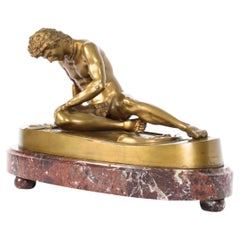
Antique Bronze Sculpture of the Dying Gaul by B Boschetti Rome, 19th Century
By Benedetto Boschetti
Located in London, GB
This is a truly magnificent antique Italian Grand Tour figural golden patinated bronze sculpture depicting a wounded gladiator known as "The Dying Gaul", and signed B Boschetti...
Category
Antique 1830s Italian Figurative Sculptures
Materials
Bronze
You May Also Like
Large Late 19th Century Grand Tour Bronze of Narcissus
Located in Pease pottage, West Sussex
Bronze Figure of Narcissus
Italy, late 19th century
After the Antique
Cast in bronze with a rich light verdigris patina, this finely modeled figure represents Narcissus, the beaut...
Category
Antique Late 19th Century Italian Neoclassical Figurative Sculptures
Materials
Bronze

Italian 19th Century Grand Tour Bronze Sculpture of Narcissus, after Pompeii
Located in Los Angeles, CA
An Italian 19th century grand tour - Greco Roman bronze sculpture of Narcissus, after the original sculpture excavated in 1862 at Pompeii. The green...
Category
Antique 19th Century Italian Greco Roman Figurative Sculptures
Materials
Bronze

$1,985 Sale Price
42% Off
Antique Grand Tour Bronze of Narcissus, Circa 1870
Located in West Palm Beach, FL
An Italian 19th-century Grand Tour Greco Roman bronze sculpture of Narcissus, after the original sculpture excavated in 1862 at Pompeii, the green patinated bronze figure of the mythological son of the river god...
Category
Antique 1870s Italian Neoclassical Figurative Sculptures
Materials
Bronze

"Narcissus" Grand Tour Bronze Sculpture After the Antique
Located in Montreal, QC
A late 19th century / early 20th century bronze figure of Narcissus, after the Antique, He wears a wreath in his hair and carries a goat skin wine sack and stands on a circular base....
Category
Antique Late 19th Century Italian Classical Greek Figurative Sculptures
Materials
Bronze

Narcissus, Italian grand tour bronze sculpture circa 1890
Located in Central England, GB
This superb Grand Tour Italian bronze study depicts Narcissus, who in Greek mythology was known for his fine looks and physique.
The story tells how he rejected the attention of oth...
Category
Antique Late 19th Century Italian Grand Tour Figurative Sculptures
Materials
Bronze

19th Century Grand Tour Bronze Statue of Narcissus
Located in Brighton, Sussex
A very good quality Grand Tour patinated bronze figure of Narcissus, dating from the last quarter of the 19th century.
Narcissus was a hunter in Greek mythology and he was distinguished for his beauty.
This well patinated bronze classical figure...
Category
Antique 19th Century Italian Grand Tour Figurative Sculptures
Materials
Bronze

More Ways To Browse
Bronze Head Sculpture On Marble Base
19th Century Bronze Goddess Sculpture
Marble Plinth Base
Bronze Figure After Antique
Antique Drawing Cabinet
Wood Nymph
Narcissus Bronze
Narcissus Sculpture
Grand Tour Narcissus
Bronze Pompeii
Bronze Sculpture 1950
Ceramic Woman
Spanish Antique Sculpture
Sculpture Wood 17th Century
White Antique Statue
Antique Arrow Quiver
Belgian Bronze Sculptures
Stone Head Sculpture Hand Carved