Items Similar to Art Nouveau Jardiniere
La Vague
, by Georges Charles Coudray, Orivit, 1900
Want more images or videos?
Request additional images or videos from the seller
1 of 9
Art Nouveau Jardiniere
La Vague
, by Georges Charles Coudray, Orivit, 1900
$2,151.46
£1,601.05
€1,800
CA$2,977.23
A$3,195.78
CHF 1,701.59
MX$37,850.39
NOK 21,503.41
SEK 19,638.61
DKK 13,715.75
About the Item
Serpentine crocodile with head raised to the side and mouth wide open, with removable back section and recessed, removable crouching female nude.
Crocodile cold painted in colours, Bergmann signet on the underside between the hind legs.
Excellent and detailed quality of workmanship, very loving representation, as is typical of Viennese bronze art.
By: Vienna Bronze Manufactory Bergmann
Franz Xaver Bergmann (also: Bergman, 1861–1936) was the owner of the Viennese foundry, which produced numerous patinated and cold-painted oriental, erotic and animal bronze figures, some with human features, as well as bizarre and humorous works of art. Known for his detailed and colorful work and the signature either a 'B' in an urn-shaped cartridge or 'Nam Greb' - 'Bergman' in reverse order. These characters were used to disguise his identity on erotic works. His father Franz Bergmann was a professional hunter from Gablonz/Bohemia, who came to Vienna and founded a small bronze factory in 1860. His son Franz Xaver Bergmann inherited the company and opened a new foundry in 1900. Many of the bronzes from the 1900s were still based on designs from his father's workshop.
Manufactured ca. 1900
Bronze modeling, casting, patinated, cold painted and gilt
Dimensions:
Width: 20,0 cm / 7.87 in
Depth: 8,0 cm / 3.14 in
Height: 5,5 cm / 2.16 in
Weight: 746 grams / 23.98 troy oz
Condition: Very well maintained
- Creator:Georges Charles Coudray (Designer),Orivit (Manufacturer)
- Dimensions:Height: 11.82 in (30 cm)Width: 9.06 in (23 cm)Depth: 5.52 in (14 cm)
- Style:Art Nouveau (Of the Period)
- Materials and Techniques:Pewter,Patinated
- Place of Origin:
- Period:1900-1909
- Date of Manufacture:circa 1900
- Condition:Wear consistent with age and use.
- Seller Location:Vienna, AT
- Reference Number:1stDibs: LU1014448354642
About the Seller
5.0
Gold Seller
Premium sellers maintaining a 4.3+ rating and 24-hour response times
Established in 1988
1stDibs seller since 2013
316 sales on 1stDibs
Typical response time: 3 hours
- ShippingRetrieving quote...Shipping from: Vienna, Austria
- Return Policy
More From This Seller
View AllMeissen Art Nouveau Group
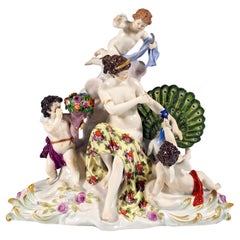
the Air
by Paul Helmig, Germany, Around 1900
By Meissen Porcelain, Paul Helmig
Located in Vienna, AT
Very rare and excellent Meissen porcelain group around 1900:
Juno, the Roman goddess of the air (Greek Hera), as a young woman with her hair pinned up, covered only with a cloth, si...
Category
Antique Early 1900s German Art Nouveau Porcelain
Materials
Porcelain
Meissen Art Nouveau Group
The Air
by Paul Helmig, Germany Around 1900
By Paul Helmig, Meissen Porcelain
Located in Vienna, AT
Very rare and excellent Meissen porcelain group around 1900:
Juno, the Roman goddess of the air (Greek Hera), as a young woman with her hair pinned up, covered only with a cloth, sit...
Category
Antique Early 1900s German Art Nouveau Porcelain
Materials
Porcelain
Meissen Art Nouveau Figure
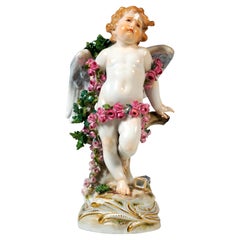
Tied Up Cupid
by Paul Helmig, Germany Circa 1900
By Meissen Porcelain, Paul Helmig
Located in Vienna, AT
Excellent Art Nouveau porcelain figurine by Paul Helmig:
Winged cupid boy with a suffering expression tied to a tree with a long garland of roses, an empty quiver at his feet.
On hig...
Category
Antique Early 1900s German Art Nouveau Porcelain
Materials
Porcelain
Meissen Art Nouveau Figure
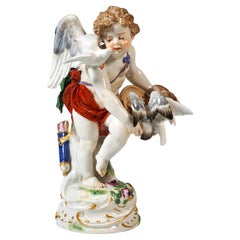
Cupid Feeding Pigeons
, Paul Helmig, Germany Ca 1900
By Meissen Porcelain, Paul Helmig
Located in Vienna, AT
Excellent Art Nouveau porcelain figurine by Paul Helmig:
A winged cupid boy, covering his nakedness with a loose cloth, leaning backwards against a tree trunk with foliage and a quiv...
Category
Antique Early 1900s German Art Nouveau Porcelain
Materials
Porcelain
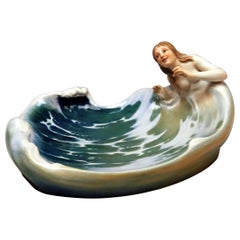
Meissen the Wave Art Nouveau Bowl Figurine Henschtel Konrad Q 169, circa 1900
By Julius Konrad Hentschel
Located in Vienna, AT
Meissen rarest Art Nouveau item: The wave
Size:
Height 3.34 inches
Depth 6.10 inches
Width 8.26 inches
Manufactory: Meissen
Hallmarked: Blue Meissen sword mark (glazed bott...
Category
Antique Early 1900s German Art Nouveau Porcelain
Materials
Porcelain
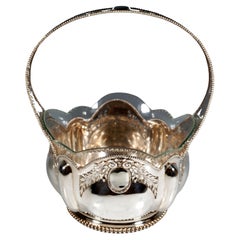
Art Nouveau Silver Jardinière, Basket with Handle, Germany, Around 1900
By German Manufactory
Located in Vienna, AT
Elegant Art Nouveau silver centerpiece:
Body on a round stand stepped by a fluting and with an embossed beaded rim, vessel widening rhythmically in differently sized, tongue-shaped ...
Category
Antique Early 1900s German Art Nouveau Sterling Silver
Materials
Silver
You May Also Like
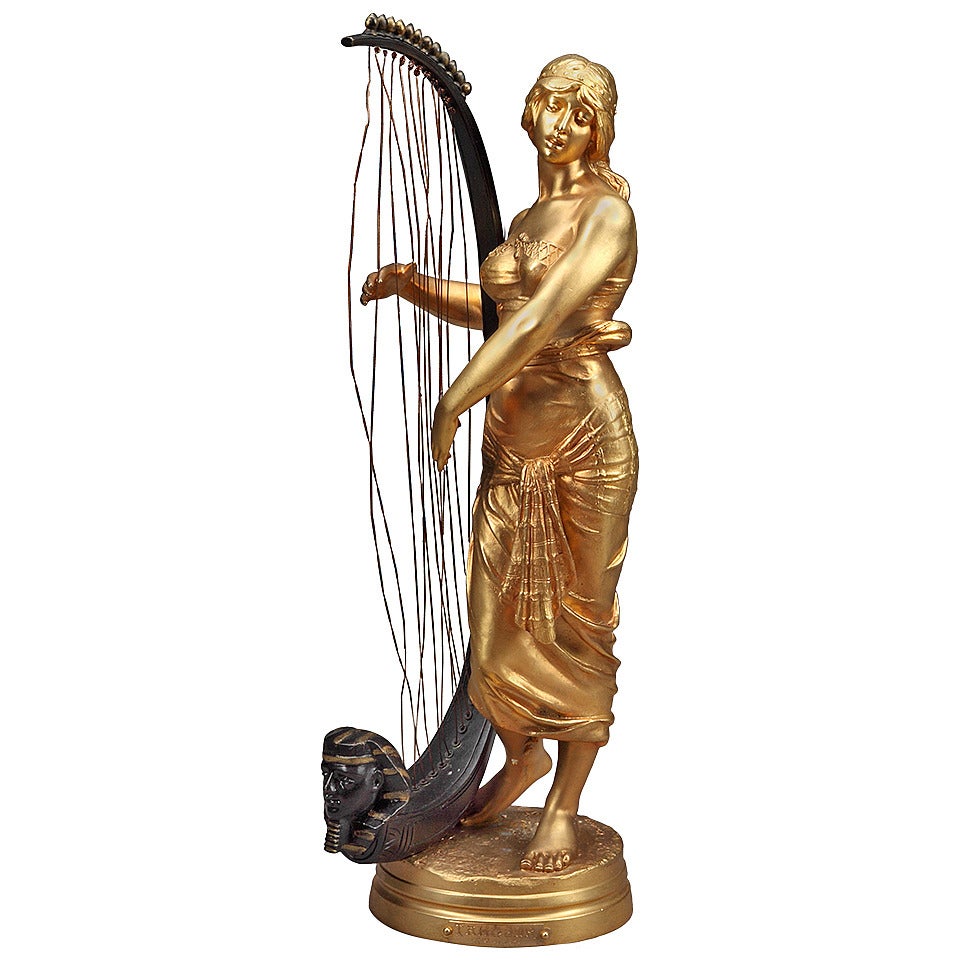
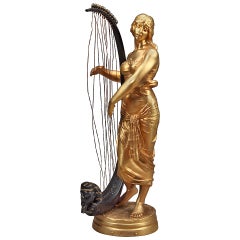
French Bronze Orientalist Figure by Georges Charles Coudray
Located in Tarzana, CA
Georges Charles Coudray (Paris, 1883-1932)
A Fine 19th century French Gilt and mid-brown Patina figure of an Orientalist Woman Playing Harp with Sp...
Category
Early 20th Century French Sculptures
Materials
Bronze
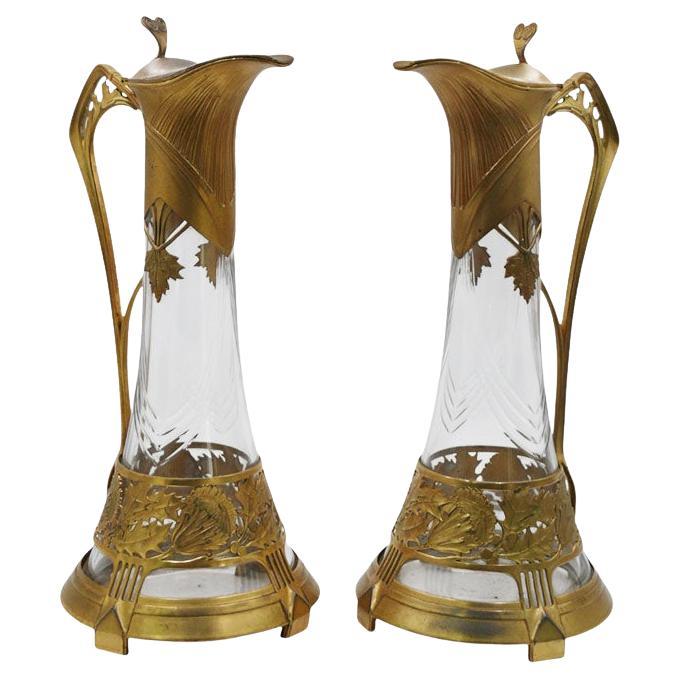
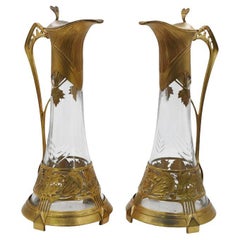
Orivit art nouveau wine decanters
By Orivit
Located in Buenos Aires, Argentina
Orivit art nouveau wine decanters
art nouveau style manufacturer Orivit
original gilding with some wear
crystals in excellent condition
material crystal and pewter
origin Germany cri...
Category
Antique Early 1900s German Art Nouveau Planters, Cachepots and Jardinières
Materials
Pewter
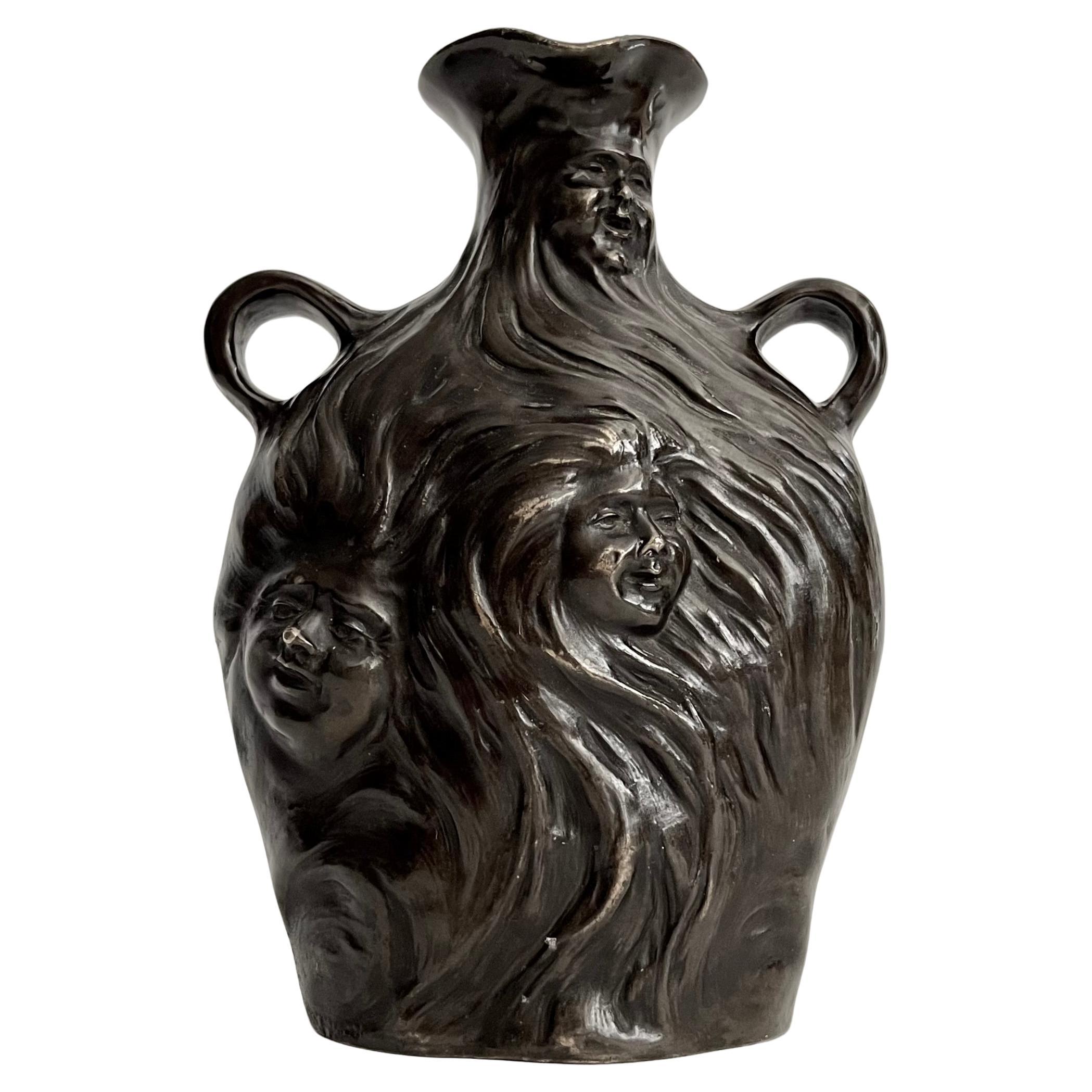
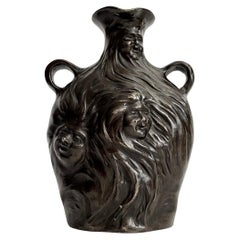
Art Nouveau Bronze Vase Homage to Edvard Much by Charles Coudray
By Georges Charles Coudray
Located in CA, CA
Georges Charles Coudray Art Nouveau Bronze vase Homage to Edvard Munch. Signed to the side G. Coudray
Category
Antique Late 19th Century Vases
Materials
Bronze
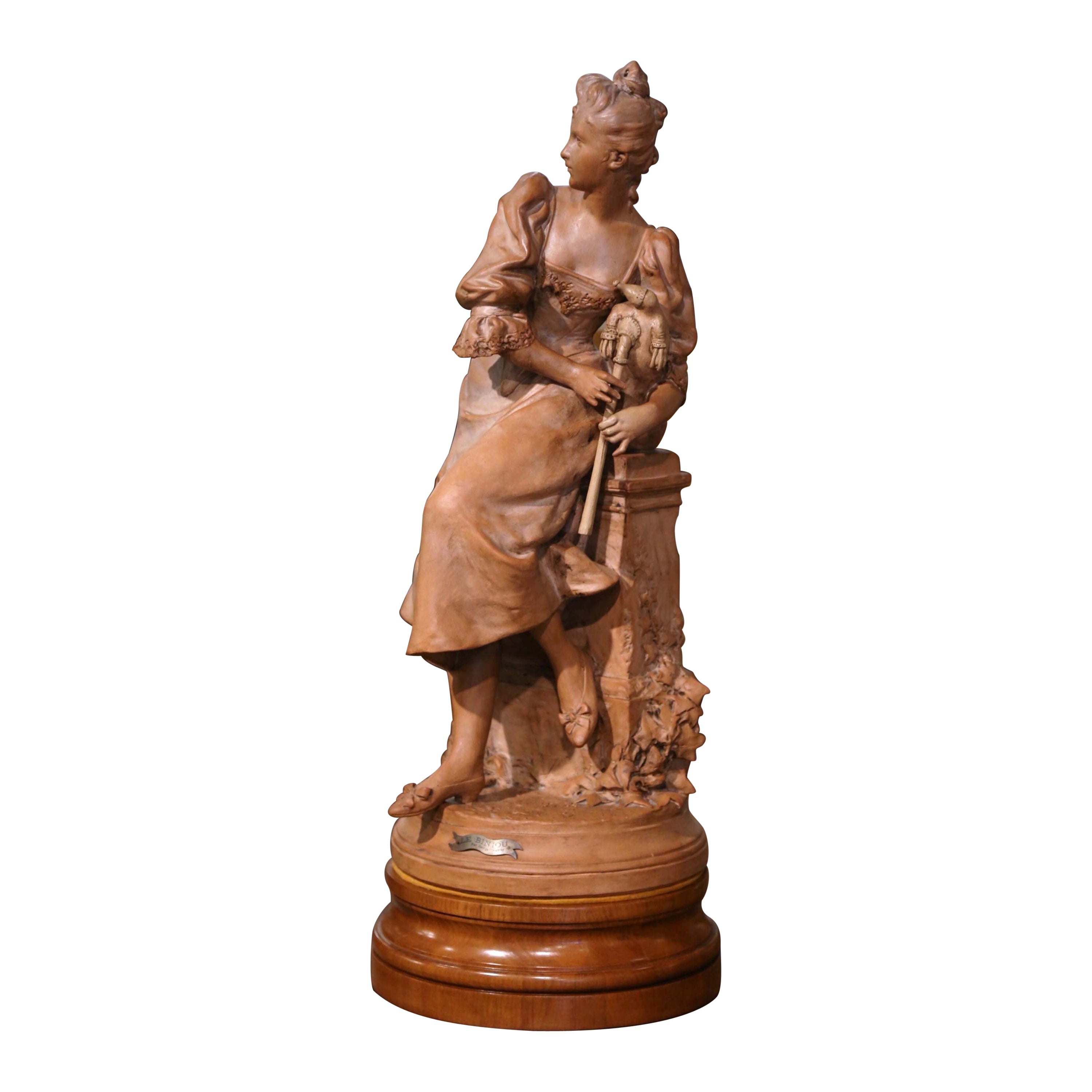
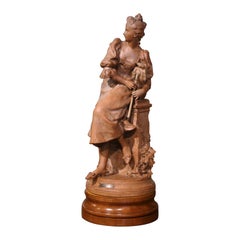
French 19th Century Terracotta Sculpture “Le Biniou” Signed Georges Coudray
By Georges Charles Coudray
Located in Dallas, TX
Decorate a study, library, or elegant living space with this refined 19th-century French terracotta figure. Sculpted in France circa 1890 and mounted on its original circular walnut base, the artwork, titled “Le Biniou” (Breton for “the bagpipe”), depicts a graceful young woman seated beside a pedestal while holding a traditional bagpipe. The sculptor, Georges Charles Coudray...
Category
Antique Late 19th Century French Country Figurative Sculptures
Materials
Earthenware, Terracotta
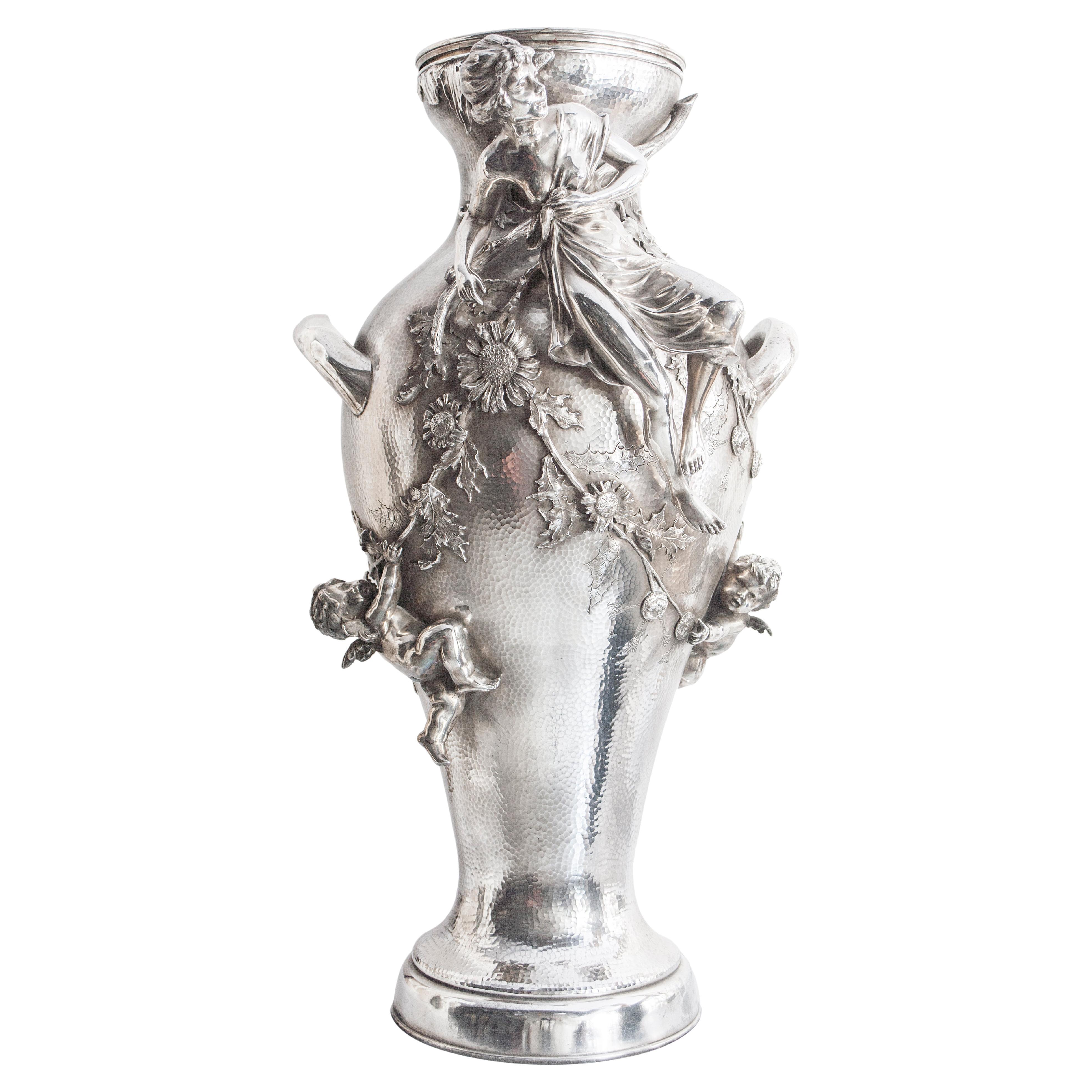
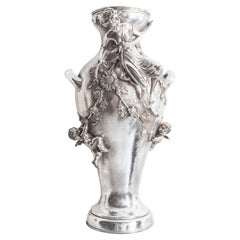
Big Vase Orivit, German, 1906 Silver Plated, Art Nouveau, Sign, Orivit
By Orivit
Located in Ciudad Autónoma Buenos Aires, C
Vase Orivit
Signs:
Orivit
In 1905, WMF acquired a majority stake in the company that manufactures Orivit AG under the name "Orivit".
Country: Germany
Materials: silver plated
...
Category
Antique Early 1900s German Art Nouveau Vases
Materials
Metal
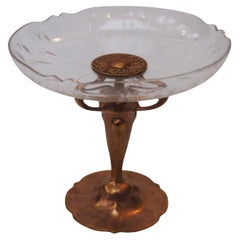
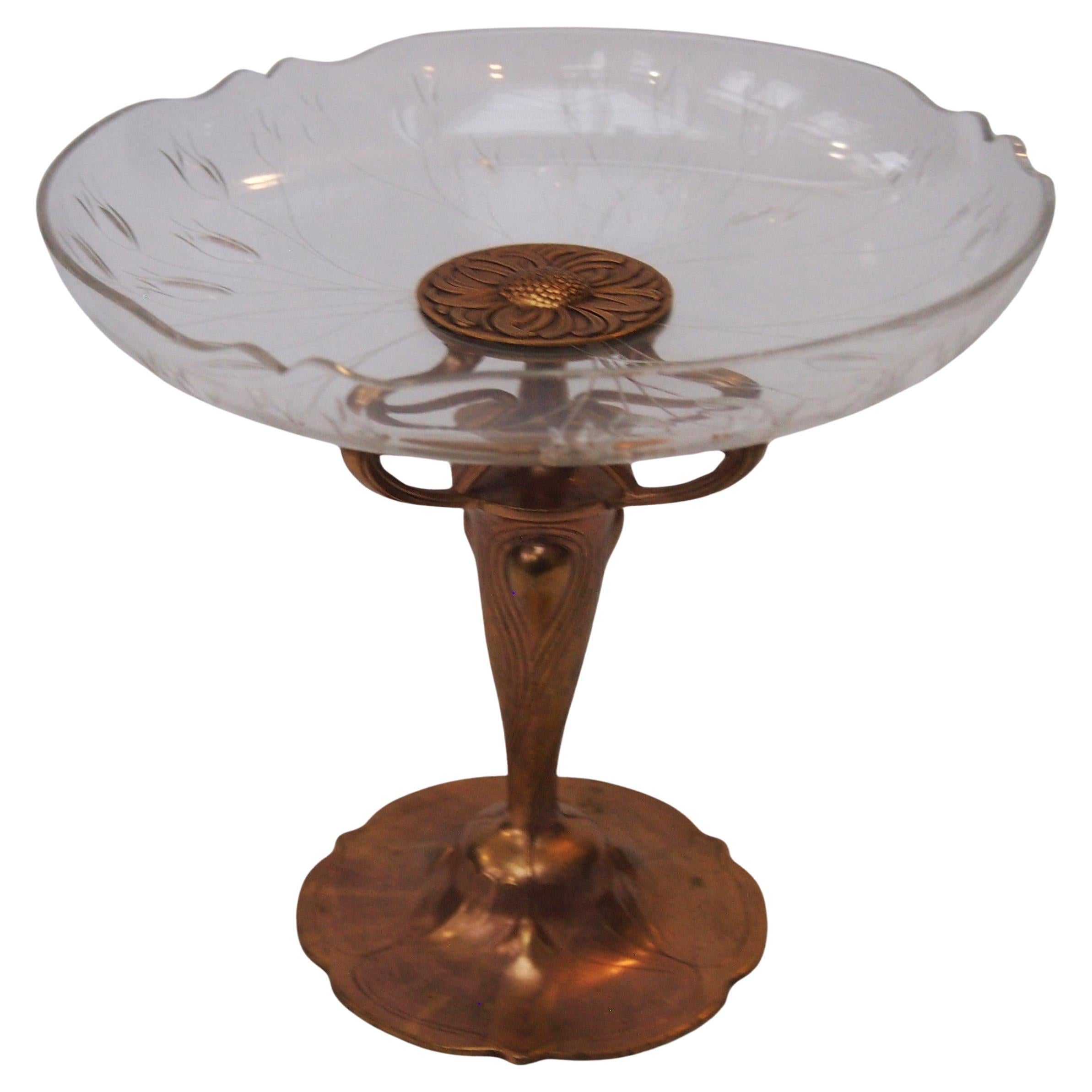
Rare Orivit Art Nouveau Signed Metal and Cut Glass Tazza c1900
By Orivit
Located in Worcester Park, GB
Fabulous Orivit signed metal and cut glass Tazza in exceptional condition. The base is a stunningly Art Nouveau sinuous gold coloured metal, with a flower head knop to hold on the glass top. It is signed Orivit 2259 on the base dating it to around 1900. The top is clear colourless glass with a wavy edge and cut with branches and leaves.
Orivit A.G. Cologne-Ehrenfeld & Braunfels. Rhine Province or Rhenish Prussia, Prussia (now North Rhine-Westphalia)
Silberschmied / Silversmiths
The company was founded in 1894, as "Rheinische Broncegiesserei für Kleinplastiken " in Köln-Ehrenfeld by Wilhelm Ferdinand Hubert Schmitz (b.1863 - d.1939).
From 1896 they started making luxury items in a new alloy,"Orivit Metal", consisting of 89.85% pewter 7.9 % antimony 1.9 % copper and 0.12 % silver.
In 1900 the factory changed its name to "Orivit A.G. fur Kunsthandwerkliche Metalwarenfabrikation" and in 1901/02 a new factory was built in Cöln- Braunfels,
complete with a revolutionary new Huber Presverfahren hydraulic press, capable of producing 3650 kiloponds per square centimetre.
Finding itself in financial difficulties, Orovit A.G was purchased in 1905 by Württembergische MetallwarenFabrik.
In 1906 Orivit A.G. acquired Orion and 60 of their designs were carried over into the Orivit range. W/MF marks were used from 1907,
although Orivit marks were still visible in the old moulds.The designers were Carl Sigmund Luber...
Category
Antique Early 1900s German Art Nouveau Decorative Bowls
Materials
Metal