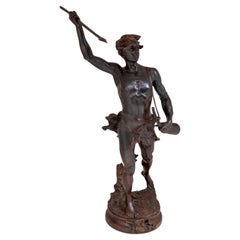
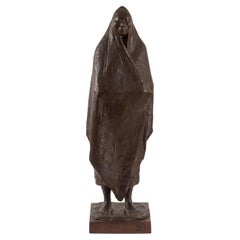
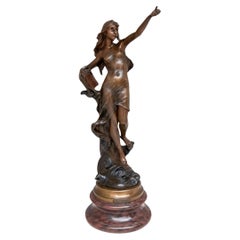
Francisco Zuniga "La Calera" Bronze Sculpture
About the Item
- Creator:Francisco Zúñiga (Artist)
- Dimensions:Height: 12 in (30.48 cm)Width: 8 in (20.32 cm)Depth: 8 in (20.32 cm)
- Materials and Techniques:
- Place of Origin:
- Period:
- Date of Manufacture:Unknown
- Condition:Wear consistent with age and use.
- Seller Location:Astoria, NY
- Reference Number:Seller: 1083301stDibs: LU889345318092
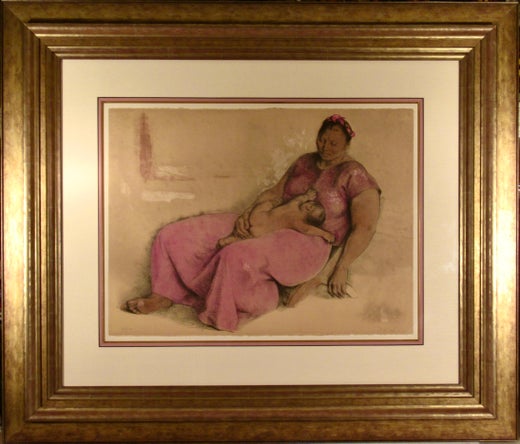
Francisco Zúñiga
Known as one of the most important Expressionist artists to emerge from Latin America, Francisco Zúñiga is remembered for his monumental sculptures, figurative paintings and prints, nude drawings and portraits of Central America’s rural indigenous women.
Born in San José, Costa Rica, in 1912, Zúñiga’s exposure to artistic sculpture began at the age of 13, when he worked with his father, Manuel Maria Zúñiga, carving religious figures for local churches. Spurred by a growing interest in art, Zúñiga attended San José’s School of Fine Arts, where he became influenced by classical, renaissance figurative art. After winning several local awards for his prodigious talent, Zúñiga left San José for Mexico City in 1936.
In Mexico City, he attended La Esmeralda, the painting and sculpture school of the National Institute of Fine Arts. There, Zúñiga studied under sculptor Oliverio Martinez and painter Manuel Rodriguez Lozano.
In 1938, Zúñiga joined the faculty at La Esmeralda, where he taught sculpture and painting until 1970. Meanwhile, during the early 1940s, Zúñiga’s works began to attract the attention of art critics in the United States as well as important collectors. In 1941, the Arts Club of Chicago included him as part of their “Thirteen Mexican Artists” group show. The following year, Alfred Barr, director of the Museum of Modern Art in New York, purchased one of his stone sculptures for MoMA’s permanent collection. Then, in 1943, New York’s Metropolitan Museum of Art acquired two of Zúñiga’s drawings.
Throughout most of his career, Zúñiga limited his subject matter to indigenous peasant women. However, he experimented with working with a variety of materials for his sculptures — bronze, alabaster, plaster, marble and modeling clay — and sought new media to create his art. (He made his first lithograph at age 60.)
Zúñiga won countless accolades in his lifetime. He won international awards for 35 of his public sculptures along with other works, and in 1992, he won Mexico’s highest cultural award, the Premio Nacional de Calidad.
Even after his death in 1998, Zúñiga’s legacy lives on. His sculptures, drawings, paintings and prints are found in museums around the world, including MoMA and the Met in New York, the Museum of Modern Art in Mexico City, the Fogg Museum at Harvard University, the Hirshhorn Museum and Sculpture Garden in Washington, D.C., the Middleheim Museum in Antwerp, Belgium and the Open-Air Museum in Hakone, Japan.
On 1stDibs, discover a range of Francisco Zúñiga prints, drawings and paintings.
You May Also Like
Late 20th Century Figurative Sculptures
Bronze
1990s Mexican Organic Modern Figurative Sculptures
Stone, Bronze
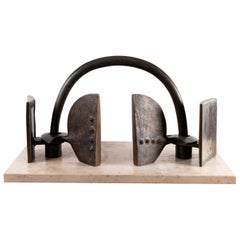
Vintage 1980s French Post-Modern Abstract Sculptures
Travertine, Bronze
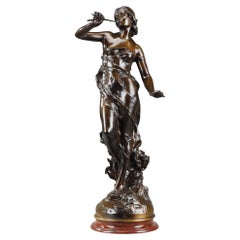
Antique 1890s French Figurative Sculptures
Bronze
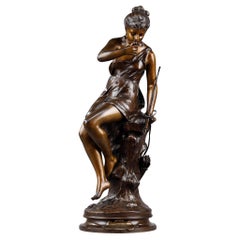
Antique 1890s French Figurative Sculptures
Bronze
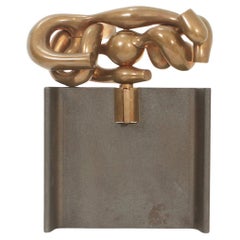
Vintage 1970s Spanish Modern Abstract Sculptures
Bronze, Iron
Vintage 1960s Canadian Abstract Sculptures
Bronze
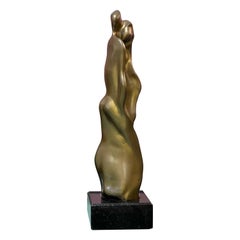
20th Century French Romantic Figurative Sculptures
Bronze
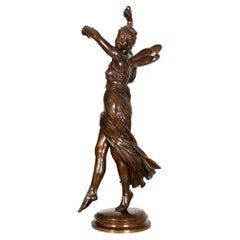
21st Century and Contemporary Figurative Sculptures
Bronze
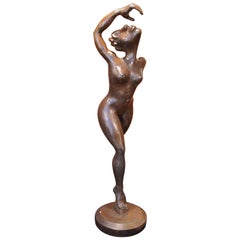
Vintage 1920s American Art Deco Figurative Sculptures
Bronze
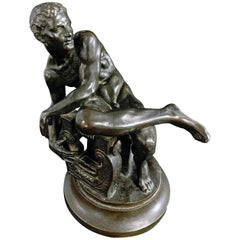
More From This Seller
View AllAntique Late 19th Century French Belle Époque Figurative Sculptures
Bronze
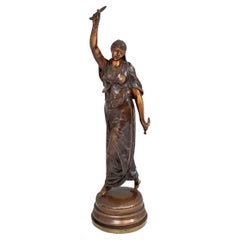
Antique Late 19th Century French Belle Époque Figurative Sculptures
Bronze
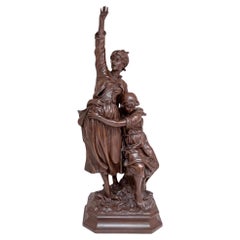
20th Century Modern Animal Sculptures
Bronze
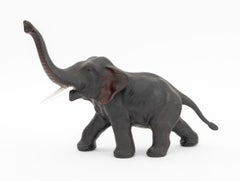
20th Century Beaux Arts Figurative Sculptures
Alabaster, Bronze
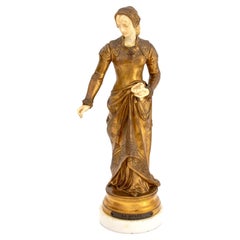
Antique Late 19th Century French Belle Époque Figurative Sculptures
Bronze
Antique Late 19th Century French Neoclassical Figurative Sculptures
Bronze