Items Similar to Grand Tour Souvenir Bronze of the Neapolitan Fisherman
Want more images or videos?
Request additional images or videos from the seller
1 of 17
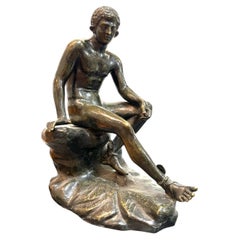
Grand Tour Souvenir Bronze of the Neapolitan Fisherman
$750
£572.05
€651.42
CA$1,053.98
A$1,149.51
CHF 608.93
MX$13,781.02
NOK 7,755.11
SEK 7,091.47
DKK 4,866.78
About the Item
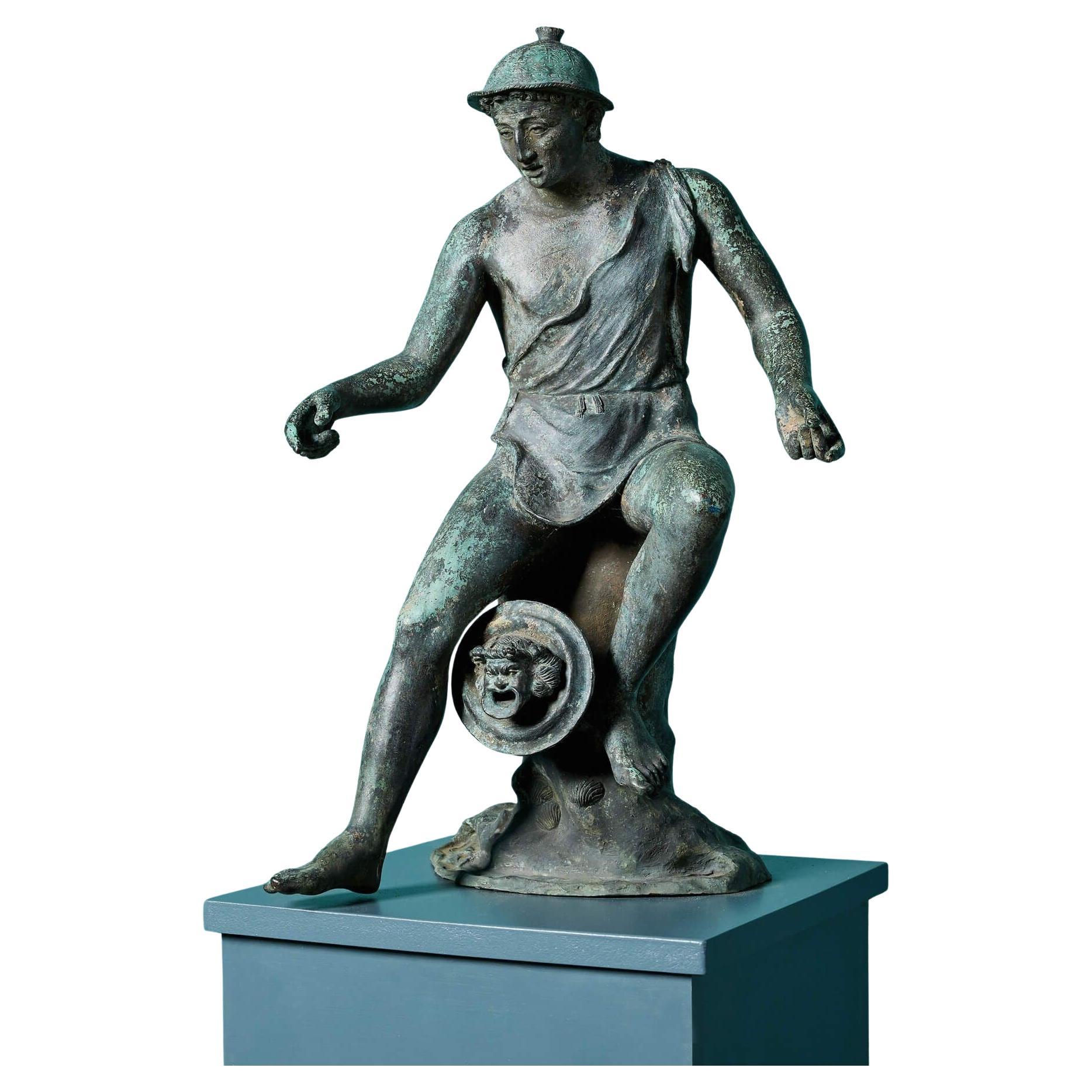
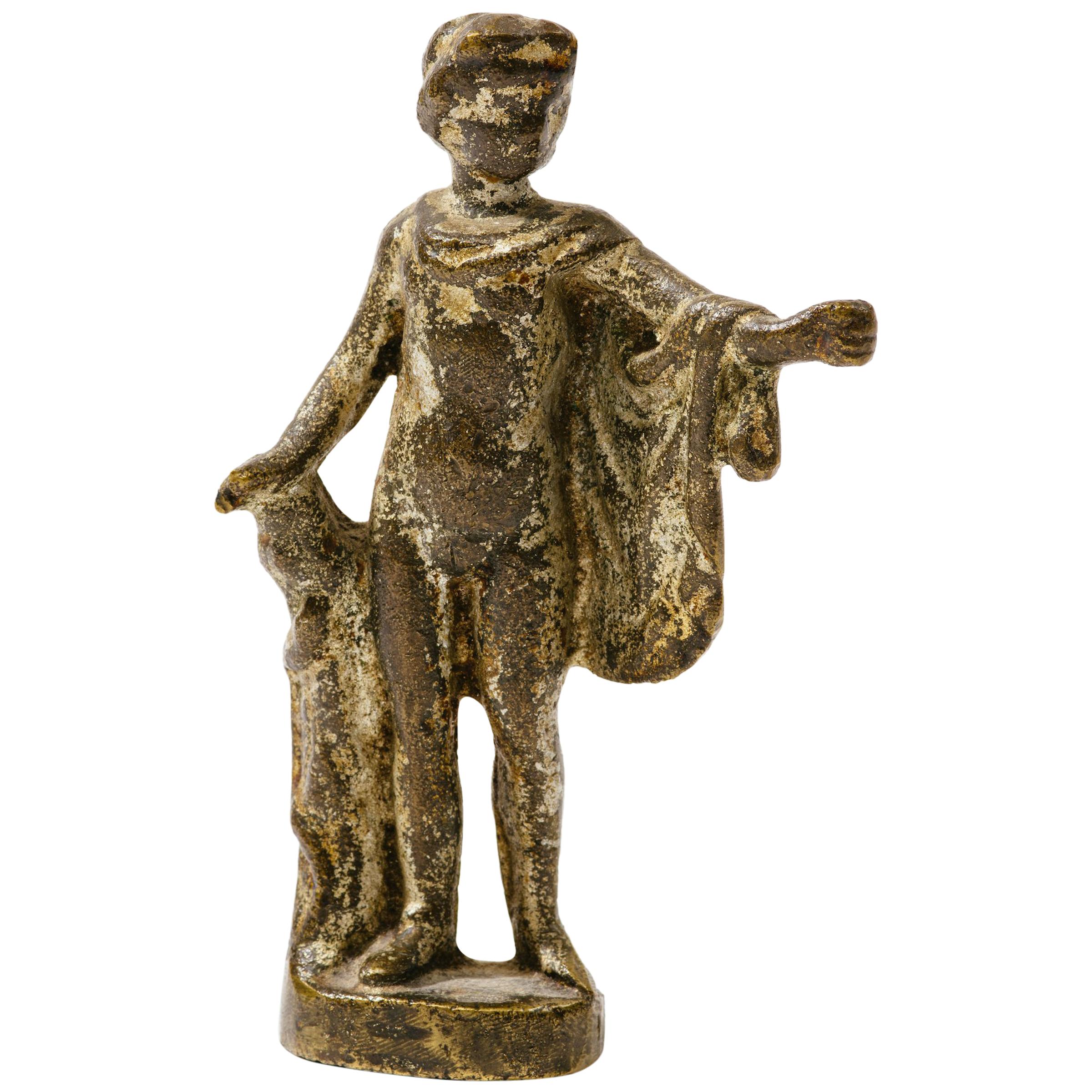
A lovely bronze antique sculpture of a fisherman after the antique excavated in Naples in the early 19th century. These Grand Tour Souvenirs were extremely popular in the 19th and early 20th centuries. This is a nice example with great crusty patina and good color. It is approximately 7.5 inches tall.
- Dimensions:Height: 7.5 in (19.05 cm)Width: 5 in (12.7 cm)Depth: 5.5 in (13.97 cm)
- Materials and Techniques:
- Place of Origin:
- Period:
- Date of Manufacture:Early 20th Century
- Condition:Wear consistent with age and use. Minor losses. In good antique condition with flaws and great patina.
- Seller Location:Palm Springs, CA
- Reference Number:Seller: Bridges over Time GT107781stDibs: LU835042785782
About the Seller
5.0
Platinum Seller
Premium sellers with a 4.7+ rating and 24-hour response times
1stDibs seller since 2007
436 sales on 1stDibs
Typical response time: <1 hour
- ShippingRetrieving quote...Shipping from: Palm Springs, CA
- Return Policy
More From This Seller
View AllGrand Tour Neoclassical Bronze of “The Dying Gaul”
Located in Palm Springs, CA
A nice little bronze Grand Tour souvenir bronze of the Dying Gaul a famous sculpture of antiquity preserved in Rome. This bronze has nice detail. The patina is worn in some places and it is in estate found condition. We haven’t tried to clean or polish it.
Some patina loss minor nicks and surfaces scratches, please see the detailed photos.
For this interested this from Wikipedia about the original sculpture:
The Dying Gaul, also called The Dying Galatian[2] (Italian: Galata Morente) or The Dying Gladiator, is an ancient Roman marble semi-recumbent statue now in the Capitoline Museums in Rome. It is a copy of a now lost Greek sculpture from the Hellenistic period (323–31 BC) thought to have been made in bronze.[3] The original may have been commissioned at some time between 230 and 220 BC by Attalus I of Pergamon to celebrate his victory over the Galatians, the Celtic or Gaulish people of parts of Anatolia. The original sculptor is believed to have been Epigonus, a court sculptor of the Attalid dynasty of Pergamon.
Until the 20th century, the marble statue was usually known as The Dying Gladiator, on the assumption that it depicted a wounded gladiator in a Roman amphitheatre.[4] However, in the mid-19th century it was re-identified as a Gaul or Galatian and the present name "Dying Gaul" gradually achieved popular acceptance. The identification as a "barbarian" was evidenced for the figure's neck torc, thick hair and moustache, weapons and shield carved on the floor, and a type of Gallic carnyx between his legs.[5]
Description
The white marble statue, which may originally have been painted, depicts a wounded, slumped Gaulish or Galatian Celt, shown with remarkable realism and pathos, particularly as regards the face. A bleeding sword puncture is visible in his lower right chest. The warrior is represented with characteristic Celtic hairstyle and moustache with a Celtic torc...
Category
Early 20th Century Italian Figurative Sculptures
Materials
Bronze
Grand Tour Neoclassical Minauture Bronze Mounted on Beautiful Rouge Marble Base
Located in Palm Springs, CA
A nicely done grand tour neoclassical souvenir of a dancing maiden mounted to a stunning rouge marble base. A lovely delicate miniature cabinet bronze. The veining on the marble base...
Category
Early 20th Century Italian Figurative Sculptures
Materials
Marble, Bronze

19th Century Bronze of the Runner of Herculaneum with Panama Pacific Expo Label
Located in Palm Springs, CA
A nicely cast bronze Neoclassical Grand Tour souvenir of the Herculaneum Athlete or Runner. It’s nicely done with fine detail and has a Panama Pacific Exposition label on the base, w...
Category
Antique Late 19th Century Italian Figurative Sculptures
Materials
Bronze
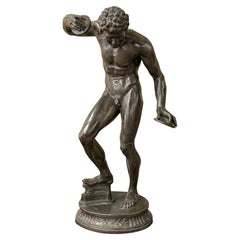
19th Century Grand Tour Neo Classical Bronze of Dancing Faun with Cymbals
Located in Palm Springs, CA
A beautifully cast Grand Tour Neo Classical Bronze of a Dancing Faun or Satyr holding cymbals. The sculpture has wonderful detail and the hands and feet are beautifully cast and fini...
Category
Antique 19th Century Italian Figurative Sculptures
Materials
Bronze
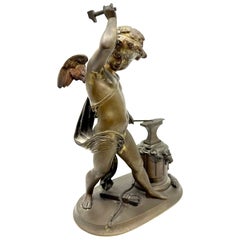
19th Century Bronze Grand Tour Neoclassical Souvenir Cupid Making an Arrow
Located in Palm Springs, CA
A lovely bronze neoclassical Grand Tour Souvenir depicting Cupid fashioning and arrow on his anvil. The sculpture is after the antique. It is numbered. Most likely Italian. It has ni...
Category
Antique Late 19th Century Italian Figurative Sculptures
Materials
Bronze
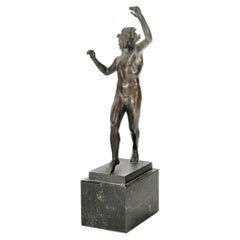
German Foundry NeoClassical Grand Tour Bronze of the Neapolitan Dancing Faun
Located in Palm Springs, CA
A lovely and well cast example of the Pompeian Dancing Faun. This grand tour bronze stands approx 12 inches tall on it’s marble base and is about half size of the original unearthed...
Category
Early 20th Century German Figurative Sculptures
Materials
Bronze
You May Also Like
Bronze Sculpture of the Neapolitan Fisherman after the Antique
Located in Wormelow, Herefordshire
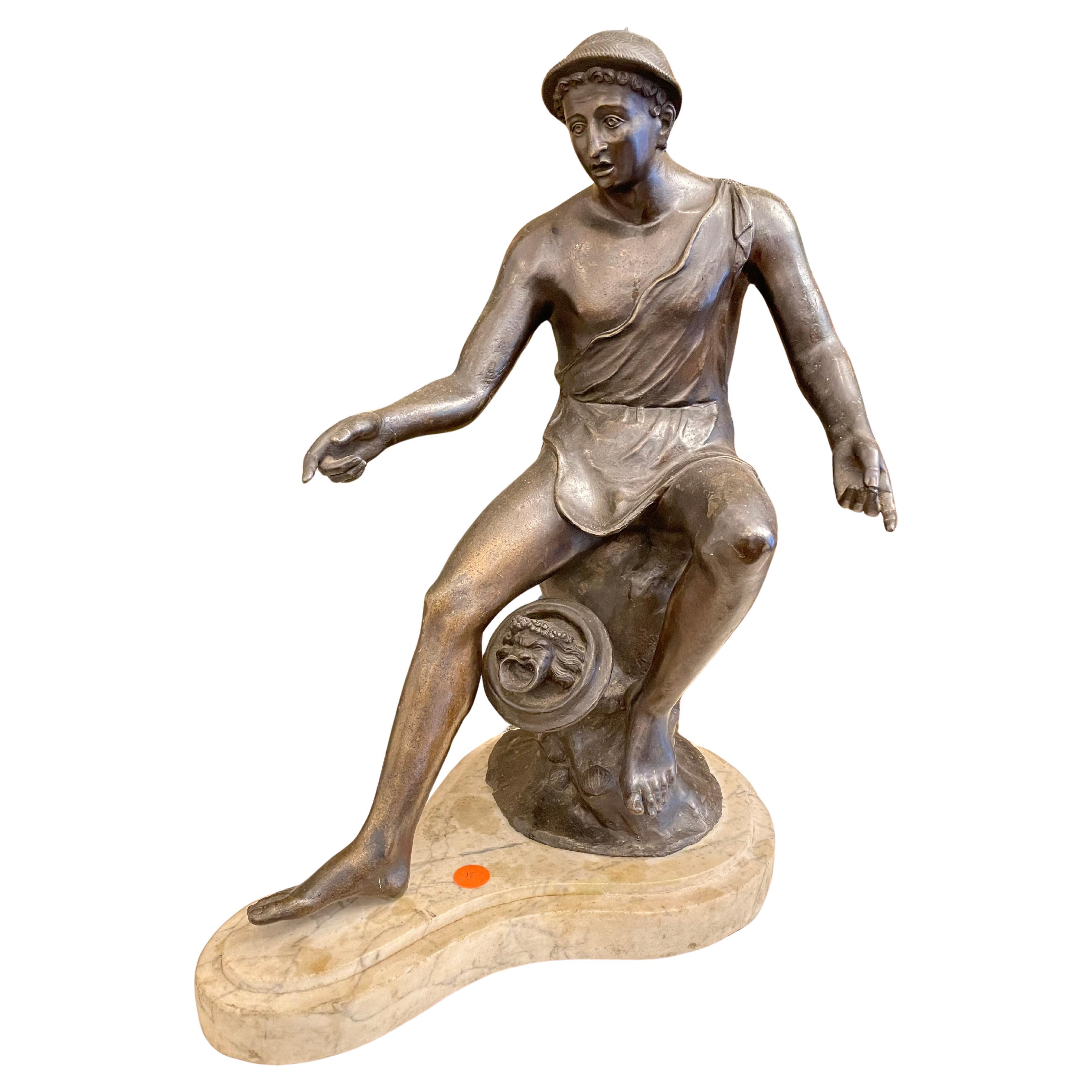
A 19th century bronze sculpture of the Neapolitan Fisherman after the antique.
In Grand tour style, the boy almost looks like he is in a stance of motion in this good quality scale,...
Category
Antique Late 19th Century Italian Neoclassical Figurative Sculptures
Materials
Metal, Bronze
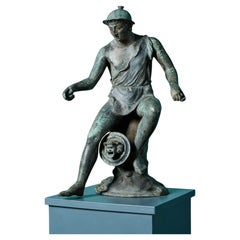
Chiurazzi Bronze Sculpture of the The Neapolitan Fisherman after the Antique
By Fonderia Chiurazzi
Located in Stockholm, SE
This superbly worked bronze sculpture with a beautiful patina by the Neapolitan foundry Fonderia Chiurazzi is a full-scale (1:1) replica of the original now preserved in the Museo Archeologico Nazionale di Napoli.
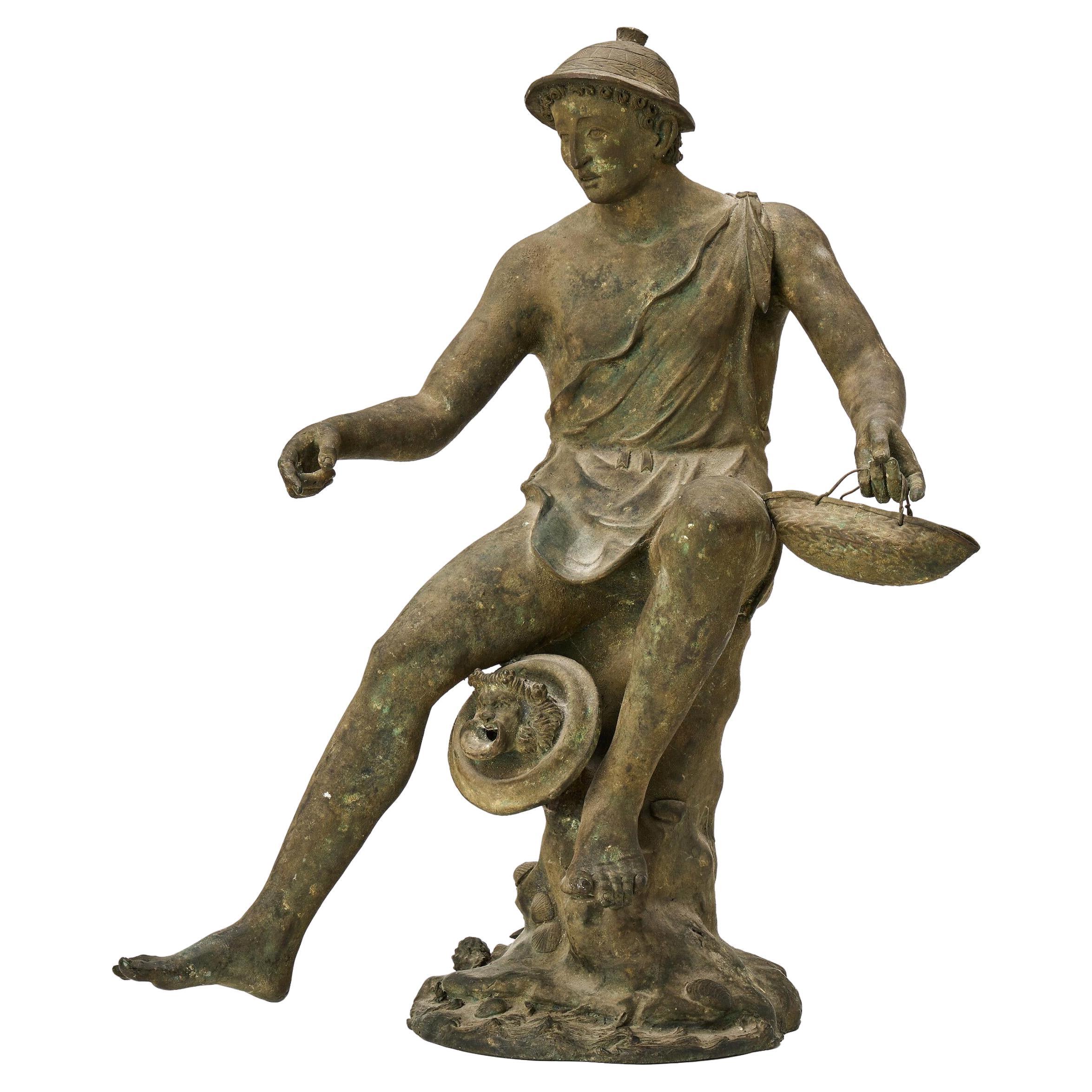
The male figure is clad in a short tunic and cap, his head turned slightly to the right, both arms outstretched, his left hand holding a small basket. He is seated on a rocky outcrop adorned with shells, and between his legs runs a small fountain head in the form of a Bacchus mask. Measuring 55 cm in height, the sculpture demonstrates refined workmanship and a rich, natural patina. It is unusual to find the basket with the sculpture.
During the late 19th and early 20th centuries, Chiurazzi produced type of bronzes in various sizes and finishes, but this particular casting is of notably high quality for its type and bears the foundry’s impressed mark Fonderia Chiurazzi.
The original Roman bronze fountain figure, commonly known as The Neapolitan Fisherman, was uncovered in 1823 during archaeological excavations at Pompeii, within the Casa della Fontana Piccola (House of the Little Fountain). This find formed part of a richly decorated mosaic fountain ensemble surrounded by four statuettes, among them a seated angler wearing an exomis (tunic) and holding a fishing rod and basket, an image that perfectly captures a moment of relaxed domestic life in a Roman household.
The original layout of the fountain and its sculptures can be seen in Giuseppe Abbate’s illustration, Mosaic Fountain Sculptures in the House of the Small Fountain, Pompeii, published by the Nicolini brothers in 1854. Abbate’s illustration provides a valuable visual record of how the fountain originally appeared, showing the arrangement of the fisherman, the sister bronze Cupid with Goose, the mosaic basin, and its decorative motifs.
Artist Luigi Bazzani also vividly captured Pompeii’s domestic elegance in his watercolor paintings. One shows another similar fountain scene, depicting how such spaces may have looked during Pompeii’s flourishing years, with richly ornamented walls, bright mosaics, and sculptural fountains glimmering in sunlight. Another watercolor by Bazzani, painted in 1919, directly portrays the Neapolitan Fisherman in situ at Pompeii.
Scholars trace the fisherman’s prototype back to a Hellenistic original of the late 3rd century BCE. Hellenistic sculptural models continued to influence Roman art well into the first centuries CE.
The Fonderia Chiurazzi was established in Naples in 1870 by Gennaro Chiurazzi, a pupil of sculptor Pietro Masulli, who had pioneered the use of the lost-wax casting technique for accurate reproductions of classical bronzes.
After Italian unification (1861), the Naples Archaeological Museum, formerly the Royal Bourbon Museum, began issuing permits to selected workshops to reproduce its vast collections from Pompeii, Herculaneum, and Stabiae. Chiurazzi excelled in this field, combining industrial precision with hand-tooled artistry to produce faithful, museum-quality casts.
By the turn of the 20th century, Chiurazzi bronzes...
Category
Antique Late 19th Century Italian Grand Tour Figurative Sculptures
Materials
Bronze
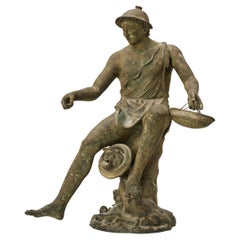
A Bronze Figure of the 1st Century CE Roman ‘Fisherman’, 19th Century
Located in ARMADALE, VIC
A Bronze Figure of the 1st Century CE Roman ‘Fisherman’, 19th Century
Provenance:
Private Australian Collection.
Description:
The male figure cast wearing a tunic and...
Category
Antique 19th Century French Figurative Sculptures
Materials
Bronze
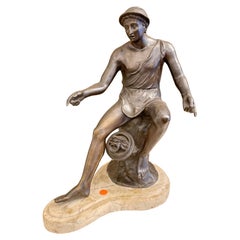
Antique Grand Tour Classical Bronze Sculpture
Located in New York, NY
Antique Grand Tour classical cast bronze Roman figural sculpture with laurel crown.
Category
Antique 19th Century Italian Classical Roman Figurative Sculptures
Materials
Bronze
$2,200 Sale Price
21% Off
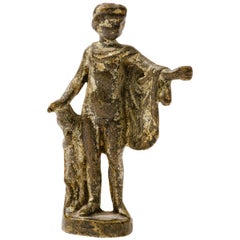
Vintage Bronze Male Figure on Marble Base
Located in Bloomfield Hills, MI
For centuries, artists have been inspired by the human figure and crafted the likeness in a multitude of materials. One of the most popular and ancient of these materials is cast bro...
Category
20th Century French Figurative Sculptures
Materials
Bronze
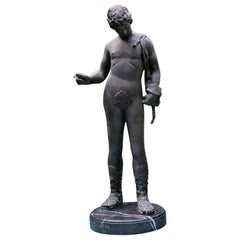
Classical, Cast Bronze, Grand Tour, Statue of Seated Hermes, Italy, 20th C.
Located in Manhasset, NY
Classical, Cast Bronze, Grand Tour, Statue of Seated Hermes, Italy, 20th C.
Cast Bronze statue depicting "Seated Hermes," who is the Greek God of messengers. This sculpture is model...
Category
Early 20th Century Figurative Sculptures
Materials
Bronze
More Ways To Browse
Antique Souvenir
Antique Fisherman
Antique Neapolitan
Chinese Root Wood Sculpture
Danseuse Sculpture
Egyptian Relief
Eve Serpent
Fayral Art
Gargoyles
Greek And Roman Statues
Horse Whip
Kuan Yin
Large Antique Bronze Statue
Leopold Ii
Life Size Plaster Sculpture
Marble Angel Sculpture
Max Le Verrier Fayral
Metal Robot