Items Similar to Pair of 19th Century Grand Tour Hand-Carved Marble Sphinx Sculptures
Want more images or videos?
Request additional images or videos from the seller
1 of 18
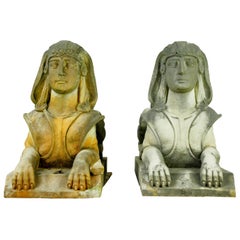
Pair of 19th Century Grand Tour Hand-Carved Marble Sphinx Sculptures
$4,800per set
£3,655.20per set
€4,174per set
CA$6,744.59per set
A$7,400.10per set
CHF 3,898.02per set
MX$88,032.03per set
NOK 49,933.15per set
SEK 45,595.79per set
DKK 31,183.81per set
About the Item
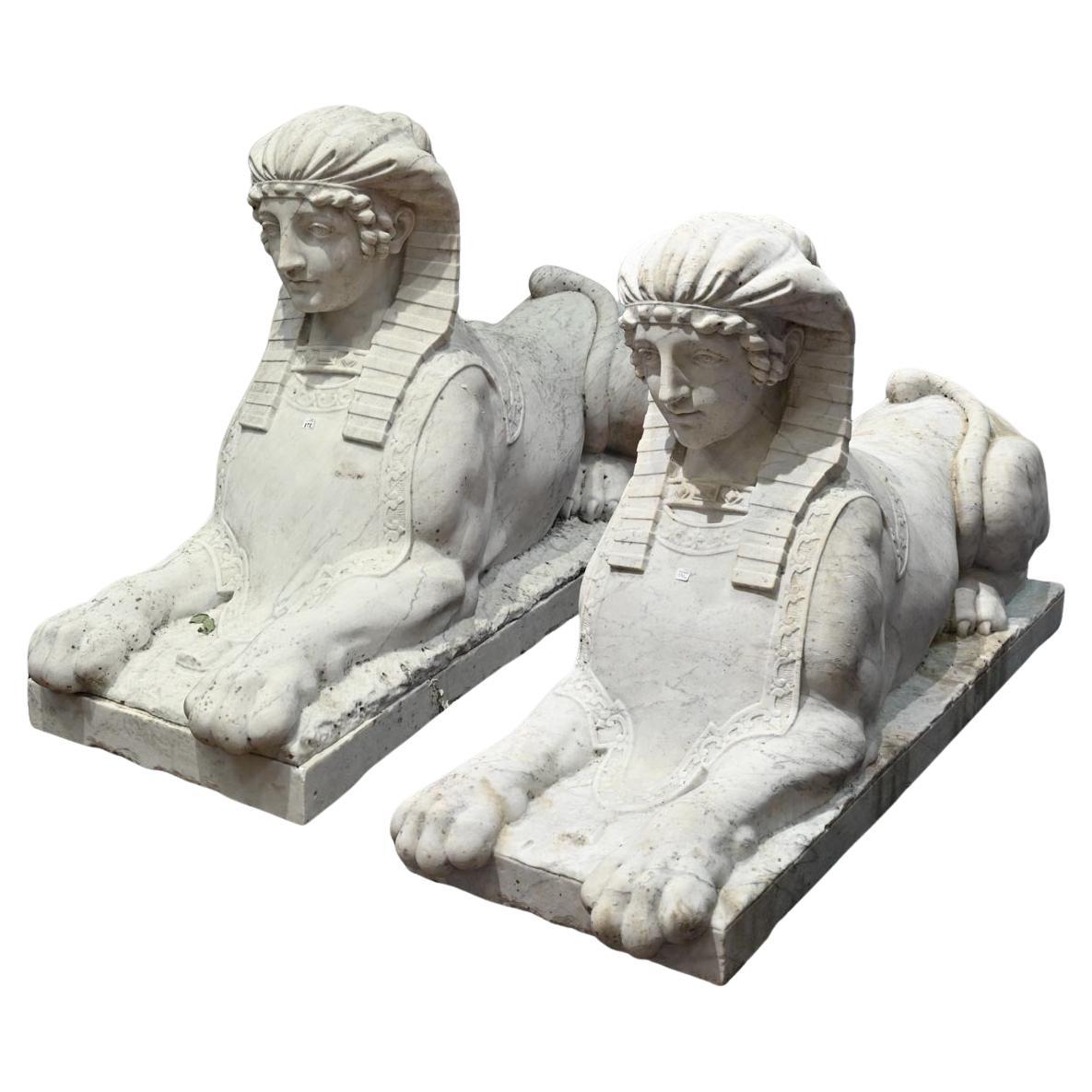
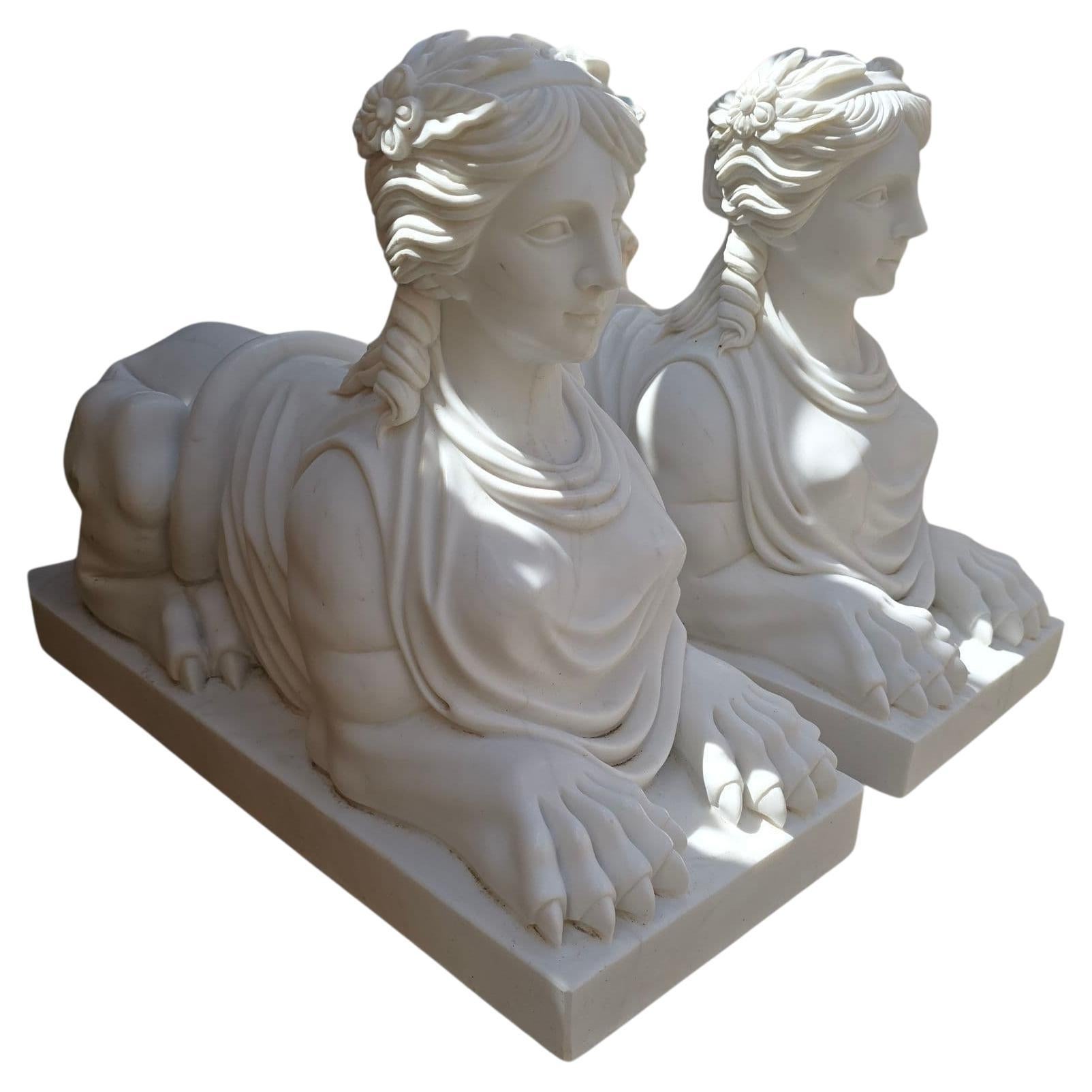
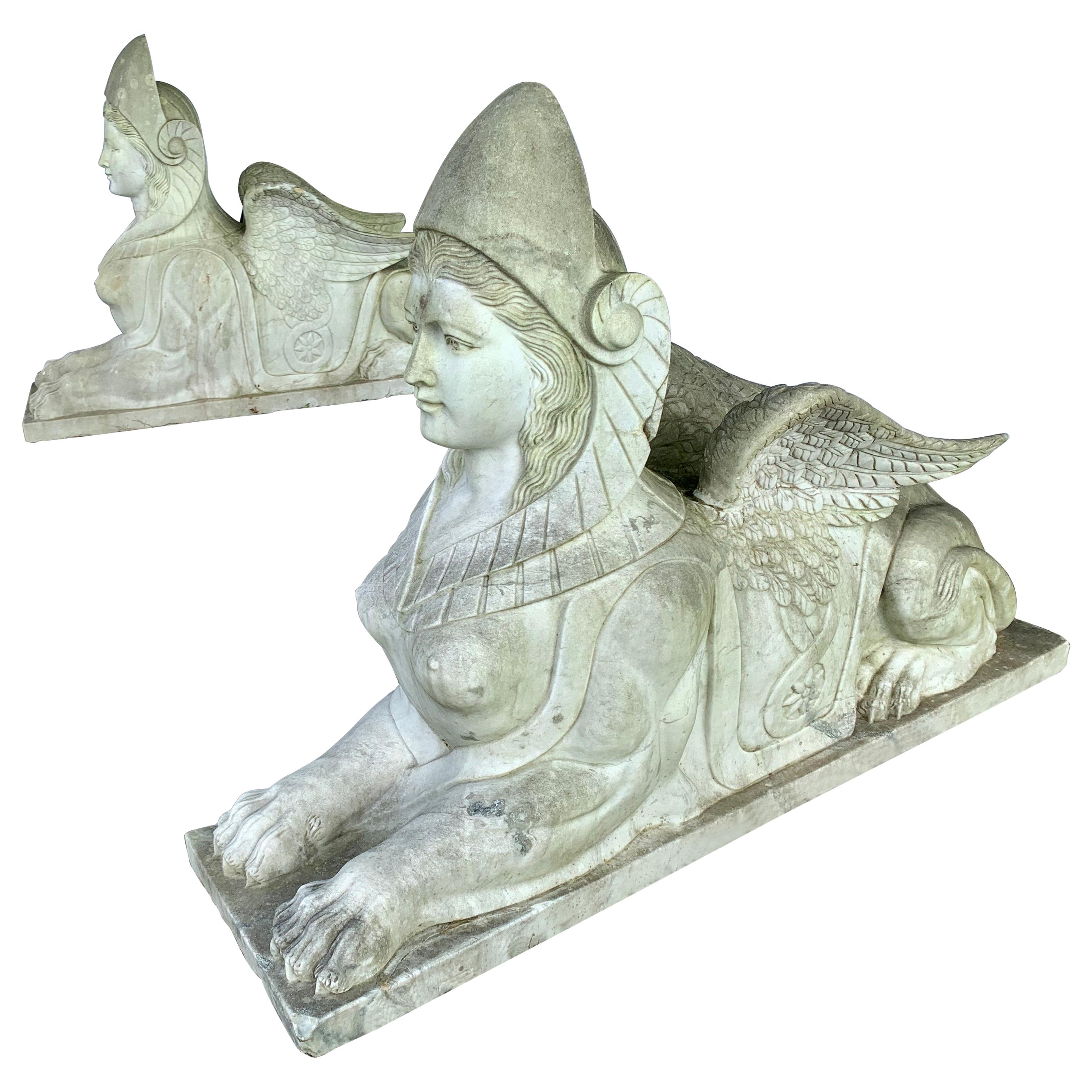
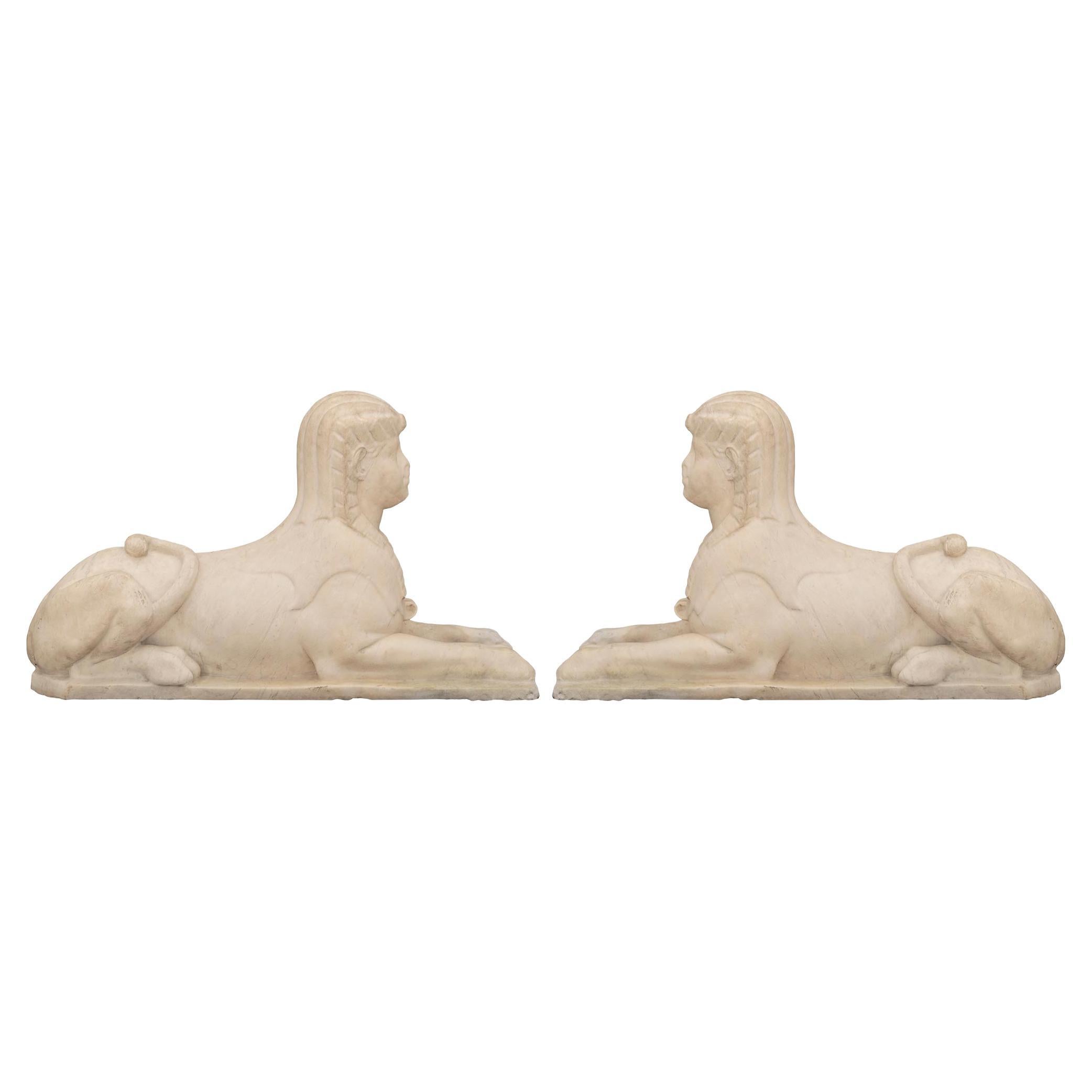
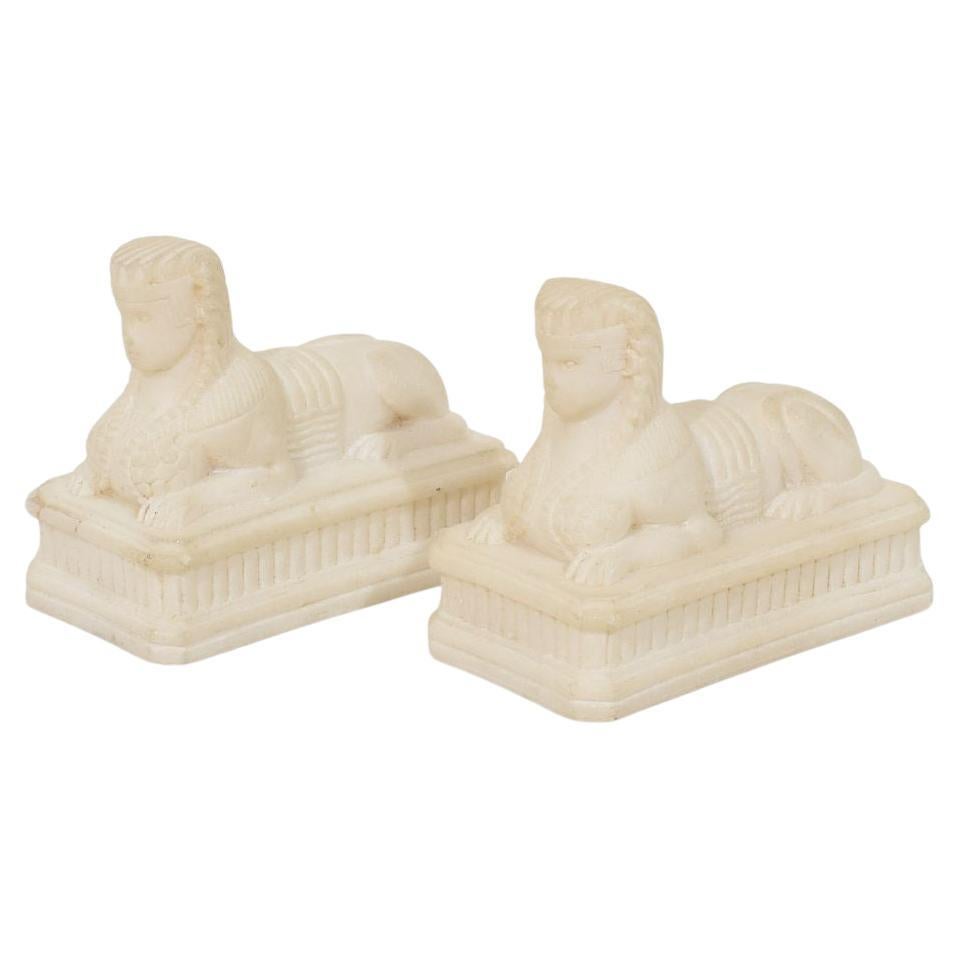
Pair of 19th-Century Grand Tour Hand-Carved Marble Sphinx Sculptures on Plinth Bases
Description:
A finely carved and substantial pair of Grand Tour-era marble sphinx sculptures, each resting on a rectangular plinth base and rendered in creamy white marble with light natural veining. These 19th-century neoclassical decorative objects were likely acquired as souvenirs of elite European travel and reflect the era’s fascination with antiquity and Egyptian revival aesthetics.
Each sphinx is sculpted with the traditional nemes headdress, false beard, and stylized musculature, bearing regal and serene expressions. Notably, the two are individually modeled: their facial features and scale differ subtly, with one figure slightly taller and broader than the other—measuring approximately 7 inches and 6.75 inches high, respectively. The bases each measure 15.5 inches long by 5.25 inches deep. These variations affirm their hand-carved origin, possibly by different artisans or as a deliberate gesture toward individuality within a matched pair.
Executed in solid marble, the figures exhibit crisp incised detailing along the headdress and beard and a softly weathered surface patina consistent with 19th-century workmanship. They are evocative of the European Grand Tour tradition, in which affluent travelers collected architectural and sculptural replicas as testaments to classical education and cosmopolitan taste.
An impressive decorative statement, this pair would be ideal as flanking objects on a console or mantel or as monumental bookends or tabletop sculpture in a library, study, or curated interior.
Dimensions:
Each base: 15.5” L × 5.25” D
Heights: 7” H and 6.75” H
Condition:
Very good overall condition with light natural wear and surface markings consistent with age and material. No significant losses or repairs.
Origin:
Italy or France, circa 1880
- Dimensions:Height: 7 in (17.78 cm)Width: 15 in (38.1 cm)Depth: 4 in (10.16 cm)
- Sold As:Set of 2
- Style:Grand Tour (Of the Period)
- Materials and Techniques:
- Place of Origin:
- Period:
- Date of Manufacture:1890s
- Condition:Wear consistent with age and use. Minor fading.
- Seller Location:West Palm Beach, FL
- Reference Number:Seller: T34291stDibs: LU2592345943822
About the Seller
5.0
Platinum Seller
Premium sellers with a 4.7+ rating and 24-hour response times
Established in 1996
1stDibs seller since 2017
1,473 sales on 1stDibs
Typical response time: <1 hour
- ShippingRetrieving quote...Shipping from: West Palm Beach, FL
- Return Policy
More From This Seller
View AllPair 19th Century or Older Century Indian Carved Stone Lions on Custom Bases
Located in West Palm Beach, FL
Pair of 19th Century or Older Indian Carved Stone Lions on Custom Wooden Bases
4 Pieces, Stone Lions, 2 Custom Hardwood Bases
A charming and unusual pair of 19th-century or older ha...
Category
Antique 19th Century Indian Anglo-Indian Animal Sculptures
Materials
Marble

Pair 18th C. Louis XVI Patinated
Gilt Bronze Sphinx Motif Andirons/Chenets
By Pierre-Philippe Thomire, Pierre Gouthiere
Located in West Palm Beach, FL
Stunning Pair 18th C Louis XVI French Bronze Recumbent Sphinx Chenets
France, circa 1790
A stunning pair of 18th-century Louis XVI French bronze chenets featuring recumbent sphinxes...
Category
Antique Late 18th Century French Louis XVI Figurative Sculptures
Materials
Bronze
Pair of Modern Neoclassical Carved Wood Whitewashed Marble Pedestals
Located in West Palm Beach, FL
Pair of Modern Neoclassical Carved Wood Whitewashed Marble Pedestals
Italy, circa 1980s
A stunning pair of Modern Neoclassical Carved Wo...
Category
20th Century Italian Hollywood Regency Pedestals
Materials
Stone
Pair of Continental Carved and Polychromed Wooden Cornucopias, 19th Century
Located in West Palm Beach, FL
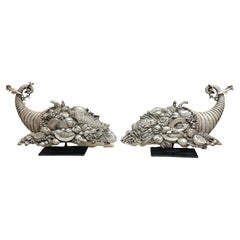
Pair of Continental Carved and Polychromed Wooden Cornucopias, 19th Century
These finely carved and polychromed wooden cornucopias exemplify the enduring symbolic power of the horn of plenty in European decorative arts. Each composition is rendered in high relief, the ribbed horn issuing an abundant cascade of fruit and vegetables—pomegranates, grapes, melons, pumpkins, gourds, citrus, corn, and floral sprays—arranged with exuberant Baroque fullness. Now mounted on forged iron bases for display, the pair measures 20" high × 28" wide × 3.5" deep, including stands 12.5" x 6" (carvings alone 28" wide × 17" high × 3.5" deep).
The Cornucopia in History
Originating in antiquity, the cornucopia (Latin cornu copiae) was first associated with Amalthea, the goat who suckled the infant Zeus, whose horn became a miraculous source of nourishment. In Roman culture it was carried by deities of abundance—Fortuna, Abundantia, and Ceres—as an emblem of civic prosperity and the cycles of nature. Revived in the Renaissance and Baroque periods, the cornucopia became a favored motif in architecture, painting, and decorative arts, symbolizing divine blessing, seasonal plenty, and the wealth of the natural world.
Iconography of the Fruits and Vegetables
The profusion of produce is not merely decorative but encodes symbolic meanings rooted in both classical and Christian traditions:
Pomegranates—fertility, eternal life, and resurrection.
Grapes—festivity, vintage, and the Eucharistic blood of Christ.
Melons and Watermelon Slices—sensual abundance, refreshment, and ephemeral pleasure.
Pumpkins and Gourds—autumn harvest, transformation, and the cycles of plenty.
Corn (Maize)—sustenance and prosperity, reflecting New World influence on European symbolism.
Citrus Fruits—health, luxury, and Mediterranean prosperity.
Floral Sprays—seasonal beauty and the transience of life, underscoring vanitas themes common in still-life art.
This allegorical language aligns the carvings with the broader European tradition of abundance imagery found in still-life painting, silverwork, and architectural ornament.
Continental Style and Possible Origin
The sculptural density, dramatic overlapping of forms, and naturalistic rendering suggest a Continental origin, likely Austrian, German, or Italian, c. late 19th century. While Swedish decorative carving of the same era tends toward flatter surfaces and folk stylization, these examples embody a more theatrical Baroque and Rococo inheritance, later enhanced with a polychrome or silver-toned surface to heighten their decorative impact. Originally conceived as architectural appliqués...
Category
Antique 19th Century European Neoclassical Figurative Sculptures
Materials
Hardwood
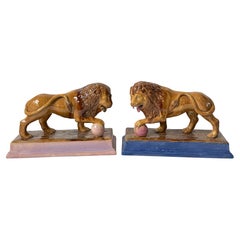
Rare Pair of Ralph Wood Staffordshire Medici Lions in Pink and Blue Bases
By Ralph Wood Pottery
Located in West Palm Beach, FL
Rare Pair of Ralph Wood Staffordshire Medici Lions in Pink and Blue Bases, Attributed to Ralph Wood, Staffordshire, England, circa 1780
A rare and highly distinctive pair of Staffor...
Category
Antique Early 19th Century English Regency Animal Sculptures
Materials
Pottery
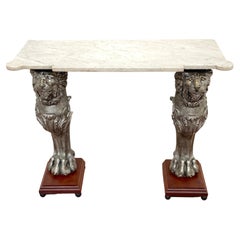
English Regency Style Marble Top Zinc Lion Caryatid Console Table
Located in West Palm Beach, FL
English Regency Style Marble Top Zinc Lion Caryatid Console Table
England, circa 1900s
With canted cornered white marble top, raised on a pair o...
Category
Early 20th Century English Regency Console Tables
Materials
Marble, Metal
$5,625 Sale Price
25% Off
You May Also Like
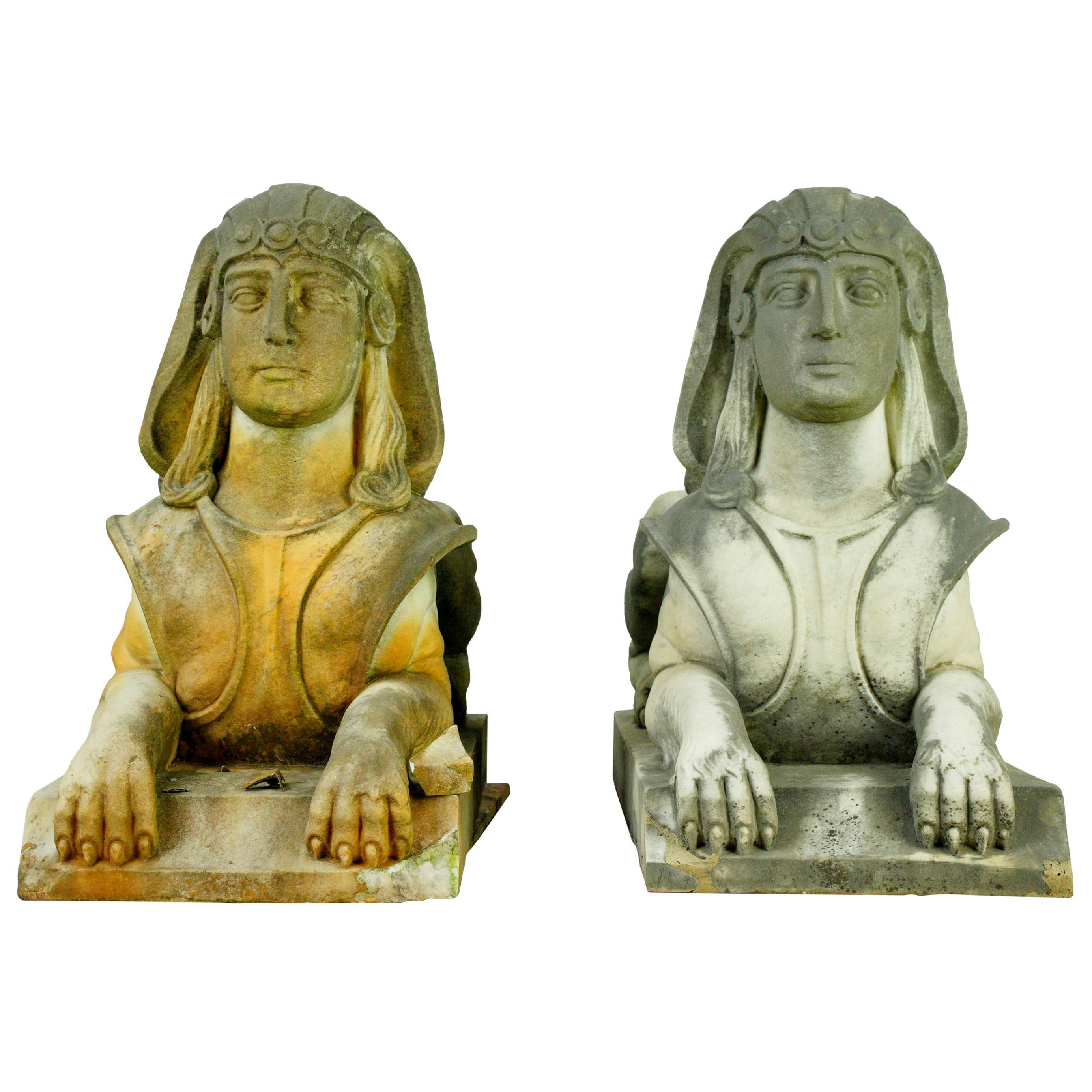
Pair of carved Carrara marble sphinxes
Located in SAINT-OUEN-SUR-SEINE, FR
Exceptional pair of white Carrara marble Sphinxes on rectangular bases. A very noble female bust combined with the powerful body of a lioness, recumbent with her tail lying flat on h...
Category
Early 20th Century French Egyptian Revival Statues
Materials
Carrara Marble
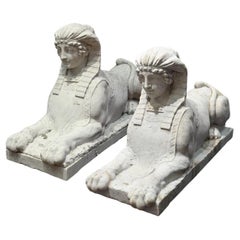
Pair of Hand-Carved Italian White Marble Egyptian Sphinx Sculptures, 20th Centur
Located in Madrid, ES
Elegant pair of Egyptian-style sphinx sculptures, hand-carved in white Italian marble during the 20th century. Each figure features the traditional lion body with a serene human face...
Category
Vintage 1970s Abstract Sculptures
Materials
Marble
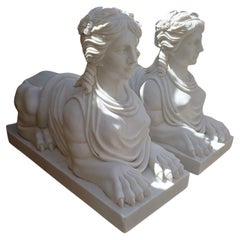
$4,498 Sale Price
20% Off
Pair of Large Scale Marble Sphinx Garden Statues Sculptures
Located in West Hartford, CT
Stunning pair of early 20th century Egyptian Revival marble garden sphinxes. Each have female heads and drapery on lion bodies. From one of the finest ho...
Category
Early 20th Century Italian Statues
Materials
Marble
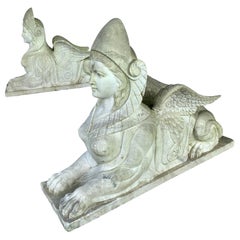
Pair of Italian 19th Century Neoclassical Style Marble Egyptian Sphinxes
Located in West Palm Beach, FL
An impressive pair of Italian 19th century Neo-Classical st. white Carrara marble statues of Egyptian Sphinxes. Each Sphinx is sculpted out of one solid piece of marble and is raised...
Category
Antique 19th Century Italian Neoclassical Figurative Sculptures
Materials
Marble
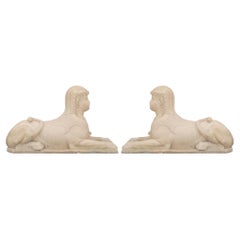
Pair 19th Century Italian Grand Tour Alabaster Sphinxes
Located in Buisson, FR
Pair small alabaster grand tour sphinxes.
Great to use as paper weights on your desk.
Italy circa 1850-1900.
Weathered,small losses and old repair
Mo...
Category
Antique 19th Century Italian Grand Tour Paperweights
Materials
Alabaster
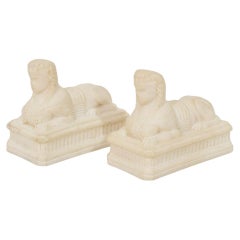
$388 Sale Price / set
51% Off
Pair of Marble Sphinx Exterior Entryway Statues
Located in New York, NY
This pair from from an estate in Greenwich, Connecticut, adds a touch of classical grandeur to your outdoor space. A sphinx is a mythological creature with a lion's body and a human head, an important image in Egyptian and Greek art and legend.
Despite their age, these statues are in good condition, showcasing the patina and wear that comes with the passage of time. Discoloration from age contributes to their vintage charm, and some repaired cracks in the base indicate a careful restoration process. The statues bear the marks of time with grace, creating a beautifully weathered appearance.
Positioned at the entrance, these Marble Sphinx...
Category
Early 20th Century Statues
Materials
Marble
$50,400 / set
More Ways To Browse
19th Century Marble Sphinx
Grand Tour Sphinx
Art Deco Sphinx
Brass Ship Sculpture
Brass Sphinx
Bronze Equestrian Statue
Bronze Fairy
Bronze Sculpture Of Athletes
Bronze Sword Sculpture
Cambodian Wood
Chaim Gross Bronze
Clam Pearl
Clodion Statue Sculpture
Colinet Bronze
Crouching Male
Curtis Boat
Curtis Jere Flower
Curtis Jere Ship