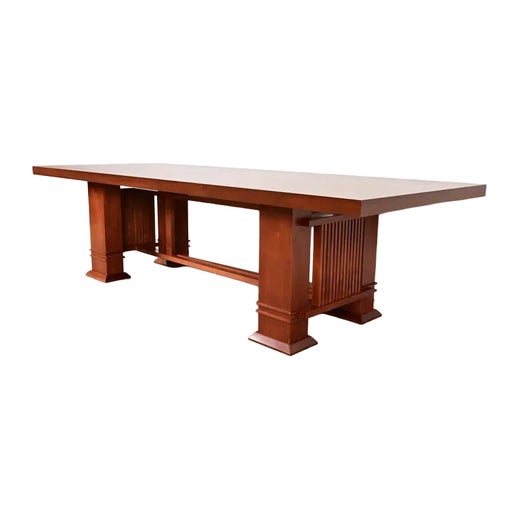
Pair of Important Frank Lloyd Wright Concrete Architectural Elements, Signed
About the Item
- Creator:Frank Lloyd Wright (Designer)
- Dimensions:Height: 25.5 in (64.77 cm)Width: 75 in (190.5 cm)Depth: 12 in (30.48 cm)
- Sold As:Set of 2
- Style:Mid-Century Modern (Of the Period)
- Materials and Techniques:
- Place of Origin:
- Period:
- Date of Manufacture:Mid-20th Century
- Condition:
- Seller Location:Queens, NY
- Reference Number:Seller: REG47661stDibs: LU977947285802
Frank Lloyd Wright
Without question the greatest architect the United States has ever produced, Frank Lloyd Wright and his philosophy of “organic architecture” — of buildings that exist in harmony with their natural surroundings — had a profound influence on the shape of modern life.
Wright gave us some of the most elegant and iconic buildings in America: residences such as Fallingwater, in rural Pennsylvania, the Robie House in Chicago, and Taliesin, Wright’s own home; and masterful institutional structures that include the Unity Temple in Oak Park, Illinois, the Johnson Wax headquarters in Racine, Wisconsin, and the Guggenheim Museum in New York. Whenever possible, Wright designed the furniture for his projects, to ensure an affinity between a building’s exterior and interior.
Wright’s wooden chairs and tables for his “Prairie Houses” of the early 1900s have sleek, attenuated forms, influenced by both the simplicity of traditional Japanese design and the work of Gustav Stickley and other designers of the Arts and Crafts movement.
For Taliesin and several residential projects, Wright designed severely geometric chairs that are marvels of reductivist design. He revisited many of these forms in the 1950s in furniture licensed to the North Carolina firm Henredon, adding a decorative frieze-like element to the edges of tables and stools. Owing to a cross-licensing agreement between Henredon and Heritage at the time, Wright's lines of the era are usually labeled Heritage-Henredon.
The works on 1stDibs also show how happily Wright embraced new forms and materials. His desks and chairs for Johnson Wax have a streamlined look and use tubular steel to the same effect as designer Warren McArthur, who collaborated with Wright in the interiors of the Arizona Biltmore Hotel. For the Price Tower (1956) in Oklahoma, Wright designed angular wooden desks as well as upholstered pedestal chairs made of chromed steel — audacious furniture for his tallest completed building project.
The beauty of Frank Lloyd Wright’s furniture designs is that while many of us wish we could live in one of his houses, his vintage sofas, storage cabinets and armchairs connect us directly to his architecture, and to the history he made.
- ShippingRetrieving quote...Shipping from: Long Island City, NY
- Return Policy
More From This Seller
View All20th Century Unknown Mid-Century Modern Figurative Sculptures
Fabric
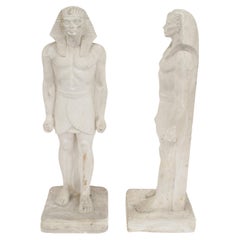
Early 20th Century Unknown Art Deco Figurative Sculptures
Terracotta
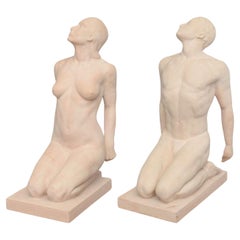
20th Century French Mid-Century Modern Figurative Sculptures
Marble
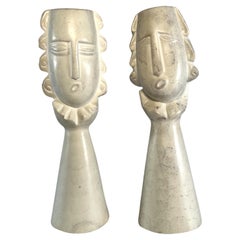
20th Century African Tribal Figurative Sculptures
Bronze
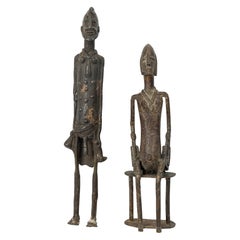
Mid-20th Century French Mid-Century Modern Figurative Sculptures
Ash
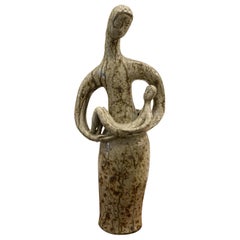
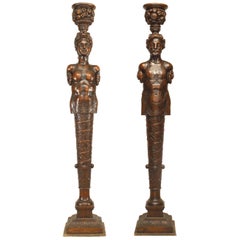
Antique 19th Century Renaissance Pedestals and Columns
Oak
You May Also Like
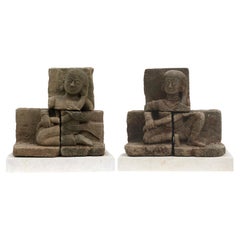
Antique 15th Century and Earlier Burmese Other Figurative Sculptures
Sandstone
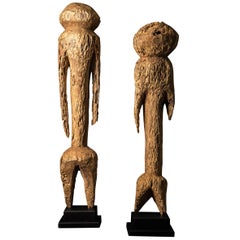
Vintage 1930s Togolese Tribal Figurative Sculptures
Wood
Vintage 1970s American Brutalist Figurative Sculptures
Pottery
Vintage 1960s French Mid-Century Modern Busts
Ceramic
20th Century Dutch Mid-Century Modern Figurative Sculptures
Plaster, Paint
Early 20th Century Chinese Qing Sculptures and Carvings
Granite