Want more images or videos?
Request additional images or videos from the seller
1 of 8
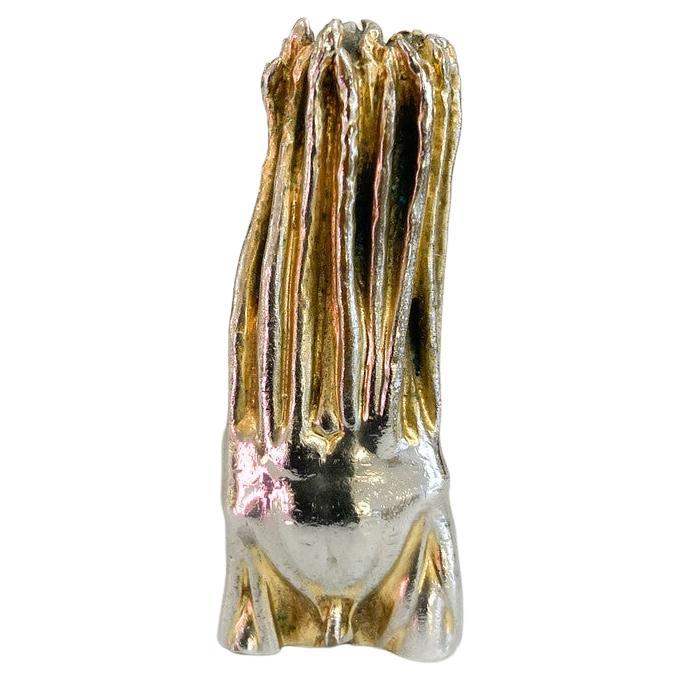
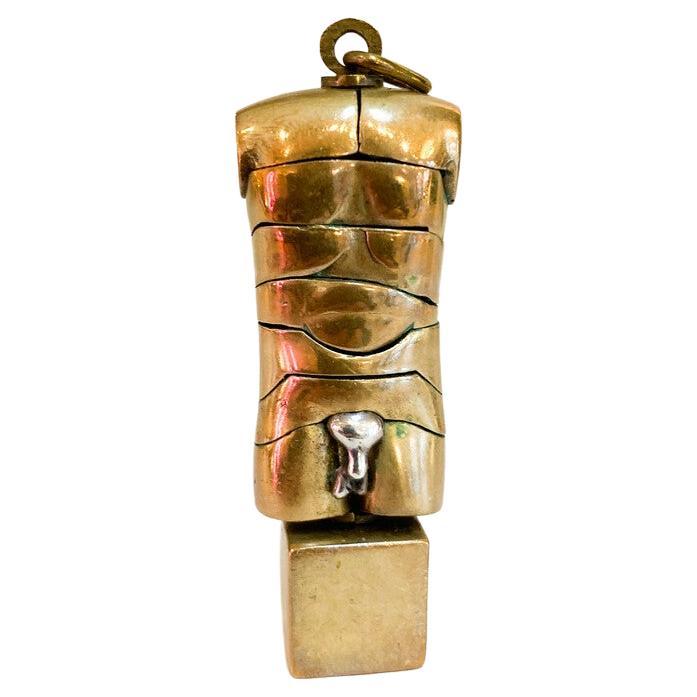
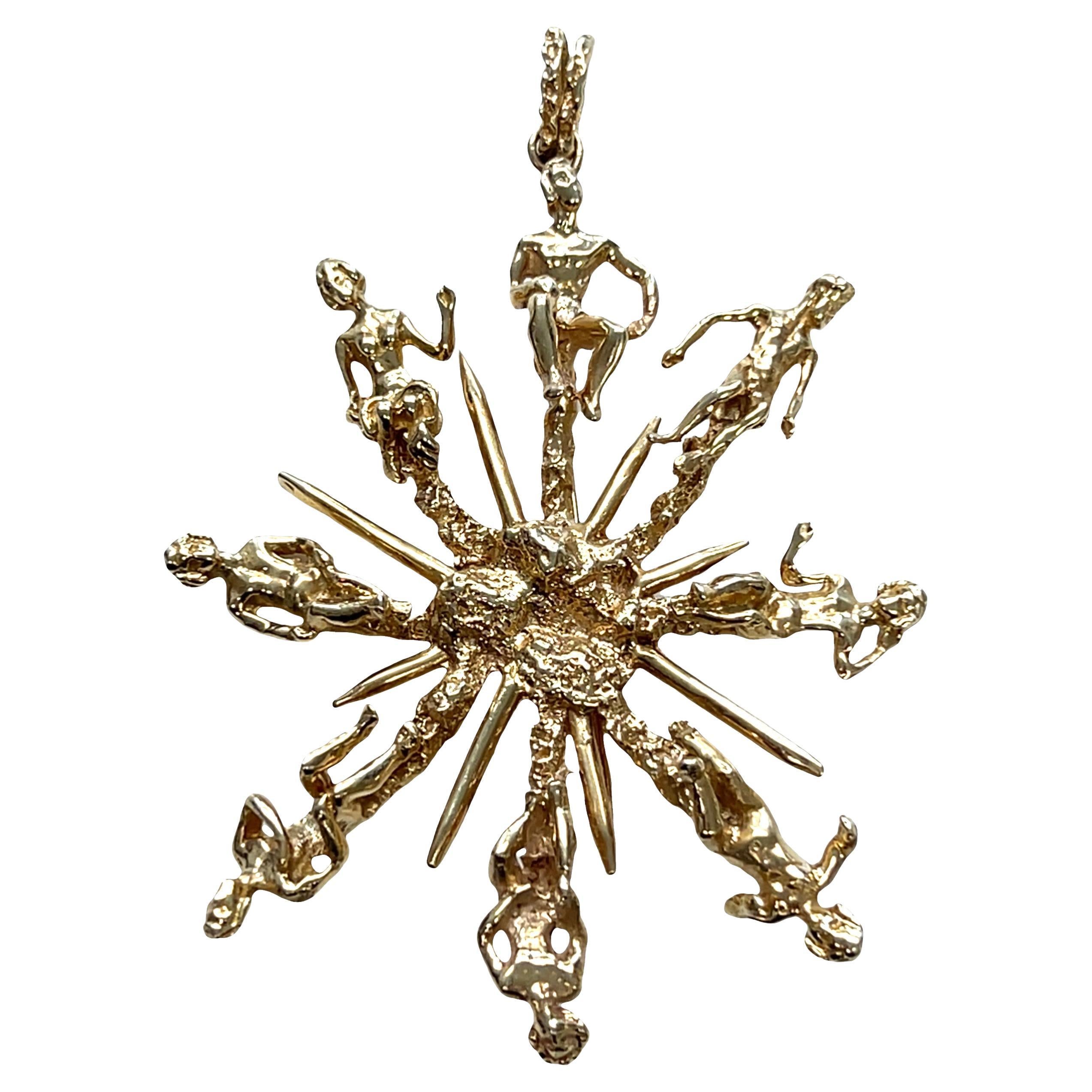
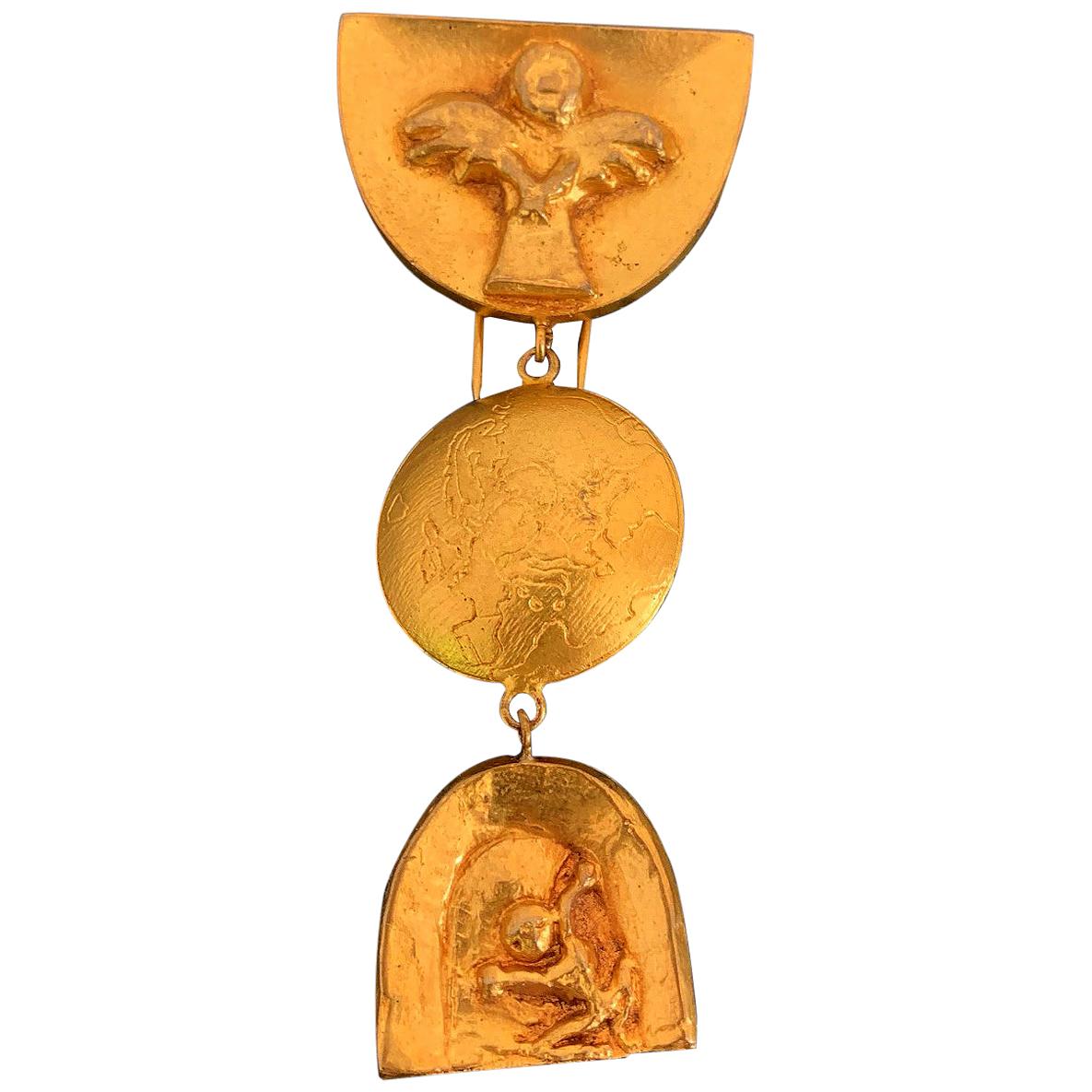
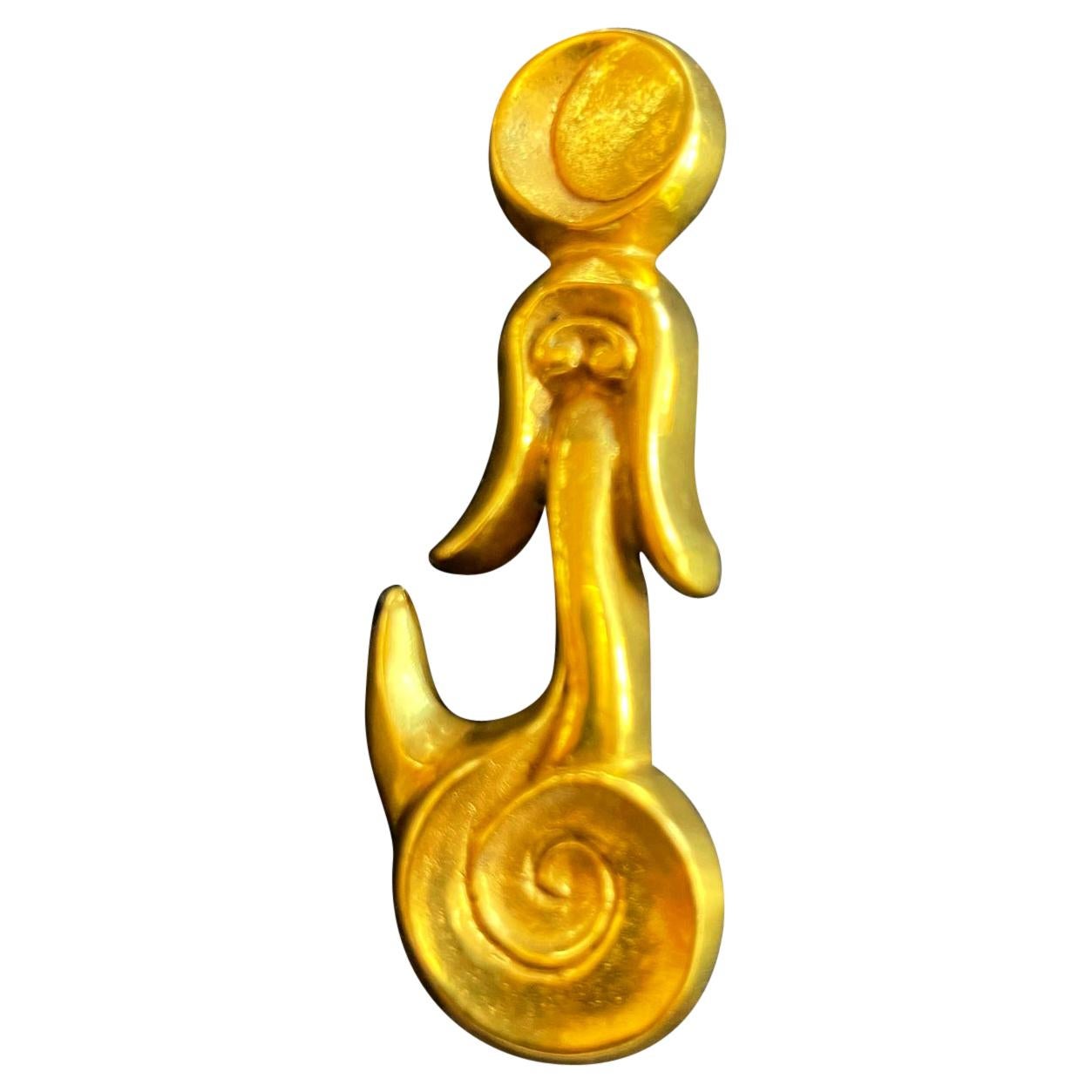
Pendant by Vic Gentils, Belgium, 1970s
$1,705.61
£1,267.31
€1,425
CA$2,336.34
A$2,548.82
CHF 1,351.84
MX$30,707.53
NOK 17,157.50
SEK 15,708.16
DKK 10,855.47
About the Item
Pendant by Vic Gentils (1919-1997), Belgium, 1970s.
About the Seller
4.8
Platinum Seller
Premium sellers with a 4.7+ rating and 24-hour response times
1stDibs seller since 2016
795 sales on 1stDibs
Typical response time: <1 hour
- ShippingRetrieving quote...Shipping from: Brussels, Belgium
- Return Policy
More From This Seller
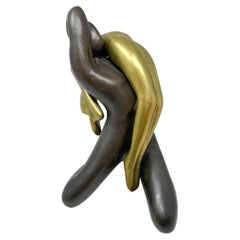
View AllPendant by Novello Finotti, Italy
By Novello Finotti
Located in Brussels, BE
Pendant by Novello Finotti, Italy.
Category
Vintage 1970s Figurative Sculptures
Materials
Gold, Silver, Bronze
Pendant by Miguel Berrocal
Located in Brussels, BE
Pendant by Miguel Berrocal (1933-2006).
Category
Vintage 1970s Busts
Materials
Brass
Mid-Century Helio Rodrigues Sculpture, Brazil
Located in Brussels, BE
Mid-Century Helio Rodrigues Sculpture, Brazil
Category
20th Century Abstract Sculptures
Materials
Bronze
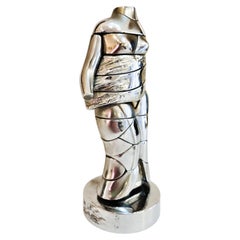
Miguel Berrocal
1933-2006
"Mini-Cariatide", Signed and Numbered
By Miguel Berrocal
Located in Brussels, BE
Miguel Berrocal ( 1933-2006) "Mini-Cariatide", signed and numbered.
Category
Vintage 1960s Spanish Abstract Sculptures
Materials
Chrome
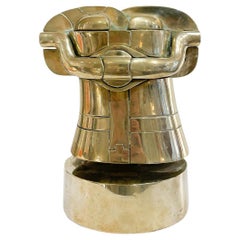
Miguel Berrocal ( 1933-2006) " Richelieu" , Signed and Numbered
By Miguel Berrocal
Located in Brussels, BE
Miguel Berrocal ( 1933-2006) " Richelieu" , Signed and Numbered
Category
20th Century Figurative Sculptures
Materials
Brass
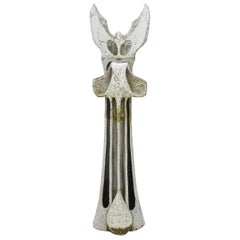
Yves Bosquet Large Ceramic Sculpture, Belgium
Located in Brussels, BE
Yves Bosquet large ceramic sculpture, Belgium.
Category
Vintage 1970s Belgian Mid-Century Modern Abstract Sculptures
Materials
Terracotta
You May Also Like
Eric de Kolb Gold Figural Pendant/Pin
By Eric de Kolb
Located in New York, NY
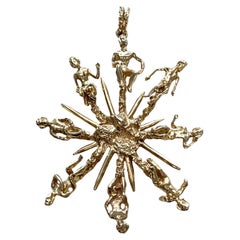
A spectacularly unique piece from the famed jewelry designer Eric de Kolb, this pin/pendant sports eight human figures - perhaps Greek or Roman gods? - arranged in a circle around a ...
Category
Late 20th Century American Modernist Pendant Necklaces
Materials
Gold, 14k Gold
French Bronze Brooch "Pergatoire" by Line Vautrin
By Line Vautrin
Located in Atlanta, GA
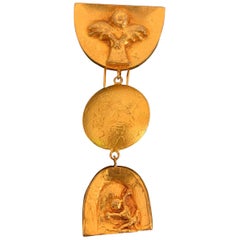
A hanging articulate three-piece gilt bronze brooch "Purgatoire" also known as "Le Ciel, la Terre, et l'Enfer." by Line Vautrin (1913-1997). Each element with figure symbolizes Heave...
Category
Vintage 1950s French Mid-Century Modern Collectible Jewelry
Materials
Bronze
Fertility Sculpture, by Vruchtbaarheid, 20th Century
Located in Madrid, ES
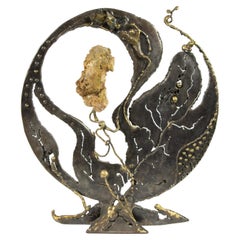
Fertility sculpture, by Vruchtbaarheid.
20th Century.
Title and monogram.
Very good condition.
Dimensions
H 51.5cm.
Category
20th Century Dutch Modern Figurative Sculptures
Materials
Metal, Bronze
French Bronze Brooch Line Vautrin
By Line Vautrin
Located in Atlanta, GA
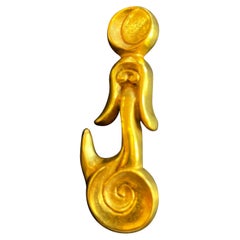
A gilt bronze brooch in sculptural form called Le Char de la lune (The Chariot of the Moon) circa 1945-1955 by French Art Jeweler Line Vautrin (1913-1997). A long pin on the back and...
Category
Mid-20th Century French Mid-Century Modern Collectible Jewelry
Materials
Bronze
Vintage Abstract Expressionist Ibram Lassaw Modernist Bronze Sculpture Pendant
By Ibram Lassaw
Located in Surfside, FL
IBRAM LASSAW
(Russian-American, 1913-2003),
Sculptural pendant
Gold plated bronze
Signed verso
Measurements: 2-7/8''h, 2-1/4''w.
Ibram Lassaw was born in Alexandria, Egypt, of Russian Jewish émigré parents. After briefly living in Marseille, France, Naples, Italy Tunis, Malta, and Constantinople, Turkey his family settled in Brooklyn, New York, in 1921.His family settled in Brooklyn, New York. He became a US citizen in 1928. Ibram Lassaw, one of America's first abstract sculptors, was best known for his open-space welded sculptures of bronze, silver, copper and steel. Drawing from Surrealism, Constructivism, and Cubism, Lassaw pioneered an innovative welding technique that allowed him to create dynamic, intricate, and expressive works in three dimensions. As a result, he was a key force in shaping New York School sculpture.He first studied sculpture in 1926 at the Clay Club and later at the Beaux-Arts Institute of Design in New York. He made abstract paintings and drawings influenced by Kandinsky, Sophie Taeuber Arp, and other artists. He also attended the City College of New York. Lassaw’s encounter with avant-garde art in the International Exhibition of Modern Art (1926), organized by the Société Anonyme at the Brooklyn Museum, made a powerful impression on him. In the early 1930s he explored new materials and notions of open-space sculpture. The ideas of László Moholy-Nagy and Buckminster Fuller were important to him, and he knew the work of Julio González, Pablo Picasso, and the Russian Constructivists. After experimenting with plaster, rubber and wire, Lassaw began working with steel, which became a frequent medium for the artist, along with other metals. His work reflects the influence of Surrealist artists such as Alberto Giacometti and Joan Miro as well as American Modernist Alexander Calder.A pioneer of abstract sculpture in the United States, in 1936 Lassaw was a founding member of the organization American Abstract Artists. Between 1933 and 1942 he worked for various federal arts projects: the Public Works of Art Project, Civil Works Authority, and WPA, the Works Progress Administration Federal Art Project. In 1938 he produced his first welded work. He served with the U.S. Army, where he learned direct welding techniques. During the 1940s he experimented with cage constructions and with acrylic plastics, adding color to his sculptures by applying dye directly to their surfaces. In 1949 Lassaw was a founder of the Club, an informal discussion group of avant-garde artists that had developed from gatherings at his studio, on Eighth Street.
During the mid-1930s, Lassaw worked briefly for the Public Works of Art Project cleaning sculptural monuments around New York City. He subsequently joined the WPA as a teacher and sculptor until he was drafted into the army in 1942. Lassaw's contribution to the advancement of sculptural abstraction went beyond mere formal innovation; his promotion of modernist styles during the 1930s did much to insure the growth of abstract art in the United States. He was one of the founding members of the American Abstract Artists group, and served as president of the American Abstract Artists organization from 1946 to 1949. In 1951, Samuel Kootz invited Lassaw to join his gallery in New York. He also had a summer gallery in Provincetown, MA. Lassaw had been summering in Provincetown since 1944, and in 1951 rented an apartment next door to the Kootz Gallery. Among the artists in the Kootz Gallery were Jean Arp, William Baziotes, Georges Braque, Jean Dubuffet, Herbert Ferber, Arshile Gorky, Adolph Gottlieb, David Hare, Hans Hofmann, Fernand Leger, Georges Mathieu, Joan Miró, Robert Motherwell, Pablo Picasso, Pierre Soulages, and Maurice de Vlaminck. Lassaw is a sculptor who was a part of the New York School of Abstract expressionism during the 1940s and 1950s. Jackson Pollock, Lee Krasner, James Brooks, Willem de Kooning, and several other artists like Lassaw spent summers on the Southern Shore of Long Island. Lassaw spent summers on Long Island from 1955 until he moved there permanently in 1963.
SELECT EXHIBITIONS
1961 International Exhibition of Modern Jewelry 1890–1961, organized by the Worshipful Company of Goldsmiths in association with the Victoria and Albert Museum, London
1967 Exhibition of Jewelry by Painters and Sculptors, organized for circulation by MoMA
1973 Jewelry...
Category
Mid-20th Century Abstract Expressionist Abstract Sculptures
Materials
Gold, Bronze
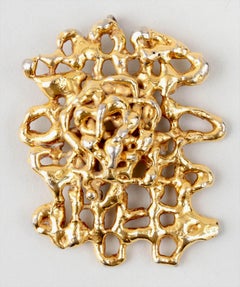
Necklace compréssion by César Baldaccini, signed.
By César Baldaccini
Located in SAINT-OUEN-SUR-SEINE, FR
Rare pendentif dit coppression par César, signé.
« Ses parents, Omer et Lelia Baldaccini, italiens d’origine toscane, tenaient un bar à Marseille où César est né, avec sa sœur jumelle Amandine, en 1921 dans le quartier populaire de la Belle-de-Mai, au no 71 de la rue Loubon, dans le 3e arrondissement[1]. « Je suis fondamentalement un autodidacte absolu », dira-t-il[2]. À l'époque, il dessine et bricole des carrioles pour son petit frère avec des boîtes de conserve. Néanmoins, après avoir d'abord travaillé chez son père (il aide également un voisin charcutier pour un maigre salaire après avoir quitté l'école à douze ans), il va suivre de 1935 à 1939 les cours de l'École supérieure des beaux-arts de Marseille ; en 1937, il obtient trois prix, en gravure, en dessin et en architecture[3].
Non mobilisable pendant la guerre (il échappe également au STO), il vit d'arnaques avant de s'installer à Paris pour être admis, en 1943, à l'École nationale supérieure des beaux-arts avec Michel Guino, Albert Féraud, Daniel David, Eugène Dodeigne et Philippe Hiquily, comme lui dans l’atelier de Marcel Gimond. En 1945, il retourne à Marseille pour épouser Maria Astruc, avec qui il monte un commerce (ils divorceront en 1959). Il revient en 1946 à Paris où il occupe un atelier dans un ancien bordel au 21 rue de l'Échaudé, dont les chambres, à la suite de la loi Marthe Richard, avaient été attribuées à des étudiants[4]. Il y rencontre Émilenne Deschamps, qui deviendra par la suite une de ses égéries.
Devant l'impossibilité pour lui de travailler la pierre, en raison de son coût, il se tourne vers d'autres matériaux[3]. Dès 1947, il travaille le plâtre et le fer. En 1949, il est initié à la soudure à l'arc dans une menuiserie industrielle de Trans-en-Provence et utilise le plomb en feuilles repoussées et des fils de fer soudés. En 1951, il visite Pompéi et reste marqué par les moulages des corps des habitants pris dans la lave[3]. En 1952, il utilise des matériaux de récupération peu coûteux et réalise ses premières sculptures en ferrailles soudées : ses moyens sont alors toujours modestes. Ainsi, par manque d'argent et pour s'offrir du marbre, César va récupérer dans les décharges de ferraille les matériaux de ses premières sculptures : des tubes, des boulons, des vis qui deviennent des insectes ou se retrouvent dans les courbes puissantes de la Vénus de Villetaneuse (1962).
En 1954, il expose à la galerie Lucien Durand à Paris et obtient le prix « collabo » pour une sculpture intitulée Le Poisson[5], réalisée à Villetaneuse, ville où il travaillera une douzaine d'années grâce à l'aide d'un industriel local, Léon Jacques[6]. Il acquiert la célébrité lorsque son œuvre est achetée 100 000 francs en 1955 par l'État pour le musée national d'art moderne[7]. La même année, il expose au Salon de mai. L'année suivante, le MNAM achète Chauve-souris de 1954 et le musée d'art moderne de la ville de Paris Le scorpion de 1955. À partir de 1954 (Torse, MOMA), il réalise également des sculptures en métal soudé, puis en bronze partiellement poli, de femmes plantureuses (Ginette, 1958, Victoire de Villetaneuse, 1965).
En 1956, il participe à la Biennale de Venise puis à la Biennale de São Paulo et à la Documenta II en 1959. En 1958, il signe un contrat avec la galerie parisienne...
Category
Vintage 1970s French Mid-Century Modern Collectible Jewelry
Materials
Bronze
More Ways To Browse
Vic Gentils
Sphinx Head
Tree Of Life Sculpture
Wisconsin Chair
Wood Life Size Sculpture
1900s Bronze Sculpture
A Carrier Sculpture
Ancient Fragment
Antique Chinese Figurines
Art Deco Mannequin
Art Nouveau Lady Gold
Ballerina Bronze Sculpture
Bronze Sculpture Maiden
Carved Driftwood Sculpture
Carved Sphinx
Erotic Objects
Eve Sculpture
Glass Sculpture Nude