Items Similar to Two Oriental Scholars At A Table, Viennese Bronze by Bergmann, Around 1920
Want more images or videos?
Request additional images or videos from the seller
1 of 8
Two Oriental Scholars At A Table, Viennese Bronze by Bergmann, Around 1920
$1,794.65
£1,339.83
€1,500
CA$2,472.26
A$2,712.54
CHF 1,428.84
MX$32,268.56
NOK 18,303.23
SEK 16,713.35
DKK 11,430.57
About the Item
Two elderly bearded Oriental men in long robes and turbans standing at a table on a stone floor with a small carpet, on the table heavy books, some of them open, and a table bell.
The figures are coloured and screwed onto the base plate, with the Bergmann signet and model number on the underside.
Excellent and detailed quality of workmanship, very lifelike representation, as is typical of Viennese bronze art.
Manufactured ca. 1920 by Vienna Bronze Manufactory Bergmann
Bronze modeling, casting, patinated and cold painted
Dimensions:
Height: 13,5 cm / 5.31 in
Width: 16,0 cm / 6.29 in
Depth: 9,0 cm / 3.54 in
Gross weight: 1.580 grams / 55.61 oz / 50.80 troy oz
Well maintained - age-related signs of wear
- Creator:Franz Bergmann (Manufacturer)
- Dimensions:Height: 5.32 in (13.5 cm)Width: 6.3 in (16 cm)Depth: 3.55 in (9 cm)
- Style:Other (Of the Period)
- Materials and Techniques:
- Place of Origin:
- Period:
- Date of Manufacture:circa 1920
- Condition:
- Seller Location:Vienna, AT
- Reference Number:1stDibs: LU1014447580962
Franz Bergmann
There were many bronze foundries operating in Vienna in this period, but it was Bergman’s which became the most celebrated, working with a number of celebrated Viennese sculptors at the turn of the 20th Century, such as Bruno Zach, to produce designs for his famous bronze figures. Bergman bronzes are especially famous for having utilised a technique for decorating the bronzes called cold painting. Cold painting as a technique developed in Vienna in the late 19th Century, and involved the application of several layers of paint added to the bronze after firing. It was used to make fashionable collectors’ items. Bergman figures came in three main forms: animal figures, Orientalist sculptures, and erotic figures in the Art Nouveau style. His animal figures were often whimsical and humorous, and often satirical. They have become highly sought-after collectors’ items today. Bergman’s Orientalist sculptures are equally highly sought-after. He was producing these figures at a time when interest in the exotic lands of the Middle East and North Africa was at its peak among Europe’s artists and buyers.
About the Seller
5.0
Platinum Seller
Premium sellers with a 4.7+ rating and 24-hour response times
Established in 1988
1stDibs seller since 2013
314 sales on 1stDibs
Typical response time: 3 hours
- ShippingRetrieving quote...Shipping from: Vienna, Austria
- Return Policy
More From This Seller
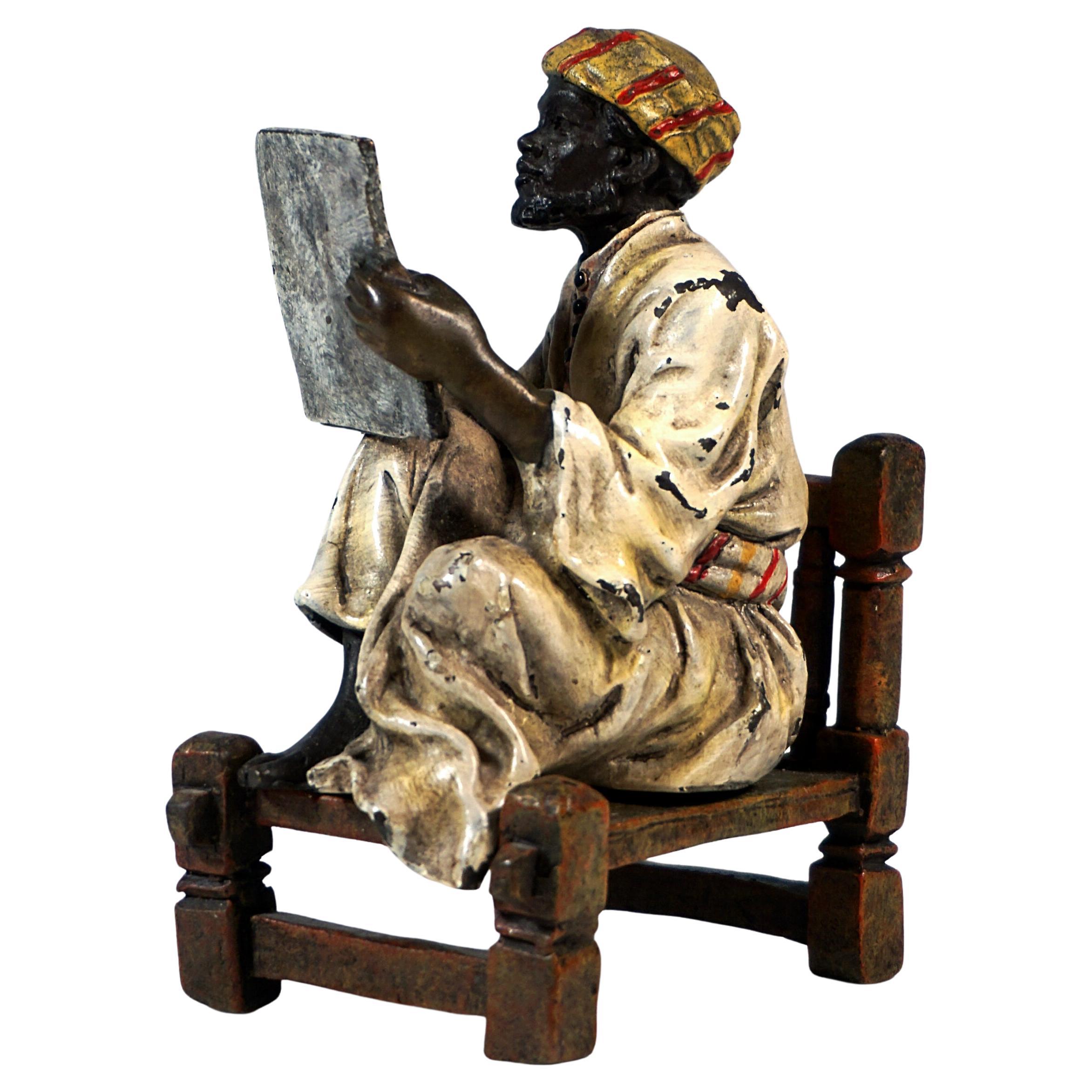
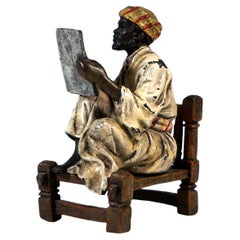
View AllSitting Oriental Scholar Writing, Viennese Bronze by Bergmann, Around 1920
By Franz Bergmann
Located in Vienna, AT
An elderly, bearded Oriental man in a long, light-coloured robe and turban, sitting with his legs drawn up on a wooden bench and writing on a sheet of paper which he holds in his lef...
Category
Early 20th Century Austrian Other Figurative Sculptures
Materials
Bronze
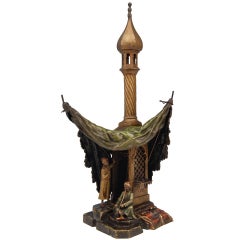
Vienna Bronze Table Lamp Vintage by Franz Bergman Smoking Arab Man, circa 1890
By Franz Bergmann
Located in Vienna, AT
Gorgeous Vienna Bronze figurine group made by famous Austrian manufactory Bergman(n) circa 1890.
The bearded Arab man wearing turban has sat down, protected by a tent. The man - a...
Category
Early 20th Century Austrian Rustic Table Lamps
Materials
Bronze
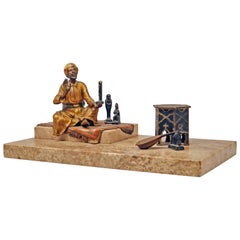
Vienna Bergman Bronze Arab Man on Carpet Selling Egypt Antiquities, circa 1890
By Bergmann Foundry
Located in Vienna, AT
Stunning bronze figurine group: Arab man clad in mantel (fireplace) selling Egypt antiquities.
An Arab man with turban is busy with presenting Egypt f...
Category
Antique 1890s Austrian Other Figurative Sculptures
Materials
Bronze
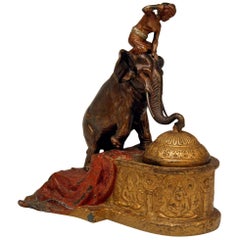
Vienna Bergman Bronze Indian Man on Elephant Inkstand Inkwell Inkpot, circa 1880
By Franz Bergmann
Located in Vienna, AT
Stunning bronze item which has function of an inkpot, inkstand, inkwell, Indian man is situated on elephant which is climbing up some stairs, the elephant's...
Category
Antique 1880s Austrian Other Figurative Sculptures
Materials
Bronze
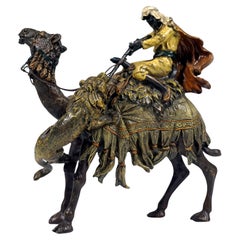
Arab On Camel Shooting A Lion, Viennese Bronze by Bergmann, around 1900
By Franz Bergmann
Located in Vienna, AT
Bearded Arab in traditional desert clothing with a flowing cloak and a white cloth tied around his head, his ankle-length shirt pulled up while seated and fastened with a belly band,...
Category
Antique Early 1900s Austrian Other Figurative Sculptures
Materials
Bronze
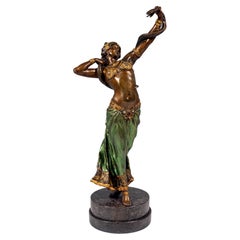
Viennese Bronze, Snake Dancer on Marble Base, by Franz Bergmann, Around 1910
By Franz Bergmann
Located in Vienna, AT
Young dancer in an oriental costume with a tight bustier, a long, softly falling green skirt and a diadem on her hair tied at the nape of her neck, posing with her upper body stretch...
Category
Vintage 1910s Austrian Art Deco Figurative Sculptures
Materials
Bronze
You May Also Like
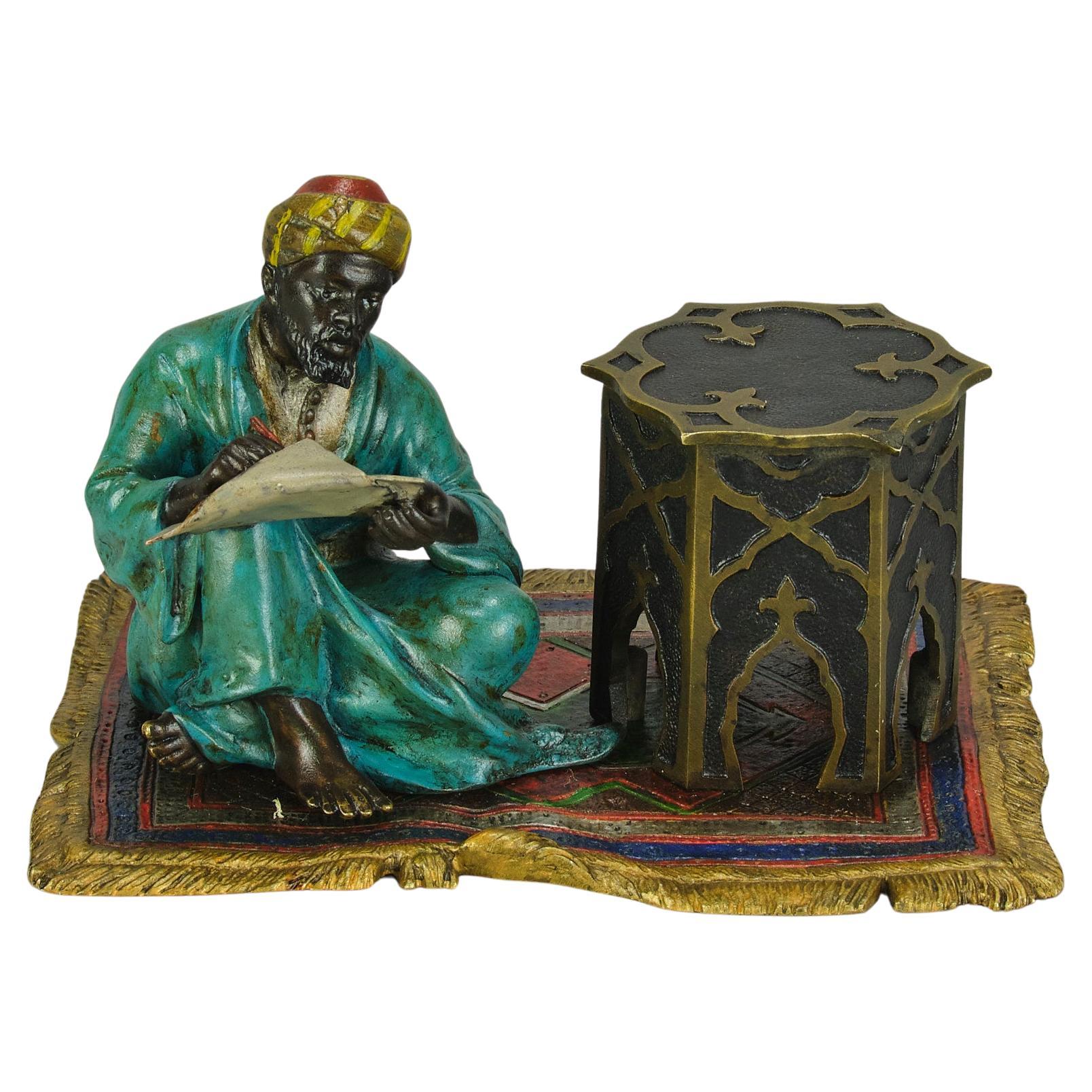
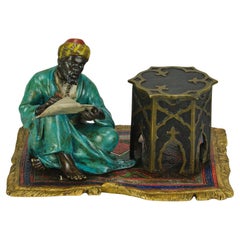
Early 20th Century Cold-Painted Bronze "Man Writing by a Table" by Franz Bergman
By Franz Bergmann
Located in London, GB
An excellent early 20th Century cold painted Austrian bronze study of an Arab man sat upon an oriental rug next to a table writing. The bronze with excellent vibrant colour and excep...
Category
Early 20th Century Austrian Late Victorian Figurative Sculptures
Materials
Bronze
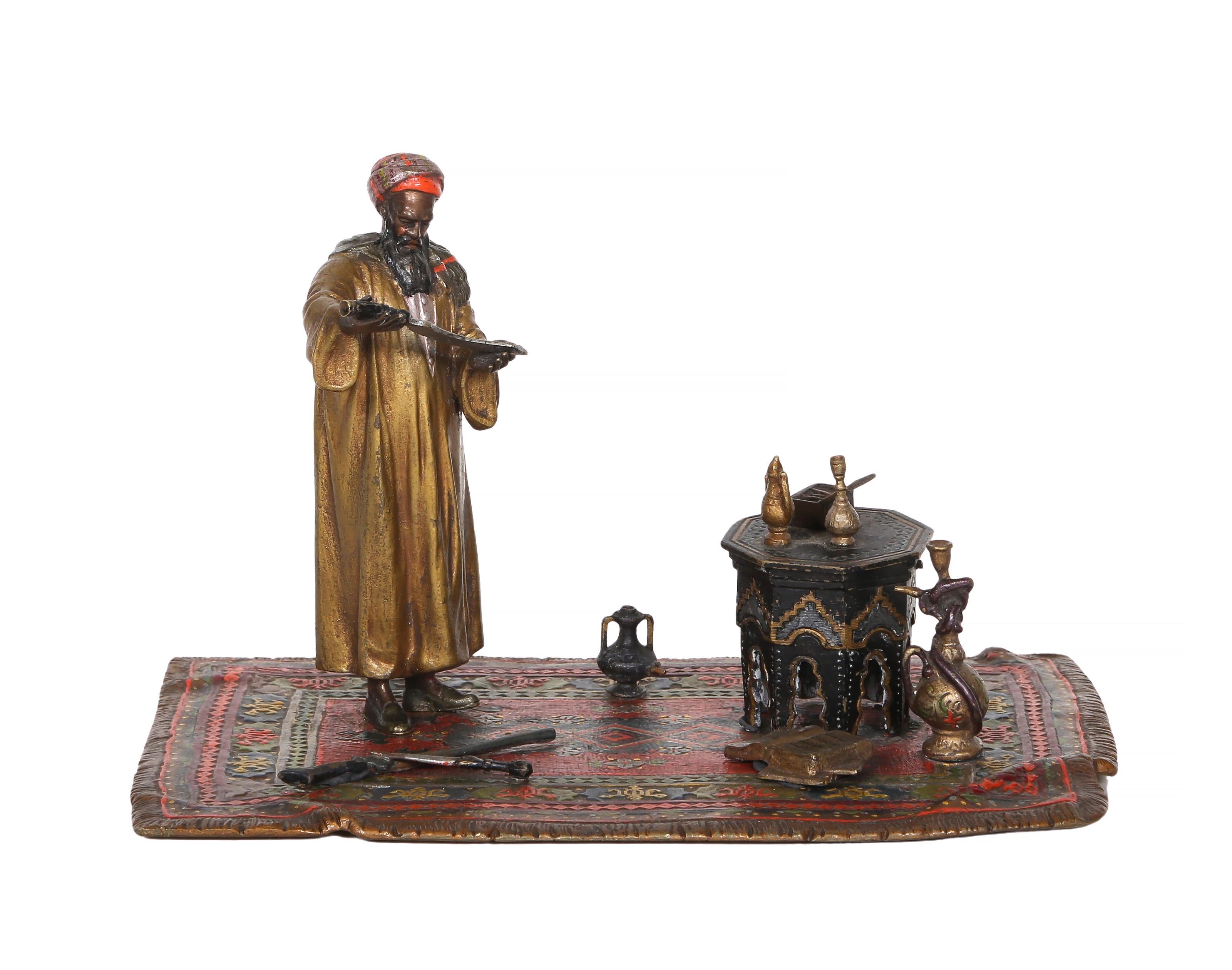
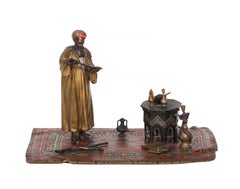
Merchant, Orientalist Bronze Sculpture by Franz Bergmann
By Franz Bergmann
Located in Long Island City, NY
Franz Bergmann, Austrian (1861 -1936) - Merchant, Year: circa 1900, Medium: Cold painted Bronze sculpture, Size: 5.75 x 9.5 x 6 in. (14.61 x 24.13 x 15.24 cm)
Category
Early 1900s Romantic Figurative Sculptures
Materials
Bronze
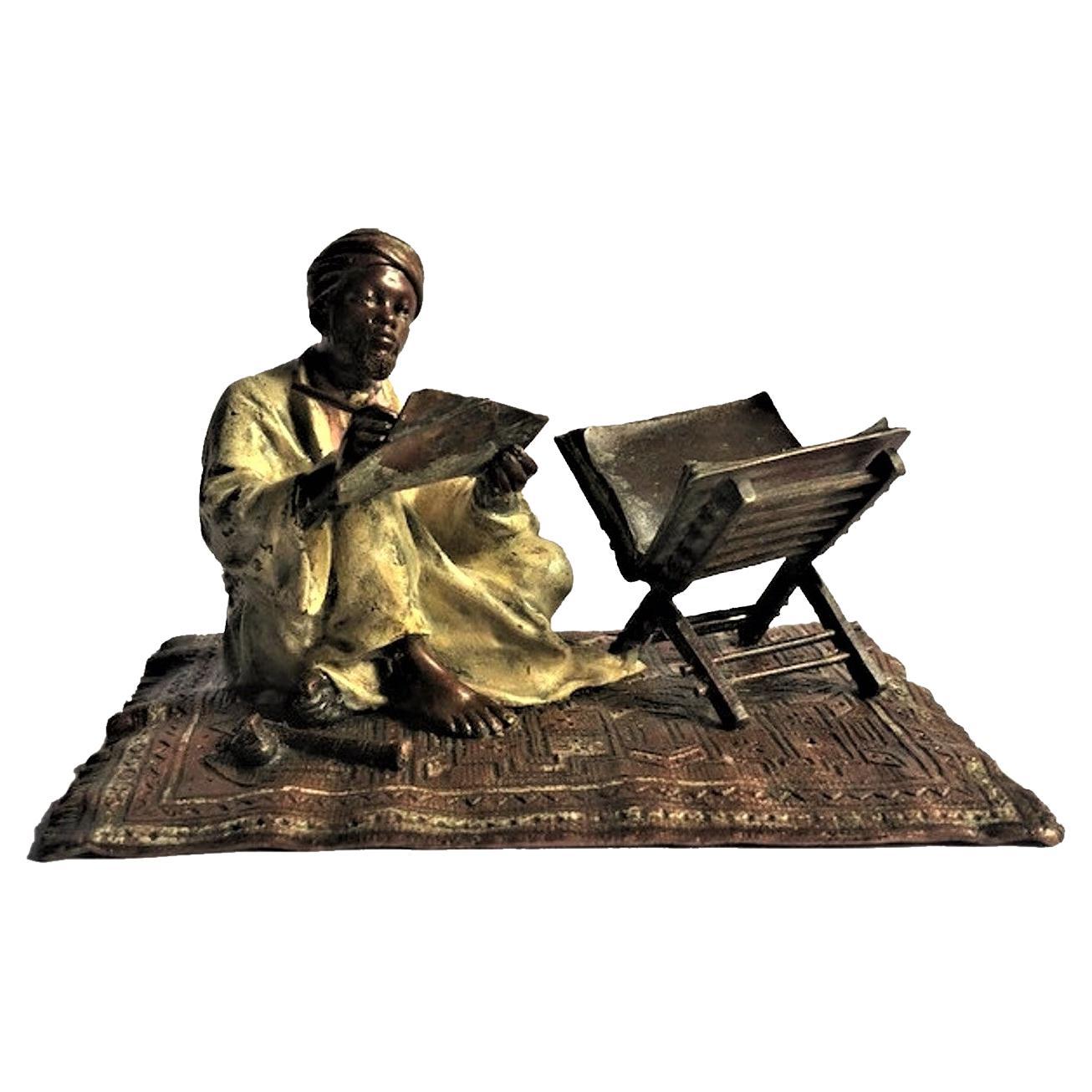
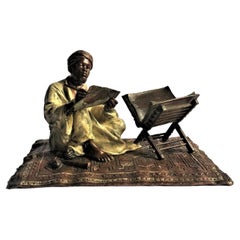
Franz Xaver Bergmann, Koran Scribe, Vienna Bronze Sculpture, Ca. 1900
By Franz Xaver Bergman (Bergmann)
Located in New York, NY
This wonderful life-like sculpture depicts a Koran scriber, who, bending his legs under him, holds sheets of paper in his hands, on which he transcribes verses from the Koran lying i...
Category
Antique 1890s Austrian Art Nouveau Figurative Sculptures
Materials
Bronze
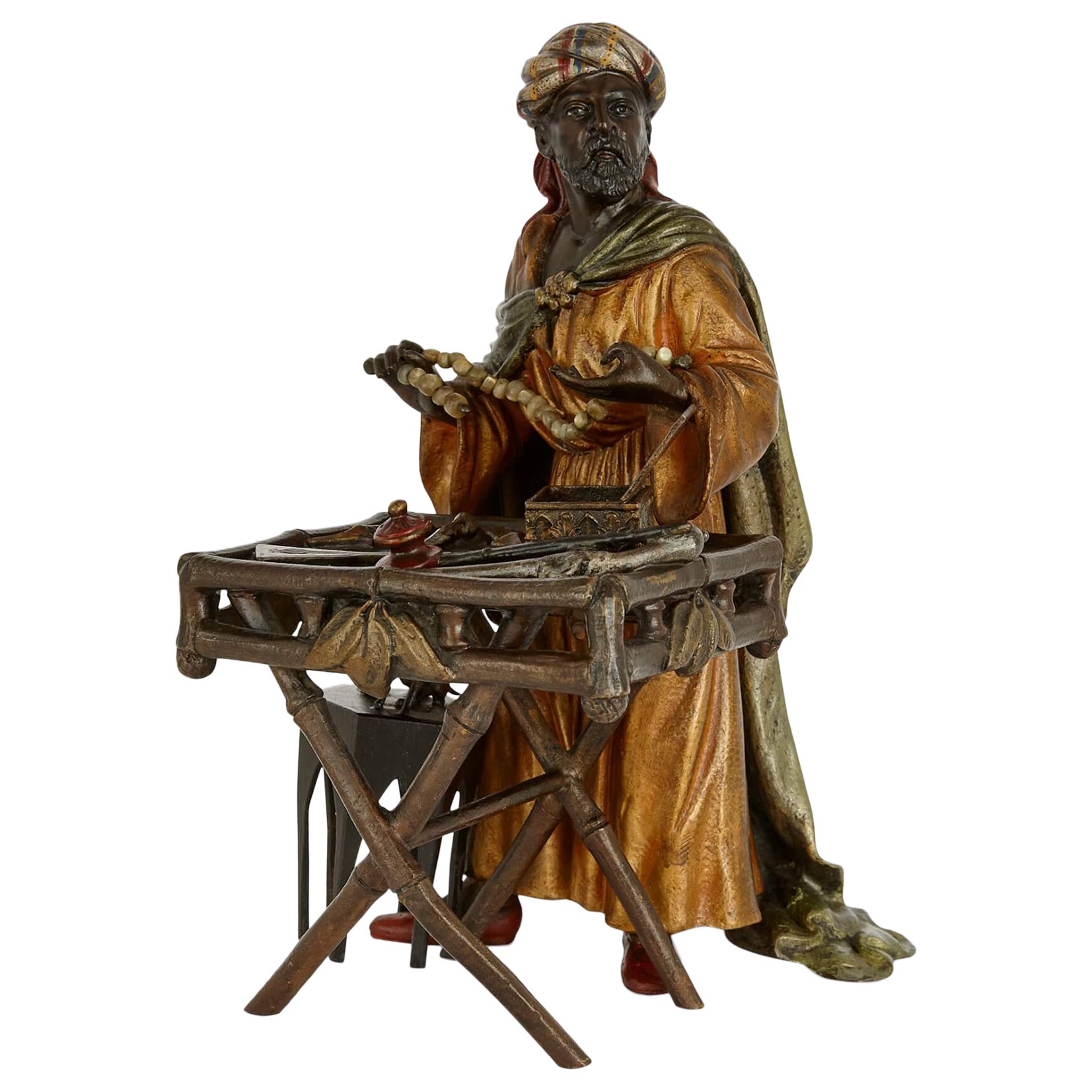
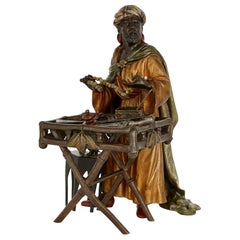
Viennese Cold-Painted Bronze of an Arab Merchant
Located in London, GB
Viennese cold-painted bronze of an Arab merchant
Austrian, c. 1910
Height 19cm, width 11cm, depth 14cm
This exceptional figurative sculpture depicts an Arab merchant selling his wares. The figure stands holding a piece of jewellery, with an inquisitive expression as if he is trying to entice potential buyers. He is expertly cast, with the ruffled texture of his beard a particularly fine detail.
The viewer’s eye is drawn to the figure’s vibrant clothing: a shimmering gold robe is complemented by a green-toned cloak which hangs loosely...
Category
Early 20th Century Austrian Islamic Figurative Sculptures
Materials
Bronze
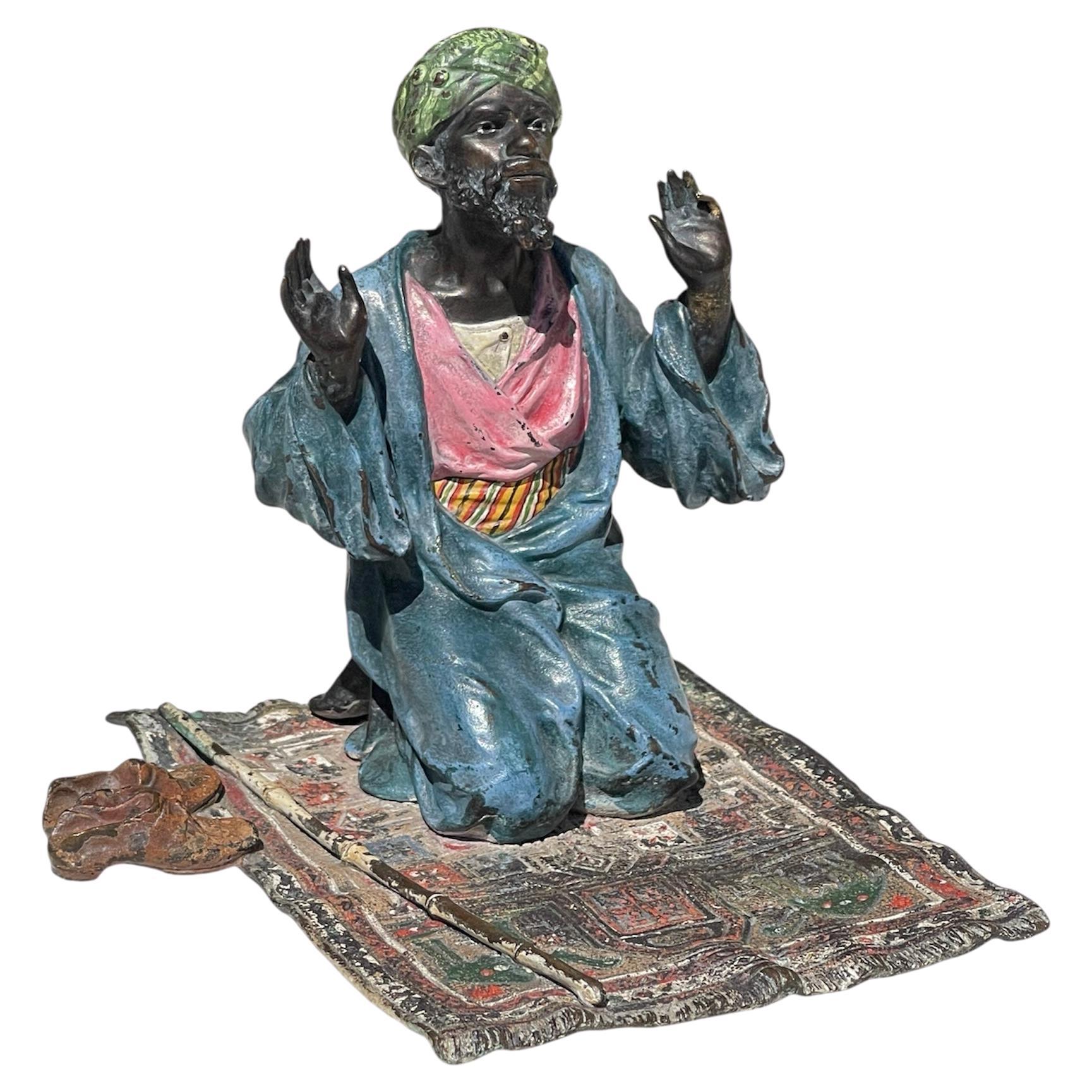
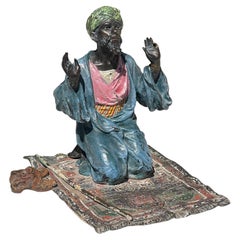
Franz Xavier Bergmann - Vienna Bronze Orientalist
By Franz Xaver Bergman (Bergmann)
Located in Beaune, FR
Vienna bronze depicting Man at Prayer. Stamped under the base "Real Vienna bronze Nam Greb". This bronze is in good condition.
Dimensions
Height 13 cm
Base - W 13 cm x D 14.5 cm
Category
Antique 19th Century Austrian Figurative Sculptures
Materials
Bronze
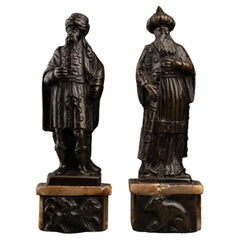
Two rare Figures in Turkish Attire - Venice, early 17th century
Located in Bruxelles, BE
Rare Bronzes Depicting two Figures in Turkish Attire
Possibly Suleiman the Magnificent at two different ages
bronzes, alabaster bases
Venice, early 17th century
19,5 x 6 x 5 cm
These two rare bronze statuettes represent two figures dressed in elaborate "Turkish" attire. They are mounted on alabaster bases with bronze reliefs—one featuring the winged lion of Venice, and the other possibly symbolizing Turkey with a wolf depiction.
One figure wears a grand külah, a spherical turban with a cone top, signifying royal authority, while the other has a wrapped turban, denoting rank and religious identity. Their garments are richly detailed with intricate engravings, suggesting luxurious fabrics of the Ottoman court.
The statuettes may represent Suleiman the Magnificent at two different stages of life, as both young and old. The sultan depicted alongside the winged lion corresponds to a description from a Venetian delegate in 1534, when Suleiman was 43. At that time, he had conquered Iraq from the Safavids and achieved a decisive victory over the Papal fleet at the Battle of Preveza. He was described as having large eyes, an aquiline nose, and long red mustaches—traits visible in Cristofano dell'Altissimo’s portrait of Suleiman in the Uffizi Gallery in Florence.
Unlike Mehmed II, who commissioned portraits by European artists for diplomatic purposes, Suleiman did not directly order such representations. Instead, his likeness spread through works by artists like Albrecht Dürer, based on sketches made by diplomats. Following his capture of Belgrade in 1521, his victory over Hungary in 1526, and his siege of Vienna...
Category
Antique 17th Century Italian Renaissance Figurative Sculptures
Materials
Alabaster, Bronze