Want more images or videos?
Request additional images or videos from the seller
1 of 11
Japanese Buddhist Shinto Shrine
$10,000List Price
About the Item
- Dimensions:Height: 49.5 in (125.73 cm)Width: 32 in (81.28 cm)Depth: 22.5 in (57.15 cm)
- Materials and Techniques:
- Place of Origin:
- Period:
- Date of Manufacture:Early-Mid 19th Century
- Condition:Wear consistent with age and use. Minor fading.
- Seller Location:Chicago, IL
- Reference Number:Seller: 12T031631stDibs: U1211168864618
About the Seller
4.9
Gold Seller
Premium sellers maintaining a 4.3+ rating and 24-hour response times
Established in 1989
1stDibs seller since 2010
442 sales on 1stDibs
Authenticity Guarantee
In the unlikely event there’s an issue with an item’s authenticity, contact us within 1 year for a full refund. DetailsMoney-Back Guarantee
If your item is not as described, is damaged in transit, or does not arrive, contact us within 7 days for a full refund. Details24-Hour Cancellation
You have a 24-hour grace period in which to reconsider your purchase, with no questions asked.Vetted Professional Sellers
Our world-class sellers must adhere to strict standards for service and quality, maintaining the integrity of our listings.Price-Match Guarantee
If you find that a seller listed the same item for a lower price elsewhere, we’ll match it.Trusted Global Delivery
Our best-in-class carrier network provides specialized shipping options worldwide, including custom delivery.You May Also Like
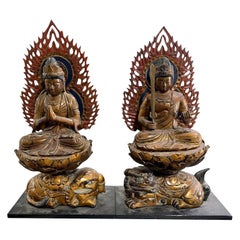
Japanese Antique Pair Buddhist Monju Fugen Bosatsu Nyorai Temple Shrine Buddhas
Located in Studio City, CA
Truly stunning pair of hand-carved wood Japanese buddha statues / sculptures that sit serenely atop their lotus petal thrones. The intricately c...
Category
Early 20th Century Japanese Meiji Sculptures and Carvings
Materials
Wood, Giltwood, Lacquer, Paint
$7,995 / set
H 26 in W 28.5 in D 7.5 in
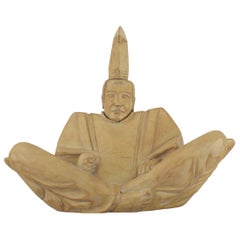
Japanese Wooden Shinto Priest
Located in Queens, NY
Asian Japanese Mid-Century Modern bleached wood carved religious figure of a Shinto Priest seated in Lotus position with legs crossed.
Category
Mid-20th Century Unknown Figurative Sculptures
Materials
Wood
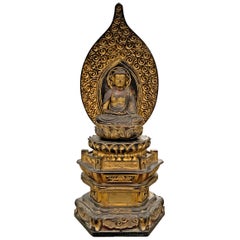
Edo Period Japanese Bodhisattva Shrine
Located in Chicago, IL
An incredible Edo Period Japanese gilt and lacquered carved wood shrine depicting a Bodhisattva with piercing glass eyes, a contemplative expression, and h...
Category
Antique Early 1800s Japanese Japonisme Sculptures and Carvings
Materials
Giltwood, Lacquer, Wood
Japanese Zushi Traveling Shrine of Bishamonten, c. 1800
Located in Chicago, IL
This gorgeous Japanese red lacquer traveling shrine (zushi) protects a miniature statue of Bishamonten, the Buddhist God of Warfare here depicted as an armor-clad warrior. A fearsome protector, he is thought to defend sacred places, punish evil-doers, expel demons and bestow wealth. In this example, Bishamonten stands atop a crouching demon, dressed in finely painted armor...
Category
Antique Mid-19th Century Japanese Edo Figurative Sculptures
Materials
Wood

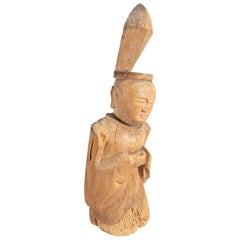
Early Shinto Carving of Figure Referred to as Father Japan
Located in Hudson, NY
Shinto carving of figure referred to as Father Japan. Heian period (794 to 1185) sculpture made of hinoki wood in single piece construction called ichiboku...
Category
Antique 15th Century and Earlier Japanese Sculptures and Carvings
Materials
Wood
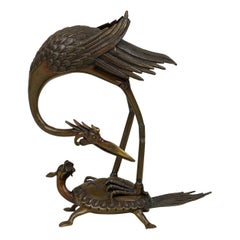
Japanese Bronze Buddhist Turtle and Crane Figurine
Located in Queens, NY
Japanese bronze (19th Century) figure of a mythological turtle having a crane perched on the back
Category
Antique 19th Century Japanese Anglo-Japanese Figurative Sculptures
Materials
Bronze
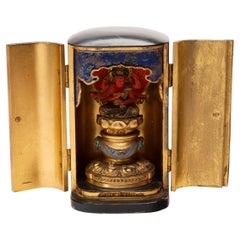
Japanese Zushi Traveling Shrine of Aizen Myō-ō, c. 1850
Located in Chicago, IL
A simple exterior of black lacquer belies the splendor within this late 19th-century Japanese traveling shrine (zushi). The hinged doors open to reveal a lustrous gold interior and a...
Category
Antique Mid-19th Century Japanese Edo Figurative Sculptures
Materials
Wood
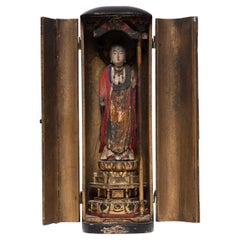
Japanese Zushi Traveling Shrine of Jizō Bosatsu, c. 1850
Located in Chicago, IL
The simple exterior of black lacquer encasing this 19th-century Japanese traveling shrine (zushi) belies the splendor within. The hinged doors open to reveal a lustrous gold interior...
Category
Antique Mid-19th Century Japanese Edo Figurative Sculptures
Materials
Wood
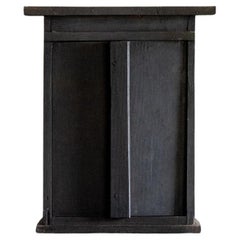
Japanese Antique Buddhist Shrine Box "Zushi", Edo Period
1603-1868
Located in Hitachiomiya-shi, 08
This antique Buddhist shrine box was crafted in the Edo Period (1603-1868).
Known in Japan as a “Zushi,” it served as a small sanctuary to enshrine Buddhist figures, scriptures, or ...
Category
Antique Mid-17th Century Japanese Edo Decorative Boxes
Materials
Cedar
$680
H 10.79 in W 9.22 in D 4.18 in
Japanese Antique Wooden Buddhist Figure, Edo Period
1603-1868
Located in Hitachiomiya-shi, 08
This antique wooden Buddhist figure was crafted in the Edo Period (1603–1868).
Although the specific identity of the deity it represents is unknown, the figure has a gentle presence...
Category
Antique Mid-17th Century Japanese Edo Figurative Sculptures
Materials
Wood
More From This Seller
View AllPair of Patinated Gilt Bronze Buddhist Apostles
Located in Chicago, IL
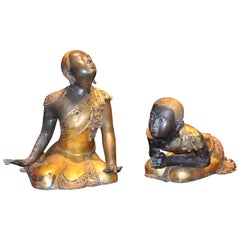
These marvelously fluid and artistic figures were cast from bronze in the style of Northern Thailand and Burma. According to Buddhist tradition, the Buddha had two first Chief Disciples, Sāriputta and Moggallāna. They were wealthy young men seeking after higher knowledge and enlightenment and always depicted in elegant robes and often with unshaven heads. Depictions of these greatly -revered apostles are often found along side Buddha statues and holy angels...
Category
21st Century and Contemporary Thai Figurative Sculptures
Materials
Bronze
$9,800 Sale Price / set
69% Off
A Pair of Linden Wood Austrian Angels
Located in Chicago, IL
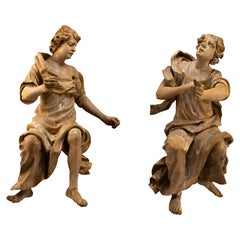
Exquisitely carved in linden wood, this pair of Austrian Baroque angels epitomizes the dynamic movement and dramatic expression characteristic of the period. Each figure is rendered ...
Category
Antique Early 19th Century Austrian Figurative Sculptures
Materials
Wood
$45,000 / set
Neolithic Jar on Stand
Located in Chicago, IL
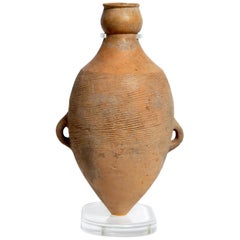
This Neolithic jar originates from China 3500 BC and these funerary jars were placed in tombs and intended for use in the afterlife.
Category
Antique 15th Century and Earlier Chinese Jars
Materials
Terracotta
$3,200
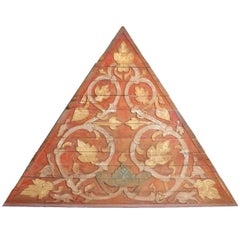
Teakwood Architectural Temple Pediment
Located in Chicago, IL
This giant architectural element once graced the pediment of a Northern Thai temple. It is from Chiang, Mai, Thailand and entirely made from Teakwood, which is naturally resistant ...
Category
Antique Late 19th Century Thai Architectural Elements
Materials
Teak
$3,750 Sale Price
25% Off
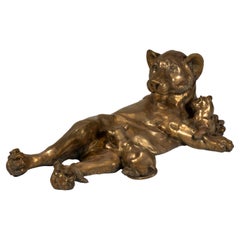
A Brass Sculpture of Lioness with Lion Cubs
Located in Chicago, IL
This vintage brass sculpture of a lioness and her cubs, is from Mumbai, India, and was cast in the early 1960's. . A Lion is depicted in various ancient Indian temples and monuments, symbolizing strength and majesty. Lion statues are commonly found at the entrances of temples as guardians. In this case, judging by its size, it was likely from a wealthy family. The Indian lion...
Category
Late 20th Century Indian Animal Sculptures
Materials
Brass
$6,800 Sale Price
30% Off
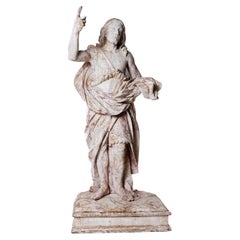
Rare 18th C Wooden Statue of St. John the Baptist
Located in Chicago, IL
This exceptionally life-like antique sculpture is carved from linden wood and once decorated a French church or cathedral. The figure stands authoritatively, with right arm raised and index finger extended toward heaven. It probably stood on a base in a side chapel.
According to Christian iconography of the period, this gesture signifies that salvation comes only through baptism. The figure wears a girdle of animal fir, probably from a bear, making symbolic reference to St. John the Baptist's life in the wilderness of Judea, between Jerusalem and the Dead Sea. The elegantly carved robe is a baroque element that adds a sense of motion and energy to the artwork. Originally, the sculpture was polychromed, but the original pigments have weathered away and been replaced with whitewash. Repairs, losses, and insect damage are minor and expected due to great age. many vintage and antique religious sculptures...
Category
Antique 18th Century French Figurative Sculptures
Materials
Wood
$16,500 Sale Price
25% Off
Still Thinking About These?
All Recently ViewedMore Ways To Browse
Buddhist Shrine
Japanese Buddhist Sculpture
Antique Bi Fold Doors
Japanese Shinto Shrine
Pre Columbian
Marble Statue Antique
Glass And Bronze Sculpture French
Bronze Relief
British Arts And Crafts Furniture
Bronze Cherub
Silver Medals
Bronze Measure
Ancient Stones
Mexican Carved Furniture
20th Century Terracotta Sculpture
Black Bust
19th Century French Bronze Bust
Mid Century Bronze 1960s Sculpture