Japonisme Mobiles and Kinetic Sculptures
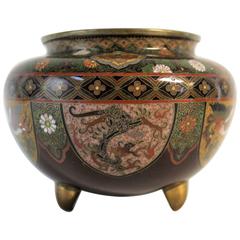
JAPONISME STYLE

In the late 19th and early 20th century, France developed an enduring passion for Japanese aesthetics and craftsmanship. Not only did this interpretation of Japanese culture — which became known as Japonisme — infuse fresh energy into French art and design, but it also radically transformed how Europeans, and subsequently the world, would come to understand visual culture. 

Until 1853, Japan had been closely guarded against foreign visitors for over two centuries. However, American Commodore Matthew C. Perry sailed into Japan that year and initiated the first of its treaties with the United States and Europe, thereby opening its borders and giving the West its first-ever look at Japanese design. 

For the next few decades, taken with Japonisme, sophisticated collectors in Paris, New York and elsewhere gorged themselves on lacquered screens, celadon ceramics and netsuke ornaments, along with artworks depicting various aspects of Japanese life. The East Asian country’s influence on Europe, particularly France, contributed to one of the most creatively prosperous periods in history, leaving an imprint on the Impressionist, Art Nouveau and Art Deco movements, and inspiring artists like Edgar Degas, Mary Cassatt, Vincent van Gogh as well as luxury houses such as Louis Vuitton and Hermès. Japonisme emerged at the time when the ornate Renaissance Revival style was the most prominent mode of decorating in Europe, and Japanese aesthetics seemed strikingly modern and elegant in comparison. 

In addition to everyday practical objects from Japan, such as vases, tableware and decorative boxes, Japanese art, especially Japanese woodblock prints by masters of the ukiyo-e school, caught the eye of many artists — particularly those in the Art Nouveau poster community in 1880s Paris. The luscious organic colors associated with traditional Japanese design, motifs like cherry blossoms and carp and the vivid patterns found in woodblock prints, silks and more were adopted and appropriated by painters as well as ceramicists and those working in other fields of the decorative arts. Today, demand for Japanese lacquerware — furniture, trays, writing boxes, screens, incense burners — from the Edo period (1615–1868) and the late 19th century continues to be very strong among collectors.

Find a collection of antique Japonisme furniture and decorative objects on 1stDibs.

to
2
2
2
115
115
17
10
6
3
2
2
2
1
1
1
1
1
2
2
2
2
2
2
Height
to
Width
to
2
2
2
2
Style: Japonisme
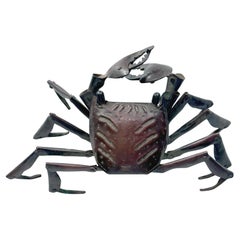
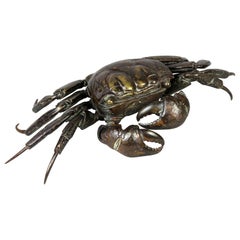
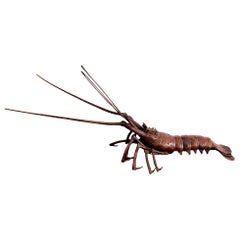
Small Japanese Articulate Crab Jizai Okimono Meiji Period Signed
Located in Atlanta, GA
A small copper crab with articulated legs made by Myochin Hiroyoshi in the late Meiji Period circa 1890-1900s. One of the pair (the other one is listed separately LU945037876072, but...
Category

Early 20th Century Japanese Japonisme Mobiles and Kinetic Sculptures

Materials

Copper

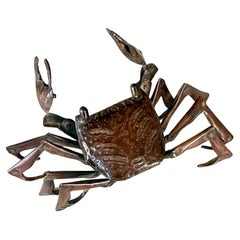
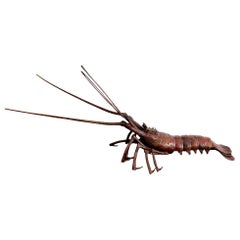
Small Japanese Articulate Crab Jizai Okimono Meiji Period Signed
Located in Atlanta, GA
A small copper crab with articulated legs made by Myochin Hiroyoshi in the late Meiji Period circa 1890-1900s. One of the pair (the other one is listed separately LU945044034102, bu...
Category

Early 20th Century Japanese Japonisme Mobiles and Kinetic Sculptures

Materials

Copper

Related Items
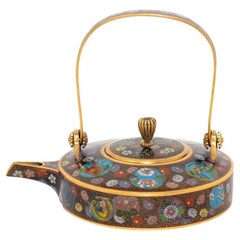
Japanese Meiji Period Cloisonne Enamel Sake Pot
Located in Newark, England
Fine Japanese Meiji period cloisonne enamel Sake pot. The Sake pot of rounded form with with clean edges profusely decorated with blossoming flowers throughout upon a black ground ba...
Category

Late 19th Century Japanese Antique Japonisme Mobiles and Kinetic Sculptures

Materials

Metal, Enamel

Japanese Meiji Period Cloisonne Enamel Sake Pot
$4,431
H 5.5 in W 6.3 in D 4.7 in
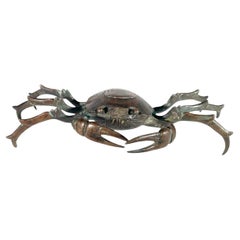
Large Japanese Meiji Period Bronze Crab (B) Okimono
Located in Chapel Hill, NC
Large Japanese naturalistically modeled bronze okimono in the form of a crab. One of 5 designated by the (B) in the title.
Category

Late 19th Century Japanese Antique Japonisme Mobiles and Kinetic Sculptures

Materials

Bronze

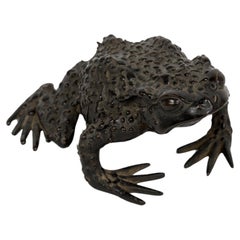
Japanese bronze okimono toad (sculpture)
Located in PARIS, FR
Okimono bronze sculpture of a large toad in a crouching position, possibly about to jump. The toad and the frog, referred to by the same term in Japanese (kaeru), are associated with...
Category

Mid-19th Century Japanese Antique Japonisme Mobiles and Kinetic Sculptures

Materials

Bronze

Japanese bronze okimono toad (sculpture)
$3,593
H 2.68 in W 4.53 in D 4.93 in
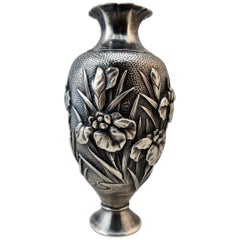
Japanese Silver Repousse Iris Vase Meiji Period
By Samurai Shokai
Located in Sarasota, FL
Japanese silver repousse vase finely decorated with blown out iris flowers. It is of the Meiji period, circa 1890s. The vase is 5 1/4" tall and weighs 4....
Category

19th Century Japanese Antique Japonisme Mobiles and Kinetic Sculptures

Materials

Silver

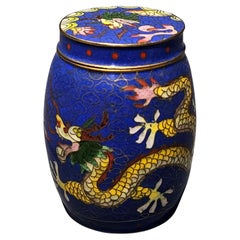
Antique Japanese Lidded Cloisonné Canister, Meiji Period
Located in Norton, MA
Quality work, Antique Japanese Lidded Cloisonné Canister, Meiji Period, with the theme of dragons. Dimensions; 2.125" Dia x 2.625" H
Category

19th Century Chinese Antique Japonisme Mobiles and Kinetic Sculptures

Materials

Bronze, Copper

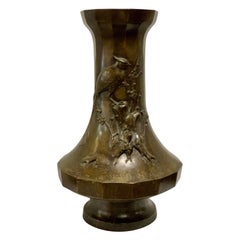
Japanese Meiji Period Large Bronze Vessel
Located in Palm Springs, CA
A beautiful Japanese Bronze vase from the Meiji period we believe. Early 20th Century. Nice scale and form. It is slightly over 24 inches tall. Crisp casting and nice detail. The b...
Category

Early 20th Century Japanese Japonisme Mobiles and Kinetic Sculptures

Materials

Bronze

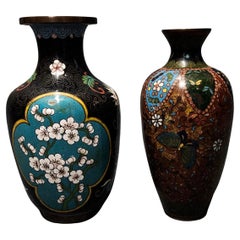
Antique 2 Japanese Cloisonné Meiji Period Vases, Signed
Located in Norton, MA
Quality work, Antique 2 Japanese Cloisonné Meiji Period Vases, Signed opm one vase. Dimensions; Larger: 4" Dia x 4.25" H with imperfect shape but no enamel lost Smaller: 3" Dia x 6" H
Category

19th Century Chinese Antique Japonisme Mobiles and Kinetic Sculptures

Materials

Bronze, Copper

Japanese Meiji Period Cloisonne Bowl
Located in Hamilton, Ontario
Japanese Meiji period cloisonne bowl.
Category

19th Century Japanese Antique Japonisme Mobiles and Kinetic Sculptures

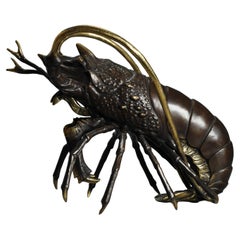
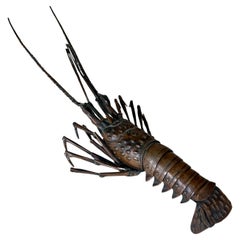
Large 30 cm Showa Period Bronze Japanese Lobster Okimono Statue Japan
Located in Amsterdam, Noord Holland
BRONZE top level Japanese statue. Lobster Condition Perfect. Size: 30x18cm Period Showa Period
Category

Early 20th Century Japanese Japonisme Mobiles and Kinetic Sculptures

Materials

Porcelain

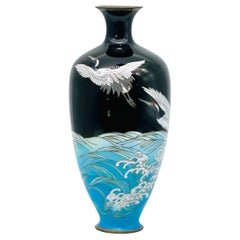
A magnificent Japanese cloisonne enamel Vase. Signed. Meiji period
Located in London, GB
A magnificent Japanese cloisonne enamel Vase. Signed. Meiji period of tapering form with everted neck, decorated in various coloured enamels with two cranes in flight above the cra...
Category

19th Century Japanese Antique Japonisme Mobiles and Kinetic Sculptures

Materials

Enamel

A magnificent Japanese cloisonne enamel Vase. Signed. Meiji period
$1,451 Sale Price
20% Off
H 9.85 in W 3.94 in D 9.85 in
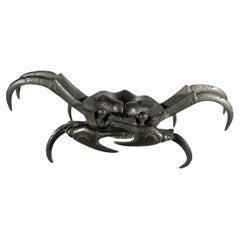
Large Japanese Meiji Period Bronze Crab (C) Okimono
Located in Chapel Hill, NC
Realistically modeled Japanese okimono of a crab raised on its toes. I of 5 designated by the (C) in the title.
Category

Late 19th Century Japanese Antique Japonisme Mobiles and Kinetic Sculptures

Materials

Bronze

Japanese Meiji Articulated Bronze Crab
Located in Essex, MA
Darker brown patina with fully articulated body. Purchased in London by previous owner.
Category

1870s Japanese Antique Japonisme Mobiles and Kinetic Sculptures

Materials

Bronze

Japanese Meiji Articulated Bronze Crab
$7,500
H 1.75 in W 8.5 in D 3.5 in
Previously Available Items
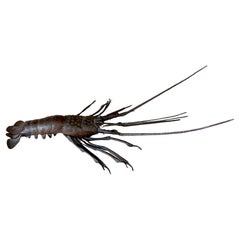
Japanese Articulate Lobster Jizai Okimono Myochin Hiroyoshi Meiji Period
Located in Atlanta, GA
An articulate spiny lobster (Ise-Ebi) as an ornamental display item, known in Japanese as Jizai Okimono, was made by Myochin Hiroyoshi in the late Meiji Period circa 1890-1900s. The ...
Category

Early 20th Century Japanese Japonisme Mobiles and Kinetic Sculptures

Materials

Copper

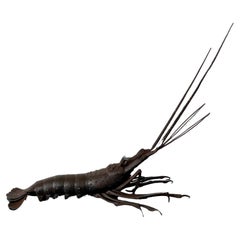
Large Japanese Articulate Iron Lobster Jizai Okimono Signed
By Myochin Muneyuki
Located in Atlanta, GA
A large articulate spiny lobster (Ise-Ebi) as an ornamental display item, known in Japanese as Jizai Okimono, was made by Myochin Muneyuki circa 1940-50s...
Category

Mid-20th Century Japanese Japonisme Mobiles and Kinetic Sculptures

Materials

Iron

Japanese Articulate Lobster Jizai Okimono Meiji Period Signed
Located in Atlanta, GA
An articulate spiny lobster (Ise-Ebi) as an ornamental display item, known in Japanese as Jizai Okimono, was made by Myochin Hiroyoshi in the late Meiji ...
Category

Early 20th Century Japanese Japonisme Mobiles and Kinetic Sculptures

Materials

Copper

Large Japanese Articulate Lobster Okimono Meiji Period Signed
Located in Atlanta, GA
An articulate spiny lobster (Ise-Ebi) as an ornamental display item, known in Japanese as Jizai Okimono, was made by Myochin Hiroyoshi in the late Meiji ...
Category

Early 20th Century Japanese Japonisme Mobiles and Kinetic Sculptures

Materials

Copper

Large Japanese Articulate Lobster Okimono Meiji Period Signed
Located in Atlanta, GA
An articulate spiny lobster (Ise-Ebi) as an ornamental display item, known in Japanese as Jizai Okimono, was made by Myochin Hiroyoshi in the late Meiji ...
Category

Early 20th Century Japanese Japonisme Mobiles and Kinetic Sculptures

Materials

Copper

Japonisme mobiles and kinetic sculptures for sale on 1stDibs.

Find a broad range of unique Japonisme mobiles and kinetic sculptures for sale on 1stDibs. Many of these items were first offered in the Early 20th Century, but contemporary artisans have continued to produce works inspired by this style. If you’re looking to add vintage mobiles and kinetic sculptures created in this style to your space, the works available on 1stDibs include asian art and furniture, decorative objects and other home furnishings, frequently crafted with copper, metal and other materials. If you’re shopping for used Japonisme mobiles and kinetic sculptures made in a specific country, there are Asia, East Asia, and Japan pieces for sale on 1stDibs. While there are many designers and brands associated with original mobiles and kinetic sculptures, popular names associated with this style include and Myochin Hiroyoshi. It’s true that these talented designers have at times inspired knockoffs, but our experienced specialists have partnered with only top vetted sellers to offer authentic pieces that come with a buyer protection guarantee. Prices for mobiles and kinetic sculptures differ depending upon multiple factors, including designer, materials, construction methods, condition and provenance. On 1stDibs, the price for these items starts at $3,000 and tops out at $3,000 while the average work can sell for $3,000.

Still Thinking About These?

All Recently Viewed