Items Similar to English 14th Century Terracotta Medieval Encaustic Tile

Want more images or videos?
Request additional images or videos from the seller
1 of 5
English 14th Century Terracotta Medieval Encaustic Tile
$1,747.29
£1,275
€1,499.26
CA$2,423.32
A$2,608.92
CHF 1,397.13
MX$31,436.58
NOK 17,627.89
SEK 16,132.37
DKK 11,203.11
About the Item
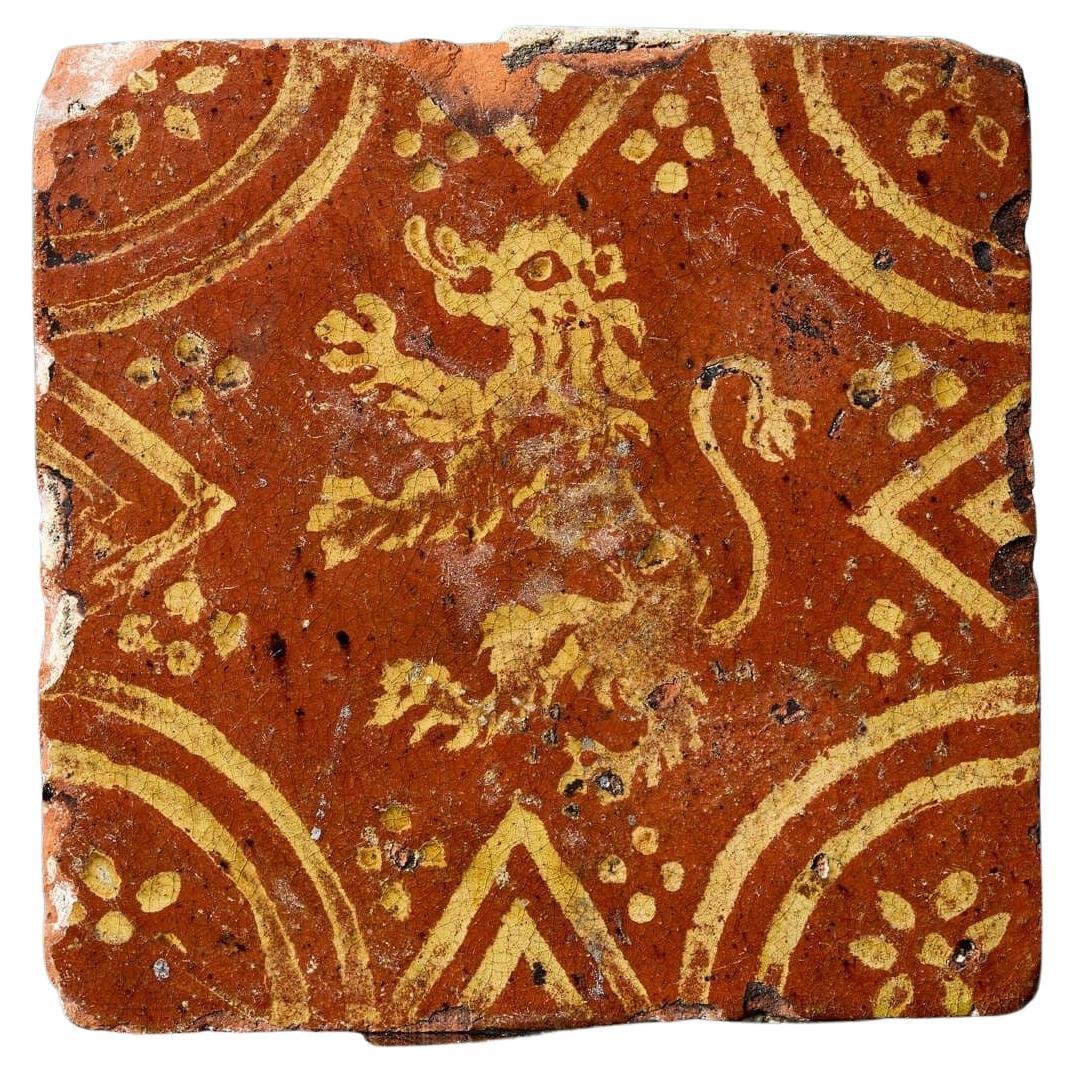
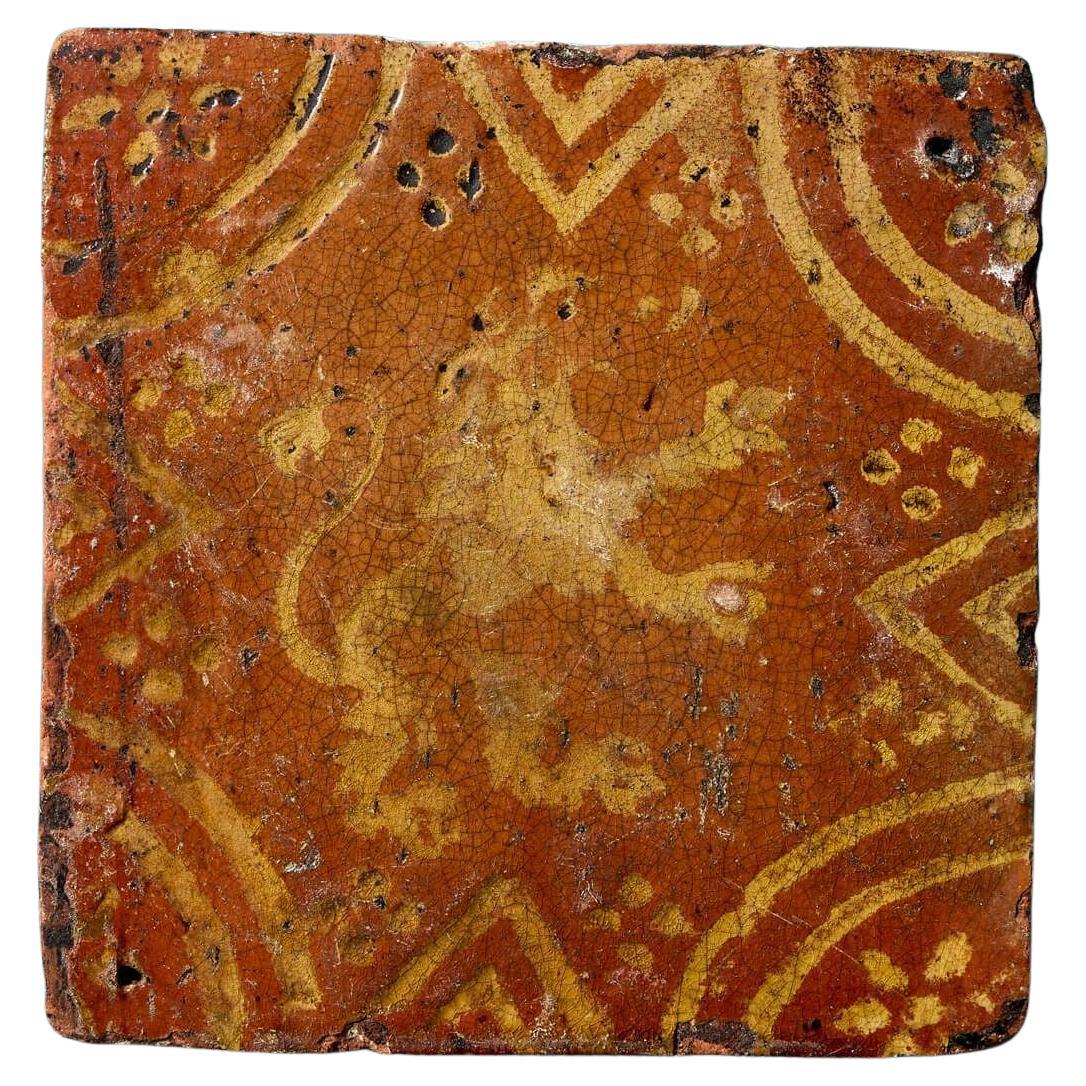
An English terracotta Medieval encaustic tile of exceptional rarity.
This tile would have been found in a monastery, church or abbey around the 14th to 15th century.
With a distinct depiction of a flower, this would have made up one quarter of a larger design.
- Dimensions:Height: 4.45 in (11.3 cm)Width: 4.45 in (11.3 cm)Depth: 0.71 in (1.8 cm)
- Style:Medieval (Of the Period)
- Materials and Techniques:
- Place of Origin:
- Period:
- Date of Manufacture:1350
- Condition:Good structural condition. Extensive surface wear with missing corner.
- Seller Location:Wormelow, GB
- Reference Number:Seller: 371941stDibs: LU2096348237652
About the Seller
4.9
Platinum Seller
Premium sellers with a 4.7+ rating and 24-hour response times
Established in 2006
1stDibs seller since 2016
785 sales on 1stDibs
Typical response time: 5 hours
- ShippingRetrieving quote...Shipping from: Wormelow, United Kingdom
- Return Policy
More From This Seller
View AllEnglish 14th Century Terracotta Medieval Encaustic Floral Tile
Located in Wormelow, Herefordshire
An English terracotta Medieval encaustic tile of exceptional rarity.
This tile would have been found in a monastery, church or abbey around the 14th to 15th century.
With a distinc...
Category
Antique 15th Century and Earlier English Medieval Flooring
Materials
Terracotta
16th Century Late Medieval Heraldic Encaustic Tile
Located in Wormelow, Herefordshire
A 445-year-old late medieval 16th century heraldic encaustic tile of Flemish origin (unmarked). Made from terracotta and glazed, this 6-inch antique tile is an excellent collector’s ...
Category
Antique 16th Century Dutch Medieval Mounted Objects
Materials
Terracotta
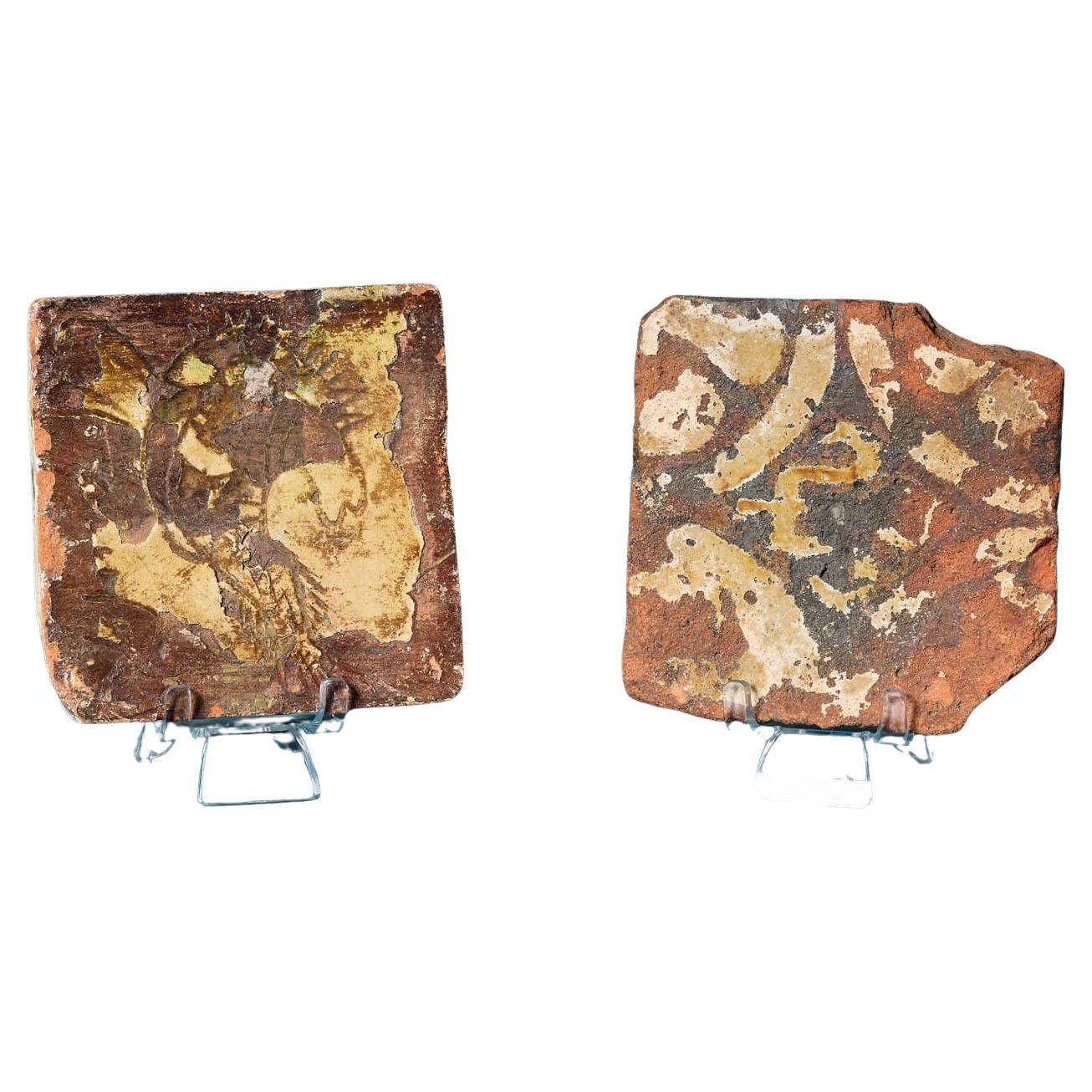
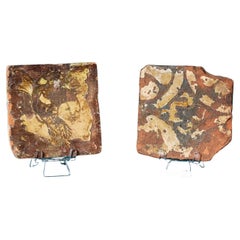
Pair of Antique English Encaustic Medieval Tiles c.1400
Located in Wormelow, Herefordshire
A pair of antique English encaustic medieval tiles, sourced from a private collection, Oxfordshire, dating to the 14-15th century.
The set com...
Category
Antique 15th Century and Earlier English Medieval Mounted Objects
Materials
Clay
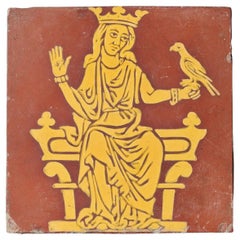
Minton
Co Encaustic Neo-Medieval English Tile Depicting a Queen
By Minton
Located in Wormelow, Herefordshire
An antique English neo-medieval encaustic tile depicting a Queen, possibly Queen Eleanor, with a bird, attributed to Minton
Co.
This tile was commissioned in 1840-42 by L. N. ...
Category
Antique Mid-19th Century English Medieval Mounted Objects
Materials
Clay
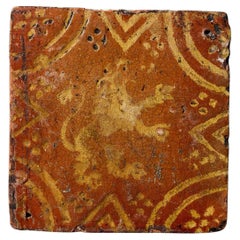
16th Century Late Medieval Encaustic Tile with Rampant Lion
Located in Wormelow, Herefordshire
A 445-year-old late medieval 16th century encaustic tile of Flemish origin (unmarked), detailed with a rampant lion. Made from terracotta and glazed, this 6-inch antique tile is an e...
Category
Antique 16th Century Dutch Medieval Mounted Objects
Materials
Terracotta
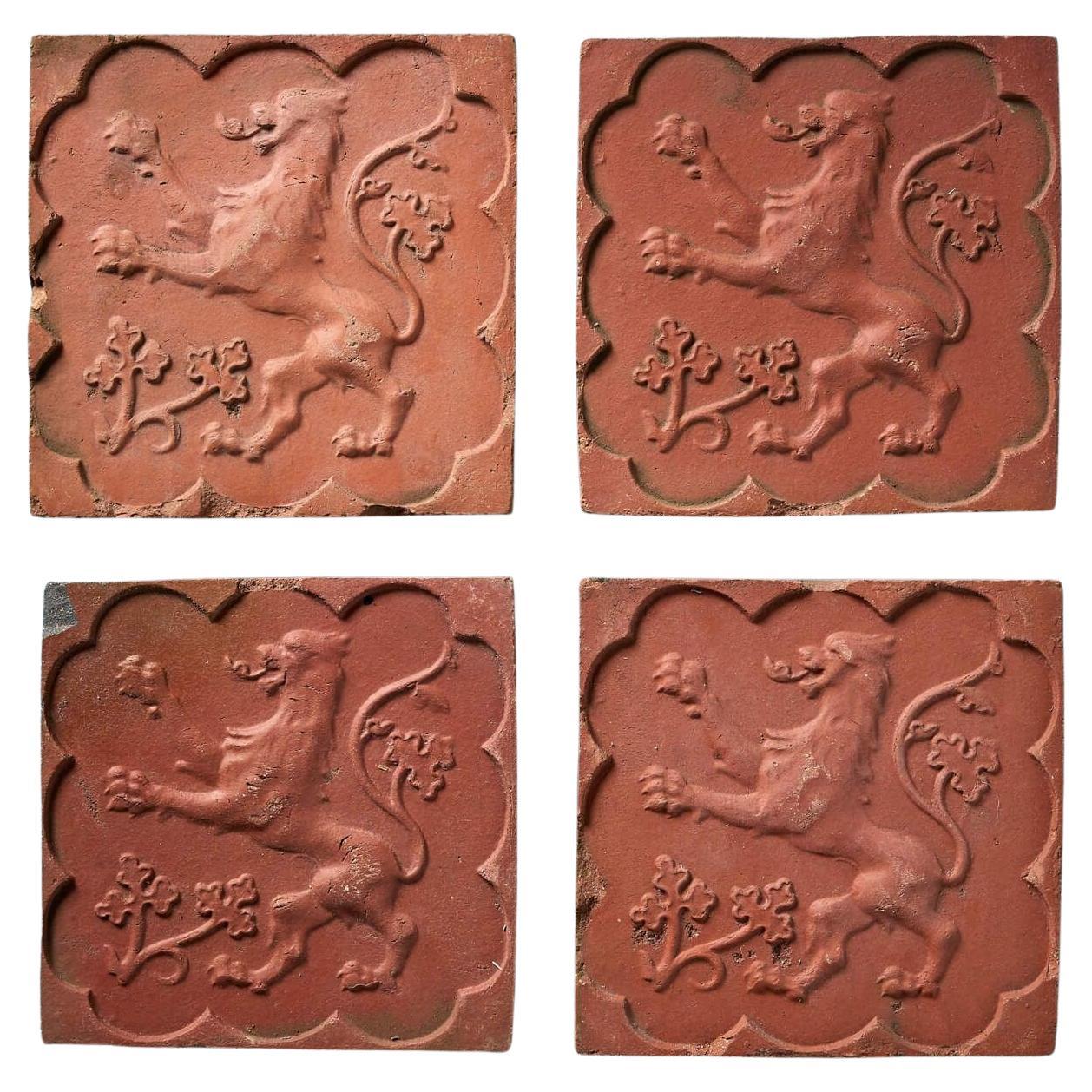
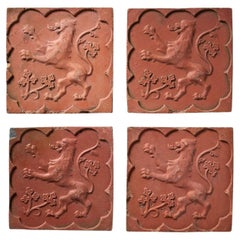
Set of 4 Medieval Style Terracotta Rampant Lion Tiles
Located in Wormelow, Herefordshire
A stunning set of 4 identical medieval style terracotta tiles decorated with raised rampant lions and foliage within scalloped borders, dating to circa 1920. These antique tiles are ...
Category
Early 20th Century Belgian Medieval Mounted Objects
Materials
Terracotta
You May Also Like
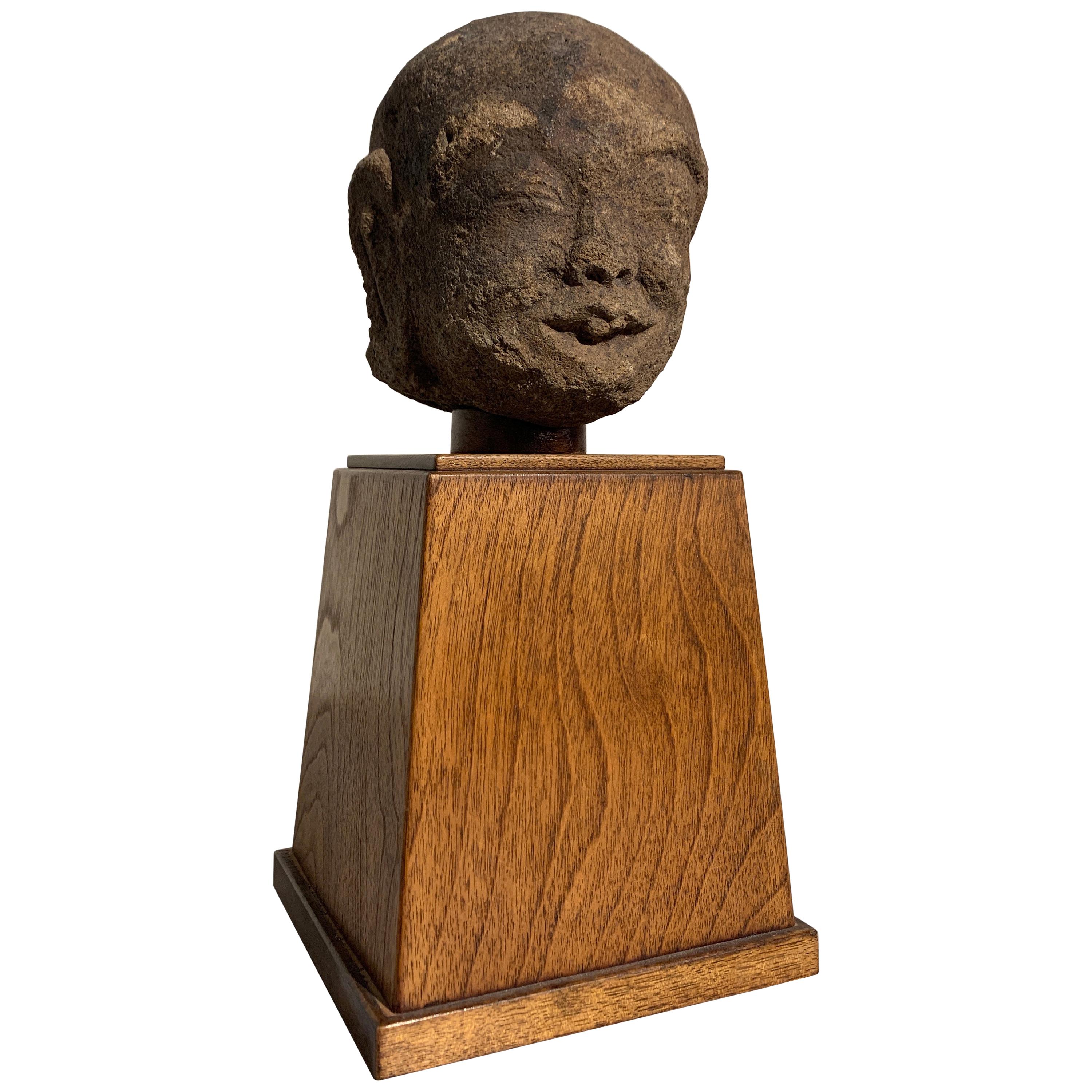
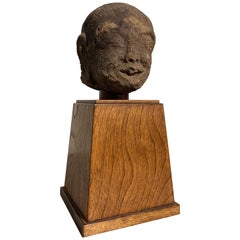
Indonesian Majapahit Terracotta Head of a Male, circa 14th Century
Located in Austin, TX
A charming head of a young male, Majapahit Empire, region of Trowulan, Eastern Java, Indonesia, 13th-14th century.
The head well sculpted as a smiling, youthful male with buck teet...
Category
Antique 15th Century and Earlier Javanese Tribal Sculptures and Carvings
Materials
Terracotta
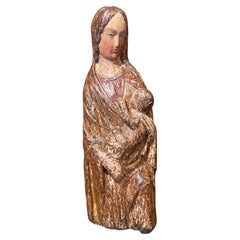
Rare Nursing Virgin from the 14th century
Located in Saint-Ouen, FR
RARE NURSING VIRGIN FROM THE 14TH CENTURY
ORIGIN : ITALY
PERIOD : 14TH CENTURY
Height : 60 cm
Width : 20,5 cm
Depth : 11 cm
Wood
Seated and in a very maternal position, Mary is wearing a red dress with a long, flowing cloak covering her narrow shoulders and falling down her body, with one side hugging her bust.
Her hair, half hidden under a veil, frames an oval face featuring a high forehead, a long and thin nose, a small mouth with thin lips and half-closed eyes.
Mary is carrying her son, the infant Jesus, who is wrapped in a cloak, in her lap. Jesus is being nursed by his mother, held by her left hand.
This remarkable depiction, imbued with such gentleness, is directly inspired by the iconographic theme of the Virgin and Child in Majesty. It breaks with the hieratic, impassive style of the models from the 12th and 13th centuries, adding a touch of realism. From Virgin Queen, Mary became Virgin Mother.
Linked to the development of the Marian cult, this type of representation, sometimes known as Virgo lactans, Virgin of Milk or Nurturing Virgin, remains extremely rare. This image of the Virgin Mary and the Infant Jesus is an extremely delicate representation of the intimate bond formed...
Category
Antique 15th Century and Earlier Italian Gothic Figurative Sculptures
Materials
Wood
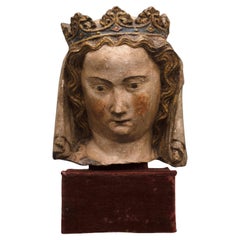
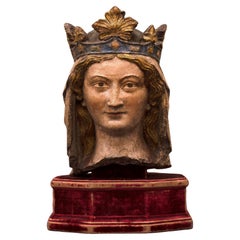
Gothic crowned Head - Île de France, 14th century
Located in Bruxelles, BE
Head of a crowned Virgin
Île-de-France, first half of 14th century.
H26 x 14 x 14 cm
Provenance :
- Private Collection, Paris France (1960)
- Private Collection Tuscany, Italy (19...
Category
Antique 15th Century and Earlier French Gothic Figurative Sculptures
Materials
Stone
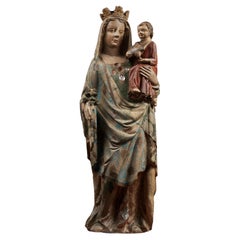
Important 14th Century Polychrome Limestone Virgin from Lorraine
Located in Saint-Ouen, FR
Provenance :
- Kunsthaus Heinrich Hahn, Frankfurt am Main, sale 16, June 17, 1930, lot 16.
- Sotheby's, Amsterdam, Feb. 26, 2006, lot 201.
HISTORIC
Located between Moselle valley and Meuse valley, framed by the Vosges Mountains on the south side and the duchy of Luxembourg on the north side, the duchy of Lorraine is the result of several partitions. It starts with the 9th century when the Carolingian empire is divided, with Lothar 1st inheriting Lotharingia. In 959 this territory was in turn divided in two; Lower and Upper Lotharingia, the latter being the forebear of the duchy of Lorraine. This duchy was under the rule of the Holy Roman Germanic Empire until 1736 when it was absorbed by the kingdom of France.
All along its history the duchy of Lorraine has found itself in the midst of many conflicts. Alliances and feuds marking European history were always particularly sensible in Lorraine where instability was frequent. Because of its geographic position the duchy of Lorraine was also an artistic crossroad.
Hence the duchy of Lorraine becomes from the 13th century onwards an important artistic centre where a particular type of Virgin and Child appears. According to professor J. A. Schmoll the characteristics of Lorraine sculpture burgeon around 1280-1300 in the Aube region. It presents “vigorous volumes, restrained movements, rare but solemn gestures and a strong interiorised and stern expression”. Those Virgins look similar with a wide forehead, a shield- or oval-shaped face, large neck, small lips and a cleft chin.
This model is particularly in favour during the 13th century because of the revival for Marial worship and for the theme of the Virgin and Child. It bears witness to a new religious sensibility with a more intimate vision of religious practice.
DESCRIPTION
The important 14th century Virgin we present to you is one of the most beautiful examples of sculptural art from Eastern France, with her fascinating distant gaze.
Her contrapposto posture is induced by the weight of the child she carries high on her left side. The child has a chubby face framed by blond hair with well defined curls and he wears a long red V-collared tunic from which emerge his feet. The fabric is animated by long folds. The position of the right foot turned to the back is a detail we can notice on several Virgins from Lorraine. He holds a bird that seems to be pecking his thumb.
“The bird /held by the child in his hands/ has been read as a reference to an episode from Christ’s childhood when he has moulded sparrows with clay before giving them life. It appears in the apocryphal gospel of Pseudo-Matthew (ch. 27) and later in the Quran (III, 43, v. 110). However the iconography seems to be more influenced by the concept of Redemption or of Eucharist, the bird symbolising the soul of the Christian about to be redeemed or revitalised.”
Mary wears a long dress with two rock crystal cabochons remaining from the original five. She is covered by a red cloak enriched with old-gold motifs draped as an apron falling in long pleats along her left hip. The relief treatment and the volume of the cloak developing a network of concentric pleats contrast with the the flat pleating of her dress. They nevertheless suggest the curve of her bent right leg.
She wears a floret crown securing a short thin veil carved in very low relief. From it emerges her blond curled hair characteristic of the 13th century. The large face with almond-shaped eyes, straight nose, small lips and cleft chin casts its gaze afar in a fashion typical of 13th century Virgins.
In her right hand she holds a lily flower. In a very refined manner the artist has carved a band on her right ring-finger.
In the back, carefully sculpted, spreads the minutely detailed short veil.
COMPARATIVE STUDIES
This sculpture of great quality presents obvious similarities with Virgins from Lorraine, designated by William Forsythe...
Category
Antique 15th Century and Earlier French Gothic Figurative Sculptures
Materials
Limestone
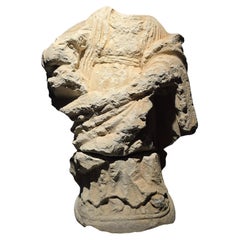
French Gothic Stone Sculpture – 14th Century
Located in Madrid, ES
Possibly a Noblewoman
Elegant stone sculpture from 14th-century Gothic France, possibly representing a noble lady. The bust features finely carved details in the attire, with attent...
Category
Antique 15th Century and Earlier Figurative Sculptures
Materials
Limestone
Head of a crowned Virgin - Lorraine, first half of 14th century
Located in Bruxelles, BE
Head of a crowned Virgin
Lorraine, first half of 14th century.
H26 x 14 x 14 cm
Provenance :
- Private Collection, Paris France (1960)
Private Collection Tuscany, Italy (1980)
Ex...
Category
Antique 15th Century and Earlier French Gothic Figurative Sculptures
Materials
Limestone