Want more images or videos?
Request additional images or videos from the seller
1 of 5
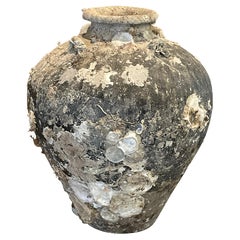
Two Gold Painted Shipwrecked Plates, China, 16th Century
$2,400List Priceper set
About the Item
- Dimensions:Height: 9 in (22.86 cm)Diameter: 7 in (17.78 cm)
- Sold As:Set of 2
- Materials and Techniques:
- Place of Origin:
- Period:
- Date of Manufacture:Unknown
- Condition:Wear consistent with age and use.
- Seller Location:New York, NY
- Reference Number:Seller: S69831stDibs: LU811243786862
About the Seller
5.0
Gold Seller
Premium sellers maintaining a 4.3+ rating and 24-hour response times
Established in 1997
1stDibs seller since 2005
483 sales on 1stDibs
Typical response time: 2 hours
Authenticity Guarantee
In the unlikely event there’s an issue with an item’s authenticity, contact us within 1 year for a full refund. DetailsMoney-Back Guarantee
If your item is not as described, is damaged in transit, or does not arrive, contact us within 7 days for a full refund. Details24-Hour Cancellation
You have a 24-hour grace period in which to reconsider your purchase, with no questions asked.Vetted Professional Sellers
Our world-class sellers must adhere to strict standards for service and quality, maintaining the integrity of our listings.Price-Match Guarantee
If you find that a seller listed the same item for a lower price elsewhere, we’ll match it.Trusted Global Delivery
Our best-in-class carrier network provides specialized shipping options worldwide, including custom delivery.You May Also Like
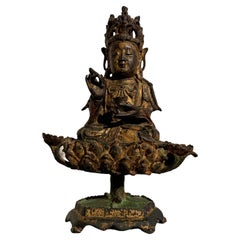
Chinese Ming Dynasty Bronze Nanhai Guanyin, 16th/17th Century, China
Located in Austin, TX
A decidingly charming Chinese polychromed and gilt cast bronze figure of Nanhai Guanyin, Guanyin of the South Sea, Ming Dynasty, 16th/17th century, China.
Guanyin, the bodhisattva of compassion, is portrayed here as a beatific figure seated upon a raised lotus pedestal over waves. Guanyin is dressed in heavy robes, and wears an elaborate headdress. The small figure of Amitabha Buddha in the headdress positively identifies this figure as Guanyin.
Guanyin rests one hand in his lap, holding a cup of pure water said to be able to alleviate all suffering. His other hand is raised, holding a willow branch which is used to sprinkle the healing waters.
The two lotus blossoms to either side of Guanyin would originally have supported figures of the acolytes...
Category
Antique Early 1600s Chinese Ming Sculptures and Carvings
Materials
Bronze
$9,800
H 13.25 in W 8.25 in D 5 in
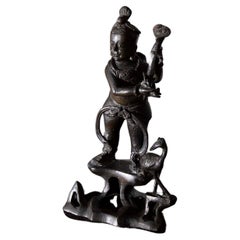
Taoist bronze figure China, Ming dynasty, 16th century
Located in Milano, IT
In the heart of ancient China, within the resplendent Ming dynasty, a masterpiece was cast in bronze, a testament to a culture steeped in mysticism and spirituality. This Taoist bron...
Category
Antique 16th Century Chinese Ming Figurative Sculptures
Materials
Bronze
$7,808
Free Shipping
H 12.01 in W 6.89 in D 3.15 in
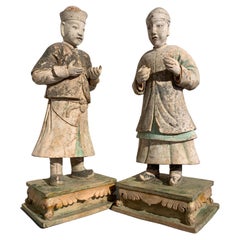
Pair Large Chinese Ming Dynasty Glazed and Painted Pottery Figures, 16th Century
Located in Austin, TX
A striking pair of large Chinese glazed and painted pottery figures, Ming Dynasty (1368 to 1644), circa 16th century, China.
The impressive and realistically modeled figures each portrayed standing upright upon a sancai (three color) glazed pedestal of kang table form.
The man is dressed in a short black surcoat over a long robe and pants, a smart cap upon his head. His face is warm and welcoming, with wide eyes and a slight smile on his lips. He holds his hands out in front of him, palms up, almost as if shrugging, though presumably originally holding an object or offering, now lost.
The woman of slightly smaller stature, and dressed in a longer surcoat over a long robe and skirt. She wears a fitted cap upon her head. Her hands also held out in front, grasping long lost objects. Her face is slightly more severe, with a somewhat pinched look, and slight frown upon her lips.
The size of these figures is remarkable, as is the realism and attention to detail, almost as if they were modeled after real people, as opposed to the more common and generic Ming Dynasty pottery...
Category
Antique 16th Century Chinese Ming Sculptures and Carvings
Materials
Pottery
$17,500 / set
H 27.75 in W 11.5 in D 8.5 in
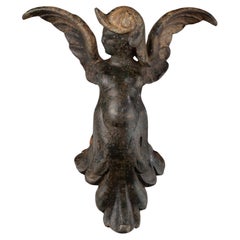
Renaissance Harpy - Italy, 16th century
Located in Bruxelles, BE
Renaissance Harpy
bronze
Italy, 16th century
15 x 12 x 5,5 cm
This expressive bronze figure represents a harpy, a mythological creature with the body of a bird and the head and tor...
Category
Antique 16th Century Italian Renaissance Figurative Sculptures
Materials
Bronze
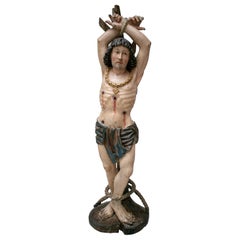
16th Century German Hand Carved Painted Wood St. Sebastian
Located in Marbella, ES
16th century German hand carved painted wood St. Sebastian.
Category
Antique 16th Century German Religious Items
Materials
Wood
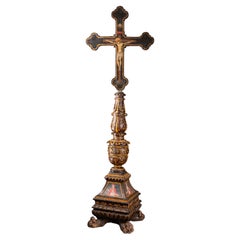
renaissance wooden candelabrum and painted cross - Umbria, 16th century
Located in Bruxelles, BE
Base of a carved wooden candelabrum, polychrome and gilded; cross painted on both sides.
Umbria or Tuscany, 16th century
136 x 43,5 x 30 cm
(The cross and the base of the candelabrum were later assembled)
The base of the candelabrum is intricately carved and adorned with polychrome and gilded finishes. The shafts take on the shape of balusters reminiscent of ancient columns, feature ornate foliage decorations, garlands and winged cherub faces. The feet are crafted in the likeness of lion paws. The base is further embellished with depictions of four saint martyrs, among them Saint Barbara and Saint Catherine of Alexandria. The plasticity of the figures, outlined with strong contour lines, the clear and vibrant colors, are stylistic elements linked to the Umbrian tradition of the sixteenth century.The precisely defined and elegant drawing, along with the clear color palette applied with refined chiaroscuro modulations, became the signature of a style that would leave a lasting mark on the era to come. This is exemplified by a preference for vibrant, multicolored images, accentuated in this case by the use of red and pink in the saint's attire.
A notable addition, introduced later, is a polylobed cross painted on both sides. On one side, the Crucifixion is vividly portrayed:The treatment of the corpus itself is in line with High Medieval practice, emphasizing pathos by showing Jesus dead, his arms sagging from the weight of the body. The upper section displaying a pelican pecks at her breast to feed her young with her own blood; a symbol of the sacrifice of Christ on the cross whose body and blood similarly nourishes the celebrant during Mass.
The lower part depicts Golgotha. On the reverse side, the Resurrection is artistically presented in a Renaissance iconography, reminiscent of the renowned composition painted by Piero della Francesca, now housed in the Civic Museum of Sansepolcro. In terms of composition, with the frontal depiction of Christ holding the banner, this motif became particularly widespread in central Italy, spanning from Tuscany to Umbria throughout the 16th century..
The double-sided construction suggests that it may also have been carried in liturgical processions. In Umbria from the 14th century, the use of portable crosses painted on both sides had become a widespread practice, aimed at satisfying the monastic clientele that had significantly increased following the establishment of new religious communities.
The earliest surviving Tuscan painted crucifix represent Christ as Christus Triumphans, or the “Triumphant Christ” with his head up and eyes open. This form was supplanted in the 13th century with the Christus Patiens, or “Suffering Christ” type who is shown often with his head fallen on his shoulder and his eyes closed, as In our cross. The iconography of the suffering Christ appears to have developed out of a new interest in Christ’s human nature, the development of the feast of Corpus Christi and with increased importance given to the Eucharist. The process of humanizing the figure of Christ reaches its peak with the abandonment of all the previous expressive conventions in favor of more realistic details we can observe in this Crucifix, such as the swollen belly, the arms stretched to the limit of muscle tearing, the body falling heavily forward, the abundant blood on
the wounds, and the cross firmly embedded in the rock of Calvary.
It's worth noting that Renaissance candelabra...
Category
Antique 16th Century Italian Renaissance Figurative Sculptures
Materials
Wood, Giltwood
$24,024
H 53.55 in W 17.13 in D 11.82 in
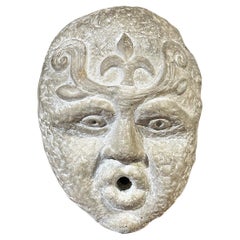
16th CENTURY FOUNTAIN MASK SCULPTURE
Located in Firenze, FI
Unique and precious sculpture in carved white marble, likely depicting Aeolus, the god of the wind. The sculpture originated as a fountain mask, as evidenced by the opening in the mo...
Category
Antique 16th Century Italian Renaissance Figurative Sculptures
Materials
Marble
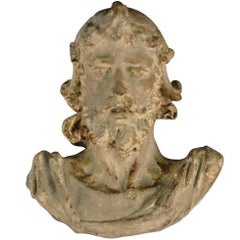
16th Century Head Of A Noble
Located in Round Top, TX
A very striking 16th century statue - head of a nobleman - crafted from Roman concrete - opus caementicium. Roman concrete is durable due to its incorporation of volcanic ash, which...
Category
Antique 16th Century Italian Figurative Sculptures
Materials
Coade Stone
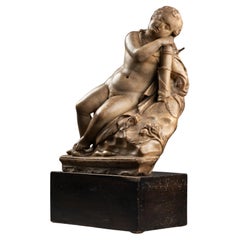
Sleeping Eros - Rome, 16th century
Located in Bruxelles, BE
Sleeping Eros
Rome, 16th century
Carrara marble, on a wooden base
of an ancient collection
31 × 44 x 17 cm
Carved from a fine block of Carrara marble, this sculpture depicts Eros ...
Category
Antique 16th Century Italian Renaissance Figurative Sculptures
Materials
Carrara Marble
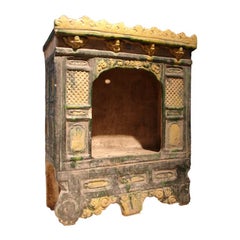
Chinese Ming Dynasty Sancai Glazed Pottery Architectural Model, 16th Century
Located in Austin, TX
An unusually large Chinese Ming Dynasty glazed pottery architectural model of a shrine or cabinet, Ming Dynasty (1368 - 1644), circa 16th century, China.
The shrine model crafted o...
Category
Antique 16th Century Chinese Ming Sculptures
Materials
Pottery
$3,800
H 16 in W 14 in D 4 in
More From This Seller
View All16th Century China Ming Dynasty Porcelain Plate on Stand
Located in New York, NY
16th century China Ming Dynasty hand painted porcelain plate on stand.
Dragon motif.
Two available and sold individually.
S7086 7.5" diameter x 11.5" height
S7087 7" diameter x 13" h...
Category
Antique 16th Century Chinese Mounted Objects
Materials
Porcelain
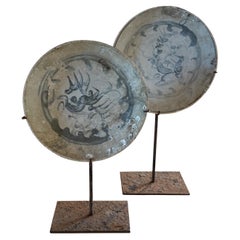
Ming Dynasty Porcelain Plate on Stand, China, 16th Century
Located in New York, NY
16th century China Ming Dynasty hand painted porcelain plate on stand.
Dragon motif.
Two available and sold individually.
S7086 7.5" diameter x 11.5" height
ARRIVING TBD
Category
Antique 16th Century Chinese Mounted Objects
Materials
Porcelain
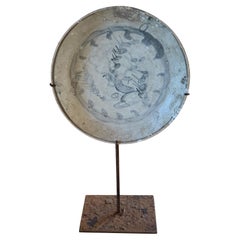
16th Century Sawankhalok Shipwreck Vase, Thailand
Located in New York, NY
16th century Thailand Sawankhalok ceramic vase from the old city of Sawankhalok known for its pottery.
Beautiful and abundant fossil growth from being submerged under water.
Natural ...
Category
Antique 16th Century Thai Vases
Materials
Ceramic
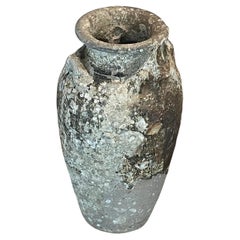
16th Century Large Shipwreck Vessel, Sawankhalok, Thailand
Located in New York, NY
16th century Thailand, Sawankhalok large ceramic vessel from the old city of Sawankhalok known for its pottery.
Beautiful and abundant fossil growth from being submerged under water.
Natural original patina.
Three available and sold individually.
Part of a very large collection of shipwrecked pottery...
Category
Antique 16th Century Thai Vases
Materials
Ceramic
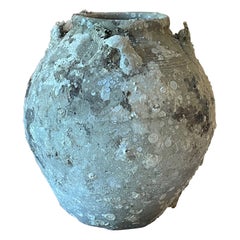
16th Century Large Shipwreck Vessel, Sawankhalok, Thailand
Located in New York, NY
16th century Thailand, Sawankhalok large ceramic vessel from the old city of Sawankhalok known for its pottery.
Beautiful and abundant fossil growth from being submerged under water.
Natural original patina.
Three available and sold individually.
Part of a very large collection of shipwrecked pottery...
Category
Antique 16th Century Thai Vases
Materials
Ceramic
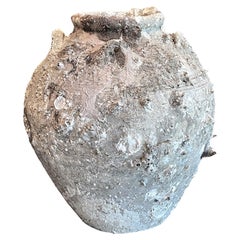
16th Century Sawankhalok Large Shipwreck Vessel, Thailand
Located in New York, NY
16th century Thailand Sawankhalok large ceramic vessel from the old city of Sawankhalok known for its pottery.
Beautiful and natural patina from being submerged under water.
Part of ...
Category
Antique 16th Century Thai Vases
Materials
Ceramic