Want more images or videos?
Request additional images or videos from the seller
1 of 5
Two bases in rare Breccia Africano and Granito Nero
$1,602.15List Price
About the Item
- Dimensions:Height: 4.93 in (12.5 cm)Diameter: 2.76 in (7 cm)
- Style:Neoclassical (Of the Period)
- Materials and Techniques:
- Place of Origin:
- Period:
- Date of Manufacture:19th century
- Condition:Wear consistent with age and use.
- Seller Location:Bruxelles, BE
- Reference Number:1stDibs: LU6666245072202
About the Seller
5.0
Vetted Professional Seller
Every seller passes strict standards for authenticity and reliability
1stDibs seller since 2022
15 sales on 1stDibs
Authenticity Guarantee
In the unlikely event there’s an issue with an item’s authenticity, contact us within 1 year for a full refund. DetailsMoney-Back Guarantee
If your item is not as described, is damaged in transit, or does not arrive, contact us within 7 days for a full refund. Details24-Hour Cancellation
You have a 24-hour grace period in which to reconsider your purchase, with no questions asked.Vetted Professional Sellers
Our world-class sellers must adhere to strict standards for service and quality, maintaining the integrity of our listings.Price-Match Guarantee
If you find that a seller listed the same item for a lower price elsewhere, we’ll match it.Trusted Global Delivery
Our best-in-class carrier network provides specialized shipping options worldwide, including custom delivery.You May Also Like
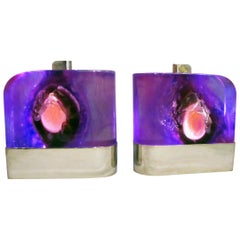
Two luminous sculptures or lamp bases in resin and chrome
Located in Paris, FR
A pair of wonderful luminous sculptures in résine with inclusion. It's also possible to remove the two chrome buttons that are screwed onto threaded rods and putting in place of el...
Category
Vintage 1980s French Abstract Sculptures
Materials
Chrome
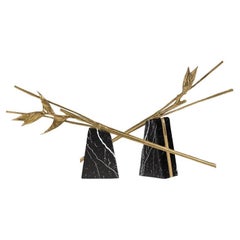
Escape – Sculptural Centerpiece in Nero Marquina Marble, Two-Piece Set
Located in Porto, PT
Escape is both a sculpture and a centerpiece, crafted in Nero Marquina marble and composed of two distinct elements that come together in visual harmony. The deep black surface, cros...
Category
2010s Portuguese Organic Modern Natural Specimens
Materials
Marble, Brass
$3,928 / set
H 15.75 in W 35.44 in D 3.15 in
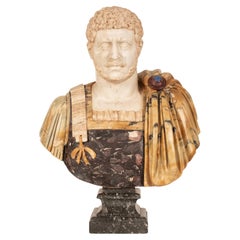
Hadrian Roman Breccia Marble Bust
Located in Houston, TX
Italian Hadrian Roman Breccia and mixed marble bust with lapis lazuli brooch.
Category
20th Century Italian Neoclassical Busts
Materials
Lapis Lazuli, Marble
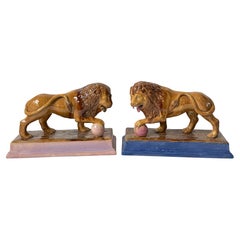
Rare Pair of Ralph Wood Staffordshire Medici Lions in Pink and Blue Bases
By Ralph Wood Pottery
Located in West Palm Beach, FL
Rare Pair of Ralph Wood Staffordshire Medici Lions in Pink and Blue Bases, Attributed to Ralph Wood, Staffordshire, England, circa 1780
A rare and highly distinctive pair of Staffor...
Category
Antique Early 19th Century English Regency Animal Sculptures
Materials
Pottery
$5,950 / set
H 9 in W 14.5 in D 6.5 in
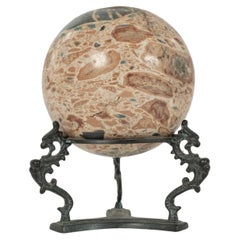
Breccia Marble Sphere
Located in Houston, TX
A polished 5" diameter Breccia marble sphere featuring predominantly beige, brown, and reddish hues with gray inclusions on ornamental stand.
Category
21st Century and Contemporary Abstract Sculptures
Materials
Marble, Metal
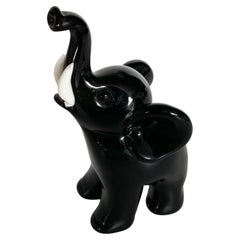
ARCHIMEDE SEGUSO Murano Glass Rare ADOLESCENT Elephant Figurine NERO Series
By Archimede Seguso
Located in Richmond, VA
Archimede Seguso Murano Glass elephant sculpture from the mid 1950s.
Seldom seen model of an adolescent elephant with white tusks, contrasting the black “Nero” glass body. The figur...
Category
Vintage 1950s Italian Mid-Century Modern Animal Sculptures
Materials
Art Glass
$735 Sale Price
25% Off
H 5.75 in W 3 in D 2 in
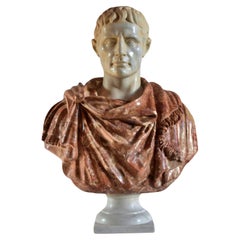
Bust of Octavian Augustus in Breccia Pernice and white Carrara end 20th Century
Located in Madrid, ES
Bust of Octavian Augustus in Breccia Pernice and white Carrara Marble
placed on a turned base in white Carrara marble
height 73 cm base included,
weight 80 kg
Italy
73x55x28cm
Go...
Category
Late 20th Century Italian Modern Busts
Materials
Carrara Marble
$14,241
H 28.75 in W 21.66 in D 11.03 in
Nero 30 Decorative Object and Mirror by Studio Lievito
Located in Geneve, CH
Nero 30 decorative object and mirror by Studio Lievito
Dimensions: D 23 x W 23 x H 30 cm
Materials: Bucchero ceramic, mirror.
Weight: 2 kg
Fragments of a distant time, shaped by han...
Category
2010s Italian Post-Modern Abstract Sculptures
Materials
Ceramic, Mirror
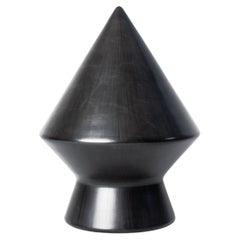
Nero 52 Decorative Object and Mirror by Studio Lievito
Located in Geneve, CH
Nero 52 decorative object and mirror by Studio Lievito
Dimensions: D24 x W24 X H52 cm
Materials: Bucchero ceramic, mirror.
Weight: 2 kg.
Fragments of a distant time, shaped by hands...
Category
2010s Italian Post-Modern Abstract Sculptures
Materials
Ceramic, Mirror
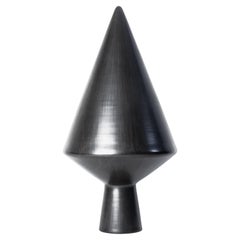
Nero 15 Decorative Object and Mirror by Studio Lievito
Located in Geneve, CH
Nero 15 decorative object and mirror by Studio Lievito
Dimensions: D20 x W20 X H15 cm
Materials: Bucchero ceramic, mirror.
Weight: 1.5 kg
Fragments of a distant time, shaped by hand...
Category
2010s Italian Post-Modern Abstract Sculptures
Materials
Ceramic, Mirror
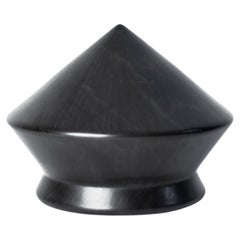
More From This Seller
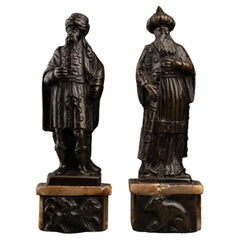
View AllTwo rare Figures in Turkish Attire - Venice, early 17th century
Located in Bruxelles, BE
Rare Bronzes Depicting two Figures in Turkish Attire
Possibly Suleiman the Magnificent at two different ages
bronzes, alabaster bases
Venice, early 17th century
19,5 x 6 x 5 cm
These two rare bronze statuettes represent two figures dressed in elaborate "Turkish" attire. They are mounted on alabaster bases with bronze reliefs—one featuring the winged lion of Venice, and the other possibly symbolizing Turkey with a wolf depiction.
One figure wears a grand külah, a spherical turban with a cone top, signifying royal authority, while the other has a wrapped turban, denoting rank and religious identity. Their garments are richly detailed with intricate engravings, suggesting luxurious fabrics of the Ottoman court.
The statuettes may represent Suleiman the Magnificent at two different stages of life, as both young and old. The sultan depicted alongside the winged lion corresponds to a description from a Venetian delegate in 1534, when Suleiman was 43. At that time, he had conquered Iraq from the Safavids and achieved a decisive victory over the Papal fleet at the Battle of Preveza. He was described as having large eyes, an aquiline nose, and long red mustaches—traits visible in Cristofano dell'Altissimo’s portrait of Suleiman in the Uffizi Gallery in Florence.
Unlike Mehmed II, who commissioned portraits by European artists for diplomatic purposes, Suleiman did not directly order such representations. Instead, his likeness spread through works by artists like Albrecht Dürer, based on sketches made by diplomats. Following his capture of Belgrade in 1521, his victory over Hungary in 1526, and his siege of Vienna...
Category
Antique 17th Century Italian Renaissance Figurative Sculptures
Materials
Alabaster, Bronze
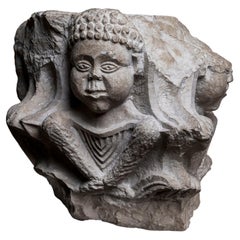
Rare Romanesque Capital Depicting Four Africans, Apulia, 13th Century
Located in Bruxelles, BE
Large stone capital carved on each side in strong relief. The basket is covered with two crowns of vertical acanthus leaves which sprout from the astragal and fill the space between ...
Category
Antique 15th Century and Earlier Italian Medieval Architectural Elements
Materials
Stone
$21,836 Sale Price
20% Off
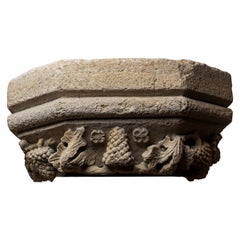
Large Hexagonale Base of Pilaster in Burgundy Stone, Burgundy, 15th Century
Located in Bruxelles, BE
Large base of molded hexagonal pilaster in burgundy stone carved with vines, grapes and rosettes in high relief.
Burgundy, 15th century
28 x 63 x 30 cm
Provenance : collection De...
Category
Antique 15th Century and Earlier French Gothic Architectural Elements
Materials
Stone
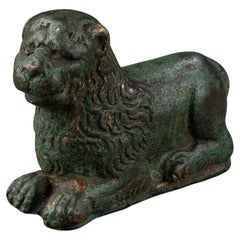
$6,171 Sale Price
20% Off
reclining lion in finely chased bronze - Italy, 15th century
Located in Bruxelles, BE
Small reclining lion in finely chased bronze
Italy, 15th century
Traces of gilding
H 4,8 x L 6 x P 2 cm
Delicately worked bronze depicting a lion in repose, characteristic of early ...
Category
Antique 15th Century and Earlier Italian Gothic Animal Sculptures
Materials
Bronze
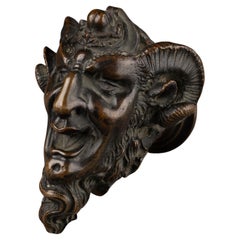
Handle in the Shape of a Devil’s Head - France, 19th century
Located in Bruxelles, BE
Handle in the Shape of a Devil’s Head
Patinated bronze
France, 19th century
10 x 7,5 x 9 cm
This unusual bronze handle takes the expressive form of a devil’s head, with exaggerate...
Category
Antique Early 19th Century French Other Figurative Sculptures
Materials
Bronze
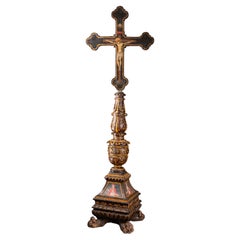
renaissance wooden candelabrum and painted cross - Umbria, 16th century
Located in Bruxelles, BE
Base of a carved wooden candelabrum, polychrome and gilded; cross painted on both sides.
Umbria or Tuscany, 16th century
136 x 43,5 x 30 cm
(The cross and the base of the candelabrum were later assembled)
The base of the candelabrum is intricately carved and adorned with polychrome and gilded finishes. The shafts take on the shape of balusters reminiscent of ancient columns, feature ornate foliage decorations, garlands and winged cherub faces. The feet are crafted in the likeness of lion paws. The base is further embellished with depictions of four saint martyrs, among them Saint Barbara and Saint Catherine of Alexandria. The plasticity of the figures, outlined with strong contour lines, the clear and vibrant colors, are stylistic elements linked to the Umbrian tradition of the sixteenth century.The precisely defined and elegant drawing, along with the clear color palette applied with refined chiaroscuro modulations, became the signature of a style that would leave a lasting mark on the era to come. This is exemplified by a preference for vibrant, multicolored images, accentuated in this case by the use of red and pink in the saint's attire.
A notable addition, introduced later, is a polylobed cross painted on both sides. On one side, the Crucifixion is vividly portrayed:The treatment of the corpus itself is in line with High Medieval practice, emphasizing pathos by showing Jesus dead, his arms sagging from the weight of the body. The upper section displaying a pelican pecks at her breast to feed her young with her own blood; a symbol of the sacrifice of Christ on the cross whose body and blood similarly nourishes the celebrant during Mass.
The lower part depicts Golgotha. On the reverse side, the Resurrection is artistically presented in a Renaissance iconography, reminiscent of the renowned composition painted by Piero della Francesca, now housed in the Civic Museum of Sansepolcro. In terms of composition, with the frontal depiction of Christ holding the banner, this motif became particularly widespread in central Italy, spanning from Tuscany to Umbria throughout the 16th century..
The double-sided construction suggests that it may also have been carried in liturgical processions. In Umbria from the 14th century, the use of portable crosses painted on both sides had become a widespread practice, aimed at satisfying the monastic clientele that had significantly increased following the establishment of new religious communities.
The earliest surviving Tuscan painted crucifix represent Christ as Christus Triumphans, or the “Triumphant Christ” with his head up and eyes open. This form was supplanted in the 13th century with the Christus Patiens, or “Suffering Christ” type who is shown often with his head fallen on his shoulder and his eyes closed, as In our cross. The iconography of the suffering Christ appears to have developed out of a new interest in Christ’s human nature, the development of the feast of Corpus Christi and with increased importance given to the Eucharist. The process of humanizing the figure of Christ reaches its peak with the abandonment of all the previous expressive conventions in favor of more realistic details we can observe in this Crucifix, such as the swollen belly, the arms stretched to the limit of muscle tearing, the body falling heavily forward, the abundant blood on
the wounds, and the cross firmly embedded in the rock of Calvary.
It's worth noting that Renaissance candelabra...
Category
Antique 16th Century Italian Renaissance Figurative Sculptures
Materials
Wood, Giltwood
Still Thinking About These?
All Recently ViewedMore Ways To Browse
Antique Marbles
Marble Specimen
Antique Cutter
Italian Specimen Marble
Antique Roman Stone
Marble Island
Cipollino Marble
Breccia Africano
Large Lapis Lazuli Spheres
Large Shiva Lingam Stone
Liana Vine
Mesh Cactus
Montana Antiques
Nautilus Shell On Stand
Ostrich Egg On Stand
Springer Petrified
Turban Shell
Antique Narwhal Tusk