16th Century Sculptures

to
20
152
2,792
6,814
25,113
11,433
4,447
9,069
7,364
569
239
963
1,096
520
1,471
2,046
2,654
1,297
830
8
1
84
32
31
20
15
101
49
101
37
33
21
20
Height
to
Width
to
152
152
152
1
1
1
Period: 16th Century
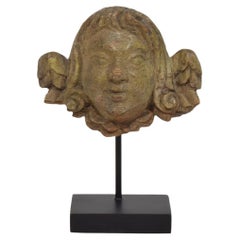
French 16th/ 17th Century Weathered Oak Renaissance Angel Fragment
Located in Buisson, FR
Beautiful weathered oak winged angel head Renaissance ornament. France, 16/ 17th century. Weathered Measurements include the wooden pedestal.
Category

French Renaissance Antique 16th Century Sculptures

Materials

Oak

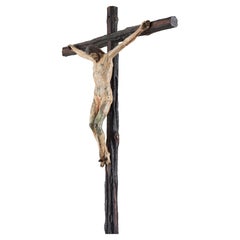
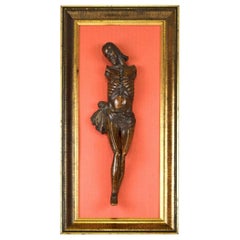
Rare and important painted bronze Crucifix after a model by Michelangelo
By Michelangelo Buonarroti
Located in Leesburg, VA
A rare and very fine bronze corpus of Christ after a model by Michelangelo, cast ca. 1597-1600 by Juan Bautista Franconio and painted in 1600 by Francisco Pacheco in Seville, Spain. The present corpus reproduces a model attributed to Michelangelo. The best known example, lesser in quality, is one on display at the Metropolitan Museum of Art (MET). The association of this corpus with Michelangelo was first brought to light by Manuel Gomez-Moreno (1930-33) who studied the wider circulated casts identified throughout Spain. The attribution to Michelangelo was subsequently followed by John Goldsmith-Phillips (1937) of the MET and again by Michelangelo expert, Charles de Tolnay (1960). While Michelangelo is best known for his monumental works, there are four documented crucifixes he made. The best known example is the large-scale wooden crucifix for the Church of Santa Maria del Santo Spirito in Florence, made in 1492 as a gift for the Prior, Giovanni di Lap Bicchiellini, for allowing him to study the anatomy of corpses at the hospital there. In 1562, Michelangelo wrote two letters to his nephew, Lionardo, indicating his intention to carve a wooden crucifix for him. In 1563 a letter between Lionardo and the Italian sculptor Tiberio Calcagni, mentions this same crucifix (a sketch of a corpus on the verso of a sheet depicting Michelangelo’s designs for St. Peter’s Basillica [Palais des Beaux-Arts in Lille] may reproduce this). That Michelangelo was working on small corpora in the last years of his life is further evidenced by the small (26.5 cm) unfinished wooden crucifix located at the Casa Buonarroti, considered his last known sculptural undertaking. Michelangelo’s contemporary biographer, Giorgio Vasari additionally cites that Michelangelo, in his later years, made a small crucifix for his friend, Menighella, as a gift. Surviving sketches also indicate Michelangelo’s study of this subject throughout his career, most notably during the end of his life but also during the 1530s-40s as he deepened his spiritual roots. The occasional cameo of crucified Christ’s throughout his sketched oeuvre have made it challenging for scholars to link such sketches to any documented commissions of importance. All the while, in consideration that such objects were made as gifts, it is unlikely they should be linked with commissions. Nonetheless, a number of theories concerning Michelangelo’s sketches of Christ crucified have been proposed and some may regard the origin of the present sculpture. It has been suggested that the corpus could have its impetus with Michelangelo’s work on the Medici Chapel, whose exclusive design was given to the master. It is sensible smaller details, like an altar cross, could have fallen under his responsibility (see for example British Museum, Inv. 1859,0625.552). Others have noted the possibility of an unrealized large marble Crucifixion group which never came to fruition but whose marble blocks had been measured according to a sheet at the Casa Buonarroti. A unique suggestion is that Michelangelo could have made the crucifix for Vittoria Colonna, of whom he was exceedingly fond and with whom he exchanged gifts along with mutual spiritual proclivities. In particular, Vittoria had an interest in the life of St. Bridget, whose vision of Christ closely resembles our sculpture, most notably with Christ’s proper-left leg and foot crossed over his right, an iconography that is incredibly scarce for crucifixes. The suggestion could add sense to Benedetto Varchi’s comment that Michelangelo made a sculpted “nude Christ…he gave to the most divine Marchesa of Pescara (Vittoria Colonna).” Of that same period, two sketches can be visually linked to our sculpture. Tolnay relates it to a sketch of a Crucified Christ at the Teylers Museum (Inv. A034) of which Paul Joannides comments on its quality as suggestive of preparations for a sculptural work. Joannides also calls attention to a related drawing attributed to Raffaello da Montelupo copying what is believed to be a lost sketch by Michelangelo. Its relationship with our sculpture is apparent. Montelupo, a pupil of Michelangelo’s, returned to Rome to serve him in 1541, assisting with the continued work on the tomb of Pope Julius II, suggesting again an origin for the corpus ca. 1540. The earliest firm date that can be given to the present corpus is 1574 where it appears as a rather crudely conceived Crucifixion panel, flanked by two mourners in low-relief and integrally cast for use as the bronze tabernacle door to a ciborium now located at the Church of San Lorenzo in Padula. Etched in wax residue on the back of the door is the date, 27 January 1574, indicating the corpus would have at least been available as a model by late 1573. The Padula tabernacle was completed by Michelangelo’s assistant, Jacopo del Duca and likely has its origins with Michelangelo’s uncompleted tabernacle for the Basilica of St. Mary of the Angels in Rome. The impetus for the Padula tabernacle’s Crucifixion panel begins with a series of late Crucifixion sketches by Michelangelo, depicting a scene of Christ crucified and flanked by two mourners (see British Museum Inv. 1895.0915.510; Ashmolean Museum Inv. 1846.89, KP II 343 recto; Windsor Castle RCIN 912761 recto; and Louvre Inv. 700). A faintly traced block possibly intended for sculpting the sketch of the crucified Christ on its recto was discovered by Tolnay on a version of the composition at Windsor Castle. The Windsor sketch and those related to it appear to have served as preparatory designs for what was probably intended to become the Basilica of St. Mary’s tabernacle door. Vasari documents that the project was to be designed by Michelangelo and cast by his assistant, Jacopo del Duca. Michelangelo died before the commission was complete, though on 15 March 1565, Jacopo writes to Michelangelo’s nephew stating, “I have started making the bronze tabernacle, depending on the model of his that was in Rome, already almost half complete.” Various circumstances interrupted the completion of the tabernacle, though its concept is later revitalized by Jacopo during preparations to sell a tabernacle, after Michelangelo’s designs, to Spain for Madrid’s El Escorial almost a decade later. The El Escorial tabernacle likewise encountered problems and was aborted but Jacopo successfully sold it shortly thereafter to the Carthusians of Padula. An etched date, 30 May 1572, along the base of the Padula tabernacle indicates its framework was already cast by then. A 1573 summary of the tabernacle also describes the original format for the door and relief panels, intended to be square in dimension. However, a last minute decision to heighten them was abruptly made during Jacopo’s negotiations to sell the tabernacle to King Phillip II of Spain. Shortly thereafter the commission was aborted. Philippe Malgouyres notes that the Padula tabernacle’s final state is a mixed product of the original design intended for Spain’s El Escorial, recycling various parts that had already been cast and adding new quickly finished elements for its sale to Padula, explaining its unusually discordant quality, particularly as concerns the crudeness of the door and relief panels which were clearly made later (by January 1574). Apart from his own admission in letters to Spain, it is apparent, however, that Jacopo relied upon his deceased master’s designs while hastily realizing the Padula panels. If Michelangelo had already earlier conceived a crucifix model, and Jacopo had access to that model, its logical he could have hastily employed it for incorporation on the door panel to the tabernacle. It is worth noting some modifications he made to the model, extending Christ’s arms further up in order to fit them into the scale of the panel and further lowering his chin to his chest in order to instill physiognomic congruence. A crude panel of the Deposition also follows after Michelangelo’s late sketches and is likewise known by examples thought to be modifications by Jacopo based upon Michelangelo’s initial sculptural conception (see Malgouyres: La Deposition du Christ de Jacopo del Duca, chef-d’oeuvre posthume de Michel-Ange). Jacopo’s appropriation of an original model by Michelangelo for more than one relief on the Padula tabernacle adds further indication that the crucifix was not an object unique to Jacopo’s hand, as few scholars have posited, but rather belongs to Michelangelo’s original...
Category

Renaissance Antique 16th Century Sculptures

Materials

Bronze

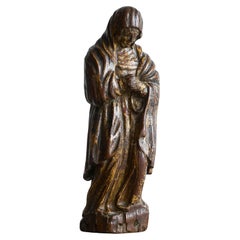
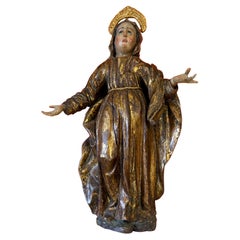
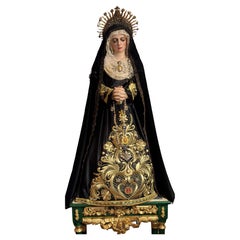
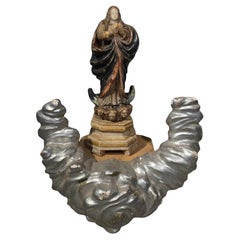
Amazing 16th Cent. Castilian Virgin of Sorrows with an 18th-century Silver Crown
Located in Madrid, ES
Amazing 16th Century Castilian Virgin of Sorrows with an 18th-century Silver Crown, Virgin of Peñaranda Exceptional 16th-century Castilian school Virgin of Sorrows of Peñaranda, car...
Category

Spanish Spanish Colonial Antique 16th Century Sculptures

Materials

Wood

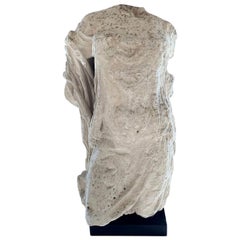
16th Century Stone Classical Roman Style Torso
Located in Vosselaar, BE
A wonderful 16th century draped female torso in classical style. Made in France under Italian Renaissance influence this female torso is finely sculpted with great detail to the stol...
Category

French Renaissance Antique 16th Century Sculptures

Materials

Sandstone

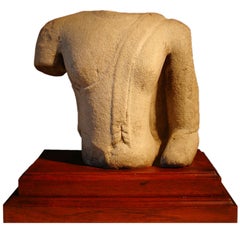
16th Century Thai Ayutthaya Sandstone Torso of the Buddha
Located in Austin, TX
A lovely carved sandstone torso of the Buddha, Ayutthaya period (1350-1767), Thailand. Wonderfully simplistic, the only ornamentation this torso displays...
Category

Thai Antique 16th Century Sculptures

Materials

Sandstone

Renaissance polychrome and gilded wooden sculpture of Saint Anne, Spain, 16th ce
Located in Madrid, ES
Renaissance polychrome and gilded wooden sculpture of Saint Anne, Spain, 16th century Imposing carved, polychrome, and gilded wooden sculpture, representing Saint Anne. Made in the ...
Category

Spanish Baroque Antique 16th Century Sculptures

Materials

Silver

Wood Low-Relief Depicting a Werewolf and Saint George
Located in Saint-Ouen, FR
Exceptional polychrome wood low-relief depicting a werewolf and saint george after a woodcut by lucas cranach (“DER WERWOLF” 1512) Provenance : collection Brimo de Laroussihle colle...
Category

German Renaissance Antique 16th Century Sculptures

Materials

Wood

16th Century Late Medieval Heraldic Encaustic Tile
Located in Wormelow, Herefordshire
A 445-year-old late medieval 16th century heraldic encaustic tile of Flemish origin (unmarked). Made from terracotta and glazed, this 6-inch antique tile is an excellent collector’s ...
Category

Dutch Medieval Antique 16th Century Sculptures

Materials

Terracotta

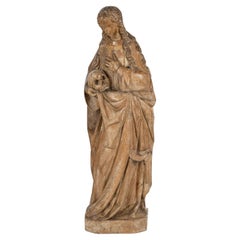
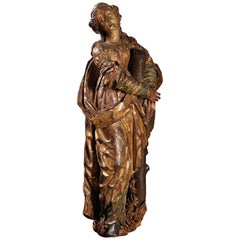
Carved Wooden Sculpture of Mary Magdalene, Circa 1500.
Located in Saint-Ouen, FR
Carved wooden sculpture of Mary Magdalene, circa 1500. Large limewood sculpture with traces of polychromy representing Mary Magdalene, German work, circa 1500. H: 80cm. W: 35cm, D: ...
Category

German Antique 16th Century Sculptures

Materials

Wood

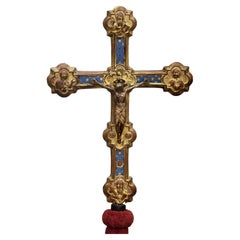
Paolo di Giovanni Sogliani - Processional Cross Florence, around 1515
Located in Bruxelles, BE
Paolo di Giovanni Sogliani (Florence 1455-1522) Processional Cross Florence, around 1515 Enameled, chiseled, engraved, stippled, and gilded copper; wooden core ; Inscription: "OPA...
Category

Italian Renaissance Antique 16th Century Sculptures

Materials

Copper, Enamel

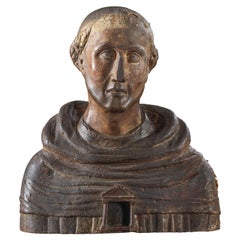
16th Century Polychrome Reliquary of a Monk
Located in Saint-Ouen, FR
The monk is depicted with an oval face, marked with high and strong cheekbones, sunken cheeks, strong jawbones and a cleft chin. His almond shaped eyes are opened under very strong a...
Category

Italian Renaissance Antique 16th Century Sculptures

Materials

Wood

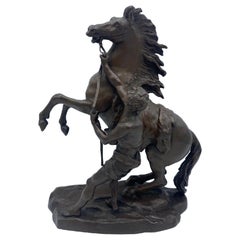
French Bronze Sculpture of Youth Wrangling a Horse by Guillaume Coustou
Located in Middleburg, VA
French Bronze Sculpture of Youth Wrangling a Horse by Guillaume Coustou (1677-1746). Best known for his monumental statues of horses, Coustou was the royal sculptor for Louis XIV an...
Category

French Louis XIV Antique 16th Century Sculptures

Materials

Bronze

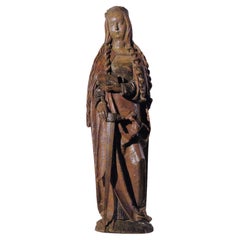
16th Century Mary Magdalene in Polychromed Carved Walnut
Located in Meer, VAN
Mary Magdalene in Polychromed Carved Walnut 16th Century Devotional figure in carved wood, depicting Mary Magdalene. Walnut, most probably Flemish and from the 16th century. It de...
Category

European Medieval Antique 16th Century Sculptures

Materials

Walnut

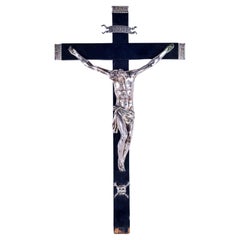
Christ Crucified in Silver 16th Century Italian School
Located in Madrid, ES
Christ crucified in silver 16th Century Italian school Measure: height: 40cm. very good condition.
Category

Italian Baroque Antique 16th Century Sculptures

Materials

Silver

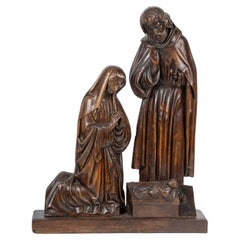
Religious Sculpture Representing the Nativity, Carved Wood from the 16th Century
Located in Saint-Ouen, FR
Religious sculpture representing the nativity, carved wood from the 16th century. Carved wood sculpture, walnut wood and oak wood base, sculpture representing the nativity, circa 16...
Category

French Neoclassical Antique 16th Century Sculptures

Materials

Oak, Walnut

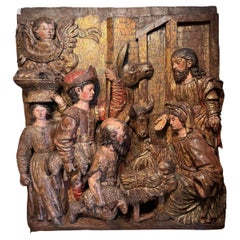
Adoration of the shepherds - Large high-relief, Northern Italy Circa 1500
Located in PARIS, FR
Large high relief in carved and gilt wood, with many traces of polychromy, representing the Adoration of the Shepherds. The evangelist Luke first mentions that the scene takes place at night. A sudden light, which frightens the shepherds, signals the arrival of an angel who announces "great joy". He gives them a sign: they will find "a newborn baby wrapped...
Category

Italian Renaissance Antique 16th Century Sculptures

Materials

Wood

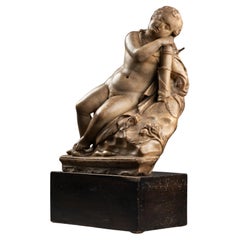
Sleeping Eros - Rome, 16th century
Located in Bruxelles, BE
Sleeping Eros Rome, 16th century
 Carrara marble, on a wooden base
 of an ancient collection 31 × 44 x 17 cm Carved from a fine block of Carrara marble, this sculpture depicts Eros ...
Category

Italian Renaissance Antique 16th Century Sculptures

Materials

Carrara Marble

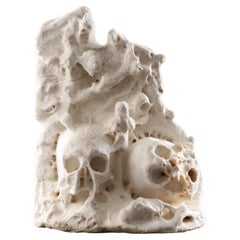
An Unusual and Rare English ‘Memento Mori’ Carved Shrine with Two Human Skulls
Located in London, GB
An Unusual and Rare English ‘Memento Mori’ Carved Shrine with Two Human Skulls to the underside, a carved ‘Dragonfly’ Marble 16th / 17th Century England Size: 36cm high, 28cm w...
Category

English Antique 16th Century Sculptures

Materials

Marble

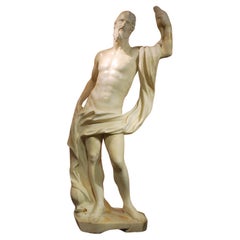
A 16th century carved marble sculpture of poseidon
Located in London, GB
This fine and imposing sculpture is an excellent example of 16th century Italian craftsmanship. The figure is stood on a raised, shaped rectangular base with a carved "dolphin" at th...
Category

Italian Renaissance Antique 16th Century Sculptures

Materials

Marble

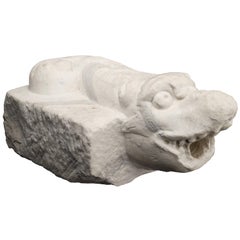
Italian Ancient Marble Sculpture Fountain, Late 16th Century
Located in Milano, IT
Sea monster Carrara marble mouth fountain Italy, late 16th century It measures 13.8 x 31.5 x 18.9 in (35 x 80 x 48 cm) State of conservation: some small evident gaps and widespread signs of wear due to outdoor exposure. The gray marks crossing it do not come from restoration, but are rather the natural veins of the marble. This work has some morphological characteristics typically associated with the iconography of the sea monster: an elongated muzzle, sharp teeth, protruding eyes, elongated ears, and a coiled serpent's tail. An in-depth series of studies on artistic depictions of the sea monster attempted to verify how this symbol evolved in antiquity in the European and Mediterranean contexts and how it gradually changed its image and function over time. The iconography itself is mutable and imaginative and its history is rich with cultural and artistic exchange, as well as the overlapping of ideas. This occurred so much that it is difficult to accurately pinpoint the "types" that satisfactorily represent its various developments. However, we can try to summarize the main figures, starting from the biblical Leviathan and the marine creature that swallowed Jonah (in the Christian version, this figure was to become a whale or a "big fish", the “ketos mega”, translation of the Hebrew “dag gadol”). Other specimens ranged from the dragons mentioned in the Iliad (which were winged and had legs) to "ketos” (also from Greek mythology), the terrifying being from whose Latinized name (“cetus”) derives the word "cetacean". See J. Boardman, “Very Like a Whale” - Classical Sea Monsters, in Monsters and Demons in the Ancient and Medieval Worlds, in Papers presented in Honor of Edith Porada, Mainz am Rhein 1987, pp. 73-84). In Italy the monster underwent yet further variations: it can be found in Etruscan art on the front of some sarcophagi representing the companion of souls, while among the Romans we find the “Pistrice” (cited by Plinio in Naturalis Historia PLIN., Nat., II 9, 8 and by Virgilio in Eneide: VERG., Aen., III, 427), which appeared in the shape of a stylized hippocampus or a very large monstrous cetacean and evolved into a hideous being with a dragon's head and long webbed fins. During the Middle Ages, the sea monster was the object of new transformations: at this time, it is often winged, the head is stretched like a crocodile, the front legs are often very sharp fins - sometimes real paws - until the image merges with dragons, the typical figures of medieval visionary spirituality widely found throughout Europe (on this topic and much more, see: Baltrušaitis, J., Il Medioevo fantastico. Antichità ed esotismi nell’arte gotica, Gli Adelphi 1997). In Italy during the 15th and 16th centuries, the revival of classicism - representative of the humanistic and Renaissance periods - led to a different reading of these "creatures". Indeed, the sea monster was also to find widespread use as an isolated decorative motif, especially in numerous fountains and sculptures where dolphins or sea monsters were used as a characterizing element linked to water (on this theme see: Chet Van Duzer, Sea Monsters on Medieval and Renaissance Maps, London, The British library, 2013). From the morphological point of view, the "sea monsters" of this period are mostly depicted as hybrid figures, in which the body of a mythological or real being (a hippocampus, a sea snake, a dolphin), is joined to a head with a rather indistinct appearance. It was usually characterized by large upright ears, an elongated snout, sharp teeth and globular, protruding eyes; a complex and indefinite figure, both from the symbolic point of view and from that of its genesis. The work we are examining is placed as a cross between the medieval sea serpent and the Renaissance dolphin, with stylistic features which recall the snake as often used in heraldry (such as the "snake" depicted in the coat of arms of the Visconti - the lords and then dukes of Milan between 1277 and 1447 - and which, for some, may be derived from the representations of the “Pistrice” that swallowed Jonah). In the search for sources, Renaissance cartography and in particular woodcuts should not be neglected. See for example the monsters of Olaus Magnus, from the editions of the “Historia de gentibus septentrionalibus” (“History of the peoples of the north”) and the natural histories of Conrad Gesner, Ulisse...
Category

Italian Renaissance Antique 16th Century Sculptures

Materials

Carrara Marble

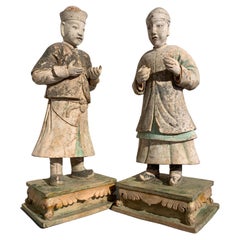
Pair Large Chinese Ming Dynasty Glazed and Painted Pottery Figures, 16th Century
Located in Austin, TX
A striking pair of large Chinese glazed and painted pottery figures, Ming Dynasty (1368 to 1644), circa 16th century, China. The impressive and realistically modeled figures each portrayed standing upright upon a sancai (three color) glazed pedestal of kang table form. The man is dressed in a short black surcoat over a long robe and pants, a smart cap upon his head. His face is warm and welcoming, with wide eyes and a slight smile on his lips. He holds his hands out in front of him, palms up, almost as if shrugging, though presumably originally holding an object or offering, now lost. The woman of slightly smaller stature, and dressed in a longer surcoat over a long robe and skirt. She wears a fitted cap upon her head. Her hands also held out in front, grasping long lost objects. Her face is slightly more severe, with a somewhat pinched look, and slight frown upon her lips. The size of these figures is remarkable, as is the realism and attention to detail, almost as if they were modeled after real people, as opposed to the more common and generic Ming Dynasty pottery...
Category

Chinese Ming Antique 16th Century Sculptures

Materials

Pottery

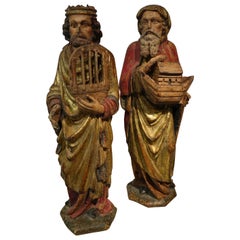
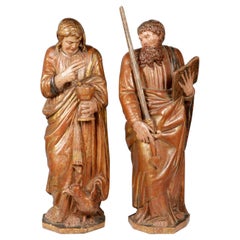
Pair of rare statues , Noah and King David, Flanders, early 16th century
Located in PARIS, FR
Noah and King David, Flanders, early 16th century Rare wood carvings in the round of Noah holding the Ark and King David holding his lyre. Noah, a biblical figure, is the tenth and l...
Category

Belgian Renaissance Antique 16th Century Sculptures

Materials

Wood

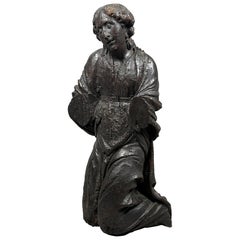
A large 16th century wood carving of an Angel
Located in Sleepy Hollow, NY
A large 16th-century hand-carved wooden fragment depicting a kneeling angel in adoration, arms extended and wearing a gentle, serene expression. Likely of Northern European origin, t...
Category

European Renaissance Antique 16th Century Sculptures

Materials

Fruitwood

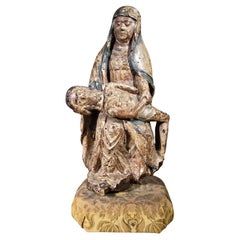
Rare 16th-Century French Polychrome Wooden Pietà Sculpture
Located in Madrid, ES
This rare and extraordinary 16th-century French sculpture depicts the iconic Pietà, showcasing exceptional craftsmanship and emotional depth. Finely carved from wood and adorned with...
Category

Antique 16th Century Sculptures

Materials

Fruitwood

Saint Afre of Augsburg
Located in Saint-Ouen, FR
SAINT AFRE OF AUGSBURG ORIGIN : SOUTHERN GERMANY PERIOD : 16th CENTURY Height : 119 cm Width : 50 cm Depth : 28 cm Limewood Good state of conservation Patron Saint of the city and the diocese of Augsburg, the oldest traces of her worship date back to the 6th century. There are several versions of his legend. She is sometimes identified as the daughter of a king of Cyprus whose violent and unexpected death forced her and her mother, Hilaria, to flee. They went to Augsburg via Rome. Others see her origins in Africa instead, her name meaning African in Latin. Settled in Augsburg, they became the owners of a notorious inn where they traded in their charms. Bishop Narcissus of Girona, accompanied by his deacon Felix, found refuge there one day, fleeing the persecution of Emperor Diocletian. As the two men prayed devoutly, Afre was touched by grace and asked to be baptized. She then left her old life and embraced the Christian faith. When the Roman authorities learned of his new vocation, they exhorted her to worship the old gods and to deny the Christian faith. She refused to renounce her faith and was sentenced to be burned alive. Her sentence was applied immediately and she suffered her mart...
Category

Antique 16th Century Sculptures

Materials

Wood

16th Century Spanish Carved Polychrome Painted Saint Anne with the Infant Mary
Located in Miami, FL
This sculpture represents Santa Ana (Saint Anne) with the infant Mary. Verge
Category

European Baroque Antique 16th Century Sculptures

Materials

Wood

16th Century Southern Germany Carved Wood Bracket Depicting a Mermaid
Located in Saint-Ouen, FR
In Medieval Europe and even more during the early 16th century fantastic beasts could be found in Bestiaries, a literary genre close to poetry. A bestiary used the characteristics of...
Category

German Renaissance Antique 16th Century Sculptures

Materials

Wood

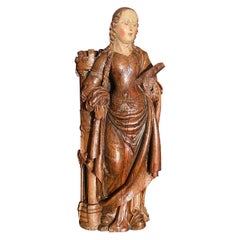
Important Sculpture Representing Saint Barbara
Located in Saint-Ouen, FR
IMPORTANT WOOD SCULPTURE REPRESENTING SAINT BARBARA ORIGIN : NORTHERN FRANCE OR FLANDERS PERIOD : 16th CENTURY Height: 103 cm Length: 40 cm Depth: 30 cm Oak wood Good condition Saint Barbara was the daughter of Dioscorus who imprisonned her in a tower to prevent her from being corrupted by Christianity. Despite this, she was taught and baptisted by a local priest. According to legend, she proved her faith by carving a third window into the tower, symbolic of the Trinity. Once her father learned this, he threatened her with his sword. She managed to escape and hide, not before being revealed by a sheperd. She was thrown in jail and tortured, refusing to denounce her faith. Her father forced her up to the mountain’s summit and decapitated her, afterwhich God struck him down by lightning. Saint Barbara`s following was popularized in the Occident in the 13th century because of the Golden Legend...
Category

Antique 16th Century Sculptures

Materials

Oak

16th Century Spanish Gilded Painted Wood Sculpture of Saint Roch
Located in Marbella, ES
16th century Castilian gold-leaf gilded painted wood sculpture of Saint Roch, where the quality shows in the exceptional realistic skin tone. He is represen...
Category

Spanish Antique 16th Century Sculptures

Materials

Wood

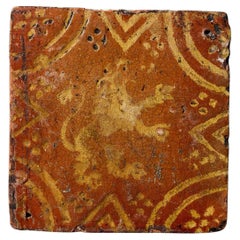
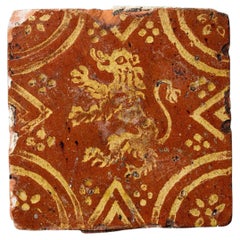
16th Century Late Medieval Encaustic Tile with Rampant Lion
Located in Wormelow, Herefordshire
A 445-year-old late medieval 16th century encaustic tile of Flemish origin (unmarked), detailed with a rampant lion. Made from terracotta and glazed, this 6-inch antique tile is an e...
Category

Dutch Medieval Antique 16th Century Sculptures

Materials

Terracotta

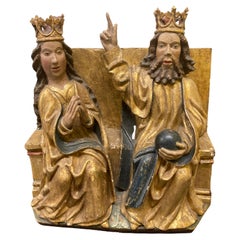
Trinity , Polychrome Sculpture , Germany, circa 1550
Located in PARIS, FR
Trinity in carved and polychromed wood, in the round, the back partially hollowed out. It is represented here as a "Throne of Grace". In this original formula, which probably origina...
Category

Antique 16th Century Sculptures

Materials

Wood

Oak Sculpture of Saint Anne, 16th Century.
Located in Saint-Ouen, FR
Oak sculpture of Saint Anne, 16th century. Large oak sculpture of Saint Anne. Work from the Upper Rhine, Basel region. First third of the 16th century. An arm is missing from the i...
Category

French Renaissance Antique 16th Century Sculptures

Materials

Oak

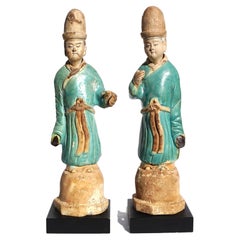
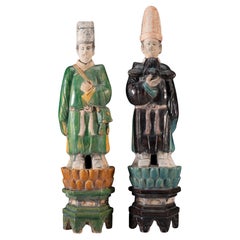
Pair Ming Dynasty Glazed Pottery Dignitary Figures
Located in Dallas, TX
A pair of Ming dynasty sancai blue glazed pottery figures. Circa 1500 AD Ming Dynasty I have owned over 250 ming tomb figures including over 80...
Category

Chinese Ming Antique 16th Century Sculptures

Materials

Pottery

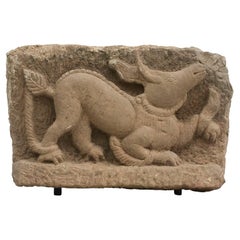
Dragon "Mythical Beast" Sandstone Relief
Located in Kastrup, DK
400 - 600 Year old charming and artistic sandstone relief. Dragon "mythical beast" which is a symbol of wisdom. From Buddha temple in Arakan, Burma....
Category

Burmese Other Antique 16th Century Sculptures

Materials

Sandstone

Tall Ming Dynasty Sancai Glazed Dignitary Tomb Figures
Located in Dallas, TX
A Pair of Chinese Enameled Sancai Glazed Pottery Attendant Figures Representing Dignitaries. Ming Dynasty Period. Circa 1600AD Dimensions; 23 x 5.5 x 5.25 inches (58.4 x 13.7 x 13.3 ...
Category

Chinese Ming Antique 16th Century Sculptures

Materials

Pottery

Italian Corpus Christi
Located in S-HERTOGENBOSCH, NL
Hand-carved Italian Corpus Christi with traces of polychromy. This sculpture reflects the transition from Gothic to Renaissance style.
Category

Italian Renaissance Antique 16th Century Sculptures

Materials

Wood

Saint Catherine of Alexandria
Located in Saint-Ouen, FR
SAINT CATHERINE OF ALEXANDRIA ORIGIN : SWABIA, ULM REGION PERIOD : ca. 1510-1520 Height : 118 cm Length : 39 cm Depth : 17 cm Limewood...
Category

Antique 16th Century Sculptures

Materials

Wood

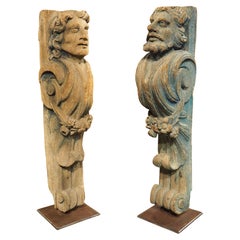
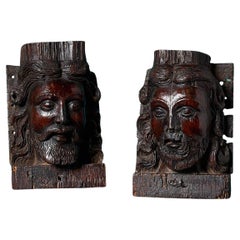
Pair of 16th Century Carved Oak Corbels
Located in Wormelow, Herefordshire
A decorative pair of 16th century carved oak corbels. Each intricately hand carved to showcase the head of a man with fine details of flowing locks and thick beards. Backed onto oa...
Category

English Tudor Antique 16th Century Sculptures

Materials

Wood, Oak

Northern Thai Lan Na Bronze Buddha Seated in Meditation, 15th-16th Century
Located in Austin, TX
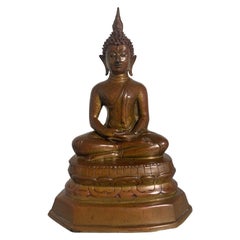
A lovely northern Thai cast bronze seated meditating Buddha statue with shell inlaid eyes, style of Wat Chedi Luang, Lan Na Kingdom, region of Chiang Mai, 15th-16th century.  The statue of the historical Buddha, Shakyamuni, is portrayed in dhyanasana, seated upon a double lotus pedestal atop a raised platform. His legs in virasana, the half lotus position, hands in dhyana mudra, the gesture of meditation. The Buddha's face is youthful and pleasant, reminiscent of faces of contemporaneous Sukhothai Buddha...
Category

Thai Antique 16th Century Sculptures

Materials

Bronze

Calzetta Da Ravenna Severo Candlestick Depicting a Kneeling Satyr
By Severo Calzetta da Ravenna
Located in Milano, IT
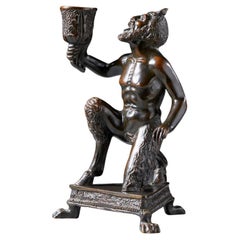
Calzetta Da Ravenna (Attivo Tra IL 1496 E IL 1543 circa) Severo. Circle of. Candlestick depicting a kneeling satyr. The model of the present bronze is the ""kneeling satyr"" attributed to Severo Calzetta da Ravenna, one of the main Paduan bronze sculptors of the first half of the 16th century, whose figure was rediscovered by Planiscig in 1935 (L. Planiscig, ""Severo da Ravenna...
Category

Italian Renaissance Antique 16th Century Sculptures

Materials

Bronze

Jean Boulogne Bronze Sculpture
Located in Los Angeles, CA
Jean Boulogne bronze sculpture "Abduction of the Sabine Women" a verdigris patinated bronze figured group on a circular stylized. Base signe "Jean Bologne".
Category

Italian Antique 16th Century Sculptures

Materials

Bronze

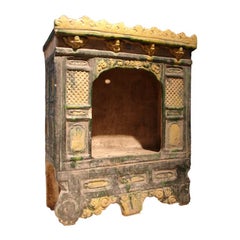
Chinese Ming Dynasty Sancai Glazed Pottery Architectural Model, 16th Century
Located in Austin, TX
An unusually large Chinese Ming Dynasty glazed pottery architectural model of a shrine or cabinet, Ming Dynasty (1368 - 1644), circa 16th century, China. The shrine model crafted o...
Category

Chinese Ming Antique 16th Century Sculptures

Materials

Pottery

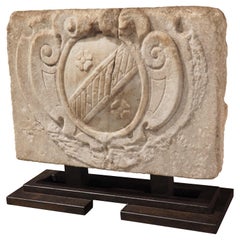
Carved and Mounted Marble Stemma Cartouche from Tuscany, Italy, 16th Century
Located in Dallas, TX
The carvings of this marble stemma cartouche dates to the 1500’s. Hand-carved in Tuscany, Italy, the marble was mounted onto a geometrically shaped iron stand within the last century...
Category

Italian Antique 16th Century Sculptures

Materials

Marble

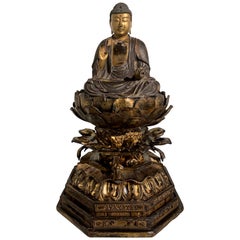
Japanese Giltwood Medicine Buddha, Yakushi Nyorai, Muromachi Period 16th Century
Located in Austin, TX
A striking Japanese late Muromachi Period (1333-1573) lacquered and giltwood figure of Yakushi Nyorai, the Medicine Buddha, seated upon an elaborate car...
Category

Japanese Edo Antique 16th Century Sculptures

Materials

Rock Crystal

Carved Wood Depicting the Resurrection of Christ
Located in Saint-Ouen, FR
Carved wood depicting the resurrection of Christ ORIGIN : SOUTHERN NETHERLANDS, ANTWERP PERIOD : EARLY 16th CENTURY Height : 67.5 cm Len...
Category

Antique 16th Century Sculptures

Materials

Oak

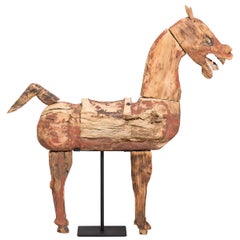
Chinese Ming Celestial Mingqi Horse Figure
Located in Chicago, IL
This hand carved Chinese wooden horse is a type of centuries-old burial figurine known as míngqì. Depicting the pleasures of daily life, míngqì f...
Category

Chinese Ming Antique 16th Century Sculptures

Materials

Wood

Chinese Jade Figure of Guanyin
Located in Bradenton, FL
Most likely Ming 15th/16th Century, carved chicken bone jade figure of a standing Guanyin (Quanyin) holding a scroll in one hand, prayer beads in the other. Affixed to carved wood ba...
Category

Chinese Ming Antique 16th Century Sculptures

Materials

Organic Material

Sculpture of John The Baptist, 16th Century
Located in North Miami, FL
Early 16th Century Spanish gold gilded and polychromed carved wood sculpture of John The Baptist.
Category

Spanish Renaissance Antique 16th Century Sculptures

Materials

Gold Leaf

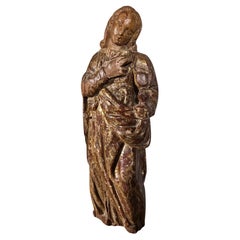
Angel, Carved and Polychrome Wood, 16th Century
Located in Madrid, ES
Angel. Carved and polychrome wood. Century XVI. Polychrome wood carving showing an angel, with the face facing the viewer and the body in pr...
Category

Spanish Renaissance Antique 16th Century Sculptures

Materials

Wood

16th C Mechelen Doll-letter M carved in the back.Some leftovers of polychromy
Located in Leuven , BE
Mechelen dolls are rare wooden devotional figurines (mainly walnut was used), which were made by some members of the Guild of Saint Luke. The figures, all individual saints, were made from reference models using highly regulated carving and polychrome techniques. They had to meet several requirements. The shape of the rug had to meet certain criteria and the letter M (from Mechelen) had to be visible in the shape. These devotional or saint figurines...
Category

Belgian Antique 16th Century Sculptures

Materials

Fruitwood

18th Century Spanish Santos
Located in Dallas, TX
Hand carved Santos in original condition. Beautiful old patina.
Category

Spanish Antique 16th Century Sculptures

Materials

Wood

16th C. Polychromed Carved St. Florian, Former N. Rothschild Collection
Located in Doha, QA
From the esteemed former collection of Baron Nathaniel de Rothschild, this exquisite early 16th-century polychromed carved wood figure of St. Florian stands as a rare example of late...
Category

German Gothic Antique 16th Century Sculptures

Materials

Wood, Giltwood

Wooden Made Crucifixion of Jesus, Italian Manufacture, Late XVI Century
Located in Roma, IT
Crucifixion of Jesus is an original wood sculpture realized at the end of the XVI century. Rare sculpture in lacquered and painted wood (lacque...
Category

Italian Antique 16th Century Sculptures

Materials

Wood

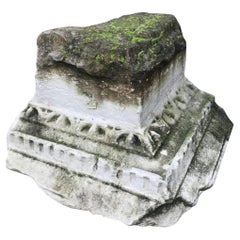
16th C. Hand Carved Capital Stone Base Architectural Element Sculpture Pedestal
Located in West Hollywood, CA
16th C. Hand Carved Capital Stone Base Architectural Element Sculpture Pedestal. Very rare 16th Century Renaissance corner Capital . Hand carved limestone Chapiteau Capital from a Cloister in France . From an ornamental point of view , it is the coronation , the upper part of a post or a column or pilaster pillar . A beautiful Architectural element garden ornament . It can used as a Base for a coffee glass table , or as a side table for drinks or to mount books. A stunning Fragments to be used as stand for a sculpture . Use it as a pedestal or as a mounted decorative object. In an entryway a bathroom a living room , in an office , it will create an incredible focal point . It can make a beautiful base for a floor lamp by a leather reading chair...
Category

French Renaissance Antique 16th Century Sculptures

Materials

Stone, Limestone

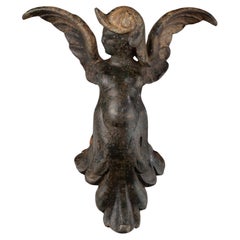
Renaissance Harpy - Italy, 16th century
Located in Bruxelles, BE
Renaissance Harpy bronze Italy, 16th century 15 x 12 x 5,5 cm This expressive bronze figure represents a harpy, a mythological creature with the body of a bird and the head and tor...
Category

Italian Renaissance Antique 16th Century Sculptures

Materials

Bronze

Small Thai Chiang Saen Bronze Head of the Buddha, 16th Century
Located in Austin, TX
A small and charming fragmentary cast bronze Buddha head with traces of gilding and lacquer, Lan Na Kingdom, Chiang Saen style, 16th century, Thailand. ...
Category

Thai Antique 16th Century Sculptures

Materials

Bronze

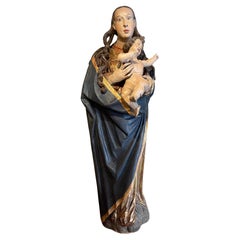
Large Sculpture of the Virgin Mary from the 16th Century Dimensions: 98x35x25 cm
Located in Madrid, ES
This majestic sculpture of the Virgin Mary, created in the 16 th century, is a unique piece of sacred art that stands out for its impressive detail and the beauty of its form. Crafte...
Category

Antique 16th Century Sculptures

Materials

Fruitwood

renaissance wooden candelabrum and painted cross - Umbria, 16th century
Located in Bruxelles, BE
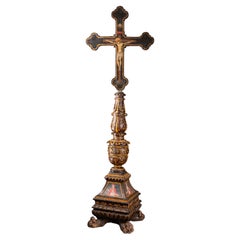
Base of a carved wooden candelabrum, polychrome and gilded; cross painted on both sides. Umbria or Tuscany, 16th century 136 x 43,5 x 30 cm (The cross and the base of the candelabrum were later assembled) The base of the candelabrum is intricately carved and adorned with polychrome and gilded finishes. The shafts take on the shape of balusters reminiscent of ancient columns, feature ornate foliage decorations, garlands and winged cherub faces. The feet are crafted in the likeness of lion paws. The base is further embellished with depictions of four saint martyrs, among them Saint Barbara and Saint Catherine of Alexandria. The plasticity of the figures, outlined with strong contour lines, the clear and vibrant colors, are stylistic elements linked to the Umbrian tradition of the sixteenth century.The precisely defined and elegant drawing, along with the clear color palette applied with refined chiaroscuro modulations, became the signature of a style that would leave a lasting mark on the era to come. This is exemplified by a preference for vibrant, multicolored images, accentuated in this case by the use of red and pink in the saint's attire. A notable addition, introduced later, is a polylobed cross painted on both sides. On one side, the Crucifixion is vividly portrayed:The treatment of the corpus itself is in line with High Medieval practice, emphasizing pathos by showing Jesus dead, his arms sagging from the weight of the body. The upper section displaying a pelican pecks at her breast to feed her young with her own blood; a symbol of the sacrifice of Christ on the cross whose body and blood similarly nourishes the celebrant during Mass. The lower part depicts Golgotha. On the reverse side, the Resurrection is artistically presented in a Renaissance iconography, reminiscent of the renowned composition painted by Piero della Francesca, now housed in the Civic Museum of Sansepolcro. In terms of composition, with the frontal depiction of Christ holding the banner, this motif became particularly widespread in central Italy, spanning from Tuscany to Umbria throughout the 16th century.. The double-sided construction suggests that it may also have been carried in liturgical processions. In Umbria from the 14th century, the use of portable crosses painted on both sides had become a widespread practice, aimed at satisfying the monastic clientele that had significantly increased following the establishment of new religious communities. The earliest surviving Tuscan painted crucifix represent Christ as Christus Triumphans, or the “Triumphant Christ” with his head up and eyes open. This form was supplanted in the 13th century with the Christus Patiens, or “Suffering Christ” type who is shown often with his head fallen on his shoulder and his eyes closed, as In our cross. The iconography of the suffering Christ appears to have developed out of a new interest in Christ’s human nature, the development of the feast of Corpus Christi and with increased importance given to the Eucharist. The process of humanizing the figure of Christ reaches its peak with the abandonment of all the previous expressive conventions in favor of more realistic details we can observe in this Crucifix, such as the swollen belly, the arms stretched to the limit of muscle tearing, the body falling heavily forward, the abundant blood on the wounds, and the cross firmly embedded in the rock of Calvary. It's worth noting that Renaissance candelabra...
Category

Italian Renaissance Antique 16th Century Sculptures

Materials

Wood, Giltwood

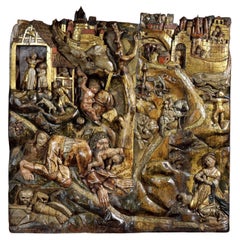
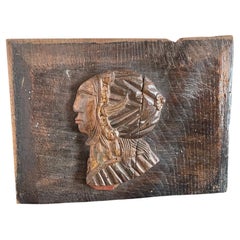
A deep and well carved panel English oak 16th century
Located in Bakewell, GB
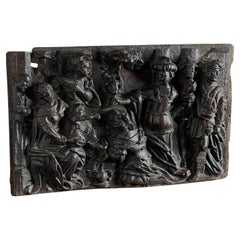
A deep and well carved panel English oak with many figures in deep relief and a good colour Circa 1520 33cms wide x 21cms high
Category

English Antique 16th Century Sculptures

Materials

Oak

Jesus Christ the Conqueror Raising the Flag After his Resurrection, 16th Century
Located in North Miami, FL
16th Century Italian carved-wood and polychromed sculpture of Jesus Christ the conqueror raising the flag after his resurrection.
Category

Italian Renaissance Antique 16th Century Sculptures

Materials

Gold Leaf

Read More

He Wrote ‘Oedipus Rex,’ but Do You Know What He Looked Like?

The Greek tragedian is said to have been handsome in his day.

These Soft Sculptures Are Childhood Imaginary Friends Come to Life

Miami artist and designer Gabriela Noelle’s fantastical creations appeal to the Peter Pan in all of us.

Salvatori Commissioned Several Famous Architects to Create Miniature Homes in Stone

Gabriele Salvatori explains how the COVID lockdowns inspired his design company's latest collection, the Village.

Christopher Norman Is Turning the Cast-Off Urban Trees of Los Angeles into Art

With a World War II–era milling machine, the California artist crafts poetic, sculptural furniture pieces.

These Human-Size Ceramic Hares Evoke Serious Emotions

Swedish artist Margit Brundin's large anthropomorphic animal sculptures are on view for the first time in the United States at Dienst + Dotter Antikviteter, in New York.

Tour the Wabi-Sabi New York Apartment of Andrianna Shamaris

As her sun-filled home reveals, the furniture maker and dealer puts a contemporary spin on antiques from around the globe.

Vicente Wolf’s Tips for Finding — and Living with — Eastern Treasures

The A-list designer shares his expertise on choosing authentic objects and displaying them with style.

Rodrigo Rivero Lake’s Mexico City Showroom Is a Museum-Worthy Trove of Spanish Colonial and Asian Antiques

The dealer and curator has spent the past 50 years amassing a collection of exceptional art, furniture and architectural elements that trace the cultural influence of the Spanish empire from Europe to the Americas and beyond.

Still Thinking About These?

All Recently Viewed