Want more images or videos?
Request additional images or videos from the seller
1 of 8
Indian Dhokra Bronze Owl Containers, Ca. 1900, Pair
$1,800List Priceper set
About the Item
- Dimensions:Height: 10 in (25.4 cm)Diameter: 6 in (15.24 cm)
- Sold As:Set of 2
- Style:Anglo-Indian (Of the Period)
- Materials and Techniques:
- Period:
- Date of Manufacture:Unknown
- Condition:Wear consistent with age and use. In good antique condition. Wear consistent with age and use.
- Seller Location:Astoria, NY
- Reference Number:Seller: S138XX - 100871 - 01241stDibs: LU889335512662
About the Seller
4.9
Vetted Professional Seller
Every seller passes strict standards for authenticity and reliability
1stDibs seller since 2010
2,614 sales on 1stDibs
Typical response time: 13 hours
Authenticity Guarantee
In the unlikely event there’s an issue with an item’s authenticity, contact us within 1 year for a full refund. DetailsMoney-Back Guarantee
If your item is not as described, is damaged in transit, or does not arrive, contact us within 7 days for a full refund. Details24-Hour Cancellation
You have a 24-hour grace period in which to reconsider your purchase, with no questions asked.Vetted Professional Sellers
Our world-class sellers must adhere to strict standards for service and quality, maintaining the integrity of our listings.Price-Match Guarantee
If you find that a seller listed the same item for a lower price elsewhere, we’ll match it.Trusted Global Delivery
Our best-in-class carrier network provides specialized shipping options worldwide, including custom delivery.You May Also Like
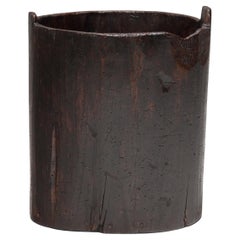
Chinese Courtyard Grain Container, c. 1900
Located in Chicago, IL
This rustic wooden container dates to the early 20th century and was once used to store dry goods or household items in a provincial home in Yunnan province. Hollowed from a single t...
Category
Early 20th Century Chinese Primitive Planters, Cachepots and Jardinières
Materials
Wood
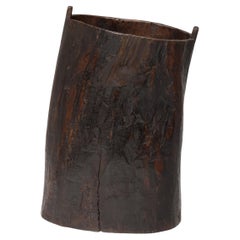
Chinese Courtyard Grain Container, c. 1900
Located in Chicago, IL
This rustic wooden container dates to the early 20th century and was once used to store dry goods or household items in a provincial home in Yunnan province. Hollowed from a single t...
Category
Early 20th Century Chinese Rustic Planters, Cachepots and Jardinières
Materials
Wood
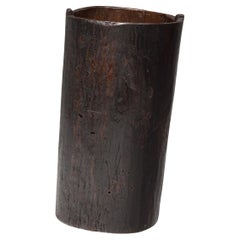
Chinese Courtyard Grain Container, c. 1900
Located in Chicago, IL
This rustic wooden container dates to the early 20th century and was once used to store dry goods or household items in a provincial home in Yunnan province. Hollowed from a single f...
Category
Early 20th Century Chinese Primitive Planters, Cachepots and Jardinières
Materials
Fir
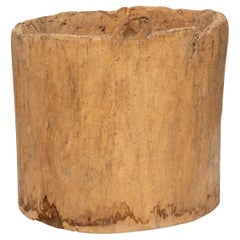
Chinese Courtyard Grain Container, c. 1900
Located in Chicago, IL
This rustic wooden container dates to the early 20th century and was once used to store dry goods or household items in a provincial home in Yunnan province. Hollowed from a single t...
Category
Early 20th Century Chinese Primitive Planters, Cachepots and Jardinières
Materials
Wood
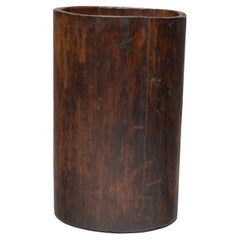
Chinese Courtyard Grain Container, c. 1900
Located in Chicago, IL
This rustic wooden container dates to the early 20th century and was once used to store dry goods or household items in a provincial home in Yunnan province. Hollowed from a single t...
Category
Early 20th Century Chinese Organic Modern Planters, Cachepots and Jardin...
Materials
Wood
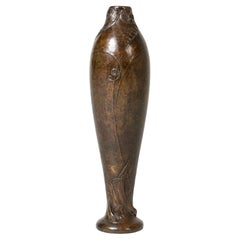
Art Noveau Bronze vase by Gerda Backlund, Sweden, ca 1900
Located in Stockholm, SE
Beautiful Art Noveau vase in patinated bronze, designed by Gerda Backlund. Slender, curvesome form with relief decor of grasses draping around the base, unfolding ferns around the to...
Category
Antique Early 1900s Swedish Scandinavian Modern Vases
Materials
Bronze
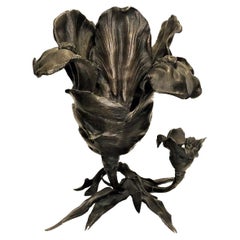
French Art Nouveau Patinated Bronze Sculptural Iris Vase, ca. 1900
Located in New York, NY
ABOUT IRIS
The iris is a special and mysterious flower. Not only because of its striking appearance, but also from an artistic and historical point of view. It is also like a work of art, as though created by Mother Nature. The unique leaves of this plant not only create wonderful shadow casts, but also look as if they were painted by hand. It's no wonder that iris acts as the muse for countless artists, and can be seen in many famous works of art.
The iris was first spotted in the time of Pharaoh Thutmose, in 1504 BC. He had the iris inscribed into the wall reliefs of a temple as a sign of his power, as well as decorating his sceptre with motifs of the flower. Since then, the iris has been a symbol of victory in Egypt. But the symbolism of the iris goes further than that. In Japan, the flower represents courage and is the symbol of the boys' festival. In Islamic cultures, the iris is a symbol of prosperity. In Europe, the flower was a popular weapon symbol in the Middle Ages and stood for chivalry. And in Christianity, the iris was seen as a symbol of the trinity because of its three-part flowers. With more than 300 varieties, the iris is now the most popular flower among growers and gardeners following the rose.
Countless artists use the iris in their works and the flower is present in all eras. You can see the flower on furniture, vases, jewelry, fabrics, sculptures, coats of arms and much more. Did you know that the iris is also called the sword lily? It's not a coincidence that it used to symbolize physical and emotional pain and suffering caused by a weapon. We also see the flower in religious art, where it's often associated with Mary and Jesus. The iris is also associated with the Greek goddess Iris, where the flower symbolizes reconciliation and divine messages. This is also reflected in many paintings.
Finally, the iris is also visible in Dutch and Flemish still-life paintings. This can be in a religious form, incorporated into an object or as a decorative flower.
In the Art Nouveau art movement, the iris (along with other plants, such as the birch) was often used as an expression of feminine beauty. With its almost otherworldly appearance, the iris is perfectly suited to the Art Nouveau aesthetic and is featured in many well-known works of art. The poet of that era, Hermann Hesse...
Category
Antique Early 1900s French Art Nouveau Planters, Cachepots and Jardinières
Materials
Bronze
$1,600
H 10.75 in W 8.5 in D 8.5 in
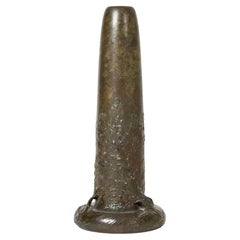
Art Noveau Bronze vase by Hugo Elmqvist, Sweden, ca 1900
Located in Stockholm, SE
Beautiful Art Noveau vase in patinated bronze, designed by Hugo Elmqvist. Stately form with a heavy base, decorated with a dynamic relief of seaweed and crabs.
Category
Antique Early 1900s Swedish Scandinavian Modern Vases
Materials
Bronze
French Beaux Arts, Patinated Bronze Figural Vase by A. Bofill, Ca. 1900
By Antoine Bofill
Located in New York, NY
Antoine Bofill (Spanish-French, 1875-1925) was a Spanish artist and member of the Animalier movement of the 19th century. Best known for his small, decorative bronze sculptures, Bofi...
Category
Antique Early 1900s French Beaux Arts Vases
Materials
Bronze
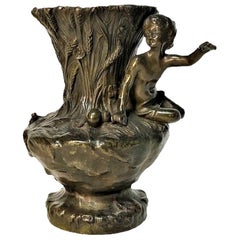
$1,150
H 6.5 in W 6.5 in D 5 in
Paul Loiseau-Rousseau, French Art Nouveau Gilt Bronze Jug, Ca. 1900
By Paul Loiseau-Rousseau 1
Located in New York, NY
Paul Louis Emile Loiseau-Rousseau (French, 1861-1927) was a famous French sculptor. In his youth, he planned to devote himself to etching, was a student of Antoine-Louis Barye at the...
Category
Antique Early 1900s French Art Nouveau Vases
Materials
Bronze
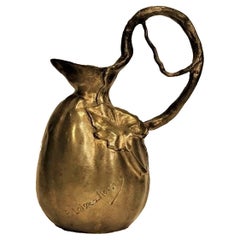
More From This Seller
View AllTurn-Teplitz Amphora Art Pottery Vase, ca. 1900
Located in Astoria, NY
Turn-Teplitz Amphora Art Nouveau Pottery Cylindrical Waisted Vase, circa 1900, with floriform lip and applied sinuous vine form handles, glazed in mottled iridescent gold and green r...
Category
Antique Early 1900s Austrian Jugendstil Vases
Materials
Pottery
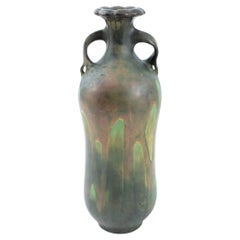
$2,300 Sale Price
29% Off
Louis XVI Style Gilt Bronze and Granite Urns, Pair
Located in Astoria, NY
Pair of Louis XVI Style Gilt Bronze Mounted Granite Urns, late 19th century, each of baluster form with laurel twig entwined handles, acorn finials, leaf capped bodies on square plin...
Category
Antique Late 19th Century French Louis XVI Urns
Materials
Granite, Bronze
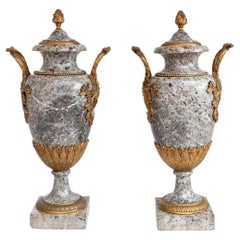
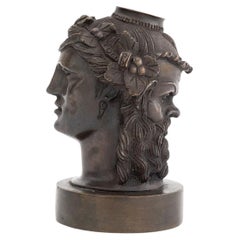
After the Antique Etruscan Two-Faced Bronze Vessel
Located in Astoria, NY
After the Antique Etruscan Two-Faced Bronze Oil Vessel, depicting the faces of a Maenad and Satyr, stamped "The Hermitage" in Cyrillic with foundry mark to circular base.
4.5" H x 2...
Category
20th Century Russian Neoclassical Jars
Materials
Bronze
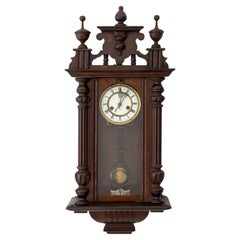
Vienna Mahogany Regulator Wall Clock, ca. 1900
Located in Astoria, NY
Vienna Mahogany Regulator Wall Clock, circa 1900, with carved urn finial and fluted column crest, porcelain and brass clock face with roman numerals encased in glass paneled flanked ...
Category
Antique Early 1900s Austrian Vienna Secession Wall Clocks
Materials
Brass
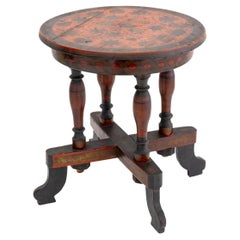
Russian Khokhloma Red Lacquered Table, ca. 1900
Located in Astoria, NY
Russian Khokhloma Red Lacquered Side Table, circa 1900, hand-painted with a stylized floral design. 18" H x 16" Diameter. Provenance: From the Collection of Laura and Lewis Kruger.
Category
Antique Early 1900s Russian Folk Art Side Tables
Materials
Wood
$850 Sale Price
29% Off
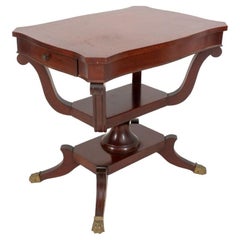
Eclectic Inlaid Mahogany Side Table, ca. 1900s
Located in Astoria, NY
Eclectic style inlaid mahogany side table, with Victorian, Federal, and mid-century elements, with shaped canted rectangular top, above a cage-form support on splay feet terminating ...
Category
20th Century Unknown Mid-Century Modern Side Tables
Materials
Mahogany
$750 Sale Price
21% Off
Still Thinking About These?
All Recently ViewedMore Ways To Browse
Antique Indian Vase
Bronze Containers
Owl Vases
Indian Containers
Greek Vase Terracotta
Jar Pewter
Antique Crystal Jar
Display Jar
Kitchen Canisters
Apothecary Set
Chinese Temple Jar
Blue White Chinese Lidded
19th Century Chinese Blue White Jar
Candy Jar
Delft Blue Jar
Legend Of Asia
Lidded Chinese Ceramic
Powder Jar